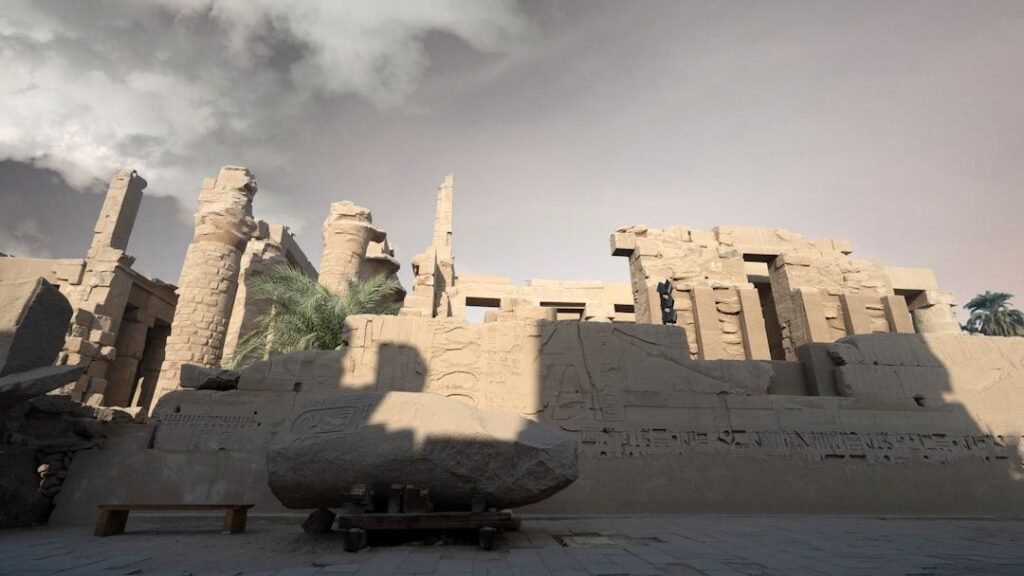

Imagine waking up tomorrow to find entire cities abandoned, vast empires emptied out, and millions of people simply gone, leaving behind nothing but stone walls, broken pottery, and silence. It sounds like science fiction, yet it happened, repeatedly, across the ancient world. Some of history’s greatest civilizations didn’t fade with a dramatic battle or a glorious final stand. They just… stopped.
What makes these disappearances so haunting is how little we still understand them, even now, even with all our technology and science and archaeology. The more you dig into the evidence, the deeper the mystery becomes. So buckle up, because some of what you’re about to read might genuinely surprise you. Let’s dive in.
The Indus Valley Civilization: The Giant That Quietly Crumbled
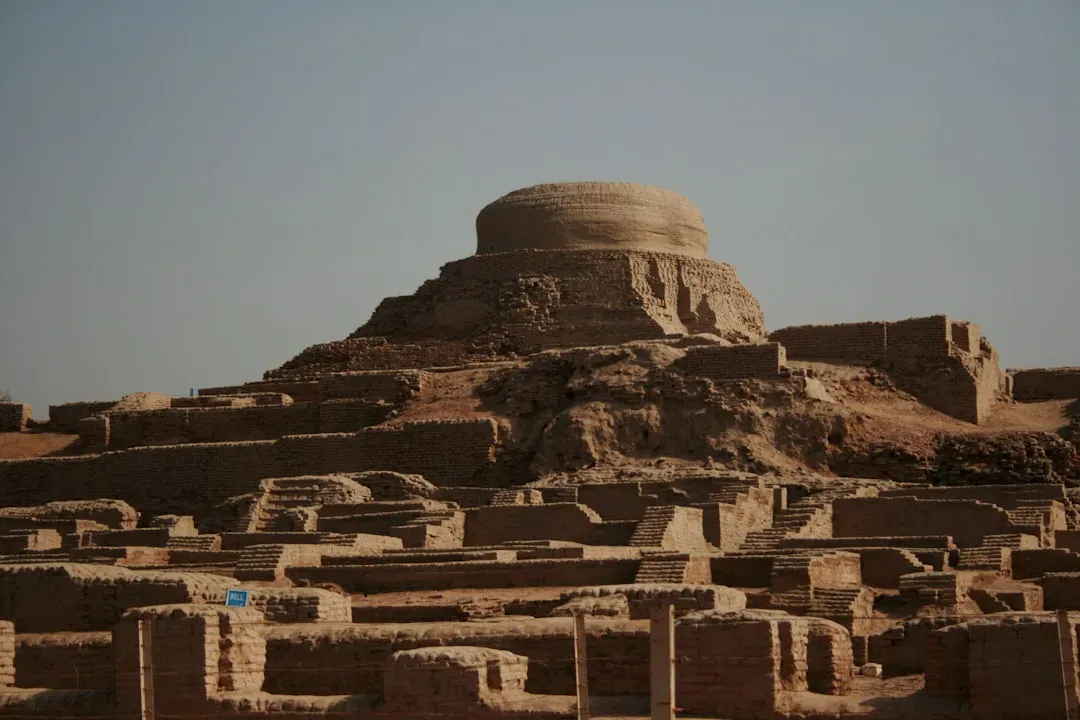
Here’s a mind-bending fact to start you off: you’ve probably heard of ancient Egypt and ancient Mesopotamia, but the civilization that actually dwarfed both of them in territory is one most people barely know by name. By the third millennium B.C., the Indus civilization occupied over 386,000 square miles of territory, much more than their better-known contemporaries in Egypt and Mesopotamia, and accounted for an estimated ten percent of the world’s population. Think about that for a moment. Nearly one in ten humans on Earth was part of this one society.
More than 4,000 years ago, the Harappa culture thrived in the Indus River Valley of what is now modern Pakistan and northwestern India, where they built sophisticated cities, invented sewage systems that predated ancient Rome’s, and engaged in long-distance trade with settlements in Mesopotamia. They had advanced urban planning, standardized weights and measures, and a writing script that still, to this day, no one has ever deciphered. The government of Tamil Nadu once offered a million dollars to anyone who could crack it, yet though archaeologists have uncovered around 5,000 inscriptions written in Indus script, no one has managed to tease out the symbols’ meaning.
Recent climate simulations reveal that repeated century-long droughts reshaped where Indus Valley people lived and strained their water systems, with these sustained pressures likely driving the civilization’s gradual decline rather than a sudden collapse. One particularly severe dry spell stands out. One drought lasting 113 years, identified between 3,531 and 3,418 years ago, aligns with archaeological evidence of widespread deurbanization in the region.
Rather than a sudden collapse, the Harappan experience shows that adaptation to environmental stress is possible, but often involves profound social reorganization, migration, and cultural change. Still, what you are left with is a civilization of potentially five million people that gradually dissolved into the landscape, leaving mostly questions behind. Honestly, I find it eerie that something so advanced could fade so completely that we still cannot read a single word they wrote.
The Minoan Civilization: Europe’s First Great Power, Gone in Ash and Fire
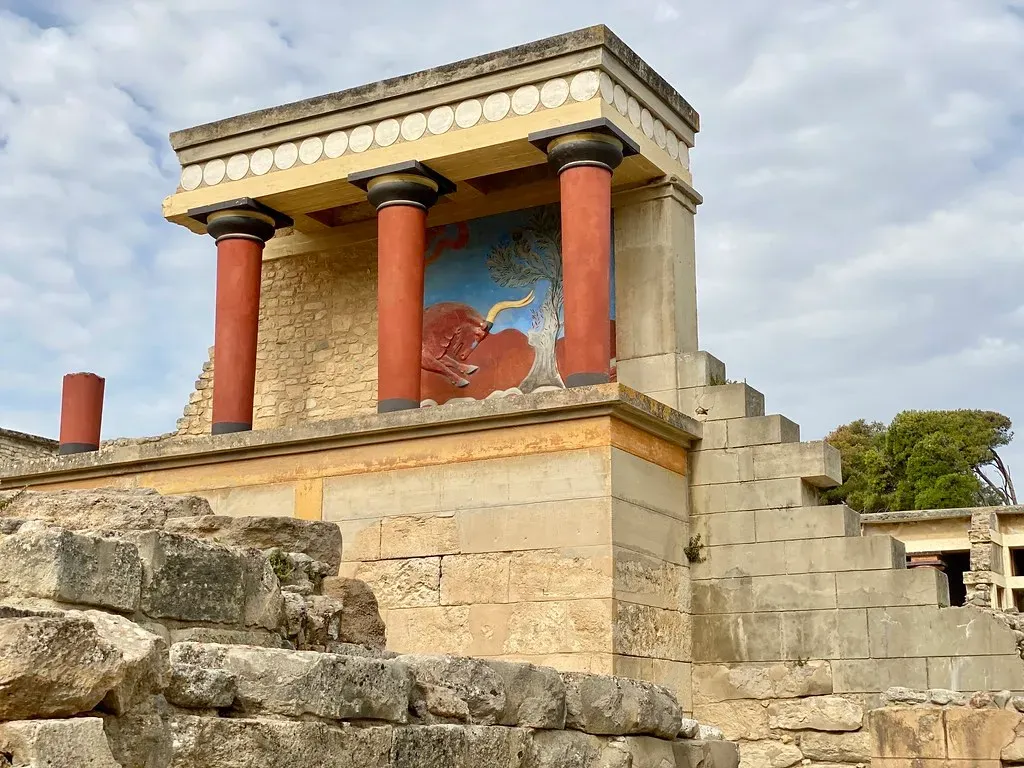
The ancient Minoans, generally considered Europe’s first major civilization, flourished on and around the Mediterranean island of Crete starting about 3000 BC. You might picture Bronze Age peoples as rough and primitive, but the Minoans were anything but. Characterized by their vibrant colors and fun-loving culture, the Minoans importantly influenced the cultures of the Mycenaeans and early Ancient Greeks. They built sprawling palace complexes, produced breathtaking frescoes, and commanded vast sea trade routes across the Mediterranean.
Around 1600 BC, one of the biggest volcanic explosions in human history blasted away much of the nearby island of Thera, obliterating communities and farmlands with hot ash, tsunamis, and earthquakes, and some archaeologists think this disaster may have started the decline and fall of the Minoans, whose culture fell apart in following centuries. A 2025 study added a striking new dimension to the mystery. Winds spread ash and aerosols from the Thera eruption, causing atmospheric changes that contributed to the civilization’s collapse, with high-altitude wind patterns playing a crucial role by spreading volcanic material across the entire region.
By 1750 BCE, the influence of the Minoan palace-directed trading culture grew throughout the Aegean region, but by 1450 BCE, the palaces collapsed with no clear historical nor archaeological explanation. The debate among scholars remains intense. Archaeological evidence strongly suggests that the Mycenaean Greeks invaded and conquered Minoan Crete around 1450 BCE, which explains why all the major administrative centers on Crete were destroyed at that time, and these destruction layers are immediately followed by the appearance of Linear B, the script of the Mycenaean Greeks, on Crete.
So was it the volcano, the invaders, or something else entirely? It is rare for one sole thing to cause the decline of an entire civilization. The Minoans remind you that empires can fall not just from a single hammer blow, but from a cascade of smaller fractures spreading quietly over time, like cracks in a pottery jar just before it shatters completely.
The Ancient Puebloans (Anasazi): Cliff Builders Who Vanished Overnight
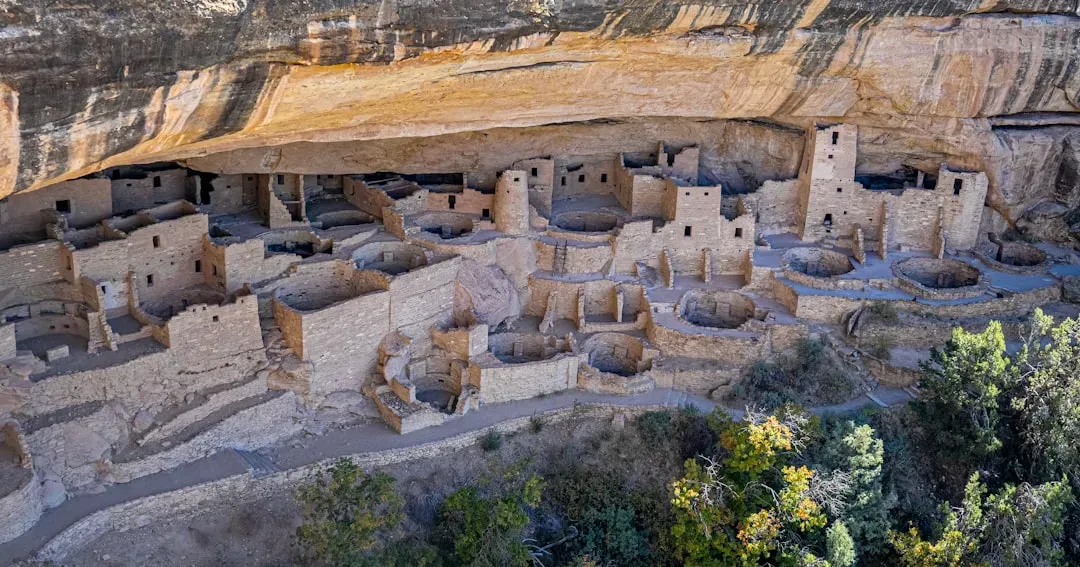
The Anasazi civilization flourished in the American Southwest from approximately 100 AD to 1300 AD, and they were known for their remarkable cliff dwellings, kivas or ceremonial underground rooms, and intricate rock art, having developed a complex society deeply connected with the environment. Let’s be real, when you stand beneath the towering cliff dwellings they carved into canyon walls, it’s difficult not to feel a sense of complete awe. Their settlements contain the preserved remains of pueblos, complex multi-story houses made of adobe, stone, mud, or sandstone, and they built these houses up to five stories high.
The Anasazi lived in their homeland for more than 1,000 years, but then, within a single generation, they were gone. Between 1275 and 1300 A.D., they stopped building entirely, and the land was left empty. What ended everything so abruptly? Evidence suggests that severe droughts plagued the Southwest during the Anasazi’s decline, with tree-ring data showing that the region experienced a prolonged period of drought from 1276 to 1299, which would have had a significant impact on their agricultural practices, causing crops to fail and food supplies to dwindle.
Researchers have uncovered signs of massacres and cannibalism, as well as evidence of deforestation, water management problems, and a crippling long-term drought that many believe precipitated the slide into violence, with religious and political upheaval ultimately forcing the Anasazi to abandon their homeland by A.D. 1300 and flee south. The picture that emerged from the ruins was a dark one, far darker than what popular imagination had assumed. The implication is that many of the Ancestral Puebloans appear to have joined a smaller population already living in the northern Rio Grande region, and their descendants form the Tewa Pueblo population that still lives there today.
So they didn’t exactly vanish without a physical trace. They dissolved into other peoples, carrying their culture quietly forward. Yet the cities they left behind, still perched impossibly high in cliff faces, remain some of the most haunting ruins on Earth. It’s hard to say for sure what truly broke them, but the combination of thirst, hunger, and fear seems like more than enough.
The Olmecs: The Forgotten Architects of an Entire Culture
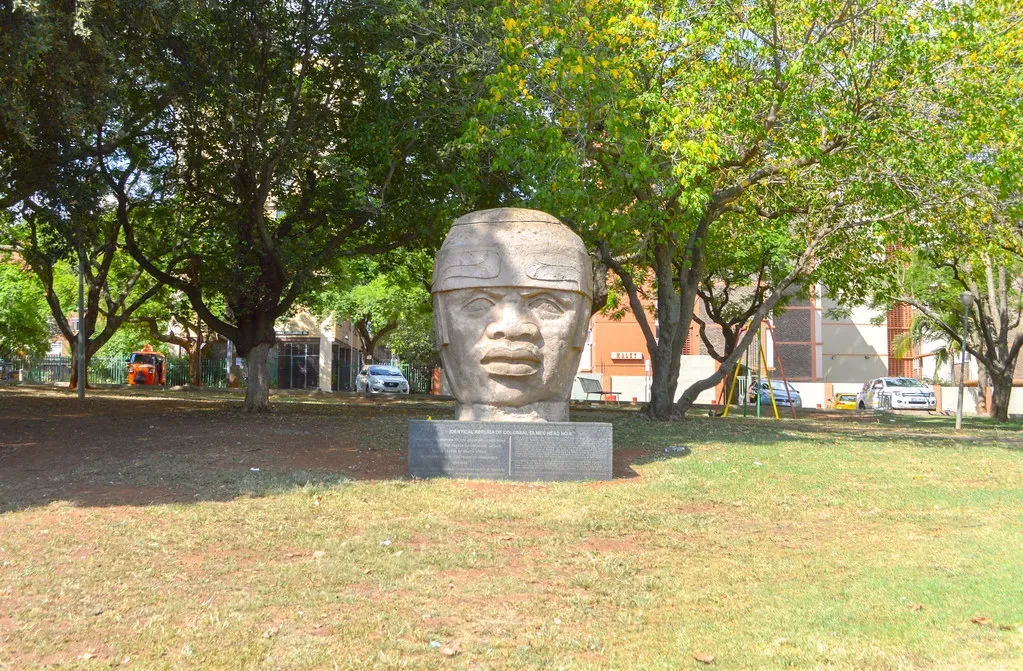
Archaeologists and historians discovered that the Olmecs were not only just another Mesoamerican civilization but the ones who laid the groundwork for the Maya and even the Aztecs to thrive and prosper, and much like the Maya, the Olmecs were also capable of constructing impressive stone temples and cities with relative ease. Think of them as the roots of a tree whose towering branches you may already recognize. Without the Olmecs, there may have been no Maya, no Aztec, no pyramid culture at all. Yet almost no one talks about them.
It is thought that the Olmecs controlled large swathes of territory in Central America between 1600 BC and 350 BC, and as the “mother culture” of most Mesoamerican empires and kingdoms, the Olmec style of architecture, governance, and even religion can be seen all throughout the region. They are best known for their colossal head sculptures, some weighing up to 50 tons, which reflect their remarkable artistry and organizational skills, and these sculptures, along with their contributions to the development of writing, urban planning, and religious concepts, underscore the Olmecs’ significant influence on subsequent Mesoamerican cultures.
The Olmec civilization mysteriously declined around 400 BC, and the reasons behind their disappearance remain speculative, with theories ranging from environmental changes such as river silting and volcanic activity, to internal strife and warfare. The really strange part? For all their influence, they left no obvious successors who wrote about them. During the 3rd century BC, the major urban settlements of the Olmecs slowly became deserted and fell into ruins, and it can only be assumed that the Olmecs must have faced similar environmental and political circumstances to the Maya, leading to the same devastating results.
You would think a civilization this foundational, this creative, this impactful on an entire continent’s cultural history would leave behind a clear story of what happened. Instead, you get silence and theories. The Olmecs are proof that even the most influential civilizations can disappear so thoroughly that history barely remembers to mention them at all.
The Khmer Empire: A Million-Strong City Swallowed by the Jungle
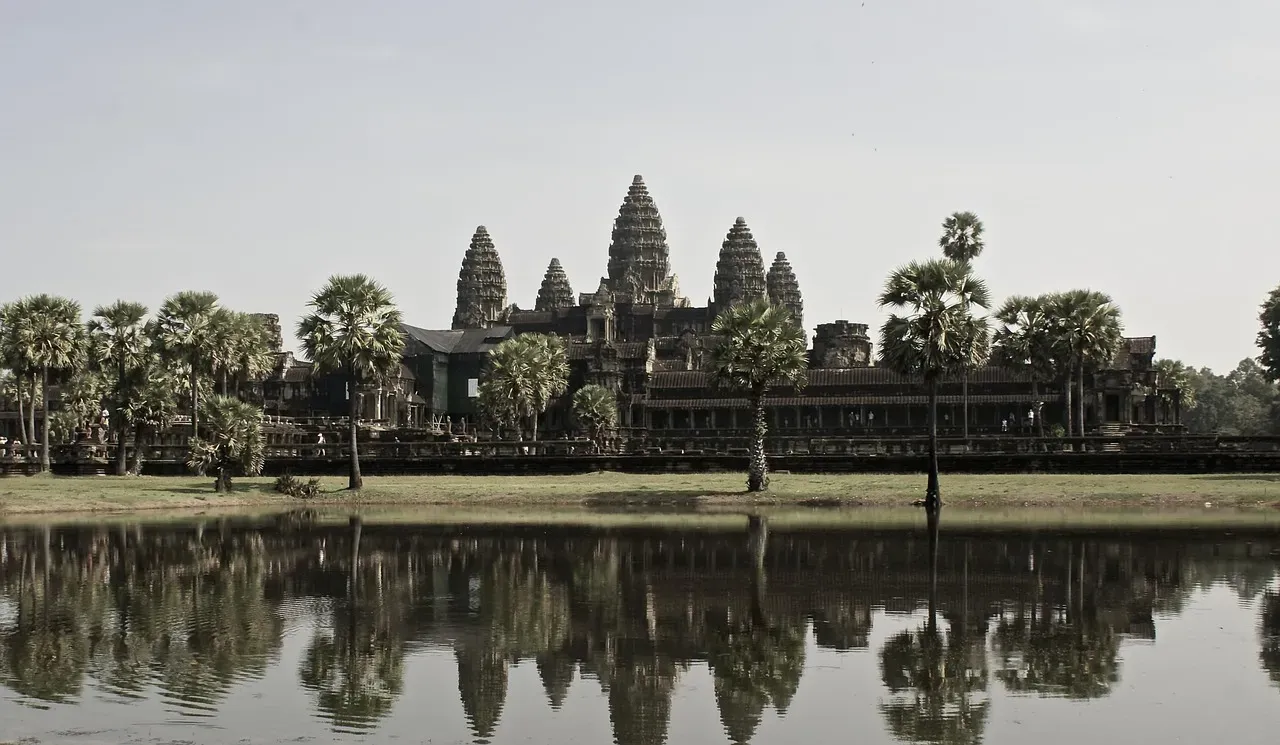
Most people have heard of the magnificent temple Angkor Wat in Cambodia, but it was only one small part of a massive urban civilization during the Khmer Empire called Angkor, a city that flourished during the late middle ages from 1000 to 1200 AD, and may have supported up to a million people. Let that number sink in for a moment. A million people. In the middle of a jungle. That is roughly the size of modern-day Austin, Texas, existing nearly a thousand years ago in Southeast Asia.
Angkor was one of the civilization’s largest cities, with an extensive system of roads and canals and an estimated population of as many as one million people, but experts are unsure what caused the civilization to disappear, leaving its cities at the mercy of the relentless jungle, with theories ranging from war to environmental catastrophe. Given all the roads and canals connecting its many regions, some archaeologists believe it may have been the biggest urban site in the world at its height. The scale of what was built here is genuinely staggering.
At its height, it is estimated that Angkor was once home to as many as one million people, and research is still ongoing, with the possibility that the population was even larger than this, which would indicate an even more catastrophic event when it fell. Today, the portion of Angkor called Angkor Wat is one of the most famous ruins in the modern world, and archaeologists hope to keep discovering artifacts and other evidence that can paint a clearer picture of life during the height of the Khmer Empire.
What’s fascinating, and a little unsettling, is how the jungle simply reclaimed it all. Trees grow through stone walls, roots split ancient carvings, and vines drape over the faces of carved deities. It feels less like a ruin and more like nature erasing a signature. There are isolated instances of whole societies vanishing without a trace, except for some ruins or artifacts left behind as proof of their existence, and the sudden and often unexplained disappearances of these civilizations have both captivated and confused the minds of experts and laypeople alike.
Conclusion: The Questions We May Never Fully Answer
What connects all five of these civilizations is not just their disappearance. It is how much they achieved before they went. Great cities, advanced engineering, rich spiritual lives, complex trade networks reaching across continents, and in many cases, writing systems we still cannot read. They were not primitive. They were, in many ways, brilliant.
Yet climate, drought, invasion, volcanic fire, and slow ecological collapse appear again and again across these stories. You could argue that the most important lesson here is not a historical one but a deeply present one. The decline of the Indus Valley Civilization is an ancient reminder that climate change can quietly, relentlessly redirect the course of human history long before its full consequences are visible. That warning feels more relevant today than ever.
Perhaps what is most humbling about all of this is that these civilizations thought they were permanent too. They built for the ages, carved their symbols into stone, raised monuments meant to last forever. And yet, here we are, unable to even read what they wrote. Which raises one genuinely uncomfortable thought: what will future civilizations make of the ruins we leave behind? What questions will they be left asking about us?