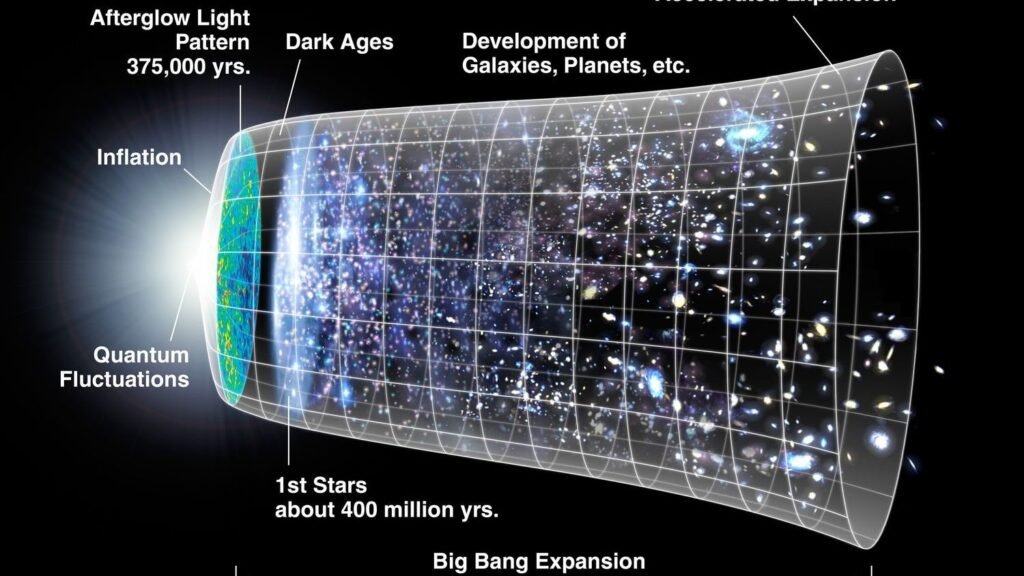

You already live in a cosmos that is racing away from itself. Every galaxy you could ever point a telescope at is retreating, and the truly startling part is that the retreat is speeding up. Not slowing down. Not staying steady. Speeding up. It’s the kind of fact that should make you stop mid-coffee and just stare at the ceiling for a moment.
What’s driving it, how long it has been doing it, and what it means for the ultimate fate of everything that exists, those are the questions scientists are fiercely debating right now. The answers are coming in fast, and they are stranger than most people realize. Let’s dive in.
How We Discovered the Universe Was Running Away from Itself
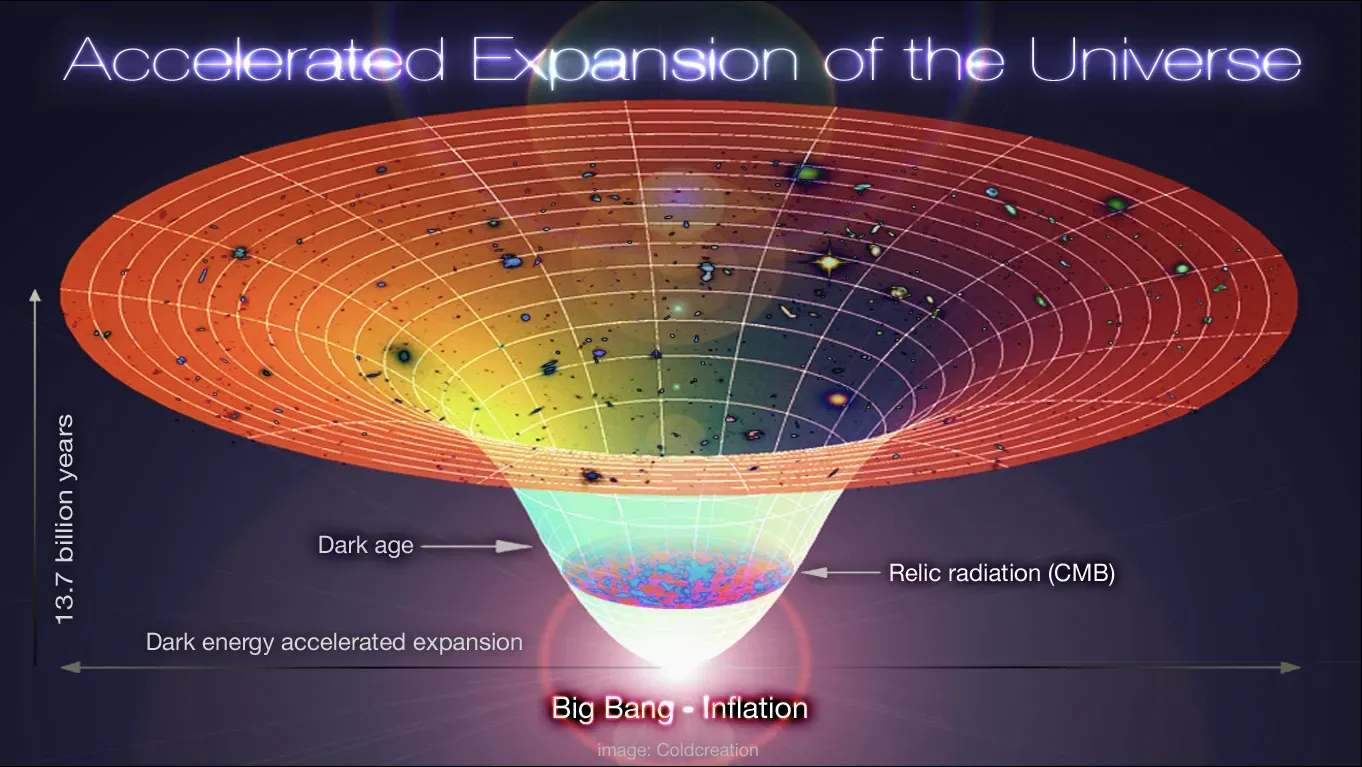
Around a century ago, scientists discovered that distant galaxies appeared to be moving away from Earth, and the further away a galaxy is, the faster it recedes. That single observation provided the first key evidence that the universe is expanding. Think of it like dots drawn on a balloon: as you inflate it, every dot moves away from every other dot. No center, no edge, just continuous outward motion.
Researchers initially expected that this expansion would slow down over time due to gravity. However, in 1998, observations of distant supernovae revealed that the universe’s expansion is actually accelerating rather than slowing down. This was genuinely shocking. It would be like throwing a ball into the air and watching it speed up instead of arc back toward the ground. Nothing in physics at the time predicted it.
Dark Energy: The Invisible Force Nobody Fully Understands
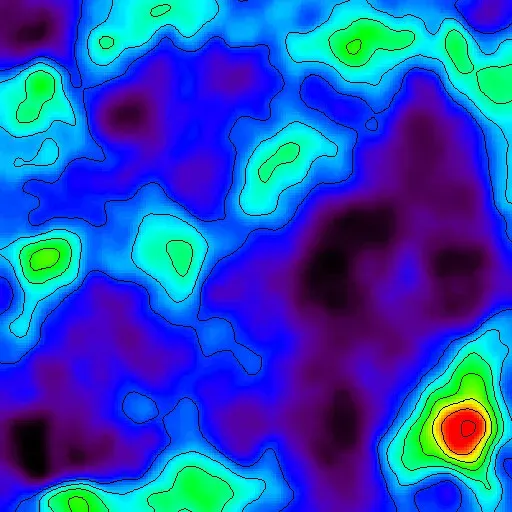
The simplest explanation for this dark energy was that empty space is imbued with a fixed amount of energy, giving it a springiness that pushes matter apart. Honestly, it sounds almost like science fiction. Empty space having energy? Yet the math works, and the observations kept confirming it.
Assuming that the Lambda-CDM model of cosmology is correct, dark energy dominates the universe, contributing roughly 68% of the total energy in the present-day observable universe, while dark matter and ordinary matter contribute about 27% and 5% respectively. So let’s be real about what that means. Nearly everything the universe is made of, you cannot see, touch, or measure directly. The stars, the planets, you and me, we’re the minority ingredient in a cosmic recipe we barely understand.
The DESI Revolution: A 3D Map That Changed Everything
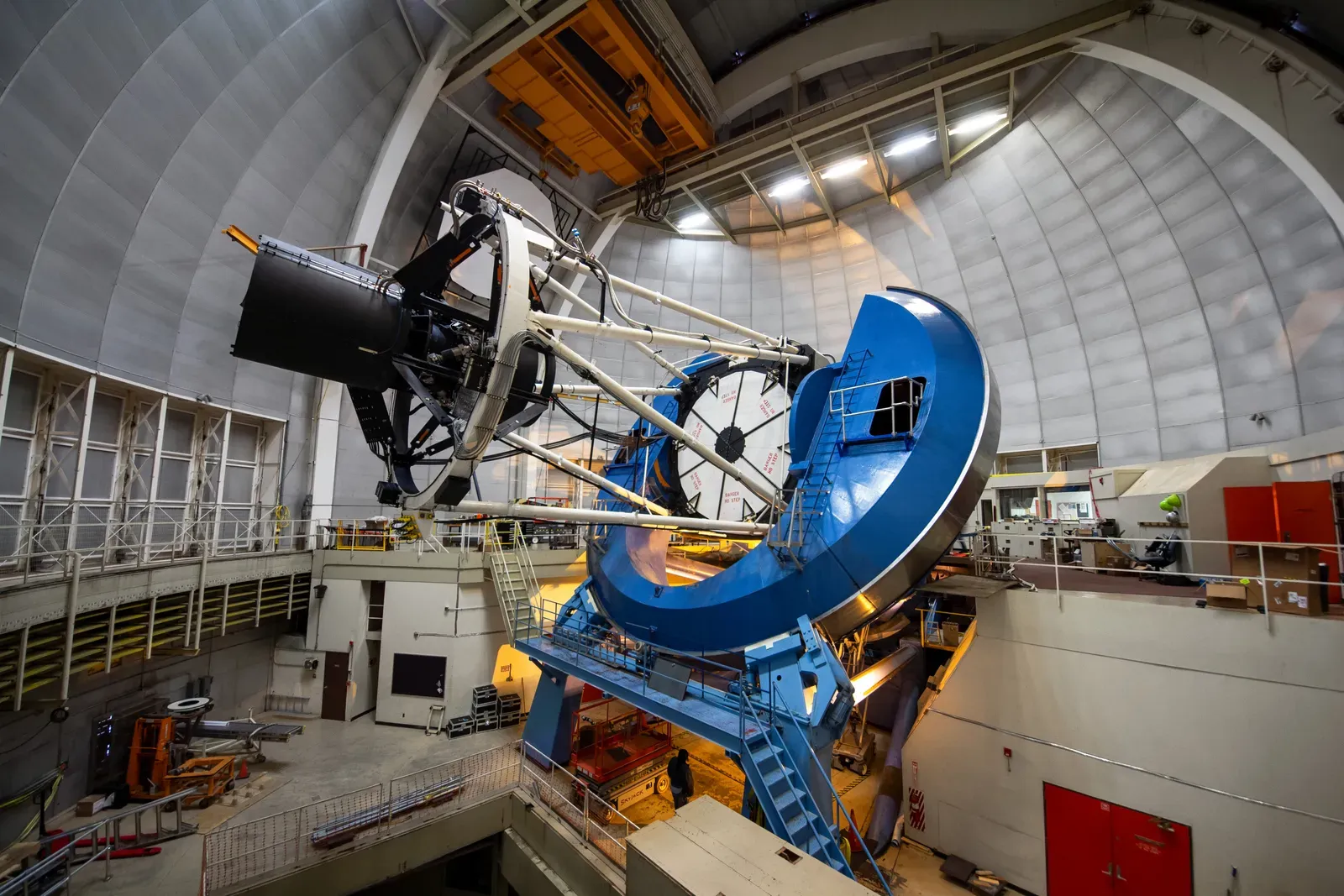
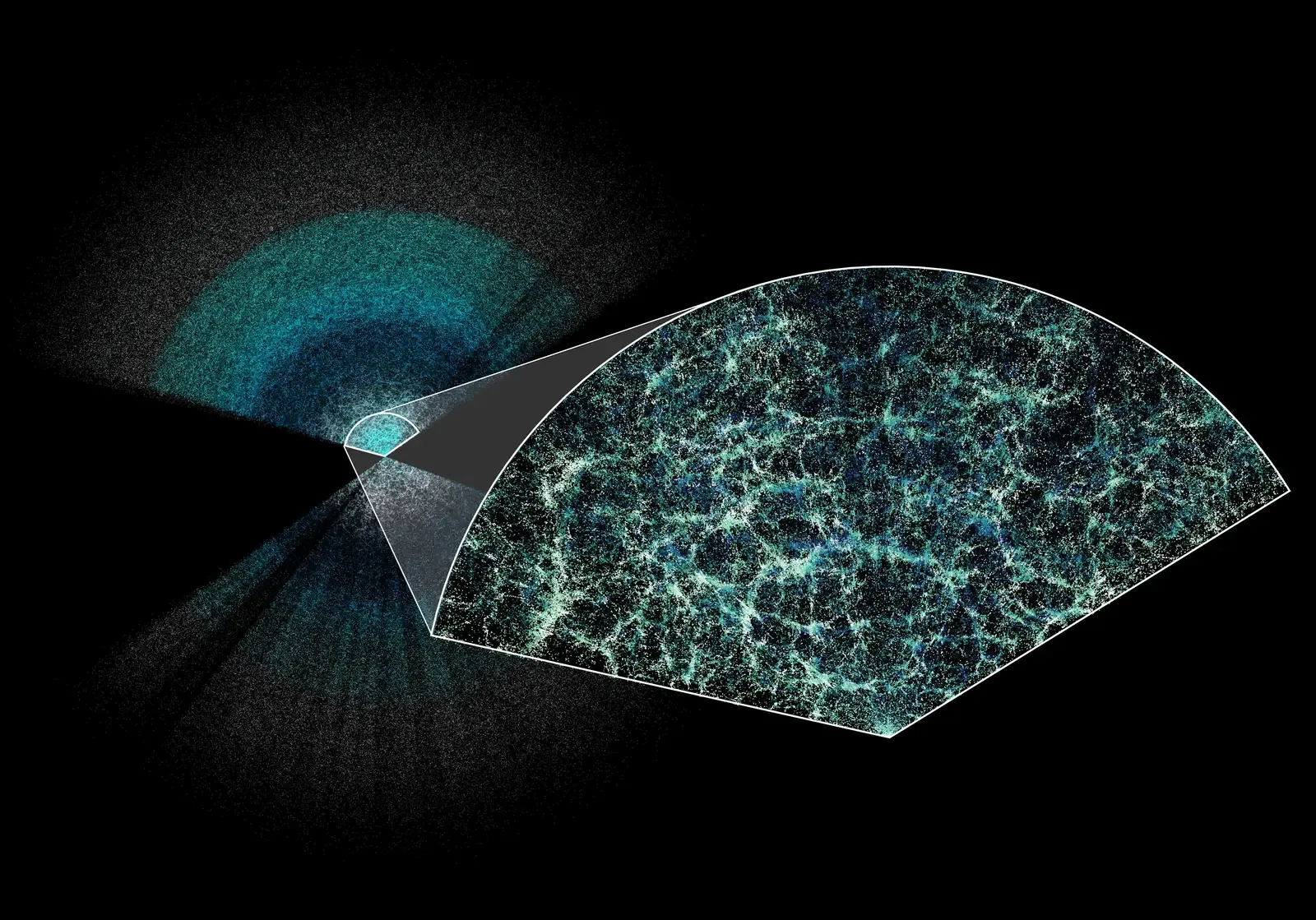
New results from the Dark Energy Spectroscopic Instrument (DESI) collaboration used the largest 3D map of our universe ever made to track dark energy’s influence over the past 11 billion years. To appreciate how remarkable this is, imagine trying to understand the growth pattern of an entire forest by studying a single leaf. DESI essentially gave scientists the whole forest, photographed across billions of years of time.
The new analysis uses data from the first three years of observations and includes nearly 15 million of the best measured galaxies and quasars. It’s a major leap forward, improving the experiment’s precision with a dataset that is more than double what was used in DESI’s first analysis. DESI’s main components are a focal plane containing 5,000 fiber-positioning robots, and a bank of spectrographs which are fed by the fibers. The sheer engineering ambition behind this instrument is something to marvel at.
The Bombshell Finding: Dark Energy Might Be Evolving
Here’s where things get genuinely unsettling for cosmology. For decades, the prevailing cosmological model known as Lambda Cold Dark Matter assumed that dark energy remains constant throughout cosmic history. This simple but powerful assumption has been the foundation of modern cosmology. Yet it leaves one key question unresolved: what if dark energy changes over time? Recent observations have started to challenge this long-held view.
When DESI’s new data is combined with other cosmic observations, scientists have discovered increasing evidence that the influence of dark energy is withering over time. Those other observations include the light leftover from the dawn of the universe, exploding stars, and how light from distant galaxies is warped by gravity. So far, the preference for an evolving dark energy has not risen to the “5 sigma” gold standard in physics that represents the commonly accepted threshold for a discovery. However, different combinations of DESI data with the CMB, weak lensing, and supernovae sets range from 2.8 to 4.2 sigma. That’s significant, though not yet definitive.
Supernovae, Sound Waves, and Cosmic Rulers
Events in the very early universe left subtle patterns in how matter is distributed, a feature called Baryon Acoustic Oscillations, or BAO. That BAO pattern acts as a standard ruler, with its size at different times directly affected by how the universe was expanding. Picture it like sonar echoes still frozen in the structure of the cosmos. Scientists can measure these echoes, compare them across different epochs of history, and reconstruct how fast space was expanding at any given moment in time.
The Dark Energy Survey measured the BAO scale when the universe was half its present age with an accuracy of roughly 2%, the most accurate determination yet at such an early epoch. It was the first time an imaging-only measurement was competitive with large spectroscopy campaigns specifically designed to detect this signal. Combine that with supernova data, and you have something truly powerful. It’s like checking the same answer on a test using two completely different methods and getting the same result. That kind of cross-verification is what makes scientists sit up straight.
Could the Universe Actually Be Slowing Down Now?
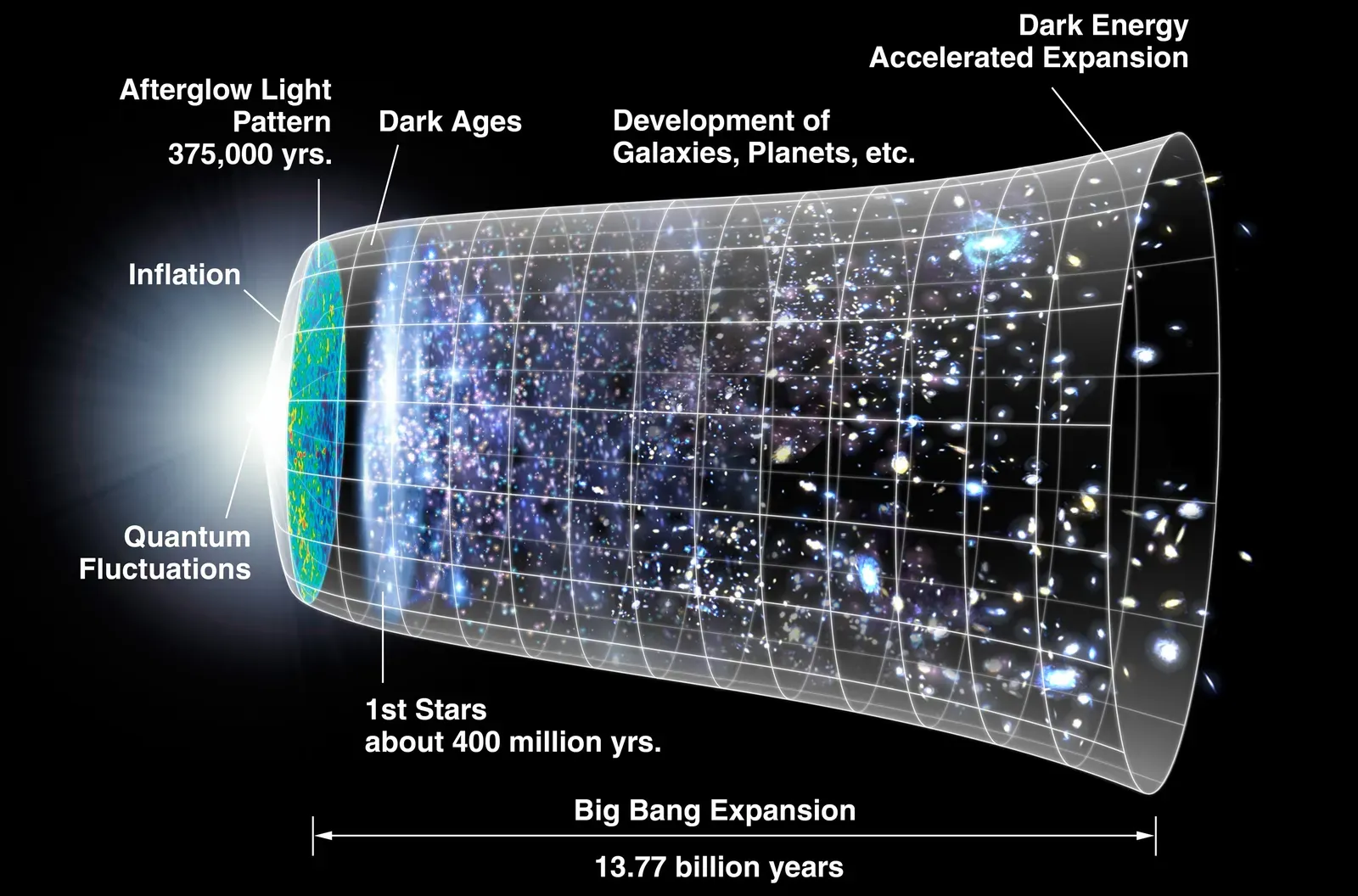
This is where the debate gets even more heated. The universe’s expansion may actually have started to slow rather than accelerating at an ever-increasing rate as previously thought, a new study suggests. The findings published in Monthly Notices of the Royal Astronomical Society cast doubt on the long-standing theory that dark energy is driving distant galaxies away increasingly faster.
Correcting for age bias in type Ia supernovae reveals that distant supernovae appear dimmer due to stellar population effects, not just cosmological expansion. This adjustment indicates the universe’s expansion is no longer accelerating but has entered a decelerating phase, with dark energy weakening over time, challenging the standard Lambda-CDM model. I’ll be honest, it’s hard to say for sure which interpretation will win out. The scientific jury is genuinely still deliberating. The standard model of cosmology struggles to explain all the observations when taken together, but a model where dark energy’s influence changes over time seems to fit the data well.
The Big Crunch: Is the Universe’s End No Longer a Distant Freeze?
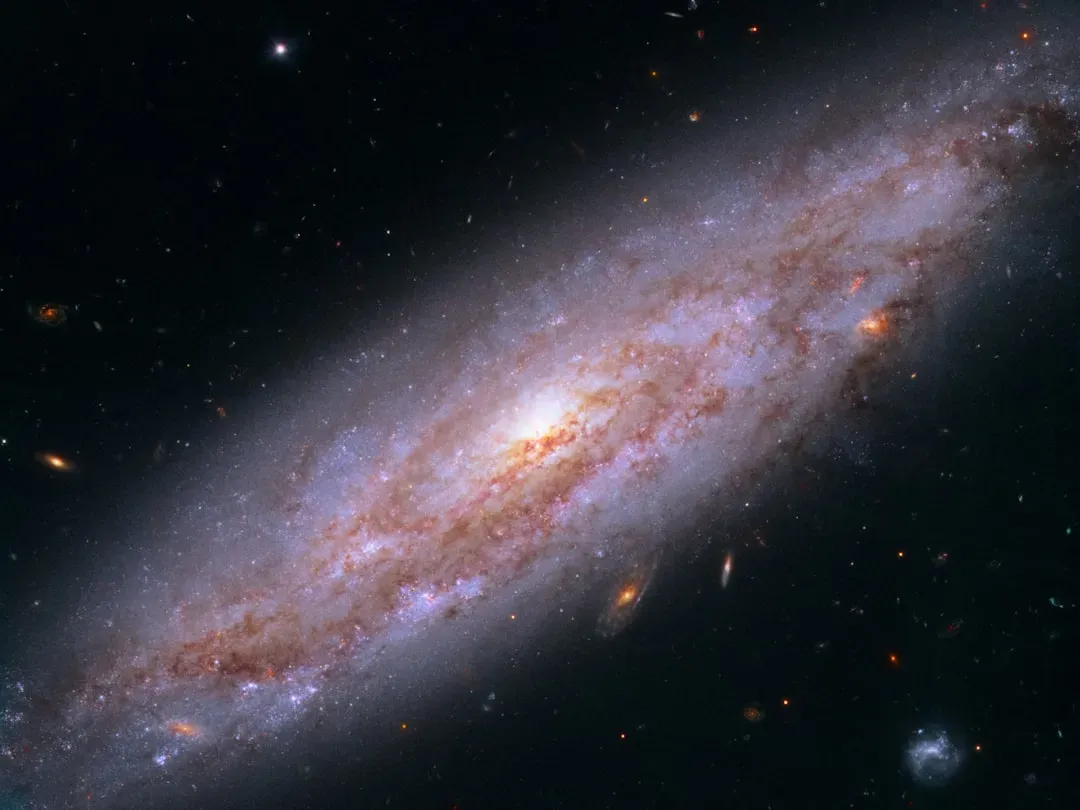
For a long time, the prevailing prediction for the universe’s fate was a slow, cold, endlessly expanding death. A cosmic freeze. With the discovery of dark energy in the late 20th century, scientists thought they had the answer: the universe was destined to expand forever, taking recollapsing scenarios off the table entirely. That comfortable certainty is now shaking.
Using data from a number of astronomical surveys, including the Dark Energy Survey and the Dark Energy Spectroscopic Instrument, researchers have developed a model that predicts the universe will end in a “Big Crunch” in approximately 33.3 billion years. Since the universe is currently 13.8 billion years old, this gives us roughly 20 billion years before the curtain falls. In a Big Crunch scenario, gravity would overcome dark energy’s weakening push, pulling galaxies back toward each other. Over billions of years, stars, planets, and entire galaxy clusters would start collapsing into a condensed core, reversing the outward motion that began with the Big Bang. It’s a staggering thought. The universe, the same one that has been racing outward for nearly 14 billion years, potentially snapping back like a cosmic rubber band.
What Comes Next: New Telescopes, New Answers
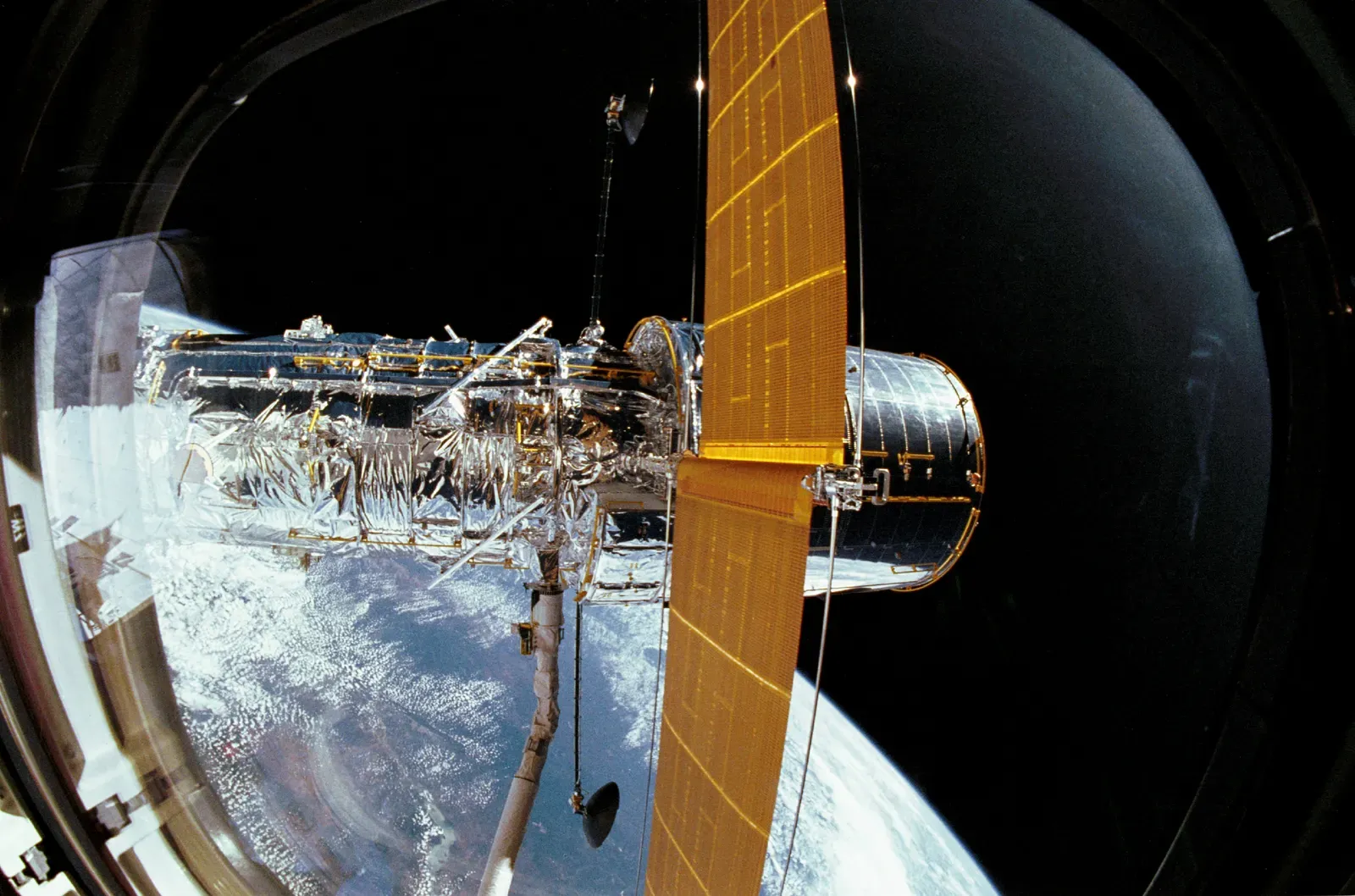
The new Vera C. Rubin Observatory, which started operating this year, is set to help settle the debate with the early 2026 launch of the Legacy Survey of Space and Time, an ultrawide and ultra-high-definition time-lapse record of the universe made by scanning the entire sky every few nights over 10 years. That kind of sustained observation is essentially pointing a camera at the whole universe and pressing record for a decade. The data it returns will be staggering.
The combined efforts of Europe’s Euclid satellite, the Vera C. Rubin Observatory, and NASA’s Nancy Grace Roman Space Telescope will usher in a new “golden age” of cosmology, in which scientists will collect more detailed information than ever about the great mysteries of dark energy. Additionally, NASA’s James Webb Space Telescope aims to make contributions to several areas of research, including studies of dark energy. Using an extended version of Einstein’s gravity, some researchers have also found that cosmic acceleration can arise naturally from a more general geometry of spacetime, hinting at a radical new way to understand why the universe keeps speeding up. In other words, the next few years of cosmology could be among the most scientifically explosive in human history.
Conclusion
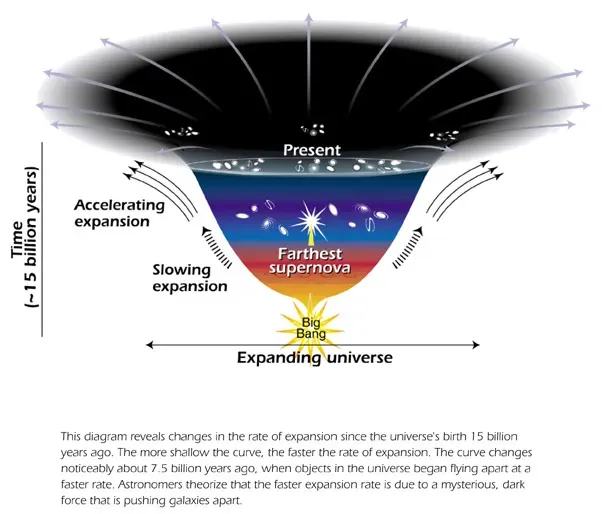
We are living through one of the most extraordinary moments in the history of science. The discovery that the universe is not just expanding but accelerating stunned the world in 1998 and earned its discoverers the Nobel Prize. Now, a quarter century later, we are discovering that even that revelation may have been incomplete. Dark energy, the engine of cosmic acceleration, may be weakening, evolving, perhaps even fading out entirely.
Whether the universe ultimately freezes in eternal expansion, tears itself apart in a Big Rip, or collapses in a dramatic Big Crunch, the answer will reshape everything we think we know about physics, time, and existence itself. Science is closing in on these answers faster than at any previous point in history, and the tools we have today make what is coming genuinely thrilling. So here is a thought to sit with: if the universe itself doesn’t know exactly where it’s headed, what does that say about the idea that anything in existence is fixed or permanent?
What do you think the universe’s final chapter looks like? Drop your thoughts in the comments.