
Reality feels solid and trustworthy… until an illusion rips that certainty right out from under you. In a split second, you’re staring at something that your eyes swear is moving, changing color, or warping in space, even though you know it’s just ink on a screen. That strange, slightly unsettling feeling isn’t a glitch; it’s your brain doing what it always does, just pushed into a corner where its usual shortcuts backfire.
Illusions don’t just entertain us; they expose the hidden rules your brain uses to build your world. They reveal which signals your brain trusts, which ones it ignores, and how much of what you “see” is actually a high-speed guess. Once you start noticing that, it’s hard to look at anything the same way again.
The Müller-Lyer Illusion: When Arrows Warp Your Sense of Size
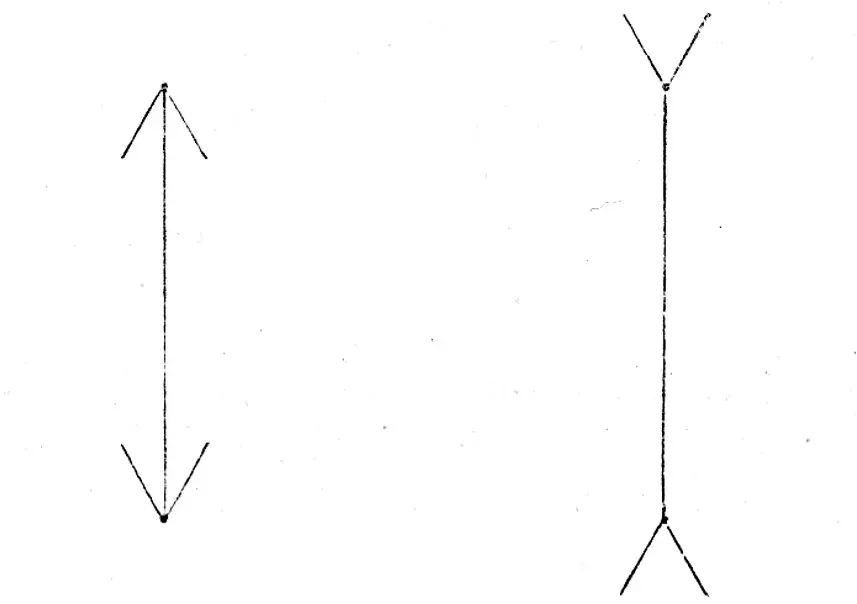
Picture two straight lines, perfectly equal, but with arrow tails pointing outward on one and inward on the other. Almost everyone insists that one line is longer, even after they measure it and discover they’re exactly the same length. It’s honestly a little annoying to be proven wrong by a couple of tiny arrowheads. Yet that frustration is exactly what makes this illusion so powerful.
Researchers think the Müller-Lyer illusion taps into how we usually interpret depth and perspective in the real world. Our brains are used to seeing corners, edges, and angles in three-dimensional space, so certain shapes quietly signal “closer” or “farther away.” When those cues are pasted onto flat lines, your brain applies the same rule and stretches or shrinks what you perceive, like a camera lens automatically correcting a scene even when you didn’t ask it to.
The Checker Shadow Illusion: Same Color, Different Worlds
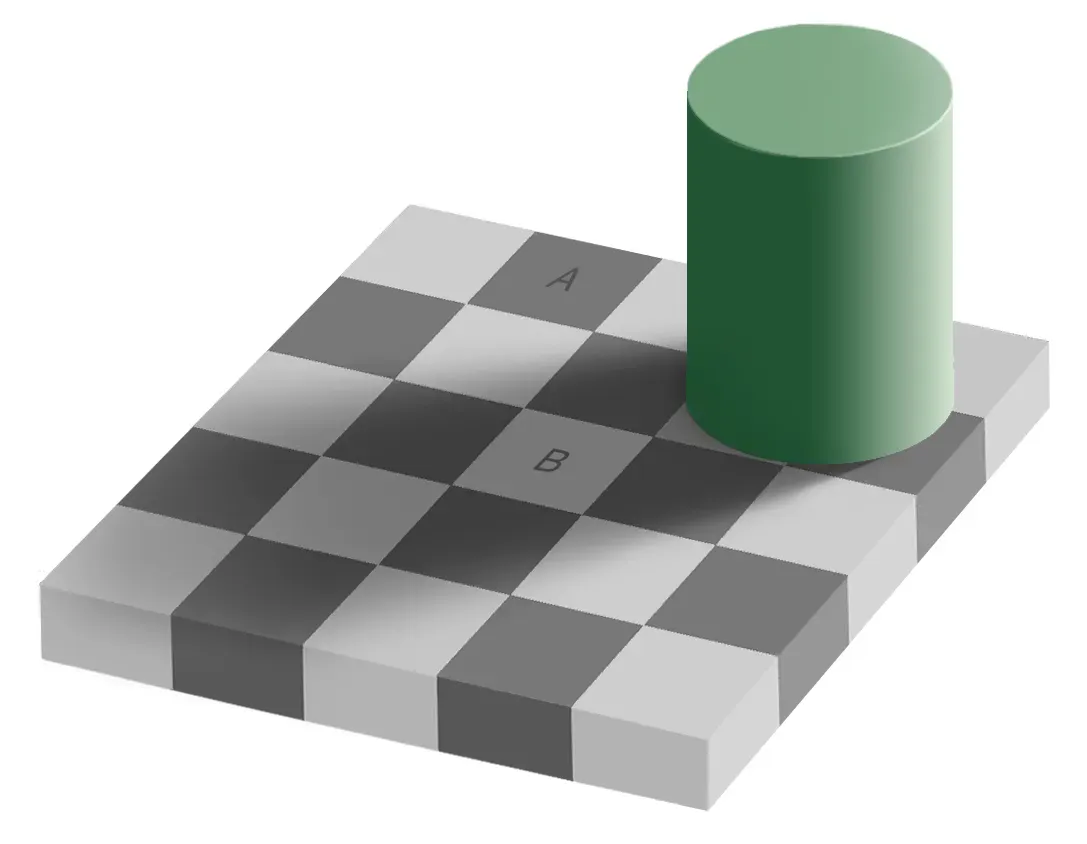
In the checker shadow illusion, you see a checkerboard partly covered by the shadow of a cylinder. One square outside the shadow looks dark; another square inside the shadow looks light. Side by side, they seem completely different in brightness. But if you isolate the two squares, you discover they’re the exact same shade. It feels like being told the sky you’re staring at is actually green.
Your brain does this because it cares less about raw light hitting your eyes and more about what that light “means” in context. It constantly compensates for shadows, highlights, and reflections so you can recognize objects under changing light. This is called lightness constancy, and it’s usually incredibly useful. The illusion hijacks that helpful feature, proving that your brain will happily distort the data if it thinks it’s correcting for a shadow that doesn’t really exist.
The Kanizsa Triangle: Seeing Shapes That Aren’t There
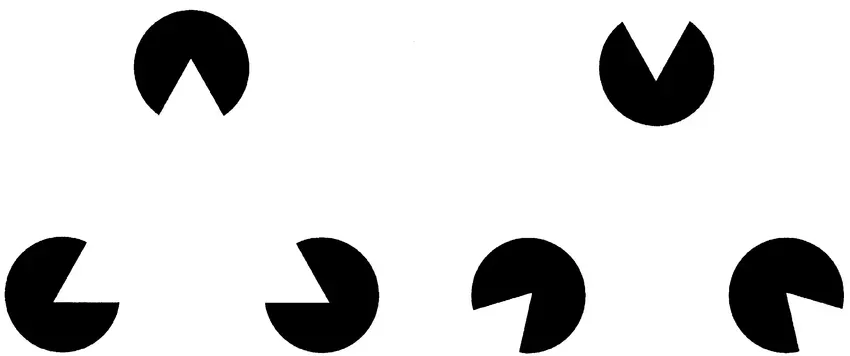
In the Kanizsa triangle, you see what looks like a bright white triangle sitting on top of three circles and another triangle. But if you look closely, there are no lines that actually draw that central triangle. Your mind fills in the missing edges, creating a vivid, crisp shape out of pure nothing. It’s like watching your brain doodle in the gaps without your permission.
This happens because your visual system is obsessed with patterns and wholes. It doesn’t like loose ends or broken pieces, so it “repairs” the image using a process sometimes called perceptual completion. Instead of just recording every pixel, your brain is constantly guessing the bigger picture, like someone finishing a sentence you’ve only half spoken. The Kanizsa triangle exposes that restless urge to impose order, even when there isn’t any.
The Spinning Dancer: A Flip Between Left and Right Brain Myths
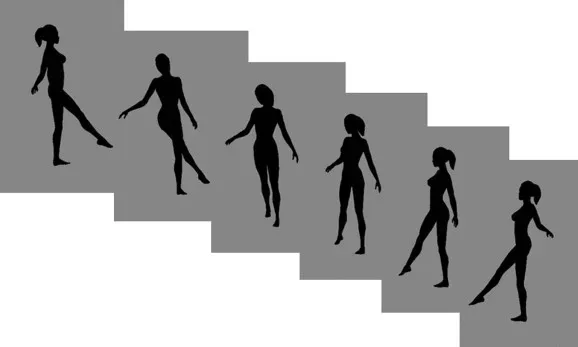
The spinning dancer illusion shows a silhouetted figure turning smoothly in circles. Some people instantly see her spinning clockwise; others swear she’s going counterclockwise. With a bit of effort, many can get her to flip directions in their mind, which feels a bit like controlling a mental toggle switch. For years, this illusion was wrongly used to “diagnose” whether you’re left- or right-brain dominant, which oversimplified how the brain really works.
What’s actually happening is a battle over depth perception from a flat, ambiguous image. The dancer is a two-dimensional figure without clear depth cues, so your brain has to decide which leg is in front and which is behind. Once it makes a choice, you see a stable direction of spin – until something nudges it to reverse. The illusion reveals how your brain builds three-dimensional motion out of incomplete information, and how surprisingly easy it is to flip that internal assumption with a tiny shift in attention.
The Ames Room: A Crooked Space That Shrinks People
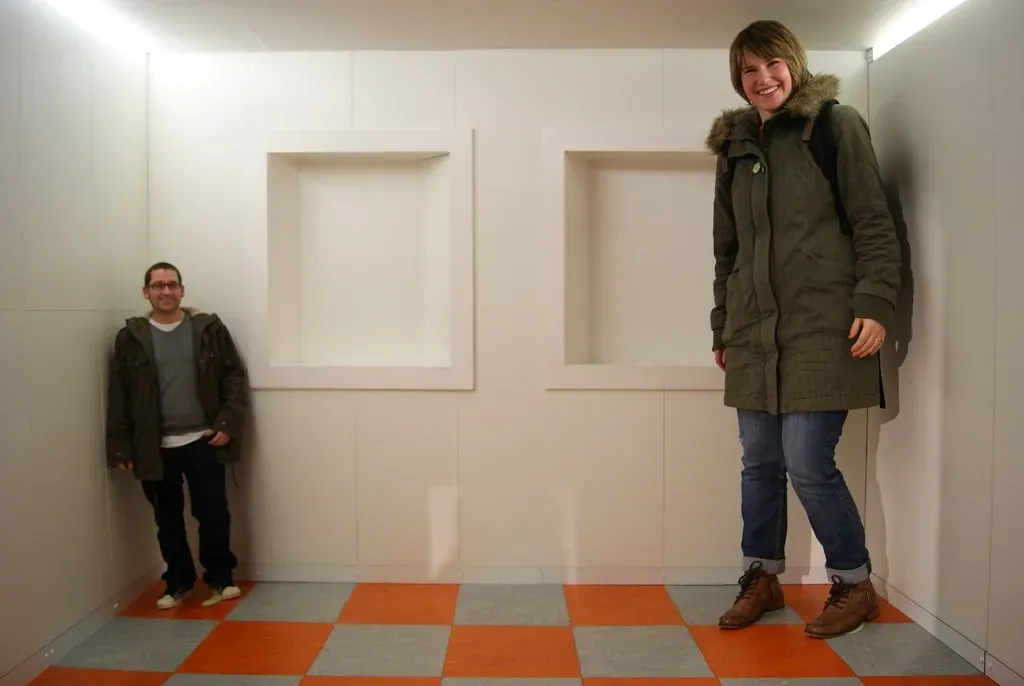
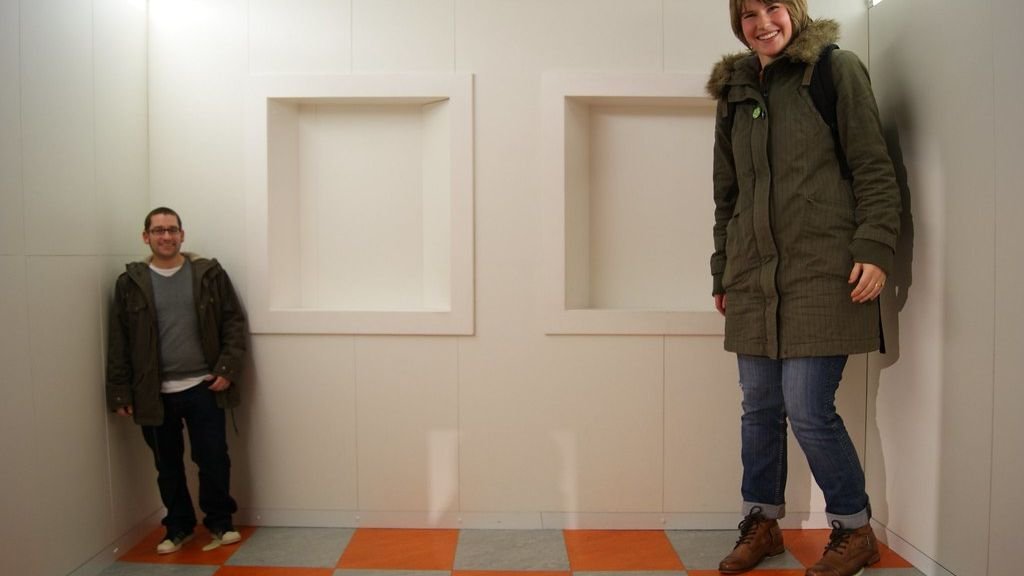
The Ames room looks like a normal rectangular room when viewed from a specific peephole. Two people stand on opposite corners, and one suddenly appears giant while the other looks miniature, even if you know they’re similar in height. Watching them trade places and magically grow or shrink feels like witnessing a low-tech special effect happening in real life, right in front of your eyes.
The trick lies in the geometry: the room is actually distorted, with one corner closer and lower than the other, and the walls are warped to maintain a fake rectangular appearance. Your brain assumes walls and floors in a room are straight and regular, so it forces the strange angles into that familiar template. Size perception depends heavily on distance, so when distance is misread, size appears to warp. The Ames room is a brutal reminder that if you control perspective, you can control what people think they see.
The Rubber Hand Illusion: Borrowing a New Body Part
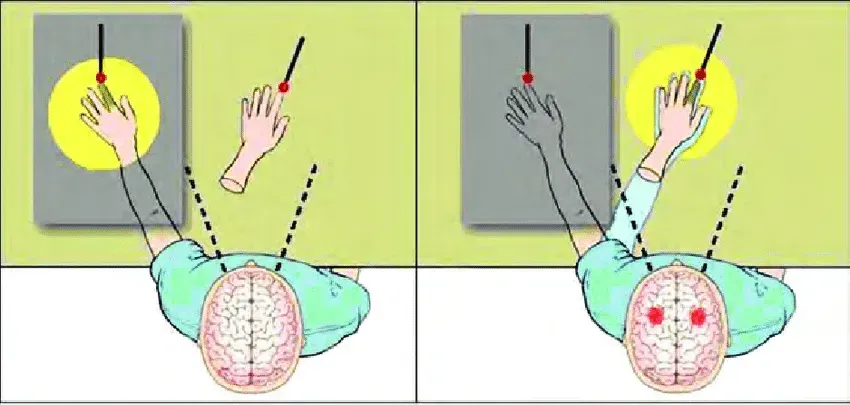
In the rubber hand illusion, a fake hand is placed in front of you while your real hand is hidden. Both the real and fake hands are stroked in the same way at the same time. After a while, many people start to feel as if the rubber hand is actually their own. When someone suddenly threatens or “injures” the fake hand, people often flinch or feel genuine discomfort, which is surprisingly unsettling when it happens to you.
This illusion shows how your sense of body ownership is more flexible than it feels. Your brain combines visual input, touch, and timing to decide which parts “belong” to you. When all those signals line up with the rubber hand, your nervous system updates its internal body map to include the fake limb. It reveals that your feeling of “this is me” is partly a story your brain constructs – and that story can be edited with the right sensory trick.
The McGurk Effect: When Your Eyes Change What You Hear

The McGurk effect is an audio-visual illusion where a recorded sound stays the same, but the mouth movements you see don’t match. When the sound “ba” is paired with a video of someone silently mouthing “fa,” many people report hearing something in between, like “fa” or “va,” even though the audio never changes. It’s like your ears are being overruled by your eyes.
This happens because the brain doesn’t treat senses separately; it fuses them into a single, coherent perception of the world. In speech, visual information from lips and facial movements is heavily weighted, especially in noisy environments. So when the sound and the mouth shape conflict, your brain compromises and invents a new perception that fits both sources poorly but feels consistent. The McGurk effect shows that hearing is partly seeing – and that your “reality” is a negotiated agreement between senses, not a simple readout from any single one.
Motion Aftereffect: Ghost Movement on a Still Screen
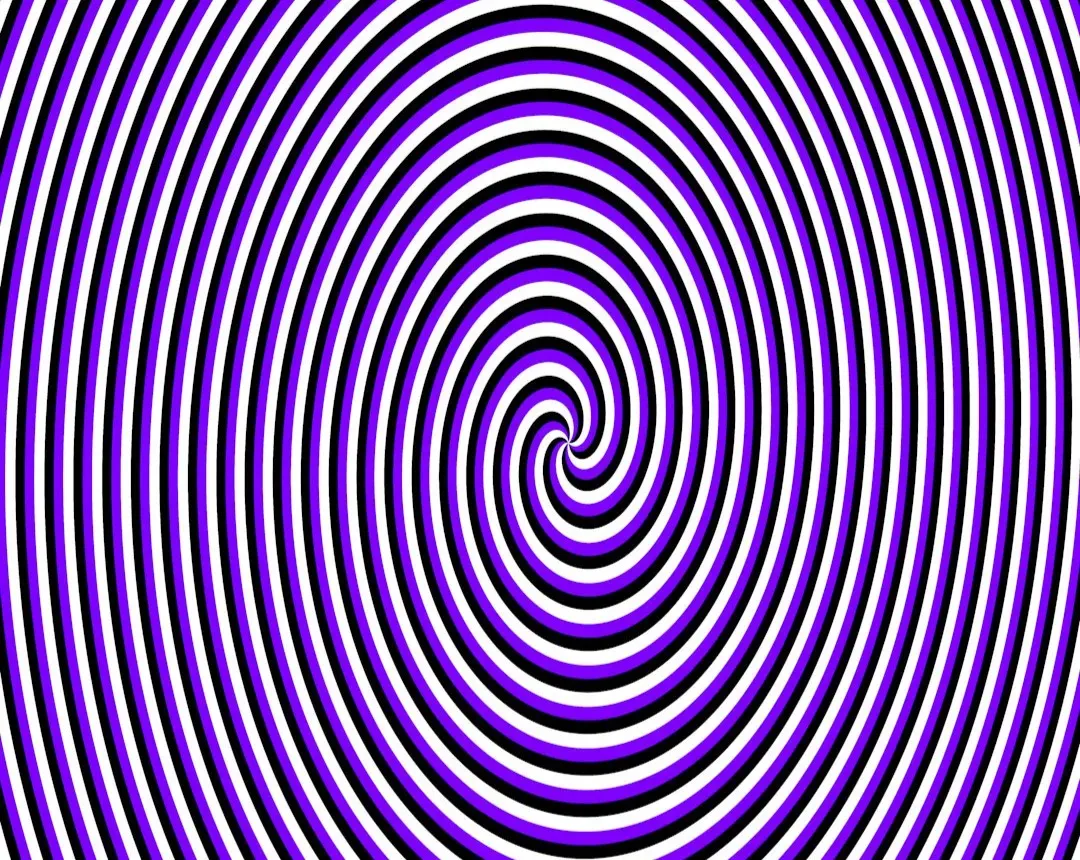
If you stare at a waterfall or a scrolling pattern for a while, then quickly look at a still image, the new image often seems to drift in the opposite direction. This is the motion aftereffect, and it can make a perfectly stationary picture feel like it’s slowly melting or sliding. It’s bizarre to experience your own brain insisting on motion where none exists.
The illusion comes from motion-sensitive neurons in your visual system that adapt when exposed to constant movement in one direction. After prolonged stimulation, those neurons temporarily reduce their firing rate. When you look away, the now-balanced system tips the other way, creating the impression of reverse motion. It’s like pushing on a door for a long time and feeling phantom pressure after you let go. The motion aftereffect reveals that your brain constantly calibrates itself, and that recalibration can briefly twist your sense of reality.
The Ebbinghaus Illusion: Size Depends on Your Surroundings
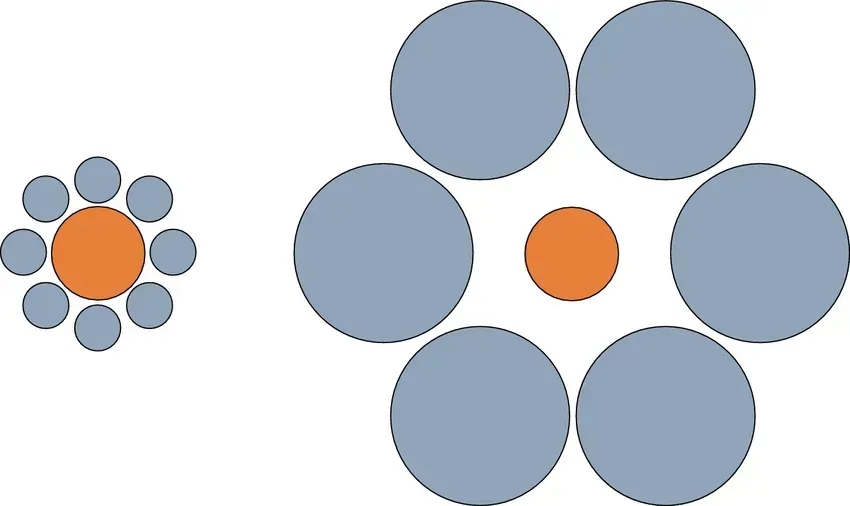
In the Ebbinghaus illusion, a central circle is surrounded by either larger or smaller circles. When you compare two central circles side by side – one surrounded by big circles and the other by small ones – they look different in size, even though they’re identical. It’s surprisingly hard to unsee the difference once your brain has committed to it.
This effect highlights how strongly context shapes perception. Your brain rarely judges size in isolation; instead, it compares objects relative to their neighbors. In everyday life, that shortcut helps you quickly estimate whether something is large, tiny, close, or far. But in the illusion, that same shortcut backfires and your brain mislabels the true size. It’s a quiet reminder that we almost never evaluate anything purely on its own; surroundings always skew the judgment, often more than we realize.
The Dress: How One Photo Broke the Internet’s Sense of Color
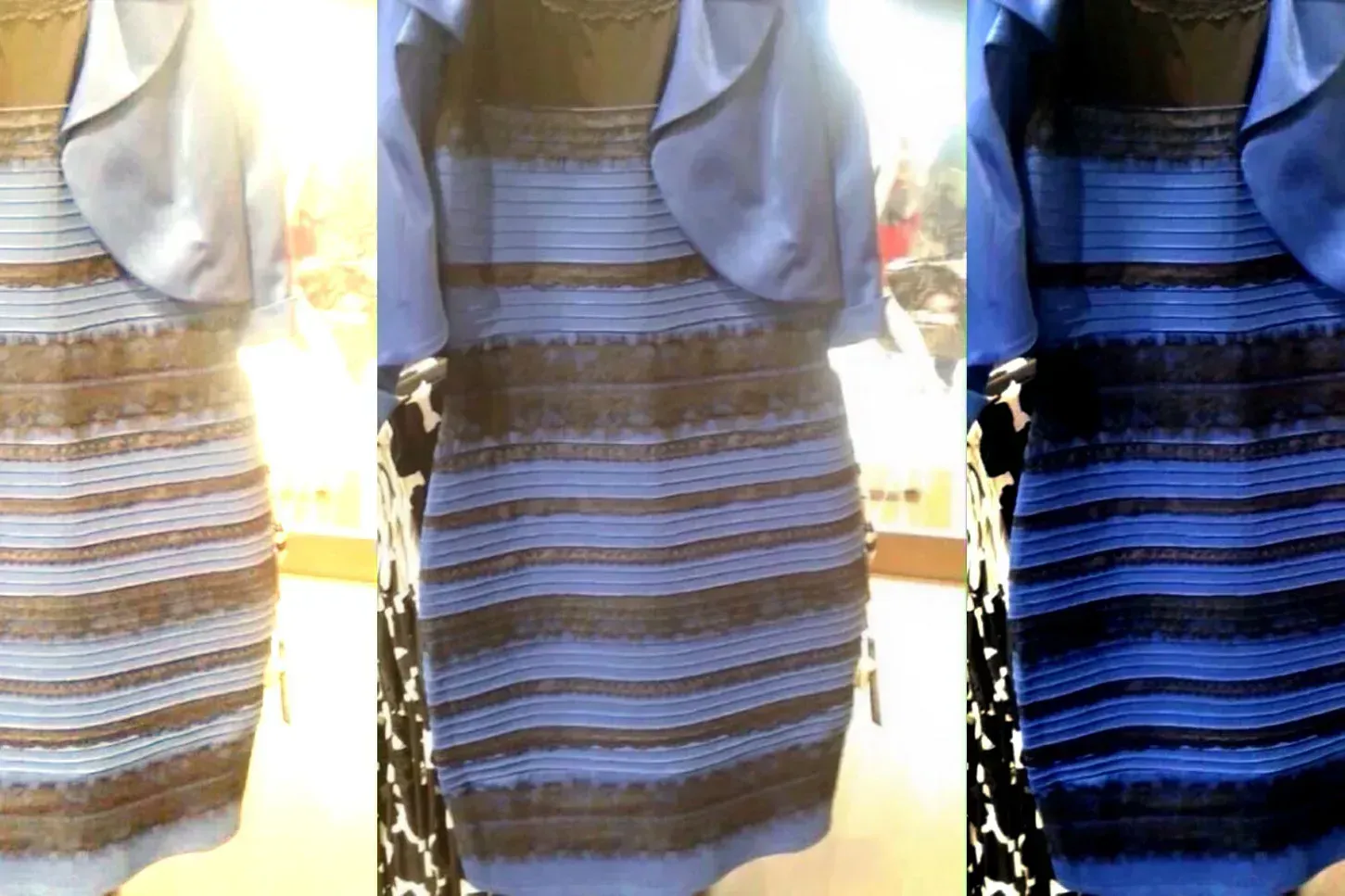
When the famous photo of “the dress” first spread online, some people were absolutely certain it was white and gold, while others insisted it was blue and black. The arguments were intense because everyone felt completely sure about what they were seeing. This wasn’t a trick image with hidden pixels; it was a normal photo that split people into two camps, exposing how personal and subjective color perception can be.
The key lies in how different brains interpret the lighting in the picture. Some people unconsciously assume the dress is in shadow, so their brains “subtract” bluish light and see the fabric as white and gold. Others assume it’s lit by warm indoor light, so they discount that and see blue and black instead. Color perception relies on an internal guess about illumination, and there’s no single correct guess in this ambiguous photo. The dress showed, on a massive scale, that even something as basic as color isn’t just out there in the world; it’s actively constructed in your head.
Illusions as Windows Into the Mind
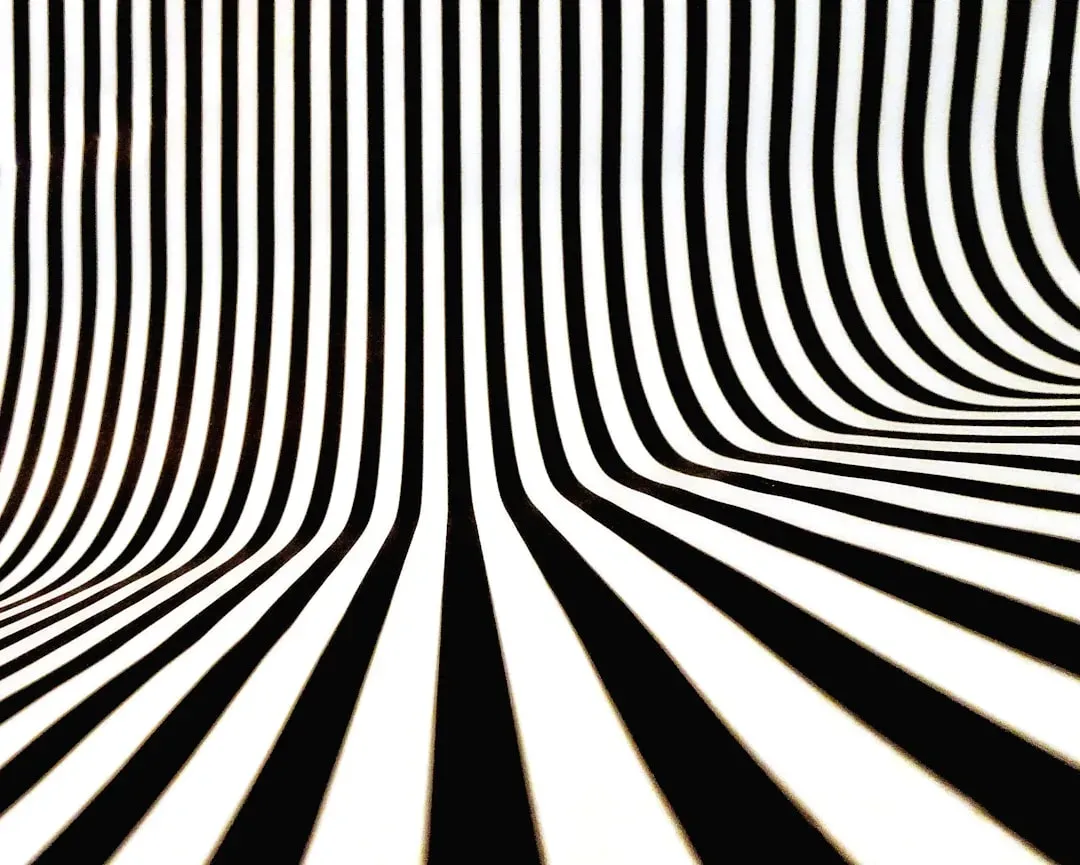
All these illusions, from warped lines to phantom motion and borrowed body parts, point to the same unsettling truth: you never experience raw reality. Your brain is constantly predicting, correcting, and editing, using shortcuts that work brilliantly most of the time and fail spectacularly in these edge cases. When they fail, you get a rare, vivid glimpse of the machinery behind the scenes.
Instead of treating illusions as party tricks, you can see them as windows into the hidden rules that shape every moment of your experience. They reveal that perception is less like a camera recording the world and more like a storyteller trying to make the best sense of incomplete, messy data. Next time an illusion bends your mind, you might wonder what else in your everyday life looks obvious and solid, but is really just your brain’s most convincing guess.