There’s something deeply human about looking up at the night sky and wondering how long all of this will last. Our planet feels permanent, solid, eternal – but science has a way of humbling that assumption pretty quickly. The question of Earth’s long-term habitability isn’t just philosophical anymore. Researchers are now putting real numbers on it, and those numbers are worth knowing.
What scientists have uncovered about Earth’s future is both fascinating and, honestly, a little sobering. It’s not a story of sudden catastrophe but something far more gradual – and in many ways, that makes it even more haunting. Let’s dive in.
The Clock Has Already Started Ticking
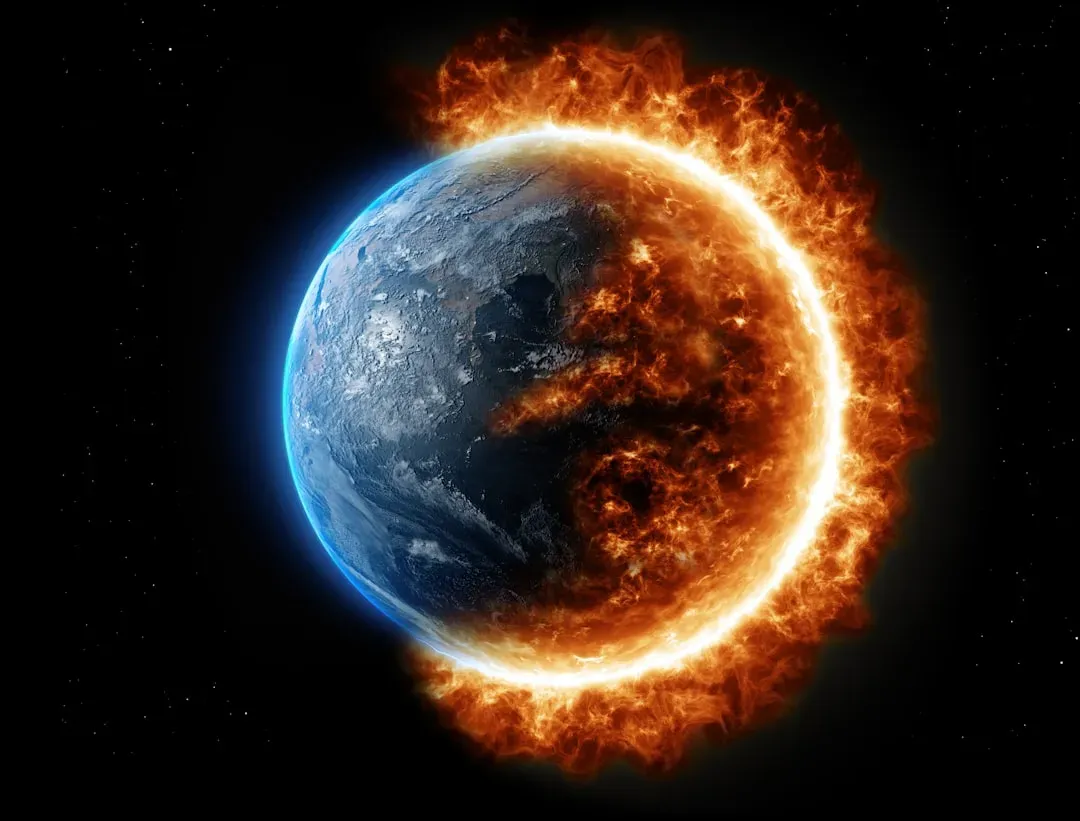
Here’s a surprising truth most people don’t think about: Earth’s habitability is not a fixed condition. It’s a slowly closing window, shaped by forces that operate on timescales so vast they barely register in human terms. The Sun, that life-giving star we casually take for granted, is gradually getting brighter and hotter over time.
This isn’t a dramatic, sudden shift. It’s subtle, almost imperceptible on any human timescale. Yet over hundreds of millions of years, that slow increase in solar luminosity begins to fundamentally reshape what’s possible on the surface of our planet.
The Sun Is Getting Too Bright for Our Own Good
Roughly about every billion years, the Sun increases its energy output by around ten percent. That doesn’t sound like much, and in the short term it isn’t. Over geological time though, it becomes the single most important driver of Earth’s long-term fate. Think of it like slowly turning up the heat on a stovetop – at some point, everything starts to boil.
As solar output increases, it intensifies surface temperatures, disrupts the carbon cycle, and gradually makes the conditions that support complex life harder and harder to sustain. Plants, animals, entire ecosystems – all of them depend on a narrow band of climate conditions that won’t last forever. The math here is genuinely sobering.
The Carbon Cycle Collapse Is the Real Danger
Most people think of climate change in terms of too much carbon dioxide. But in the far future, the bigger problem is actually too little. As the Sun warms the planet, silicate rocks weather faster and draw CO2 out of the atmosphere at an accelerated rate. Over time, atmospheric CO2 levels drop dangerously low.
This matters enormously because plants need CO2 to survive through photosynthesis. When concentrations fall below a critical threshold – roughly about 150 parts per million – most plant life simply cannot function. No plants means no oxygen production, no food chains, no complex animal life. It’s a cascade, and it begins with something as invisible as atmospheric chemistry.
Complex Life Has a Shorter Deadline Than You’d Think
Let’s be real – when people imagine Earth’s end, they usually picture something explosive. A massive asteroid, a runaway greenhouse effect, the Sun going supernova. The actual timeline is far less cinematic. According to research, complex multicellular life – the kind that includes humans, mammals, birds, and insects – may only have around five hundred million to perhaps a billion years left on this planet.
I know it sounds like an eternity. In cosmic terms, it genuinely isn’t. The universe is roughly fourteen billion years old. Five hundred million years is less than four percent of that. On a personal level, it’s hard to emotionally process, but the science makes a compelling case that complex life’s window is narrowing, even if it’s doing so with agonizing slowness.
Microbial Life Will Outlast Everything Else
Here’s the thing – not all life faces the same deadline. Microbial life, the single-celled organisms that were Earth’s original inhabitants, are far more resilient. They can tolerate extreme heat, extreme acidity, vanishingly low oxygen, and conditions that would instantly kill anything more complex. It’s almost poetic that life began with microbes and will likely end with them too.
Researchers suggest that microbial life could persist on Earth for well over a billion years after complex life has disappeared entirely. Deep underground, near hydrothermal vents, in hyper-saline environments – these microscopic survivors have already proven their staying power across four billion years of Earth’s history. They were here first, and they’ll be here last.
What This Means for the Search for Life Elsewhere
This research carries profound implications beyond just Earth’s own future. When astronomers search for potentially habitable exoplanets, they typically look for worlds in the so-called “habitable zone” around their star. But habitability isn’t just about distance from a star – it’s about where a planet is in its own biological timeline.
A planet that looks perfectly positioned might already be in the late stages of its habitable window, with CO2 levels already in freefall and surface conditions beginning to deteriorate. Alternatively, a world might appear marginally habitable but actually be in the early, stable phase of a multi-billion-year productive period. Understanding Earth’s own trajectory gives scientists a much sharper lens for evaluating which other worlds might genuinely be worth investigating.
The Bigger Picture: Earth’s Habitability Is Rare and Finite
It’s hard to say for sure how common Earth-like conditions are across the galaxy, but one thing seems increasingly clear: the specific combination of factors that makes Earth hospitable to complex life is both rare and temporary. Plate tectonics, a large stabilizing Moon, a protective magnetic field, a well-positioned Sun – these are not universal features of rocky planets.
Earth has had an extraordinary run. Nearly four billion years of life, punctuated by mass extinctions that somehow never erased life entirely. The planet has absorbed ice ages, asteroid impacts, and volcanic super-eruptions, and yet here we are. That resilience is remarkable. Still, the research reminds us that even extraordinary things eventually come to an end, and there’s something genuinely moving about understanding that the clock has always been ticking, quietly, beneath everything we know.
A Thought Worth Sitting With
Honestly, this kind of research doesn’t make me feel despair – it makes me feel something closer to awe. The universe is indifferent to our presence, and yet here we are, the only known species capable of figuring out the very timeline of our own planetary expiration. That’s extraordinary in its own right.
The real takeaway isn’t doom. It’s perspective. On human timescales, Earth remains wonderfully habitable. On cosmic timescales, we’re living in a brief, precious window of extraordinary conditions. Every generation that has ever lived and every generation that will live for millions of years to come exists within that window. That’s either terrifying or beautiful, depending on how you look at it.
What does it stir in you to know the planet’s clock is already running? Drop your thoughts in the comments – I’d genuinely love to hear how you process something as vast as this.