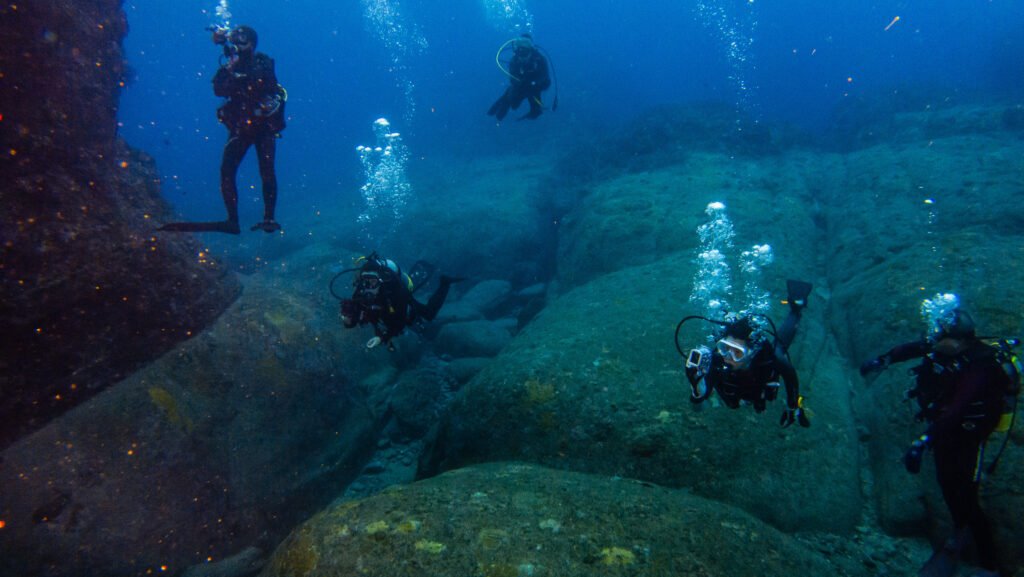

Somewhere beneath the surface of our oceans, lakes, and seas, entire civilizations are sitting in silence. Streets, temples, palace walls, and market squares – all of it swallowed by water, hidden from human eyes for thousands of years. It is one of archaeology’s most humbling truths: the past we think we know is almost certainly incomplete, because a significant portion of it lies submerged.
Beneath the waves of oceans and seas lie the silent ruins of once-thriving cities, frozen in time, shrouded in mystery, and steeped in history. These ancient underwater cities, long lost to natural disasters or rising sea levels, offer rare and tantalizing glimpses into early human civilizations. If that does not send a chill down your spine, honestly, nothing will. Get ready to dive deep – because what you are about to discover might just change how you see the ancient world entirely.
1. Thonis-Heracleion, Egypt – The City That History Almost Forgot
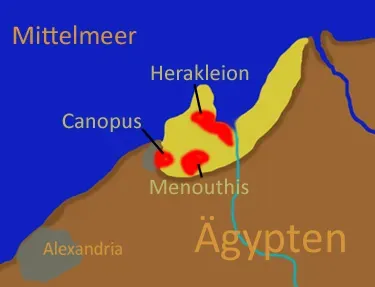
Imagine an entire city vanishing so completely that historians were not even sure it truly existed, only to have it confirmed resting on the seafloor more than a thousand years later. Thonis-Heracleion, once the main port of entry to Egypt, vanished for 1,200 years before its discovery in 2000. That is not a short absence. That is longer than the entire medieval period of European history.
Franck Goddio, who led the discovery, found important information on the ancient landmarks of Thonis-Heracleion, such as the grand temple of Amun and his son Khonsou. Archaeology also solved a historic enigma: the material revealed that Heracleion and Thonis were in fact one and the same city with two names – Heracleion for the Greeks, and Thonis for the Egyptians. You can picture traders, priests, and sailors going about their daily lives in a city that straddled two great cultures. The objects recovered from the excavations illustrate the cities’ beauty and glory – colossal statues, inscriptions and architectural elements, jewellery and coins, ritual objects and ceramics – a civilization frozen in time.
Recent phases of underwater missions documented new zones around the Amun temple complex and identified a Greek sanctuary dedicated to Aphrodite east of it. Finds from these missions include imported bronze and ceramic objects and Greek weapons, supporting the idea that Greek merchants and mercenaries operated within the city well before the Hellenistic era. The more researchers look, the more they find – and every discovery seems to add a new chapter to a story we thought we already knew.
2. Pavlopetri, Greece – The World’s Oldest Planned Underwater City
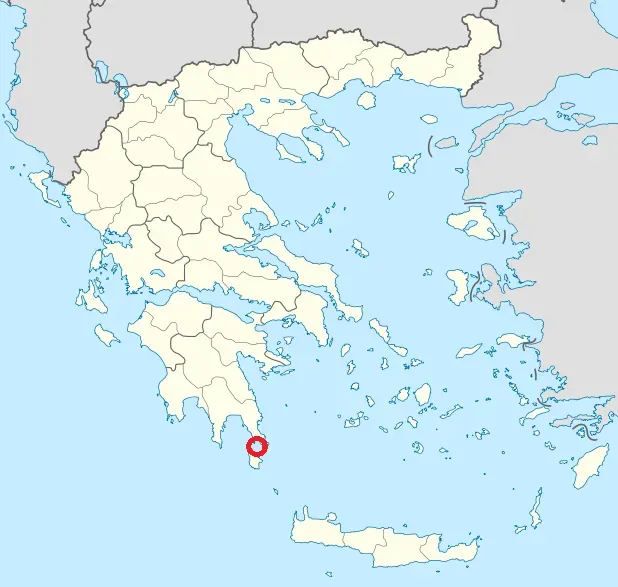
Here is something that genuinely floors me every time I think about it. In the clear coastal waters off the Peloponnese region of southern Greece lie the remains of what some archaeologists believe is the oldest submerged city in the world. The Bronze Age site, called Pavlopetri, was occupied between 2800 and 1200 B.C., centuries before the Classical Greek period. You are talking about a city that was already ancient when ancient Greece was still young.
First discovered in the 1960s, Pavlopetri has only recently been fully excavated, revealing a well-preserved network of stone-paved streets, rock-cut tombs, and ceremonial buildings. Archaeologists believe that one large, rectangular structure may have been a megaron – a Mycenaean great hall that was a precursor to Greek temples. Think of it like finding the blueprint for everything that came after. The ruins of Pavlopetri include roads, houses, and courtyards, showcasing advanced engineering, and its discovery has revolutionized the understanding of prehistoric architecture and urbanism. It is not a ruin in any rough sense – it is a fully planned urban environment, just sitting quietly on the seafloor.
3. Dwarka, India – Where Myth Meets the Seafloor
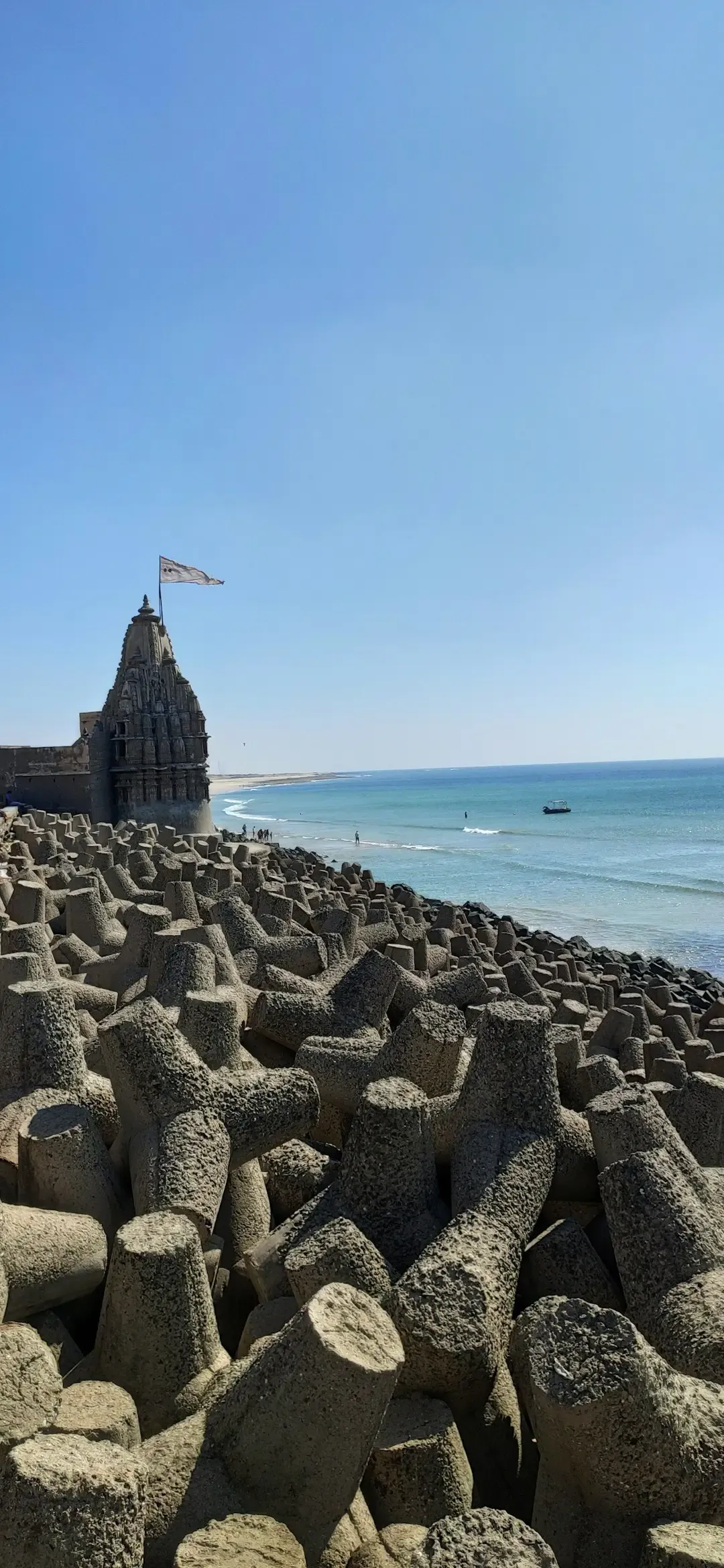
Of all the underwater cities on this list, Dwarka might be the one with the most extraordinary backstory. Dwarka, the god Krishna’s earthly home, is one of the four holiest Hindu sites, and Hindus believe that it dates back 10,000 years. Legend says that after Krishna died, his beloved city and its occupants sank into oblivion. For centuries, that was considered purely religious mythology. Then archaeologists started diving.
Archaeologists began searching for the city in the mid-20th century, and it wasn’t until the 1980s that they unearthed some promising ruins. Excavations revealed pillars, walls, pottery, streets, and anchors. In early 2026, the Archaeological Survey of India announced a renewed program of deeper land and underwater exploration at the site, including the use of modern technologies to probe previously unexamined offshore sectors. Officials say the upcoming investigations will focus on mapped underwater zones near Bet Dwarka and the Gomti Creek, where structural anomalies and stone features have been observed. This initiative marks a significant intensification of efforts to document the sunken portions of Dwarka’s urban footprint. The story is far from over.
4. Atlit-Yam, Israel – 9,000 Years of Forgotten Sophistication
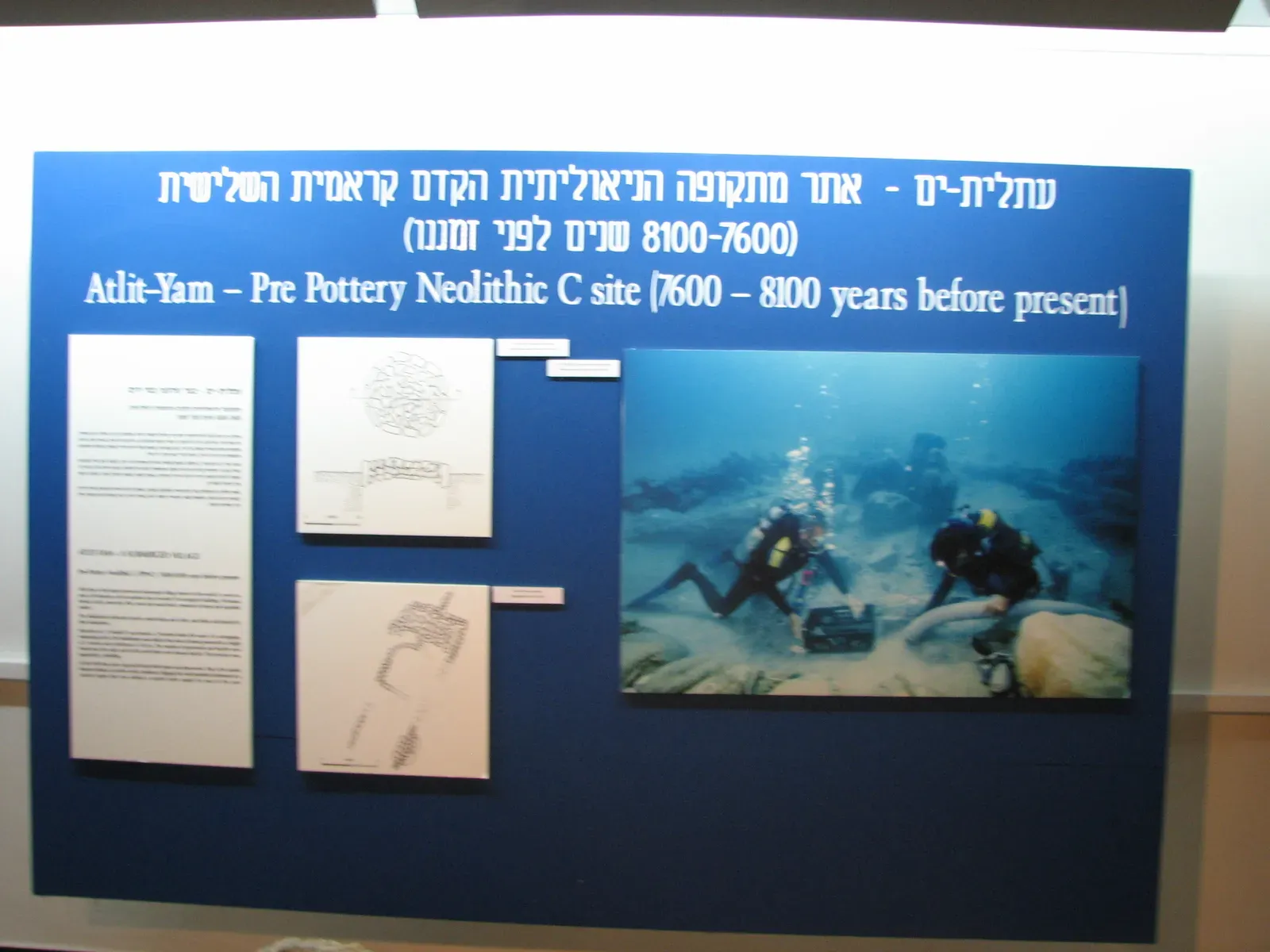
When you think of Neolithic people, you might picture something rough and rudimentary – small bands surviving day to day with barely any social structure. Atlit-Yam will completely shatter that image. Discovered in 1984 in the shallow coastal waters near Haifa, Israel, Atlit-Yam is a Neolithic site that was first settled around 6900 B.C., making it by far the oldest known human settlement found underwater. The inhabitants were farmers and fishermen who occupied a fertile stretch of land left behind by the receding Mediterranean Sea.
One of the most intriguing discoveries at Atlit-Yam was a circle of large, upright stones that some archaeologists compare to Stonehenge. The stones surround a natural spring and may have served a ceremonial purpose – as an open-air sanctuary where the ancient farmers made offerings for their agricultural bounty. A Stonehenge-like structure, beneath the sea, near Israel. Atlit-Yam reveals that early humans had complex societies and community planning long before the rise of cities like Babylon or Ur. The presence of agriculture, fishing, and ancestor worship shows an early shift toward settled life and religious practice. It is honestly one of the most underrated discoveries in the entire field of underwater archaeology.
5. The Gulf of Khambhat, India – The Find That Sparked a Global Debate
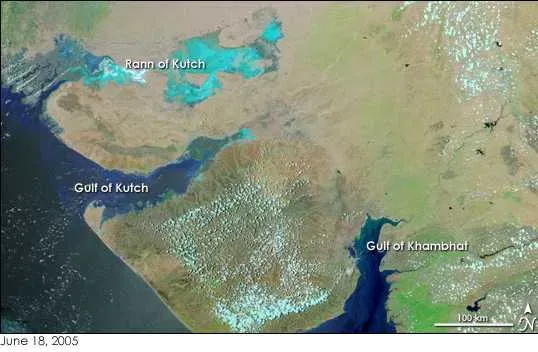
Few discoveries in recent memory have stirred up as much controversy as this one. In December 2000, a remarkable underwater discovery was made off the coast of Gujarat, India, also known as the Gulf of Khambhat. Marine scientists from India’s National Institute of Ocean Technology were conducting routine pollution studies when sonar imaging unexpectedly revealed what appeared to be geometric patterns on the seafloor. These formations included man-made structures resembling fortified walls, large rectangular sections, and grid-like layouts.
Through carbon dating technologies, researchers observed that samples taken from the archaeological site date around 7500 BCE, indicating that the structures could be around 9,500 years old. If proven accurate through further studies, it would predate even Harappa of the Indus Valley Civilization and many other known ancient civilizations. If accepted, the theory that this civilization could be twice as old as the Harappan, Sumerian, and Egyptian civilizations would necessitate a significant revision of our understanding of history. Additionally, this theory challenges established political and religious belief systems, which may have contributed to its suppression over the years. It is the kind of discovery that academia sometimes finds deeply uncomfortable.
6. Port Royal, Jamaica – The Wickedest City That Sank in Minutes
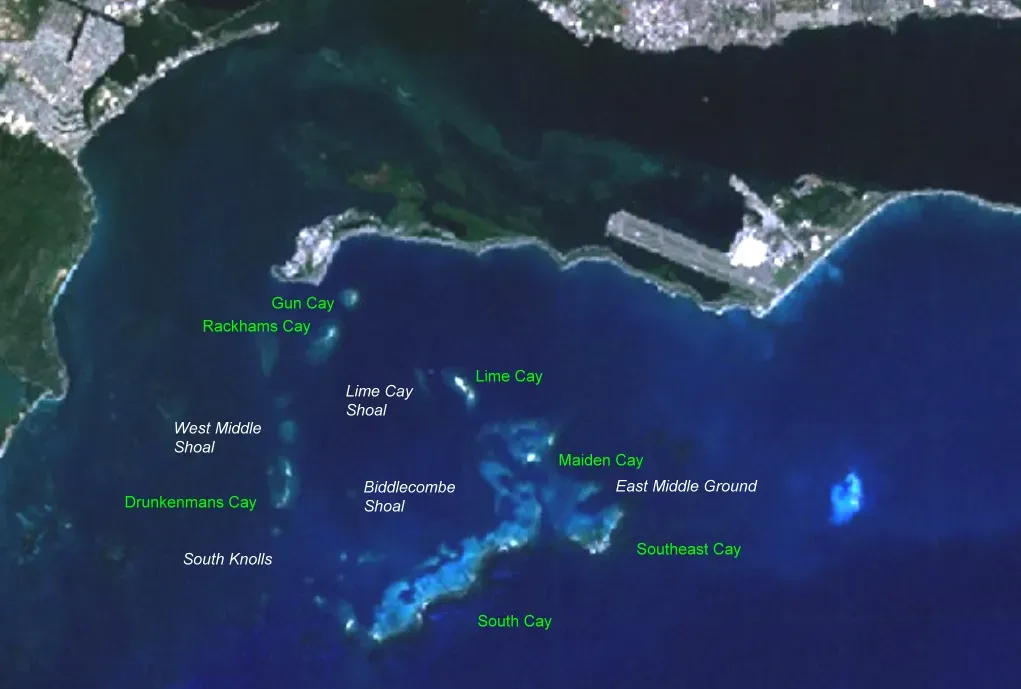
Let’s be real – if any city deserved a dramatic, cinematic ending, it was Port Royal. Once referred to as the wickedest place on earth, the pirate city of Port Royal in Jamaica was once the largest and richest in the Caribbean. The British captured Port Royal from Spain in 1655, and over the next 40 years it became one of the most important trading posts in the New World. Port Royal’s wealth came from the slave trade, as well as sugar and other raw materials.
A 7.5 magnitude earthquake shook the island and obliterated Port Royal, killing over 5,000 people. Those who survived reported that two-thirds of the city slid into the sea. It happened on June 7, 1692 – and it happened fast. The underwater ruins are remarkably well-preserved and have provided archaeologists with a detailed picture of daily life in the 17th century. In 2025, Port Royal was named a UNESCO World Heritage Site. That designation is a recognition that what lies beneath that Jamaican harbor is genuinely irreplaceable.
7. Baiae, Italy – Ancient Rome’s Sunken Party City
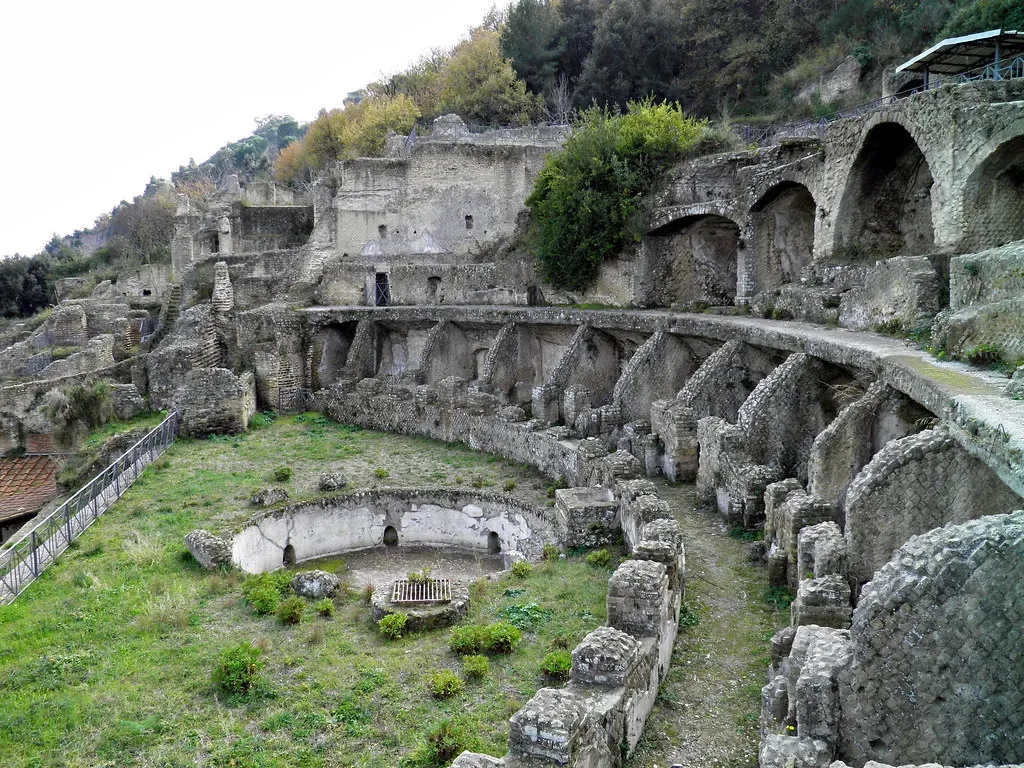
If ancient Rome had a Las Vegas, it was Baiae. Baiae is not far from Mount Vesuvius, and the entire region is known as the Phlegraean Fields, a highly active hydrothermal zone within a collapsed volcanic caldera. Ancient Romans flocked to Baiae for its relaxing thermal baths and constructed lavish villas to host hedonistic parties and conceal illicit love affairs. Emperors, senators, and poets all retreated here. It was the kind of place where rules felt optional.
Unlike the city of Port Royal, Baiae wasn’t struck down by a devastating earthquake, but was slowly swallowed up by the sea through a geological process called bradyseism, in which the land above a hydrothermal zone periodically rises or subsides. Two thousand years ago, the ornately decorated villas and baths of Baiae were at sea level, but now they’re 20 to 30 feet beneath the Gulf of Pozzuoli. In August 2025, archaeologists announced the discovery of a submerged Roman bathhouse with features consistent with Roman heating and bathing infrastructure. Together, these finds show Baiae isn’t just a known site – it’s still yielding new, headline-grade urban discoveries. Some cities refuse to give up their secrets easily.
8. The Cuban Underwater Structures – The Deepest Mystery of All
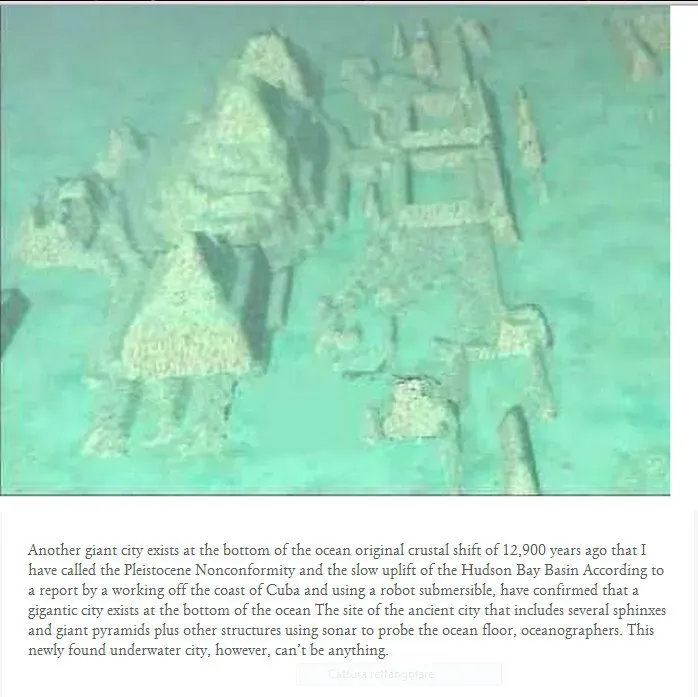
This one is the wildcard. Everything about it defies easy explanation, and honestly, that is what makes it so compelling. Sonar revealed geometric shapes and precise alignments on the seabed resembling streets, buildings, and pyramids. These weren’t random rock formations – they appeared to be the remnants of an ancient city, frozen in time beneath the waves. The lead researcher called it “a truly remarkable structure,” suggesting this could be evidence of a civilization more than 6,000 years old, older than the great pyramids of Egypt.
For the site to have once been dry land, the sea level would have needed to be about 2,300 feet lower than today. That last happened during the last Ice Age – over 50,000 years ago – long before humans were believed to have arrived in the Americas. This timing creates a major conflict. Mainstream archaeology holds that human development in this region is far more recent. Since the initial discovery, no extensive underwater expeditions have taken place. The cost and complexity of mounting a deep-sea archaeological mission near 2,300 feet deep are enormous. The mystery remains wide open – and that might be the most unsettling thing about it.
Conclusion: The Ocean Knows More Than We Do
Here is the thing about all eight of these places: they are not anomalies. Some are the result of cataclysmic earthquakes, others of slow sea level rise following the end of the Ice Age. Collectively, these sunken cities help archaeologists reconstruct ancient coastlines, trade networks, and migration patterns. Every one of them is a reminder that human civilization is far older, far more complex, and far more widely spread than our textbooks currently suggest.
Submerged cities like Pavlopetri and Dwarka suggest that myths may sometimes contain kernels of truth – whether symbolic or historical. That is a thought worth sitting with. The legends our ancestors passed down about great floods and lost cities were not simply the fantasies of uneducated minds – some of them may have been genuine, encoded memories of real events. The Submerged Prehistoric Archaeology and Landscapes of the Continental Shelf project has recently counted 2,600 such submerged sites in 19 countries. There are thousands of chapters of human history still sitting on the seafloor, waiting.
The ocean is not just a body of water. It is the world’s largest archive. How many more cities, how many more civilizations, how many more stories are still down there? That is the question that keeps archaeologists up at night – and honestly, it should keep the rest of us wondering too.