
Time. You experience it every second of every day, yet science keeps revealing that it is nothing like you think it is. It doesn’t flow at a steady pace. It bends, stretches, speeds up, and slows down. The universe itself had a beginning in time, and what we call the “present moment” is far stranger than any philosopher ever imagined.
Over centuries, brilliant and stubborn minds have torn apart what we thought we knew about time and rebuilt it into something far more wild and fascinating. From the inner workings of atoms to the fabric of the cosmos, these discoveries didn’t just update textbooks. They shook the very ground under our feet. So buckle up, because things are about to get wonderfully weird.
Einstein’s Theory of Relativity: Time Is Not What You Think It Is
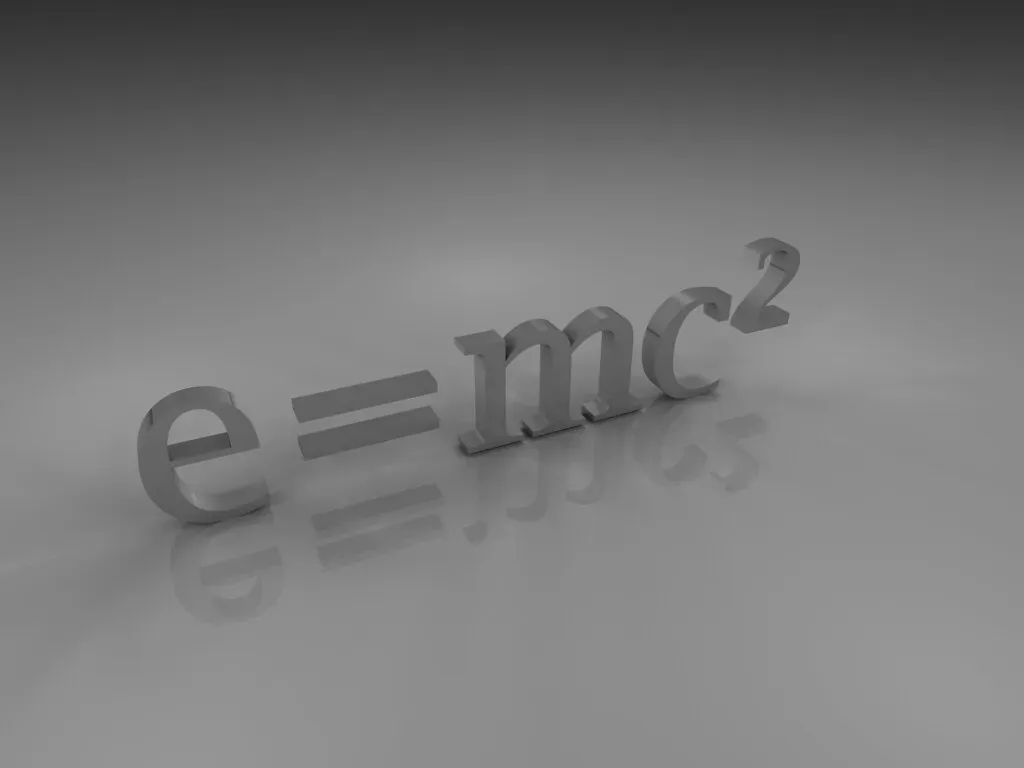
Here’s the thing – for most of human history, you would have assumed time ticks at the same rate everywhere in the universe. Reassuringly predictable. Steady as a metronome. Then came Albert Einstein, and everything unraveled in the best possible way. Einstein’s Special Theory of Relativity in 1905 and his General Theory of Relativity in 1915 revolutionized our understanding of space, time, and gravity. Before his work, scientists once thought that space and time were separate, and that the universe was merely an assortment of cosmic bodies arranged in three dimensions.
What Einstein showed was breathtaking in its simplicity and terrifying in its implications. Time dilation is the difference in elapsed time as measured by two clocks, either because of a relative velocity, a consequence of special relativity, or a difference in gravitational potential between their locations due to gravitational time dilation. In plain terms, that means you age more slowly the faster you move or the deeper you sit in a gravitational well. Astronauts aboard the International Space Station age slightly less than people on Earth due to their high velocities and the effects of time dilation. I know it sounds crazy, but this isn’t science fiction. It has been measured. It is real.
Gravitational Time Dilation: Gravity Actually Slows Time Down
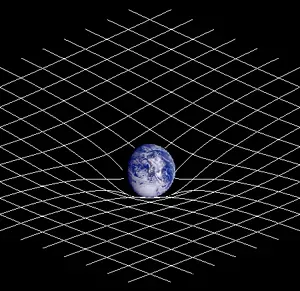
If Einstein’s special relativity was already mind-bending, his general relativity pushed things even further into the extraordinary. Gravitational time dilation is an actual difference of elapsed time between two events, as measured by observers situated at varying distances from a gravitating mass. The lower the gravitational potential, meaning the closer the clock is to the source of gravitation, the slower time passes. So a clock sitting at sea level ticks ever so slightly slower than a clock at the top of a mountain. Honestly, pause and sit with that for a moment.
The existence of gravitational time dilation was first confirmed directly by the Pound-Rebka experiment in 1959, and later refined by Gravity Probe A and other experiments. The effects aren’t just laboratory curiosities either. The GPS technology we rely on for navigation would not work if the satellites didn’t have clocks that account for the fact that time runs more slowly at the surface of Earth than at their position in orbit. The time difference is minor but would quickly accumulate, eventually rendering GPS useless. Your phone knowing where you are, right now, is partly a victory for Einstein’s theory of gravity.
The Atomic Clock: Redefining the Very Second You Live In
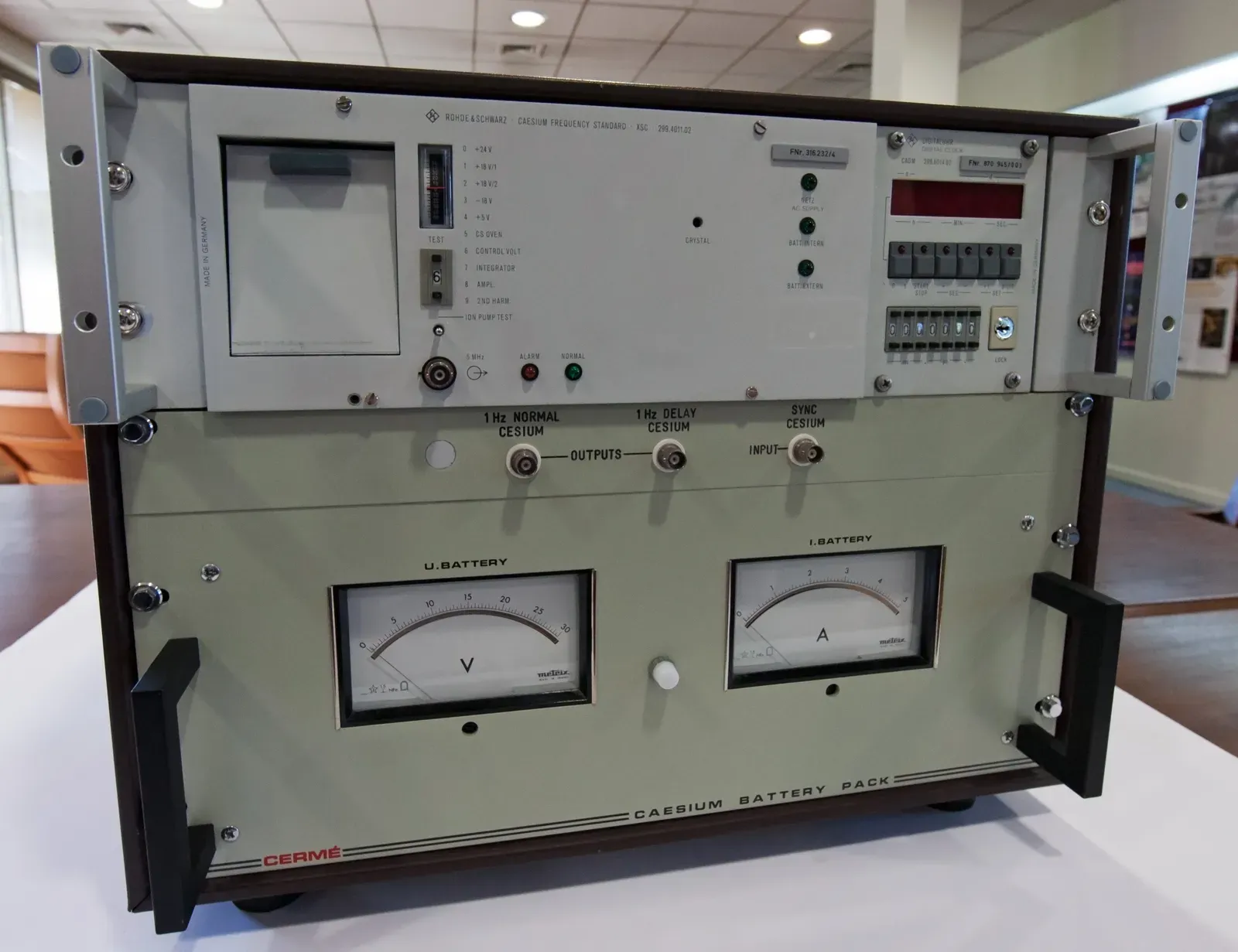
You probably don’t spend much time thinking about how a “second” is actually defined. Most people don’t. But in the mid-twentieth century, scientists were obsessed with it, and what they built changed civilization forever. The first caesium clock was built by Louis Essen in 1955 at the National Physical Laboratory in the UK. It didn’t just keep better time. Louis Essen’s invention changed the basis of timekeeping from the periodic motion of the Earth, as recorded by astronomers, to the periodic motion of electrons in cesium atoms as measured by physicists.
Before atomic clocks, the second was defined by dividing astronomical events, such as the solar day or the tropical year, into smaller parts. This permanently changed in 1967, when the SI second was redefined as the duration of 9,192,631,770 periods of the electromagnetic radiation that causes ground state transitions in the cesium atom. The new definition meant that seconds were now measured by counting oscillations of electric fields that cause atoms to change state, and minutes and hours were now multiples of the second rather than divisions of the day. Think of it like replacing a leaky hourglass with a perfect, never-failing, quantum heartbeat. Many technologies that we now take for granted, such as global navigation satellite systems, mobile telephones, and the “smart grids” that provide our electric power, depend upon atomic clock accuracy.
Cosmological Time Dilation: The Universe’s Own Clock Was Running Slowly
If you thought all the weirdness about time was confined to laboratories and satellites, think again. Scientists turned their gaze to the far reaches of the universe and found something astonishing. Scientists confirmed that just 1.5 billion years after the Big Bang, time ran five times slower than it does today, 13.8 billion years later. Five times slower. The early universe wasn’t just younger and hotter, it was literally operating in slow motion compared to now.
Using quasars as ticking cosmic clocks, scientists took a journey back in time, discovering that time progressed five times slower just after the Big Bang. This wasn’t just an abstract calculation. It was an observational confirmation of something Einstein’s physics had predicted all along. What is important about this observation is that the time dilation predicted by Einstein is a fundamental aspect of the universe, and it works just like the great physicist predicted. The idea that you can look at a distant quasar and essentially read the universe’s own clock from billions of years ago is, to me, one of the most staggering things science has ever accomplished.
Entropy, the Arrow of Time, and the Quantum World: Why You Can’t Unscramble an Egg
Here is something that rarely gets enough attention: the fundamental equations of physics work just as well going forward in time as they do going backward. Mathematically, a particle interaction looks identical whether you run it forward or in reverse. So why does time feel so relentlessly one-directional? Why can you remember yesterday but not tomorrow? The answer lives in entropy. The second law of thermodynamics appears to show why change happens in the first place. At the level of individual particles, the classical laws of motion can be reversed in time. The second law implies that change must happen in a way that increases entropy. This directionality is widely considered to impose an arrow of time.
What’s even more compelling is that recent research has been probing the deepest roots of this arrow. The second law of thermodynamics is among the most sacred in all of science, but it has always rested on 19th century arguments about probability. New arguments trace its true source to the flows of quantum information. In other words, the reason time flows in one direction might ultimately come down to quantum mechanics itself. The second law of thermodynamics states that the amount of entropy of any closed system can never decrease. It adds an arrow of time to everyday occurrences, determining which processes are reversible and which are not. It explains why an ice cube placed on a hot stove will always melt, and why compressed gas will always fly out of its container when a valve is opened. Simple examples, enormous consequences. The deeper you dig into time’s direction, the more you realize it may be woven into the very fabric of quantum reality.
Conclusion
What’s remarkable about all five of these discoveries is how each one peeled back a layer of certainty and replaced it with something far richer. You started with a universe where time was absolute and universal. Then it became relative, bendable by speed and gravity. Then the very second itself was redefined down to the atomic heartbeat. Then time at the cosmic scale turned out to be slowing down as you look further back. Finally, the direction of time itself turns out to be rooted in quantum entropy and information.
Time isn’t a river flowing at a steady rate. It’s more like a living landscape, shaped by mass, motion, and the deep laws of physics. Every time scientists think they have it fully mapped, another discovery opens a new corridor. It’s hard to say for sure where the next breakthrough will come from, but given the pace of quantum computing and cosmological observation, it may not be long before our picture of time changes yet again.
So here is a thought worth carrying with you: every clock you’ve ever glanced at, every “second” you’ve ever counted, rests on centuries of revolutionary science that is still unfolding. What does it feel like knowing that time itself is still not fully understood? Drop your thoughts in the comments.