
There is something almost unsettling about realizing that people who lived thousands of years before smartphones, satellites, and the internet somehow figured out solutions that still make modern engineers do a double take. We love to think of human history as a straight line of progress, always moving upward, always improving. Yet ancient civilizations keep proving that assumption spectacularly wrong.
From a self-healing building material sitting at the bottom of the Mediterranean Sea for two millennia, to a pocket-sized mechanical computer that tracked the entire cosmos, these inventions aren’t just impressive for their time. They’re flat-out impressive, full stop. Let’s dive in.
The Antikythera Mechanism: A Computer Built Before Computers Were Conceivable
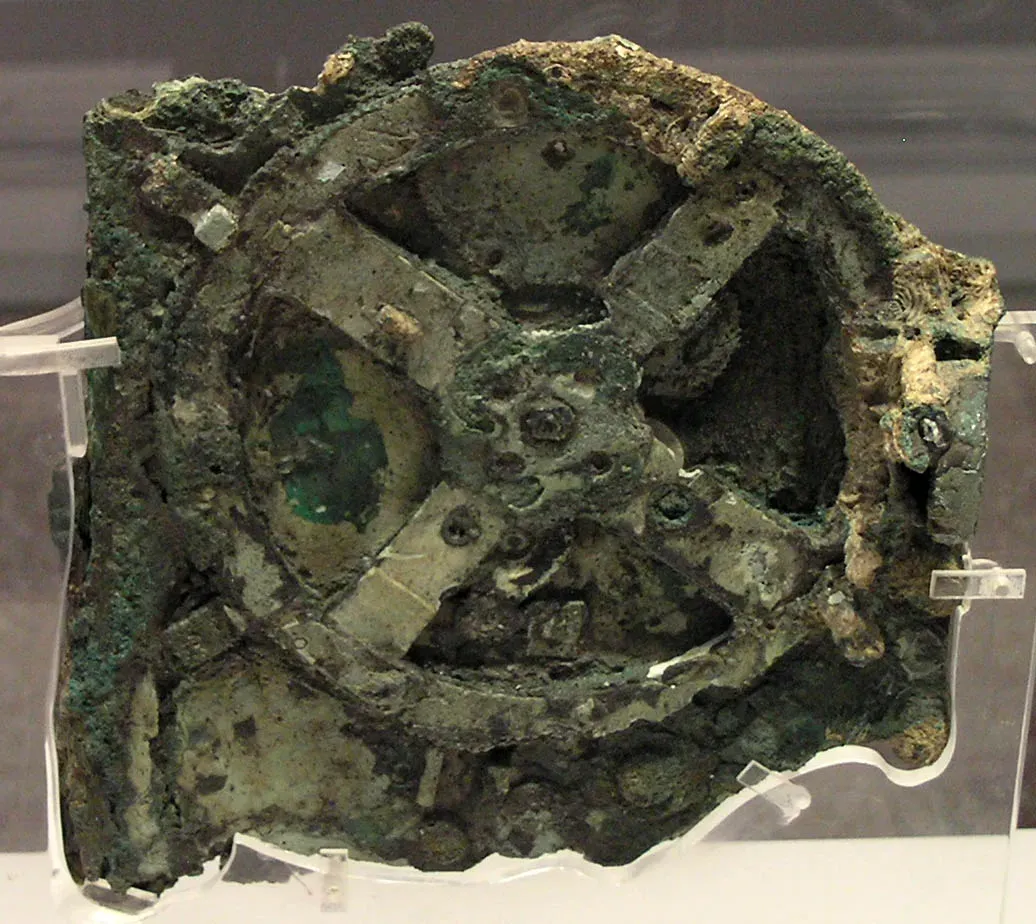
Honestly, when you first hear about this one, it sounds like science fiction. The Antikythera mechanism, dated to roughly 205 to 60 BCE, is understood as the world’s first analog computer, created to accurately calculate the position of the sun, moon, and planets. It is not a metaphor. It is not a rough approximation. It is a fully functional mechanical computing device built over two thousand years ago by Greek craftsmen using hand tools.
The bronze astronomical calculator was about the size of a shoebox, with dials on its exterior and an intricate system of 30 bronze gear wheels inside. It could be used to predict astronomical positions and eclipses decades in advance. It could also be used to track the four-year cycle of athletic games similar to an olympiad, the cycle of the ancient Olympic Games. Think about what you are using to schedule your next dentist appointment, then think about that.
The level of technology associated with this device is considered to be of an extremely high level, and its sophistication would not be equalled until the fourteenth century CE. That is a gap of over a thousand years. The device was discovered in a shipwreck off the Greek island of Antikythera by sponge divers in 1900, and it took researchers decades of increasingly advanced scanning technology to even begin understanding how it worked.
Once the purpose and technological sophistication of the device was understood, its existence amazed researchers, scholars, and historians who, until that time, held that this level of technology was not developed until the 14th century. I think the most mind-bending part is not what the device did, but what it implies: that someone had the intellectual framework to imagine it, plan it, and build it. Who was the person who first sketched this out on papyrus? We will never know.
Roman Self-Healing Concrete: A Building Material That Actually Gets Stronger Over Time

Here is the thing about modern concrete: it is everywhere, it holds up our entire civilization, and it starts crumbling after about fifty years. Modern concrete is typically made from Portland cement, a mixture of limestone, clay, sand, chalk, and other ingredients, and it starts to crumble in as little as 50 years. The Romans somehow built things out of concrete that are still standing after two thousand years of wave action, earthquakes, and weather.
The ancient Romans were masters of engineering, constructing vast networks of roads, aqueducts, ports, and massive buildings, whose remains have survived for two millennia. Many of these structures were built with concrete: Rome’s famed Pantheon, which has the world’s largest unreinforced concrete dome and was dedicated in 128 CE, is still intact, and some ancient Roman aqueducts still deliver water to Rome today. Let that sink in for a moment.
Scientists from MIT and other institutions have uncovered an ingredient called quicklime used in ancient Roman techniques for manufacturing concrete that may have given the material self-healing properties. For a sample using ancient mixing techniques, the cracks had completely healed within two weeks, and water no longer flowed through the material. The lime clasts had aided in a chemical process that resulted in self-healing. You read that correctly. The concrete healed itself.
When saltwater comes into contact with ancient Roman concrete, a chemical reaction happens between the Pozzolana, lime, and saltwater to create a rare crystal called Tobermorite. Roman scholar Pliny the Elder described the concrete in contact with salt water as “a single stone mass, impregnable to the waves and every day stronger.” During its production, less carbon dioxide is released into the atmosphere than any modern concrete production process. It is stronger, it heals itself, and it is greener. We have been doing concrete wrong for centuries.
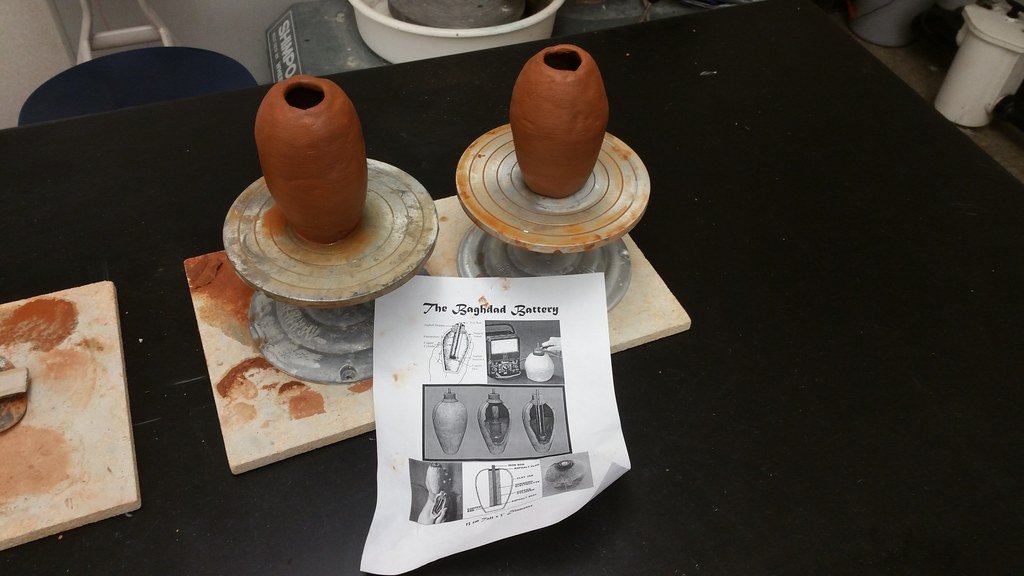
The Baghdad Battery: Did Ancient Mesopotamia Discover Electricity?
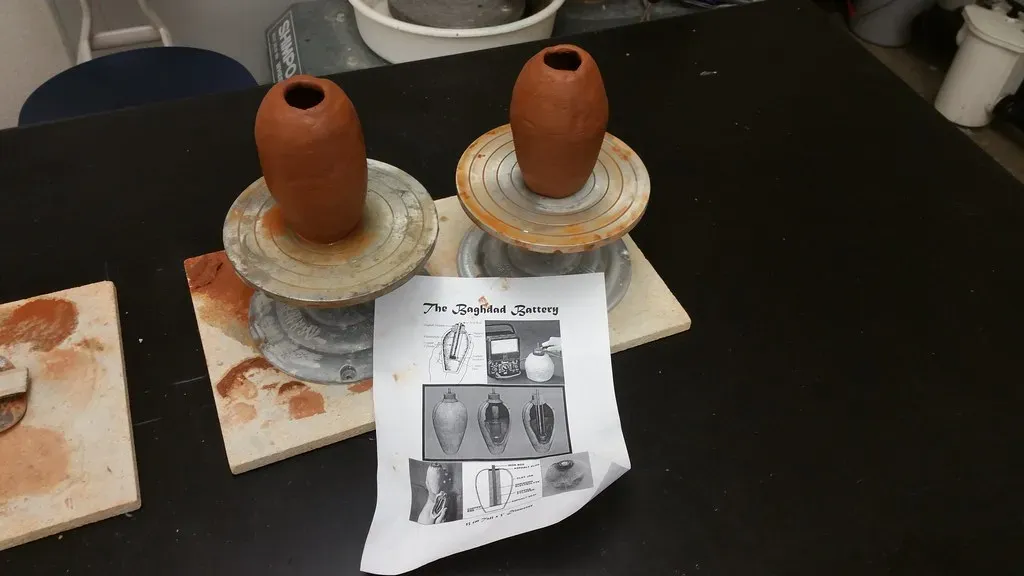
Few ancient artifacts generate as much debate as this one. The Baghdad Battery is the name given to an artifact consisting of a ceramic pot, a tube of copper, and a rod of iron fixed together with bitumen. It was discovered in present-day Khujut Rabu, Iraq, close to the ancient city of Ctesiphon, and is believed to date from the Parthian period, roughly 150 BC to 223 AD. Its purpose, after decades of study, remains genuinely unresolved.
The artifact dates to the Parthian period and consists of a clay jar containing a copper cylinder and an iron rod. When filled with an acidic substance like vinegar or fermented grape juice, the jar can generate a small electric current. König initially theorized that the device was used for electroplating gold onto silver objects, a technique known to have existed in antiquity. The Baghdad Battery remains a contentious topic in archaeological circles, with established academia viewing it with skepticism as more likely a mundane artifact than an ancient electrical device. It’s hard to say for sure what the truth is, but the possibility alone is extraordinary.
Damascus Steel: The Lost Blade Technology That Modern Metallurgy Still Can’t Fully Replicate

Damascus steel swords originated in the Middle East during the 9th century and were renowned for their appearance as well as their durability, being multiple times stronger and sharper than the Western swords used during the Crusades. Their name, derived from the Arabic word for “water,” references not only the Syrian city from which they hailed but also the flowing pattern that adorns their surface. You can imagine how European knights felt when they first encountered blades that made their own swords look like kitchen knives.
This pattern was created during a unique forging process where small ingots of wootz steel sourced from India, Sri Lanka, or Iran were melted with charcoal and cooled at an incredibly slow rate. The demand for Damascus steel remained high for centuries, but gradually diminished as swords were replaced with firearms in armed conflicts; by 1850, the secrets of its production process appeared lost. Damascus steel, wielded by Islamic warriors during the Crusades, could flex back unscathed after bending 90 degrees. Even with today’s scientific advancements, modern scientists are as perplexed about the exact recipe of Damascus steel as the European crusaders were centuries ago. A technology that has been lost and still baffles modern science. Think about that.
Zhang Heng’s Seismoscope: China’s Ancient Earthquake Detector
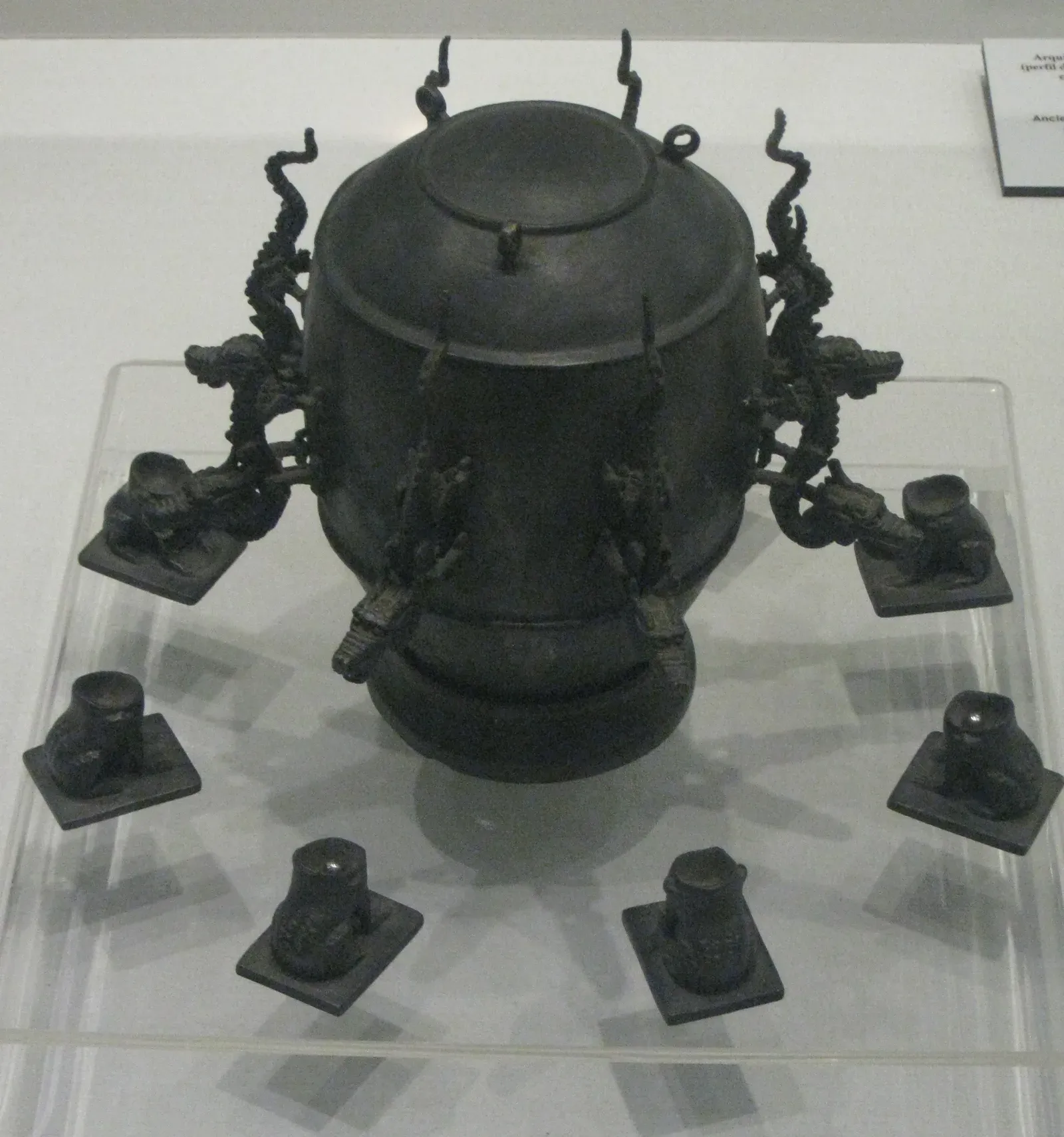
Long before the digital sensors and satellite networks we rely on today, a Chinese mathematician named Zhang Heng built a device in 132 CE that could detect earthquakes happening hundreds of miles away. The first tool used to detect earthquakes was likely this invention made by the Chinese mathematician Zhang Heng. Beautifully decorated, the vessel was likely made around 132 AD. Scientists claim that this instrument was capable of detecting earthquakes in a four-hundred-mile radius, even though the earthquake was not felt in the vicinity of the seismoscope. Let that distance sink in for a moment.
The first seismoscope was invented by Zhang Heng, the Leonardo da Vinci of China, in the year 132. Until now, scientists have not been able to unveil the mechanism that allowed the seismoscope to detect earthquakes beyond the range of thousands of kilometers remotely. Was it as simple as a pendulum-based system or something more complex? Even after multiple reconstruction attempts, the exact mechanism behind the ornate Zhang Heng seismoscope is still a mystery today. So we have a device from nearly two thousand years ago that we still cannot fully explain. That is not a comforting thought for modern engineering pride.
The Roman Aqueducts: Gravity-Powered Engineering That Still Functions Today
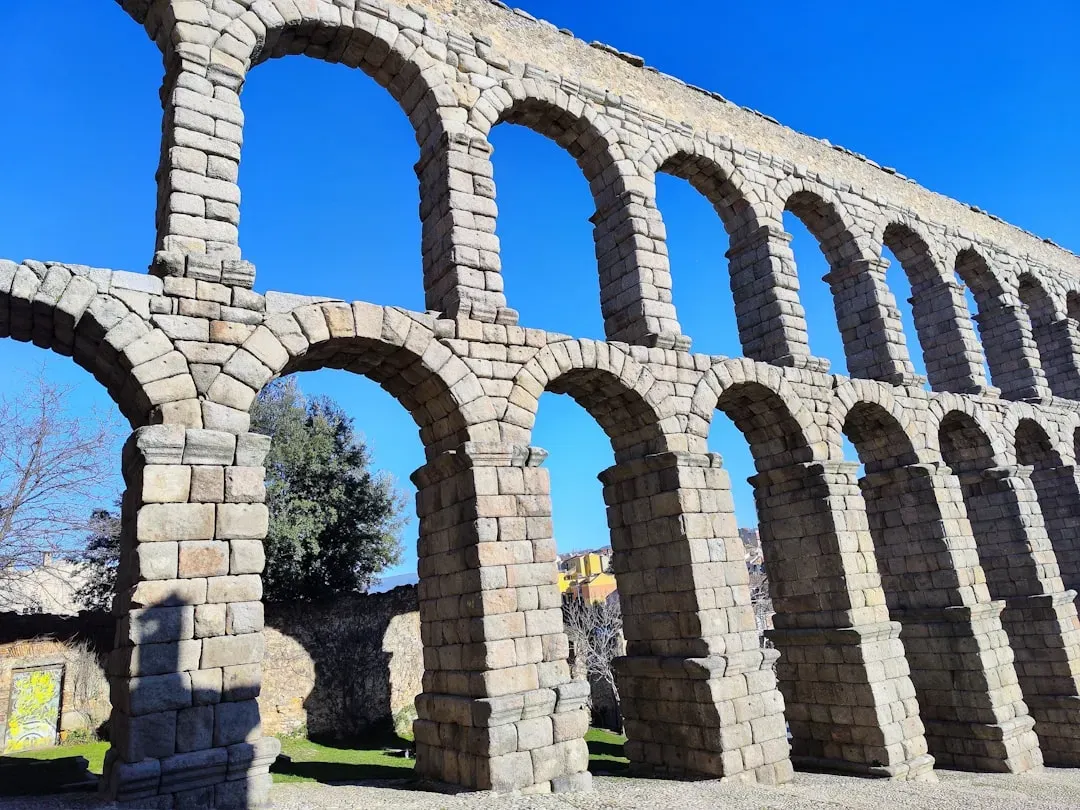
You might think of infrastructure as a modern obsession. Pipes, drainage systems, clean water delivery. These feel like contemporary achievements. The Roman aqueducts stand as enduring symbols of ancient engineering prowess. These monumental structures transported fresh water across vast distances, relying on gravity, carefully calculated gradients, and the strength of arches. Their design enabled cities to thrive and set the foundation for modern water infrastructure. No pumps. No electricity. Just an almost supernatural understanding of physics and terrain.
Some ancient Roman aqueducts still deliver water to Rome today. That sentence alone deserves a full stop and a moment of silence. Rome began as a modest village along the banks of the Tiber on the Italian Peninsula around 750 BC and expanded into one of history’s largest empires, spanning massive swaths of the Mediterranean and beyond. As they extended their authority, the Romans often appropriated the ideas and inventions of those they encountered. Yet when it came to water engineering, they did not borrow. They innovated in ways that no civilization had managed before, building a network that would take modern engineers enormous effort to match even with today’s tools.
The Ancient World Was Smarter Than We Give It Credit For
There is a subtle but persistent arrogance in how we often think about ancient history. We picture people in the past as primitive, reactive, stumbling forward by accident. The evidence, though, tells a very different story. Archaeological excavations throughout the world reveal that, once in a while, ancient civilizations developed inventions that were decades if not centuries ahead of their time.
While many ancient super technologies, from Roman concrete to Damascus steel, were once lost, they have since been recreated by present-day researchers. The fact that it takes modern science this much effort to reverse-engineer solutions that ancient people arrived at through observation and creativity should give all of us a healthy dose of humility. These weren’t lucky accidents. They were deliberate, brilliant acts of human ingenuity.
The Antikythera Mechanism sat on the ocean floor for almost two thousand years before anyone understood what it was. Roman concrete has been bathed in seawater for two millennia and is still growing stronger. These inventions survived because they were, in the truest sense of the word, extraordinary. The next time someone dismisses ancient history as primitive, you have six very compelling reasons to push back. Which of these six surprised you most? Drop your thoughts in the comments, because this is exactly the kind of conversation history deserves more of.