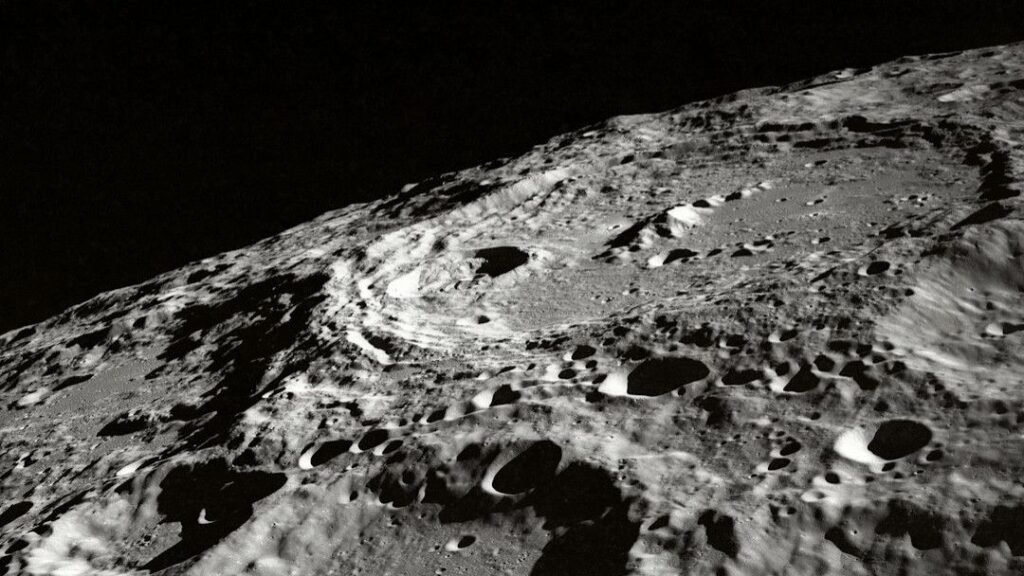
For decades, one of the Moon’s biggest secrets has been hiding in plain sight – locked inside tiny rock samples sitting in NASA storage facilities. Scientists have long puzzled over why the Moon, which today has virtually no global magnetic field, somehow left behind rocks that appear to have been magnetized billions of years ago. It’s a contradiction that has frustrated researchers for as long as the Apollo samples have existed.
The deeper you dig into this mystery, the stranger it gets. New research is now shedding fresh light on exactly how and when the Moon may have generated its own magnetic field – and the findings are reshaping everything we thought we knew about early lunar history. Let’s dive in.
The Moon’s Magnetic Past Is Far Stranger Than We Imagined
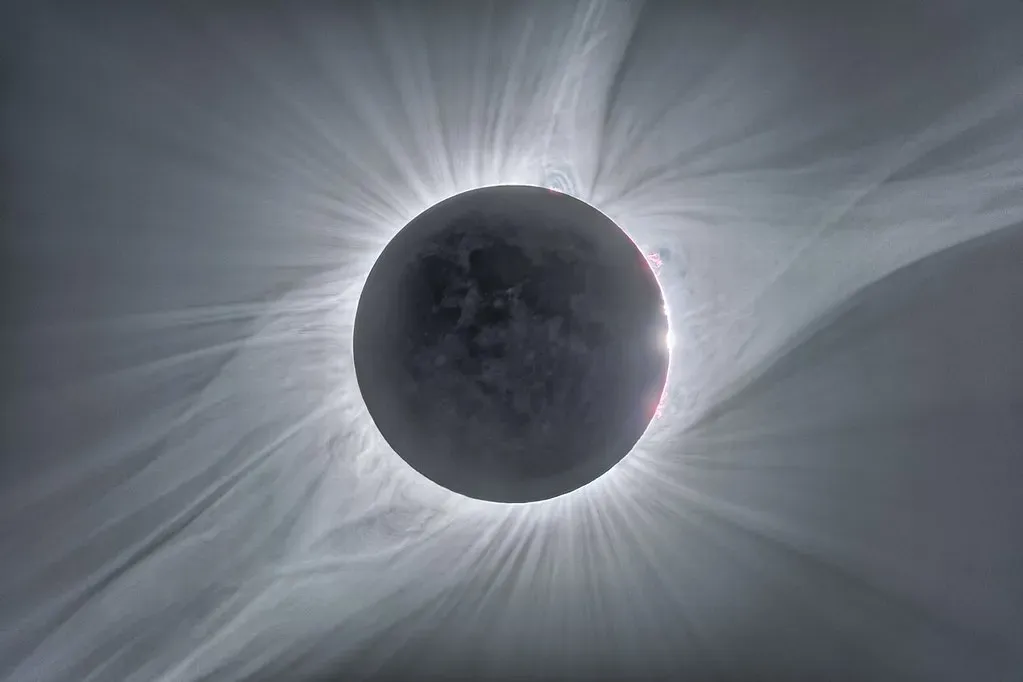
Here’s the thing most people don’t realize: the Moon today is essentially magnetically dead. It has no global magnetic field worth speaking of, yet Apollo-era rocks collected between 1969 and 1972 carry unmistakable signatures of ancient magnetization. That’s like finding a cold fireplace with charred wood and somehow concluding a fire burned there long ago – which is exactly what scientists are now piecing together.
Researchers analyzing these samples have found magnetic recordings embedded in the mineral grains of the rocks themselves. These tiny magnetic fingerprints suggest the Moon once had a functioning dynamo – a churning, liquid metallic core generating a magnetic field similar to what Earth has today. The question was never really “did it exist?” but rather “how long did it last, and how strong was it?”
What Apollo Samples Actually Tell Us
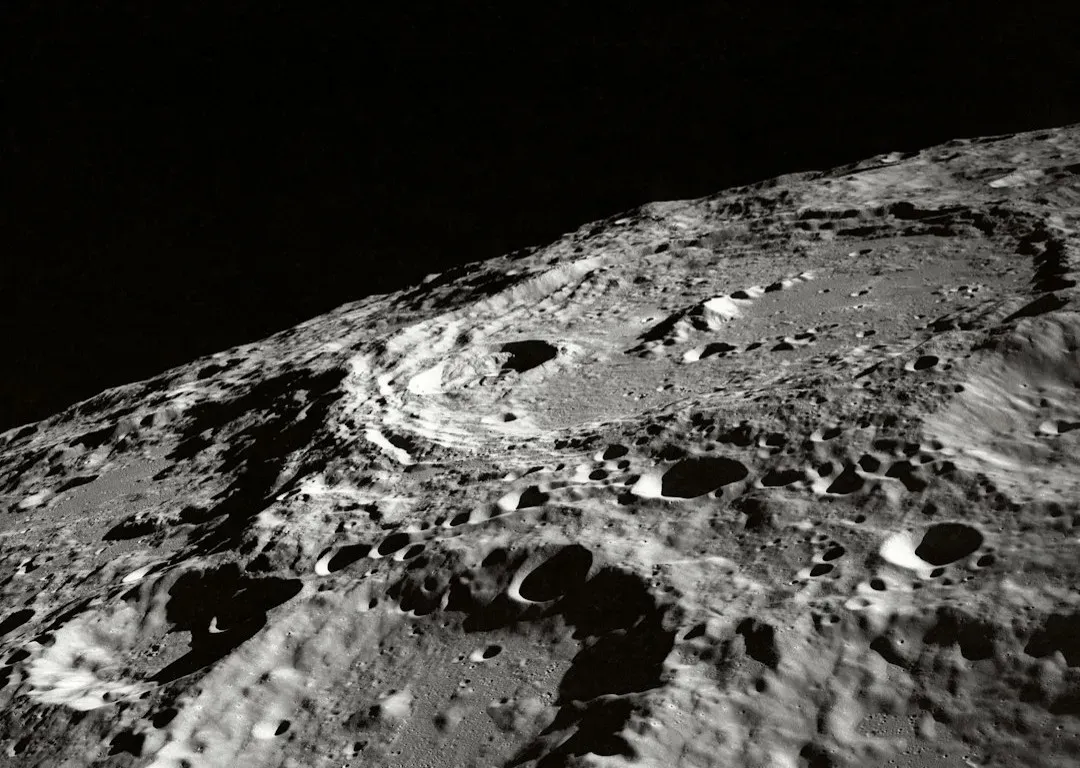
The Apollo missions returned roughly 842 pounds of lunar material, and scientists are still finding new things in those samples more than fifty years later. Honestly, that alone should be jaw-dropping. The rocks act almost like ancient recording devices, preserving the magnetic environment that existed at the moment they cooled from molten or impact-heated states.
Recent advances in laboratory measurement techniques have allowed researchers to extract far more precise magnetic data from these samples than was ever possible in the 1970s. Modern instruments can detect incredibly faint magnetic signals, essentially “rewinding” the tape that nature recorded billions of years ago. The results have been eye-opening, pointing to a lunar magnetic field that was surprisingly robust during parts of the Moon’s early history.
A Dynamo That Should Not Have Existed
The Moon is small. That’s the central problem. Planetary dynamos require a large, actively convecting liquid metal core, and the Moon’s core is tiny relative to its total size. By most conventional models, the lunar dynamo should have fizzled out early and fast. Yet the rock record tells a different story – one of a magnetic field that persisted far longer than anyone expected.
Some researchers have proposed that external forces, like the gravitational tug of the early Earth during a period when the Moon orbited much closer, could have stirred the lunar core and kept the dynamo alive longer. This mechanism, known as mechanical stirring or precession-driven dynamo action, is a genuinely compelling idea. It suggests the Moon’s magnetic history was intimately connected to its gravitational dance with Earth, which is a poetic thought when you stop and think about it.
When Did the Lunar Magnetic Field Finally Die?
Pinpointing exactly when the Moon’s magnetic field collapsed is like trying to find the exact moment a candle burned out in a room you weren’t watching. The evidence is indirect, but it’s there. Studies of Apollo samples suggest the dynamo was active at least until around one billion years ago, and possibly later, which is far more recent than earlier estimates suggested.
Some samples dated to around 3.56 billion years ago show strong magnetization, while others from more recent periods show weaker signals, pointing to a gradual decline rather than a sudden shutdown. This slow fade is actually more scientifically interesting than a dramatic collapse would have been. It hints at a complex internal history, with the lunar core slowly losing its ability to sustain the circulation needed to maintain a magnetic field.
How Impact Events Complicate the Picture
Here’s where it gets genuinely complicated. Meteorite and asteroid impacts can temporarily generate localized magnetic fields through a process called shock magnetization – essentially, a violent collision creating enough plasma and pressure to briefly magnetize surrounding rock. This means not every magnetically charged Apollo sample necessarily reflects a global planetary dynamo.
Researchers have spent considerable effort trying to distinguish between rocks magnetized by the global field versus those affected by impact events. It requires painstaking analysis and cross-referencing between multiple samples from different locations. The fact that scientists can even attempt this kind of forensic reconstruction using fifty-year-old samples is, I think, one of the most underappreciated achievements in modern planetary science.
What This Means for Understanding Other Moons and Planets
The Moon isn’t unique in raising these questions. Several moons in our solar system, along with Mars, share similar puzzles about ancient magnetism and long-dead dynamos. Understanding how the lunar dynamo worked – and failed – gives scientists a template for studying these other worlds. In a sense, the Moon is a laboratory that the solar system built for us.
If a body as small as the Moon could sustain a magnetic field for hundreds of millions of years through mechanical stirring, then similar processes might be happening, or might have happened, in unexpected places throughout the solar system. This opens up new questions about whether ancient magnetic fields could have briefly shielded planetary surfaces from solar radiation, which has implications for the search for habitable environments beyond Earth. It’s a much bigger conversation than just one strange Moon rock anomaly.
The Future of Apollo Sample Research
There are still Apollo samples that have never been opened. NASA deliberately set some aside decades ago, waiting for technology that didn’t exist yet to become available. That moment has essentially arrived. New curation facilities and ultra-sensitive analytical tools are now allowing scientists to extract information from these pristine samples that would have been impossible to obtain even ten years ago.
The lunar magnetic mystery is not solved – not by a long shot. Every new analysis seems to add another layer of complexity rather than a clean, satisfying answer. Perhaps that’s appropriate for a Moon that has been orbiting above our heads for billions of years, quietly keeping its secrets. What do you think – does it surprise you that a rock sitting in a NASA drawer could still be rewriting planetary science in 2026? Drop your thoughts in the comments.