
Picture this: beneath your feet, hundreds of miles below the soil and stone you walk on, lies an ocean. Not a flowing, crashing, tide-swept body of water, but something altogether more alien and extraordinary. A world you never knew existed is hiding in plain sight, locked inside rock, kept secret by crushing pressure and temperatures that would vaporize everything you know.
This isn’t science fiction. It’s one of the most breathtaking geological revelations of recent decades, and it keeps getting more surprising. The deeper scientists look, the more water they find. So let’s dive in – quite literally.
A World Beneath the World: What Are These Hidden Reservoirs?
Honestly, when you first hear the phrase “hidden ocean,” your imagination probably conjures up an underground lake, or some vast dark sea echoing in a cavern. The reality is stranger, and in many ways even more impressive. Researchers from Northwestern University and the University of New Mexico uncovered groundbreaking evidence of potentially massive amounts of water trapped deep beneath the United States – not as liquid oceans or flowing rivers, but locked inside the very rocks of the Earth’s mantle.
Unlike surface water, this reservoir doesn’t exist as a liquid, solid, or gas. Instead, it’s held in a strange fourth state, suspended inside the rock like moisture in a sponge. Think of a sea sponge. You could squeeze it and water would pour out, but to look at it, it seems solid. The Earth’s mantle operates on that same principle, just billions of times more dramatic.
Ringwoodite: The Blue Mineral Holding Earth’s Secret
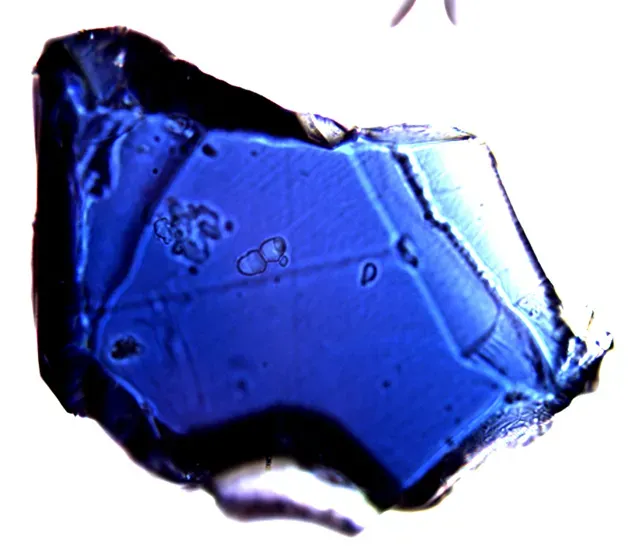
Ringwoodite, a high-pressure mineral with a captivating blue hue, was named after the Australian geologist Alfred Ringwood. It forms deep within the Earth’s mantle at depths between 410 and 660 kilometers. It is rare, beautiful, and almost impossibly hard to obtain – since you’d need to travel hundreds of miles straight down to collect a natural sample. Most of what scientists know about it comes from lab-grown versions or tiny fragments trapped inside diamonds.
A key 2014 finding discovered a tiny piece of ringwoodite inside a diamond brought to the surface by a volcanic eruption in Brazil – the only direct sample we have from this part of the mantle – which contained surprising amounts of water. One of the scientists, Graham Pearson, took several hundred diamonds back to his lab at the University of Alberta, where, inside one particular diamond, he and his colleagues discovered ringwoodite from the transition zone. Not only that, but it was hydrous ringwoodite, which meant it contained water – about 1 percent by weight. That might sound like a small number, but scaled to the volume of the entire transition zone, the implications are staggering.
The Transition Zone: Earth’s Most Important Hidden Layer
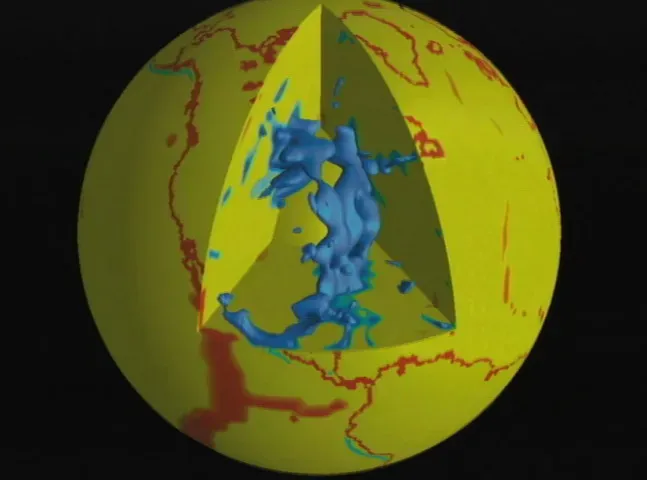
This water is stored deep in a mysterious region of the Earth’s interior called the transition zone, located roughly 250 to 410 miles beneath North America. You can think of the transition zone as the Earth’s middle child – wedged between the upper and lower mantle, often overlooked, but quietly holding the most extraordinary secrets. The immense pressure of up to 23,000 bar in the transition zone causes the olive-green mineral olivine, which constitutes around 70 percent of the Earth’s upper mantle, to alter its crystalline structure. At the upper boundary of the transition zone, at a depth of about 410 kilometers, it is converted into denser wadsleyite; at 520 kilometers it then metamorphoses into even denser ringwoodite.
The dense minerals wadsleyite and ringwoodite can, unlike the olivine at lesser depths, store large quantities of water – in fact so large that the transition zone would theoretically be able to absorb six times the amount of water in our oceans. Let that sink in for a moment. Six times the volume of every ocean, sea, and lake combined – sitting silently beneath your feet. A team working with data from thousands of seismic stations found evidence of an enormous reservoir of water about 700 kilometers beneath Earth’s surface, locked inside deep mantle rock and estimated to hold roughly three times as much water as all the surface oceans combined.
How Scientists Detected Water This Deep Underground
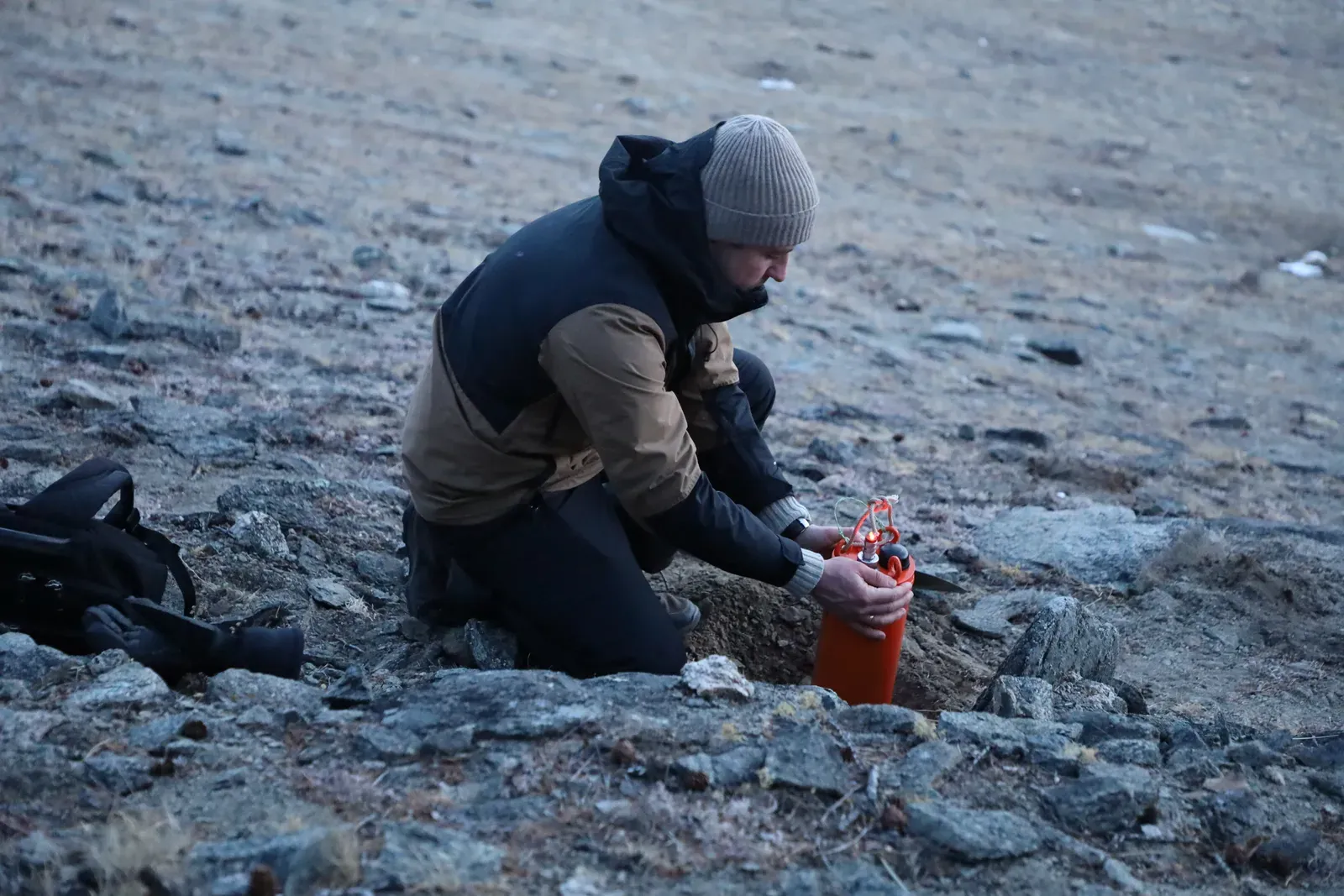
Using a combination of seismic data from a vast network of over 2,000 seismometers and high-pressure laboratory experiments, the researchers found pockets of partially melted rock, or magma, about 400 miles underground. It’s a bit like using sound waves to locate a hidden room in an old house – you tap on the walls, listen for the hollow echo, and map what you cannot see. The team of scientists used seismometers to measure the motion of energy waves caused by earthquakes through the ground below the United States. The waves slowed down as they passed through the region of the mantle containing ringwoodite. The scientists suggest that the saturation of ringwoodite with water explains the sluggishness of the waves through this particular region of Earth’s center.
Northwestern geophysicist Steve Jacobsen and University of New Mexico seismologist Brandon Schmandt found deep pockets of magma located about 400 miles beneath North America, a likely signature of the presence of water at these depths. The discovery suggests water from the Earth’s surface can be driven to such great depths by plate tectonics, eventually causing partial melting of the rocks found deep in the mantle. This melting, called dehydration melting, happens because minerals in the transition zone can hold water, but once they move deeper into the lower mantle, they must release it – causing partial melting at the boundary.
Bridgmanite and the Primordial Water Vault
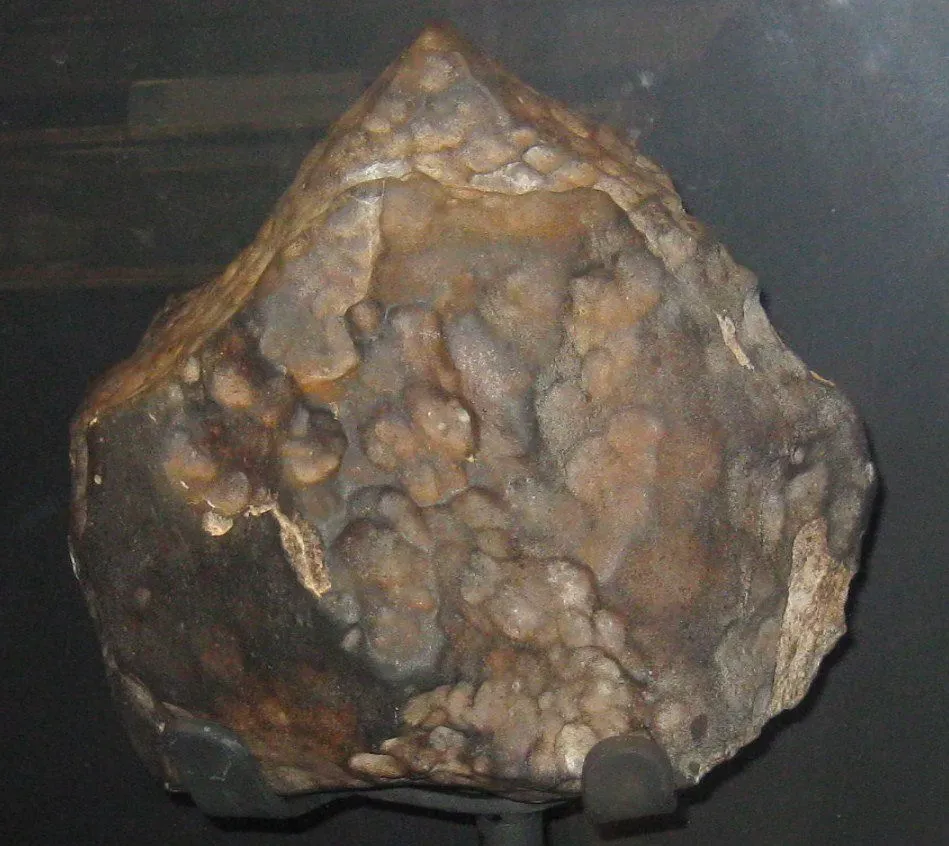
Here’s where things get even more fascinating, and more recent. Scientists have now turned their attention to a mineral called bridgmanite – the single most abundant mineral in the entire Earth’s mantle. Bridgmanite, the most abundant mineral in Earth’s mantle, can store significant amounts of water at high temperatures, especially during the planet’s early magma ocean phase. This capacity suggests the lower mantle became a major water reservoir. This is a genuinely groundbreaking finding, because it rewrites what we thought we knew about Earth’s deep interior.
Using these results, the team modeled how Earth’s magma ocean cooled and crystallized. Their simulations suggest that, because bridgmanite held water so efficiently under extreme heat, the lower mantle became the largest water reservoir within the solid Earth after the magma ocean cooled. The model indicates that this reservoir could be five to 100 times larger than earlier estimates. Using laboratory experiments that recreated the extreme conditions of Earth’s deep mantle, geochemist Wenhua Lu of the Chinese Academy of Sciences in Guangzhou and colleagues investigated how much water bridgmanite could actually hold. As the heat increased, the bridgmanite was able to incorporate more and more water into its crystal structure. That was published in Science in December 2025 – and it changed the conversation entirely.
Water in the Mantle and Its Role in Shaping Earth’s Surface
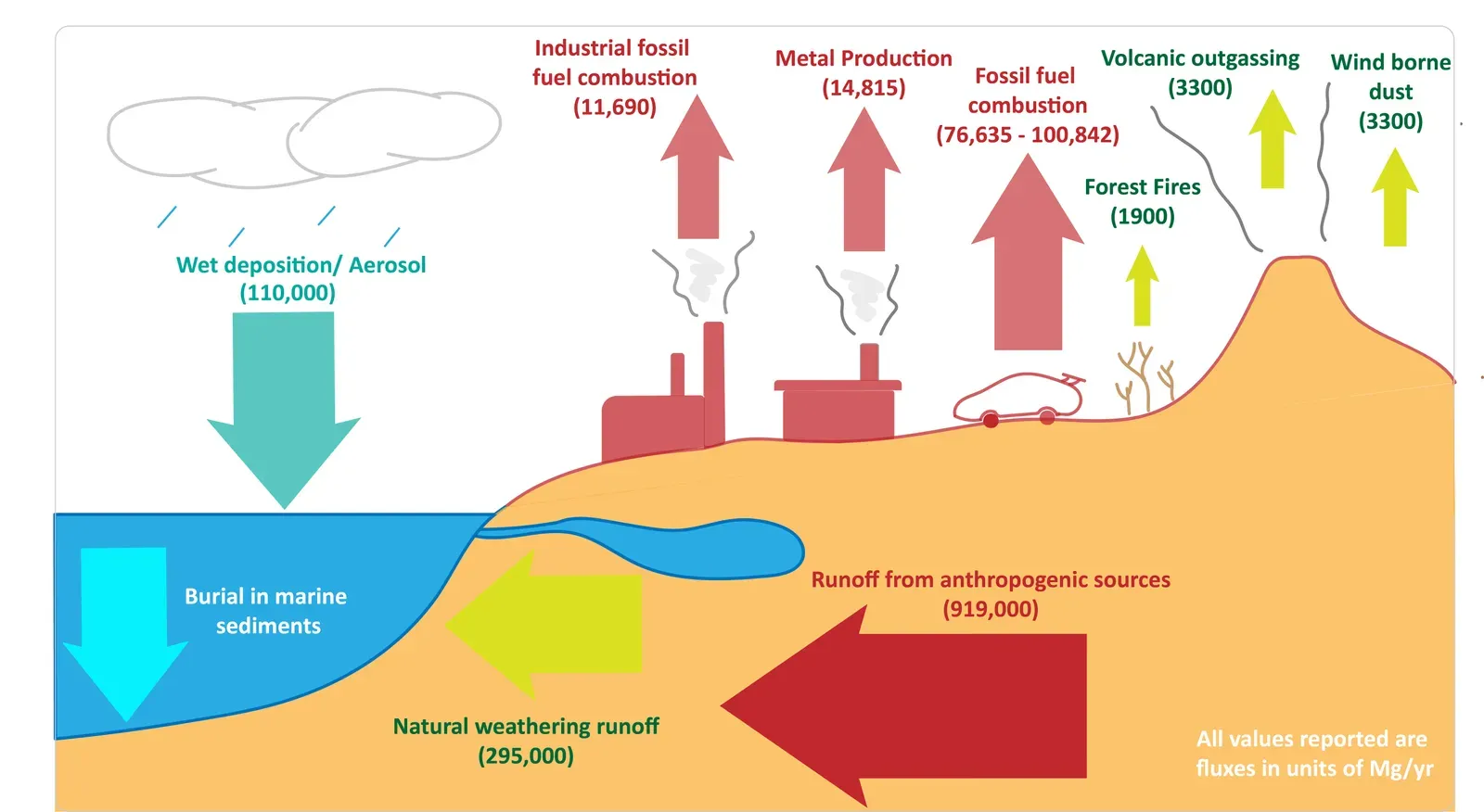
You might be wondering why any of this matters beyond pure scientific curiosity. Here’s the thing: the water locked inside the mantle isn’t just sitting there doing nothing. Water in the mantle affects melting, volcanic activity, and plate tectonics – the processes that shape earthquakes, mountain building, and even the magnetic field that protects our planet. In other words, every mountain range you’ve ever admired, every earthquake you’ve ever felt, may owe something to water that has never seen sunlight.
This deeply stored water did not simply remain trapped. Instead, it acted as a “lubricant” for Earth’s internal engine. By lowering the melting point and viscosity of mantle rocks, the water helped drive internal circulation and plate motion, giving the planet long-term geological energy. Over vast spans of time, some of this water was slowly returned to the surface through volcanic and magmatic activity. Oceanic crust slides into the mantle at subduction zones, dragging surface water with it. In the transition zone, minerals such as ringwoodite soak up part of that water. Over geologic time, some of it returns to the surface through volcanic activity and mantle upwelling. It’s a water cycle so vast, it operates across hundreds of millions of years.
What This Means for Our Understanding of Life and Other Planets
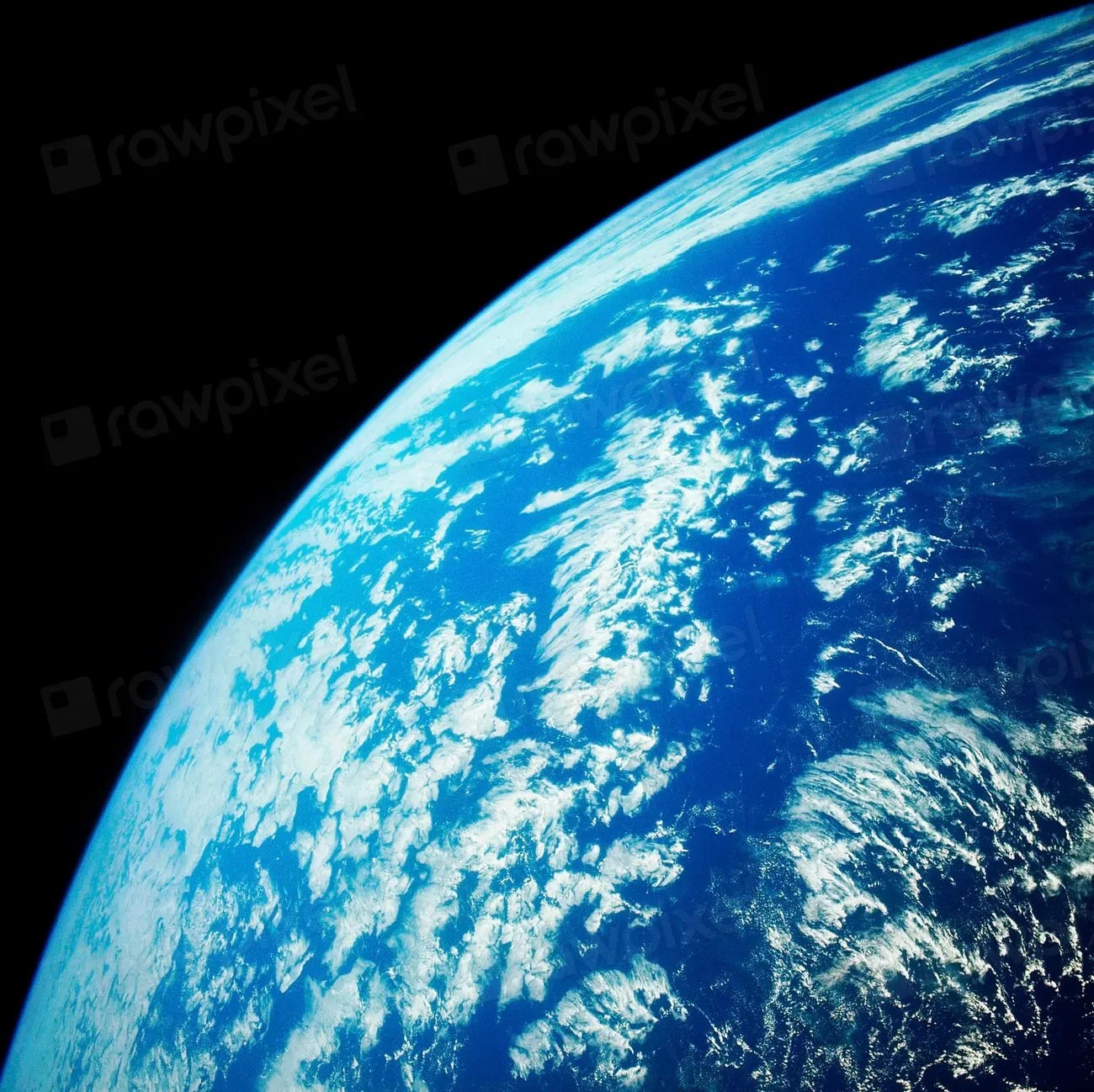
There’s a bigger picture here that is both humbling and exciting. Some scientists once thought Earth’s oceans formed when icy comets hit the planet. But new research suggests a different origin for the oceans: they simply seeped out of the center of the Earth. That’s a radical reframing of one of the most fundamental questions in planetary science – where did our oceans come from? The answer may be: from within.
Steven Jacobsen of Northwestern University, a lead researcher on the work, suggests that this hidden store helps explain why the volume of the oceans has remained relatively stable over hundreds of millions of years despite shifting continents and changing climates. He has pointed out that without such a buffer, so much water could have reached the surface that mountaintops might be the only land visible. Knowing how minerals like bridgmanite behave also helps astronomers judge whether a rocky planet with modest surface water might still hide large internal reservoirs. Evidence from Earth’s interior suggests that buried deep mantle water may have been vital for maintaining oceans and a stable surface. The implications extend well beyond Earth – to Mars, to exoplanets, to the search for life across the universe.
Conclusion: The Ocean You’ll Never See
It’s hard not to feel a quiet sense of wonder thinking about all of this. Beneath every city, every forest, every ocean floor, the Earth is holding its breath – and apparently, a great deal of water. What these hidden reservoirs offer is context for why liquid water has persisted on Earth for billions of years and why our planet, unlike Mars or the Moon, still supports a global ocean and a thriving biosphere.
For now, most of the seismic evidence comes from beneath North America. Researchers are eager to collect similar data from other regions to see whether water-rich ringwoodite is common worldwide or concentrated in particular zones. They also want to refine estimates of how much water the transition zone holds and how quickly it cycles in and out. The more answers scientists find, the more questions seem to open up beneath them – much like the Earth itself. In the end, the ground beneath your feet may be far less solid, and far more alive, than you ever imagined. What do you think – does knowing there’s a hidden ocean beneath you change how you see the world? Tell us in the comments.