
Think about the last time an hour felt like five minutes, or when five minutes stretched out like an eternity. You weren’t imagining it. Something real was happening. Something that science, philosophy, and neuroscience are only beginning to fully unpack. Time, as it turns out, is not the rigid, one-size-fits-all conveyor belt we were taught to believe in. It is stranger, more personal, and far more flexible than that.
What if the way you relate to time isn’t just poetic metaphor but something genuinely measurable, even shapeable? We are living in a moment where physics, brain science, and ancient contemplative practice are all pointing in the same direction – toward the radical idea that you can develop a conscious relationship with time itself. Let’s dive in.
Time Is Not What You Think It Is
Most of us walk through life treating time like gravity, as if it’s an unchangeable, universal background hum that applies equally to everyone everywhere. That assumption, honestly, is one of the most widespread misconceptions in human thinking. Time feels like the most basic feature of reality, with seconds ticking and days passing as everything from planetary motion to human memory seems to unfold along a single, irreversible direction.
Here’s the thing though. That feeling is a construction. For more than a century, physics has struggled to say what time actually is, and this struggle is not philosophical nitpicking. It sits at the heart of some of the deepest problems in science. In other words, the thing you check on your phone dozens of times a day is, at its core, a deep mystery that the smartest minds alive haven’t fully solved.
Physics Has Already Proven Time Bends
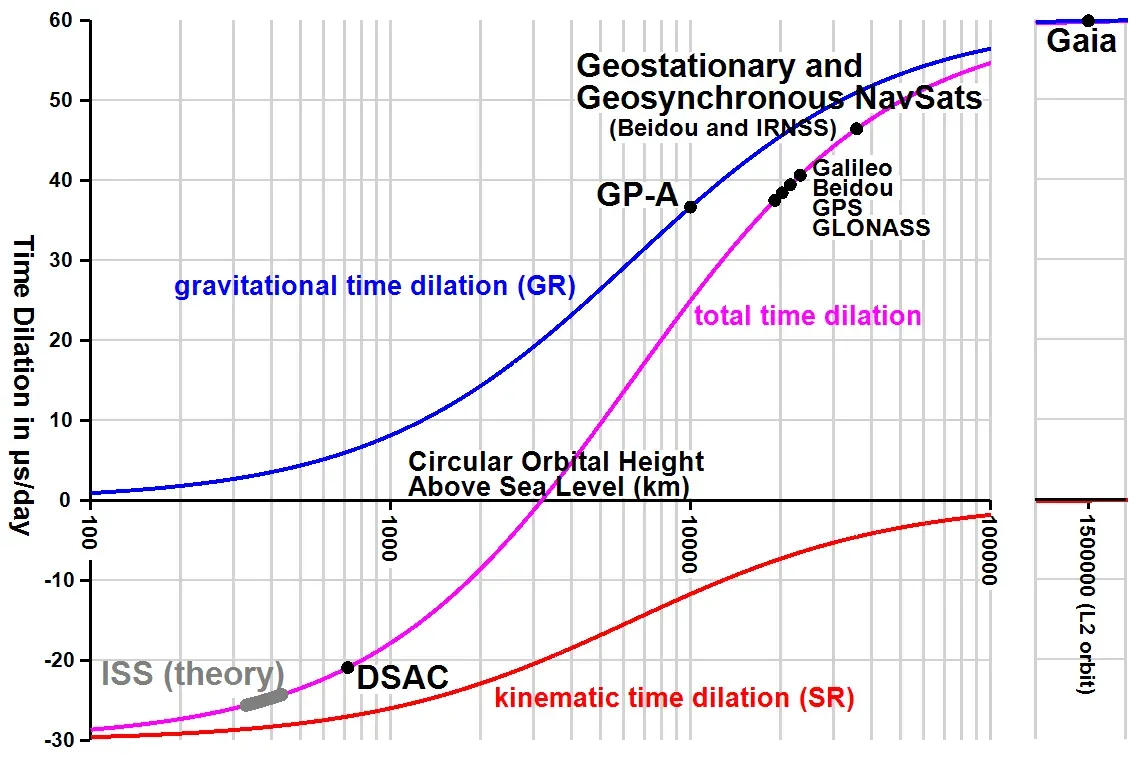
You don’t need a science degree to be startled by this one. Relativity time dilation refers to the phenomenon where the elapsed time between two events depends on the relative motion or gravitational environment of the observer measuring it. In practical terms, a moving clock or a clock in a strong gravitational field can tick more slowly compared to a reference clock in a different state. This effect is not a trick of perception but a measurable change in the rate at which physical processes occur.
Gravitational time dilation is an actual difference of elapsed time between two events, as measured by observers situated at varying distances from a gravitating mass. The lower the gravitational potential, the closer the clock is to the source of gravitation, and the slower time passes. Albert Einstein originally predicted this in his theory of relativity, and it has since been confirmed by tests of general relativity. So time is already bending around you every single day, even if you can’t feel it happening.
Your GPS Runs on Bent Time

I know it sounds crazy, but every time you navigate somewhere using your phone, you are benefiting from humanity’s knowledge of time dilation. GPS satellites orbit the Earth at high speeds, and their clocks tick more slowly due to special relativity. However, they are also farther from the Earth’s gravitational field, so their clocks tick faster due to the weaker gravity. Engineers must account for both effects in order to keep GPS accurate, making adjustments based on relativistic calculations.
Think about that for a moment. Though time dilation effects are minuscule at everyday speeds and gravitational strengths, they are still present. Airline pilots and astronauts age slightly slower than those who remain on Earth’s surface over long periods due to both effects of time dilation. Even regular human movement technically influences time on an imperceptible scale. Every time you fly on a plane, you age – just a tiny bit differently. That is genuinely wild.
The Brain Has Its Own Internal Clock, and You Can Tinker with It
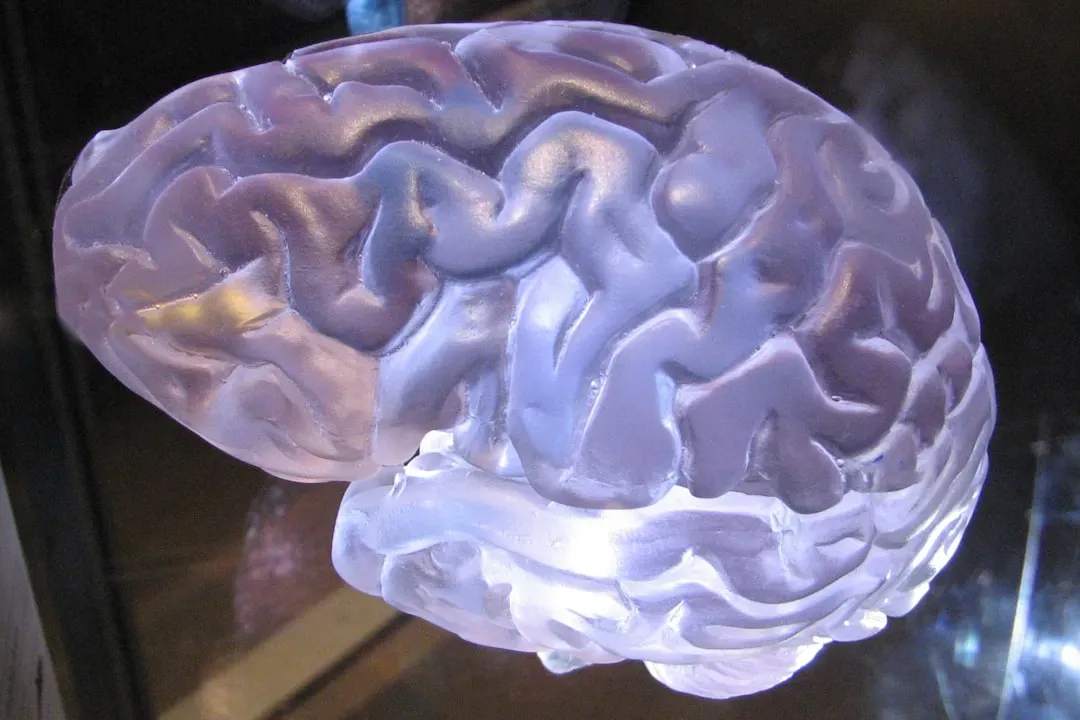
Here is where things get genuinely fascinating for everyday life. In psychology and neuroscience, time perception or chronoception is the subjective experience, or sense, of time, which is measured by someone’s own perception of the duration of the indefinite and unfolding of events. The perceived time interval between two successive events is referred to as perceived duration. Your brain is not passively recording time like a stopwatch. It is actively constructing it.
The Learning Lab at Champalimaud Research discovered a way to manipulate the brain’s perception of time by controlling neural activity in rats, with research that has potential applications in treating diseases like Parkinson’s. More specifically, researchers found that activity in the striatum, a deep brain region, follows predictable patterns that change at different speeds: when animals report a given time interval as longer, the activity evolves faster, and when they report it as shorter, the activity evolves more slowly. Your felt sense of time has a biological dial, and science is learning how to turn it.
Emotion Literally Speeds Up or Slows Down Your Clock

You have almost certainly noticed this yourself. Dread makes a minute feel like an hour. Joy makes an afternoon vanish in what seems like a blink. Unpleasant emotions are associated with a feeling of time urgency, making external clock time by comparison seem to pass slowly. During pleasant emotions, however, there is less time urgency and therefore clock time by comparison appears to go quickly.
This isn’t just poetic. It’s measurable. Research shows that time perception can be successfully manipulated using a distorted timekeeper, and total breath-holding duration correlated with perceived time, not actual time. This effect was attributable to changes in the onset of the physiological breaking point, not changes in the length of the struggle phase. These results demonstrate that unconscious psychological factors and cognitive processes can significantly influence fundamental physiological processes. Your mind’s relationship to time is already shaping your physical experience of the world, whether you realize it or not.
Mindfulness Rewires How You Experience Time

Several recent studies have explored the relationships between mindfulness and time perception, an area of research that has become increasingly popular in the last ten to fifteen years. The findings are compelling. Mindfulness meditation altered time perception via attentional processes. Research has increasingly focused on the benefits of meditation in everyday life and performance. Mindfulness in particular improves attention, working memory capacity, and reading comprehension.
What’s more, the effect on time is specific. There is an increase in perceived duration and the flow of time becomes slower. Mindfulness training involves deliberately staying in the present moment for as long and as continuously as possible. Think of it like changing the resolution of your experience. More detail per moment means more “subjective time” per second. Mindfulness is essentially a lens that magnifies the present, and in doing so, it multiplies what you get from each minute you live.
Flow State: The Art of Losing and Commanding Time Simultaneously

There is a state of mind where time seems to completely evaporate, where hours pass as though they were minutes. Researchers call it “flow.” Flow experience is a subjective psychological state that people report when they are completely involved in something to the point of forgetting time and their surroundings except the activity itself. During flow, subjective perception of time may change, with time passing faster or slower and the environment hardly or no longer perceived. Attention is fully invested in the task at hand, and the person functions at his or her fullest capacity.
The neuroscience behind this is remarkable. Studies show that when you enter a flow state, the brain undergoes a powerful shift in how it processes information. Instead of relying on the slower, more energy-intensive systems of conscious thought, it taps into faster, more streamlined subconscious pathways. This neurological switch supports quicker decisions, heightened focus, and seamless performance, making flow one of the most efficient and optimized mental states you can access. To deliberately access flow is, in a real sense, to gain command over your inner experience of time.
Is Time Itself an Emergent Property, Not a Fixed Force?
This is perhaps the most mind-bending idea of all, and cutting-edge physics is taking it seriously. Time may not be fundamental but instead emerges from the irreversible accumulation of information through physical interactions. In this view, spacetime acts as a memory medium, with each event leaving an informational imprint that defines temporal order and the arrow of time. This framework links gravity, dark matter, and time’s direction to the dynamics of information storage and retrieval.
Modern physics relies on different but equally important frameworks. One is Albert Einstein’s theory of general relativity, which describes the gravity and motion of large objects such as planets. Another is quantum mechanics, which rules the microcosmos of atoms and particles. On an even larger scale, the standard model of cosmology describes the birth and evolution of the universe as a whole. All rely on time, yet they treat it in incompatible ways. If time itself is something that emerges from deeper processes, then the idea of “commanding” it shifts from science fiction to a genuinely open question. Honestly, that’s one of the most exciting places physics has arrived at in a long time.
Conclusion: You Are Already Shaping Time
The evidence, from relativity to neuroscience to mindfulness research, all points to the same quietly astonishing conclusion. Time is not a prison wall. It is more like a river with shifting currents, and you are already wading through it in ways you don’t always notice. Your emotions reshape it. Your attention expands or compresses it. Your position in a gravitational field literally alters its flow.
The real opportunity isn’t to control the ticking of a universal cosmic clock. It’s to understand that the version of time you live inside every day is, to a remarkable degree, something you co-create. Learning to perceive it differently, to enter states of focus and presence deliberately, is not wishful thinking. It is a skill backed by science. The question isn’t whether you can learn to command time. It’s whether you’re paying close enough attention to realize you already do. What would change for you if you took that power seriously?