Science has a funny way of making you feel like everything you thought you knew is quietly wrong. You wake up one day thinking the universe is predictable, time is constant, and matter is solid – and then physics comes along and pulls the rug out from under you, politely but completely.
From the very small to the impossibly vast, five discoveries stand out as moments when science didn’t just update our knowledge – it rewired our perception of what reality actually is. Hold tight, because some of these will genuinely mess with your head.
1. The Double-Slit Experiment: Reality Changes When You’re Watching
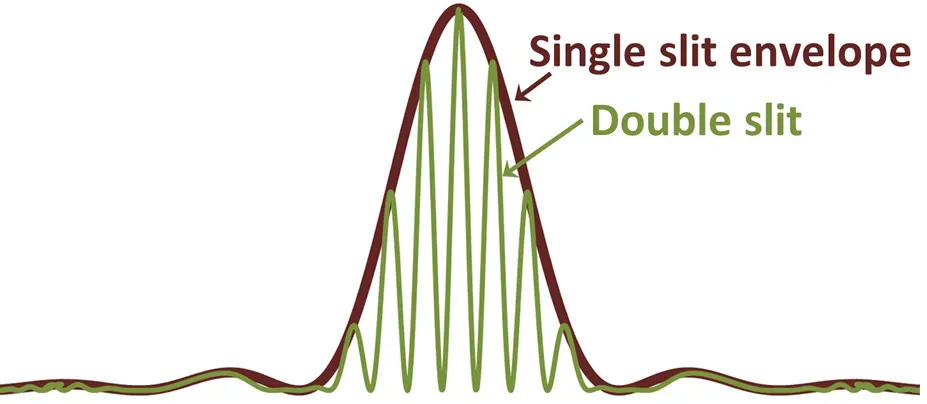
Here’s something that should keep you up at night. The double-slit experiment demonstrates a head-scratching reality: that light exists as both a particle and a wave. That alone sounds strange enough. The experiment is elegantly simple on the surface – you shine light through two narrow slits and study the pattern it creates on a screen beyond.
The truly jaw-dropping part comes when you place a detector at the slits to observe which path the light takes. When scientists placed detectors at each slit to determine which slit each photon was passing through, the interference pattern disappeared – suggesting that the very act of observing the photons “collapses” those many realities into one. Think about that for a moment. The universe behaves differently depending on whether you’re looking at it or not. It’s almost as if reality is somehow aware of being watched.
The experiment demonstrates, with unparalleled strangeness, that little particles of matter have something of a wave about them, and suggests that the very act of observing a particle has a dramatic effect on its behaviour. No wonder physicist Richard Feynman spent decades wrestling with it. The double-slit experiment has become a classic for its clarity in expressing the central puzzles of quantum mechanics. Richard Feynman called it “a phenomenon which is impossible to explain in any classical way, and which has in it the heart of quantum mechanics.” If a genius like Feynman found it indigestible, you can forgive yourself for feeling a little dizzy too.
MIT physicists performed an idealized version of the double-slit experiment, stripping it to its quantum essentials – confirming that light exists as both a wave and a particle but cannot be observed in both forms at the same time. Even in 2025, a century after quantum mechanics was formulated, these experiments are still yielding new insights and sparking debates at the highest levels of physics. Reality, it turns out, is not a fixed stage. It is more like a performance that changes based on its audience.
2. Quantum Entanglement: Two Particles, One Impossible Connection
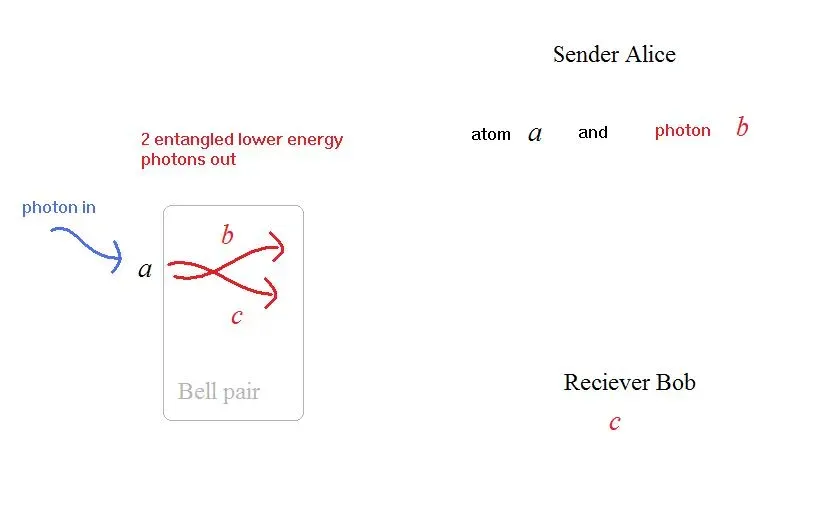
If the double-slit experiment made you uneasy, quantum entanglement is about to make it worse. Quantum entanglement is a mind-bending phenomenon that defies our classical understanding of reality. It occurs when two particles become so intimately linked that their quantum states are inseparable, regardless of the distance between them. Imagine writing a message on one side of the world and watching the other side of the page respond instantly – without any signal traveling between them.
One of the most mind-boggling scientific discoveries is quantum entanglement. This phenomenon occurs when two particles remain connected regardless of distance, allowing them to instantly affect each other’s state. Scientists have observed entangled particles reacting simultaneously even when separated by vast distances. Einstein famously called this “spooky action at a distance” – and he wasn’t wrong to be disturbed by it. Quantum mechanics introduced the concept of entanglement, where particles become instantaneously connected regardless of distance. These peculiarities have paved the way for technologies like quantum computing, cryptography, and teleportation, offering glimpses into a future where the boundaries of what is possible continue to expand.
Honestly, I think the most unsettling thing about entanglement is not just the physics – it’s the philosophical fallout. It tells you that the universe, at its most fundamental level, does not respect the separation of space. Two things can be profoundly linked with no physical bridge between them. This odd scientific phenomenon defies classical physics and continues to baffle researchers. Our intuitions about distance and independence were shaped by a world of rocks and rivers. The quantum world plays by an entirely different rulebook.
3. Einstein’s Relativity: Time Is Not What You Think It Is
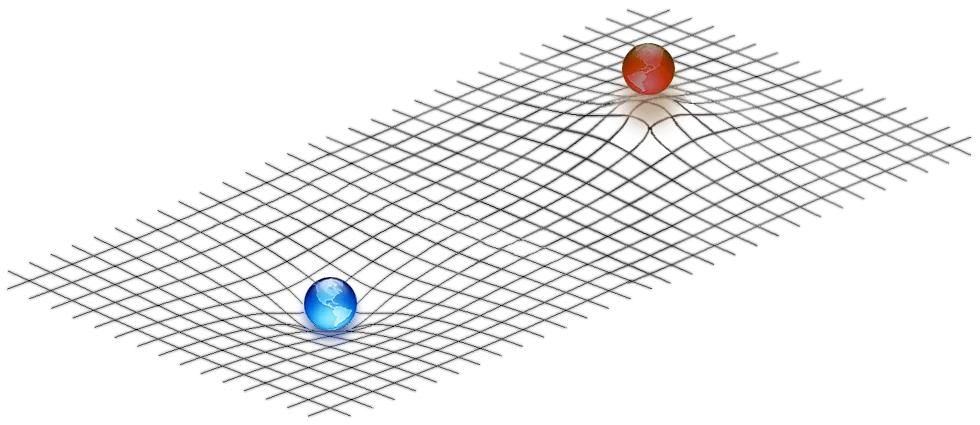
Most of us grow up treating time like a river – steady, uniform, unstoppable. One of the conclusions of the theory of relativity is that time itself is by no means absolute. For millennia people considered time to be absolute. Even Isaac Newton, the founder of classical mechanics, believed that time would tick at the same speed everywhere in the universe. At the beginning of the 20th century, however, Einstein showed that this was a pure illusion and that different observers could not always agree on the passage of time.
The stronger the gravitational field, the slower time passes. This spacetime curvature means that time moves slightly faster at the top of a skyscraper than at ground level. Near black holes, the effect becomes extreme, with time nearly standing still at the event horizon. Time dilation challenges and reminds us that the universe is far stranger than we imagine.
Here is the part that makes this more than just a thought experiment. The Global Positioning System uses accurate, stable atomic clocks in satellites and on the ground to provide worldwide position and time determination. These clocks have gravitational and motional frequency shifts which are so large that, without carefully accounting for numerous relativistic effects, the system would not work. Your GPS navigation app – the one you use to find a coffee shop – only works because engineers built Einstein’s theory directly into it.
If these effects were not properly taken into account, a navigational fix based on the GPS constellation would be false after only 2 minutes, and errors in global positions would continue to accumulate at a rate of about 10 kilometers each day. The whole system would be utterly worthless for navigation in a very short time. So the next time someone says relativity is abstract and theoretical, feel free to point at your phone.
4. Dark Energy: The Universe Is Tearing Itself Apart and Nobody Knows Why
Picture the aftermath of a big explosion. Things fly outward, slow down, and eventually stop – or reverse course under gravity’s pull. That is exactly what scientists expected when they began studying the expansion of the universe after the Big Bang. Prior to this observation, scientists thought that the gravitational attraction of matter and energy in the universe would cause the universe’s expansion to slow over time. What they found instead was the scientific equivalent of watching a car accelerate off a cliff.
Scientists discovered the increasing expansion of the universe in 1998 through observations of distant supernovae – exploding stars. Hubble found that the supernovae were dimmer than they should have been, which meant that their host galaxies were farther away than expected. And that only made sense if the universe’s expansion was accelerating. Scientists now theorize that the universe slowed down under the power of gravity for a time after the big bang and then, at a point when it had grown large enough that those gravitational connections weakened, began to speed up as dark energy took over.
So what exactly is dark energy? That is where the story gets uncomfortable. Assuming the standard model of cosmology is correct, dark energy dominates the universe, contributing roughly two thirds of the total energy in the present-day observable universe while dark matter and ordinary matter together contribute most of the rest. We live inside something that is more than half composed of a force we cannot see, touch, or explain. Let’s be real – that is deeply unsettling.
The mystery has gotten even more confusing as we’ve learned more – the latest and most thorough observations seem to show that the strange pressure is shifting over time, holding the fate of the universe in the balance. As recently as 2025, the Dark Energy Spectroscopic Instrument collaboration announced that evidence for evolving dark energy has been discovered, with results suggesting that the density of dark energy is slowly decreasing with time. The universe may not be expanding forever the way we thought. The story is still being written – and science is still scrambling to catch up.
5. Quantum Superposition: Everything Is Possible Until You Look

Let’s end with the strangest one of all. Quantum mechanics explores the behavior of particles at the smallest scales and challenges . In the realm of quantum physics, particles exhibit wave-particle duality and can exist in multiple states simultaneously. This phenomenon, known as superposition, defies classical intuitions. Think of it like a coin spinning in the air – not heads or tails, but both at once, until it lands.
All the possible paths of particles can interfere with each other, even though only one of the possible paths actually happens. All realities exist at once – a concept known as superposition – until the final result occurs. This isn’t a metaphor or a poetic description. It is what the mathematics and the experiments actually show. Reality at the quantum scale is not a single determined path – it is a fog of possibilities that collapses only when something forces a definite outcome.
The philosophical consequences are staggering. The advent of quantum mechanics in the early 20th century is a profound example of scientific discovery reshaping . This theory challenged classical mechanics, leading to questions about the nature of matter and energy, and incorporating philosophical debates around determinism and the nature of observation. For centuries, scientists believed that if you knew all the initial conditions of a system, you could predict its future exactly. Superposition obliterated that assumption entirely.
Physicists recently discovered “time crystals,” a new phase of matter that changes states in a time-based pattern without consuming energy. This anomalous science contradicts conventional thermodynamics, hinting at new possibilities for quantum computing. The quantum world keeps producing surprises. Each discovery seems to open three new doors instead of closing one, and every answer invites a dozen more questions that make the last ones seem almost quaint.
Conclusion: Science Doesn’t Give You Certainty – It Gives You Better Questions
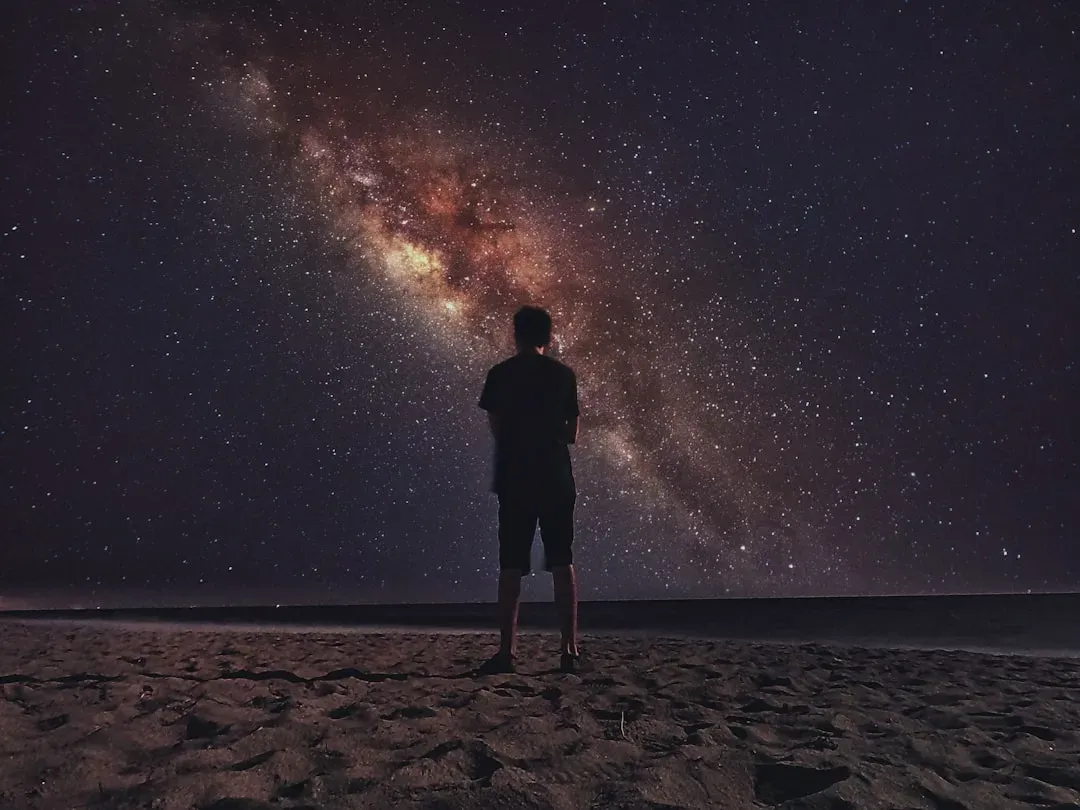
It’s tempting to look at these five discoveries and feel destabilized. Time isn’t fixed. Reality shifts when observed. The universe is expanding faster than it should, powered by something we can barely name. Particles exist in multiple states at once. These are not small tweaks to the operating manual of the world – they are fundamental rewrites.
Yet there is something genuinely thrilling about all of this. As much as we might like to think that our collective knowledge has unlocked most of the mysteries of the universe, we’ve really only got a hold on a tiny fraction of the knowledge required to fully understand it all. Science is honest enough to admit that. And that honesty – that willingness to keep asking questions even when the answers are deeply uncomfortable – is what makes science so remarkable. Which of these five discoveries surprised you the most? Drop your thoughts in the comments below.