
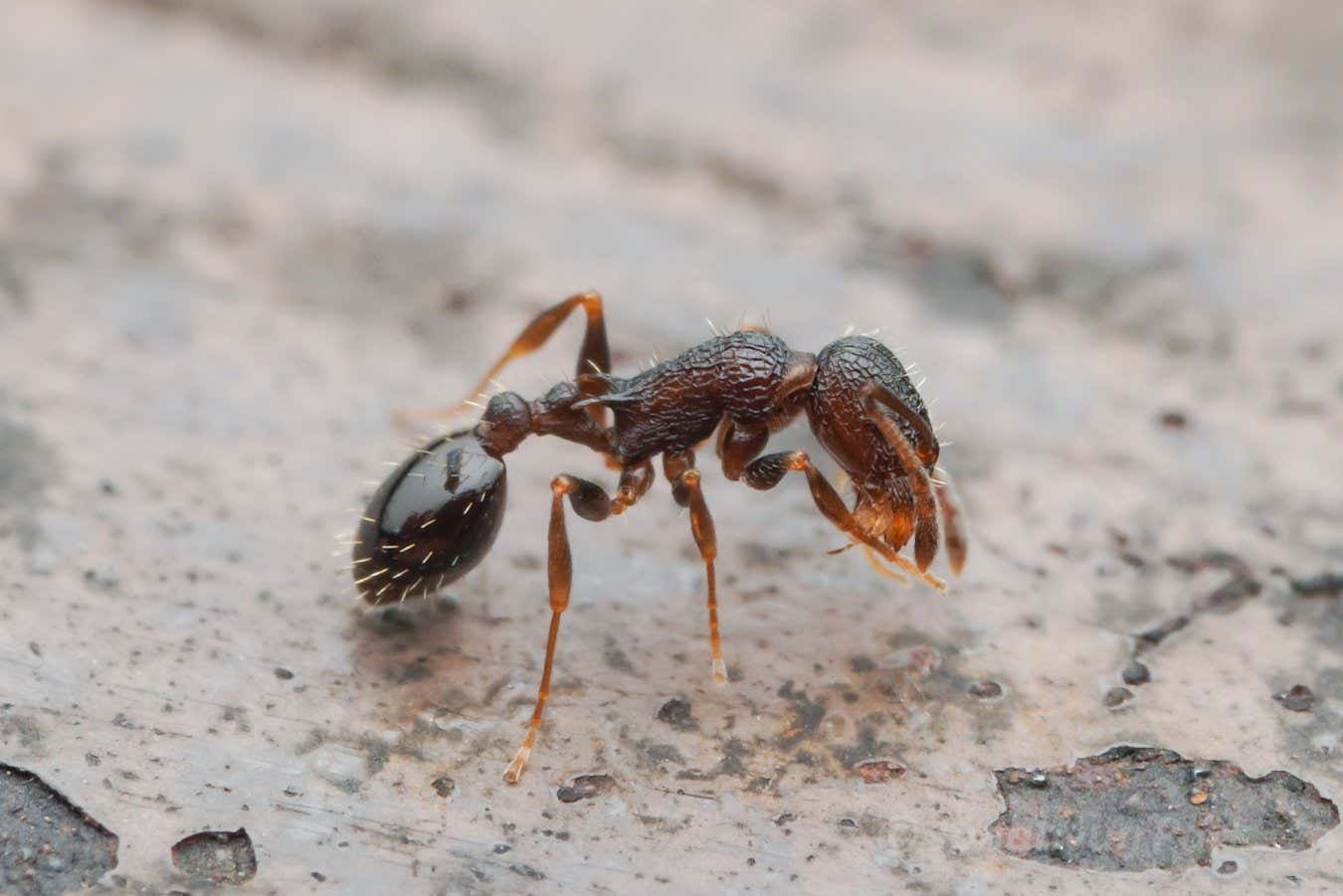
Astonishing Lab Confirmation After Decades of Suspicion (Image Credits: Images.newscientist.com)
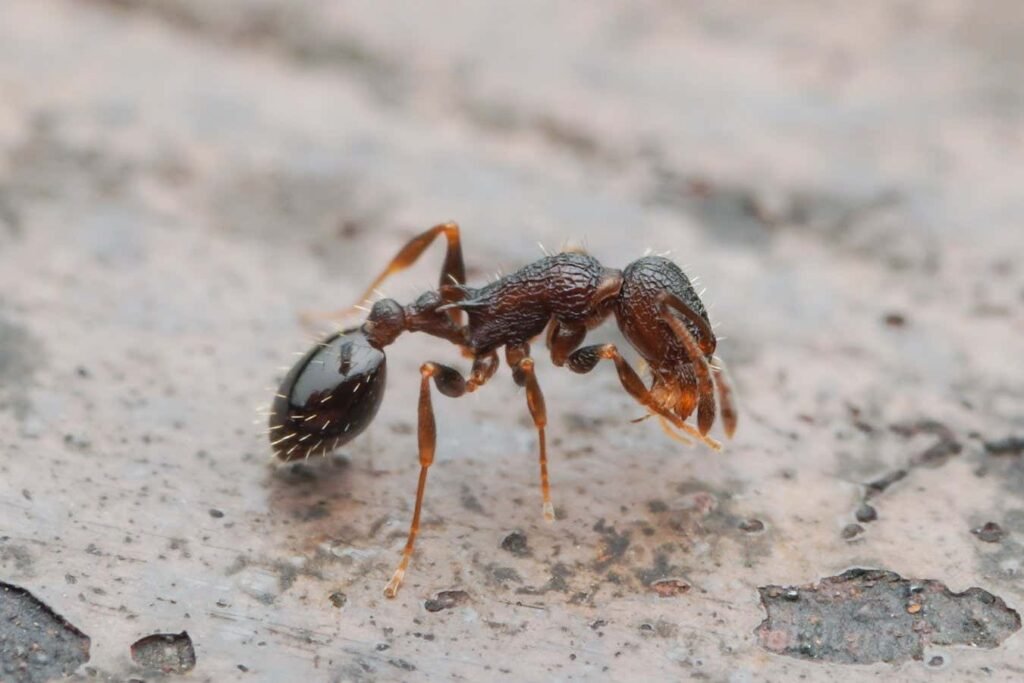
Japan – Researchers have unveiled a rare ant species where every individual functions as a queen, challenging long-held assumptions about insect social structures.[1][2]
Astonishing Lab Confirmation After Decades of Suspicion
Scientists suspected for more than 40 years that Temnothorax kinomurai produced only queens, but laboratory experiments provided the first definitive proof. Teams collected six colonies from Japanese forests and reared them under controlled conditions. They observed 43 queen offspring emerge, with no males or workers in sight. Further tests involved seven queens successfully taking over host nests, yielding 57 more queens. Microscopic analysis confirmed the absence of male genitalia and worker traits across all specimens.[1]
This breakthrough appeared in Current Biology, marking Temnothorax kinomurai as the sole known ant species lacking both males and workers. Jürgen Heinze of the University of Regensburg in Germany led the study. He described the finding as an entirely new form of social organization that adds excitement to ant diversity.[1]
Asexual Reproduction Fuels Queen Dominance
Temnothorax kinomurai queens reproduce through parthenogenesis, developing clones from unfertilized eggs without mating. This process ensures all offspring become queens, amplifying their numbers dramatically. A single queen can produce up to 100 daughters, each ready to establish her own parasitic outpost. Heinze noted that this mutation-driven parthenogenesis gives these queens a reproductive edge over sexual counterparts, who rely on scarce mates.[1]
Queens appear in two forms: winged young gynomorphs for dispersal and wingless intermorphs suited for nest life. Nests blend light brown parasitic queens with dark brown host workers, creating a deceptive harmony. This all-queen strategy eliminates the need for a labor force, as hosts handle rearing duties.[2]
Cunning Invasions and Host Deception
These ants thrive as social parasites targeting Temnothorax makora colonies. Invading queens sting the host queen to death and eliminate some workers, clearing the way for takeover. They then manipulate surviving host workers into raising their eggs as if they were their own. This infiltration succeeds despite high risks, with low takeover rates offset by sheer queen volume.[3]
The process unfolds in distinct steps:
- Scout queens infiltrate nearby T. makora nests.
- Stings dispatch the resident queen and select workers.
- Host workers accept parasitic eggs, mistaking them for familiar brood.
- Cloned queens emerge, perpetuating the cycle.
- Intermorph queens remain to oversee ongoing parasitism.
Heinze called this the final evolutionary step in social parasitism, showcasing insects’ adaptive flexibility.[1]
Evolutionary Insights from an All-Queen World
Temnothorax kinomurai deviates sharply from standard ant colonies, which feature one breeding queen, sterile female workers, and short-lived males. Parthenogenesis remains rare among ants, though common elsewhere in the insect realm. This species’ success stems from outsourcing labor to hosts while maximizing queen output. Such extremes highlight untapped evolutionary paths in social insects.
Endemic to Japan, the ants dwell in forest leaf litter, evading notice until rigorous study. Their discovery prompts questions about hidden biodiversity and parasitic innovations. Heinze emphasized how random mutations can spawn such radical shifts, boosting colony-founding odds.[1]
Key Takeaways
- Temnothorax kinomurai queens clone themselves asexually, producing only more queens.
- They parasitize T. makora by killing the host queen and hijacking workers.
- First confirmed all-queen ant species, confirmed via lab rearing of over 100 queens.
This parasitic powerhouse redefines ant society, proving nature’s ingenuity knows few bounds. What evolutionary surprises might lurk in other overlooked species? Share your thoughts in the comments.