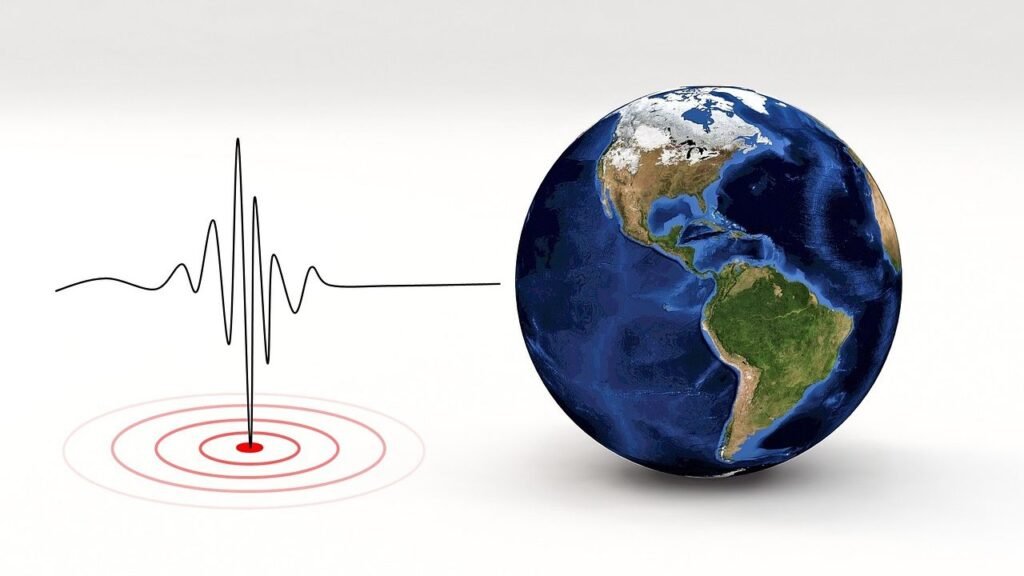

Right now, as you read this sentence, the ground beneath your feet just shuddered. You didn’t feel it. Nobody did. Yet somewhere deep in the planet’s crust, a silent tremor rippled outward across continents, detected by machines but invisible to human senses. It happens again. Then again. Every single 26 seconds, without fail, like a clock that never misses a tick.
Like clockwork, seismometers across multiple continents have detected a mysterious pulse since at least the early 1960s. Every 26 seconds, the Earth shakes. Not a lot, certainly not enough that you’d feel it, but just enough to register. What makes this genuinely mind-bending is that no one, not even the world’s best geophysicists, can fully agree on what’s causing it. It’s one of science’s strangest open secrets, quietly ticking away while the rest of the world goes about its business. Let’s dive in.
The Discovery That Changed How We Listen to Earth
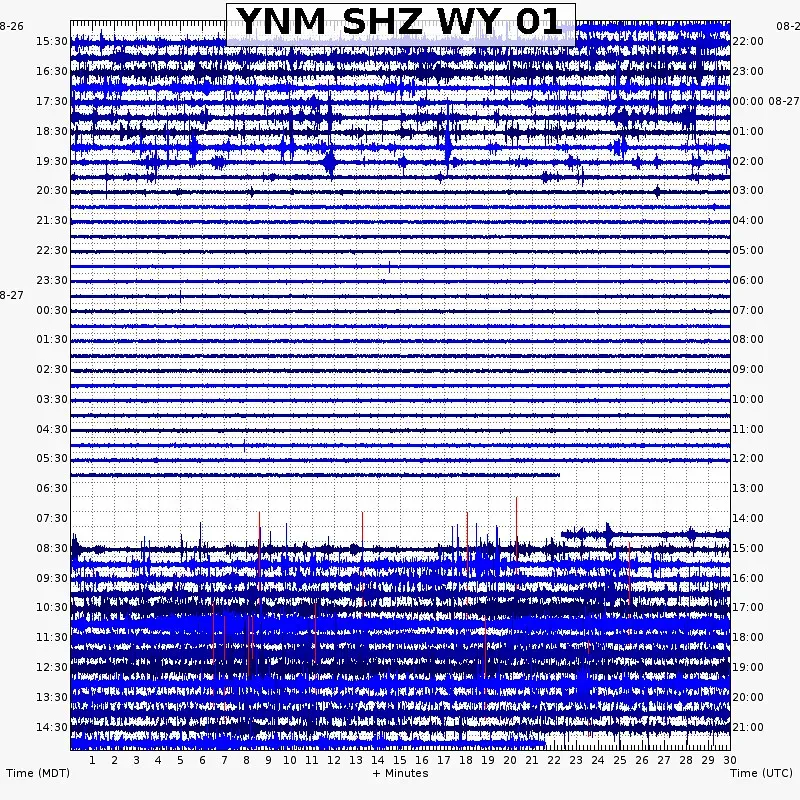
Imagine sitting in a lab in the early 1960s, staring at paper readouts of seismic data, and suddenly noticing something impossibly regular. That’s essentially what happened to one American researcher who first cracked open this mystery. The pulse, or “microseism” in geologist lingo, was first documented in the early 1960s by a researcher named Jack Oliver, then at the Lamont-Doherty Geological Observatory. It was an odd, rhythmic signal that kept showing up, day after day, with a consistency no natural event should have.
The fact that the Earth has a pulse every 26 seconds was discovered in the early 1960s, and the pulse was first recorded by American seismologist Jack Oliver, who also did important work in the development of the theory of plate tectonics. Here’s the thing though: Oliver was working with paper records, not digital instruments. He lacked the sophisticated instruments needed to investigate further. So the mystery got documented, filed away, and mostly forgotten for decades while the planet kept humming beneath everyone’s feet.
What Exactly Is a Microseism, and Should You Be Worried?
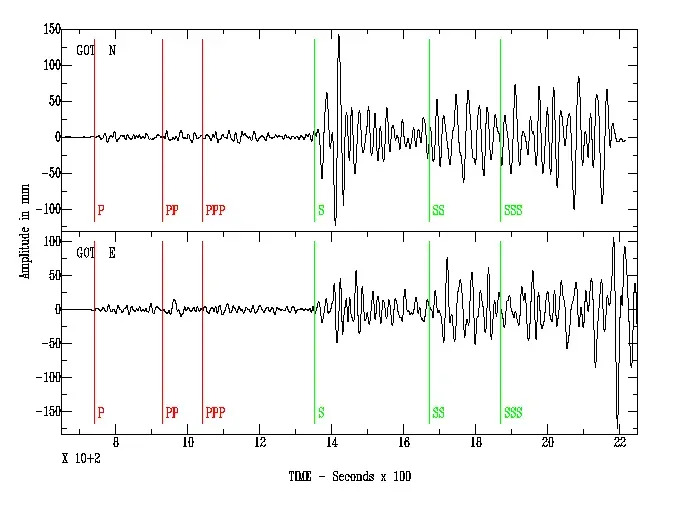
In seismology, a microseism is defined as a faint earth tremor caused by natural phenomena. Sometimes referred to as a “hum,” it should not be confused with the anomalous acoustic phenomenon of the same name. The term is most commonly used to refer to the dominant background seismic and electromagnetic noise signals on Earth, which are caused by water waves in the oceans and lakes. Think of it less like an earthquake and more like the planet’s version of a resting heartbeat. It’s background noise at a cosmic scale.
Every 26 seconds, like clockwork, a faint seismic tremor ripples through the Earth’s crust. Known as a “microseism,” it isn’t strong enough to knock over a vase, but it is distinct enough to be recorded by monitoring stations on multiple continents. So no, you don’t need to lose sleep over it. Because the conversion from ocean waves to seismic waves is very weak, the amplitude of ground motions associated with microseisms does not generally exceed 10 micrometers. That’s tinier than a single strand of human hair. The planet has a heartbeat, and it’s almost impossibly quiet.
The Source Location: A Tiny Corner of Africa Holds a Giant Secret
For years after Oliver’s initial discovery, scientists knew something was pulsing but had almost no idea where it was coming from. The technology simply wasn’t sharp enough. Then, decades later, a graduate student accidentally stumbled across the signal again. In 2005, then-graduate student Greg Bensen was working with seismic data at his lab at the University of Colorado, Boulder. His advisor walked in and asked him to show him what he was working on. As Ritzwoller tells it, Bensen pulled up some data, and there it was: a strong signal, coming from somewhere far off.
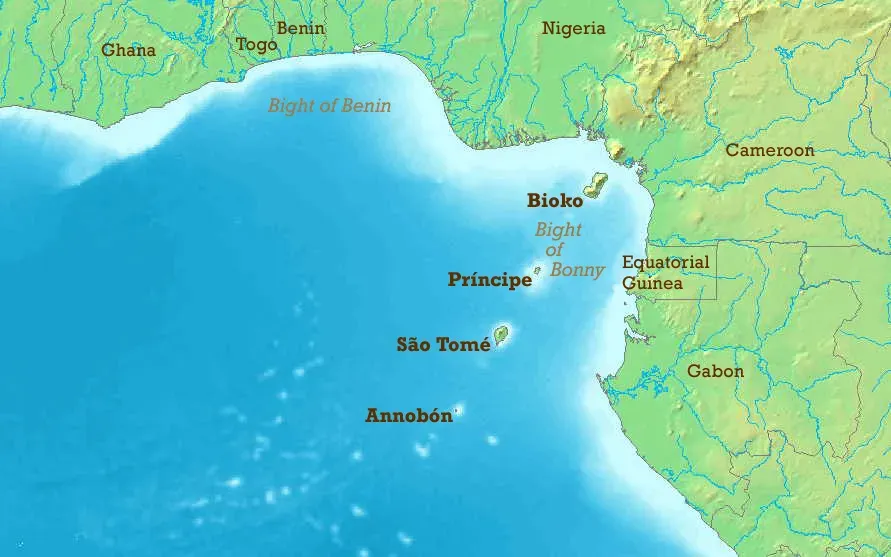
All signs pointed to real seismic activity. They were even able to triangulate the pulse to its origin: a single source in the Gulf of Guinea, off the western coast of Africa. They dug up Oliver’s and Holcomb’s work too, and published a study in 2006 in Geophysical Research Letters. More specifically, scientists have spent a lot of time listening to the pulse and even finding out where it comes from: a part of the Gulf of Guinea called the Bight of Bonny. A remote, mostly overlooked corner of the Atlantic Ocean somehow has the entire planet on a timer. Remarkable, honestly.
Theory One: Ocean Waves Drumming Against a Continental Shelf
The most widely discussed explanation involves ocean waves and the unique shape of the seafloor in the Gulf of Guinea. It’s actually a pretty elegant idea when you picture it. When waves travel across the ocean, the pressure difference in the water might not have much effect on the ocean floor. But when it hits the continental shelf, where the solid ground is much closer to the surface, the pressure deforms the ocean floor and causes seismic pulses that reflect the wave action. Think of it like pressing your finger rhythmically against a drumhead. The vibration travels.
In 2013, during the Seismological Society of America conference, a student named Garrett Euler furthered the source location of the pulse to the region called the “Bight of Bonny” in the Gulf of Guinea. He elaborated his hypothesis by adding that waves hitting and crashing against the coast might be the probable reason for this pulse. But this explanation was soon ruled out by most experts. The ocean wave theory is intuitive, yet the regularity of the pulse, that precise 26-second interval, is something ocean waves alone don’t easily explain. Waves are chaotic. This pulse is not.
Theory Two: A Volcano Hiding in Plain Sight
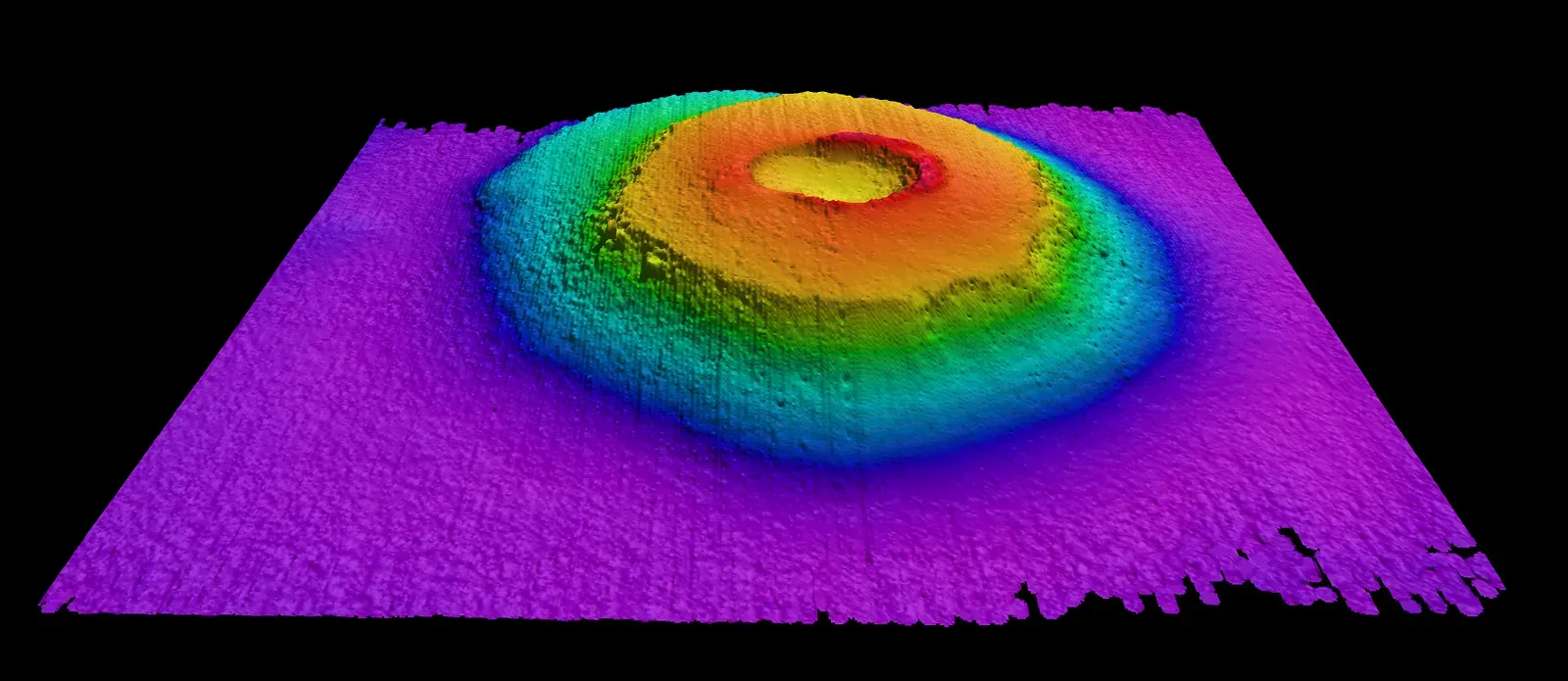
Here’s where it gets genuinely spooky. Right near the identified source of the pulse sits a volcano, and some researchers think that’s no coincidence at all. In a paper published in 2013, a team led by Yingjie Xia from the Institute of Geodesy and Geophysics in Wuhan, China, proposed that the most likely source of the 26-second pulse was not waves, but volcanoes. That’s because the pulse’s origin point is suspiciously close to a volcano on the island of São Tomé in the Bight of Bonny. Indeed, there is at least one other place on Earth where a volcano does cause a microseism with some similarities to this one.
Xia drew parallels to the Aso Volcano in Japan, which emits similar microseisms, suggesting that subterranean volcanic or hydrothermal activity may be responsible. Further developments of this theory propose a sealed, layered hydrothermal system, potentially with a fractured plug, that could emit regular gas or pressure pulses. This structure could naturally resonate at a frequency of 26 seconds, creating a mechanical metronome deep beneath the ocean floor. If you want a visual, imagine a pressure cooker with a slightly leaky valve, releasing steam in regular bursts. The Earth might literally be doing something similar under the sea.
The 2023 Breakthrough and the Mystery of “Frequency Glides”
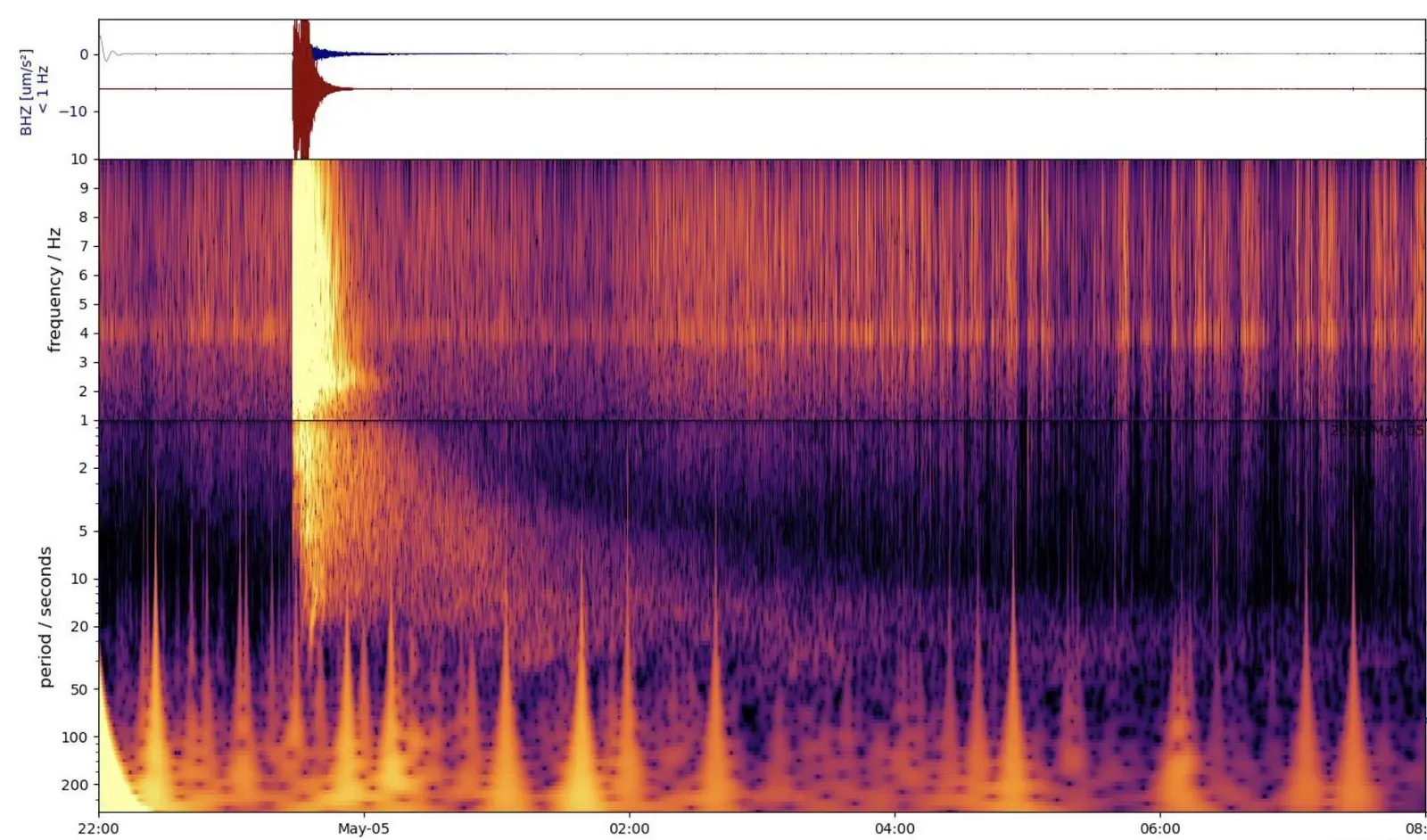
For decades, the debate sat largely dormant. Then a 2023 study published in Nature’s Communications Earth and Environment introduced something genuinely new to the conversation. A 2023 Nature study identified “frequency glides” accompanying the primary signal, subtle shifts in the spectrum that originate from the same fixed point in the Gulf of Guinea. These glides are like a note on a guitar that starts at one pitch and slowly bends. They’re not random. They come from the exact same spot as the pulse itself.
The stable characteristics of the tremors, their low frequency range, the implied large spatial scale, and the decades-long timescales where this phenomenon seems to have been active, all point towards a gap in our understanding of long period oceanic and volcanic signals. Since tremor is an important tool to monitor volcanoes, understanding this phenomenon may affect future forecasting of volcanic activity. That last part is worth sitting with. If scientists can crack this puzzle, the tools developed to do it could help predict volcanic eruptions elsewhere on the planet. Solving one mystery might unlock the keys to others.
Why Science Hasn’t Solved It Yet, and What That Tells You About Earth
You might wonder why, after more than six decades of knowing this pulse exists, science still hasn’t delivered a clean answer. Part of it, honestly, comes down to priority. Since the pulse does not cause any discomfort, nor is it apparently perceived except by advanced seismograph technology, nor does it cause any damage, it is not a priority. There are other, more important things that seismologists focus on in their research. When you’re racing to understand earthquakes that kill thousands, a quiet 26-second blip on a machine gets put on the back burner.
Although the 26-second pulse presents no threat to life or infrastructure, its scientific value is immense. It stands at the crossroads of oceanography, seismology, and volcanology, offering a rare opportunity to study how energy moves across the ocean-crust interface, and how subterranean systems can sustain rhythmic activity over long durations. In an era where missions to Mars and beyond dominate scientific headlines, this terrestrial mystery reminds us that the Earth still guards secrets as profound as any in outer space. That line hits differently the more you think about it. We’re out there scanning distant galaxies while our own planet keeps a secret locked beneath the Gulf of Guinea.
Conclusion: The Planet Is Talking. We Just Don’t Speak the Language Yet.
There’s something almost humbling about the 26-second pulse. Every 26 seconds, the pulse from Earth is captured by seismic stations around the world. The signals are most evident in West Africa, North America, and Europe. The pulse is one of the few signals being generated regularly, clearly, and accurately. In a world overflowing with data and answers-on-demand, this mystery simply refuses to be pinned down.
Since its humble identification in the 1960s, the Earth’s 26-second pulse has persisted with unwavering fidelity, marking time beneath the feet of generations. From the depths of the Gulf of Guinea, this tremor radiates outward, bearing silent witness to the planet’s inner cadence. While wave-seafloor interactions remain the most plausible explanation, the door remains open to volcanic and sedimentary influences, or a confluence of them all. Whether it’s waves, volcanoes, hydrothermal vents, or something nobody has named yet, one thing is certain: the planet is doing something on purpose-sounding schedule, and it isn’t stopping.
Maybe the most exciting scientific discoveries aren’t always light-years away. Sometimes they’re right beneath your shoes, pulsing quietly every 26 seconds. What does it say about human curiosity that we’ve known about this for over 60 years and still don’t have the answer? We’d love to know what you think. Drop your thoughts in the comments below.
Hi, I’m Andrew, and I come from India. Experienced content specialist with a passion for writing. My forte includes health and wellness, Travel, Animals, and Nature. A nature nomad, I am obsessed with mountains and love high-altitude trekking. I have been on several Himalayan treks in India including the Everest Base Camp in Nepal, a profound experience.