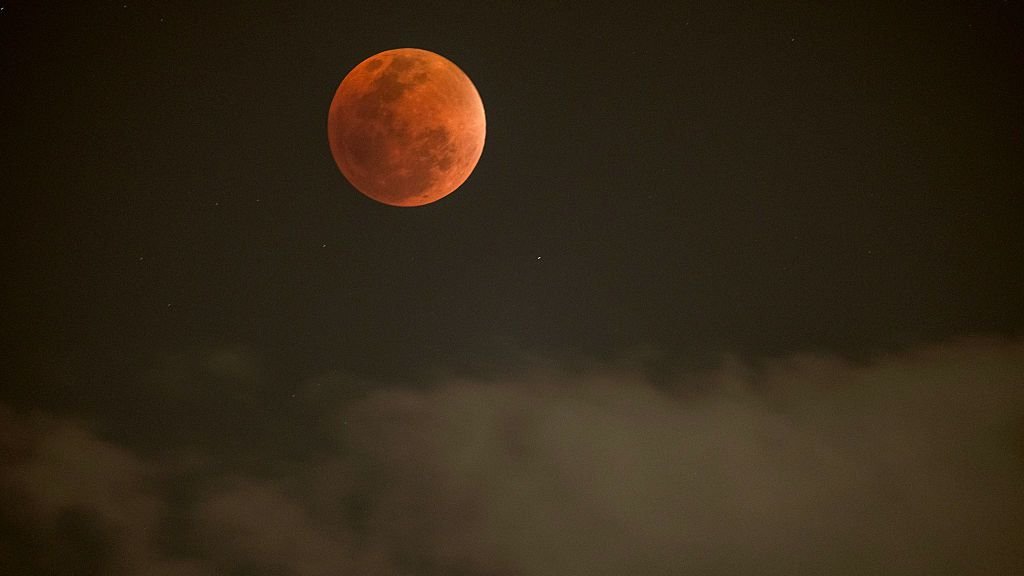
Earth’s Shadow Creates a Cosmic Drama (Image Credits: Cdn.mos.cms.futurecdn.net)
United States — A vivid total lunar eclipse will cast a reddish glow over the full moon in early morning hours on March 3, drawing eyes skyward across much of North America.[1][2]
Earth’s Shadow Creates a Cosmic Drama
The moon plunges into Earth’s shadow during this event, blocking direct sunlight and scattering longer red wavelengths across its surface. This phenomenon produces the eerie blood moon effect that has captivated observers for centuries. The alignment of sun, Earth, and moon reaches perfection around the March full moon phase.[3]
Totality lasts 58 minutes, with the entire eclipse spanning over five hours. Observers witness the moon gradually darken before emerging in deep crimson hues at maximum eclipse. Unlike solar eclipses, this display remains safe for naked-eye viewing from anywhere on Earth’s night side.[4]
Prime Times for Cities Across America
Western states enjoy the full show high in the sky, while eastern regions catch the dramatic peak near dawn. The penumbral phase begins around 3:33 a.m. EST, subtle at first as Earth’s faint outer shadow brushes the moon. Partial eclipse follows, with the dark umbra claiming more of the lunar disk.[5]
Totality arrives between 6:04 a.m. and 7:02 a.m. EST, peaking at 6:33 a.m. Local times vary:
- Los Angeles: Totality from 3:04 a.m. PDT
- Denver: 4:04 a.m. MST
- Chicago: 5:04 a.m. CST
- New York: 6:04 a.m. EST
- Washington D.C.: Maximum at 6:33 a.m. EST
Check local forecasts, as clear skies enhance the view in the Pacific Northwest and Rockies.[6]
Visibility Spans Continents, But US Gets Front Row
Northwest North America sees the eclipse from moonrise, ideal for coastal viewers in Alaska and Washington. Central Pacific and northeast Asia also witness the full sequence, but much of the U.S. mainland offers partial to total phases before sunrise. The moon sits near its average apparent size, given its position post-perigee.[3][7]
Binoculars or telescopes reveal surface details like craters bathed in red light. No special gear protects eyes, unlike solar events. Urban light pollution poses the main challenge; head to rural spots for pristine skies.
A Rare Treat Before Years of Wait
This marks the first total lunar eclipse visible across the Americas since March 2025. Skywatchers face a three-year gap until the next on December 31, 2028. The event coincides with the Worm Moon, adding cultural resonance from Native American traditions.[2][8]
NASA highlights the eclipse’s accessibility, urging families to step outside. Regulus, the lion’s heart star, hovers nearby for added wonder in some views.
Key Takeaways
- Totality peaks at 6:33 a.m. EST; lasts nearly an hour.
- Visible nationwide, best in western U.S.
- Safe and simple: just look up with clear skies.
As the blood moon fades into dawn, it reminds us of our place in the cosmic dance. Will you catch this fleeting spectacle? Share your plans in the comments.