
Imagine waking up one morning and finding out that in some other reality, you made one tiny different choice that completely changed your life. Maybe in another universe you never met your best friend, or you moved to a different country, or you never sent that risky message. The multiverse theory takes that wild feeling and cranks it up: it suggests there could be countless versions of you, each living out a slightly different story.
That idea is both thrilling and unsettling. It forces you to look at your own life like a branching tree of possibilities instead of one thin straight line. If even a fraction of these theories are right, then your regrets, your what-ifs, and your “if only I had…” moments might be playing out somewhere else for some other you. The question is: how seriously should we take this, and what does it actually mean for the version of you reading this right now?
What Do Scientists Mean by “The Multiverse”?

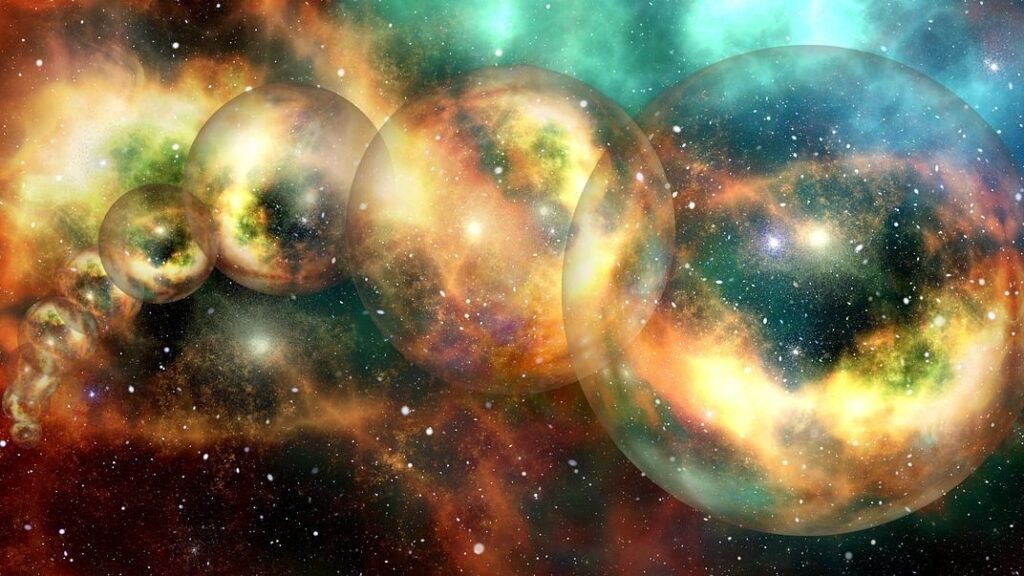
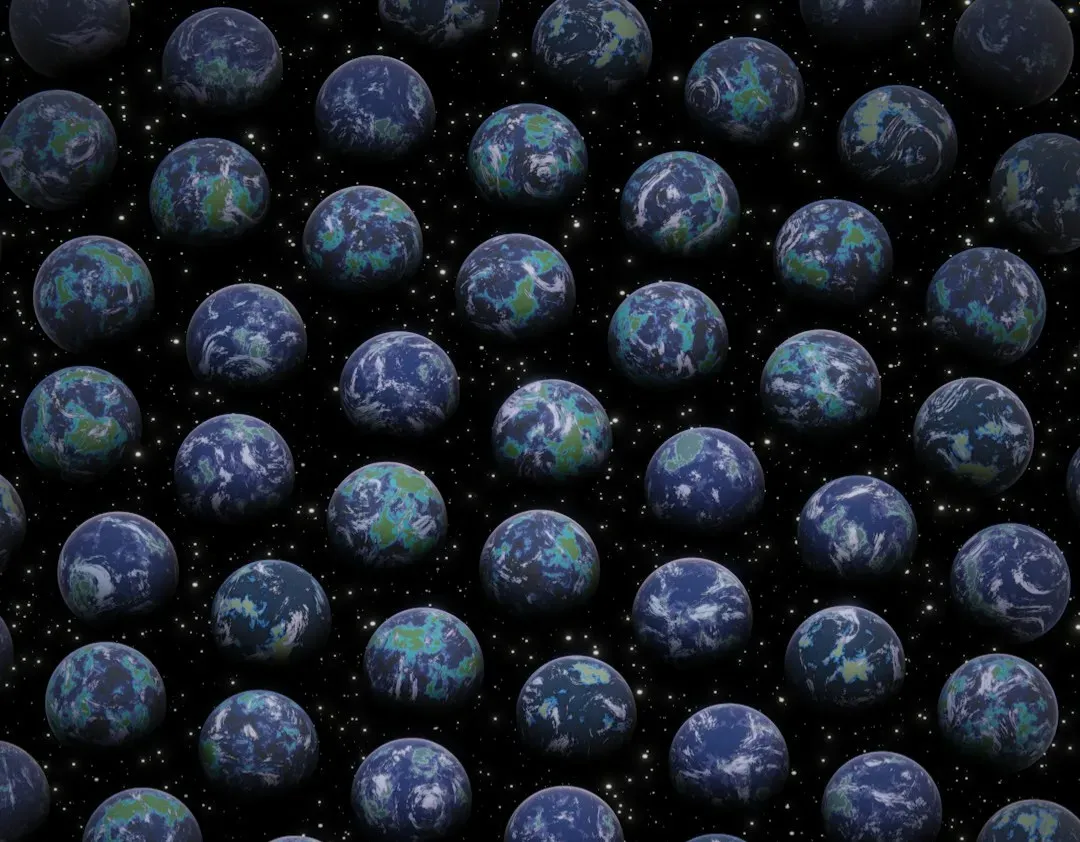
When physicists talk about a multiverse, they are not usually picturing a comic book-style portal to a world where you’re a pirate or a rock star, although that makes for great movies. They mean something far more technical: the idea that our universe might just be one bubble in a vast cosmic foam of many universes, each with its own physical conditions. In some versions of the theory, these universes might have different values of basic constants, like how strong gravity is or how fast light travels.
The word “multiverse” is actually a big umbrella for several different ideas that sometimes get mashed together in pop culture. There’s the cosmological multiverse from inflation theory, the many-worlds interpretation of quantum mechanics, and other more speculative versions. They do not all say the same thing, and not all of them involve another you making different life choices. But they share one shocking suggestion: what we think of as “the universe” might not be the full story.
Cosmic Inflation: A Universe That Never Really Stops Growing
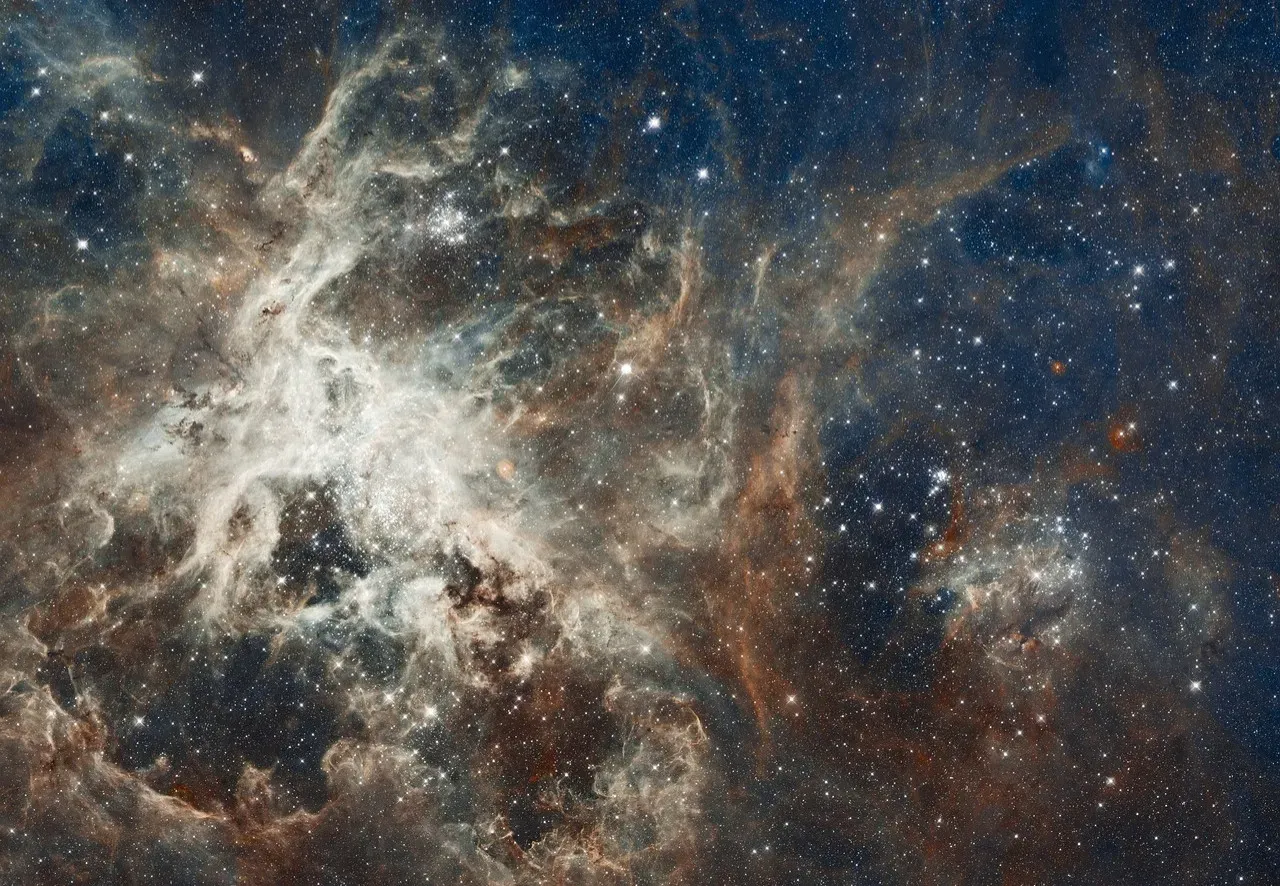
One of the most respected roads to a multiverse comes from something called cosmic inflation. According to current cosmology, our universe expanded incredibly rapidly in the first sliver of a second after the Big Bang, much faster than the speed of light, smoothing everything out. Many inflation models suggest this process did not just happen once and end; instead, it keeps going in other regions, forever bubbling out new “pocket universes.” Our universe would just be one such bubble in a huge, possibly endless cosmic landscape.
In this picture, other bubbles are completely cut off from us by enormous distances that light can never cross, like islands in a dark ocean that can never see each other. These other universes might have different physical parameters, maybe even different kinds of particles, which means they might be utterly hostile to life or strangely favorable to it. We cannot hop between these bubbles, at least with anything like current physics, so they are more like philosophical consequences of our best models rather than travel destinations. Still, the math that leads to this endless bubbling is taken seriously by many cosmologists today.
Many-Worlds: Every Quantum Flip Creates a New Reality
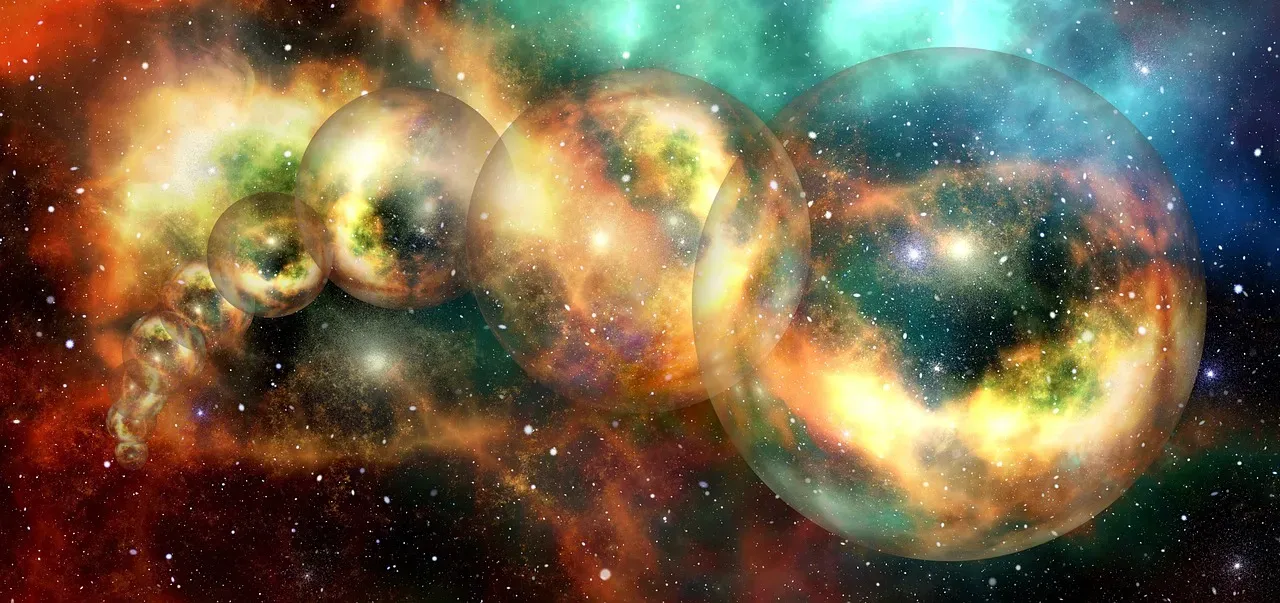
The multiverse idea that most directly suggests “infinite versions of you” comes from quantum mechanics, specifically the many-worlds interpretation. Quantum physics tells us that at tiny scales, particles exist in a haze of possibilities until a measurement is made. The standard way we talk about it in textbooks says that the wave of possibilities “collapses” into one definite outcome when measured. Many-worlds takes a different path: instead of collapsing, the universe itself splits into branches, and every possible outcome actually happens in its own branch.
In this view, when you make a decision, it is not that you freely pick one path and the others vanish. Rather, the universe branches into versions where each possible outcome is realized, and so are versions of you that experience each one. There is a you who took the job and a you who turned it down, a you who made the phone call and a you who stayed silent. These branches do not interact after they split, so you will never meet your other selves, but mathematically they are all there in the structure of the wave function. Whether this is a deep description of reality or just an elegant way of thinking about quantum math is still hotly debated.
Are There Really Infinite Copies of You? How That Could Work

The idea of “infinite yous” sounds like pure science fiction, but certain versions of the multiverse do point in that direction. If space is truly infinite and matter is arranged in every possible way somewhere, then after a mind-bogglingly huge distance, there could be regions of space that are almost exact copies of our observable universe. That means same galaxies, same planet, same town, and eventually, the same you, down to your memories and thoughts, just living a different next second. This comes from basic probability: if you have infinite rolls of the cosmic dice, every combination shows up somewhere.
In the quantum many-worlds picture, you do not have clones sitting side by side in space. Instead, the branching structure of reality itself contains uncountably many versions of you, diverging whenever microscopic events could have gone another way. It is not that you feel yourself splitting; you only ever experience one thread, like following one path through a dense forest of alternatives. Whether this counts as “infinite versions of you” depends on how you think about identity: are those other branches really you, if you will never be aware of them and they will never be aware of you?
Evidence or Just Elegant Speculation?

Here’s the uncomfortable part: right now, we do not have direct experimental evidence for other universes. Our telescopes can only see out to a certain distance because the universe has a finite age, and other cosmic “bubbles” from inflation, if they exist, might be forever beyond that horizon. A few researchers have searched for subtle signatures, like strange patterns in the cosmic microwave background that could hint at collisions with other universes, but nothing has been confirmed in a solid, universally accepted way.
For many-worlds, the story is different but just as tricky. The math of quantum mechanics works the same whether you say the wave function collapses or branches into many worlds; both make the same predictions for experiments we can do in the lab. That means we cannot yet design a clean test to say which interpretation is right. Some physicists like many-worlds because it avoids the messy idea of collapse and treats the math straightforwardly, while others are deeply skeptical of multiplying unseen worlds without a clear way to detect them. For now, the multiverse sits in a strange place between physics and philosophy.
Why the Multiverse Keeps Showing Up in Movies and Stories

It’s not an accident that multiverse stories have exploded in movies, series, and games over the last decade. The idea taps straight into everyday feelings of regret, curiosity, and nostalgia: what if I had stayed, what if I had left, what if I had answered that call? A multiverse plot turns those quiet late-night questions into literal worlds you can visit, where the character meets the person they could have been. It gives writers an excuse to remix characters, settings, and timelines in wild ways while still leaning on serious physics terms to keep it from feeling totally random.
On some level, multiverse fiction is just a stylized way of wrestling with identity and choice. When you see a character standing face to face with another version of themselves, the real conversation is about who they are right now versus who they could have become. Science usually says you can’t meet your alternate selves, but emotionally, we kind of do that every day when we imagine what could have been. In a strange way, these stories can make the real science more approachable, even if they are wildly inaccurate about the actual physics.
So What Does It Mean for Your Life Right Now?
Even if the multiverse turns out to be real in some deep physical sense, you still only get to live one chain of experiences as far as you know. You do not get reports from your other selves, no matter how many might exist in theory, so your regrets and hopes stay grounded in this single thread. Thinking that somewhere there’s a version of you who never made that big mistake can be comforting for a moment, but it does not fix anything here. At the same time, it can also loosen the grip of perfectionism a bit: maybe you do not have to live the one ideal life when there might be uncountably many lives branching off anyway.
There is also something quietly humbling about the multiverse idea. It reminds you that, whether or not there are infinite versions of you, this universe already offers you more complexity and mystery than you can ever fully grasp. You are a tiny pattern in a huge, perhaps endlessly branching cosmic story, yet your feelings and choices still matter deeply to the people around you and to your own sense of meaning. If anything, the possibility of other yous is an invitation to pay more attention to this one. After all, if countless paths are possible in theory, the one you are walking right now is still the only one you actually get to feel.