
Have you ever seen something out of the corner of your eye only to realize it wasn’t there at all? Or felt absolutely certain about a memory that later turned out to be completely wrong? It’s unsettling to admit, but what you experience as reality might not be the objective truth you think it is. Your brain is working overtime every single second, crafting a version of the world that feels solid and real – yet it’s actually a carefully constructed interpretation.
This isn’t some abstract philosophical puzzle. It is a fact of neuroscience that everything we experience is a figment of our imagination. Your brain isn’t just passively recording what happens around you like a camera. Instead, it’s actively predicting, filtering, and assembling your entire experience from scratch. Let’s be real, that’s both fascinating and a little bit terrifying when you really think about it.
Your Brain Is a Prediction Machine, Not a Recorder
Here’s the thing most people don’t realize: All our perceptions are active constructions, brain-based best guesses at the nature of a world that is forever obscured behind a sensory veil. Your brain doesn’t wait around for sensory data to tell it what’s happening. It’s constantly generating predictions about what’s going to happen next based on everything you’ve experienced before.
Your brain constantly and invisibly guesses what to do next and what you will experience next, based on memories that are similar to the present moment. Think about walking into your kitchen. Before you even flip the light switch, your brain has already predicted what you’ll see, hear, and smell. When the actual sensory information arrives, it’s mostly just checking whether those predictions were right. If they are, great – your brain saves energy. If they’re wrong, it quickly updates the prediction.
The brain constructs a representation of what it thinks is happening and what it predicts will happen, and you perceive this representation as reality. This predictive processing happens so fast and so seamlessly that you never notice it. You just experience what feels like a direct window onto the world. Except it’s not a window at all – it’s more like a simulation.
Colors Don’t Actually Exist Outside Your Head
Want proof that your brain creates reality? Let’s talk about color. We have known since Isaac Newton that colors do not exist out there in the world. Instead they are cooked up by the brain from mixtures of different wavelengths of colorless electromagnetic radiation. That’s right – when you look at a red apple, the redness you see isn’t a property of the apple itself. It’s something your brain invented.
Colors are a clever trick that evolution has hit on to help the brain keep track of surfaces under changing lighting conditions. Your visual system takes in electromagnetic waves and transforms them into the rich, vibrant world of color you experience. The apple reflects certain wavelengths of light, but the sensation of redness exists only in your mind.
Even more mind-blowing: We humans can sense only a tiny slice of the full electromagnetic spectrum, nestled between the lows of infrared and the highs of ultraviolet. Every color we perceive, every part of the totality of each of our visual worlds, comes from this thin slice of reality. There’s a whole universe of information out there that your brain simply can’t access. So much for seeing things as they really are.
Illusions Reveal the Brain’s Shortcuts and Tricks

The story usually told about illusions is that they exploit quirks in the circuitry of perception, so that what we perceive deviates from what is there. Optical illusions aren’t just fun party tricks – they’re windows into how your brain actually works. When you fall for an illusion, you’re getting a rare glimpse behind the curtain of consciousness.
Recent research has uncovered something remarkable. Scientists have discovered specialized IC-encoder neurons that make the brain “see” illusions, such as squares or triangles that aren’t truly there. These neurons respond to patterns your brain expects to see, even when those patterns are incomplete or entirely absent. Hyeyoung Shin, Ph.D. (now with Seoul University), Hillel Adesnik, Ph.D., and their team discovered a special group of cells called IC–encoder neurons that tell the brain to see things that aren’t really there as part of a process called recurrent pattern completion.
What’s happening is that higher brain areas interpret ambiguous information and then send signals back down to lower visual areas. The study findings change the paradigm of vision and perception as a passive process where we simply receive and “take in” information from the world around us to an active one where our perception of reality is interpreted and constructed by a series of complex brain calculations that then influence what we actually see. Your vision isn’t like a camera – it’s more like a storytelling brain.
Your Brain Filters Out Most of What’s Happening Around You
At any given moment, your senses are being bombarded with millions of bits of information. Sensory gating describes neural processes of filtering out redundant or irrelevant stimuli from all possible environmental stimuli reaching the brain. Also referred to as gating or filtering, sensory gating prevents an overload of information in the higher-order centers of the brain. Without this filtering system, you’d be completely overwhelmed.
To make adaptive decisions, organisms must appropriately filter sensory inputs, augmenting relevant signals and suppressing noise. Your brain is constantly making decisions about what deserves your attention and what can be safely ignored. That conversation happening across the room? Your brain might tune it out entirely. That text notification? Suddenly it’s the only thing you can focus on.
Research shows that the circuit they identified, which is controlled by the prefrontal cortex, filters out unwanted background noise or other distracting sensory stimuli. When this circuit is engaged, the prefrontal cortex selectively suppresses sensory input as it flows into the thalamus, the site where most sensory information enters the brain. This happens automatically, outside your conscious awareness. You’re literally not experiencing most of reality – your brain is editing it out before you even know it’s there.
Memory Shapes What You See Right Now
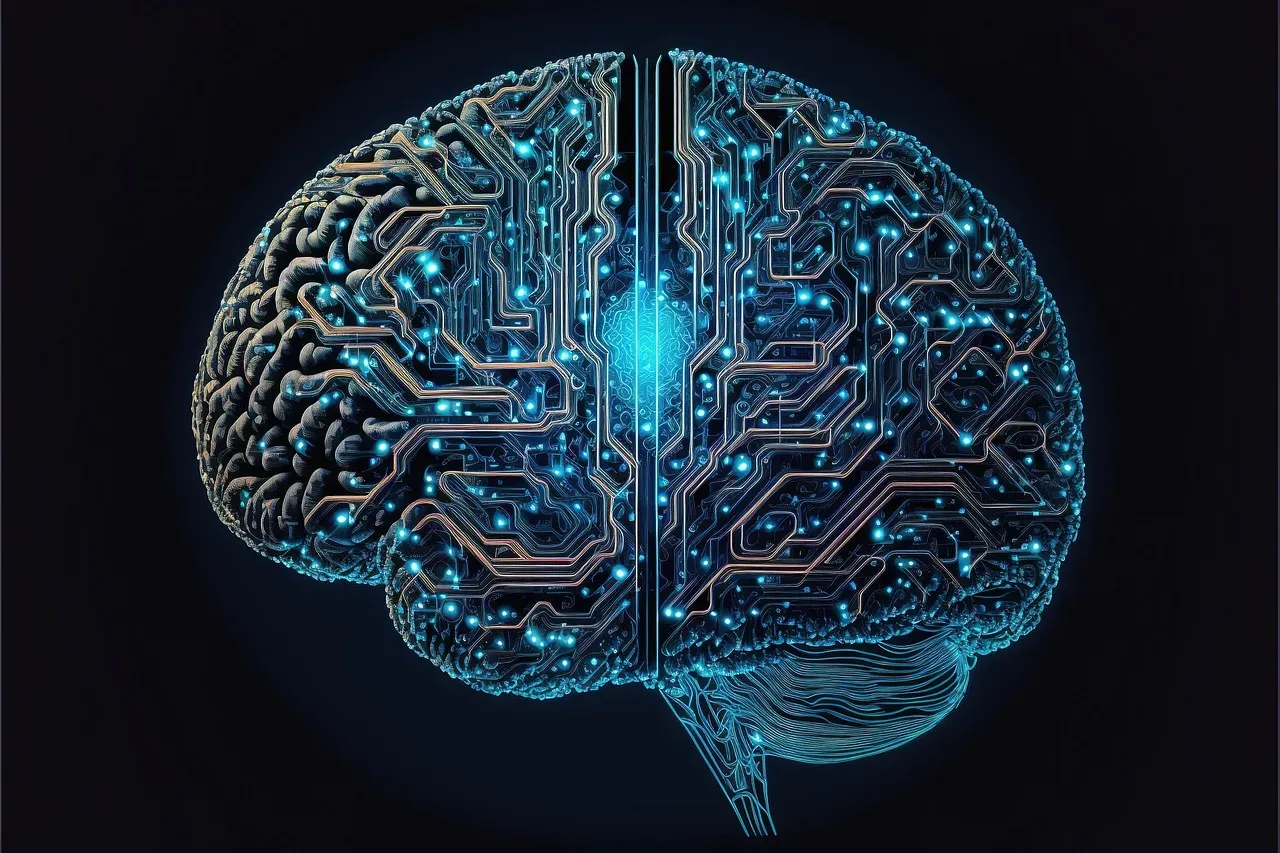
Your past experiences don’t just influence how you remember things – they actively shape what you perceive in the present moment. As you perceive the world around you, your brain draws on information relayed by your senses as well as information inferred from your past experiences. Every single perception you have is colored by everything you’ve learned and experienced before.
When it’s making a prediction, it’s creating a category of instances from the past which are similar in some way to the present, in order to predict what’s going to happen next, what the brain has to do next, and what your experience will be next. This is why two people can witness the exact same event and come away with completely different accounts of what happened. Their brains are constructing different realities based on different prior experiences.
Your feelings and expectations can bias your brain’s predictions, like when you’re feeling nervous and your expectations about the situation make you think someone looks angry when they aren’t. If you’re anxious, your brain is more likely to interpret neutral faces as threatening. If you’re in a good mood, the same neutral expression might seem friendly. The face hasn’t changed – but your reality has.
Controlled Hallucinations Are How Normal Perception Works
This might sound extreme, but neuroscientists have a term for everyday perception: controlled hallucination. Rather than being a passive registration of an external objective reality, perception emerges as a process of active construction – a controlled hallucination, as it has come to be known. Your brain is hallucinating all the time – it’s just that most of the time, those hallucinations are kept in check by sensory input.
Your brain predicts what the scene should look and sound and feel like, then it generates a hallucination based on these predictions. It’s this hallucination that you experience as the world around you. The sensory data coming in through your eyes and ears acts as a reality check, tweaking the hallucination when necessary to keep it aligned with what’s actually out there.
Neuroscientists like to say that your day-to-day experience is a carefully controlled hallucination, constrained by the world and your body but ultimately constructed by your brain. When this system malfunctions – when the brain’s predictions stop being properly constrained by sensory input – that’s when people experience true hallucinations, like those seen in schizophrenia or certain neurological conditions. The difference between normal perception and hallucination is one of degree, not kind.
Everyone Lives in Their Own Slightly Different Reality
Here’s where things get really interesting for understanding human disagreement. The reality we experience – the way things seem – is not a direct reflection of what is actually out there. It is a clever construction by the brain, for the brain. And if my brain is different from your brain, my reality may be different from yours, too. This isn’t just philosophical speculation – it’s a biological fact.
People whose brains make and integrate predictions in similar ways are likely to have more similar experiences, while differences in prediction patterns may explain why individuals perceive the same reality differently. Cultural background, personal experiences, emotional state, and even professional training all shape the prediction models your brain uses. Recent research found that Radiologists are not entirely immune to the illusion, but are much less susceptible. It seems radiologists’ superior perception is a result of their extensive training.
Each of us lives in a version of reality shaped by our own assumptions and predictions. This helps explain why political debates can feel so impossible, why eyewitness testimony is notoriously unreliable, and why your version of an argument might be genuinely different from the other person’s. You’re not just interpreting the same facts differently – you’re literally experiencing different realities.
Understanding This Changes Everything
So what do we do with this knowledge? Understanding the constructive, creative mechanisms of perception has unexpected social relevance. Perhaps once we can appreciate the diversity of experienced realities scattered among the billions of perceiving brains on this planet, we will find new platforms on which to build a shared understanding and a better future. Recognizing that your reality is constructed rather than directly perceived can make you more humble and more curious about other perspectives.
It also means you have more agency than you might think. Our brains are constantly trying to fill in the blanks and with its best guess of what’s out there. Because of this guesswork, our perceptions depend on our experiences, leading each of us to perceive and interact with the world in a way that’s uniquely ours. You can actively shape your perceptual reality by exposing yourself to new experiences, challenging your assumptions, and being aware of how your mood and expectations color what you see.
The brain’s construction of reality isn’t a bug – it’s a feature that’s kept humans alive and thriving for millennia. But it comes with limitations and biases we should acknowledge. Your experience feels absolutely real and certain, but it’s always an interpretation, always a best guess. That gap between perception and reality is where wisdom begins. What assumptions might you be making right now that are shaping what you see? It’s worth thinking about.