
You’ve seen plenty of mountains and rivers in your life, maybe even a few impressive waterfalls. Those are all nice to look at, sure. Yet there are formations around our planet that stop you in your tracks and make you question whether you’re standing on Earth or in some fantasy world designed by a particularly creative architect.
Some of these wonders look like they belong in a science fiction movie or were sculpted by ancient civilizations with technology we don’t understand. Let’s be real, at first glance, it’s hard to believe these structures formed purely from wind, water, ice, and millions of years of patience. Yet they did. So let’s dive into these mind-bending marvels of geology that’ll make you appreciate just how imaginative nature can be.
The Wave in Arizona: Nature’s Most Surreal Sandstone Sculpture
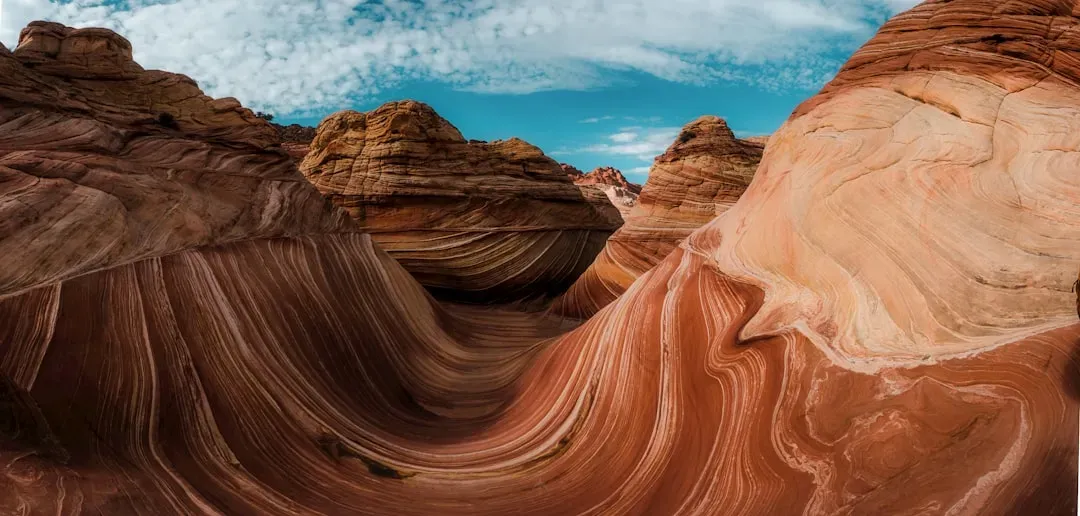
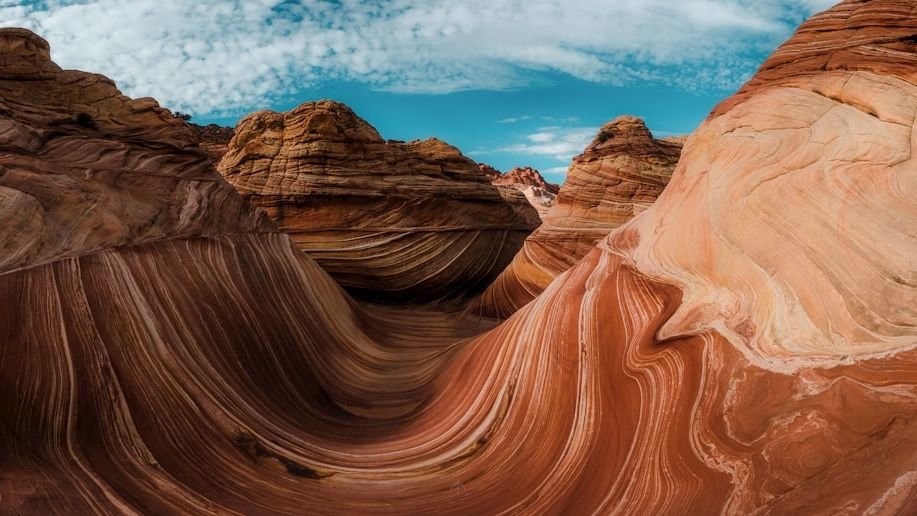
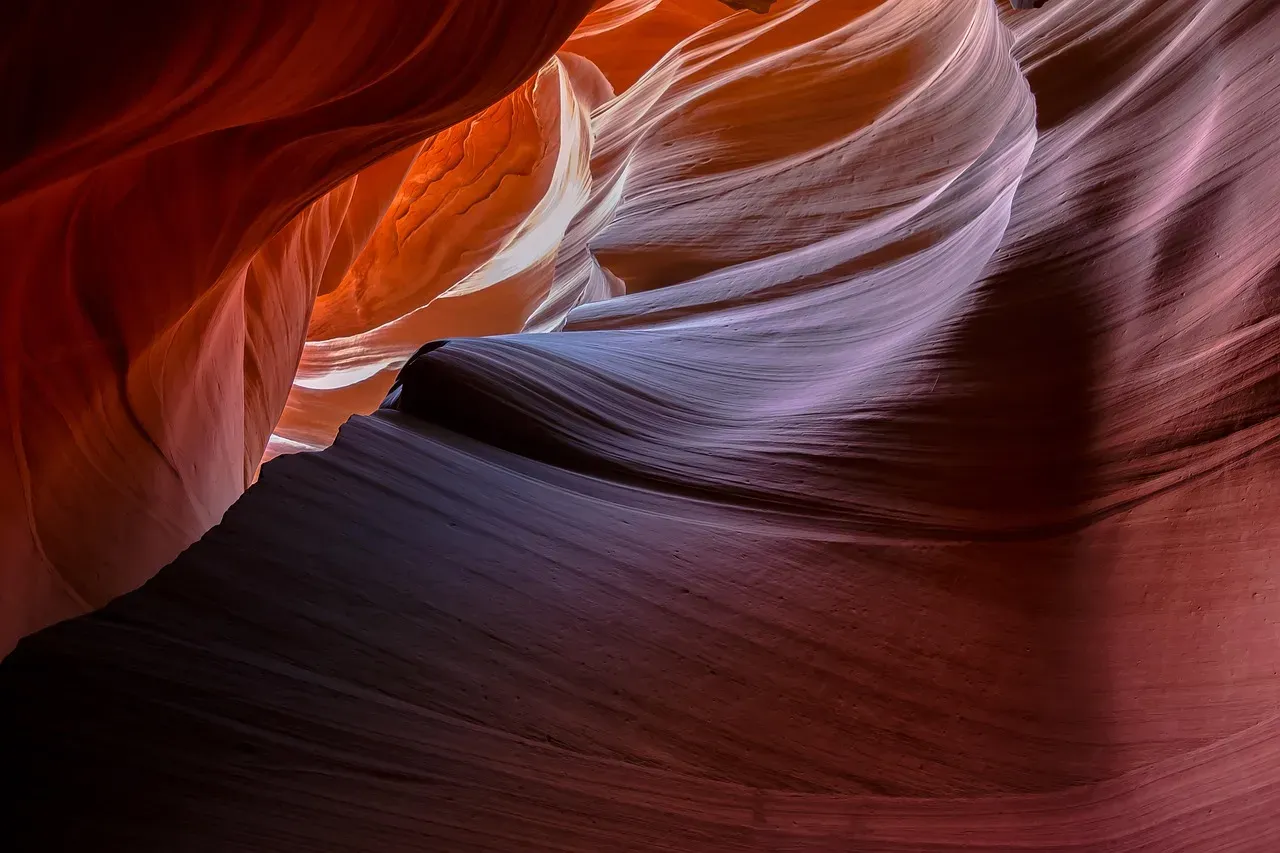
The Wave, located in the Coyote Buttes area of the Paria Canyon-Vermilion Cliffs Wilderness in Arizona, USA, is a mesmerizing sandstone formation renowned for its unique geological features. The Wave’s distinct undulating patterns and vibrant colors have captivated visitors for years. Walking through this formation feels like stepping into a frozen ocean carved from stone, with waves of rock rippling in every direction.
The formation is primarily composed of Navajo Sandstone, which was deposited during the Jurassic period, approximately 190 million years ago. The soft and cross-bedded sandstone created an ideal canvas for the sculpting forces of nature. The smooth sandstone canyon of The Wave was carved by the ceaseless action of water and wind. At first, runoff seeped into cracks in the bedrock, widening them, then gusts cut deep troughs in the soft rock. What’s particularly frustrating for eager visitors is that access to The Wave is limited and tightly regulated to preserve its pristine condition. A limited number of permits are granted daily through a lottery system, ensuring the protection and conservation of this natural masterpiece.
Giant’s Causeway: Ireland’s Hexagonal Masterpiece
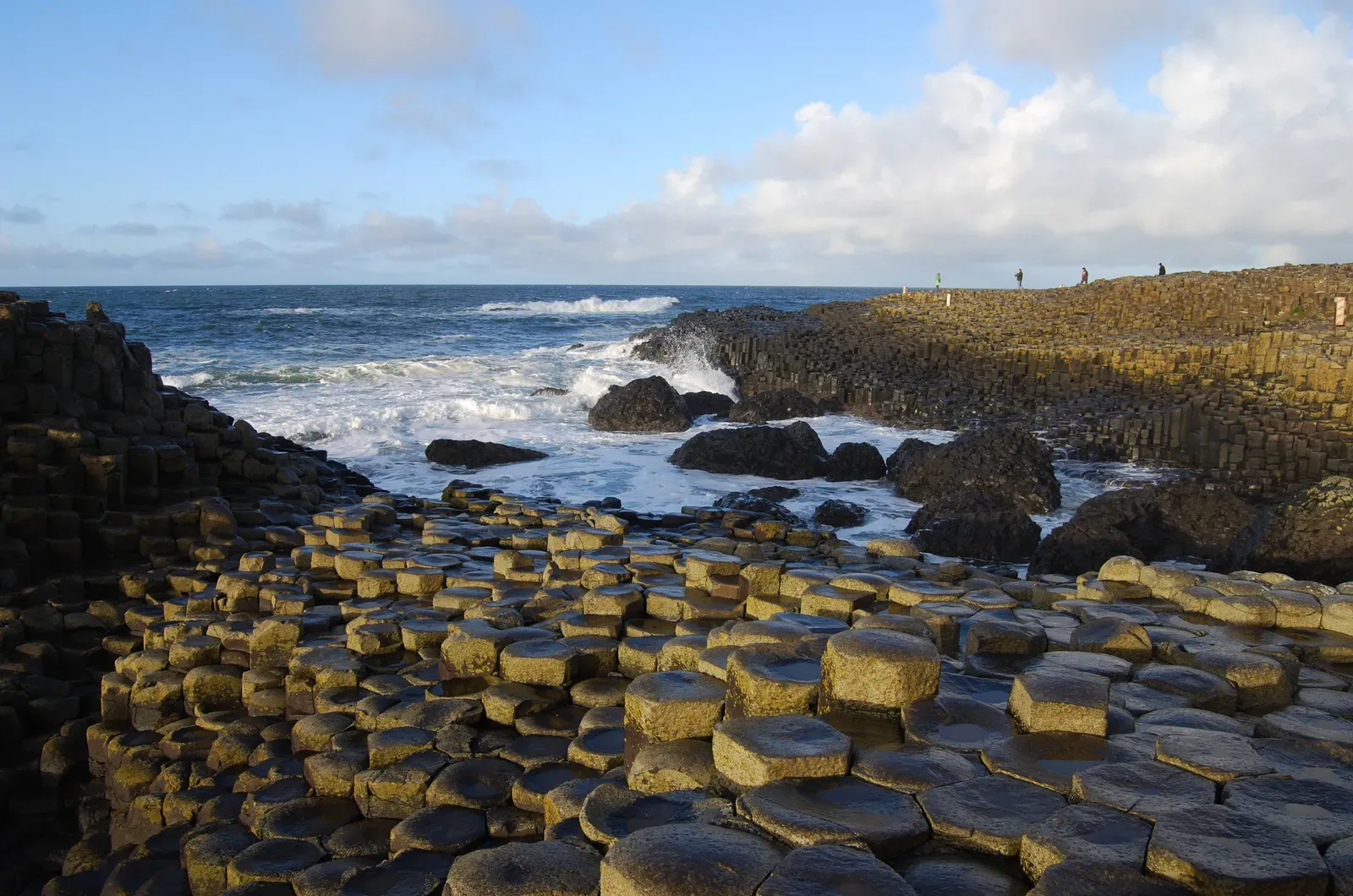
These 40,000 or so basalt columns are one of the most popular attractions this side of the UK. Hexagonal in shape and staggered side-by-side, the Giant’s Causeway is a rock formation resulting from volcanic fissures nearly 60 million years ago. Honestly, when you see these columns for the first time, your brain struggles to accept they’re natural. They look too perfect, too deliberately shaped.
As volcanic activity pushed the basalt through chalk, the columns shot in vertical direction. As they cooled, they cracked forming a hexagonal shape. Although the columns rise up to 12 meters (36 feet) high and are marvels to view, this causeway has another amazing feature. Many of the columns have eroded until only the tops are visible. This creates an intricate cobblestone type natural walkway, so detailed that it appears as if stone masons laid them. The locals, of course, prefer a more colorful explanation involving an Irish giant named Finn McCool building a bridge to Scotland, which I think adds character to an already spectacular site.
The Eye of the Sahara: A Bullseye From Space
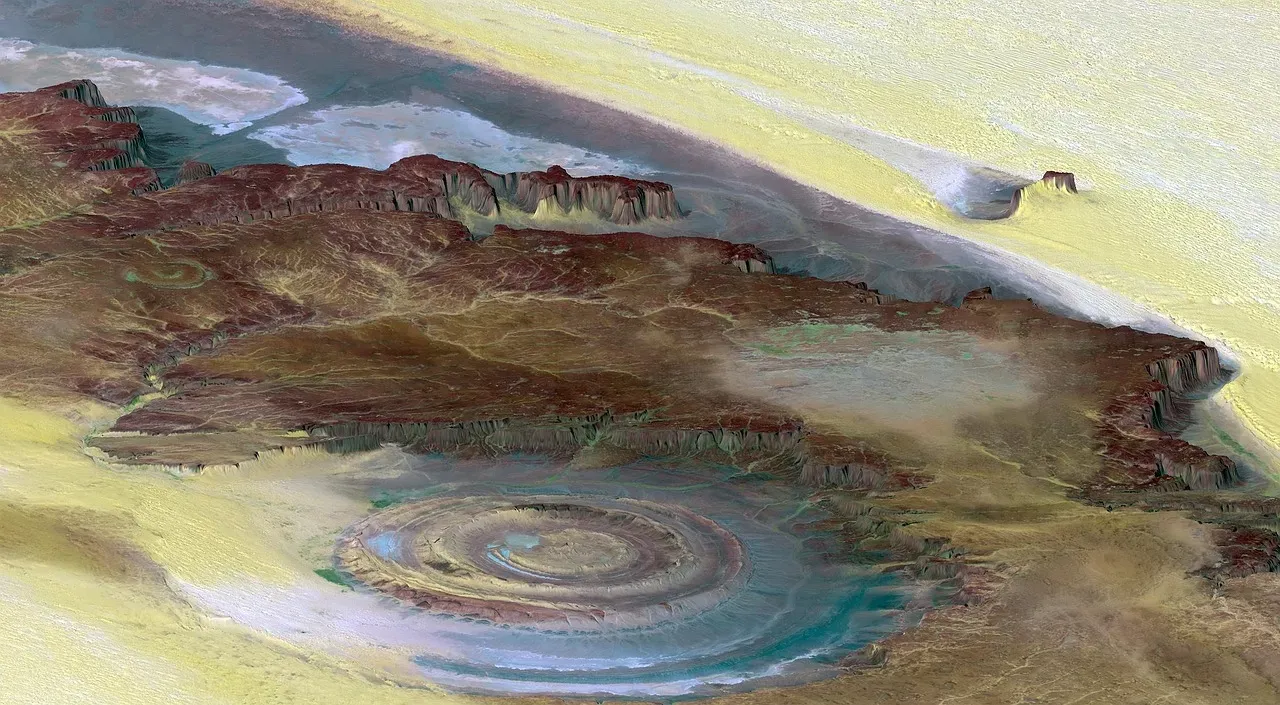
The Eye of the Sahara, also known as the Richat Structure, is a 28-mile-wide site of huge concentric circles found in the western African nation of Mauritania. Geologists initially thought the site was created by an asteroid impact, but there isn’t enough melted rock among the rings to support this theory. Similarly, there’s no evidence to suggest a volcanic eruption. So what created this massive target visible from space? Here’s the thing: scientists still don’t completely agree.
The most accepted current theory involves erosion of layers of sedimentary rock over millions of years, creating the circular pattern we see today. New Age enthusiasts hint that the Eye of the Sahara could represent the remains of the mythical sunken island of Atlantis, based on Plato’s allegory. While that’s certainly more exciting than slow erosion, the geological evidence points to natural forces at work. Still, you can’t help but feel a bit of wonder when something this perfectly circular emerges from pure geological processes.
Blood Falls in Antarctica: The Crimson Mystery
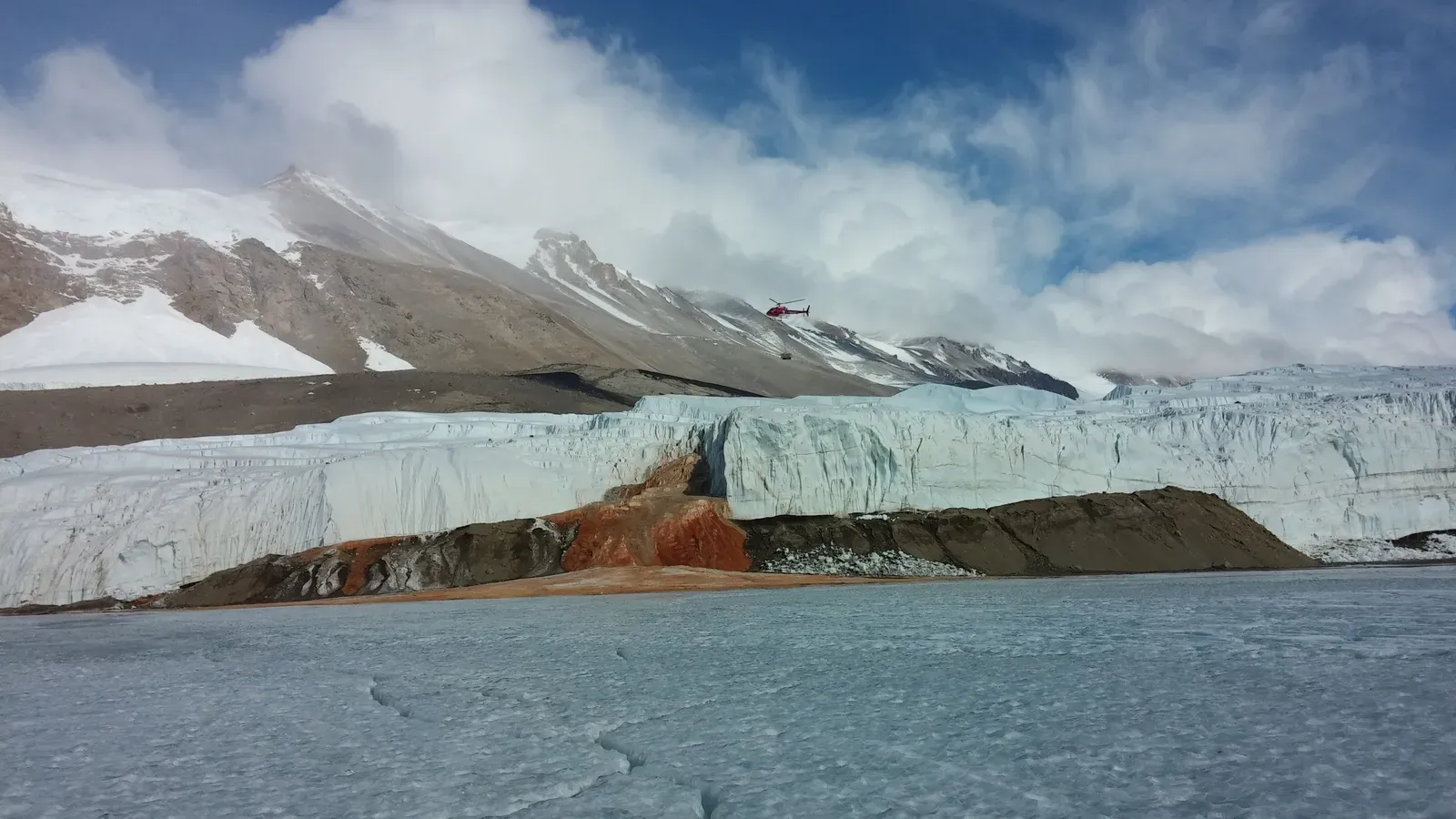
Blood Falls is a geological phenomenon located in Antarctica’s Taylor Glacier. It gets its name from the outflow of iron-rich salty water that flows from the glacier, giving it the appearance of blood. The water that emerges from Blood Falls is highly saline and contains a high concentration of iron. This creates a reaction with the oxygen in the air, causing the water to turn a deep red color, similar to blood. I know it sounds crazy, but imagine seeing a glacier literally bleeding crimson water across pristine white ice.
The water flows from an underground reservoir beneath the glacier, which is believed to have been sealed off from the outside world for millions of years. Scientists believe that the water in the reservoir is kept liquid due to geothermal heating from the Earth’s interior, which allows it to remain liquid even in the extremely cold temperatures of the Antarctic. What makes this even more remarkable is that scientists have discovered microorganisms living in this isolated, iron-rich environment, surviving without sunlight for potentially millions of years.
The Sailing Stones of Death Valley: Rocks That Move Themselves
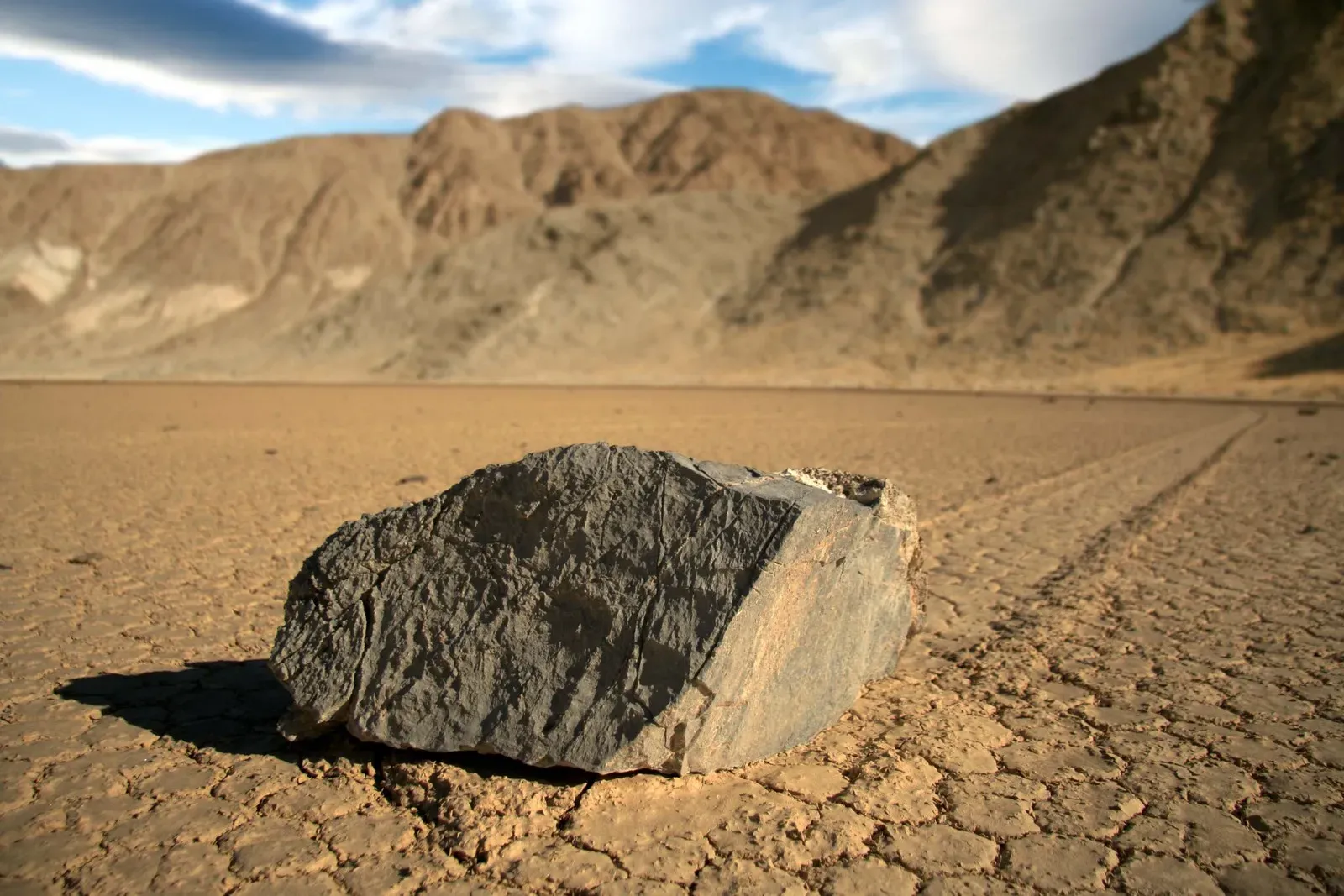
The phenomenon of the “Sailing Stones” is a mysterious geological occurrence that has puzzled scientists and intrigued visitors for years. Located in the Racetrack Playa of Death Valley National Park in California, these rocks appear to move across the desert floor on their own, leaving behind long tracks that can stretch for hundreds of feet. Despite years of study, the cause of this movement is still not fully understood.
For decades, researchers proposed various theories involving aliens, magnetic fields, and mysterious forces. It wasn’t until the advent of time-lapse photography that scientists were finally able to capture the movement of the rocks in action, providing important new clues about the forces at work in this unusual geological phenomenon. It was later discovered that thin sheets of ice combined with strong winds push the rocks. The explanation might be simple, yet seeing these tracks stretching across the desert floor still gives you an eerie feeling that something inexplicable is happening.
Fairy Circles of Namibia: Polka Dots in the Desert
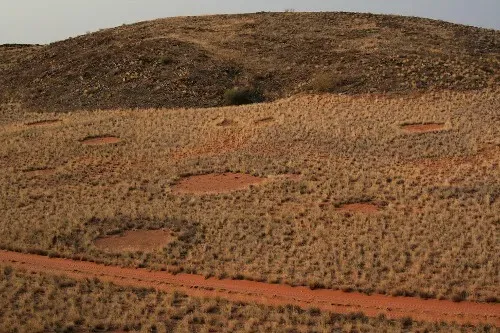
Up close, the fairy circles in the Namib Desert are just circular patches of bare red earth, surrounded by tufts of grass. But from a bird’s-eye view, these spots stretch endlessly across the arid landscape, creating a regular polka-dot pattern. The mysterious “fairy circles” of Namibia are circular patches, typically six to 40 feet in diameter, of barren soil that are bordered by grass. They extend for over 1000 miles throughout the Namib Desert in Southern Africa – one of the driest regions on Earth.
At first, some proposed that the circles are created when plants compete for water: The root systems of the successful vegetation dominate the ground, while smaller plants are unable to compete, leaving bare patches of desert. In 2017, a promising new theory appeared in the journal Nature. Excavations of several circles revealed termite nests under each one, implying the circles were created by the termites eating the vegetation above their territory, allowing desert grasses to flourish only between each nest. Folktales claim the spots are the gods’ footprints, which honestly sounds more poetic than termites, yet both explanations might actually be working together. The debate continues, making these circles one of nature’s most intriguing puzzles.
The Chocolate Hills of the Philippines: Nature’s Candy Land
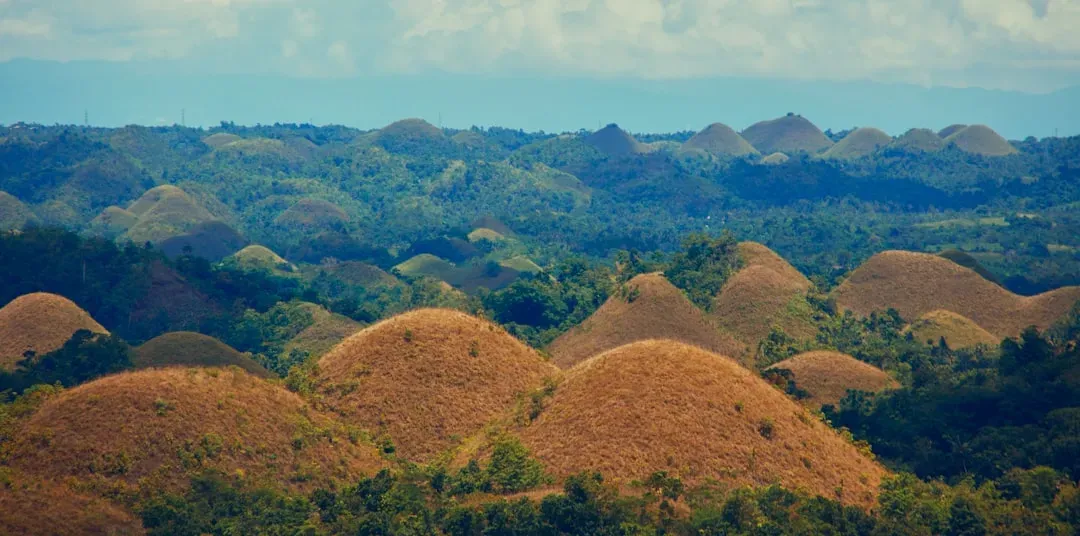
The Chocolate Hills are unusual geological formations that consists of at least 1,268 individual mounds scattered throughout the interior of the island of Bohol in the Philippines. The almost symmetrical and same-sized formations range from 30 to 50 meters (98 to 164 feet) high and are covered in green grass. During the dry season the grass turns brow, hence the name. Honestly, seeing more than a thousand nearly identical hills dotting the landscape looks like something a giant might have sculpted for fun.
Geologists have not reached any consensus on how these giant mole hills were formed. One theory holds that the Chocolate Hills are the weathered rock formations of a kind of marine limestone on top of a impermeable layer of clay. Other theories propose coral deposits or volcanic activity. What’s frustrating for scientists is that these hills are remarkably uniform in size and shape, which makes natural formation seem almost too convenient. Yet there they stand, defying easy explanation and looking absolutely delicious during the dry season when they turn brown.
The Pinnacles of Western Australia: A Desert Forest of Stone
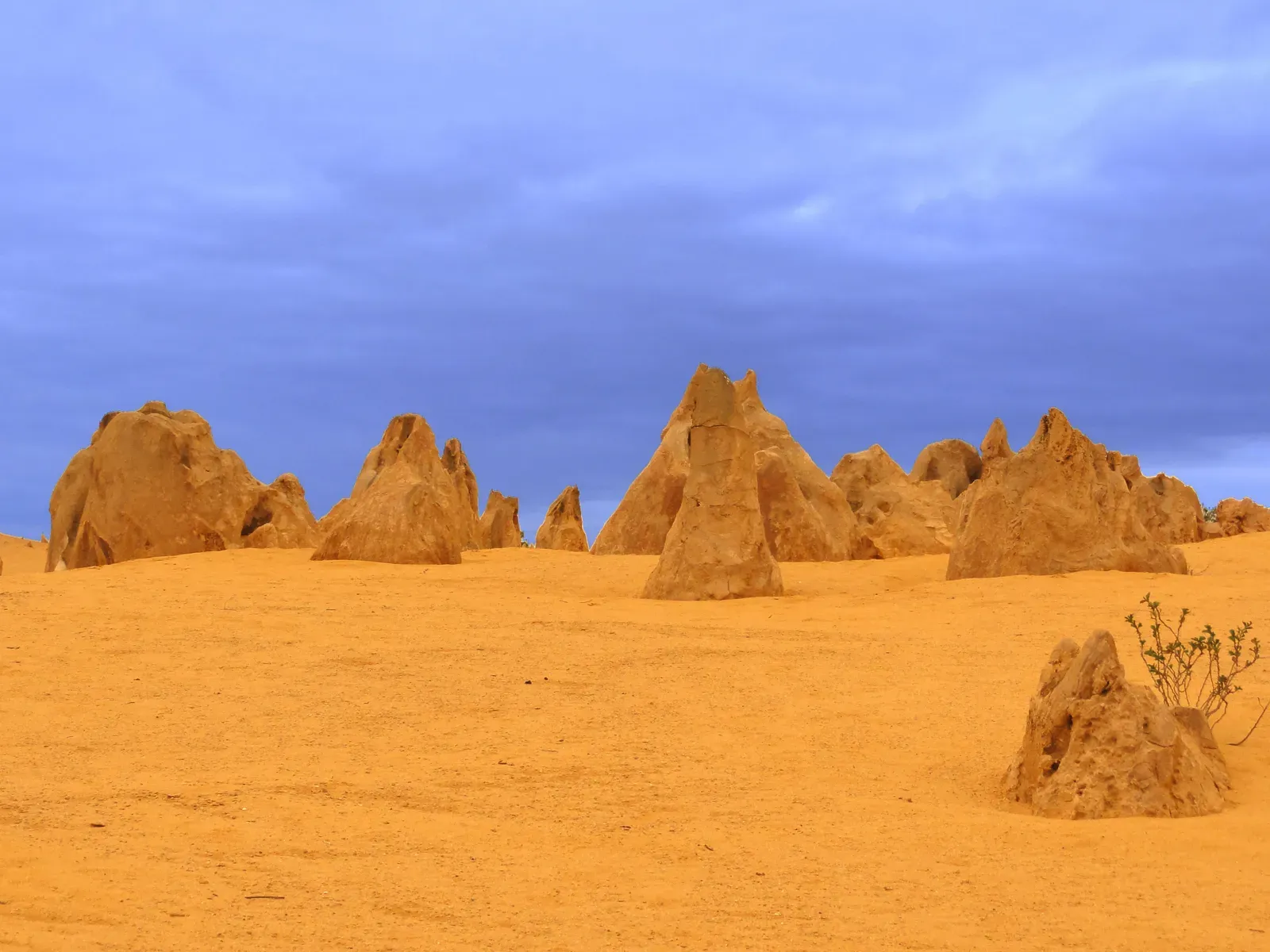
The Pinnacles, located in Nambung National Park in Western Australia, is a unique and captivating rock formation that attracts visitors from around the world. This extraordinary landscape is characterized by thousands of limestone pillars rising from the desert floor, creating an eerie and surreal environment. These spires look like the remains of an ancient stone forest or perhaps the work of some lost civilization.
The Pinnacles were formed over millions of years through a combination of natural processes, including the accumulation of seashells and marine organisms, sedimentation, and erosion. The area was once covered by the sea, and over time, the shells and organisms became embedded in the sand and limestone deposits. As the sea levels fluctuated and the climate changed, the exposed limestone underwent various stages of weathering and erosion. The Pinnacles Desert in Western Australia is filled with thousands of towering limestone formations, some reaching 3.5 meters. Their sudden appearance in the otherwise flat desert landscape has puzzled geologists for years. Though it’s believed they formed from seashell deposits millions of years ago, how these spires resisted erosion while the surrounding land wore away remains a contention.
The Stone Forest of China: Where Trees Turned to Rock
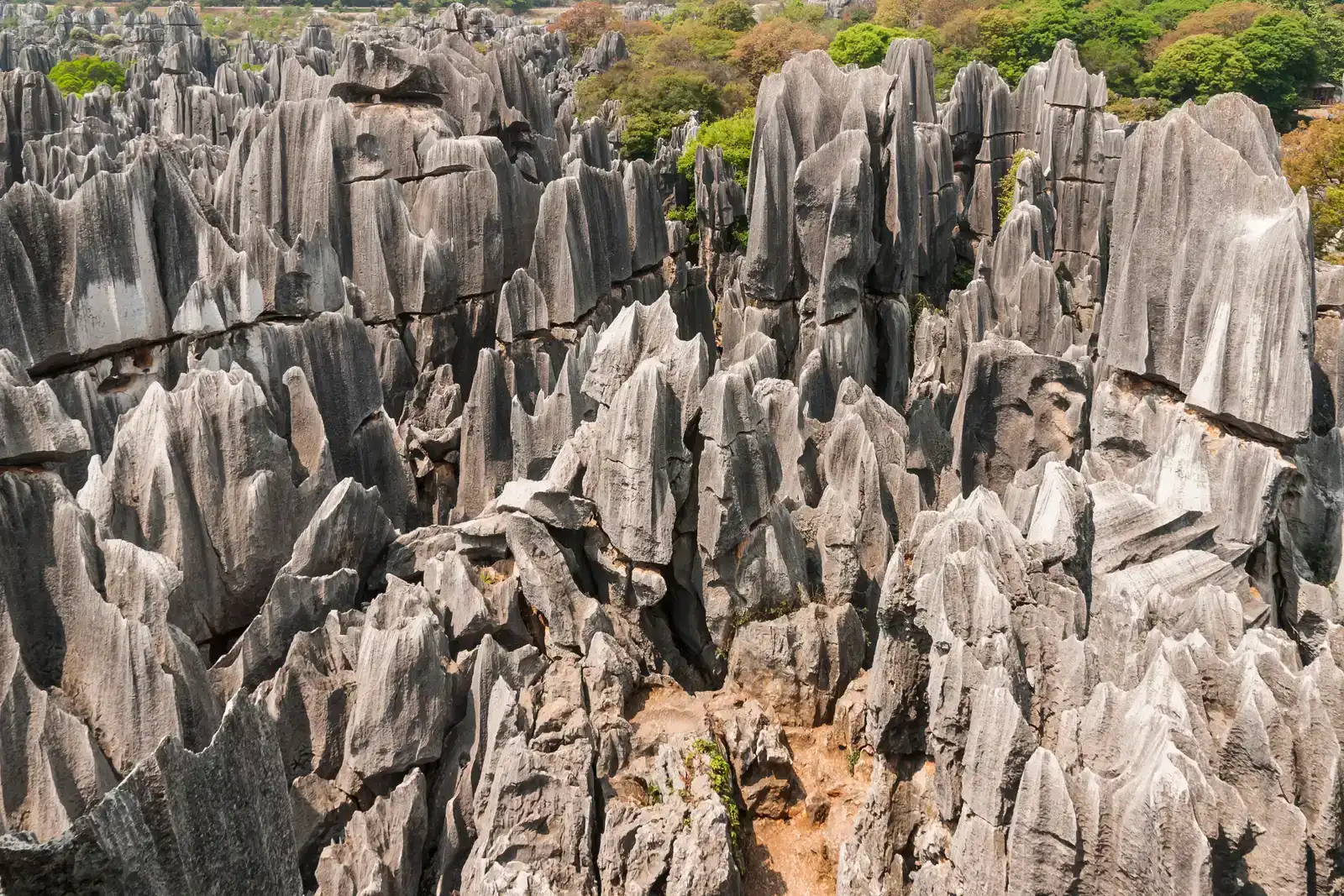
This set of limestone formations resembles petrified trees, creating the illusion of a forest made of stone. Spread over an area of more than 300 square kilometers, the Stone Forest is part of a larger karst landscape. Visitors can explore a maze of towering peaks, deep valleys, and subterranean rivers, all of stone. Walking through this landscape feels surreal, as if you’ve stumbled into an ancient forest that was somehow transformed into rock overnight.
This remarkable landscape has been steeped in local legends since the Ming Dynasty, making it a cultural treasure as well as a natural wonder. This limestone formation is a part of the Stone Forest, which is spread over about 400 square kilometres in Lunan County (Yunnan province) of the People’s Republic of China. The countless stone formations in the Forest have different shapes – from high pillars and camel humps to elephant shapes – caused by the fury of nature millions of years ago. The karst erosion that created these formations worked over countless millennia, dissolving limestone and leaving behind only the most resistant pillars.
Zhangye Danxia: The Rainbow Mountains of China
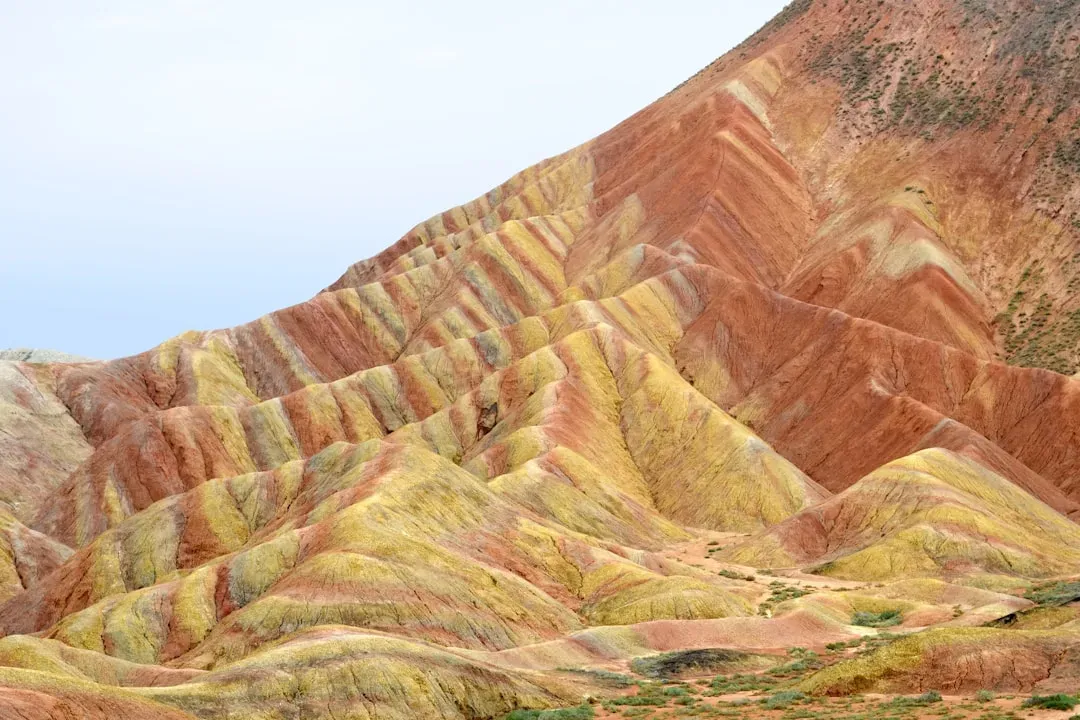
The Rainbow Mountains, also known as the Zhangye Danxia Landform Geological Park, are a natural wonder located in Gansu Province, China. They get their name from their colorful appearance, which is caused by the presence of different minerals that have been compressed and eroded over millions of years. The Rainbow Mountains are made up of a series of sandstone and mineral deposits that were formed over 24 million years ago. The different colors are the result of the oxidization of iron and other minerals, which created unique bands of red, orange, yellow, green, and blue.
These mountains look like someone took a massive paintbrush and striped them in every color imaginable. The layers tell a story of ancient lake beds, iron oxidation, and millions of years of tectonic activity that folded and tilted the rock formations. These formations of different colored sandstone were shaped after thousands of years of rain and wind, and the region has been listed as a UNESCO World Heritage site since 2010. What makes the Rainbow Mountains particularly spectacular is how the colors change throughout the day depending on sunlight and weather conditions, creating an ever-shifting masterpiece that no photograph can truly capture.
Conclusion: Nature’s Patient Artistry
These ten formations remind us that Earth doesn’t need human imagination to create the extraordinary. All it needs is time, pressure, water, wind, and an almost infinite capacity for patience. What looks impossible or even artificial is simply the result of geological processes working steadily over millions of years.
The most fascinating part is that we understand most of these formations now. Science has peeled back the mystery to reveal the mechanisms behind these wonders. Yet somehow, that doesn’t make them any less amazing. If anything, understanding how a hexagonal column forms or how wind can sculpt sandstone into waves makes these places even more impressive. It shows that the laws of physics and chemistry, given enough time, can create beauty that rivals anything we humans could design.
Next time you’re planning a trip, consider visiting one of these geological marvels. Standing before them in person is completely different from seeing pictures online. You’ll find yourself simultaneously humbled by nature’s power and grateful that you live on a planet creative enough to produce such wonders. What’s your favorite natural formation? Have you visited any of these incredible places?