Have you ever wondered whether the planet beneath your feet operates like a living thing, breathing and adjusting itself to keep conditions just right for life? It’s a pretty wild thought, honestly. You’re not alone in pondering this strange possibility.
For decades, a provocative idea has simmered at the edges of mainstream science, sparking both excitement and fierce debate. This concept challenges the way you think about Earth itself. Instead of viewing the planet as merely a backdrop for life, imagine it as something more integrated, more alive. What if living things don’t just happen to survive on this rock, but actually help shape and stabilize the very conditions that allow them to thrive? Let’s dive in.
Birth of a Radical Idea in the Space Age
The Gaia hypothesis was formulated by the chemist James Lovelock and co-developed by the microbiologist Lynn Margulis in the 1970s. Lovelock wasn’t your typical academic. He was an independent inventor working with NASA in the mid-1960s, thinking about how to detect life on Mars. Rather than looking for little green men, he realized something profound: you could spot life by examining a planet’s atmosphere.
When he compared Mars to Earth, the difference was stunning. Lovelock compared the atmospheres of Mars and Earth, and noted that the Earth’s high levels of oxygen and nitrogen were abnormal and thermodynamically in disequilibrium. Earth’s atmosphere looked all wrong, chemically speaking. It shouldn’t be stable. The oxygen we breathe should react away quickly, yet it persists. This oddity got him thinking: maybe life wasn’t just living on Earth, maybe life was actually controlling the atmosphere.
Following the suggestion by his neighbour, novelist William Golding, Lovelock named the hypothesis after Gaia, the primordial deity who was sometimes personified as the Earth in Greek mythology. The name stuck, though it would later cause headaches as people mistook the scientific hypothesis for mysticism.
What Exactly Does Gaia Propose?

The Gaia hypothesis proposes that living organisms interact with their inorganic surroundings on Earth to form a synergistic and self-regulating complex system that helps to maintain and perpetuate the conditions for life on the planet. Think of it like this: the biosphere, atmosphere, oceans, and rocks all work together as one massive system. Life doesn’t just adapt to the environment. Life actively shapes it.
The key word here is “self-regulating.” The Gaia hypothesis postulates that the Earth’s surface is maintained in a habitable state by self-regulating feedback mechanisms involving organisms tightly coupled to their environment. It’s sort of like how your body maintains a steady temperature whether you’re in the Arctic or the Sahara. Gaia suggests Earth has similar mechanisms.
Life has persisted for over 3.8 billion years despite increasing solar luminosity and variable exchange of matter with the inner Earth. That’s remarkable when you consider that the sun has gotten roughly 30 percent brighter over that time. A lifeless planet would have cooked. Yet Earth stayed habitable. Coincidence? Lovelock didn’t think so.
The Evidence That Makes You Think Twice
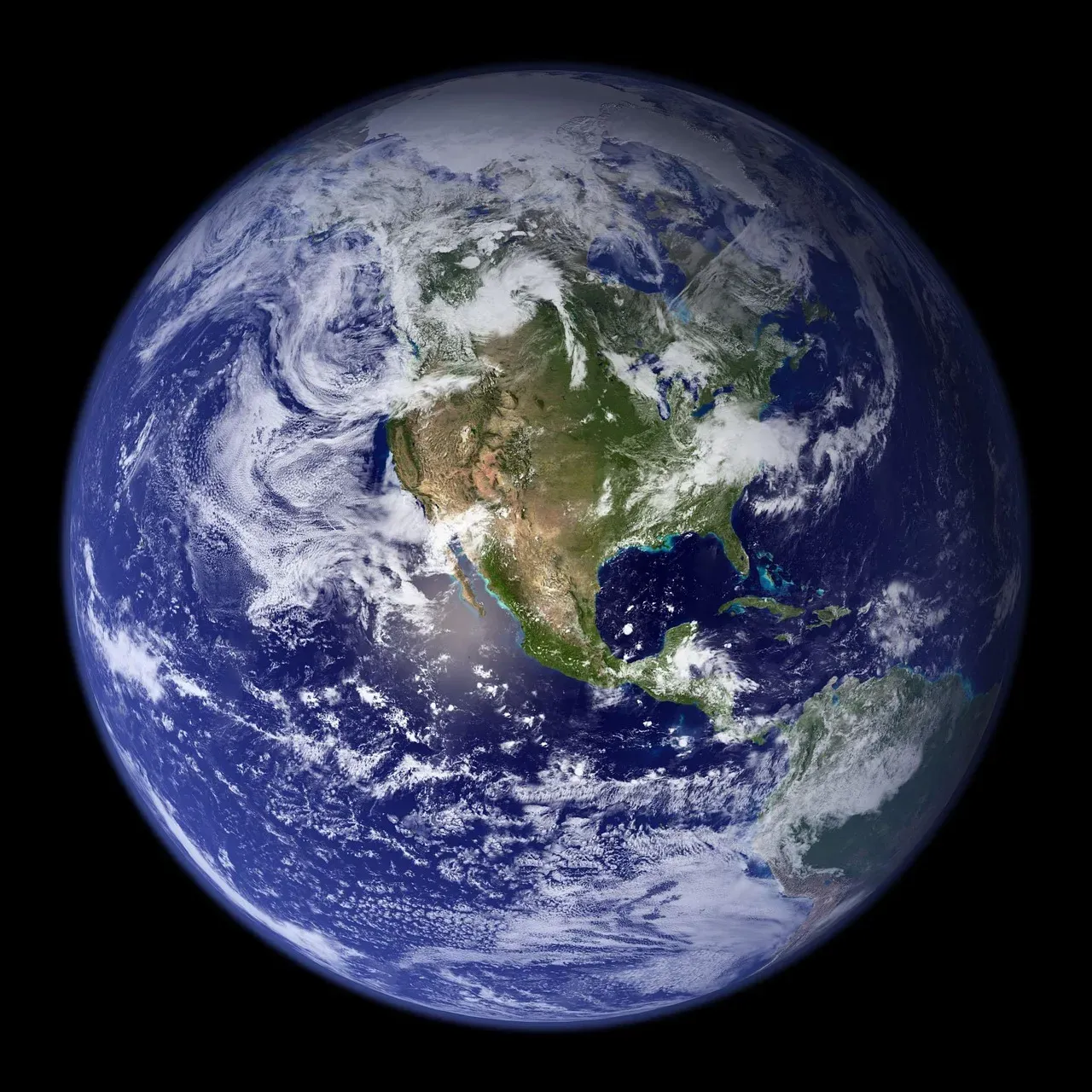
Let’s be real, the atmosphere is weird. The atmosphere is in an extreme state of thermodynamic disequilibrium owing to the activities of life, yet aspects of its composition are remarkably stable. Oxygen makes up about 21 percent of our air, maintained by photosynthetic organisms. Without constant replenishment by plants and algae, it would vanish in geological time.
Biological activity also explains why the atmosphere is not mainly CO2 and why the oceans are not more saline. Marine organisms pump out compounds that help form clouds, which in turn regulate temperature. Forests influence rainfall patterns. These aren’t isolated phenomena but interconnected feedback loops.
Lovelock argued that if Earth were merely an inert object, its surface temperature would fluctuate significantly with changes in solar radiation. Instead, the planet has maintained a relatively narrow range of temperatures, ensuring its suitability for life. The planet’s thermostat seems to work suspiciously well, keeping things habitable despite dramatic external changes. That’s the central mystery Gaia tries to explain.
Feedback Loops: The Planetary Thermostat
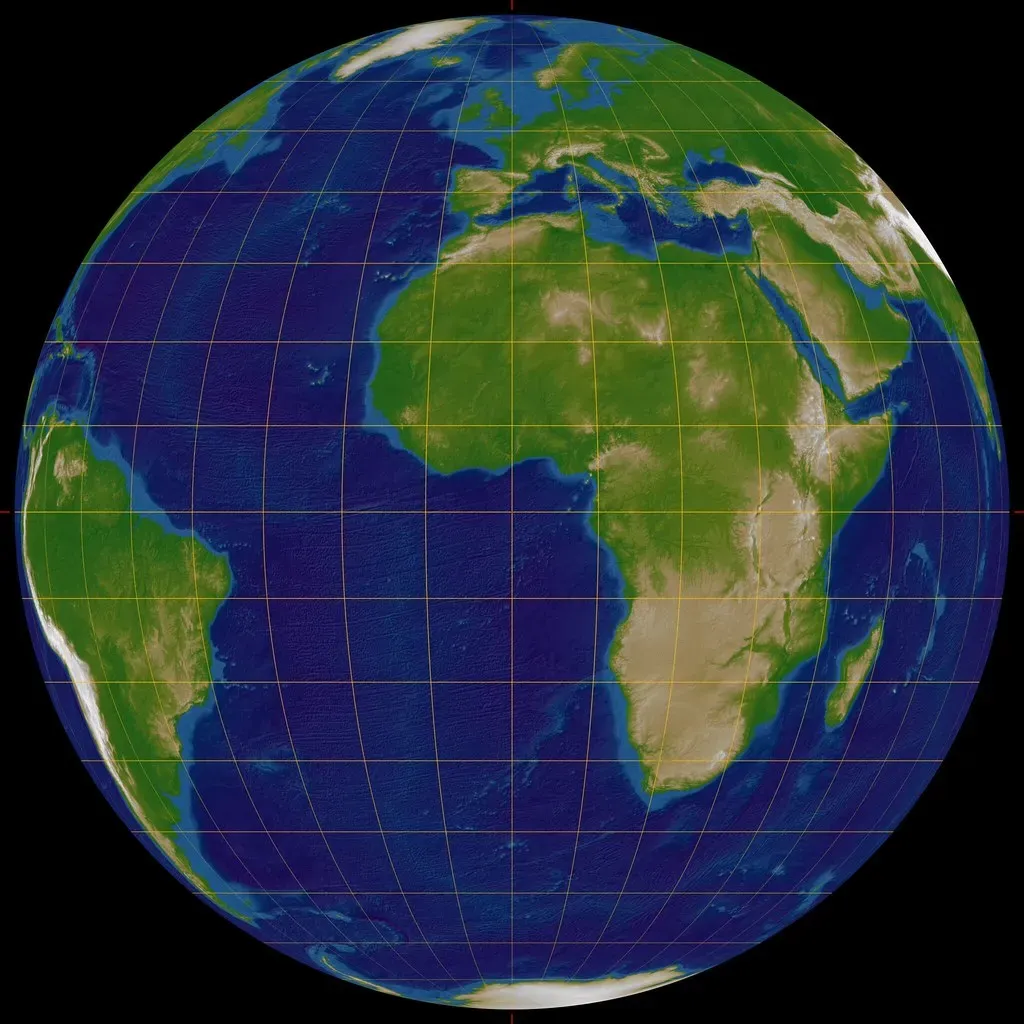
Here’s the thing about feedback mechanisms. They come in two flavors: positive and negative. Positive feedback amplifies change. Negative feedback dampens it. Negative feedback loops act as self-regulatory mechanisms, counteracting changes that could lead to instability within Earth’s systems. For stable conditions, you need negative feedbacks to dominate.
Earth’s systems function like a feedback loop, constantly adjusting to maintain stability. Lovelock noted that despite the planet’s orbit around the sun and changes in solar output over millennia, Earth’s mean temperature has remained remarkably stable. It’s hard to say for sure, but this stability hints at something deeper than mere luck.
The Daisyworld model became Lovelock’s answer to critics. The Daisyworld model demonstrated that planetary self-regulation can occur without teleology, in a manner consistent with natural selection. In this simple computer model, black and white daisies regulate planetary temperature through their different heat-absorbing properties, without any conscious plan. It showed self-regulation could emerge from simple rules.
The Scientific Backlash: Evolution’s Objection
Not everyone was thrilled. Actually, most evolutionary biologists were downright hostile. In the early 1980s, W. Ford Doolittle and Richard Dawkins separately argued against this aspect of Gaia. Doolittle argued that nothing in the genome of individual organisms could provide the feedback mechanisms proposed by Lovelock. Dawkins meanwhile stated that for organisms to act in concert would require foresight and planning, which is contrary to the current scientific understanding of evolution. They had a point: natural selection works on individuals and genes, not entire planets.
Stephen Jay Gould criticized Gaia as being “a metaphor, not a mechanism.” He wanted to know the actual mechanisms by which self-regulating homeostasis was achieved. This was the crux of the criticism: where’s the mechanism? How does planetary self-regulation actually work without some guiding intelligence?
Responding to this critique in 1990, Lovelock stated, “Nowhere in our writings do we express the idea that planetary self-regulation is purposeful, or involves foresight or planning by the biota”. The misunderstanding persisted, though. People kept treating Gaia as if it implied the Earth was conscious or purposeful. It doesn’t.
As emphasized by multiple critics, no plausible mechanism exists that would drive the evolution of negative feedback loops leading to planetary self-regulation of the climate. Indeed, multiple incidents in Earth’s history have shown that the Earth and the biosphere can enter self-destructive positive feedback loops that lead to mass extinction events. Earth’s history isn’t all about balance. Sometimes things go catastrophically wrong.
Lynn Margulis and the Symbiotic View
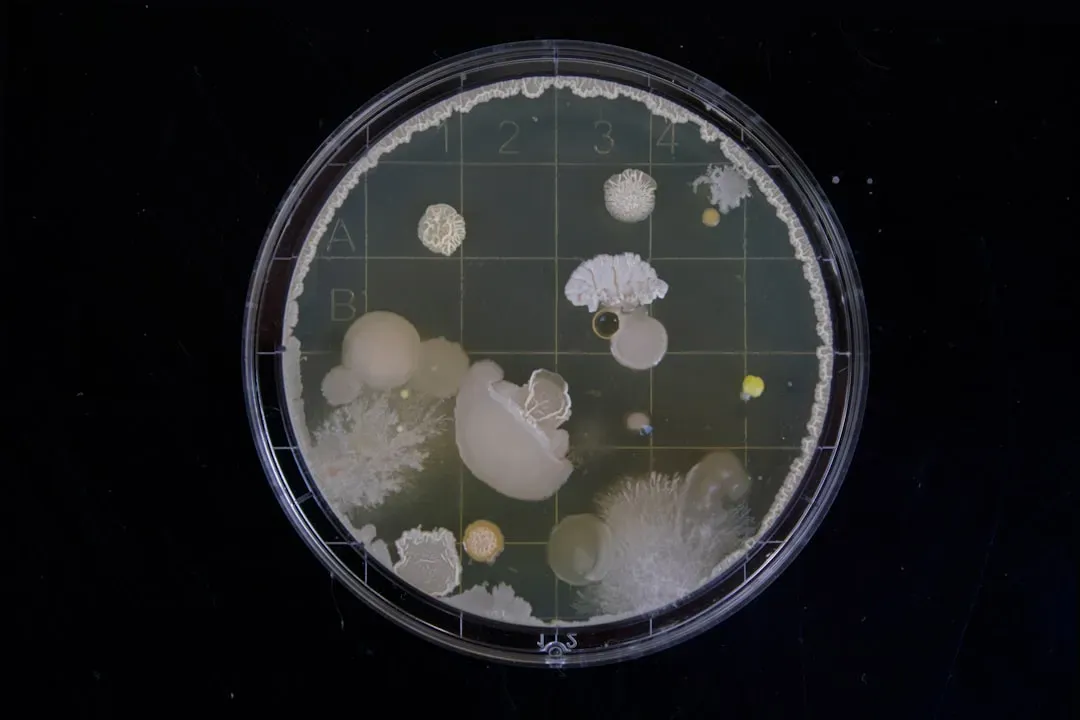
In 1971 microbiologist Dr. Lynn Margulis joined Lovelock in the effort of fleshing out the initial hypothesis into scientifically proven concepts, contributing her knowledge about how microbes affect the atmosphere and the different layers in the surface of the planet. Margulis brought serious biological credentials. She was already famous for her work on endosymbiosis, the idea that complex cells evolved through cooperation between simpler organisms.
Margulis argued in 1999 that “Darwin’s grand vision was not wrong, only incomplete. In accentuating the direct competition between individuals for resources as the primary selection mechanism, Darwin (and especially his followers) created the impression that the environment was simply a static arena”. She wrote that the composition of the Earth’s atmosphere, hydrosphere, and lithosphere are regulated around “set points” as in homeostasis, but those set points change with time. Her perspective emphasized cooperation and interconnection rather than pure competition.
Margulis had her own take on what Gaia meant. She resented the widespread personification of Gaia and stressed that Gaia is “not an organism,” but “an emergent property of interaction among organisms.” She defined Gaia “the series of interacting ecosystems that compose a single huge ecosystem at the Earth’s surface. Period.” She was more cautious about calling Earth alive, but recognized its physiological-like processes.
Is Gaia Science or Speculation?
The scientific community remains deeply divided. The Gaia hypothesis continues to be broadly skeptically received by the scientific community. For instance, arguments both for and against it were laid out in the journal Climatic Change in 2002 and 2003. Some view it as a useful framework, others as untestable pseudo-science.
The clue lies in the term ‘pseudo-science’ which critics have used to describe Gaia, and it is an idea with meaning and history. Simply put, it refers to theories and claims that might look like science, but don’t measure up to the standards of ‘proper’ science – they are not predictive, but are inconsistent, powered by external values, and so forth. The criticism stung because Lovelock and Margulis were respected scientists, yet their big idea couldn’t get mainstream acceptance.
Interestingly, the hypothesis evolved. Gaia theory: the revision in response to critics – the combined physical, chemical and biological components of the earth system regulate the planet so as to maintain it as a habitat for life. Various analyses have tried to distinguish between “weak” and “strong” Gaia, with weak Gaia differing little from conventional earth system science. Weak Gaia basically says life influences the environment, which nobody disputes. Strong Gaia claims optimization for life, which remains controversial.
As science, Gaia never really made it, but it has provoked important scientific work nonetheless. The world as a whole, its homeostasis or lack of it, is interesting, important, and worthy of investigation. Climate change has added huge impetus to systems thinking about the global environment, and this is one reason why in 2006 Lovelock was awarded the Wollaston Medal, the highest award granted by the Geological Society of London. Even if the Gaia theory is not accepted as such, ‘Earth Systems Science’ flourishes. So maybe Gaia’s legacy isn’t acceptance, but inspiration.
Modern Echoes: Planetary Boundaries and Earth System Science
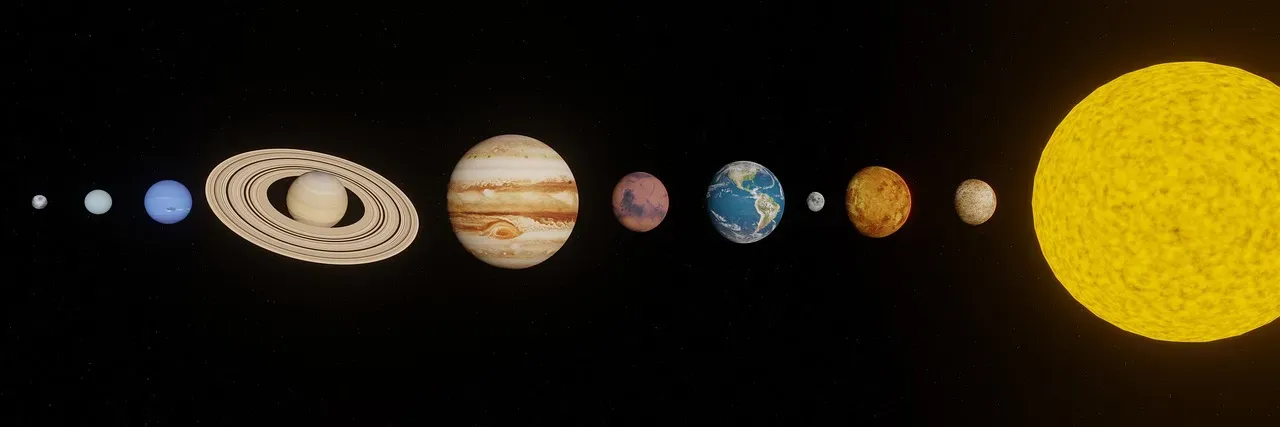
Fast forward to today, and you’ll find Gaia’s fingerprints all over contemporary environmental science. Planetary boundaries are a framework to describe limits to the impacts of human activities on the Earth system. Beyond these limits, the environment may not be able to continue to self-regulate. This framework, developed in 2009, identifies nine critical Earth system processes.
This planetary boundaries framework update finds that six of the nine boundaries are transgressed, suggesting that Earth is now well outside of the safe operating space for humanity. Climate change, biodiversity loss, altered biogeochemical cycles. We’re pushing the system hard. In Lovelock’s book The Revenge of Gaia, he suggests that the destruction of rainforests and biodiversity, compounded with global warming resulting from the increase of greenhouse gases made by humans, could shift feedbacks in the Earth system away from a self-regulating balance to a positive (intensifying) feedback loop. That’s the nightmare scenario: Earth flipping from stabilizing to destabilizing feedbacks.
The known interdependence of planetary boundaries is confirmed by Earth system science understanding of the planet as an integrated, partially self-regulating, system. Whether you call it Gaia or Earth System Science, the core insight remains: everything is connected. You can’t mess with one part without affecting the whole.
So, Is Earth Actually Alive?
In claiming that Gaia is “lifelike”, Lovelock notes the difficulty of defining life. He points out that a biological emphasis on (potential for) reproduction would, for example, exclude postmenopausal women. It’s a clever point. If reproduction is essential to life, then lots of things we consider alive wouldn’t qualify. Maybe we’re using the wrong definition.
Let’s be honest though: Earth doesn’t reproduce. It doesn’t have DNA. It doesn’t metabolize in the traditional sense. They argue that, as Gaia cannot reproduce herself, she cannot be alive in any meaningful sense. Critics have a point here. Calling Earth a superorganism is stretching the metaphor pretty far.
Yet there’s something undeniably compelling about the idea. At the heart of the Gaia Hypothesis lies a compelling concept: Earth, with its intricate web of physical, chemical, and biological processes, acts as a unified organism. Lovelock theorized that life on Earth actively regulates its environment to maintain conditions conducive to its survival. However, Gaia is not sentient in the traditional sense. Rather, it is an intricate interplay of systems – oceans, atmosphere, and ecosystems – that create and sustain the delicate balance necessary for life. Perhaps the question isn’t whether Earth is literally alive, but whether thinking of it that way helps us understand how it works.
What This Means for You and Me
The Gaia hypothesis, whether fully correct or not, fundamentally changed how we think about our planet. It introduced the radical notion that Earth’s habitability isn’t just lucky chance but emerges from the interactions of life itself. That makes every species, every ecosystem, part of something larger.
Here’s where it gets personal. If Earth’s systems really do regulate themselves through feedback mechanisms, then disrupting those systems has consequences we might not anticipate. Climate change isn’t just about warmer temperatures. It’s about potentially pushing Earth’s self-regulating systems past their breaking points into new, unpredictable states.
The hypothesis reminds us that we’re not separate from nature, observing from the outside. We’re participants, embedded in the same interconnected web that keeps the planet habitable. Our actions ripple through systems we barely understand. Whether Gaia is scientifically correct in every detail matters less than the larger truth it points toward: Earth is far more integrated, far more delicate, and far more alive with possibility than we ever imagined.
What do you think? Does viewing Earth as a self-regulating system change how you see your relationship with the planet? The debate continues, and honestly, the jury’s still out.
Hi, I’m Andrew, and I come from India. Experienced content specialist with a passion for writing. My forte includes health and wellness, Travel, Animals, and Nature. A nature nomad, I am obsessed with mountains and love high-altitude trekking. I have been on several Himalayan treks in India including the Everest Base Camp in Nepal, a profound experience.