
Have you ever wondered if the world around you operates by rules far more bizarre than anything dreamed up in a science fiction novel? Well, you’re not alone. The truth is, the universe we inhabit is filled with phenomena that make even the wildest Hollywood blockbusters seem tame by comparison.
As scientists peer deeper into the nature of reality, they keep stumbling upon discoveries that challenge everything we thought we knew. From the tiniest particles behaving in impossible ways to the very fabric of life itself harnessing quantum mechanics, the line between what’s real and what’s fantastical has become increasingly blurred. Let’s dive into five scientific breakthroughs that prove our reality is far stranger than fiction could ever imagine.
Quantum Biology: Your Cells Are Running Quantum Computers
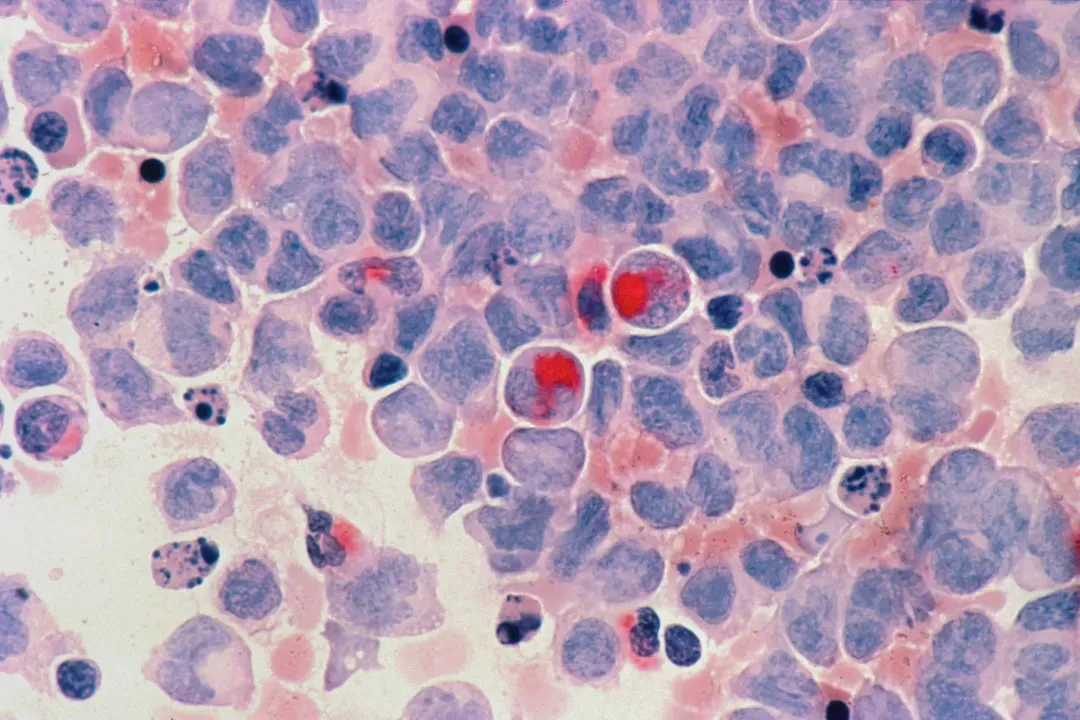
Here’s something that sounds absolutely insane but turned out to be true. Biological systems, once thought too chaotic for quantum effects, may be quietly leveraging quantum mechanics to process information faster than anything man-made. Think about that for a moment. Your body, sitting there reading this, might be operating as a sophisticated quantum computer without you even realizing it.
Researchers at the University of Chicago Pritzker School of Molecular Engineering have turned a protein found in living cells into a functioning quantum bit, or qubit, the foundation of quantum technologies, and unlike engineered nanomaterials, protein-qubits can be built directly by cells, positioned with atomic precision and detect signals thousands of times stronger than existing quantum sensors. Let’s be real, this discovery completely flips our understanding of biology on its head. The messy, warm, chaotic environment of living cells was supposed to destroy delicate quantum effects. Yet here we are, discovering that life itself might depend on them. UV-excited qubits in biological fibers prove that almost all life on Earth can process quantum information with exceptional efficiency, surpassing even the latest quantum error correction technologies.
Time Crystals: Matter That Breaks the Rules of Physics
Imagine a substance that moves without using any energy. Sounds like perpetual motion, right? Something that should be utterly impossible according to everything we know about thermodynamics. Physicists recently discovered time crystals, a new phase of matter that changes states in a time-based pattern without consuming energy, and this anomalous science contradicts conventional thermodynamics, hinting at new possibilities for quantum computing.
I know it sounds crazy, but time crystals are real. They represent a completely new phase of matter that scientists didn’t even think could exist until recently. Researchers believe time crystals could revolutionize future technology by enabling more stable quantum systems. These aren’t just theoretical curiosities tucked away in some dusty research paper. They’re genuine physical objects that violate our basic assumptions about how matter should behave. The implications are staggering. If we can create matter that moves in repeating patterns forever without energy, what else might be possible?
The Toxoplasma Parasite: A Brain-Hijacking Microbe Among Us
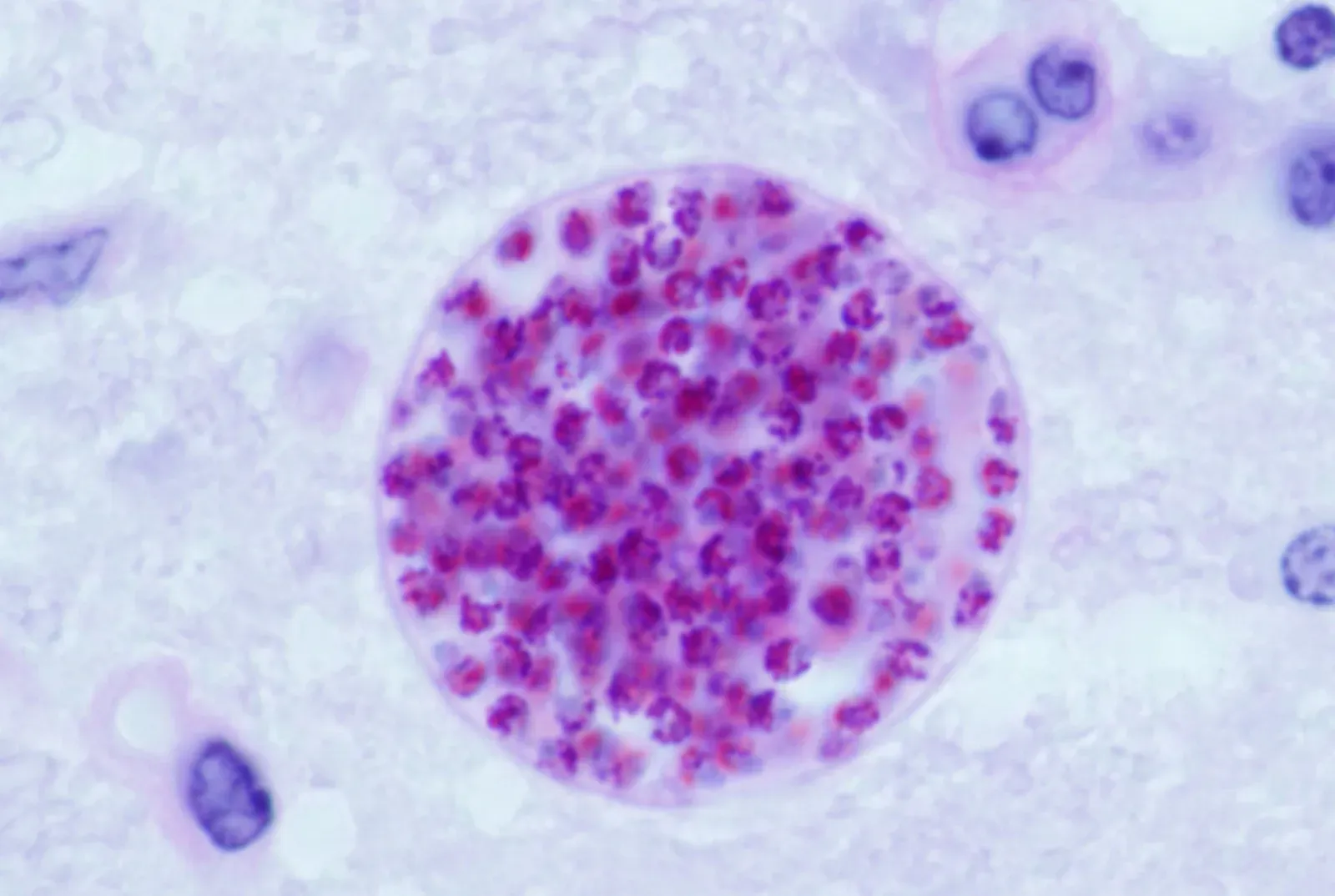
This one genuinely gave me chills when I first learned about it. A parasite spread by cats was found to make people more impulsive, take sexual risks and behave more aggressively. We’re talking about Toxoplasma gondii, and it gets worse. Toxoplasma gondii, which can spread when humans handle contaminated cat litter, is found in thirty to sixty percent of human brains around the world.
Let that sink in for a second. Nearly half of all humans on Earth are walking around with a microscopic parasite living inside their brains, potentially altering their behavior and decision-making processes. It’s like something straight out of a zombie movie, except it’s happening right now, all around us. The parasite doesn’t turn us into mindless creatures, obviously. Still, the fact that a tiny organism can subtly influence our thoughts and actions challenges our very notion of free will. Are your decisions truly your own, or could a microscopic parasite be nudging you in certain directions?
Dark Energy Is Getting Weirder: The Universe Might Collapse
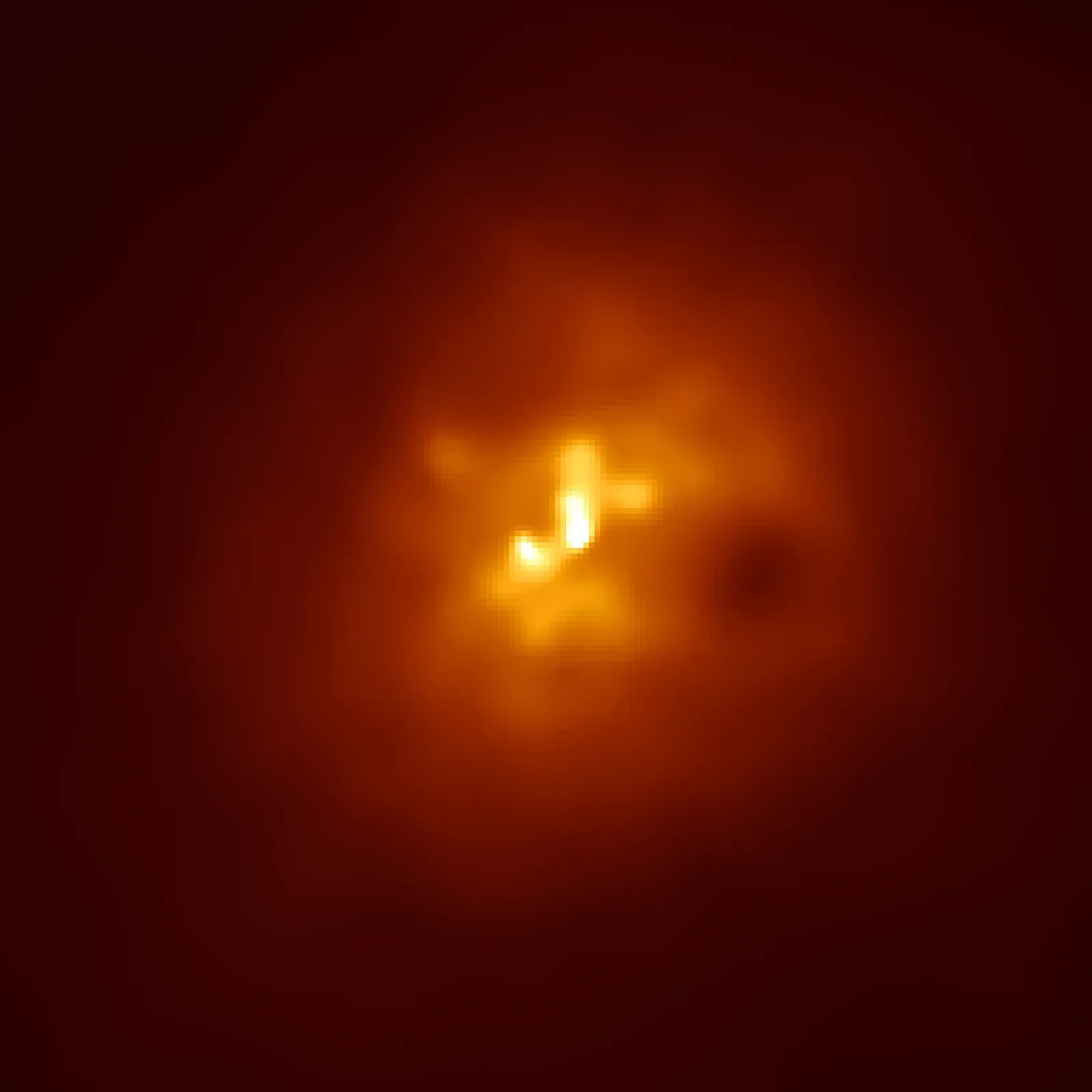
The universe is mostly made of stuff we can’t see or understand. That alone is pretty wild. Dark energy, the enigmatic stuff which makes up the bulk of the cosmos, is generally thought to maintain a constant density. However, recent observations are suggesting something far more unsettling. New observations of roughly six million galaxies and quasars from the Dark Energy Spectroscopic Instrument, or DESI, paired with data on exploding stars, cast doubt on that idea, and these data more closely fit a model of the universe in which the relationship between dark energy’s density and its pressure changes over time.
What does this mean for us? The trajectory hints at a new possible ending for the Universe, whenever it happens: a catastrophic Big Crunch, in which expansion eventually reverses and the entire cosmos collapses. So instead of expanding forever, the universe might one day start shrinking, pulling everything back together into a single point. Honestly, it’s hard to say for sure what’s going to happen. The point is, the very foundation of cosmology is being questioned right now. The universe is stranger and more unpredictable than we ever imagined.
Ancient Martian Life: We Found Possible Fossils on Mars
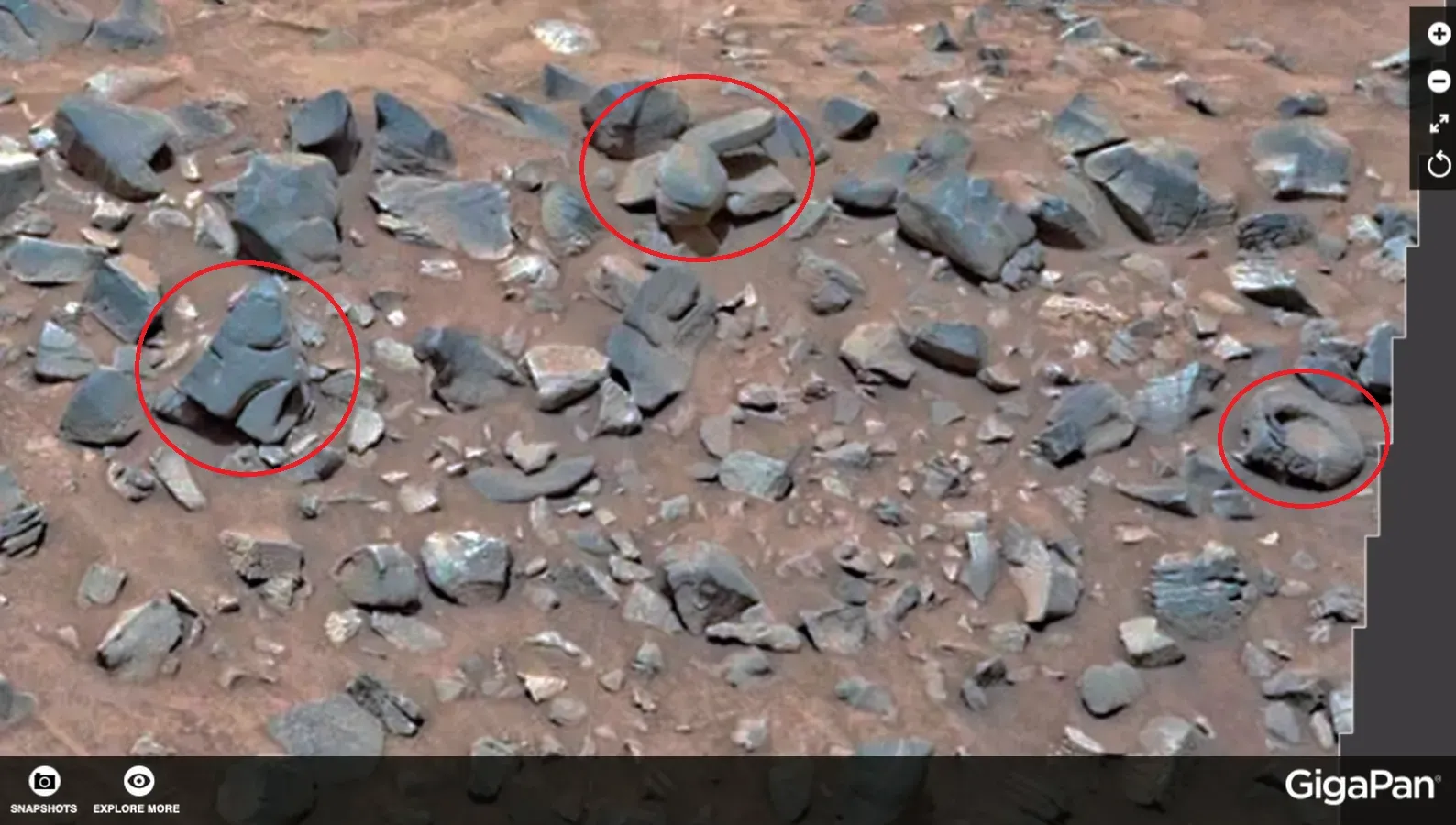
The search for life beyond Earth has always captured our imagination. What if I told you we might have already found it? A rock thought to be around three and a half billion years old was discovered by NASA’s Perseverance rover during its exploration of the Jezero Crater, and the leading theory is that markings came from ancient Martian microbes. This isn’t definitive proof yet, but the implications are staggering.
Perseverance has taken and stored a fragment of the rock, and if all goes to plan, the sample will be returned to Earth one day and thoroughly examined for signs of past life. The rock contains distinctive patterns that, on Earth, are typically associated with ancient microbial life. If confirmed, this would fundamentally alter our understanding of life in the universe. We would no longer be alone, even if the neighbors are just long-dead bacteria. The discovery raises profound questions about the origins of life itself. Did life emerge independently on Mars and Earth? Or did it spread between planets on meteorites? Either way, the universe just got a whole lot more interesting.
Conclusion
The five discoveries we’ve explored reveal a universe far more complex, mysterious, and downright bizarre than anything our ancestors could have imagined. From quantum computers operating inside living cells to parasites manipulating our minds, from impossible forms of matter to the potential collapse of the cosmos itself, reality consistently proves itself stranger than fiction.
These aren’t just abstract scientific curiosities. They’re fundamental revelations about the nature of existence, challenging our assumptions about life, consciousness, and the universe itself. As we continue to push the boundaries of scientific knowledge, one thing becomes increasingly clear: we’ve barely scratched the surface of understanding the world around us. What other mind-bending truths are waiting to be discovered? Did any of these discoveries change the way you think about reality? Share your thoughts in the comments.
Hi, I’m Andrew, and I come from India. Experienced content specialist with a passion for writing. My forte includes health and wellness, Travel, Animals, and Nature. A nature nomad, I am obsessed with mountains and love high-altitude trekking. I have been on several Himalayan treks in India including the Everest Base Camp in Nepal, a profound experience.