
What if the very mathematics physicists use to describe vibrating strings in the deepest corners of the universe could also explain why your brain is wired the way it is? It sounds like science fiction, doesn’t it? Yet groundbreaking research published in early 2026 is making waves by showing that principles from string theory can help us understand how neurons branch and connect, potentially shedding light on how our minds emerge from biological networks.
For nearly eighty years, scientists have scratched their heads trying to understand why neurons don’t follow the simplest path when connecting to each other. Now, they might finally have an answer, and it comes from one of the most controversial branches of theoretical physics.
The Eighty-Year Mystery That Stumped Neuroscience
Since the 1940s, scientists have hypothesized that the connections between neurons took the shortest route between two points, a straight line from neuron A to neuron B. This made perfect sense from an efficiency standpoint. Why would nature waste precious biological resources building unnecessarily long connections?
However, recent observational data have largely contradicted this hypothesis. When researchers finally developed the technology to map neurons in three dimensions with precision, they discovered something odd. The wiring patterns they observed consistently violated the predictions of simple length minimization. The total lengths of these physical networks consistently exceed predictions based solely on Steiner’s minimal wiring theory by approximately 25%.
When Brain Architecture Meets Quantum Mathematics
New research from the Network Science Institute at Northeastern University made a surprising discovery: Some of the same mathematics used to describe string theory, which attempts to make sense of the quantum realm, could be used to solve the question of why neurons branch and connect as they do. The work represented a stunning collision between two seemingly unrelated fields.
The research article, “Surface Optimization Governs the Local Design of Physical Networks,” graced the cover of Nature Magazine. This wasn’t just any academic paper. It suggested that nature uses a more sophisticated optimization strategy than anyone had suspected, one that considers the full three-dimensional geometry of neural structures rather than just their length.
String Theory Solves an Impossible Problem
Here’s where things get mathematically wild. Predicting the true material cost of physical networks requires accounting for their full three-dimensional geometry, resulting in a largely intractable optimization problem, but an exact mapping of surface minimization onto high-dimensional Feynman diagrams in string theory predicts that, with increasing link thickness, a locally tree-like network undergoes a transition into configurations that can no longer be explained by length minimization.
String theory typically deals with vibrating strings at unimaginably tiny scales, attempting to unify quantum mechanics with gravity. String theory is a sprawling realm of theoretical physics that assumes that tiny vibrating strings are the fundamental basis of reality, offering ways for unifying the quantum mechanics that govern the universe on small scales with the gravitational force that shapes the cosmos at larger scales. Nobody expected its mathematics would be useful for understanding brain wiring.
From Brains to Blood Vessels to Coral Reefs
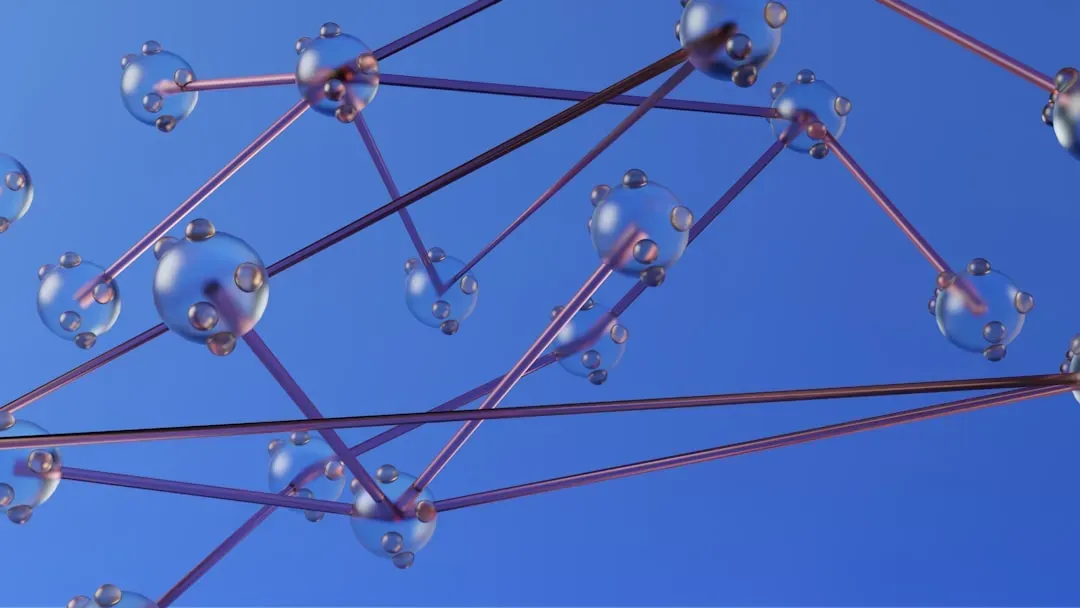
The implications extend far beyond neuroscience. The math seems to apply to physical systems from the brain to the vascular system to coral reefs, and the study considered not only neurons and blood vessels in humans, but also trees, corals, Arabidopsis plants, and even fruit fly neurons.
Drawing on ideas from Feynman diagrams in string theory to understand how link thickness shapes the overall structure, the team discovered that these networks branch in a predictable way, minimizing surface area at each junction. This universal principle appears throughout nature’s designs. It’s honestly a bit eerie how consistent this pattern turns out to be.
Why Neurons Create Dead Ends That Matter
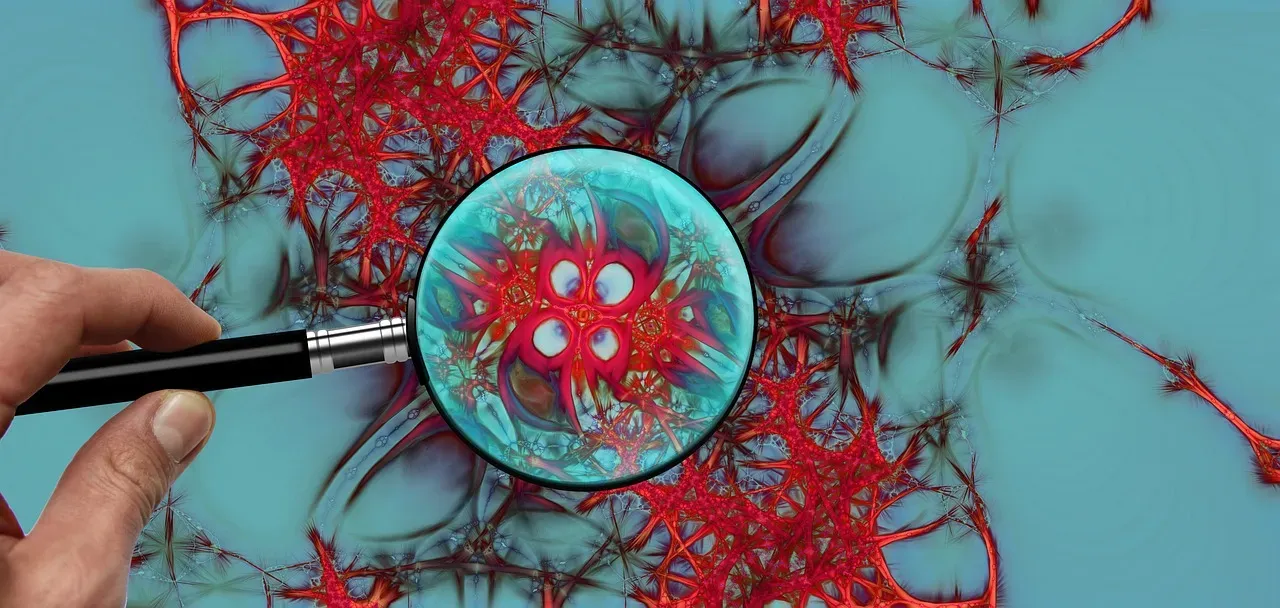
One particularly fascinating finding involves what scientists call orthogonal sprouts. String theory can account for “orthogonal sprouts,” which are dead ends that naturally appear on trees, plants, and the neurons of brains, and in brains, synapses occur in 98 percent of these sprouts.
These aren’t mistakes or evolutionary leftovers. The neuron connections aim to use as little biological material as they can to save on energy. Those seemingly unnecessary branches serve crucial functions as connection points between neurons, and the string theory mathematics predicted their existence and placement with remarkable accuracy.
The Bigger Picture About Consciousness
Now, let’s be clear about what this research does and doesn’t claim. Senior author Albert-László Barabási emphasizes that the paper isn’t claiming any profound, direct relationship between string theory and neuroscience. As a paper focused on nature’s structures, it would be difficult to make leaps to the theory of consciousness, and researchers are not saying that the brain is quantum.
Still, the connection between fundamental physics and brain structure opens intriguing questions. If the mathematics governing the smallest scales of reality also describes how our brains are built, what does that tell us about the relationship between consciousness and the physical universe? The research provides tools for understanding brain architecture, potentially offering insights into how physical networks balance efficiency with functional demands.
What This Means for the Future
This is fundamental research and real-world applications of their discovery are likely still years away, but they have laid the groundwork for a better understanding of how the brain develops, potentially providing deeper insight into how networks balance efficiency with functional demands.
The solution to this mystery is now possible because only in the last five years have we started to have accurate, three-dimensional maps of individual neurons. Technology finally caught up with theory, allowing scientists to test ideas that had been floating around for decades. Future research will explore how surface minimization impacts the actual function of physical systems beyond just their structure.
Conclusion: Where Physics Meets Biology
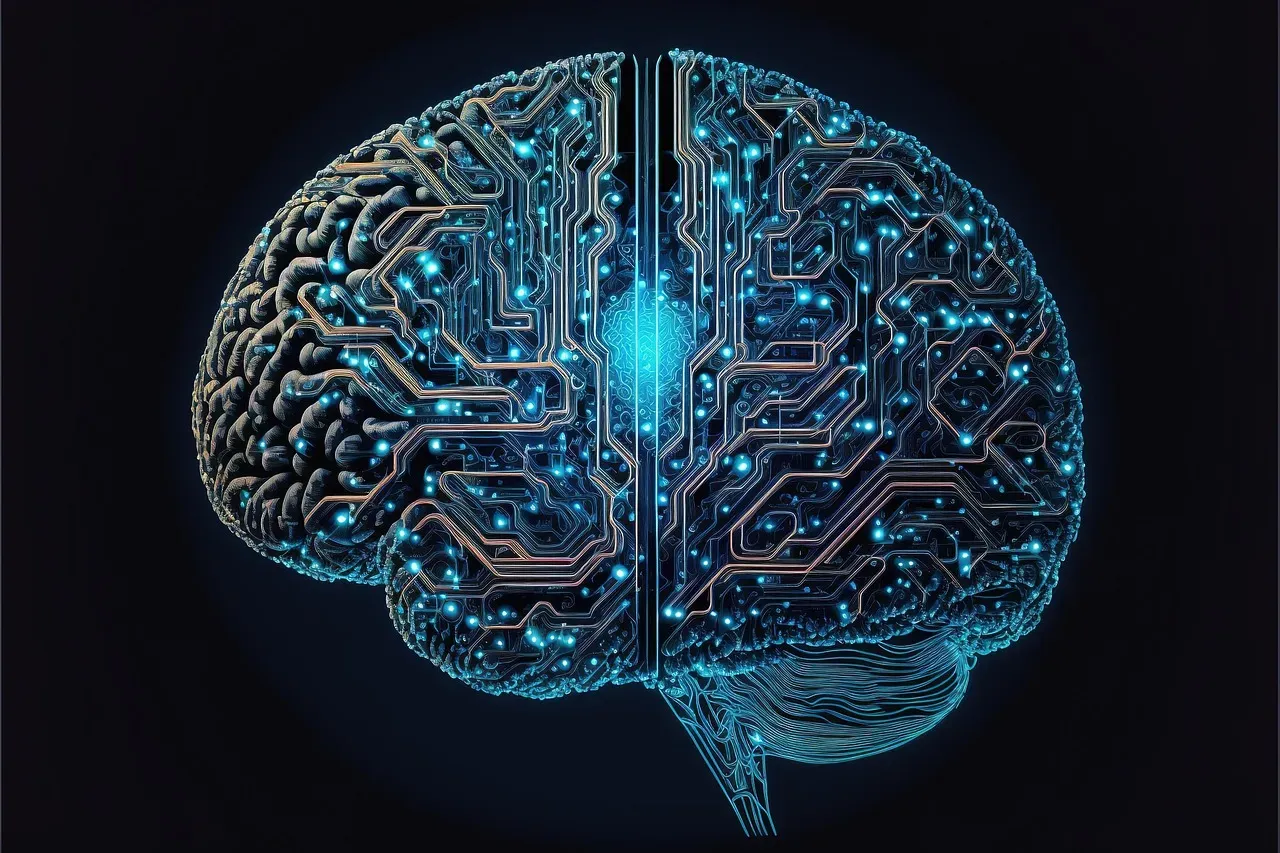
The discovery that string theory mathematics can explain brain wiring patterns represents one of those rare moments when distant fields of science unexpectedly converge. It doesn’t mean your thoughts are made of vibrating strings or that consciousness emerges from extra dimensions. Rather, it shows that nature might use similar optimization strategies across vastly different scales, from the quantum realm to the biological networks that give rise to our minds.
The very existence of this relationship between the string theory field and the surface minimization problem solves an almost 80-year-old mystery. Sometimes the tools we develop for one purpose turn out to unlock secrets in completely different domains. That’s the beauty of fundamental research.
What do you think about the unexpected connection between brain structure and string theory? Does it change how you view the relationship between physics and consciousness?