Everyday life tricks us into thinking reality is simple: solid objects, linear time, clear cause and effect. But modern science has quietly built a very different picture, one that’s weird, unsettling, and strangely beautiful. If you’ve ever had the feeling that there’s more going on beneath the surface of ordinary life, you’re not imagining it.
Some of the most powerful theories in physics and neuroscience suggest that what you experience as “reality” is less like a photograph and more like a curated story. In a way, your mind is less a passive observer and more a clever storyteller, constantly making educated guesses about a universe that is far stranger than it looks. Let’s walk through five scientific ideas that might permanently warp the way you see, well… everything.
1. Quantum Mechanics: Reality Is Probabilities, Not Certainties
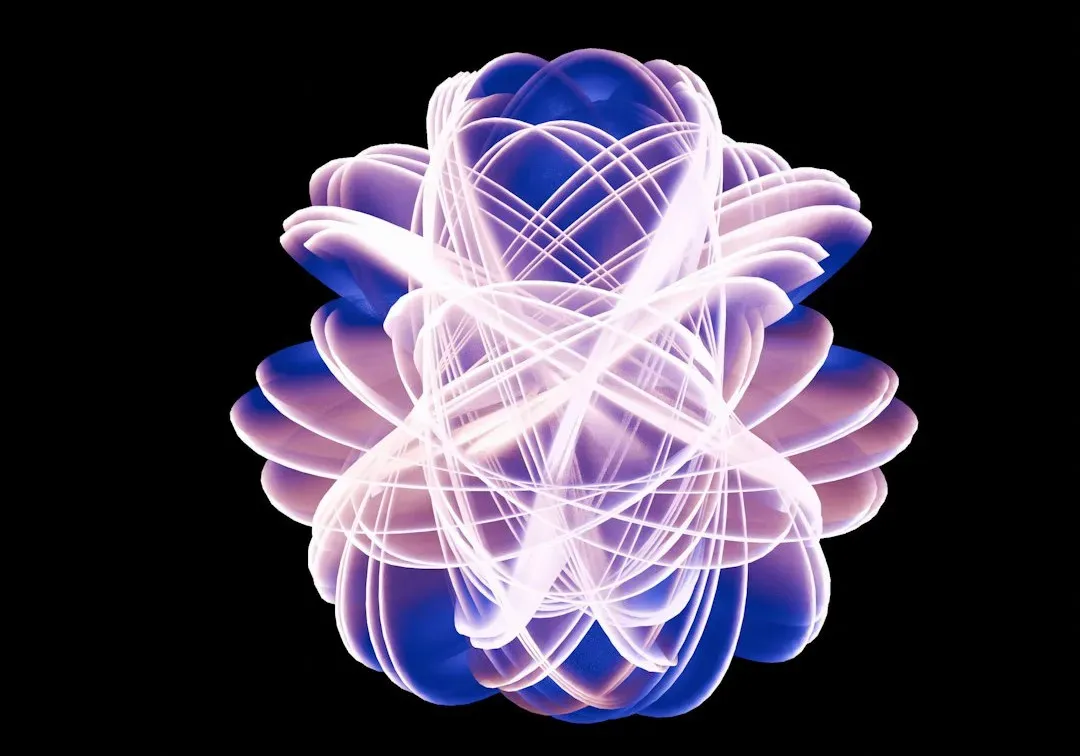
Imagine throwing a ball and, until someone looks, it isn’t in any one place but in a cloud of possibilities. That sounds like bad science fiction, but on the tiny scales of atoms and particles, that’s essentially what quantum mechanics says. Particles don’t have definite positions or paths until they interact with something, and before that they’re spread out as probabilities described by a mathematical wave.
This idea isn’t just abstract theory; it’s been hammered into place by experiments for over a century. In the famous double-slit experiment, single particles fired one by one create an interference pattern as if each particle behaves like a wave going through two slits at once, until they’re measured. The unsettling takeaway is that at the most fundamental level, reality seems to be written in terms of chances, not certainties, and what you finally see may depend on how you choose to look.
2. Relativity: Time and Space Are Not What You Think
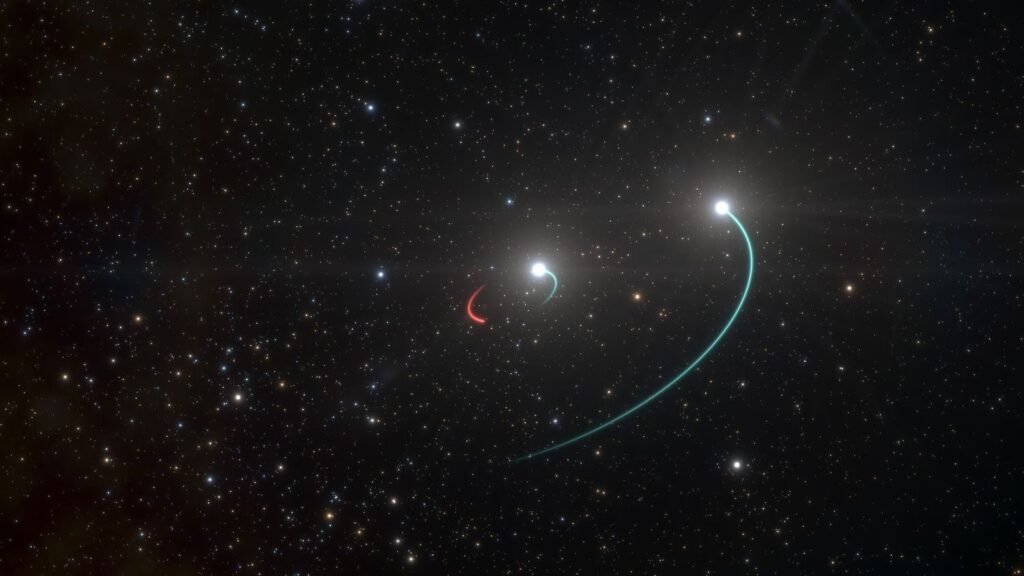
We grow up thinking time is like a river flowing at a steady speed and space is just the stage where things happen. Einstein’s theory of relativity ripped that comfort blanket away. It showed that time can slow down and space can stretch depending on how fast you move or how close you are to something very massive, like a black hole.
This isn’t just a philosophical twist; it shows up in real technology. The satellites that power GPS run in a weaker gravitational field and move fast enough that their clocks literally tick at different rates than clocks on Earth. Engineers have to correct for these relativistic effects, or your navigation would drift wildly out of sync. The deeper punchline is that space and time are woven together into a single fabric called spacetime, and your “now” is not universal – different observers can genuinely disagree about what events are simultaneous.
3. The Holographic Principle: Our 3D World Might Be a Projection
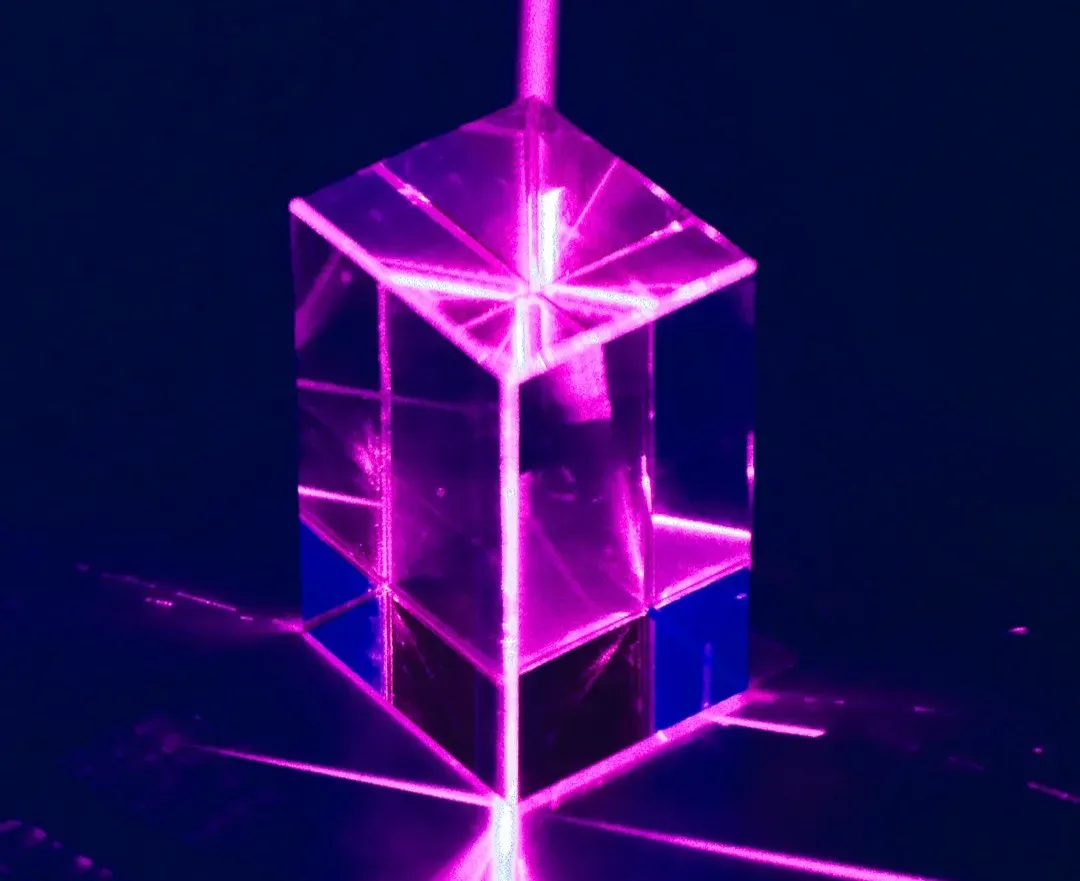
Take a moment to picture a hologram on a credit card: a flat surface holding information that produces a three-dimensional image. Some physicists think the entire universe might work in a similar way. The holographic principle suggests that all the information inside a volume of space can be described by data encoded on its boundary, like a cosmic hard drive storing a 3D world on a 2D surface.
This bold idea grew out of attempts to understand black holes, where information storage seems to depend on surface area, not volume. It has since inspired models where a universe with gravity in three dimensions emerges from a more fundamental theory defined on a lower-dimensional boundary. If something like this picture is correct, then the reality you move through could be more like a projection generated from underlying information, turning your intuitive sense of “solid 3D stuff” into a very convincing illusion built from abstract bits.
4. The Brain as a Prediction Machine: Your Perception Is a Controlled Hallucination
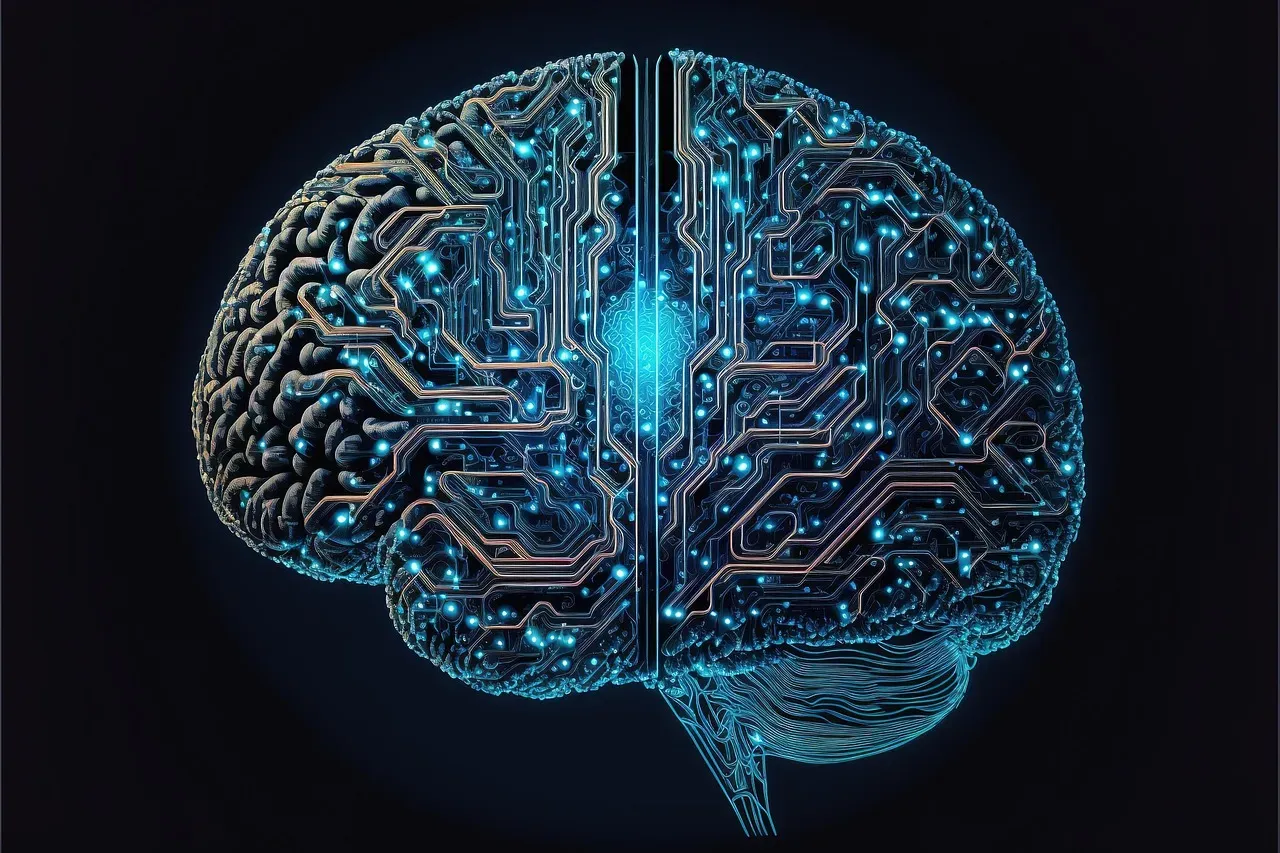
Most of us assume we open our eyes and simply “see” what’s out there, like a camera capturing the world. Modern neuroscience pushes a very different view: the brain is constantly predicting what it expects to see, hear, or feel, and then only correcting those guesses when reality disagrees. Perception, in this light, is a negotiation between incoming signals and prior expectations, not a straightforward mirror of the outside world.
This predictive brain model helps explain everything from visual illusions to why you might mishear a word in a noisy room. It also sheds light on mental health conditions where those internal predictions become too strong or too weak compared to sensory input. In a sense, your experience of reality is a kind of controlled hallucination shaped by your history, beliefs, and body, tuned just enough by the world to keep you alive and functioning. You’re not just looking at reality; you’re constantly guessing it into existence.
5. The Multiverse Idea: Our Universe Might Be Just One of Many
It’s tempting to think of the universe as everything there is: one grand, all-encompassing reality. Various scientific ideas challenge that, suggesting there could be many universes, each with different properties, physical constants, or even numbers of dimensions. Some versions grow out of inflationary cosmology, where different regions of space might have inflated into separate “bubble universes” beyond our observable horizon.
Other versions piggyback on quantum mechanics, proposing that all possible outcomes of quantum events actually occur in diverging branches of reality. None of these multiverse ideas have direct, decisive evidence, and they’re hotly debated among physicists. But they’re taken seriously enough that they appear in mainstream research and discussions about fine-tuning, cosmology, and quantum theory. If even one version turns out to be right, our universe might be just one page in an unimaginably huge library of realities.
Living With a Stranger Reality
When you put these theories side by side, a theme jumps out: reality is not the straightforward, sturdy thing it appears to be from the vantage point of daily life. On small scales, it’s probabilistic; on large scales, space and time flex; in your mind, it’s filtered through predictions and expectations; in the grandest pictures, it might be encoded on a surface or just one of countless universes. The world you experience is more like a set of overlapping stories than a single, simple photograph.
That might sound unsettling, but there’s something oddly freeing about it too. If reality is richer, stranger, and more layered than your intuition suggests, then your current picture of the world is not a final verdict but a work in progress. You’re living inside a mystery that science is slowly learning to describe, one wild theory at a time. Which of these ideas will you never be able to unsee now?