Stand in your kitchen, tap the table, look out the window: everything feels solid, continuous, and knowable. Quantum physics tears that comforting picture to shreds and replaces it with something so bizarre that even many physicists admit it still unsettles them. At the smallest scales of nature, particles flip between possibilities, influence each other across vast distances, and sometimes seem to exist in several places at once. Yet this isn’t a fringe idea or a late-night thought experiment; it is the most precisely tested framework in all of science. What follows is not a list of fun paradoxes, but a tour through a real, experimentally verified world that makes science fiction look conservative.
When Particles Refuse to Pick a Single Reality
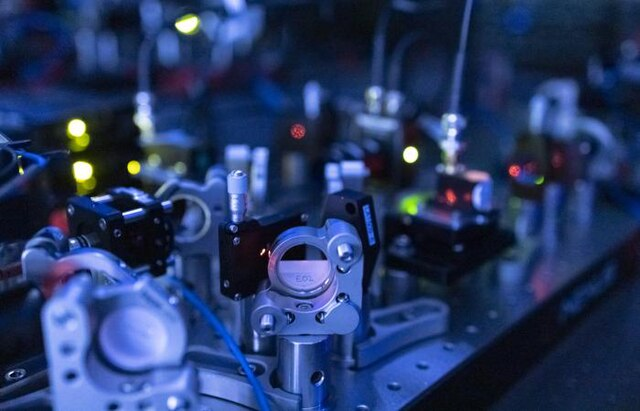
The starting shock of quantum mechanics is that particles do not behave like tiny billiard balls following neat, predictable paths. Instead, they are described by a wave of possibilities, a mathematical object called a wavefunction that encodes all the outcomes that could happen if you measure them. In classic demonstrations like the double-slit experiment with electrons or photons, a single particle passes through an apparatus one at a time, yet over many runs it builds up an interference pattern that screams “wave” rather than “particle.” It is as if each particle explores multiple paths simultaneously, then somehow interferes with itself before choosing one final outcome when observed. This is not a mere limitation of our instruments; it is built into the theory’s core.
Physicists call this peculiar behavior superposition: a system can exist in a blend of states until a measurement forces a definite result. In everyday life, you never see a coffee mug in a superposition of on-the-table and on-the-floor, because quantum effects usually wash out when trillions of particles interact. But in carefully isolated lab setups, scientists routinely prepare photons, electrons, atoms, even molecules of impressive size in delicate superposition states. The unsettling implication is that reality, at its root, is probabilistic and fundamentally deals in maybes, not certainties, until something pushes it to decide.
Entanglement: Correlations That Seem to Ignore Distance
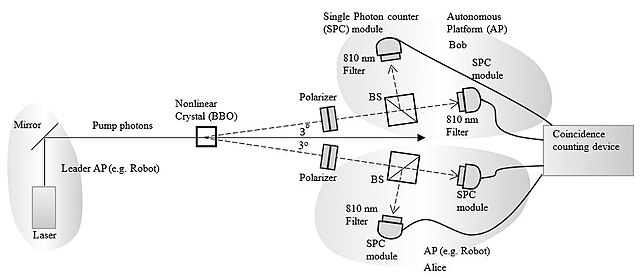
If superposition is unsettling, entanglement is the point where many people throw up their hands and say this sounds impossible. When two particles interact and become entangled, their properties can no longer be described independently; they form a single quantum system, no matter how far apart they later travel. Measure one, and you instantly know the result you will obtain when you measure the other, even if it is on the other side of the planet. Experiments have tested this with photons separated by many kilometers and found correlations stronger than any theory of hidden local causes can explain.
For decades, physicists wrestled with whether some unseen mechanism might restore a more intuitive picture, but increasingly precise experiments have shut down loophole after loophole. They do not show faster-than-light messages zipping around, because you still cannot use entanglement to send information in a controllable way. Instead, they reveal that our classical idea of separate objects with preexisting properties simply does not map onto the quantum world. The universe appears to allow connections that are deeply nonlocal in terms of correlations, while stubbornly refusing to let us exploit them to break relativity’s speed limit.
Quantum Experiments That Rewrite Our Intuition About Measurement

Perhaps the most mind-bending twist arrives when you ask what exactly counts as a “measurement” and when reality decides on a single outcome. In so-called delayed-choice experiments, physicists set up devices where they can choose how to measure a particle only after it has already passed through part of the apparatus. Astonishingly, the pattern of results behaves as if the particle’s past behavior adapts to the measurement choice, even though that choice was made later in time.
Then there are “quantum eraser” experiments, where information about which path a particle took is either preserved or erased before detection. When that path information is available in principle, interference vanishes; when it is removed, the interference reappears, even though the particles have already flown through the device. To be clear, no one is literally changing the past, but these results force us to abandon the idea that particles carry a straightforward, continuous story from A to B. Instead, what we can meaningfully say about what happened depends on the entire experimental context, including choices made after the fact.
Many Worlds, Hidden Variables, and Competing Stories of Reality
Because quantum mechanics works so well yet feels so alien, physicists have spent nearly a century arguing about what it really means. One straight-talking approach, often called the Copenhagen view, essentially shrugs and says: the equations give correct probabilities for measurements, do not ask what happens in between. Other frameworks push harder. The many-worlds interpretation takes the mathematics at face value and says the wavefunction never collapses; instead, every possible outcome actually occurs in different branches of a constantly splitting multiverse. In that picture, when you observe a quantum event, you and the universe effectively divide into versions corresponding to all possible results.
On another front, pilot-wave or hidden-variable theories try to restore a version of definite particle paths guided by a quantum wave. These models reproduce standard quantum predictions but at the cost of accepting a strongly nonlocal underlying reality. What is striking is that no experiment so far has picked a unique winner among these narratives; they all agree on the measurable outcomes. We are left with a theory that works flawlessly but comes wrapped in competing metaphysical stories, each stranger than the last, and no consensus on which, if any, reflects how the world truly is.
From Thought Experiments to Quantum Technologies in Your Pocket
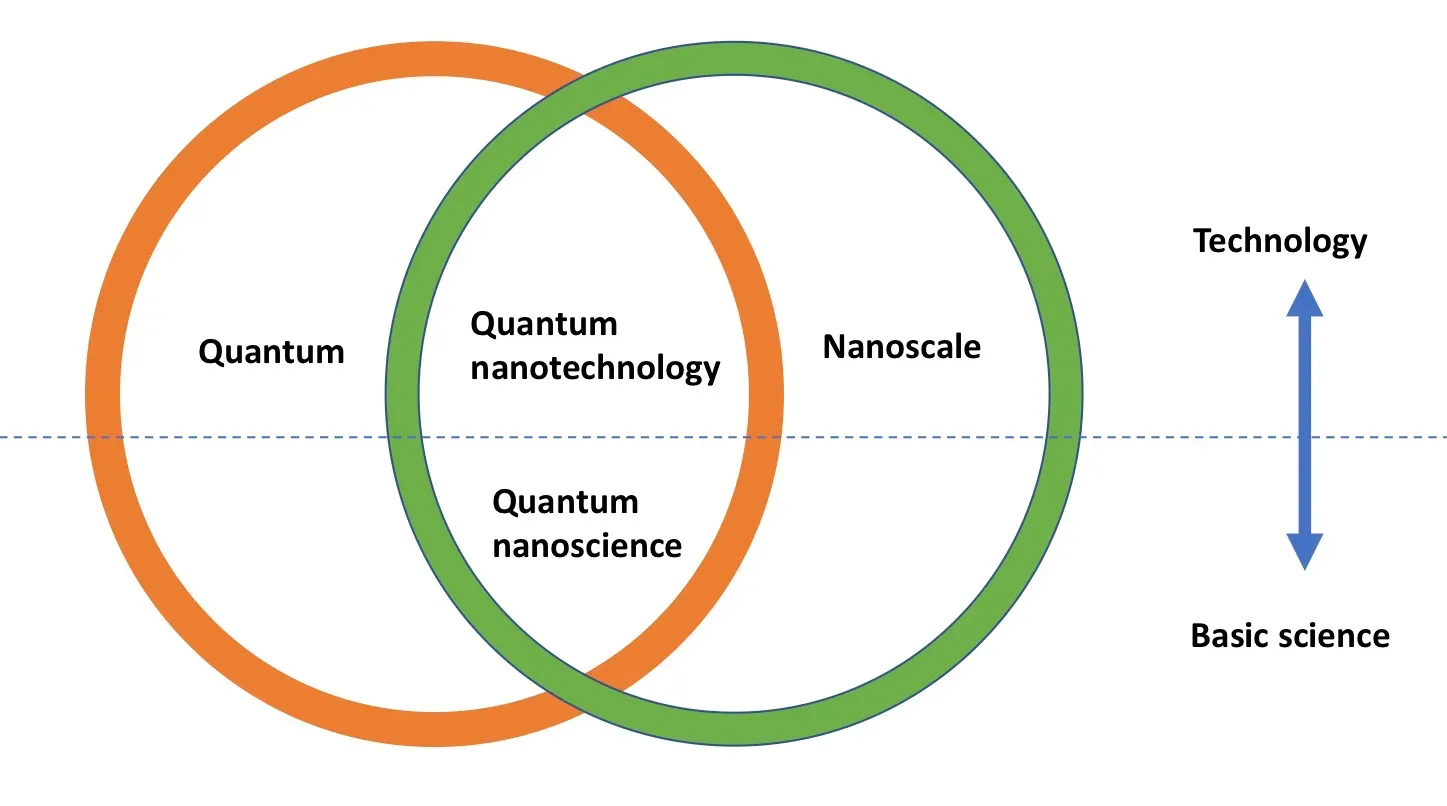
For all its philosophical weirdness, quantum mechanics is not just a playground for abstract arguments; it is a workhorse of modern technology. The design of semiconductor electronics, including the chips in phones and laptops, depends on treating electrons as quantum waves in a crystalline lattice. Lasers, which rely on stimulated emission from quantized energy levels, now underpin everything from high-speed internet links to barcode scanners in grocery stores. Medical imaging techniques like MRI exploit quantum behavior of atomic nuclei in magnetic fields to produce detailed views inside the human body.
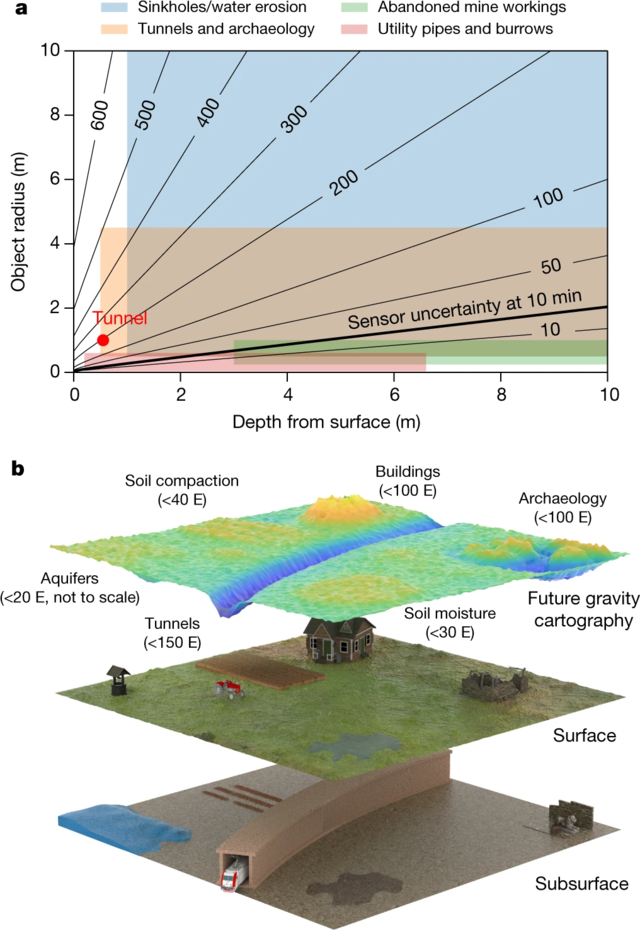
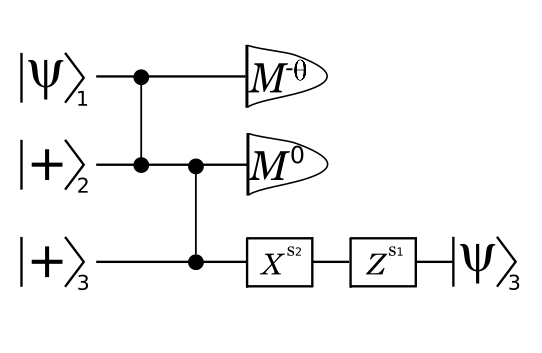
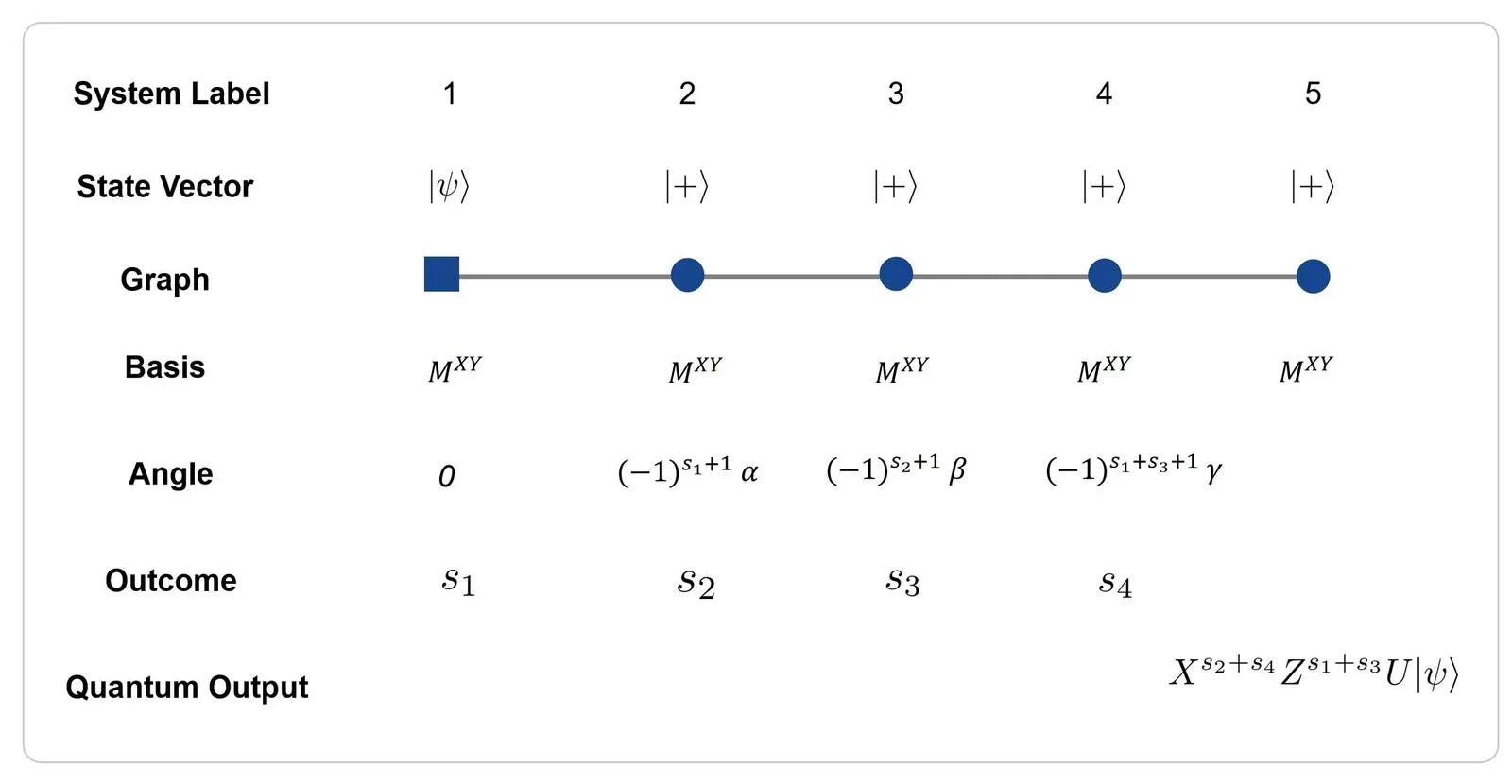
Newer technologies lean even more directly into quantum strangeness. Quantum cryptography uses entangled photons and single-photon encoding to create encryption keys where any eavesdropping attempt leaves a detectable scar. Quantum sensors harness superposition and entanglement to measure tiny variations in time, gravity, and magnetic fields with remarkable precision. And companies and research labs around the world are racing to build quantum computers that manipulate fragile qubits instead of classical bits, promising new capabilities in simulating materials, optimizing complex systems, and tackling some classes of problems that stump conventional machines.
Why Quantum Weirdness Matters Far Beyond the Lab
It is tempting to treat quantum effects as exotic details that only show up in rarefied experiments, but that misses their deeper importance. The success of quantum theory tells us that the familiar world of tables and trees is not the basic level of reality; it is an emergent layer built from a much stranger foundation. Classical physics imagined a clockwork cosmos where, in principle, knowing enough about the present would let you calculate the future with arbitrary accuracy. Quantum mechanics replaces that with a universe ruled by probabilities, uncertainty relations, and correlations that defy classical explanation.
This shift has cultural and philosophical ripples. It challenges old assumptions about determinism and free will, and it undermines the comforting notion that reality must always align with everyday intuition. At the same time, it reinforces a core scientific lesson: the universe is under no obligation to be simple, and our job is to follow wherever the evidence leads, not to force nature into familiar molds. The fact that human beings, with brains built to dodge predators and find food, can even glimpse this quantum structure is itself a kind of quiet miracle.
Unfinished Business: Gravity, Space-Time, and the Quantum Frontier
For all its triumphs, quantum mechanics is not the final story, and some of its strangest features may be clues toward a deeper framework. One glaring problem is that quantum theory and general relativity, our best description of gravity and space-time, do not yet mesh into a single, complete picture. Black holes, with their extreme density and warped space-time, are arenas where both theories should apply, but their combination leads to puzzles like the fate of information that falls past the event horizon. Efforts in quantum gravity, from string theory to loop quantum gravity and newer ideas, try to reconcile these tensions, often at the cost of introducing even more radical concepts.
There are also hints that entanglement itself may be woven into the very fabric of space-time. Some researchers propose that the geometry of the universe, the smoothness of the space we move through, could emerge from vast networks of entangled quantum bits. Others study curious connections between quantum information, black hole thermodynamics, and the limits of computation. None of these ideas are settled, but they show that quantum strangeness is not a side story; it may be the thread from which space, time, and gravity are ultimately stitched.
Living with a Universe Stranger Than Fiction
Facing quantum reality can feel a bit like realizing the map you have always used for your hometown is wildly simplified: the streets are real enough, but the underlying landscape is far more intricate than you knew. You do not need advanced math to appreciate the basic message: particles do not always have definite properties, distant systems can be linked in ways that defy classical locality, and what counts as “real” can depend on how you choose to look. You are already living in a quantum world, whether you ever think about it or not, every time you use a smartphone, get a medical scan, or connect to the internet.
If this leaves you both amazed and slightly unsettled, you are in good company; many physicists felt the same way when these ideas first emerged and, in some cases, still do. The most constructive response is not to retreat into mysticism or dismiss the weirdness as mere math, but to stay curious and engaged. There are accessible books, public lectures, online courses, and science news outlets that unpack these ideas without diluting their depth, and following real experimental advances is far more rewarding than any fictional shortcut. After all, when the universe itself is this strange and this real, what story could be more worth your attention?
Suhail Ahmed is a passionate digital professional and nature enthusiast with over 8 years of experience in content strategy, SEO, web development, and digital operations. Alongside his freelance journey, Suhail actively contributes to nature and wildlife platforms like Discover Wildlife, where he channels his curiosity for the planet into engaging, educational storytelling.
With a strong background in managing digital ecosystems — from ecommerce stores and WordPress websites to social media and automation — Suhail merges technical precision with creative insight. His content reflects a rare balance: SEO-friendly yet deeply human, data-informed yet emotionally resonant.
Driven by a love for discovery and storytelling, Suhail believes in using digital platforms to amplify causes that matter — especially those protecting Earth’s biodiversity and inspiring sustainable living. Whether he’s managing online projects or crafting wildlife content, his goal remains the same: to inform, inspire, and leave a positive digital footprint.