
Somewhere over the open ocean right now, a bird no heavier than a handful of coins is flying thousands of miles to a forest it has never seen, guided by cues we still do not fully understand. Animal migration is supposed to be a tidy story about seasons, food, and breeding, yet the more closely scientists track these journeys, the stranger the picture becomes. With satellite tags, tiny geolocators, and decades of field work, researchers keep uncovering routes that feel less like ordinary biology and more like science fiction flight plans. These nine migrations push the limits of endurance, orientation, and inherited memory in ways that continue to baffle even specialists. Together, they reveal not just how tough wild animals can be, but how much of the planet’s invisible navigation system we still have left to decipher.
Arctic Terns: Pole‑to‑Pole Pilots on an Endless Summer Loop
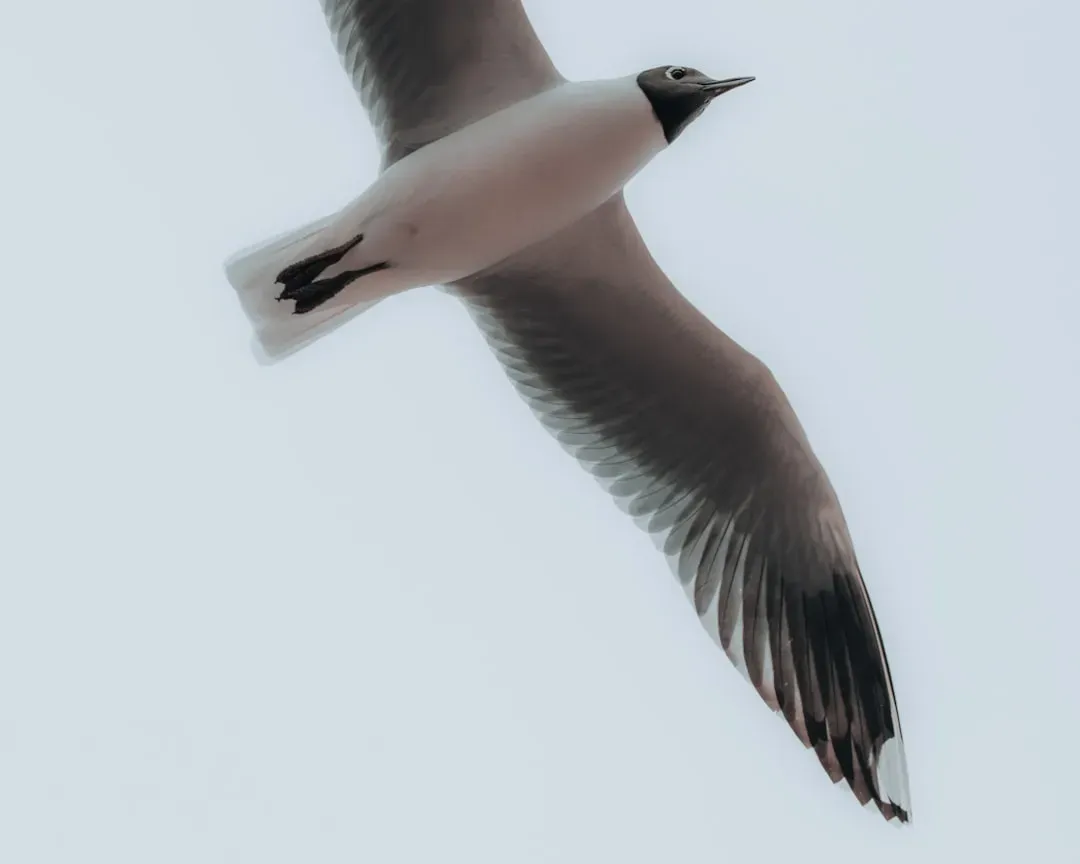
Imagine spending most of your life chasing daylight from one end of the planet to the other; that is essentially the life strategy of the Arctic tern. These slender seabirds breed in the high Arctic, then swing all the way down to Antarctica for the austral summer, and back again, logging round-trips that can exceed the entire circumference of Earth. Tracking studies have shown that many terns do not just fly straight south and north but carve graceful S-shaped curves across the Atlantic, exploiting prevailing winds to save energy on journeys of tens of thousands of miles. A single individual can easily accumulate the equivalent of several trips to the moon over its lifespan, which for a small bird is already impressive. The fact that juvenile terns, migrating for the first time, manage these routes without older birds as guides still stirs heated debate among researchers.
Scientists suspect a blend of magnetic sense, celestial cues, smell, and even low-frequency sounds helps terns stay on course, but the exact combination remains unresolved. Unlike human pilots, these birds do not receive weather briefings or use maps, yet they adjust to storms and shifting winds in real time, rerouting with uncanny precision. The sheer scale of their migration also highlights how dependent they are on intact oceans, rich feeding areas around sea-ice edges, and predictable wind patterns. As sea ice recedes and wind regimes change, some biologists worry that even these master navigators may be forced into riskier detours. For now, though, the Arctic tern still stands as the planet’s most spectacular example of long-distance commuting.
Bar‑Tailed Godwits: Nonstop Marathoners of the Pacific Flyway
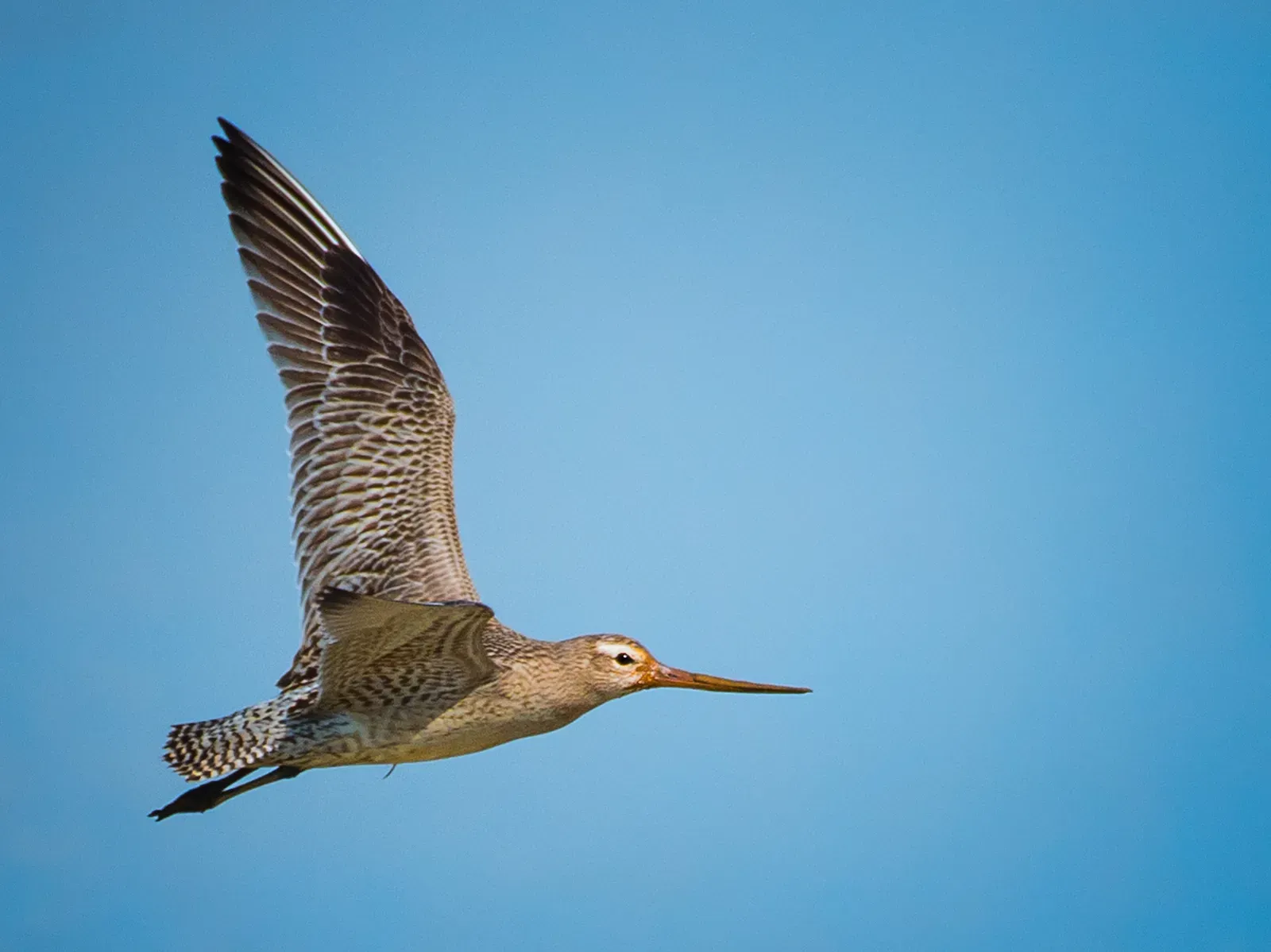
When scientists first documented bar-tailed godwits flying from Alaska to New Zealand in a single, nonstop flight, many found it hard to believe that a shorebird could cross the entire Pacific without landing. Yet satellite tags confirmed what looked impossible: some individuals cover more than a week of continuous flight over open ocean, flapping almost the entire time. Before departure, these birds gorge themselves at Alaskan mudflats until their body mass nearly doubles, then they shrink their digestive organs to lighten the load and free up space for fat. On the wing, they burn through this fuel with the efficiency of a high-end racing engine, sometimes losing nearly half their starting weight by the time they arrive. There is no backup plan if the winds turn against them or a storm wall blocks their path.
The navigational side of this feat is just as startling as the physiology. Crossing the Pacific means there are no coastlines to follow, no familiar landmarks, only a shifting canvas of clouds and waves. Godwits appear to read wind fields and pressure systems in ways we barely grasp, selecting departure windows that line up with favorable tailwinds. The smallest errors would send them hundreds of miles off course, yet most birds arrive within a relatively narrow band of estuaries year after year. This razor-thin margin for error raises a troubling question: what happens when increasingly erratic storm systems scramble the wind highways these birds evolved to ride?
Monarch Butterflies: Multi‑Generational Memory Written in Fragile Wings

Every autumn across North America, monarch butterflies drift south in a blaze of orange, but the real shock is not that they migrate – it is how the migration works. No single butterfly completes the full round-trip; instead, it takes several generations to move from summer breeding grounds in the north to wintering forests in central Mexico and then back north again. The monarchs that arrive at the Mexican oyamel fir forests have never been there before, yet they congregate with remarkable precision in the same mountain groves their great-grandparents used. This implies some form of inherited navigational program encoded in their genes and physiology rather than learned from experience. To watch millions of them blanket trees like living leaves is to see an ancient route operating through entirely new bodies each year.
Researchers have uncovered some of the monarch’s tools: an internal clock tied to the sun’s position, sensitivity to Earth’s magnetic field, and a finely tuned response to day length and temperature. Still, the way this information cascades across generations, resetting direction and timing along the way, remains deeply puzzling. The migration is also precariously balanced on the availability of milkweed for larvae in breeding areas and the protection of high-elevation forests in Mexico. Habitat loss, pesticide use, and climate shifts have already squeezed monarch numbers, turning their great migration into a kind of living indicator of landscape health. When you see a monarch in your backyard, you are looking at the latest link in a relay chain that spans a continent and stretches back through time.
Caribou and Reindeer: Migrating Across a Moving, Melting Map
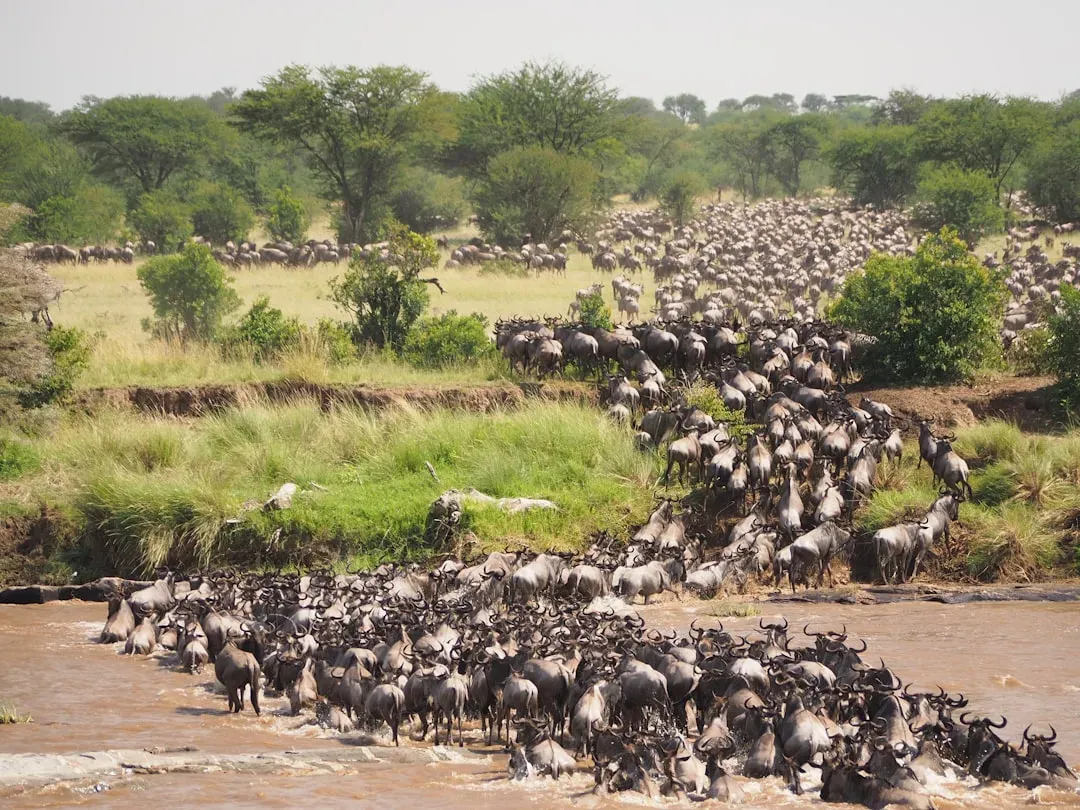
At first glance, caribou and reindeer migrations look straightforward: follow emerging vegetation in spring, then retreat toward safer wintering grounds when snow deepens. But the distances involved – hundreds to more than a thousand miles for some herds – and the precision with which animals thread through mountains, rivers, and ice make these journeys far more complex. Historically, herds in North America and Eurasia have been known to swim wide rivers, cross sea ice, and fan out across tundra in vast, shimmering ribbons visible from aircraft. Calving grounds are often used year after year, even when storms reshape the landscape or permafrost slumps open new obstacles. Young calves, only days old, are pulled into this moving river of hooves as if the route were an unspoken rule written into the herd’s collective memory.
Climate change is rapidly turning that memory into a risky gamble. Rivers break up earlier, sea ice becomes unreliable, and insect harassment seasons shift, yet many herds still appear to move on traditional timetables honed by past conditions. Scientists tracking collared individuals have documented more frequent detours, stalled progress, and mismatches between arrival dates and peak plant nutrition. Added to that are roads, pipelines, and industrial development that slice across ancient routes, forcing animals into narrow corridors or pushing them into suboptimal habitat. The persistence of caribou migration, despite this moving maze, underscores both the resilience and vulnerability of a system built on long-term environmental rhythms now being thrown out of tune.
Green Sea Turtles: Returning to Beaches They Have Never Seen
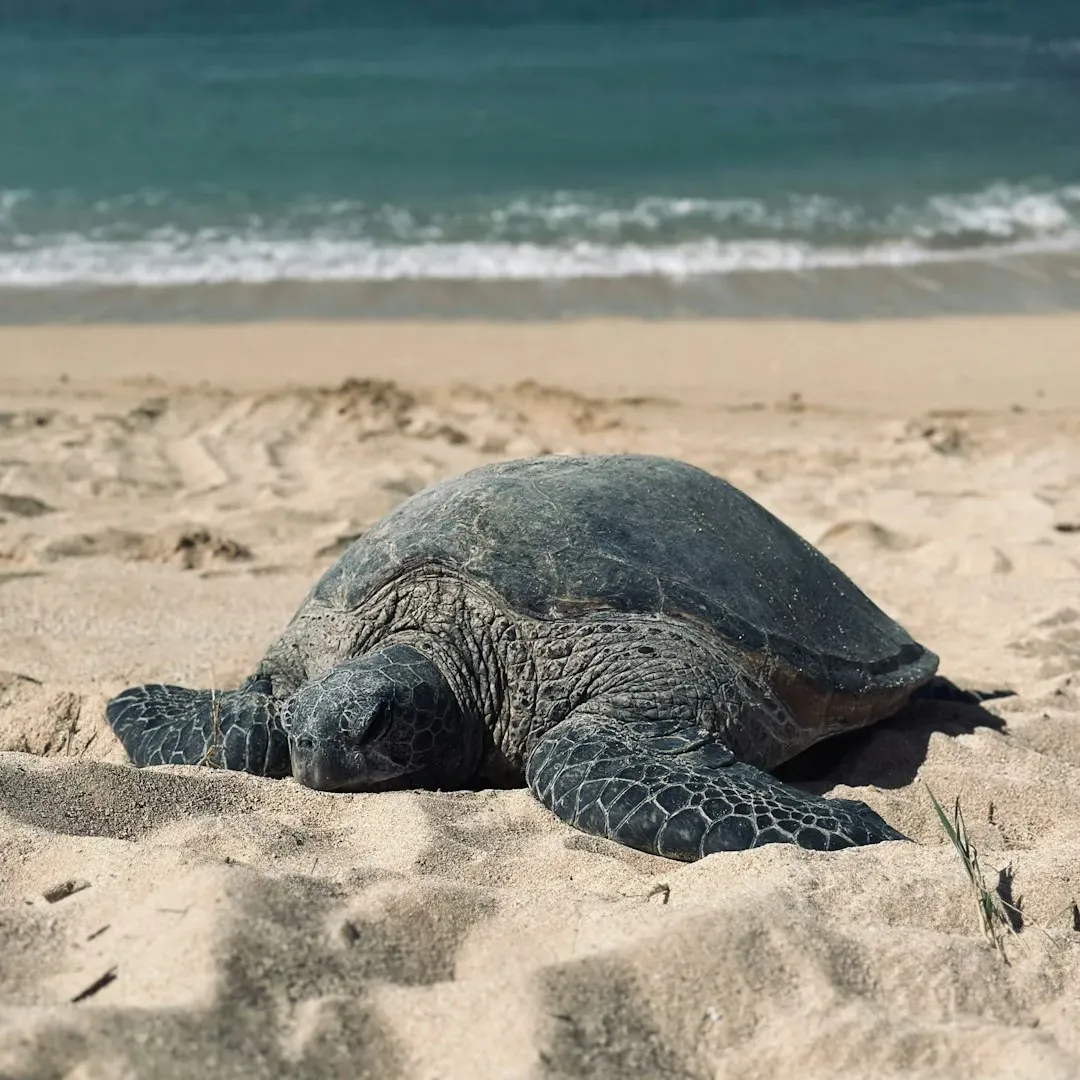
Green sea turtles can spend decades roaming the oceans, yet females somehow navigate back to the very stretch of coastline where they hatched to lay their own eggs. In some cases, their foraging grounds lie thousands of miles away from these natal beaches, separated by featureless expanses of open water that offer few stable landmarks. Tagging projects and genetic studies have shown that nesting populations on neighboring beaches can be surprisingly distinct, implying remarkably fine-scale homing. This suggests that turtles are not simply returning to a region but to particular bays or even stretches of sand. For an animal that may not revisit a nesting beach for ten or more years, the reliability of that long-term memory is astonishing.
Evidence points to a kind of magnetic imprinting: hatchlings may encode the specific magnetic signature of their birth beach, using it later as a navigational beacon. Adult turtles seem able to detect slight variations in Earth’s magnetic field strength and inclination, reading it like a global address system. Yet magnetic fields drift over time, shifting the “coordinates” of a beach, and storms physically reshape coastlines, raising questions about how turtles adjust. Despite these complications, many still arrive close to their original sites, then fine-tune their final approach through odors, currents, and perhaps underwater topography. Each successful nesting season is a quiet confirmation that a map written in magnetism and memory can persist across years of wandering.
European Eels: A Secretive Odyssey to the Sargasso Sea
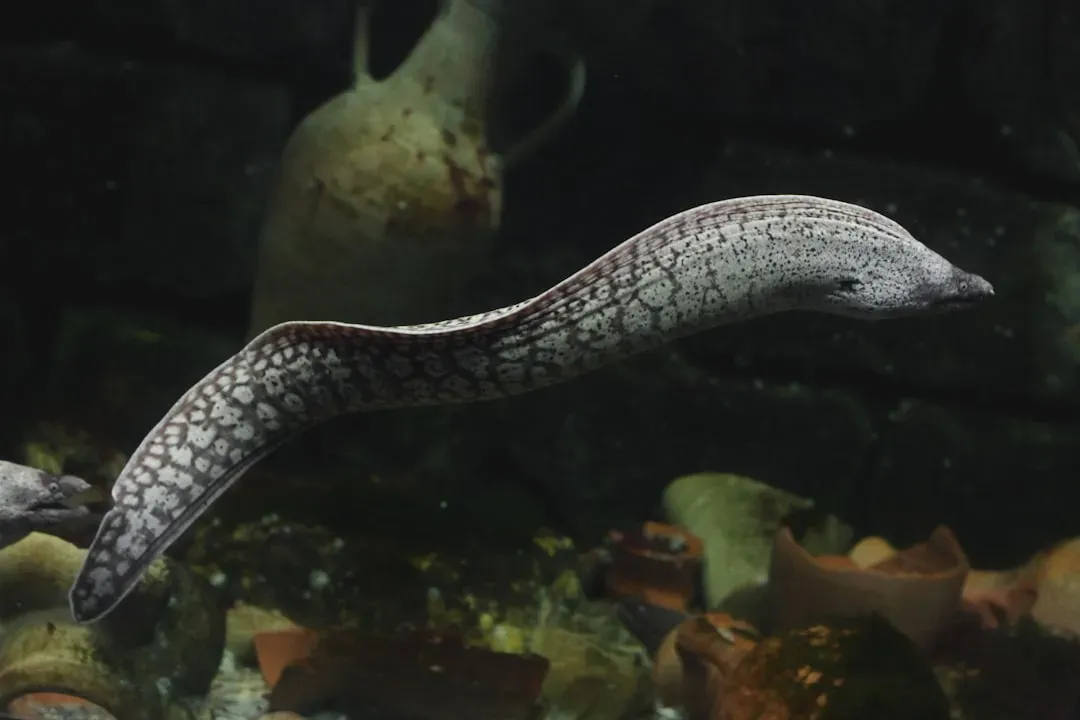
Few migrations have frustrated scientists as much as that of the European eel, an animal that disappears into the Atlantic Ocean and then reappears in rivers and lakes across Europe and North Africa as if by magic. For more than a century, researchers suspected that adult eels leave continental waters and spawn somewhere in the Sargasso Sea, a region of the North Atlantic marked by swirling currents and floating seaweed. Larval eels have indeed been found there, gradually increasing in size closer to Europe, implying a vast, multi-year loop between freshwater habitats and an offshore breeding ground no human has ever directly witnessed. Adult eels, however, have remained almost completely elusive in the open ocean, turning the final leg of their migration into a famously enduring mystery.
Modern tagging efforts have begun to trace portions of the route, showing eels diving to great depths and riding oceanic currents in a slow, spiraling journey toward the presumed spawning area. This trip may take many months and spans thousands of miles, undertaken after years or even decades spent in rivers and estuaries. The navigation challenge is immense: there are no visible coastlines for much of the way, and the Sargasso itself is defined not by land but by moving water. How eels pinpoint the right zone and then find each other in the deep ocean remains unknown. In an era when satellites image the entire planet, the fact that we still cannot describe in detail how a common fish completes its most important journey is a humbling reminder of how much of animal migration is still hidden.
Desert Locusts: Chaotic Swarms That Still Hit the Same Green Targets
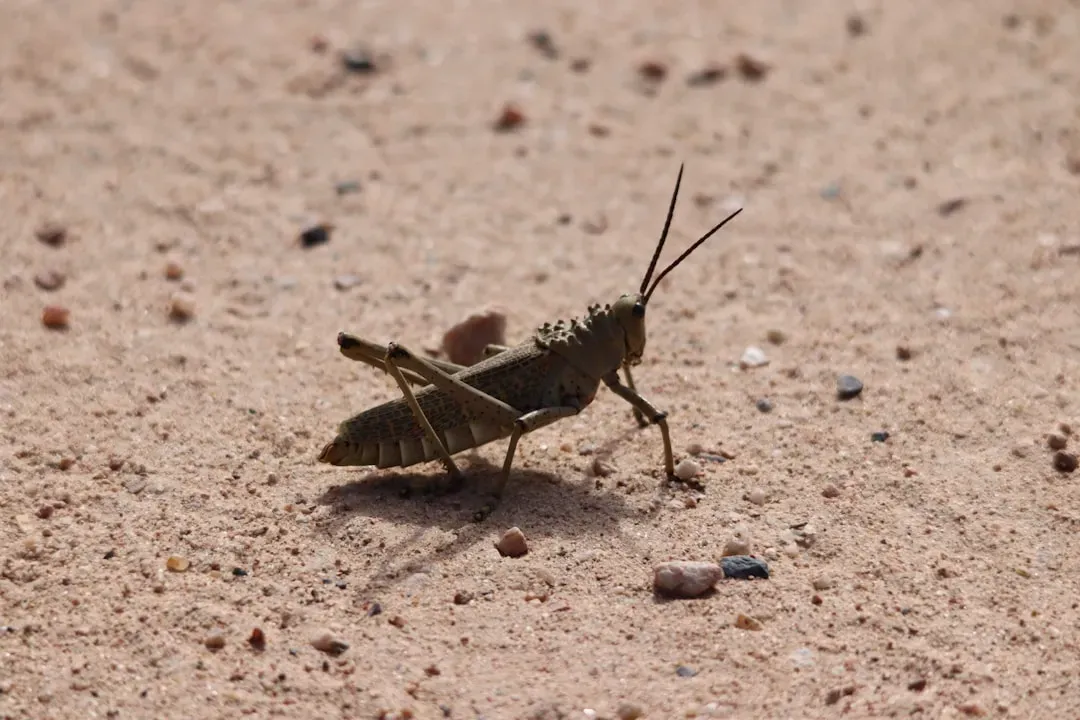
Desert locust swarms look, at first, less like a migration and more like chaos: dense clouds of insects, shifting direction with the wind and darkening the sky. Yet when ecologists track these outbreaks over years, patterns emerge that are uncomfortably precise. Swarms repeatedly appear in certain regions after rare rainfall, move along broad corridors, and converge on belts of fresh vegetation that seem almost impossible to predict without satellite data. Individual locusts respond to local cues – moist soil, green plants, the presence of other locusts – but the emergent movement of millions produces long-distance displacements that can span countries and even cross seas.
The logic behind this collective migration lies partly in phase change: when crowded and well-fed, desert locusts transform from solitary, cryptic insects into gregarious, highly mobile swarmers. Their sensory systems become tuned to following each other, aligning with group motion, and seeking distant food sources. Wind patterns carry them, but swarms also show some control, shifting altitude and direction to stay within suitable conditions. The eerie part is how effectively this loosely coordinated mass seems to “find” ephemeral green zones that human forecasters struggle to anticipate. In a world where weather extremes are becoming more common, understanding how locust migrations self-organize could mean the difference between early warning and agricultural disaster.
Humpback Whales: Oceanic Voyagers with Uncanny Route Fidelity
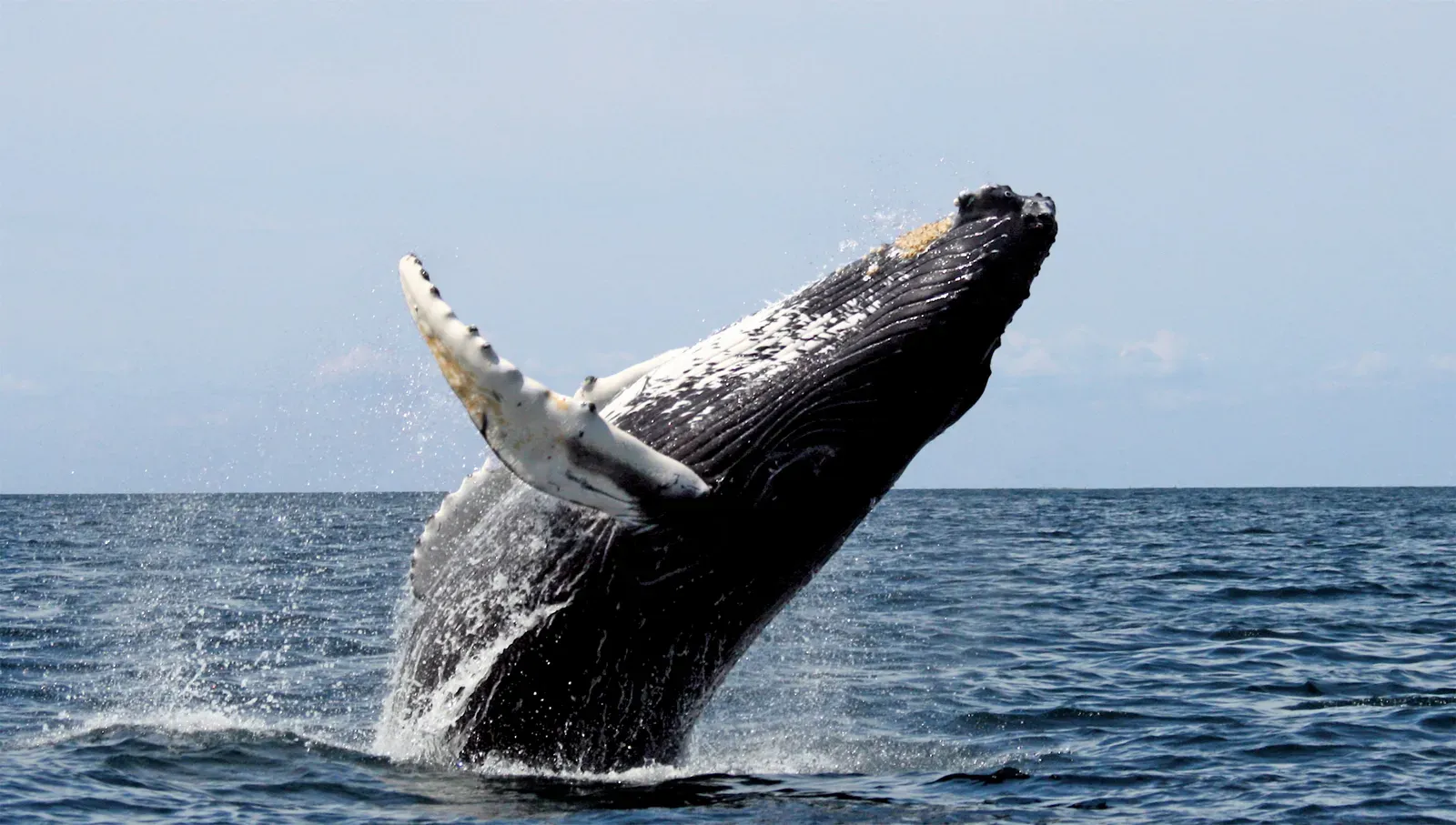
Humpback whales are among the ocean’s most iconic travelers, migrating between polar feeding grounds and tropical breeding areas along routes that can easily surpass thousands of miles. What still raises eyebrows is not only their endurance but their fidelity: individuals tend to return to the same feeding and breeding regions year after year, tracing paths through open ocean with almost map-like consistency. Tagging has revealed whales threading between seamounts, crossing deep basins, and sometimes traveling nearly straight lines over vast distances. Calves accompany their mothers on these journeys, suggesting a cultural component, but some of the navigational heavy lifting likely comes from senses we barely understand. For an animal navigating through three-dimensional water with no surface landmarks, this level of route memory seems almost unfairly advanced.
Researchers suspect that humpbacks combine multiple cues: the position of the sun and stars, gradients in water chemistry and temperature, geomagnetic information, and low-frequency soundscapes carried across ocean basins. The whales’ own vocal behavior complicates this picture, as populations share changing song traditions, yet their basic geographic fidelity persists. Some have been documented switching hemispheres or exploring new corridors, underscoring that these migrations are flexible rather than rigidly programmed. Still, long-term photo-identification has repeatedly matched individuals to the same bays and channels decades apart. In a sense, each returning whale is an archive of routes written into its neural circuitry, shaped by both inherited tendencies and a lifetime of experience.
What These Journeys Reveal About Animal Minds and Earth’s Hidden Maps
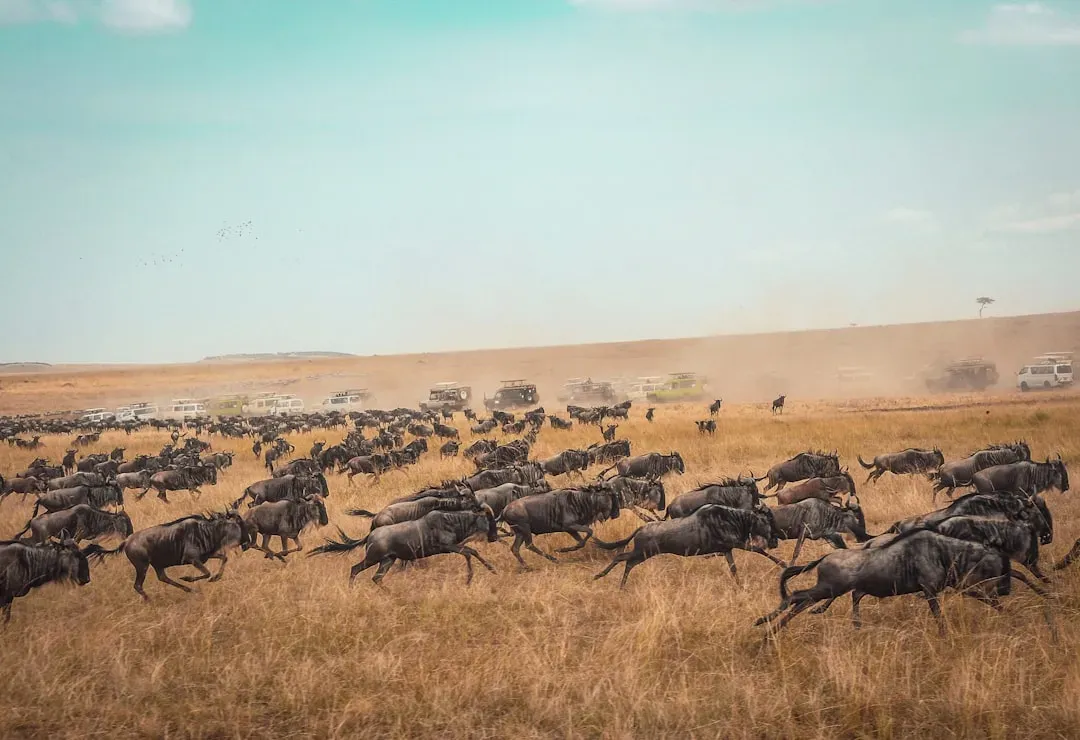
Look across these nine migrations and a theme jumps out: animals are not just reacting to their environments in the moment, they are anticipating patterns that play out across seasons, years, and even generations. From monarchs inheriting a route chain to turtles imprinting on a magnetic signature, migration demands a fusion of memory, sensing, and decision-making that blurs any simple line between instinct and intelligence. For decades, textbooks framed migration as a straightforward response to food scarcity or temperature, but detailed tracking has exposed a far subtler reality, full of detours, shortcuts, individual quirks, and cultural transmission. Even the idea that birds and other animals simply “know” where to go has given way to more layered models involving internal compasses, inherited maps, and ongoing learning. These systems operate at time and space scales that most human experience simply does not cover.
Technological advances have both clarified and deepened the mystery. Tiny GPS tags, archival loggers, and genetic tools have let scientists follow individual animals in ways that would have been impossible only a few decades ago, revealing flights once dismissed as exaggerations and routes no one suspected. At the same time, each new data set raises fresh questions: how do eels locate an invisible target in the mid-ocean, or how precisely can a whale sense the planet’s magnetic field? Compared with earlier understandings that treated migration as a kind of fixed, species-wide program, modern interpretations emphasize flexibility, individual variation, and the dynamic nature of environmental cues. These journeys are not just biological curiosities; they are living demonstrations of how brains and bodies, tiny and enormous alike, can build and update complex internal maps of a changing world.
Why These Migrations Matter in a Rapidly Changing World
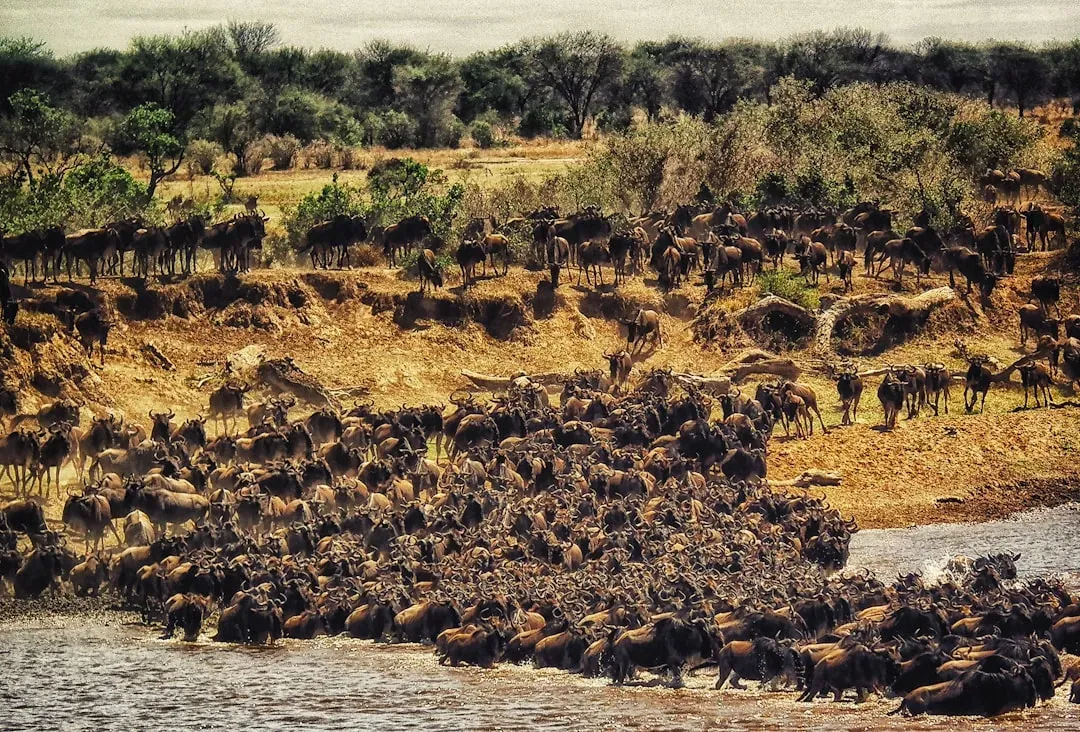
All of these migrations are, in their own ways, high-risk strategies built on the assumption that the world will be roughly the same from one year to the next. Arctic terns expect predictable winds, caribou rely on the timing of plant growth, turtles trust that a beach will still exist when they return decades later. As climate change scrambles seasons, shifts ocean currents, and reshapes coastlines, the finely tuned schedules and routes of migratory animals can suddenly become liabilities. Scientists are already seeing mismatches between arrival dates and food peaks, increased mortality in long ocean crossings, and altered pathways as animals try to adjust on the fly. Migrations that once looked invincible now appear surprisingly fragile when the underlying environmental patterns start to wobble.
Yet there is also a hint of resilience woven into these stories. Some populations are experimenting with new corridors, adjusting timing, or expanding their ranges, suggesting that flexibility is part of the migratory toolkit. Protecting key stopover sites, calving grounds, nesting beaches, and feeding hotspots can give animals room to make those adjustments without hitting hard walls of habitat loss or pollution. From an ecological perspective, migrations help move nutrients, shape food webs, and connect distant ecosystems, meaning that their decline ripples far beyond a single species. Our evolving understanding of these journeys therefore feeds directly into conservation planning, from marine protected areas to flyway agreements. In a very real sense, safeguarding migration is about keeping the planet’s circulatory system intact.
How You Can Pay Attention to the Planet’s Great Travelers
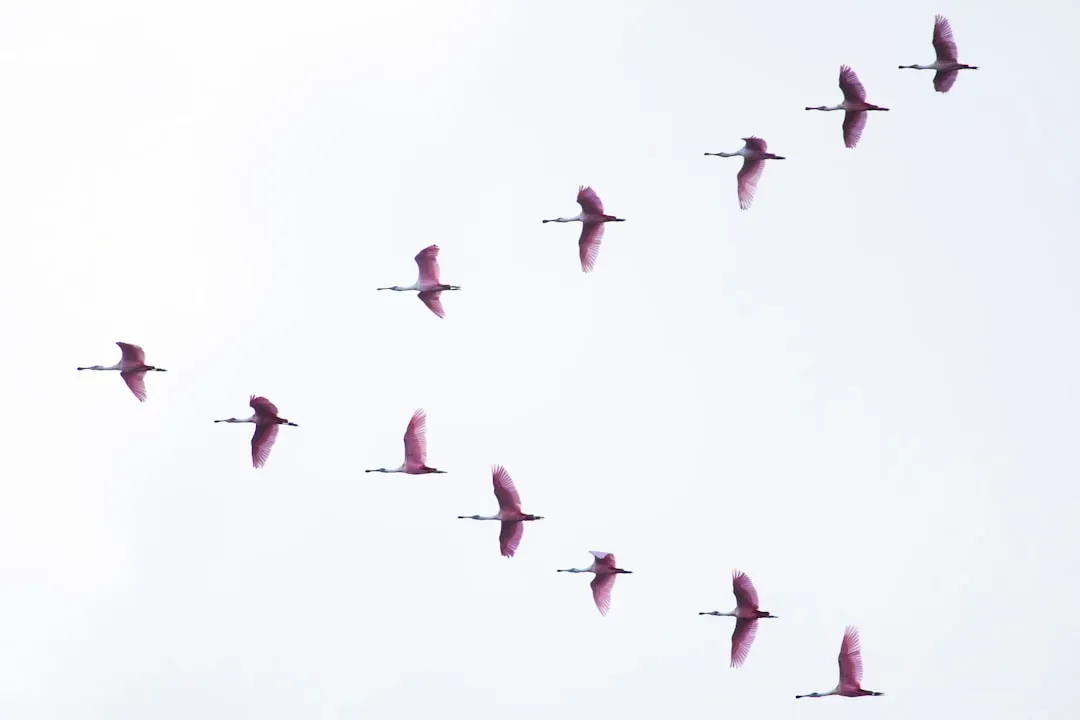
You do not need specialized equipment to start noticing migration; you just need to look up, look around, and remember that many of the animals you see are passing through on invisible highways. Seasonal bird movements can be tracked from a backyard feeder or a city park, and online citizen science platforms let you log observations that researchers actually use. If you live along a coast or near a river, you may be on the path of whales, turtles, salmon, or dragonflies that link your home to distant oceans and mountains. Even something as simple as turning off unnecessary lights during peak bird migration can help reduce fatal collisions in urban areas. Supporting habitat restoration, from planting native milkweed to protecting wetlands, directly strengthens the routes these travelers depend on.
For me, the first time I learned that a tiny tag on a shorebird could reveal a nonstop Pacific crossing, it permanently changed the way I looked at any flock lifting off a beach. Every long-distance migrant is carrying a story that spans cities, countries, and climates, stitched together by senses and memories we are only beginning to decode. Paying attention to them is not only a way to help science; it is a way to stay grounded in the bigger patterns shaping our shared planet. The next time you see a butterfly heading purposefully south or a V of geese etched against the sky, it may be worth asking yourself where they started, and what invisible line they are following. Which of these impossible journeys will you try to spot on your own horizon?
Suhail Ahmed is a passionate digital professional and nature enthusiast with over 8 years of experience in content strategy, SEO, web development, and digital operations. Alongside his freelance journey, Suhail actively contributes to nature and wildlife platforms like Discover Wildlife, where he channels his curiosity for the planet into engaging, educational storytelling.
With a strong background in managing digital ecosystems — from ecommerce stores and WordPress websites to social media and automation — Suhail merges technical precision with creative insight. His content reflects a rare balance: SEO-friendly yet deeply human, data-informed yet emotionally resonant.
Driven by a love for discovery and storytelling, Suhail believes in using digital platforms to amplify causes that matter — especially those protecting Earth’s biodiversity and inspiring sustainable living. Whether he’s managing online projects or crafting wildlife content, his goal remains the same: to inform, inspire, and leave a positive digital footprint.