Stand on the flank of an active volcano and almost everything you feel is contradiction: still air above, restless Earth below, silence broken by a low, animal growl from inside the planet. Volcanoes are not just spectacular natural shows; they are pressure valves for a planet that is constantly rearranging itself from the inside out. When they erupt, they rewrite landscapes, disrupt lives and climate, and yet also build the very continents we stand on. Understanding why volcanoes erupt is not just a classroom question, it is a matter of safety, survival, and awe at how a rocky planet stays alive. To answer it properly, we have to follow the heat, the rock, and the slow, relentless motion deep beneath our feet.
From Solid Rock to Liquid Fire: How Magma Forms
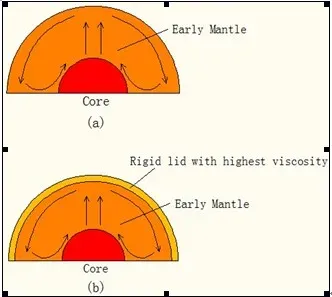
The story of any eruption starts far below the crater, in regions where solid rock begins to melt into magma. Earth’s interior is hot enough to melt rock almost everywhere at depth, but immense pressure usually keeps that rock solid, the way a block of ice can remain hard even as it nears its melting point. Magma is born when that balance is disturbed, most often by a drop in pressure, an increase in temperature, or the addition of water from subducting oceanic plates. Each of these changes makes it easier for minerals in the mantle or lower crust to break their bonds and start to flow. The result is not a uniform sea of liquid but a patchwork of partly melted zones that slowly coalesce and rise.
In many subduction zones, like those circling the Pacific, water carried down in a sinking oceanic plate begins to leak into the overlying mantle. That water lowers the melting point of the mantle rocks, triggering partial melting and generating magmas rich in volatile components. Beneath mid-ocean ridges, by contrast, hot mantle rock rises and decompresses, melting because the pressure drops faster than the temperature. Even under continental hotspots, such as Hawaii or Yellowstone, unusually hot mantle plumes punch upward and create melting zones at depth. These different melting recipes explain why not all magma is the same, and why one volcano oozes gentle lava while another erupts with devastating explosiveness.
Buoyancy, Cracks, and Magma Highways Toward the Surface
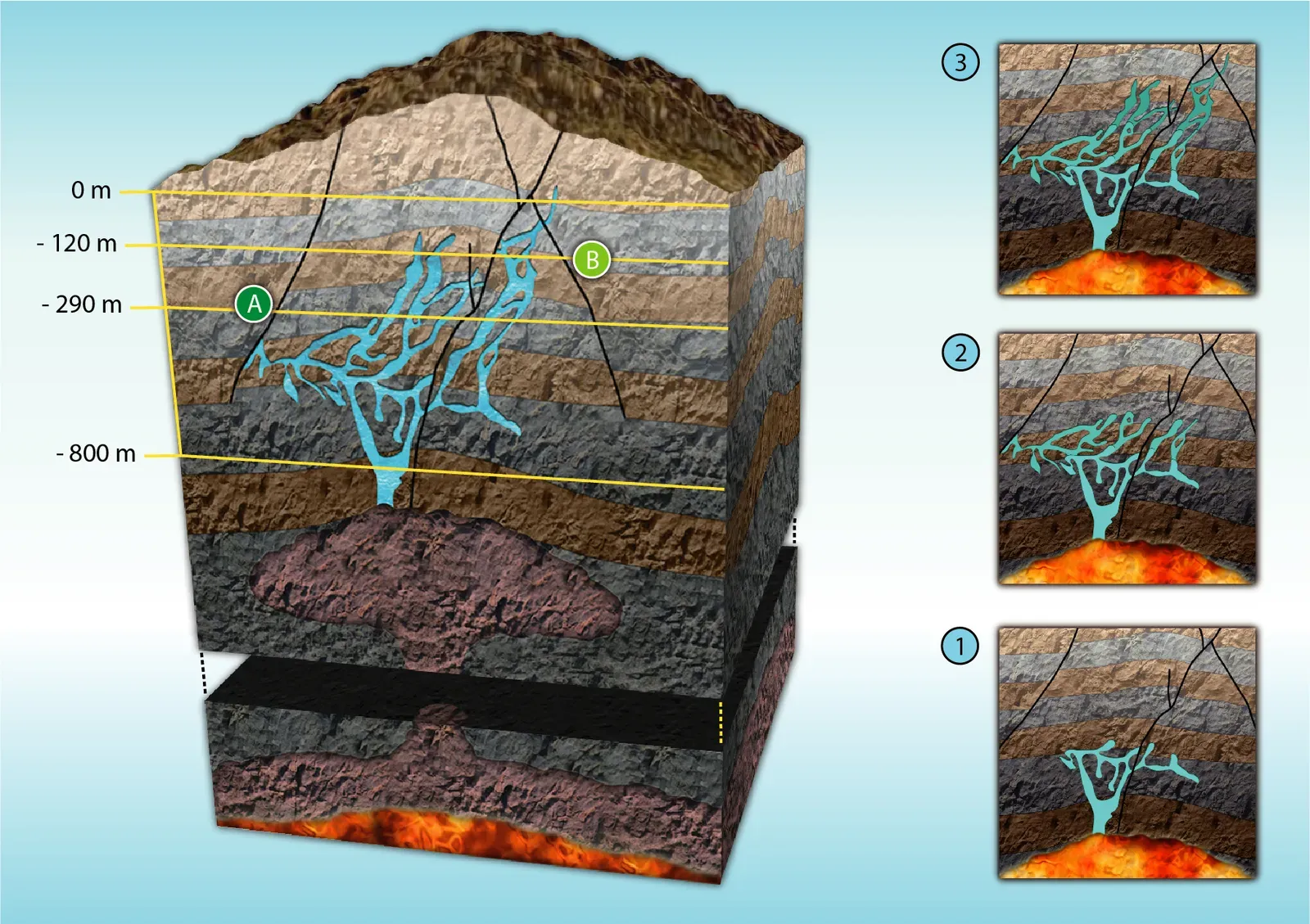
Once magma forms, it faces a simple choice: stay put and slowly cool into solid rock, or rise. Because molten rock is usually less dense than the solid rock around it, it tends to behave like a hot air balloon in a cold sky, drifting upward as long as it can find a path. In the crust, that path is rarely a straight chimney; instead, magma exploits existing fractures, faults, and zones of weakness, prying them open and sometimes creating new cracks as pressure builds. You can think of the crust as a cracked windshield, where a small stress can suddenly cause a thin line to race outward, opening a new route for the molten material.
Along the way, some magma pauses in underground reservoirs, which scientists often call magma chambers or storage regions, although they are less tidy tanks and more tangled networks of melt and crystals. These reservoirs can sit a few miles to more than ten miles below the surface, growing and shrinking as new magma arrives or old magma cools and crystallizes. Instruments that measure tiny changes in ground level or seismic waves sometimes reveal these hidden pools as they inflate and deflate. When enough magma collects and keeps rising, the overlying rock is eventually pushed to its limit, setting the stage for an eruption. But whether that eruption is a gentle leak or a catastrophic blast depends largely on what the magma is made of and what it carries inside it.
Gas Under Pressure: The Hidden Engine of Explosive Eruptions
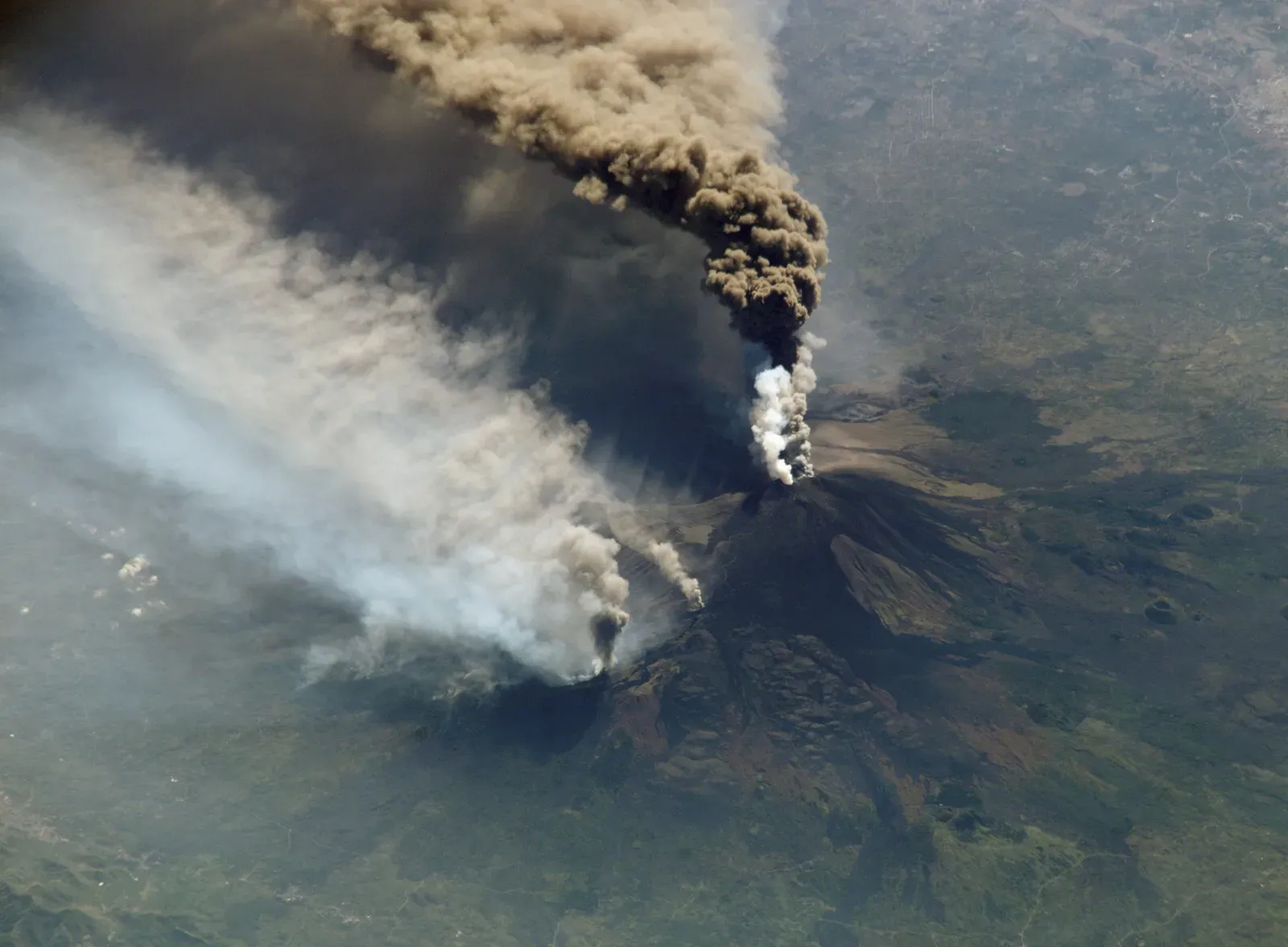
If magma were just hot liquid rock, volcanic eruptions would be much less dramatic; the real drama comes from dissolved gases. Deep underground, high pressure forces gases such as water vapor, carbon dioxide, and sulfur dioxide to stay mixed into the melt, much like carbon dioxide dissolves into a bottle of soda. As magma rises and pressure drops, these gases start to come out of solution and form bubbles. Each bubble expands as it rises, adding more push from within the melt column. In gas-rich magmas, this process can become runaway, turning the rising magma into a frothy, pressurized mixture that wants to explode out of confinement.
Viscosity – the internal stickiness of the magma – determines how easily those bubbles can escape. Basaltic magmas, common in places like Hawaii, are relatively runny, so gas bubbles can slip free and vent quietly, producing spectacular but usually less dangerous lava fountains and flows. Thick, silica-rich magmas, like those feeding many stratovolcanoes on the Pacific Ring of Fire, trap gas bubbles and resist flow, allowing enormous pressure to build. When the surrounding rock or the plug in the volcanic conduit finally gives way, the rapid expansion of gas can shatter the magma into ash and pumice and blast it skyward in a towering plume. This gas-driven engine explains why some volcanoes simmer for years and others go from quiet to catastrophic in minutes.
Different Volcanoes, Different Tempers
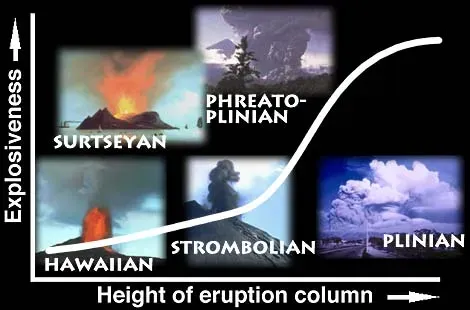
Not all volcanoes erupt alike because they are built on different plumbing systems and fed by different magmas. Shield volcanoes, such as those in Hawaii, tend to erupt hot, low-viscosity basalt that flows easily and spreads out in broad, overlapping layers, giving the volcano its wide, shield-like shape. Stratovolcanoes, found above many subduction zones like those in Japan, the Andes, and Cascadia, often erupt cooler, stickier andesite or dacite magmas that promote explosive activity and steep, conical profiles. Some volcanoes do not even build traditional mountains; instead, they form fissure systems like those in Iceland, where long cracks in the ground pour out curtains of lava over vast areas.
The style of eruption can change over the lifetime of a single volcano as its magma supply evolves. A volcano might begin with relatively fluid lava flows and later shift to more explosive episodes as the magma becomes richer in silica and gas. Caldera-forming eruptions occur when enormous volumes of magma are withdrawn so quickly that the surface collapses, creating large depressions that can fill with lakes or new growth of smaller cones. When we see dramatic footage of glowing rivers, towering ash plumes, or volcanic lightning, we are witnessing combinations of these underlying physical and chemical differences. The volcano’s temperament is, in the end, a reflection of the character of its magma and the architecture of its underground pathways.
Lessons From History: When Eruption Physics Meets Human Lives
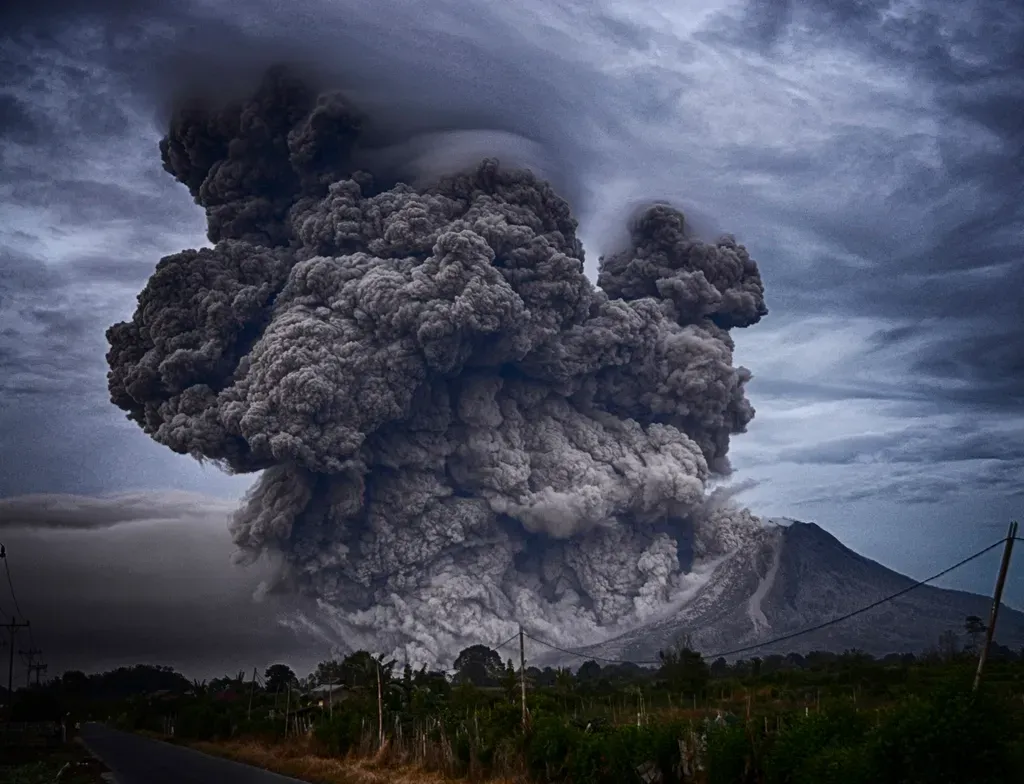
Some of the clearest answers to why volcanoes erupt come from the moments when that question became painfully urgent for human communities. The destruction of Pompeii and Herculaneum in the eruption of Vesuvius in the first century showed how an initially impressive ash plume could evolve into deadly pyroclastic surges, dense clouds of hot gas and rock racing down the slopes. Those surges were driven by collapsing eruption columns, a direct consequence of gas-rich magma fragmenting violently and overloading the atmosphere above the vent. In more recent times, eruptions at Mount St. Helens in 1980 and Pinatubo in 1991 revealed that sideways blasts and long-lived ash clouds can have far-reaching consequences, from destroyed forests to disrupted global air travel.
Each of these historical eruptions has also been a laboratory for testing scientific ideas. At Mount St. Helens, for example, close monitoring before and after the main blast dramatically advanced understanding of how ground deformation, gas emissions, and earthquake swarms relate to magma movement. The Pinatubo eruption provided rare, detailed data on how sulfur-rich eruptions send aerosols into the stratosphere, temporarily cooling global temperatures. Communities around volcanoes, from Indonesia to Italy to Central America, now live with the knowledge that the same processes building their fertile soils and even their cultural identities can also threaten them. The physics of eruptions is never just an abstract matter; it is constantly written into the timelines of villages, cities, and entire regions.
Deeper Significance: Volcanoes as Planetary Pressure Valves
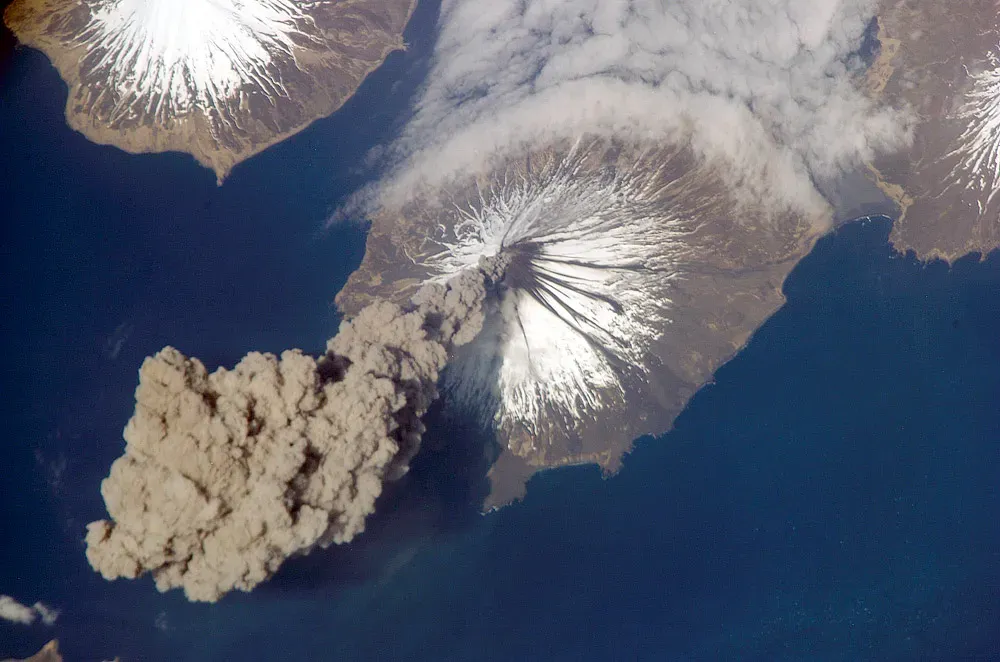
Stepping back from individual eruptions, volcanoes tell us something profound about how Earth works as a whole system. They are surface expressions of plate tectonics and mantle convection, the slow churning that recycles ocean floors and shifts continents over tens of millions of years. Without volcanism, gases like water vapor and carbon dioxide might never have reached the atmosphere in the amounts needed to sustain oceans and a stable climate. Many geologists view volcanoes as part of a planetary thermostat, releasing heat and volatiles from the interior while weathering and biological processes gradually draw some of those gases back down into rocks and the deep Earth.
Comparing Earth with its neighbors sharpens this idea. Mars shows evidence of past massive volcanoes that now lie dormant, suggesting a planet that cooled and stiffened until its internal engine largely stalled. Venus, in contrast, appears to host widespread volcanic features despite its crushing atmosphere and extreme heat, implying a different balance between internal heat and surface conditions. On Earth, active volcanoes mark the boundaries and hotspots where deep processes meet surface environments, influencing everything from ocean chemistry to long-term climate cycles. When we ask why volcanoes erupt, we are also asking why Earth, unlike many other worlds, remains geologically and biologically active after more than four billion years.
Modern Monitoring: Listening for Pressure Building Below
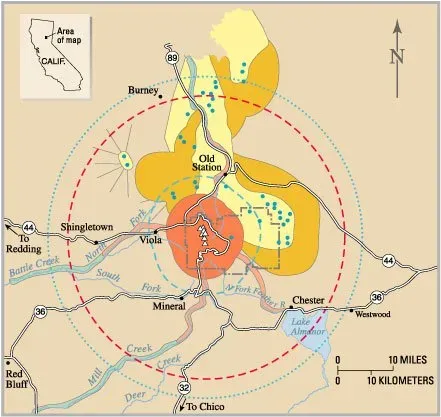
In the past, people often had no warning before a volcano erupted; today, scientists are trying to turn that surprise into a forecast. Networks of seismometers record small earthquakes that happen as magma fractures rock or forces open cracks. Sensitive GPS instruments and satellite radar track subtle swelling or sinking of volcanic slopes as underground reservoirs fill or drain. Gas sensors and drones measure the types and amounts of gases escaping from vents and fumaroles, watching for shifts that might signal fresh magma rising. Together, these tools create a picture of how close a volcano might be to crossing the threshold into eruption.
Despite these advances, forecasting remains an exercise in probabilities, not certainties. Some volcanoes grumble for months or years without producing a major eruption, while others ramp up quickly with short, intense precursors. Scientists rely on patterns gleaned from past behavior at each volcano, but every system has quirks, shaped by its unique plumbing and history. Misjudging the timing or magnitude of an eruption can have serious consequences, from unnecessary evacuations to tragic underestimates of danger. Understanding why volcanoes erupt, in this context, is about turning raw physical principles into actionable, life-saving information for the communities living in their shadow.
Unanswered Questions Beneath the Crust
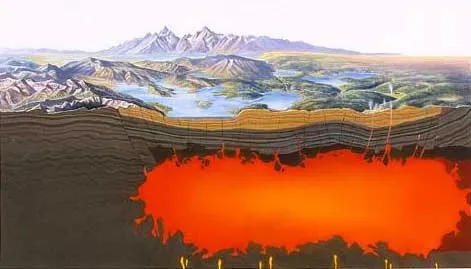
For all we have learned, several key aspects of volcanic behavior remain stubbornly uncertain. One major puzzle is the exact structure of magma storage regions: rather than big open chambers of liquid, they appear to be complex mush zones of crystals and melt that may sit for long periods on the edge of eruptibility. Scientists are still working out how quickly fresh magma can rejuvenate these mushes and push them into eruption mode. Another question concerns the triggers that decide whether a given intrusion of magma will stall and cool quietly or break through to the surface. Small differences in gas content, temperature, or surrounding rock strength may tip the balance, but teasing out those thresholds is difficult.
Advances in high-pressure experiments, computer modeling, and real-time monitoring are beginning to narrow these gaps, yet each new major eruption tends to reveal at least one surprise. Sometimes a volcano long considered sleepy suddenly becomes active; in other cases, a system known for frequent small eruptions quietly transitions toward fewer but more powerful events. These surprises are not signs that the underlying physics is wrong, but that the details of each volcano are more intricate than early models assumed. As research continues, scientists are refining their understanding of why eruptions start, pause, and stop, with the goal of making that knowledge practical. The planet keeps running its experiment, and we are still catching up.
Staying Curious and Prepared in a Volcanic World
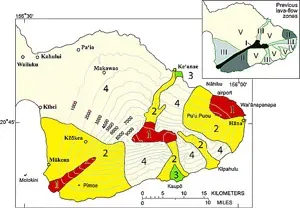
If you live far from an active volcano, it can be tempting to think of eruptions as distant spectacles, something to watch in video clips and dramatic photos. Yet volcanic ash can travel across continents, and sulfur-rich eruptions can influence global climate, affecting agriculture and weather systems that everyone depends on. Staying informed about volcanic hazards is not about living in fear; it is about respecting the power of the processes that also create new land, enrich soils, and shape coastlines. Local hazard maps, public science talks, and resources from geological surveys are all ways for people to understand the specific risks and benefits of volcanism in their region. Paying attention to how scientists explain unrest at a volcano is another way to practice scientific literacy in real time.
There are simple, concrete steps individuals can take, from learning evacuation routes if they live near a volcano to supporting funding for monitoring networks and research. Even visiting well-interpreted volcanic landscapes, whether on a family vacation or a field trip, can shift how people see the planet under their feet. Instead of a static ball of rock, Earth becomes a restless, creative system, with volcanoes as both its most dangerous and most revealing features. The next time you see footage of an eruption, you might find yourself not only awed by the spectacle but also quietly tracing the path of magma, gas, and pressure that made it inevitable. That mix of wonder and understanding is one of the most powerful forms of preparedness we have.
Hi, I’m Andrew, and I come from India. Experienced content specialist with a passion for writing. My forte includes health and wellness, Travel, Animals, and Nature. A nature nomad, I am obsessed with mountains and love high-altitude trekking. I have been on several Himalayan treks in India including the Everest Base Camp in Nepal, a profound experience.