
If you’ve ever felt that everyday reality is a bit too neat, the quantum universe is here to tear up the script. Deep below the surface of things, the world does not behave like a tidy textbook or a sensible movie plot. It’s weirder, sharper, and somehow more honest, as if nature dropped its polite mask and showed what’s really going on when no one is looking.
In this hidden layer of existence, particles tunnel through walls, cats are both alive and dead (at least on paper), and events can be linked across vast distances with no visible connection. Quantum physics isn’t just a set of abstract equations – it’s the operating system of reality, quietly deciding how everything from your smartphone to the stars actually works. Once you start to glimpse it, it’s hard to look at the ordinary world in the same way again.
When Particles Become Waves and Waves Become Possibilities
Here’s one of the most shocking ideas in all of science: at the quantum scale, particles don’t behave like tiny billiard balls – they act like spread-out waves of possibility. In classic experiments where particles such as electrons or photons pass through slits, they create interference patterns usually associated with waves of water or light. It’s as if each particle explores many paths at once, only settling on a definite outcome when we actually measure it.
This strange dual personality is called wave–particle duality, and it forces us to rethink what we mean by “thing.” A particle isn’t simply here or there in the way a pebble is on a beach; before measurement, it’s described by a wave function that encodes many potential locations and states. When we interact with it, that cloud of possibilities abruptly narrows down to one concrete result. It’s like reality waits until the last possible moment to decide which version of events to commit to.
Superposition: The Art of Being Many Things at Once
Superposition takes the idea of possibility and pushes it into almost absurd territory. In quantum mechanics, a system can exist in several states at the same time – an electron can be spin-up and spin-down, a photon can take multiple paths, and in thought experiments, a cat can be both alive and dead. These aren’t just metaphors; the math that successfully predicts real experiments explicitly requires these “both at once” states to exist.
What makes this so unsettling is that superposition isn’t simply about ignorance, like not knowing which card is in your hand. Instead, superposition means the system genuinely has not yet chosen a single definite state. Only when it’s measured – by a detector, an experimenter, or the environment around it – does it snap into one outcome. This is where the quantum world feels like an unfinished story, with multiple plotlines running in parallel until reality finally picks one to publish.
Entanglement: Spooky Connections Across the Cosmos
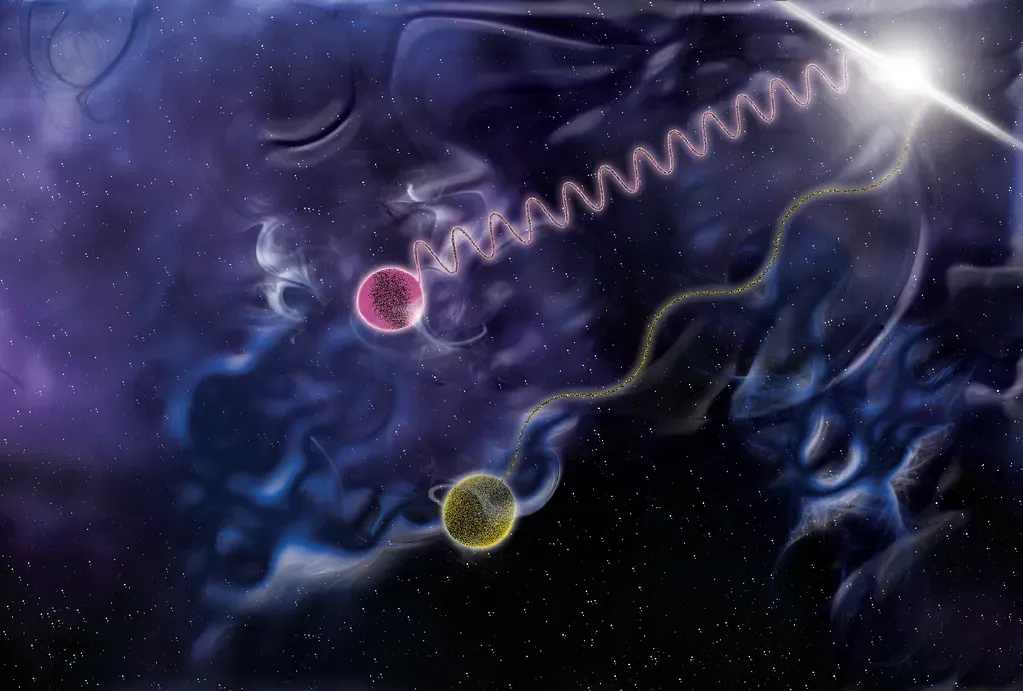
If superposition bends common sense, entanglement pretty much shatters it. When two particles become entangled, they share a linked quantum state so deeply that measuring one instantly influences the description of the other, no matter how far apart they are. Change the state of one particle here, and its partner, light-years away, responds as if they’re still in the same room whispering secrets.
This phenomenon has been tested repeatedly and with increasing precision, and the results are clear: nature allows correlations that no classical, local theory can explain. It does not mean information travels faster than light, but it does mean that our usual story about separate, independent objects is too simple. Entanglement hints that the universe is woven together more tightly than we ever imagined, as if distance is less fundamental than we think and “here” and “there” are partly illusions created by our limited viewpoint.
Quantum Measurement: Does Reality Exist Before We Look?
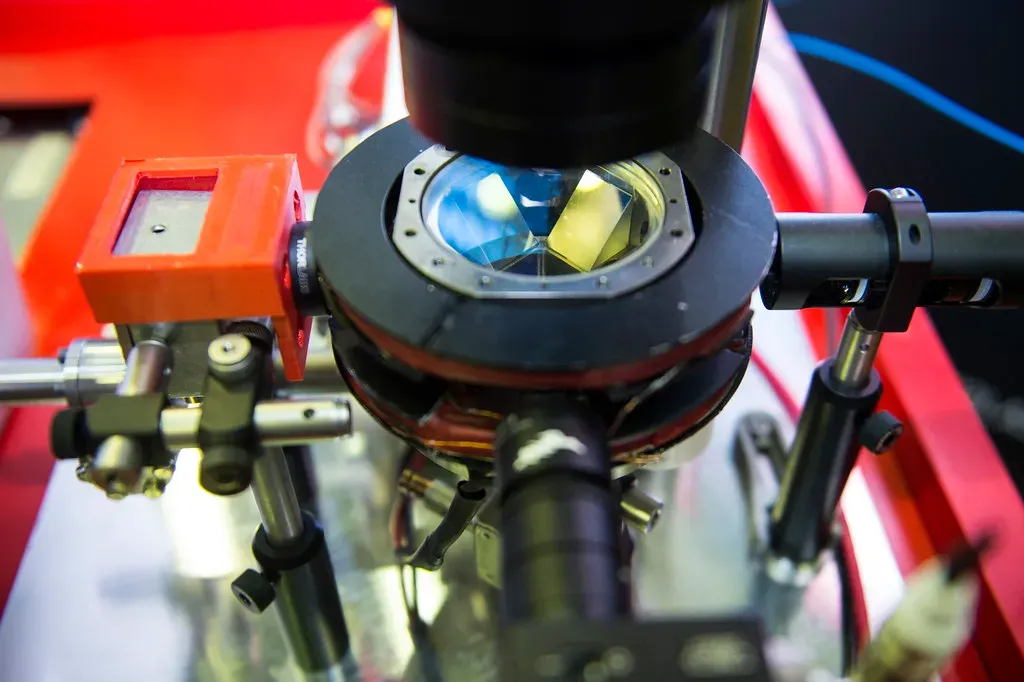
The measurement problem is where quantum physics stops being just weird and starts feeling personal. The theory works beautifully to predict probabilities, but it refuses to say definitively what is real before we observe it. Is the electron “really” in one place, or is its spread-out wave of possibilities the true description until we intervene? Different interpretations of quantum mechanics answer this in wildly different ways, from many-worlds branching universes to models where hidden variables quietly steer outcomes.
What we know for sure is that the act of measuring changes the system in a way that cannot be ignored. Even the gentlest observation leaves fingerprints, collapsing superpositions and breaking fragile quantum states. In practice, this is why quantum technologies are so challenging; just trying to look at a quantum system is like trying to photograph soap bubbles in a storm without popping them. The line between observer and observed, once so clear in classical physics, becomes blurry and uncomfortable here.
From Quantum Strangeness to Everyday Technology
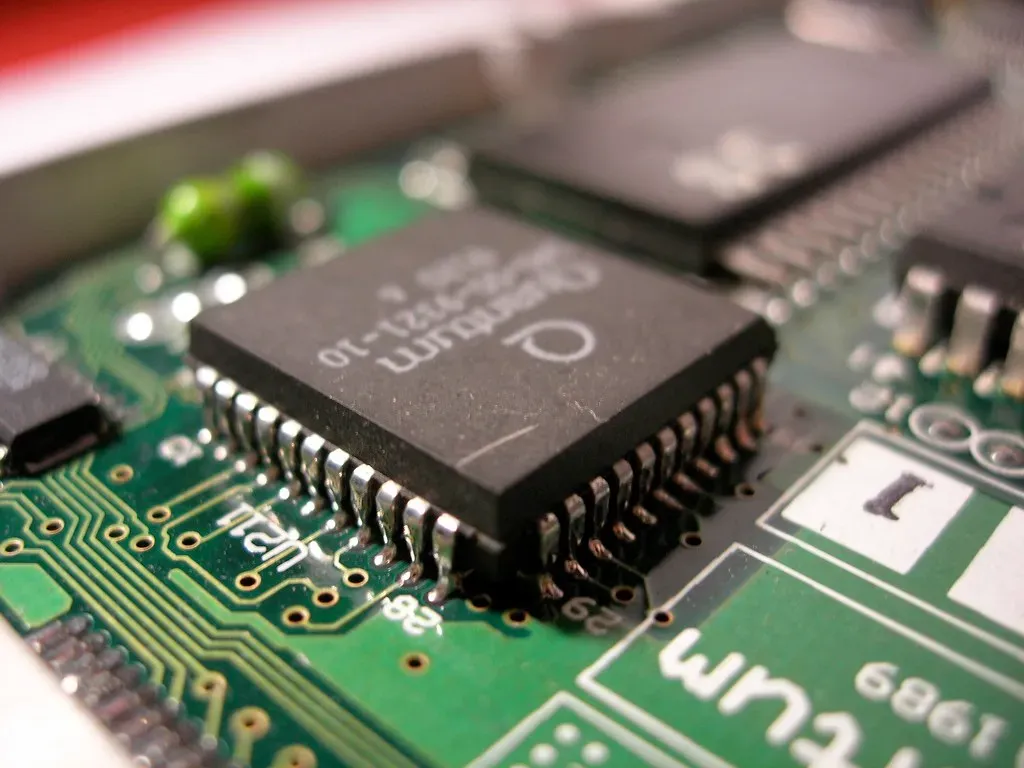
For all its philosophical headaches, quantum theory is not just an abstract playground – it’s the engine behind much of modern life. The behavior of electrons in atoms underlies chemistry, solid-state physics, and the design of transistors, which power every computer and smartphone. Lasers, MRI machines, and many types of sensors rely on quantum principles that were once dismissed as purely theoretical.
Today, a new wave of quantum technologies is pushing the frontier even further. Quantum computers use qubits that exist in superposition and entanglement to perform certain calculations far more efficiently than classical machines, at least in principle. Quantum communication promises ultra-secure channels based on the fact that any attempt to eavesdrop inevitably disturbs the quantum states involved. What began as a seemingly abstract exploration of microscopic weirdness is turning into a practical toolkit that could reshape computing, security, and materials science in the coming decades.
Logic Under Pressure: Rethinking Space, Time, and Causality
The more we probe the quantum universe, the more it pressures some of our most basic assumptions about how reality should behave. Experiments suggest that the order of events can sometimes become fuzzy, and that in certain exotic setups, it’s not clear what caused what in a simple, one-directional way. Space and time, which feel so solid and absolute in daily life, start to look like flexible bookkeeping devices rather than the ultimate frame of reference.
Physicists wrestling with quantum gravity and the foundations of quantum theory are exploring bold ideas: that space might emerge from networks of entanglement, that reality could be fundamentally made of information, or that our classical world is a stable pattern floating on a deeper sea of quantum fluctuations. None of these ideas is settled, and many may prove wrong, but they share a common thread: when you zoom in far enough, familiar logic begins to crack. The universe turns out not to be a tidy machine but a strange, beautiful puzzle that we’re only just learning how to read.
Living With a Bent Reality
Quantum physics forces us to face an uncomfortable truth: the world underneath our everyday experience is not neatly ordered or intuitively logical. It’s a place where uncertainty is fundamental, where connections stretch across space, and where outcomes remain open until something – or someone – pushes them into focus. We still move through life as if things are solid and predictable, but we now know that this is only a rough approximation of a far stranger story.
Accepting this doesn’t make reality weaker or less real; it just makes it deeper, more layered, and more surprising than we once dared to imagine. The quantum universe invites us to live with questions, to stay curious, and to recognize that our common sense is just one local dialect in a much larger cosmic language. In a world , the real challenge is not whether we can understand everything, but whether we’re willing to keep asking how far the weirdness goes.