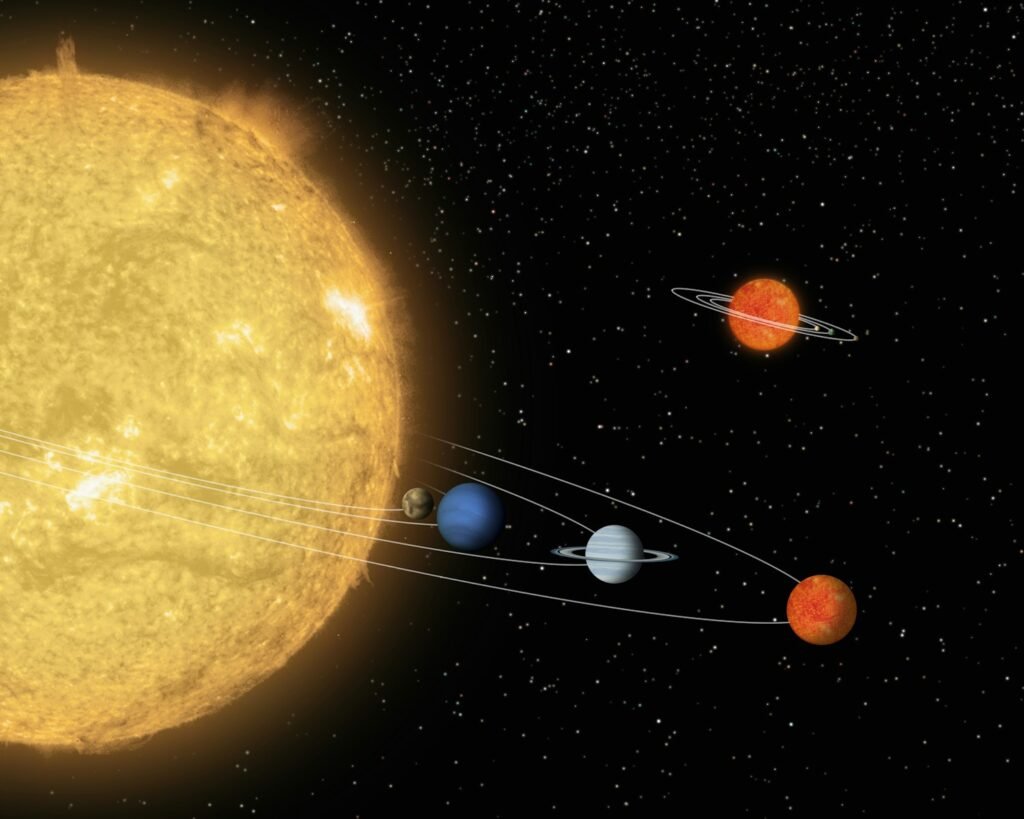

On the icy fringe of our solar system, far beyond Pluto’s lonely path, something massive appears to be tugging at the orbits of distant worlds. For nearly a decade, astronomers have watched strange patterns in the Kuiper Belt and asked a question that sounds like science fiction: Is there a hidden ninth planet, still unseen in the darkness? The evidence is maddeningly indirect, like finding footprints in fresh snow with no person in sight. Yet as telescopes sharpen and data sets grow, the possibility of a concealed world roughly the size of Neptune has become harder to dismiss. The search has turned our familiar solar system into an active crime scene, with physicists and planetary scientists playing the role of cosmic detectives.
The Hidden Clues at the Edge of Our Solar System
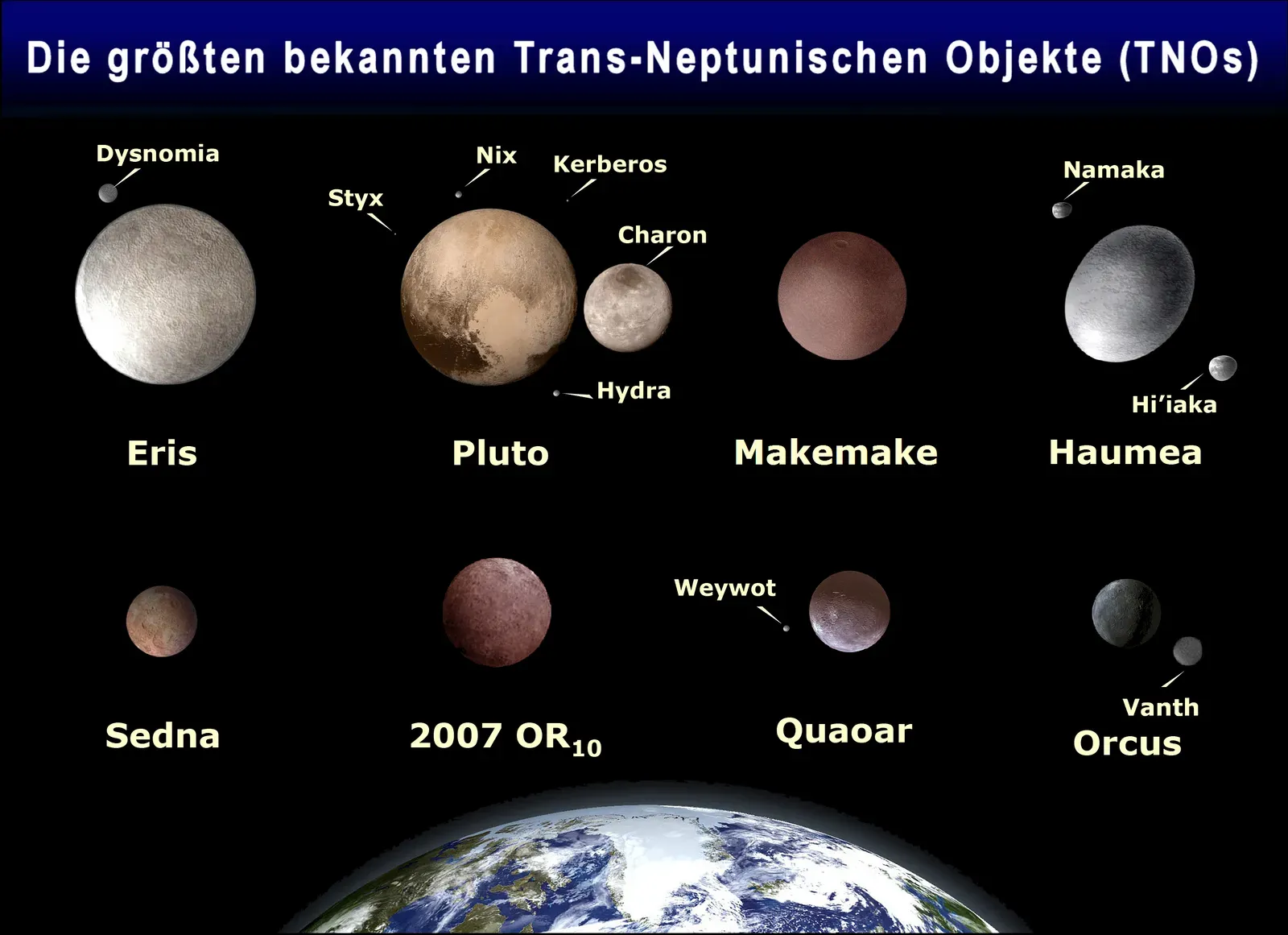
It started with a puzzle that refused to go away: a cluster of far‑flung icy objects, called trans‑Neptunian objects, all pulling in the same strange direction. These bodies, some hundreds of kilometers wide, follow orbits that are elongated and tilted in eerily similar ways, as if something heavy and invisible is pulling their strings. For years, astronomers tried to explain this away as coincidence, or as a side effect of observational bias, since we can only survey certain parts of the sky well. But even after accounting for those biases, the strange alignment persisted and, in some models, became even harder to explain without adding a hidden player to the solar system’s cast. It is like watching leaves swirl in a backyard and realizing the pattern only makes sense if there is a powerful fan just out of sight.
When researchers run simulations that include a hypothetical Planet Nine, the orbits of these distant objects suddenly fall into place. A planet perhaps five to ten times the mass of Earth, on a stretched‑out, slow‑moving path hundreds of times farther from the Sun than our own orbit, neatly reproduces the observed alignments in many models. Not everyone agrees, and some teams argue that subtle survey effects or incomplete data could still mimic the same pattern. Yet the idea has refused to die, partly because it ties together multiple weird phenomena in one sweeping explanation. In science, that kind of unifying power is hard to ignore.
From Ancient Sky‑watchers to Cold Digital Surveys
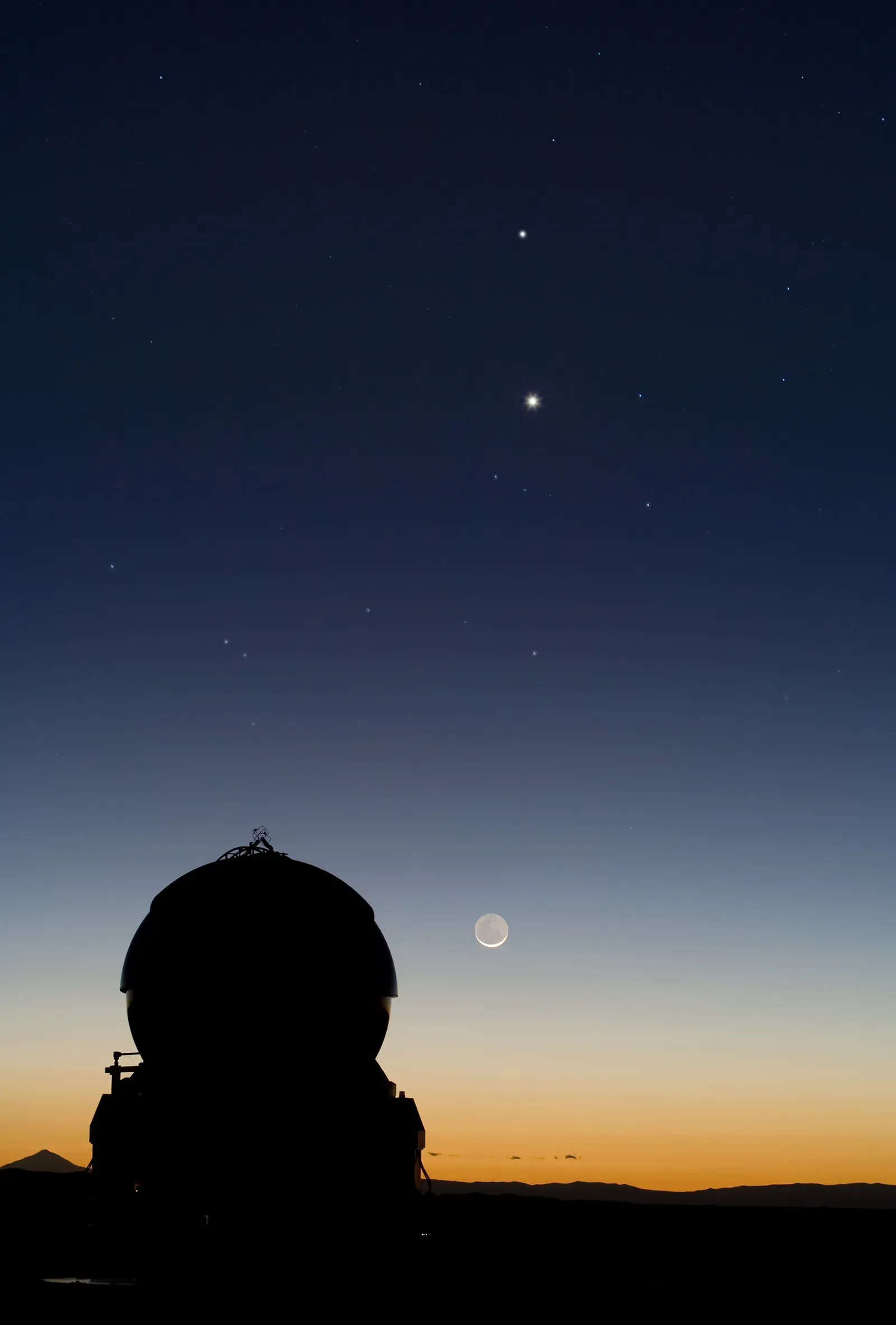
Humans have been mapping the heavens for thousands of years, from Babylonian star catalogs scratched into clay to Polynesian navigators reading the night sky as if it were a living map. Those early observers knew of only five wandering stars, the visible planets, and for centuries that seemed like the full set. The shock of discovering Uranus in the late eighteenth century and Neptune in the mid‑nineteenth was a reminder that the solar system still had surprises in store, even for a civilization already deep into the scientific age. Those planets were not found randomly; their existence was inferred from tiny wobbles in the orbits of the ones we already knew. In a sense, Planet Nine – if it exists – would be discovered in the same spirit, using gravity itself as a kind of ancient tool upgraded with modern math.
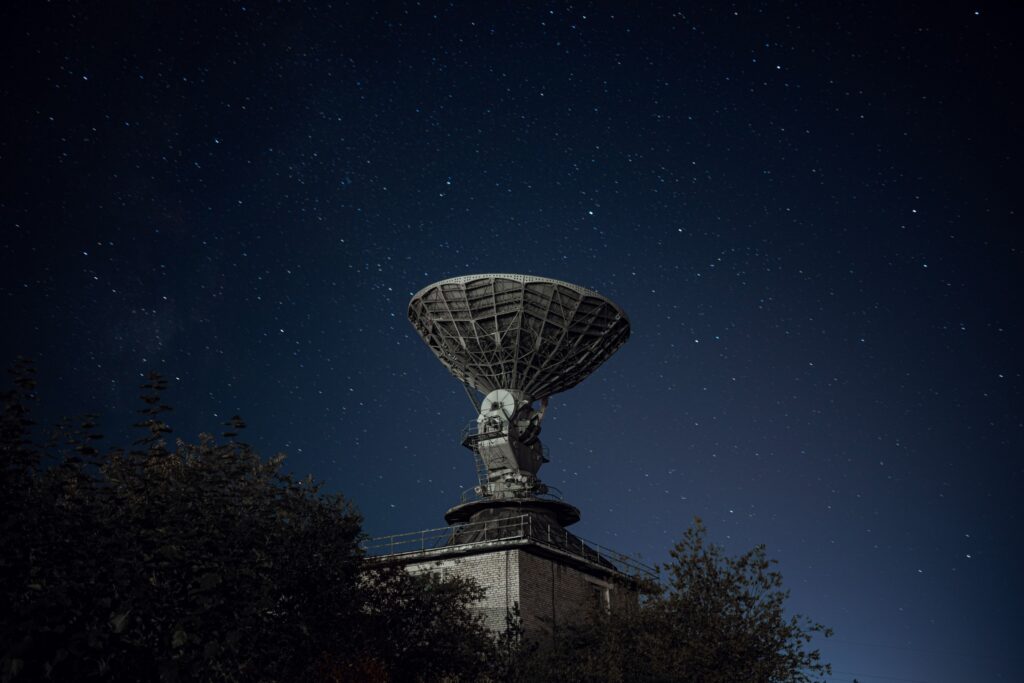
Today, the search no longer depends on lone observers squinting through small telescopes. Astronomers rely on sky‑survey cameras that sweep huge sections of the heavens night after night, building digital atlases of faint, moving points of light. Instruments like the Subaru Telescope in Hawaii and the upcoming Vera C. Rubin Observatory in Chile are capable of spotting incredibly dim, distant bodies against the star‑strewn background. Instead of hand‑drawn charts, scientists now sift through terabytes of data, looking for the slowest, most subtle drifts – a possible signature of an enormous, cold world. The tools have changed, but the underlying curiosity is the same: what else is out there that we have missed?
Gravity as a Cosmic Whisper: What the Data Suggests
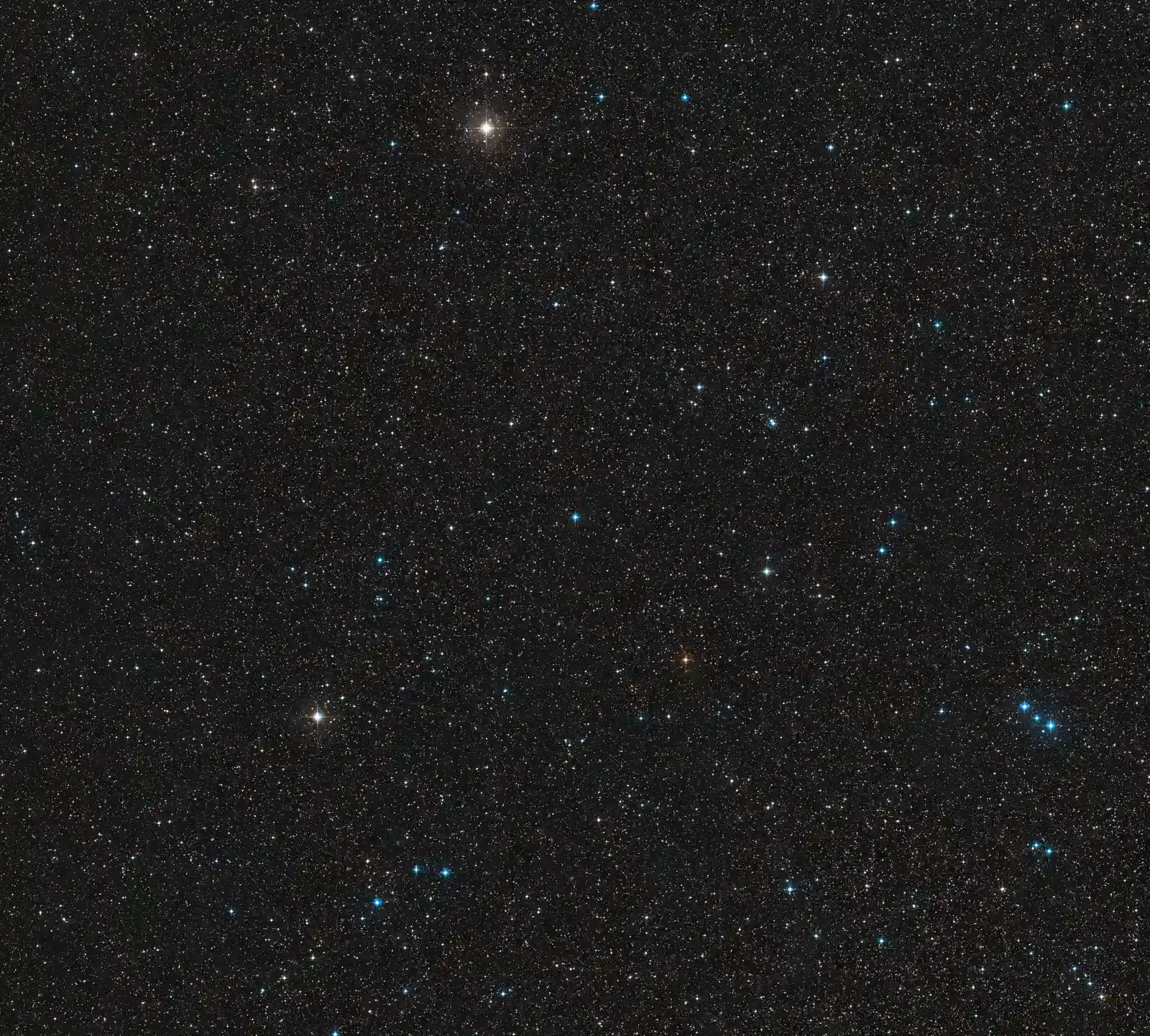
The case for Planet Nine rests almost entirely on gravitational breadcrumbs. These include strange alignments of distant icy objects, unusual orbital tilts, and even hints that some bodies may have been nudged inward or outward long ago. When researchers simulate the outer solar system without an extra planet, the long‑term stability of these orbits becomes tricky to preserve over billions of years. Add a distant, heavy planet on an elongated orbit, and the simulations often produce systems that look a lot more like what we actually see. It is not proof, but it is a persistent and tantalizing pattern.
Some studies have also proposed that Planet Nine could help explain why the orbits of several distant worlds appear to be clustered in both orientation and inclination. Others suggest it might even account for the odd tilt between the sun’s equator and the average plane of the planets. A few possibilities often discussed include: – A planet with several times Earth’s mass, lurking far beyond Neptune – An orbital period that could last many thousands of Earth years – A temperature so low that sunlight there would feel like a dim, distant memory These ideas turn the outer solar system from a quiet afterthought into a dynamic, evolving frontier.
Universe Theories, Quantum Curiosities, and a Very Real Planet
It might seem strange to connect a hypothetical ninth planet with the deep abstractions of universe theories and quantum physics, but there is a real bridge between them. Cosmology and quantum theory both deal with invisible influences – dark matter, quantum fields, vacuum energy – that we infer only from their effects. Planet Nine is a similar kind of ghost: not seen directly, but hinted at through its gravitational fingerprint. For many physicists, that rhymes with the larger story of modern science, where unseen layers shape what we do observe. The search for this planet becomes a small, local echo of the grander quest to understand hidden structures in the universe.
At the same time, quantum tools and techniques play an indirect role in the technology that makes the search possible. Ultra‑sensitive detectors, precision timing, and advanced imaging rely on quantum behavior of light and matter, even if the planet itself is a classic, macroscopic object. The algorithms that sift sky data borrow conceptual tricks from statistical physics and information theory, cousins to the quantum world. The result is a curious overlap: our most abstract ideas about reality help us track down something as concrete as a frozen giant planet in our own cosmic backyard. In that sense, Planet Nine could become a rare meeting point between everyday stargazing and frontier physics.
Why It Matters: Rethinking Our Place in the Solar System
It is fair to ask why anyone should care about one more icy world in a universe full of planets. The answer is that finding Planet Nine would completely rewrite the story we tell about how our solar system formed and evolved. Current models already strain to explain the arrangement of gas giants, the Kuiper Belt, and the scattered disk of distant objects; adding a massive hidden planet would force us to revisit almost every chapter of that narrative. We would need to ask whether this world formed near the other giants and was later flung outward, or whether it started in the deep freeze and slowly grew there. Each possibility carries a different message about how common or rare systems like ours might be in the galaxy.
There is also a psychological dimension we rarely admit: we like to think we know our own neighborhood. Discovering a large, nearby world that went unnoticed for the entire history of human astronomy would be a humbling reminder of our limits. It would be like realizing there is a huge, dark island just off the coast that every map somehow missed. For planetary science, it would become a new Rosetta Stone, helping decode patterns in exoplanet systems that we now see circling other stars. For the rest of us, it would make the night sky feel suddenly larger and stranger, in the best possible way.
Disagreements, Skeptics, and the Sharp Edge of Science
Not everyone is convinced that Planet Nine exists, and that tension is exactly what healthy science looks like. Some astronomers argue that the apparent clustering of distant objects is an illusion produced by where and how we have pointed our telescopes. In their view, once you fully correct for survey biases and small sample sizes, the statistical case for a hidden planet weakens or even disappears. Others question whether gravitational nudges from passing stars or the overall shape of the galaxy’s gravitational field could explain the data without invoking a new world. The debate can be sharp, but it is grounded in math, models, and new observations rather than personal belief.
This disagreement matters because it shapes where limited telescope time and funding go. If Planet Nine is a mirage, then years spent hunting it might delay other discoveries in planetary science or cosmology. On the other hand, if we walk away too soon and the planet is real, we will have missed a once‑in‑a‑generation chance. This is the same tension that runs through many areas of frontier science, from dark matter searches to experiments in quantum gravity: how far do you chase a compelling idea before you decide it is a dead end? The outer solar system has become the latest testing ground for that question.
The Future Landscape: New Eyes on the Dark
The next decade will be decisive for the Planet Nine hunt, largely because of new observatories and smarter ways of analyzing data. The Vera C. Rubin Observatory, set to begin its Legacy Survey of Space and Time, will image the sky again and again with unprecedented depth and coverage. If a slow‑moving, massive object is out there within its reach, repeated images could reveal a barely perceptible crawl against the distant stars. Meanwhile, upgrades to infrared space telescopes and more sensitive detectors could help spot the faint heat signature of such a cold planet, even if visible light from it is almost undetectable. Together, these tools promise to narrow the search area dramatically.
At the same time, advancing computer models will test more extreme scenarios, including the possibility that Planet Nine is smaller, farther, or on a different orbital path than currently suspected. Some wild ideas, like the planet being a captured rogue world or even a primordial black hole, will be pushed harder against observational limits. Global collaboration will matter, because different observatories in both hemispheres can cover more sky and cross‑check each other’s hints. What emerges over the coming years will be either a convincing detection or a tightening noose of non‑detections that force scientists back to the drawing board. Either outcome will teach us something deep about how to read the universe’s more subtle signals.
How You Can Follow – and Support – the Search
You do not need a research grant or a PhD to be part of this unfolding mystery. Public data releases from major sky surveys often include tools that let motivated amateurs explore images and help flag oddities, a tradition that has already led to genuine discoveries. Planetarium shows, science podcasts, and astronomy outreach events increasingly feature the Planet Nine story as a living example of how science works in real time. Paying attention, asking questions, and staying skeptical – but open‑minded – is a form of participation that matters more than most people think. It helps create a culture where slow, careful discovery is valued as much as flashy announcements.
If you want to go a step further, consider supporting organizations that fund astronomy, science education, and public observatories. Many small programs rely on donations or memberships to keep telescopes open to students and night‑sky enthusiasts. You can also advocate for strong science funding and education in your own community, where decisions about school curricula and public investment are often made quietly. In a very real sense, whether we find Planet Nine depends not only on instruments and equations, but on how much we, as a society, are willing to invest in looking up. The next time you see a clear, dark sky, you might wonder: is that hidden world out there right now, sliding silently through the black?
Suhail Ahmed is a passionate digital professional and nature enthusiast with over 8 years of experience in content strategy, SEO, web development, and digital operations. Alongside his freelance journey, Suhail actively contributes to nature and wildlife platforms like Discover Wildlife, where he channels his curiosity for the planet into engaging, educational storytelling.
With a strong background in managing digital ecosystems — from ecommerce stores and WordPress websites to social media and automation — Suhail merges technical precision with creative insight. His content reflects a rare balance: SEO-friendly yet deeply human, data-informed yet emotionally resonant.
Driven by a love for discovery and storytelling, Suhail believes in using digital platforms to amplify causes that matter — especially those protecting Earth’s biodiversity and inspiring sustainable living. Whether he’s managing online projects or crafting wildlife content, his goal remains the same: to inform, inspire, and leave a positive digital footprint.