
The world is dotted with places that seem to bend reality, where temperature drops feel sharper, shadows linger a little too long, and stories refuse to die even when the people who tell them do. For decades, ghost tours and campfire legends have claimed these spots are haunted, cursed, or gateways to something beyond. Now, scientists armed with thermal cameras, infrasound sensors, and brain scanners are quietly slipping into the same locations, asking a different question: what, exactly, is happening here? The clash between folklore and data is turning supposedly haunted sites into natural laboratories, where geology, psychology, and environmental physics collide. And as research deepens, one unsettling idea keeps surfacing: even when the ghosts are gone, the fear they inspire might still be very real.
The Island of Bones: Poveglia, Italy
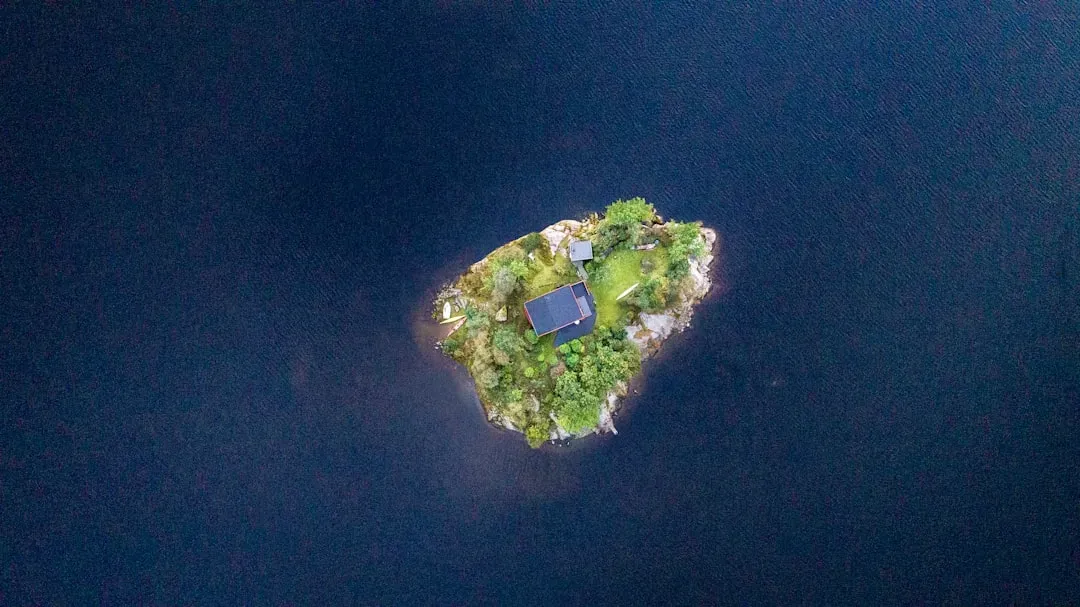
Poveglia, a tiny island in the Venetian Lagoon, is often described as one of the most haunted places on Earth, but its horrors are painfully human. During outbreaks of plague from the fourteenth century onward, it was used as a quarantine station and mass burial ground, with some estimates suggesting that many thousands of people died or were dumped there. Today, crumbling buildings swallow ivy and salt air, and locals still avoid sailing too close after dark, more out of superstition than navigation concerns. When investigators visit with instruments instead of candles, they find extremely high humidity, unstable structures, and disorienting acoustics that can make footsteps and whispers seem to come from nowhere. Those physical conditions, paired with a brutal historical record, create a perfect storm for the brain to misinterpret sounds and shadows as something supernatural.
What makes Poveglia scientifically fascinating is how memory and environment combine. Studies in environmental psychology have shown that expectation shapes perception; when people believe a place is haunted, they’re more likely to report chills, presences, and strange sounds even in controlled conditions. On Poveglia, you get a layered effect: the knowledge of mass death, the isolation of an island, and sensory cues like echoing corridors and thick fog all pushing the nervous system toward high alert. Researchers who measure skin conductance and heart rate in such environments often find elevated stress responses, even when participants insist they “don’t believe in ghosts.” In that sense, Poveglia is not just a haunted location but a living experiment in how history literally gets under the skin.
The Forest That Bends Reality: Hoia Baciu, Romania
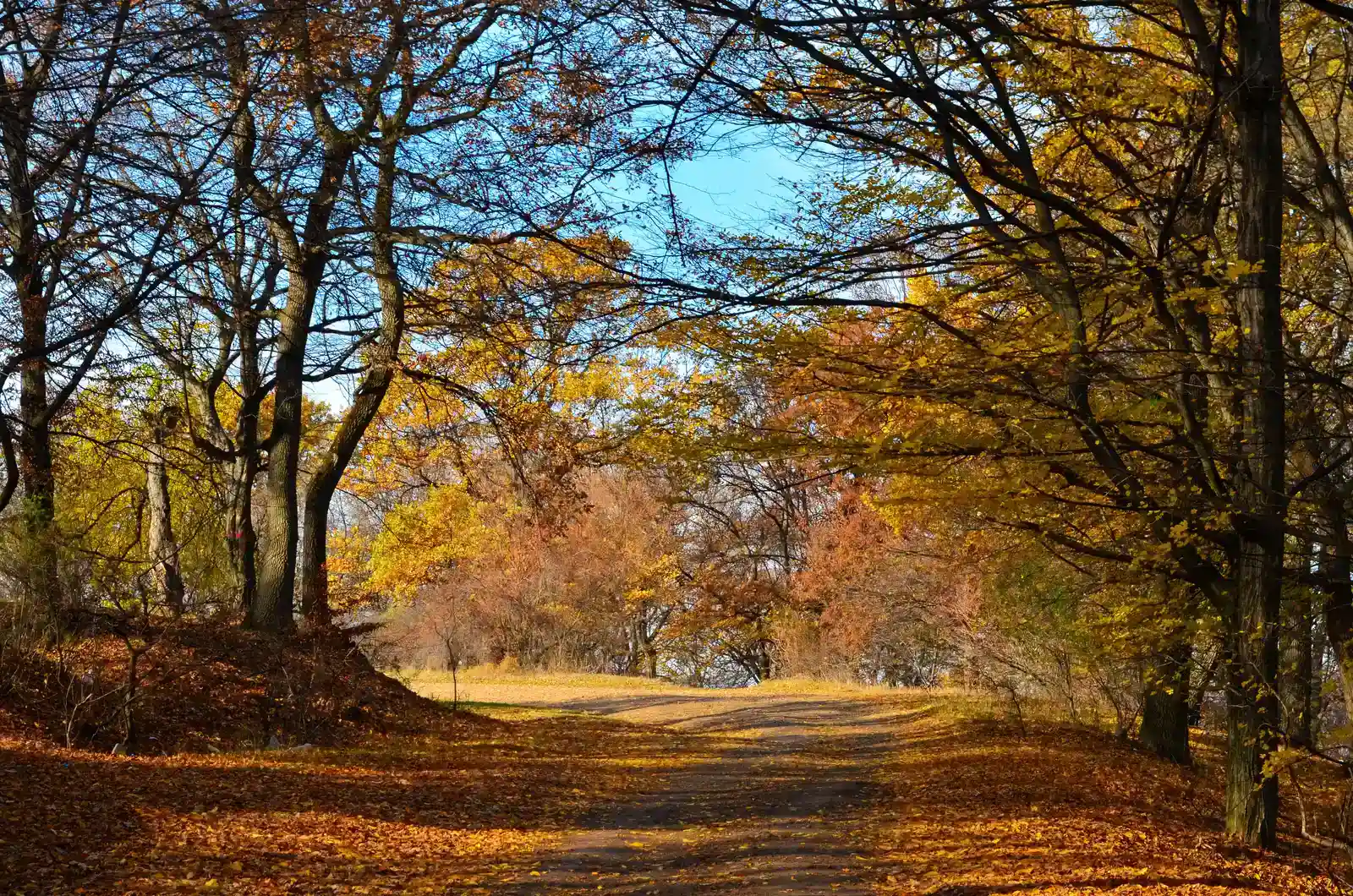
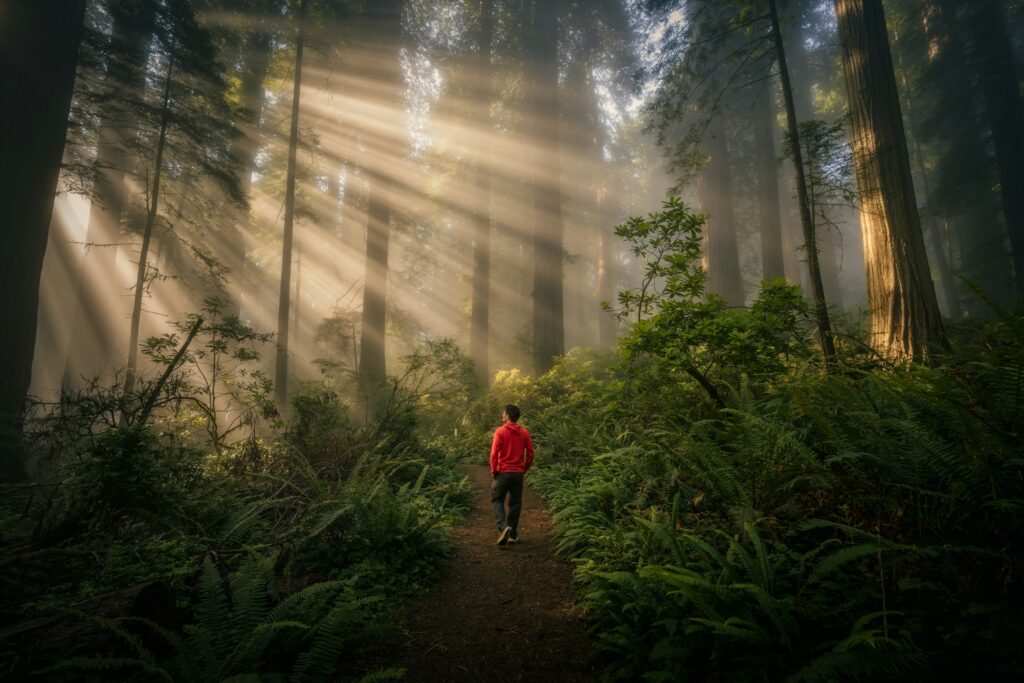
Just outside the city of Cluj-Napoca in Romania, Hoia Baciu Forest has become a global magnet for ghost hunters, UFO enthusiasts, and curious hikers willing to spook themselves. Stories here range from inexplicable lights and floating shapes to people claiming to lose hours of time or emerge from the trees disoriented and nauseated. The forest even has a strangely bare circular clearing where vegetation thins dramatically, feeding theories about portals and curses. From a scientific angle, the area invites more grounded questions: why do some people experience vertigo and panic here while others simply enjoy a walk in the woods? The answer may lie in a mix of environmental quirks, suggestion, and the brain’s hardwired tendency to find patterns in chaos.
Researchers who have looked at Hoia Baciu point to several possible factors: irregular magnetic fields in certain spots, complex tree geometry that distorts depth perception, and the strong psychological priming of visiting a place already labeled “the world’s most haunted forest.” In dim or filtered light, twisted trunks and uneven terrain can trick the visual system, making it harder to judge distance and movement, which in turn can create a feeling that the forest itself is shifting. Add stories of UFOs and vanishing shepherds passed along for decades, and the brain is primed to interpret every odd rustle as a threat. Hoia Baciu, then, becomes a case study in how landscape, lore, and neurology combine to manufacture the uncanny without any need for the paranormal.
Radioactive Ghosts: Pripyat and the Chernobyl Exclusion Zone, Ukraine
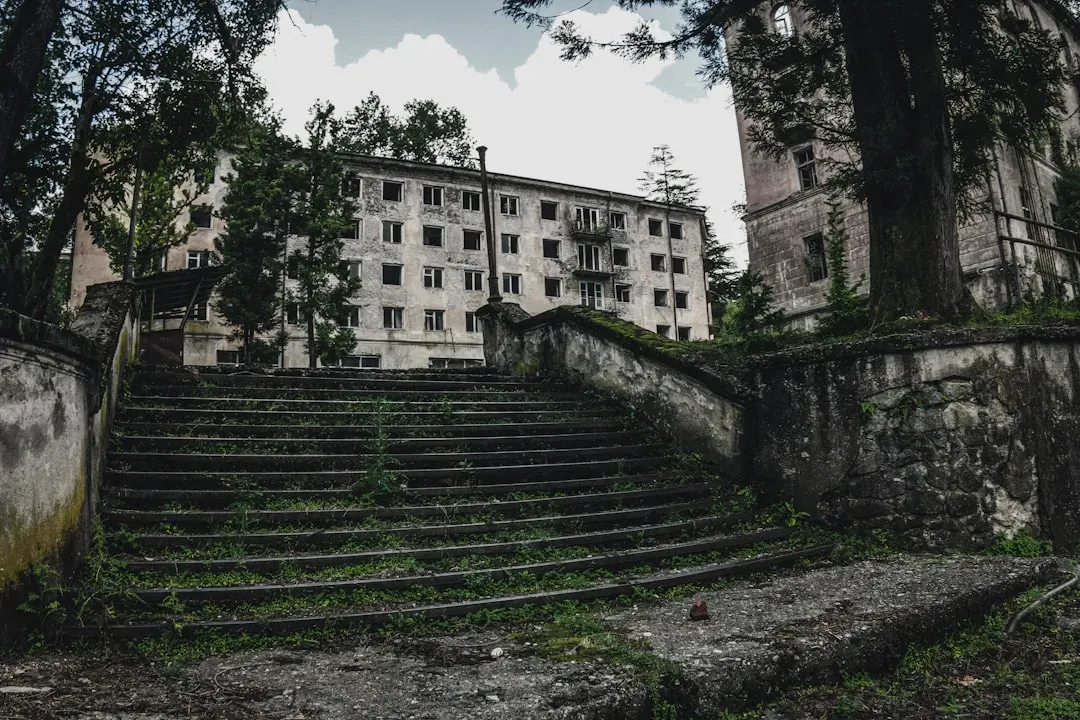
The abandoned city of Pripyat, evacuated after the Chernobyl nuclear disaster in April 1986, might be the closest real-world setting to the horror-movie trope of a frozen-in-time civilization. Ferris wheels, schools, and apartment blocks stand in slow-motion decay, with trees punching through concrete and wild animals reclaiming streets. Visitors frequently describe the place as eerily “alive” with an invisible presence, and in some accounts, they mistake distant animal calls or crumbling structures for something spectral. The eeriness here is not about ghosts in the traditional sense but about an invisible physical threat: lingering radiation that can’t be seen, smelled, or felt in the moment but is tracked by Geiger counters in anxious, clicking bursts. That mismatch between sensory perception and real danger creates a uniquely unsettling kind of fear.
Scientists have spent decades turning this haunted-feeling landscape into a living laboratory for radiation biology and ecology. They’ve documented everything from increased rates of genetic mutations in some species to surprising resilience and biodiversity as humans vacated the region. The psychological impact is just as important: studies on “radiophobia” show that fear of contamination can cause stress-related health issues even when exposure is low. In Pripyat, the quiet streets and abandoned toys act as constant visual reminders of a catastrophe, amplifying this effect. The city becomes a place where the line between haunted and contaminated blurs, reminding us that the most terrifying forces can be entirely natural and man-made at the same time.
The City That Sleeps on Bones: Paris Catacombs, France
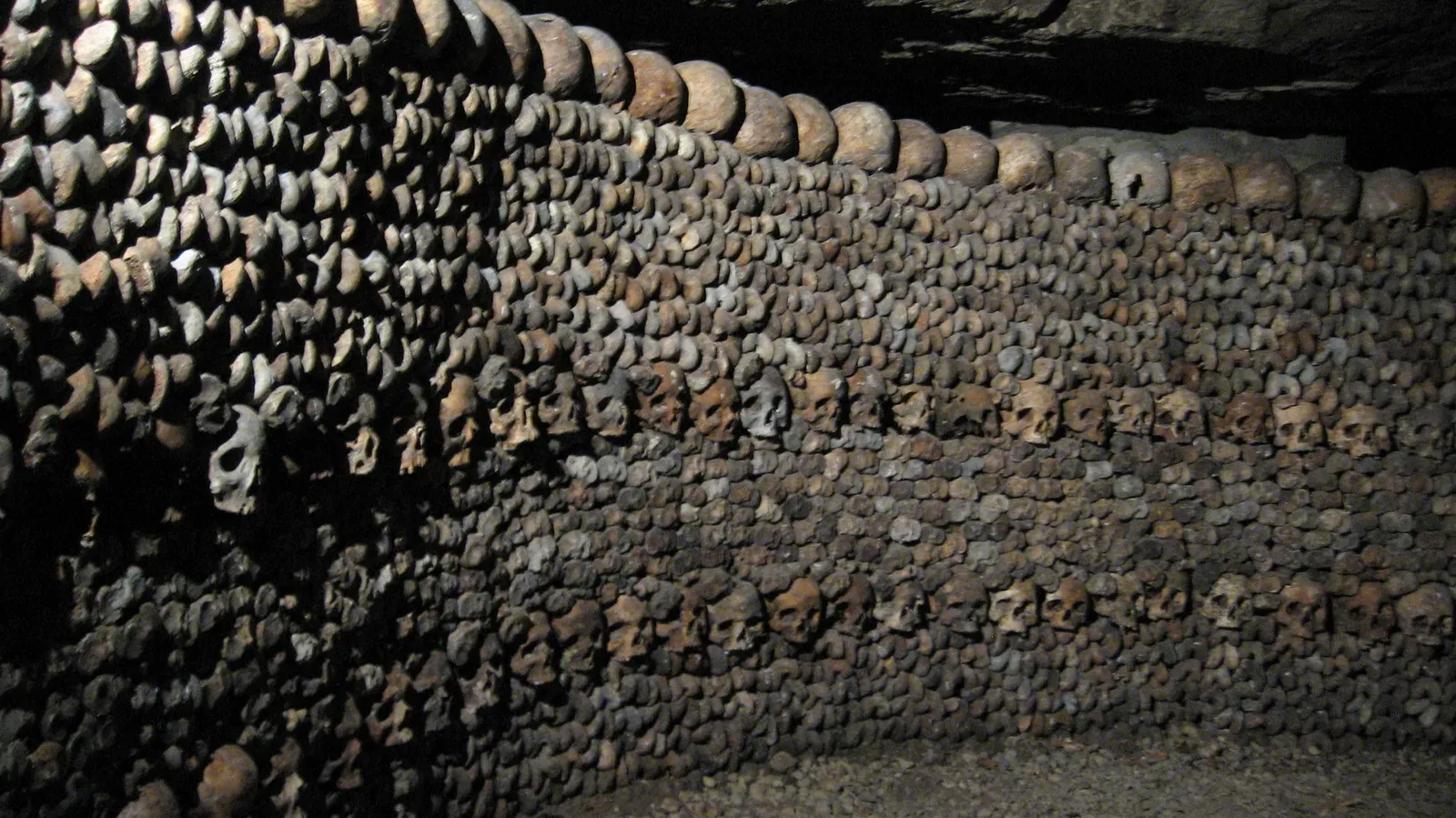
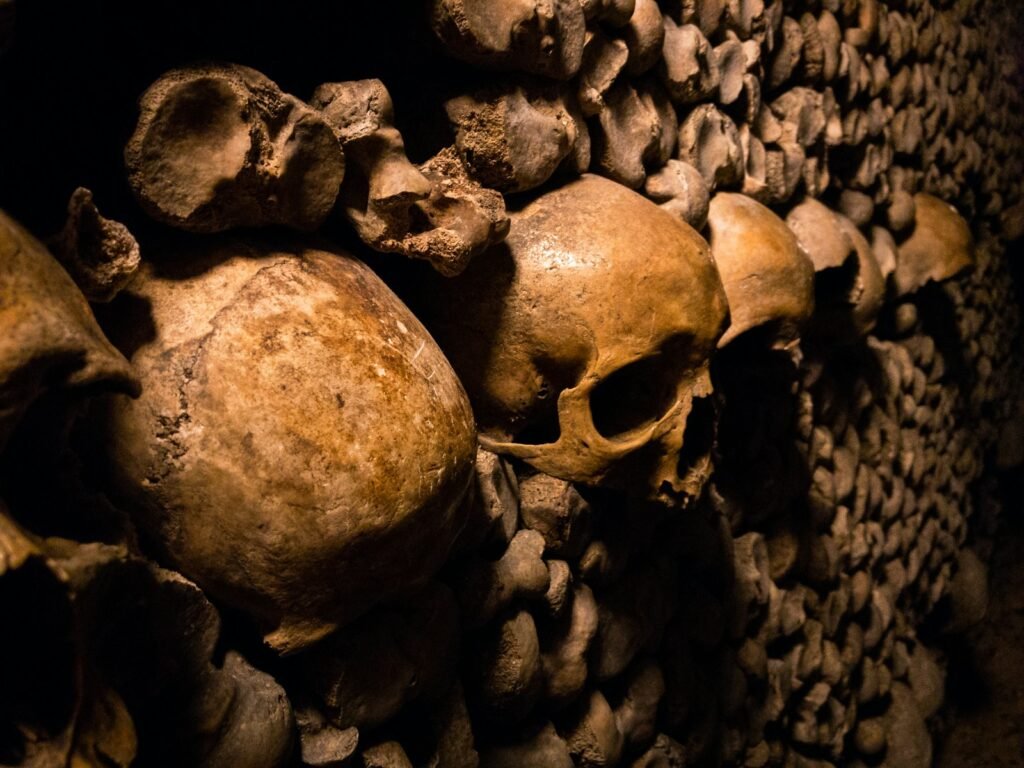
Beneath the tourist-filled streets of Paris lies a parallel city of tunnels and ossuaries stacked with the remains of roughly several million people, moved there between the late eighteenth and nineteenth centuries to relieve overflowing cemeteries. The Catacombs are organized in disturbingly neat patterns: skulls and femurs arranged in walls that seem more like architecture than burial. Visitors routinely report a growing sense of unease as they move deeper into the tunnels, even without any violent legends attached. The human brain is finely tuned to respond to reminders of mortality, and here, death is not hinted at but physically placed inches away on all sides. The result is a kind of psychological pressure, a creeping awareness of being vastly outnumbered by the dead.
Neuroscientists studying emotional responses to images of skulls, skeletons, and other death cues have found heightened activity in brain regions related to fear, threat detection, and self-referential thinking. In a place like the Catacombs, those triggers are not occasional – they’re continuous. The low ceilings, cool air, and damp stone also contribute to a mild sensory deprivation effect, muting outside noise and natural light. This environment nudges visitors into a more introspective and anxious state, making it easier for any small sound or drip of water to feel charged with meaning. From a science perspective, the Catacombs are less about ghosts and more about direct confrontation with human finitude, which can be just as chilling.
The Prison That Refuses to Go Quiet: Eastern State Penitentiary, USA
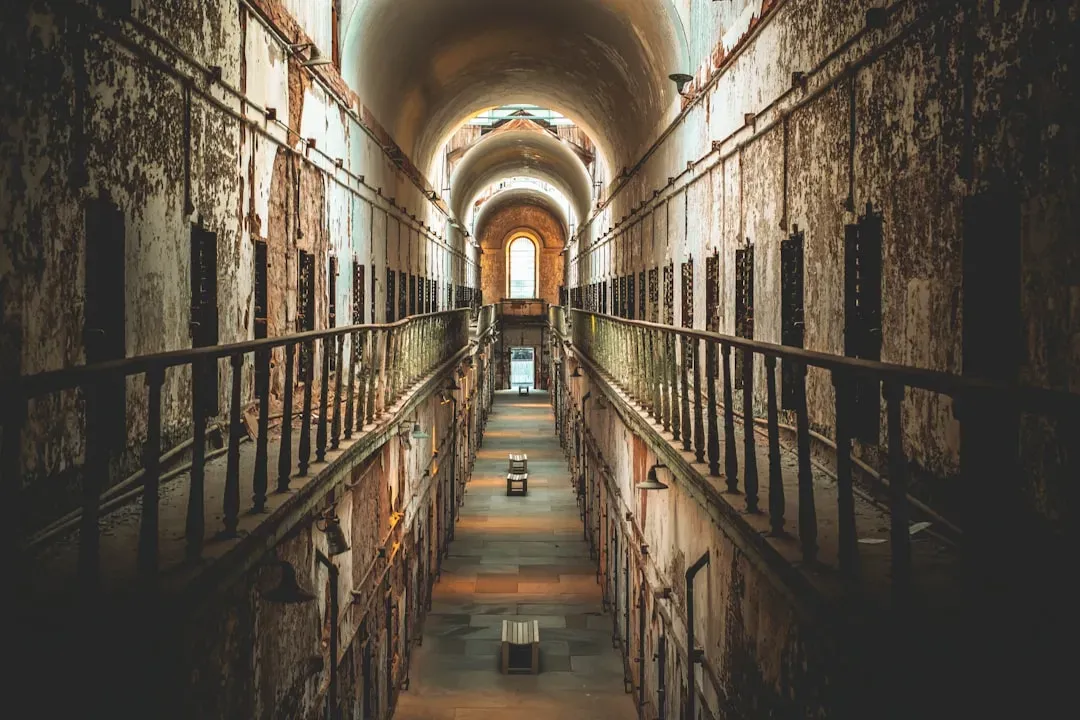
In the middle of Philadelphia, the massive stone walls and radiating cell blocks of Eastern State Penitentiary loom like a fortress built to contain not just people, but their worst impulses. Opened in the nineteenth century as a pioneering experiment in solitary confinement, it kept prisoners in near-total isolation for years at a time, a practice now known to cause severe psychological damage. Today, the prison is a museum by day and a magnet for ghost tours and paranormal investigations by night. Visitors and staff have reported footsteps in empty corridors, echoing voices, and the unnerving sensation of being watched from dark cells. Given the site’s long history of suffering and sensory deprivation, it is not surprising that human imagination fills the gaps left by silence.
Modern psychology offers a stark lens on why Eastern State feels so charged. Prolonged isolation has been linked to hallucinations, heightened anxiety, and even changes in brain structure, and those effects are woven into the building’s legacy. The decaying architecture also plays tricks: peeling paint, patchy light through broken roofs, and long, symmetrical corridors create ambiguous visual cues that the brain may misinterpret as movement. Researchers interested in “place memory” note that spaces associated with intense emotion often produce stronger reactions in visitors, even generations later. At Eastern State, the combination of documented human suffering and disorienting physical design means a flashlight tour can feel like stepping straight into a psychological experiment you didn’t consent to.
The Ocean’s Silent Warning: The Ghost Fleet of Chuuk Lagoon, Micronesia
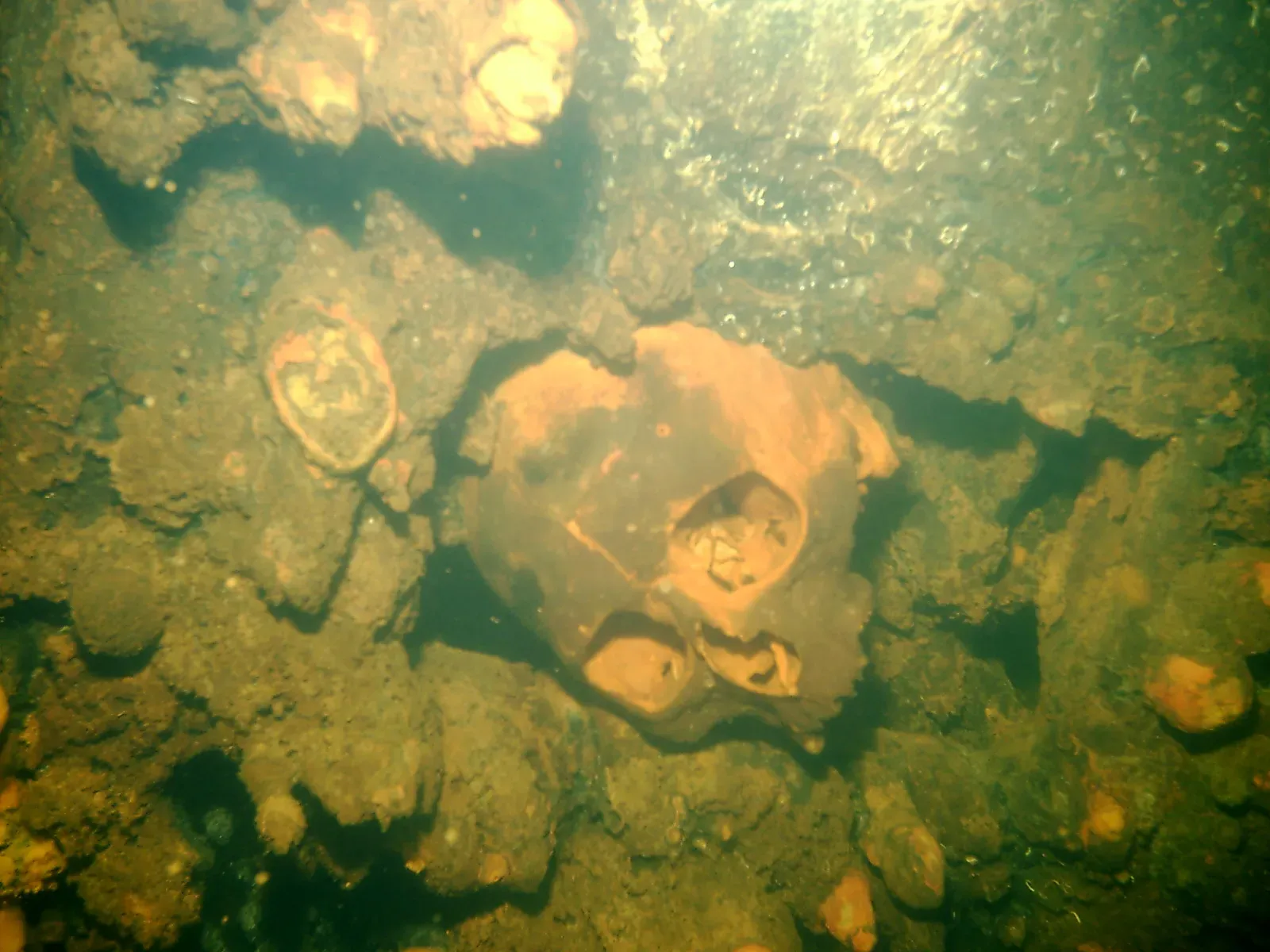
Under the clear blue waters of Chuuk Lagoon in Micronesia lies a graveyard of more than fifty World War II Japanese ships, aircraft, and vehicles, sunk during a massive Allied attack in 1944. For divers, these wrecks are both breathtaking and deeply unnerving, their skeletal hulls carpeted in coral and inhabited by fish that weave through rusted guns and collapsed decks. Many describe a haunting stillness, as if the lagoon itself is holding its breath, aware of the lives abruptly cut short here. Unlike haunted houses on land, the ghost stories in Chuuk tend to be quieter: strange moods, sudden chills at thermoclines, or the eerie sight of personal items preserved in silt. The real tension comes from knowing that history is still decaying – and leaking – right below you.
From a scientific point of view, Chuuk Lagoon is a stark reminder that ghost stories can have very tangible environmental stakes. Many of the wrecks still contain fuel, oil, and possibly munitions that threaten surrounding reefs as corrosion advances. Marine chemists and ecologists monitor these underwater time capsules to understand how slow leaks or sudden structural failures could impact local ecosystems. At the same time, cultural historians and archaeologists see the lagoon as an underwater museum, preserving artifacts and human narratives that would otherwise be lost. It is a place where the “haunting” is not only emotional but ecological, warning that the remains of war continue to shape oceans long after the last survivor is gone.
The Science Behind the Shivers: Hidden Clues in Haunted Places
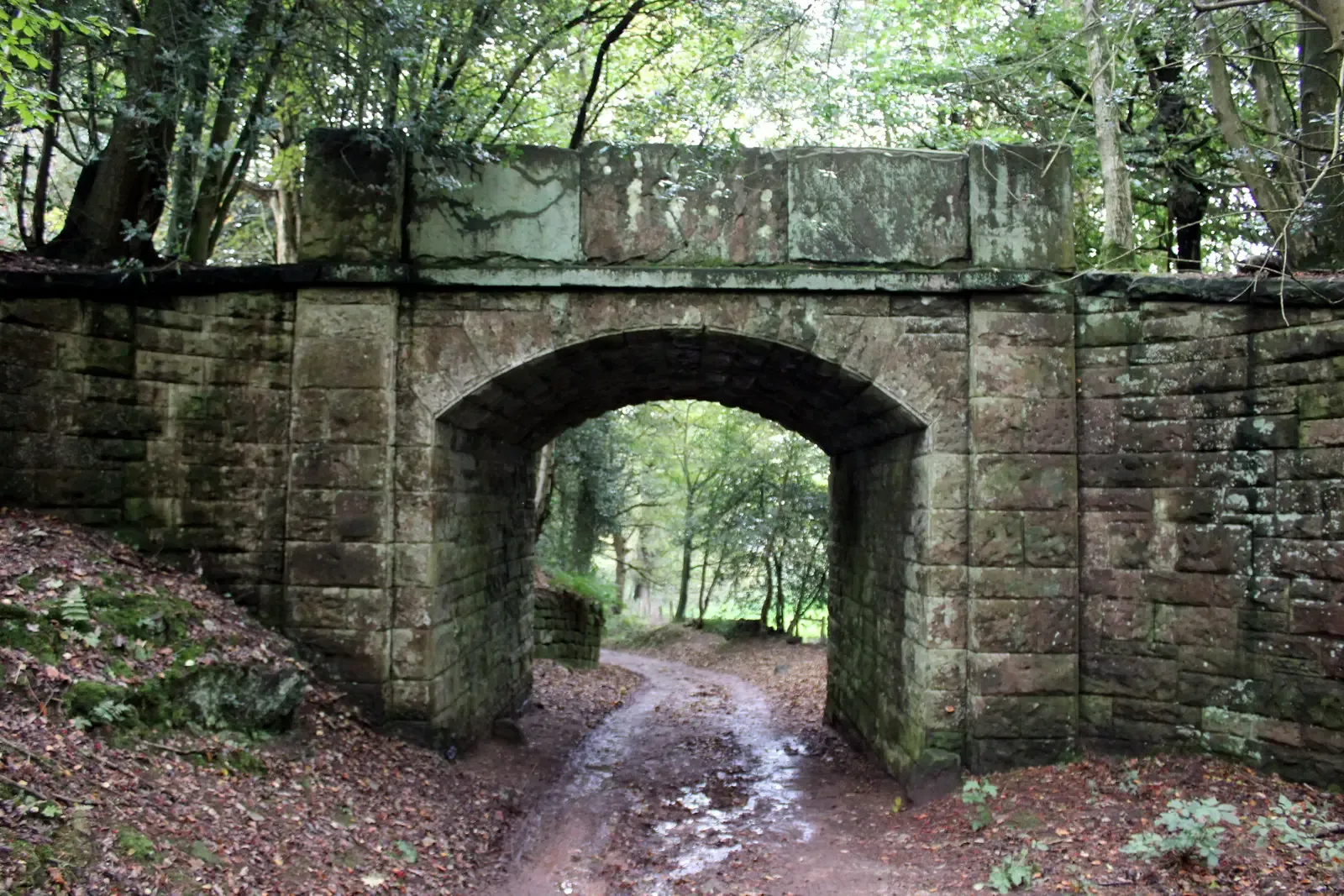
Strip away the campfire stories and one pattern shows up again and again in the world’s creepiest locations: the human body is reacting to very real, very measurable conditions. Low-frequency sound – known as infrasound – can be generated by wind through cracks, distant machinery, or even waves hitting rock, and has been linked to feelings of dread, pressure in the chest, and visual disturbances. Slight drafts in old buildings can create localized cold spots that feel like an invisible presence brushing past. Complex acoustics in stone corridors or forests can bounce noises around, making it hard to locate their source and triggering a primal sense of vulnerability. When these factors overlap in places already labeled haunted, our brains eagerly connect the dots.
Studies in cognitive science show that people tend to attribute unexplained events to agency – a “someone” or “something” – especially in uncertain or threatening situations. This bias likely helped our ancestors survive, because assuming that a rustle in the dark was a predator rather than the wind was a safer bet. In a crumbling prison, abandoned city, or underground tunnel system, that same instinct kicks in, upgrading harmless environmental quirks into active agents. Add prior knowledge – plague island, radiation zone, mass grave – and the sense of presence becomes difficult to shake, even for skeptics. In other words, the are powerful not because they break the rules of nature, but because they press hard on the rules our brains evolved to follow.
Why It Matters: Haunted Sites as Natural Laboratories
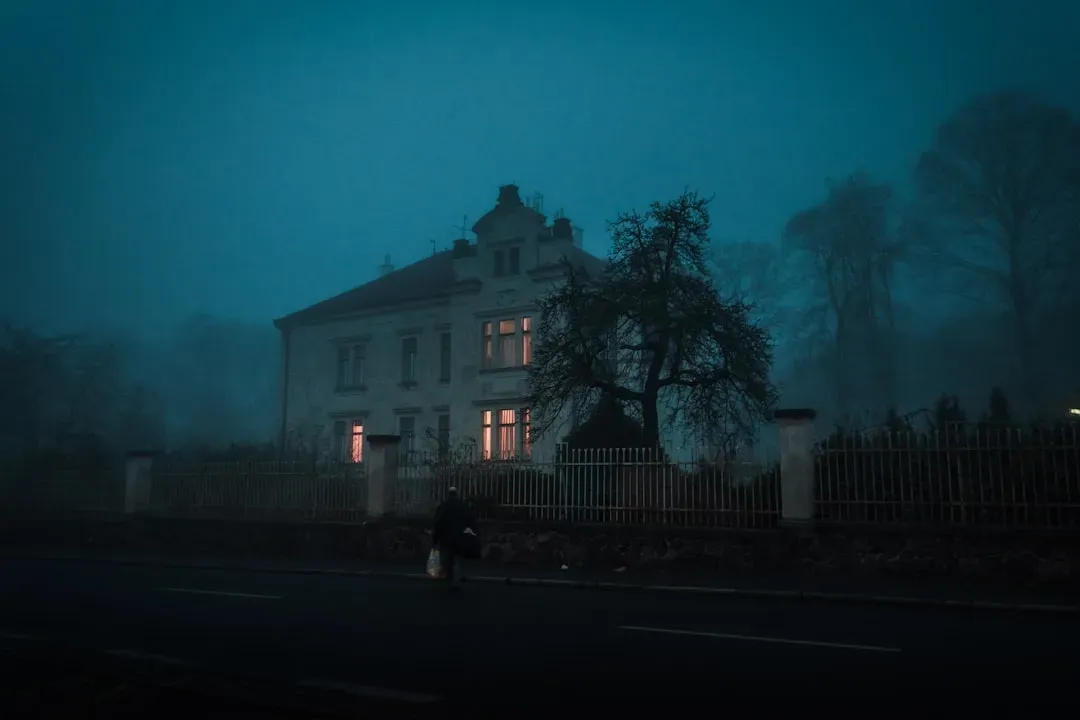
It might be tempting to dismiss haunted places as tourist traps and ghost-hunting playgrounds, but they are quietly turning into rich field sites for multiple branches of science. Environmental psychologists study how architecture, light, and sound shape emotion, stress, and decision-making, using these locations as extreme examples. Neuroscientists are interested in how expectation and belief change what people perceive, especially when they walk into a place primed with stories of terror and tragedy. Even public health researchers pay attention, because the same mechanisms that make a prison or forest feel haunted can influence how communities respond to risks like pollution or disease. Fear is not just a feeling; it is a powerful driver of behavior.
Comparing these “creepy” environments to more ordinary ones reveals how subtle changes can have outsized effects. A dimly lit hospital corridor late at night may trigger some of the same responses as a supposedly haunted asylum, especially if staff share stories about past events. Understanding these overlaps helps designers build spaces that minimize unnecessary stress, from nursing homes to subway systems. It also helps science communicators explain invisible threats – like radiation or viruses – without resorting to unhelpful or paralyzing fear. Haunted places, in this light, become training grounds for learning how to talk about risk and uncertainty in a world where many dangers can’t be seen but must still be faced.
The Future Landscape: Sensors, Simulations, and Ghost Tourism
As technology advances, the line between ghost hunting and scientific investigation is blurring in surprising ways. Teams now bring high-resolution thermal cameras, electromagnetic sensors, infrasound microphones, and even portable EEG headsets into notorious locations, collecting streams of data alongside personal sensations. Virtual reality and augmented reality platforms are starting to recreate famous creepy sites, letting users walk through a digital Hoia Baciu or Chernobyl while researchers tweak lighting, sound, and narrative prompts to see how perception shifts. These tools allow scientists to separate what is driven by the environment from what is driven by expectation and story. They also raise ethical questions about how far we should go in turning sites of real tragedy into immersive entertainment.
At the same time, ghost tourism is booming, with destinations from former asylums to abandoned theme parks marketing their creep factor as an economic resource. This can bring much-needed money for conservation and safety work, but it risks flattening complex histories into jump scares. The next decade will likely see more collaborations between historians, local communities, and researchers to craft experiences that are thrilling yet grounded, respectful, and informed by data. Smart monitoring systems could quietly track visitor stress responses or environmental changes, helping manage crowding and preserve fragile structures. If handled well, the world’s creepiest places might become showcases for how science, storytelling, and memory can coexist without erasing one another.
Stepping Into the Dark: How Readers Can Engage
You do not need to fly to a plague island or nuclear zone to explore the science and story of haunted places; you can start by paying attention to how your own body reacts in unfamiliar or unsettling spaces. Notice how your heart rate changes in a dark hallway, how your hearing sharpens in a silent forest, or how quickly a single eerie anecdote can change the way you feel about an otherwise ordinary building. Supporting museums, historical societies, and conservation projects that maintain sites like Eastern State Penitentiary or the Paris Catacombs helps ensure that these complex environments are preserved and studied rather than sensationalized beyond recognition. When you visit, consider taking tours that highlight both the human stories and the scientific context – how architecture, environment, and psychology all shape what you feel.
You can also follow or support research groups and science communicators who investigate fear, risk perception, and environmental psychology, since their work often draws on the same mechanisms that make haunted places so compelling. Simple actions like questioning viral ghost videos, seeking out evidence-based explanations, and respecting the real tragedies behind famous sites push public conversation in a healthier direction. In the end, the world’s creepiest places are mirrors, reflecting our anxieties about death, disaster, and the unknown. The more we understand how those mirrors are built – brick by brick, story by story – the less likely we are to be trapped by our own shadows.
Suhail Ahmed is a passionate digital professional and nature enthusiast with over 8 years of experience in content strategy, SEO, web development, and digital operations. Alongside his freelance journey, Suhail actively contributes to nature and wildlife platforms like Discover Wildlife, where he channels his curiosity for the planet into engaging, educational storytelling.
With a strong background in managing digital ecosystems — from ecommerce stores and WordPress websites to social media and automation — Suhail merges technical precision with creative insight. His content reflects a rare balance: SEO-friendly yet deeply human, data-informed yet emotionally resonant.
Driven by a love for discovery and storytelling, Suhail believes in using digital platforms to amplify causes that matter — especially those protecting Earth’s biodiversity and inspiring sustainable living. Whether he’s managing online projects or crafting wildlife content, his goal remains the same: to inform, inspire, and leave a positive digital footprint.