It’s one of the strangest language detours in tech: a canned meat from the 1930s lends its name to the most irritating part of the modern internet. The story starts in a TV studio, jumps to early online chat rooms, then bursts into your inbox with industrial force. Along the way it says a lot about how culture bleeds into code, and how jokes harden into jargon. I still remember the first time I watched the Monty Python sketch on a grainy clip; the relentless chant felt funny and, weirdly, familiar – like my email on a bad day. Here’s how a comedy bit morphed into a global shorthand for digital overload – and why that journey still shapes the way we fight online abuse.
The Hidden Clues
In December 1970, Monty Python’s “Spam” sketch aired in Britain, featuring a diner where nearly every menu item came with that one brand-name meat repeated to absurdity. The bit’s joke – overkill so loud it drowns out normal conversation – became the seed of a metaphor that technologists would later borrow. When the Vikings chorus escalates, the signal disappears beneath a wall of cheerful noise, which is exactly what mass unsolicited messages do to real conversation online. The humor works because it weaponizes repetition; the metaphor works because the internet is exquisitely sensitive to volume.
Decades later, lexicographers would explicitly connect the sketch to the digital meaning we use today, turning a punchline into a dictionary entry. That’s a rare case where pop culture didn’t just reflect technology; it named it, and the name stuck for good reasons grounded in behavior.
From Sketch to Silicon

The leap from television to terminals happened in the late eighties, when hobbyists in text-based multi‑user dungeons (MUDs) and early chat systems started saying someone “spammed” a channel by flooding it with automated text. Those communities loved in‑jokes and Python references, and the sketch’s logic mapped perfectly: repetition as disruption. From there, the label migrated to Usenet, where the first big flare‑ups of mass postings made the term feel painfully apt. It’s a classic case of cultural drift: a metaphor that fits so well it becomes the default description across platforms.
By the time the web arrived, “spam” already meant more than meat; it meant a social norm broken by thoughtless – or shameless – volume. The linguistic pipeline from MUD to mainstream shows how grassroots tech culture can set the terms for everyone else.
First Floods: ARPANET to Usenet

The earliest known mass unsolicited email on ARPANET landed in May 1978, when a marketer blasted a product demo invite to hundreds of addresses; it wasn’t called spam yet, but the pattern was there. Through the early nineties, Usenet saw cross‑posted screeds, clumsy chain letters, and then an infamous 1994 ad for immigration services that carpeted thousands of groups in one go. Those moments turned an annoyance into a crisis, forcing communities to invent both vocabulary and defenses – cancelbots, moderation norms, and eventually automated filters.
The name “spam” rode that wave, becoming the everyday term as the scale of abuse exploded. It’s striking how quickly the culture settled on one word to describe so many tactics, from noisy floods to commercial junk. And it’s just as striking how a label can focus outrage and accelerate countermeasures.
Why It Matters

Words steer policy, and “spam” did something smart: it framed abuse as noise that drowns out conversation, not simply “advertising you didn’t ask for.” That framing justified community tools that remove volume without stifling legitimate speech, and it underpins modern email norms like opt‑in lists and rate limits. Compared with the older term “junk mail,” which implies mere inconvenience, “spam” carries the sense of collective harm – lost time, missed messages, and the erosion of trust.
That matters when vendors design filters or lawmakers weigh rules such as the U.S. CAN‑SPAM framework; they aren’t just tackling nuisance, they’re protecting signal. It also matters for research: evaluating a filter isn’t only about catch rate, it’s about false positives that swallow real conversations. Once you think in signal‑to‑noise, you think in systems, not just inboxes.
The Science of Naming and Memory

Language scientists talk about semantic shift and metaphorical extension, and “spam” is almost a textbook case powered by humor. Because the sketch is vivid and easy to recall, the word piggybacks on that mental imagery and becomes a fast label your brain reaches for under pressure. There’s a cognitive economy to it: one syllable, punchy mouthfeel, and a story attached – perfect for rapid categorization. The social element helps too; if your peers use the term, you adopt it to show you understand the rules of the space. Over time the label shapes the task: engineers build “anti‑spam” systems rather than “anti‑unsolicited‑message” systems, which subtly biases what gets measured and optimized. Naming isn’t neutral; it guides what we see and what we build.
Global Perspectives

Despite trademark sensitivities, “spam” crossed borders with the internet itself, showing up in multiple languages as either a loanword or a local variant. The universal appeal is the metaphor: everyone knows what it feels like to have signal smothered by repetition, whether in email, SMS, social feeds, or comment sections. Different regions regulate it differently, but technical countermeasures have converged on similar toolkits – reputation scores, content classifiers, authentication protocols, and user feedback loops. The term has also broadened beyond email to include robocalls, bot swarms, and reply‑guy floods that bend a conversation off course. That breadth can be confusing, but it reflects a shared problem of scale that transcends platforms. And it keeps the original lesson close at hand: the issue is the chorus, not any one singer.
The Future Landscape

Today’s spam feels less like a wall of identical messages and more like a shape‑shifter: personalized, AI‑crafted, and adaptive to defenses. As content generators get better at mimicking human style, filters must lean harder on cross‑signal evidence – behavioral patterns, source reputation, and cryptographic proofs of authorship. Expect the battleground to expand in private messaging, collaboration suites, and even generative platforms where bots can mass‑produce plausible replies. Authentication tools will matter more, but so will governance, since attackers exploit the weakest link across a chain of services. The cultural power of the word still helps; calling it “spam” keeps attention on the harm of volume, even when that volume looks conversational. The next frontier is aligning technical defenses with the social meaning the term captured from the start.
Brand, Law, and the Meat in the Middle
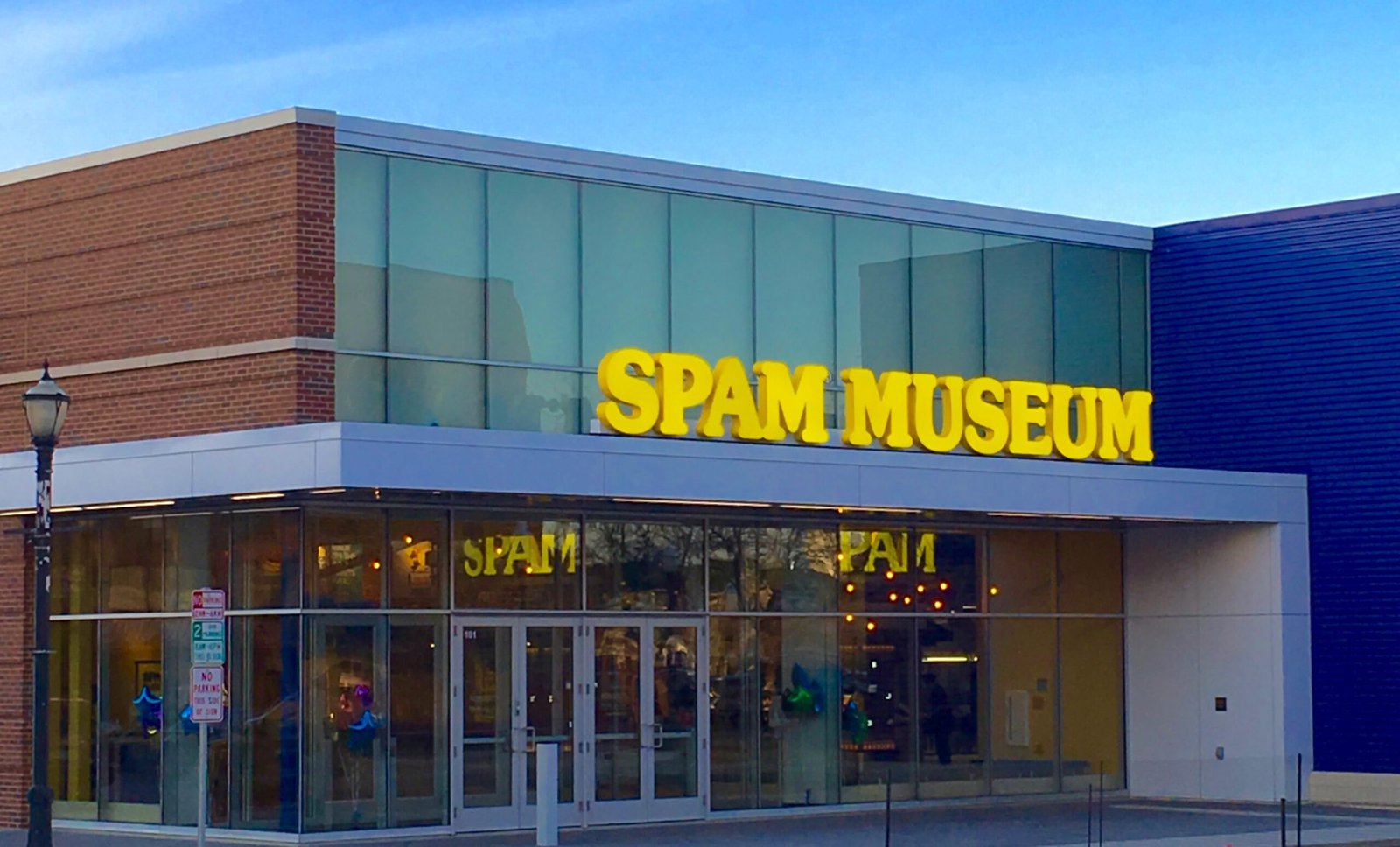
Hormel, the maker of SPAM, has had to thread a delicate needle: defend a food brand while living with a linguistic reality it can’t control. Over time the company’s stance softened toward the lowercase generic for unwanted email, emphasizing capitalization and context to distinguish luncheon meat from inbox abuse. That uneasy truce shows how trademark law and everyday speech often diverge; once a term takes on a culturally useful meaning, policing it can backfire. Meanwhile, the origin story keeps pulling both worlds together, right down to museum exhibits and marketing winks that acknowledge the Python link.
It’s a reminder that the internet’s vocabulary is a patchwork quilt of brands, jokes, and engineering shorthand stitched together by use. The meat and the meme now coexist, and each keeps the other oddly visible.
Conclusion

Train your filters by marking unwanted messages instead of just deleting them, and unsubscribe from lists you don’t read so your signal stays clean. Turn on email authentication for your domains if you manage any – SPF, DKIM, and DMARC make a real dent. Be skeptical of messages that pressure you to act fast or share credentials, and verify through a second channel when stakes are high. Support researchers and standards bodies working on anti‑abuse tools, because the fight increasingly spans platforms and protocols. And when you hear “spam,” remember the sketch’s lesson: it’s the chorus that kills the conversation, so defend the quiet where real voices can be heard.
Suhail Ahmed is a passionate digital professional and nature enthusiast with over 8 years of experience in content strategy, SEO, web development, and digital operations. Alongside his freelance journey, Suhail actively contributes to nature and wildlife platforms like Discover Wildlife, where he channels his curiosity for the planet into engaging, educational storytelling.
With a strong background in managing digital ecosystems — from ecommerce stores and WordPress websites to social media and automation — Suhail merges technical precision with creative insight. His content reflects a rare balance: SEO-friendly yet deeply human, data-informed yet emotionally resonant.
Driven by a love for discovery and storytelling, Suhail believes in using digital platforms to amplify causes that matter — especially those protecting Earth’s biodiversity and inspiring sustainable living. Whether he’s managing online projects or crafting wildlife content, his goal remains the same: to inform, inspire, and leave a positive digital footprint.