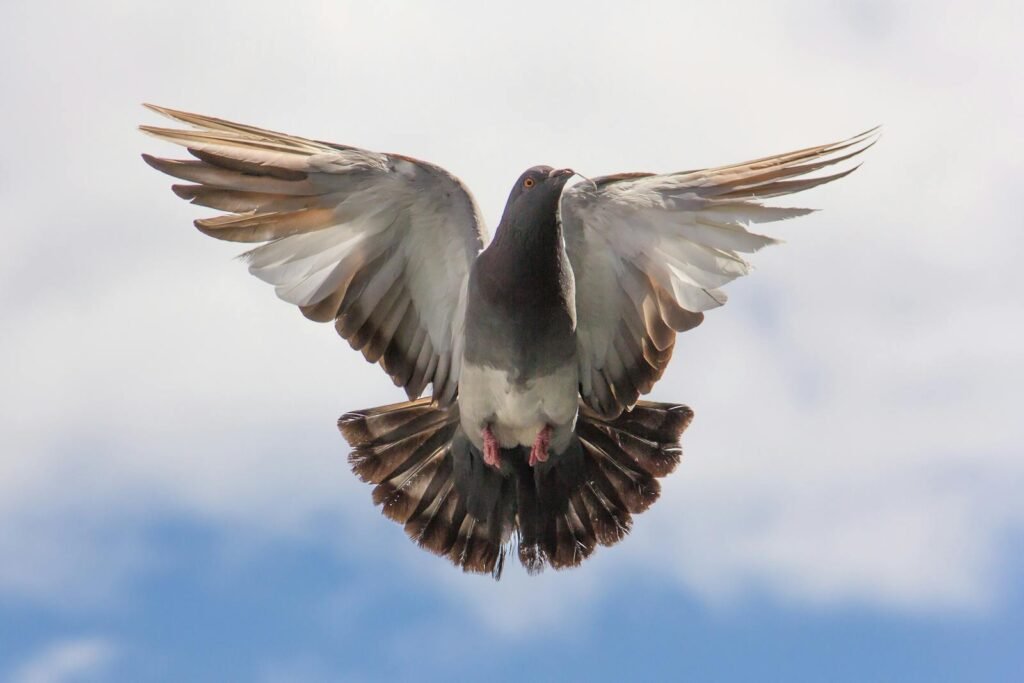
The next time you see a pigeon pecking at crumbs on a city sidewalk, you might want to show a little more respect. These seemingly ordinary birds have a secret military history that reads like something out of a spy novel. From carrying messages across enemy lines to guiding missiles to their targets, pigeons have played roles in warfare that most people never imagine. Now, as we enter an age of drone technology and artificial intelligence, these feathered veterans are making an unexpected comeback in ways that could revolutionize modern military operations.
The Forgotten Heroes of World War II

During World War II, over 250,000 pigeons served in various military capacities, and their contribution was nothing short of extraordinary. These birds carried messages when radio communications failed, delivered intelligence reports from behind enemy lines, and even guided early missile prototypes. The British military awarded 32 pigeons the Dickin Medal, the highest honor for animal bravery in wartime. One pigeon named Cher Ami became legendary after delivering a message that saved 194 American soldiers trapped in the Argonne Forest, despite being shot through the breast and losing a leg. The bird’s determination to complete its mission exemplified the reliability that made pigeons invaluable to military operations.
Nature’s GPS System Revealed

What makes pigeons such exceptional navigators lies in their remarkable biological equipment that puts modern GPS systems to shame. These birds can detect magnetic fields, infrasound, and even polarized light patterns invisible to human eyes. Their internal compass system includes specialized cells containing magnetite crystals that function like tiny biological compasses. Pigeons can also hear infrasound frequencies as low as 0.1 Hz, allowing them to detect sounds from storms, ocean waves, and geographical features hundreds of miles away. This multi-sensory navigation system enables them to fly hundreds of miles and return home with pinpoint accuracy, even when released in completely unfamiliar territory.
Racing Pigeons as Military Messengers

The transformation of racing pigeons into military assets began in the late 1800s when armies recognized their speed and reliability advantages over traditional communication methods. Military pigeon services established breeding programs specifically designed to produce birds with enhanced endurance and homing abilities. These specialized military pigeons could fly at speeds of up to 60 miles per hour and cover distances exceeding 600 miles in a single flight. Training programs developed complex conditioning regimens that prepared birds for combat conditions, including exposure to gunfire, explosions, and adverse weather. The investment in these feathered messengers proved invaluable when other communication systems failed during critical military operations.
Operation Columba: The Secret Pigeon Network

One of the most ambitious wartime pigeon operations was Britain’s top-secret Operation Columba, which dropped thousands of pigeons over Nazi-occupied Europe. Each bird carried a small questionnaire in multiple languages, asking local resistance fighters to provide intelligence about German troop movements and fortifications. The operation successfully retrieved over 1,000 messages containing vital military intelligence that helped plan D-Day and other major operations. French, Dutch, and Belgian civilians risked their lives to participate in this unusual intelligence network, understanding that these birds represented a lifeline to Allied forces. The success rate of returned messages exceeded expectations, proving that pigeons could operate effectively even in heavily monitored enemy territory.
Pigeon Photography: Early Aerial Surveillance

Military innovators discovered that pigeons could carry small cameras to conduct aerial reconnaissance missions decades before satellites existed. German pharmacist Julius Neubronner pioneered pigeon photography in the early 1900s, developing lightweight automatic cameras that could be strapped to the birds. These feathered photographers captured images of enemy positions, troop concentrations, and strategic installations from angles impossible for ground-based observers. The technique proved so effective that multiple nations adopted pigeon photography units for intelligence gathering. Some remarkable photographs from these missions still exist today, showing coastal fortifications and military installations with surprising clarity and detail.
Project Pigeon: Guiding Missiles to Target

Perhaps the most bizarre military application of pigeons emerged from the brilliant mind of psychologist B.F. Skinner during World War II. Project Pigeon, later renamed Project Orcon, trained pigeons to guide missiles by pecking at target images displayed on screens inside the warheads. Skinner conditioned the birds to recognize enemy ships, aircraft, and ground targets through extensive training programs using operant conditioning techniques. The pigeons demonstrated remarkable accuracy in laboratory tests, successfully guiding simulated missiles to their intended targets. Although the project was eventually abandoned in favor of electronic guidance systems, it proved that biological intelligence could effectively control precision weapons.
The Decline of Military Pigeons

The advent of reliable radio communications and satellite technology gradually reduced military dependence on pigeon messengers throughout the 1950s and 1960s. Electronic systems offered instant communication capabilities that no biological system could match for speed and volume of information transfer. Many military pigeon services were officially disbanded as defense budgets shifted toward advanced technological solutions. However, some nations maintained small pigeon units for emergency situations where electronic systems might fail or be compromised. The institutional knowledge and breeding programs developed over decades of military pigeon operations largely disappeared as veteran handlers retired without replacement.
Pigeons in Modern Search and Rescue

Today’s emergency responders have rediscovered the unique capabilities that made pigeons valuable military assets, particularly in search and rescue operations. Coast Guard units have successfully trained pigeons to spot life jackets and emergency equipment floating in ocean waters with greater accuracy than human observers. These birds can scan vast areas of water and identify objects that rescue helicopters might miss due to glare, weather conditions, or visual fatigue among crew members. Training programs condition pigeons to distinguish between different colored objects and signal their handlers when they spot potential survivors. The birds’ superior color vision and pattern recognition abilities make them exceptional at detecting anomalies in natural environments.
The Drone Revolution Meets Ancient Wisdom

The explosive growth of drone technology has created unexpected opportunities to combine artificial intelligence with biological navigation systems that pigeons perfected over millions of years. Researchers are studying pigeon flight patterns and navigation strategies to improve autonomous drone operations in GPS-denied environments. Modern military drones often struggle in situations where electronic warfare systems jam their guidance signals, but pigeons navigate successfully using entirely different sensory inputs. The integration of biological navigation principles into drone programming could create more resilient and adaptable autonomous systems. This biomimetic approach represents a fascinating convergence of ancient natural abilities and cutting-edge technology.
Hybrid Bio-Mechanical Systems

Scientists are developing experimental systems that combine live pigeons with drone technology to create hybrid bio-mechanical reconnaissance platforms. These systems utilize the pigeon’s natural navigation abilities while augmenting them with electronic sensors, cameras, and communication equipment. The birds provide biological intelligence and decision-making capabilities that purely electronic systems cannot replicate, especially in complex or unpredictable environments. Prototype systems have demonstrated the ability to conduct extended surveillance missions with greater stealth and adaptability than conventional drones. The ethical implications of such systems remain under debate, but the technological possibilities continue to drive research and development efforts.
Training Tomorrow’s Feathered Operators

Modern pigeon training programs for military and civilian applications have evolved far beyond the simple conditioning methods used in previous decades. Contemporary training utilizes sophisticated behavioral psychology techniques combined with advanced monitoring technology to optimize bird performance. Trainers now use virtual reality systems to expose pigeons to simulated mission environments and potential threats before actual deployment. GPS tracking devices monitor training flights to analyze flight patterns and identify areas for improvement in navigation efficiency. The combination of traditional animal training expertise with modern technology creates highly capable biological systems for specialized applications.
Urban Warfare and Pigeon Surveillance

The complex environment of modern urban warfare presents unique challenges where pigeons could potentially outperform conventional surveillance systems. These birds can navigate through dense city environments with multiple obstacles and electronic interference that might disable or hinder drone operations. Pigeons naturally blend into urban environments without attracting attention, making them ideal for covert surveillance missions in populated areas. Their ability to land on buildings, power lines, and other urban structures provides observation angles that might be difficult or dangerous for human operatives to achieve. Military planners are reconsidering the tactical advantages that biological surveillance systems might offer in asymmetric warfare scenarios.
Environmental Monitoring and Defense Applications

Beyond traditional military roles, pigeons are being trained for environmental monitoring missions that have significant defense implications. These birds can detect chemical pollutants, radiation levels, and biological hazards in areas too dangerous for human investigation teams. Their natural flight patterns and extended range capabilities make them effective platforms for collecting environmental data across large geographic areas. Military environmental monitoring applications include detecting chemical weapons residue, monitoring nuclear facilities, and assessing biological contamination in combat zones. The birds’ sensitivity to environmental changes could provide early warning systems for various types of military and civilian threats.
Counter-Drone Operations Using Pigeons
An unexpected application for military pigeons involves counter-drone operations where birds could potentially neutralize or interfere with enemy unmanned systems. Trained pigeons could be conditioned to recognize and intercept small hostile drones, particularly in situations where electronic countermeasures prove ineffective. Their natural agility and three-dimensional maneuvering capabilities make them potentially effective against small, fast-moving aerial targets. Some experimental programs have explored using pigeons to deliver small electronic devices that could disable drone systems through electromagnetic interference. The biological approach to counter-drone operations represents a creative solution to an increasingly complex battlefield challenge.
Artificial Intelligence Learns from Pigeon Behavior

Computer scientists are studying pigeon decision-making processes to improve artificial intelligence systems used in military drones and autonomous weapons platforms. Pigeons demonstrate remarkable problem-solving abilities and can make rapid decisions in complex, changing environments that often challenge computer systems. Machine learning algorithms are being developed that mimic the pattern recognition and decision-making strategies observed in trained military pigeons. The birds’ ability to generalize from training experiences to new situations provides valuable insights for creating more adaptable AI systems. This research could lead to autonomous systems that combine the best aspects of biological intelligence with computational processing power.
Ethical Considerations in Bio-Military Applications

The renewed interest in using pigeons for military applications raises important ethical questions about animal welfare and the moral implications of biological warfare systems. Animal rights advocates argue that training pigeons for potentially dangerous military missions violates ethical principles regarding animal treatment and consent. Military ethicists debate whether biological systems should be integrated into weapons platforms and what protections should exist for animals used in combat roles. International humanitarian law may need updates to address the use of animals in modern warfare scenarios where biological and technological systems merge. These ethical considerations will likely influence the development and deployment of future bio-military systems.
Global Military Interest and Development Programs

Several nations have quietly renewed their interest in military pigeon programs as part of broader biological warfare research initiatives. Defense contractors are investing in research that combines traditional animal training with modern technology to create next-generation biological systems. International military exchanges now include information sharing about animal-based intelligence and surveillance capabilities. The cost-effectiveness of biological systems compared to high-tech alternatives makes them attractive options for resource-constrained military operations. This renewed global interest suggests that pigeons may once again play significant roles in future military conflicts.
Future Applications and Technological Integration

The future of military pigeons likely involves deeper integration with artificial intelligence, nanotechnology, and advanced communication systems. Researchers envision pigeons equipped with microscopic sensors, neural interfaces, and real-time data transmission capabilities that could revolutionize battlefield intelligence gathering. Genetic engineering techniques might eventually enhance natural pigeon abilities to create specialized birds optimized for specific military missions. The convergence of biotechnology and military technology could produce hybrid systems that surpass the capabilities of either biological or artificial systems alone. These developments could restore pigeons to prominent roles in 21st-century warfare, but with capabilities far beyond anything imagined by their World War II handlers.
The Enduring Legacy of Feathered Warriors

The remarkable story of military pigeons demonstrates how nature’s solutions often surpass human engineering in unexpected ways. These humble city birds possess navigation and decision-making capabilities that modern technology still struggles to replicate completely. Their historical contributions to military operations saved countless human lives and changed the outcomes of major conflicts. As we develop increasingly sophisticated artificial intelligence and autonomous systems, the lessons learned from pigeon behavior continue to provide valuable insights. The next time you encounter a pigeon on the street, remember that you’re looking at a descendant of genuine war heroes whose legacy may shape the future of military technology. What other secrets might these ordinary-looking birds still have to teach us about surviving and thriving in a complex world?