The universe is vast, mysterious, and full of wonders that stretch the limits of human understanding. In recent years, groundbreaking discoveries have provided us with astonishing insights into the cosmos, offering glimpses into the fundamental workings of space and time. This article highlights eight exciting space discoveries that promise to change our perception of the universe and our place within it.
Gravitational Waves: Ripples in Space-Time

In 2015, scientists celebrated a monumental breakthrough with the first detection of gravitational waves, caused by the collision of two massive black holes. Predicted by Einstein over a century ago, these ripples in space-time offer unprecedented ways to observe cosmic events that were previously invisible. This discovery not only confirmed a key aspect of general relativity but also ushered in a new era of astronomical exploration.
Exoplanets in Habitable Zones
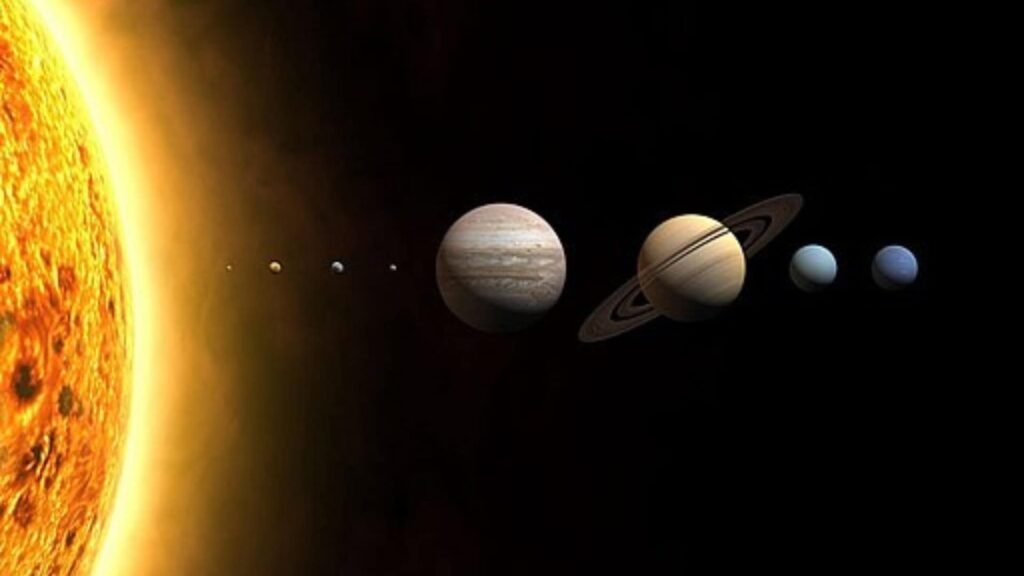
Advances in technology have propelled our search for planets beyond our solar system. The discovery of thousands of exoplanets, some within their stars’ habitable zones, has significantly increased the probability of finding extraterrestrial life. Notable examples, such as the Trappist-1 system with its seven rocky planets, hint at complex planetary systems where signs of life might be detected in the future.
The Expansion of the Universe Accelerates
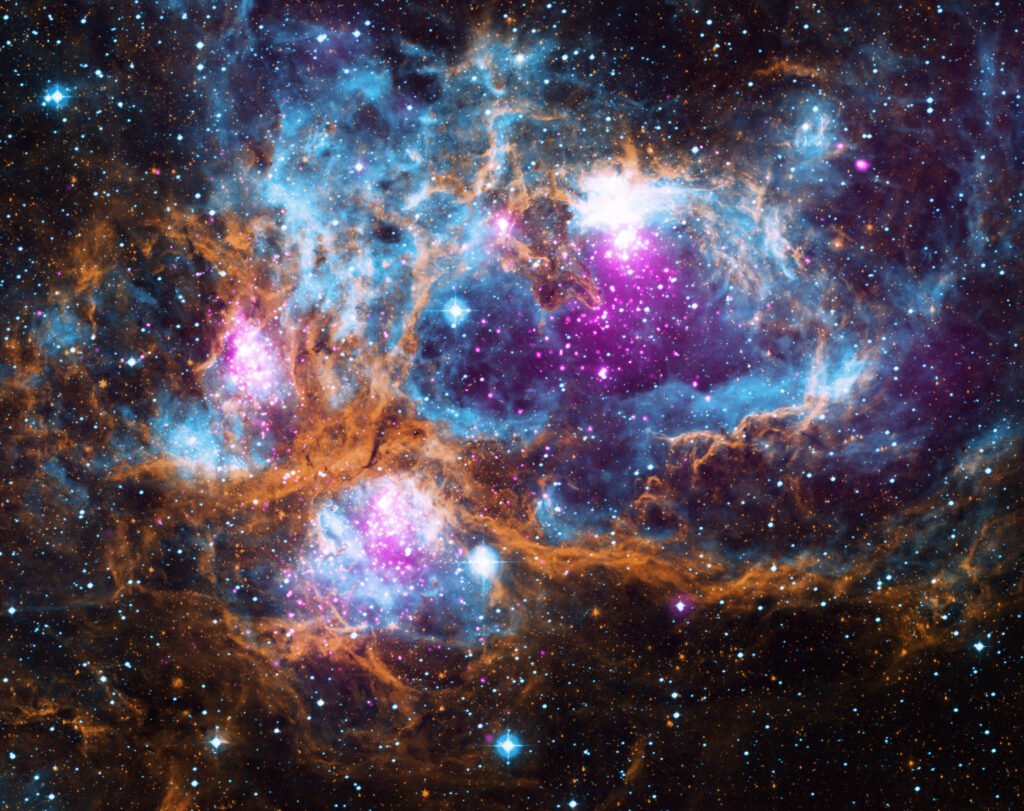
Observations of distant supernovae in the late 1990s led to the unexpected realization that the universe is expanding at an accelerating rate. This phenomenon, attributed to an unknown force termed dark energy, challenges current cosmological models and poses fundamental questions about the fate of the universe. Ongoing research aims to better understand this mysterious force and its implications for cosmic evolution.
First Image of a Black Hole

In 2019, humanity witnessed a pivotal moment in astronomy: the first image of a black hole. Captured by the Event Horizon Telescope, the image revealed the shadow of the supermassive black hole at the heart of the galaxy M87. This achievement marked a significant advancement in our ability to study these enigmatic objects and provided vital evidence supporting the existence of event horizons around black holes.
Mysterious Fast Radio Bursts
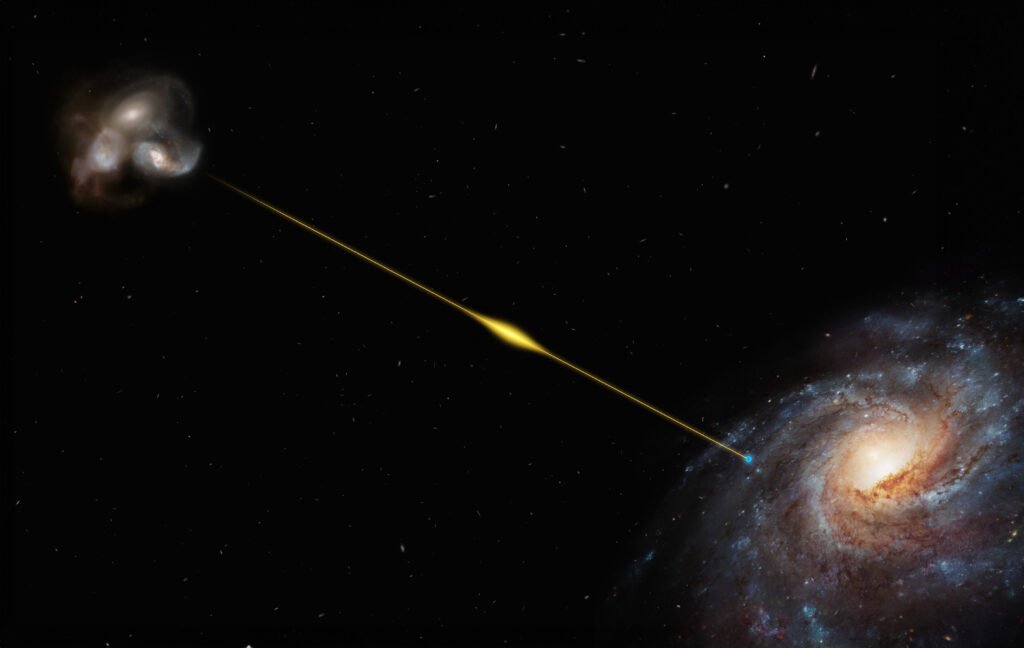
Fast radio bursts (FRBs) are powerful, brief flashes of radio waves originating from distant galaxies, baffling scientists since their discovery. These mysterious signals, sometimes recurring and sometimes unique, pose intriguing questions about their sources. By studying FRBs, astronomers hope to uncover insights into extreme cosmic environments and the nature of intergalactic space.
Glowing Signals from the Early Universe

The cosmic microwave background radiation provides a snapshot of the early universe, containing clues about its origin and evolution. Detailed maps of this ancient light, created by missions like the Planck satellite, have offered insights into the universe’s composition, age, and the formation of cosmic structures. These glimpses into the primordial universe are essential for understanding the cosmos’ history and future trajectory.
The Enigmatic Structure of Neutron Stars
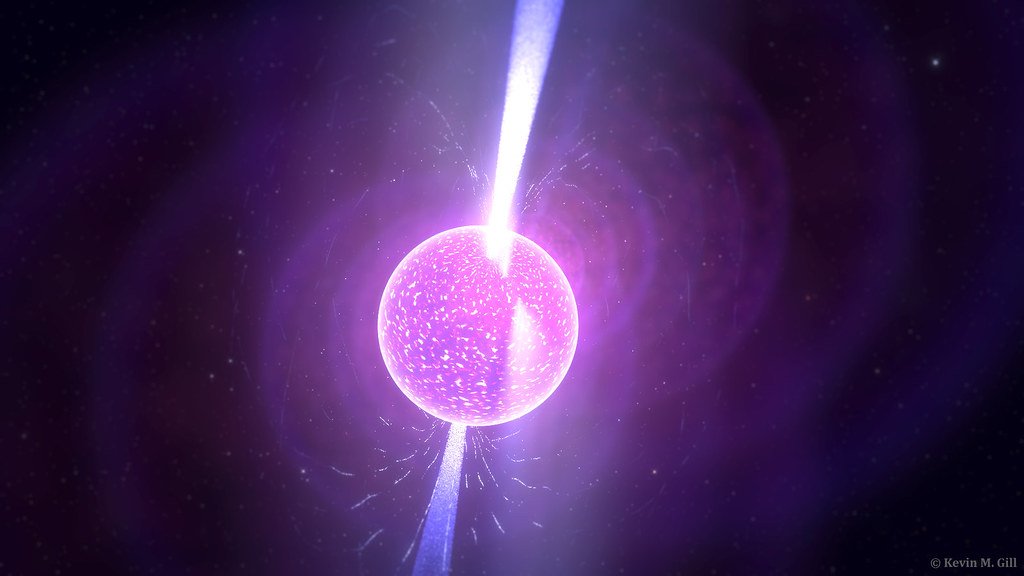
Neutron stars, remnants of massive stellar explosions, are among the densest objects in the universe. Recent breakthroughs in studying these stars through X-ray observatories and gravitational wave events have yielded new insights into their structure and composition. Understanding neutron stars sheds light on fundamental physics, potentially revealing the behavior of matter under extreme conditions.
Evidence of Ancient Water on Mars

Explorations of Mars have unveiled compelling evidence of ancient water flows on the Red Planet, suggesting it once harbored conditions suitable for life. Discoveries of dried riverbeds, mineral deposits, and underground water ice have transformed our understanding of Mars’ history. Future missions aim to uncover direct signs of past life, guiding efforts to explore and perhaps even settle our neighboring planet.
Each of these discoveries represents a significant leap forward in our quest to understand the universe. They redefine our knowledge, challenge existing theories, and inspire new lines of inquiry. As scientists continue to probe the cosmos, the thrilling discoveries of today promise to spark further revelations and deeper insights into the mysteries of space.