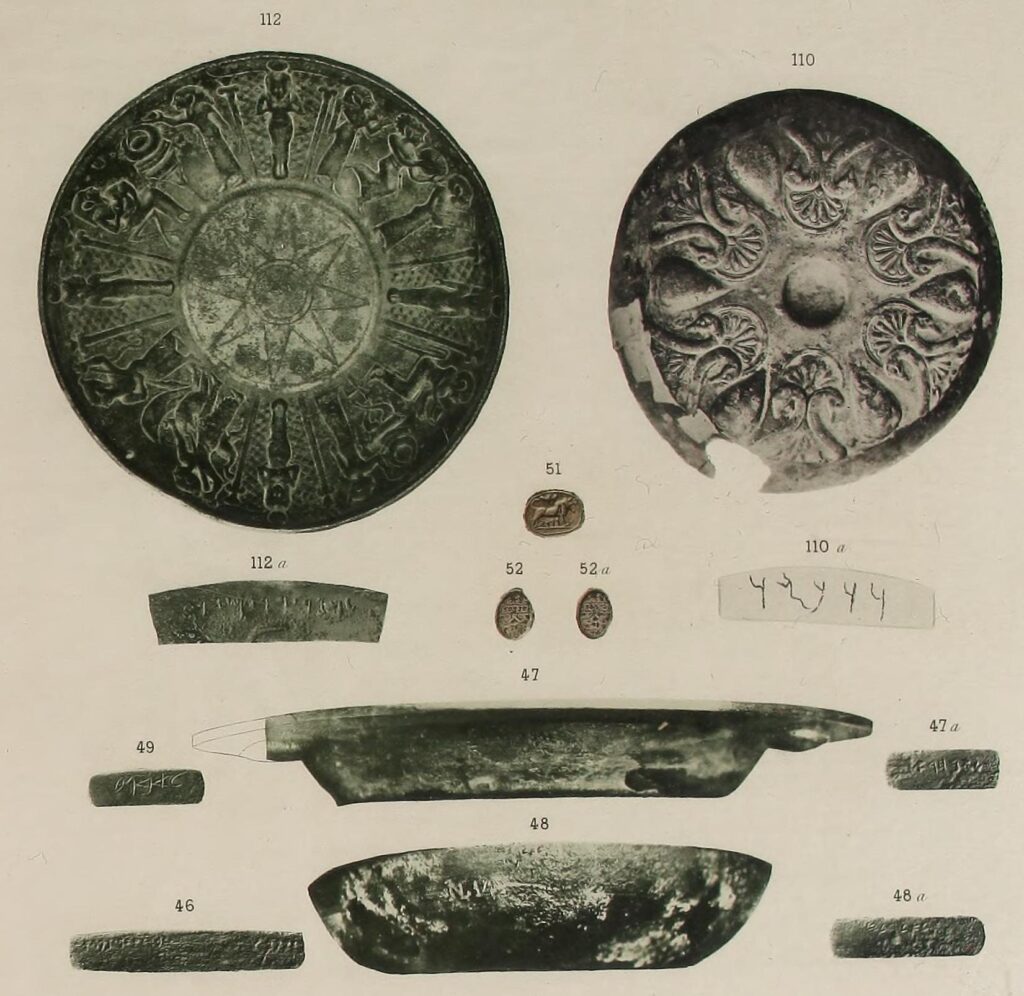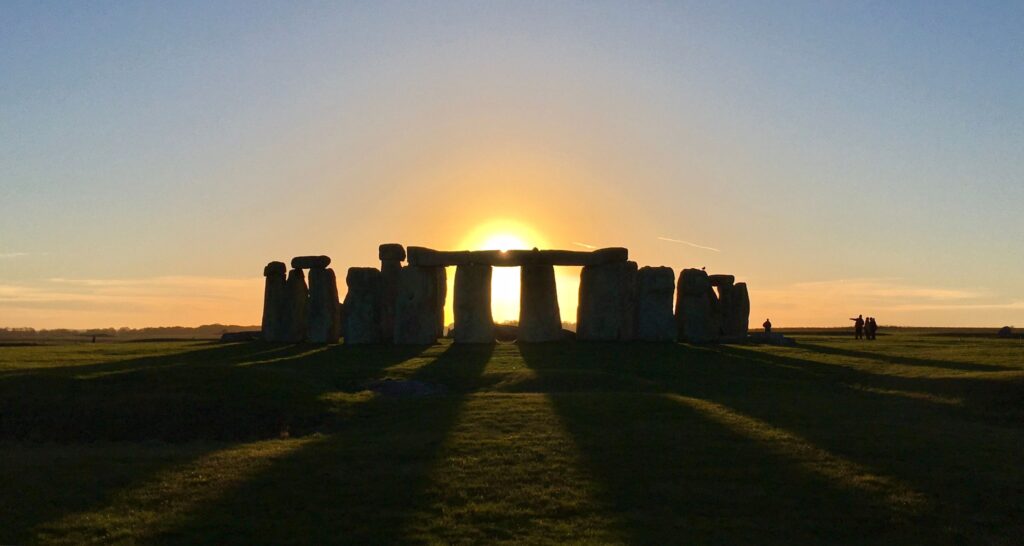
You probably grew up hearing that ancient cultures were neatly separated: different continents, different gods, different stories. Then you stumble onto something that quietly blows that idea apart – the same strange symbol carved into stone in places whose people never met, never traded, and never even knew the other existed. It feels less like archaeology and more like a riddle someone left for you to solve. In this article, you are not just a passive reader; you are the investigator. You will look at recurring symbols that show up across continents – spirals, crosses-within-circles, “tree of life” motifs, serpent forms, and more – and ask what it really means when humans who supposedly had no contact end up carving almost the same thing into rock. You will also see why good researchers stay cautious: similar carvings do not magically prove lost global civilizations, but they do force you to think harder about how human minds work, and how ideas travel without a map.
1. The Universal Spiral: From European Megaliths to the Americas
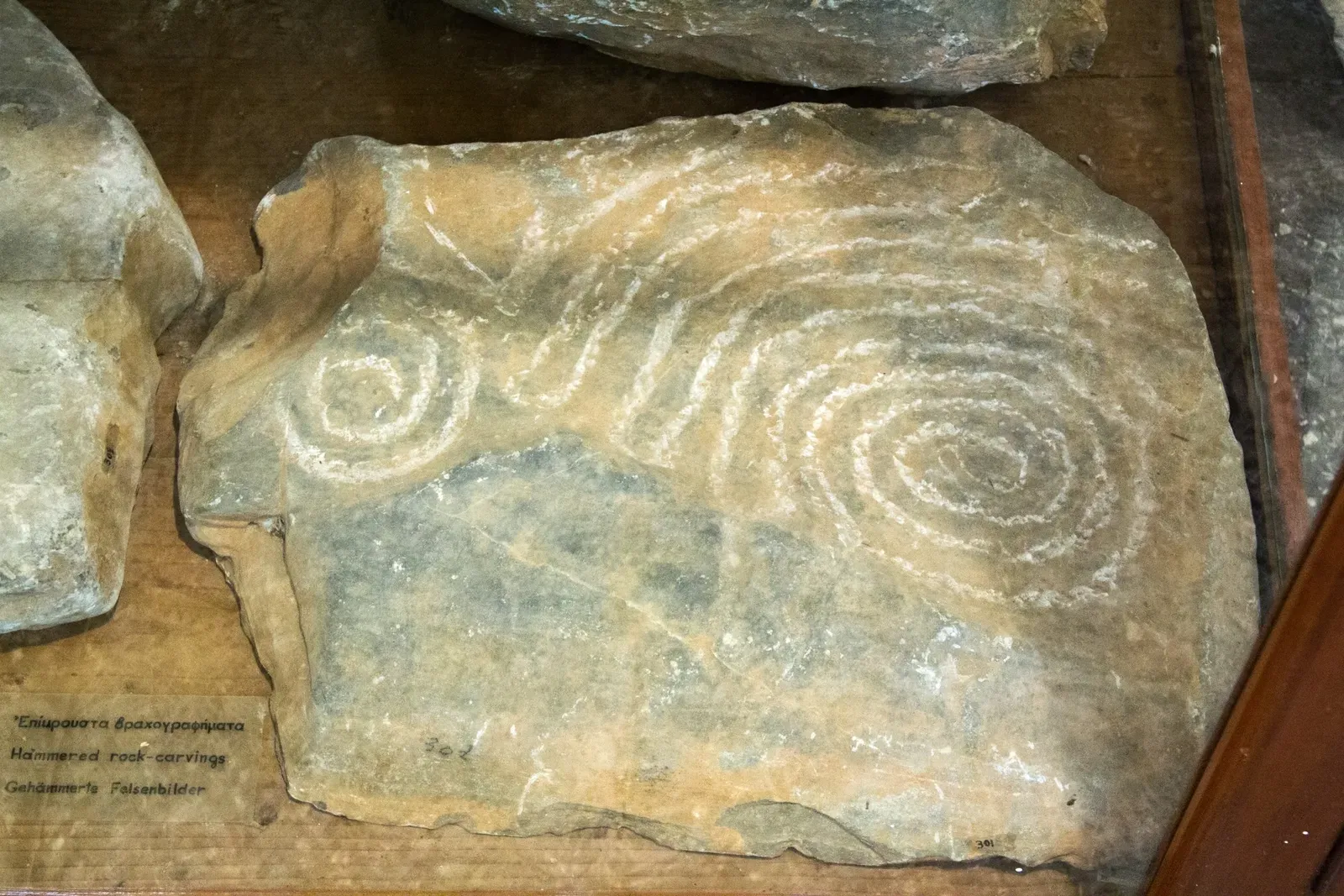
You start noticing spirals everywhere once you know to look for them. In prehistoric Europe, you see them carved into megalithic tombs and standing stones; in the Americas, you find versions of the same curling shape etched into canyon walls and boulders by Indigenous peoples separated by oceans and millennia. No one can point to a single shared culture linking an Irish tomb builder and an ancient carver in the American Southwest, yet you are staring at nearly identical swirling motifs. When you think about why this happens, you quickly realize how naturally your own brain latches onto the spiral. You see it in seashells, whirlpools, galaxies, and the way plants grow. Even if those cultures never met, they all lived under the same sky and handled the same shells and bones. So when you see a spiral carved in stone on two different continents, you are really seeing how humans everywhere respond to the same repeating pattern in nature and turn it into a symbol of cycles, journeys, or the passage of time.
2. The Cross Within a Circle: Solar Discs Without Shared Myths
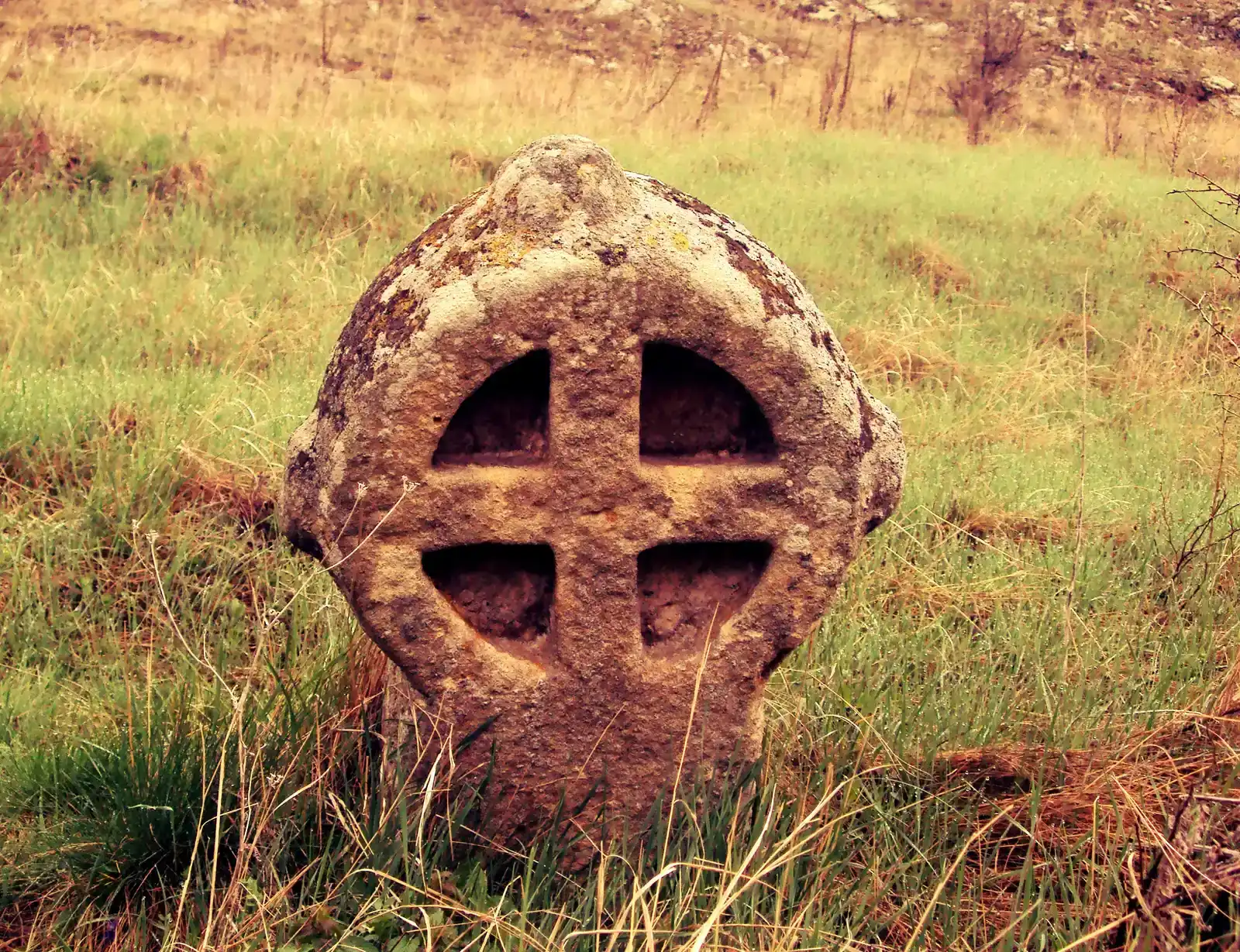
You have probably drawn a circle with a cross in it as a kid without thinking twice. That simple shape turns up in rock carvings in Europe, Asia, and the Americas, often interpreted as a solar symbol or a way to map the four directions. Yet the people who carved those stones typically had no known contact, no shared religious texts, and no evidence of a common origin that would neatly connect their myths. When you break the shape down, you can see why it appears again and again. You are dealing with a circle, which is one of the first shapes any person can draw, and a cross that neatly divides space into four. If you are trying to show the sun’s path, the seasons, or the directions on a flat rock with no writing system, that circle-plus-cross becomes an obvious tool. So when you find almost the same mark on distant continents, you are seeing how different cultures facing similar practical problems invent similar symbolic solutions.
3. The “Tree of Life” Motif: Branching Worldviews on Separate Continents
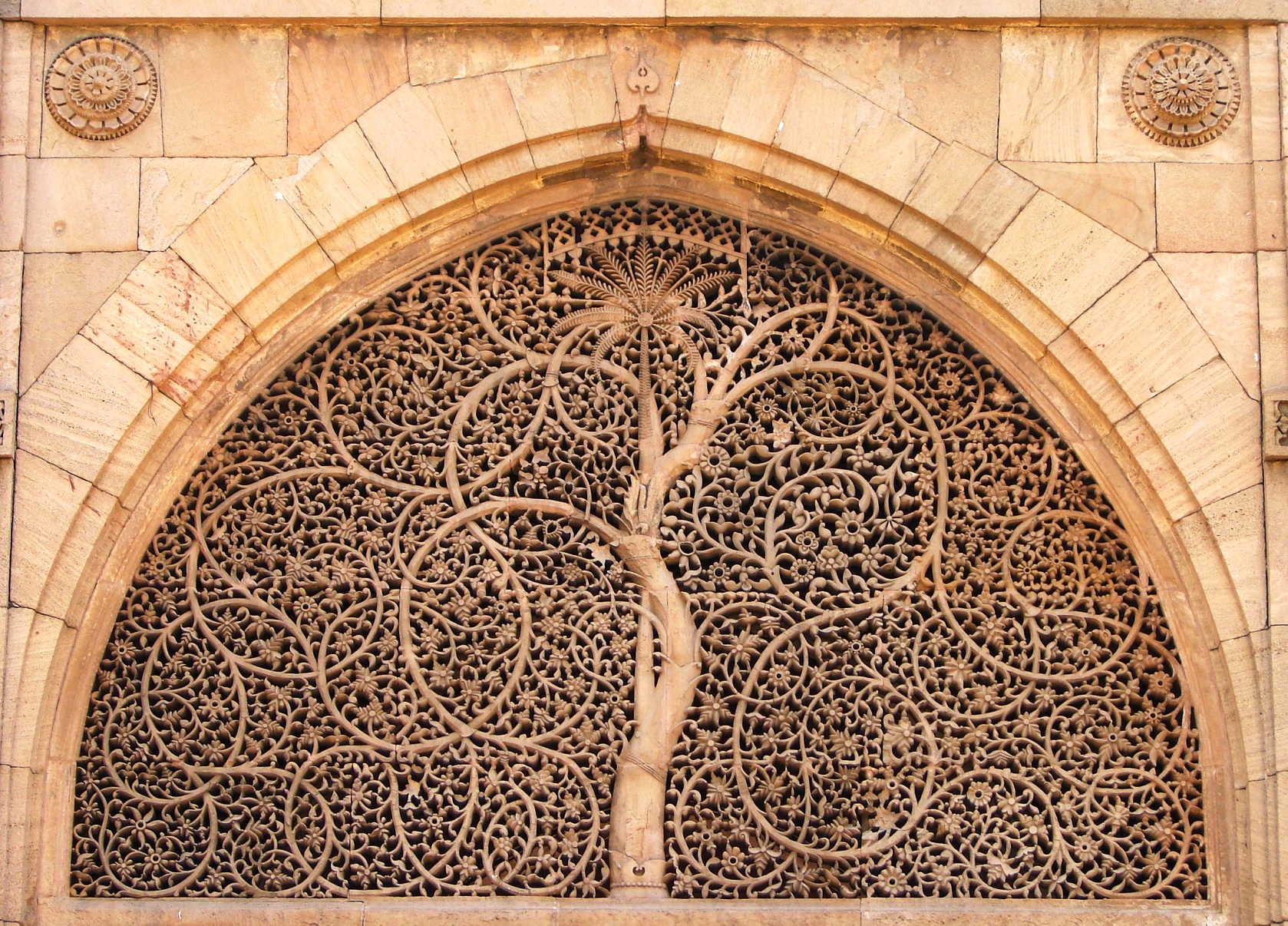
You might assume the “tree of life” image is tied to one religious tradition, but once you look at rock art and carving traditions around the world, you find tree-like symbols in places that never exchanged scripture. You see stylized trunks with branching limbs, sometimes connecting sky, earth, and what lies below, in regions spread across Eurasia and found in ancient rock art elsewhere. The people carving them had their own stories, yet you keep bumping into the same basic vertical, branching form. If you think about your own relationship with trees, the symbol makes sense without any shared doctrine. A tree visibly links the underground roots, the solid ground, and the open sky. It offers food, shelter, and fuel, all pulled mysteriously out of soil and sunlight. So when you see that branching carving on stones across different continents, you are seeing how you, like those ancient carvers, naturally reach for a tree as a metaphor for life, ancestry, or the structure of the cosmos, even without a direct cultural connection.
4. Serpents and Wavy Lines: Snakes That Cross Oceans Without Moving
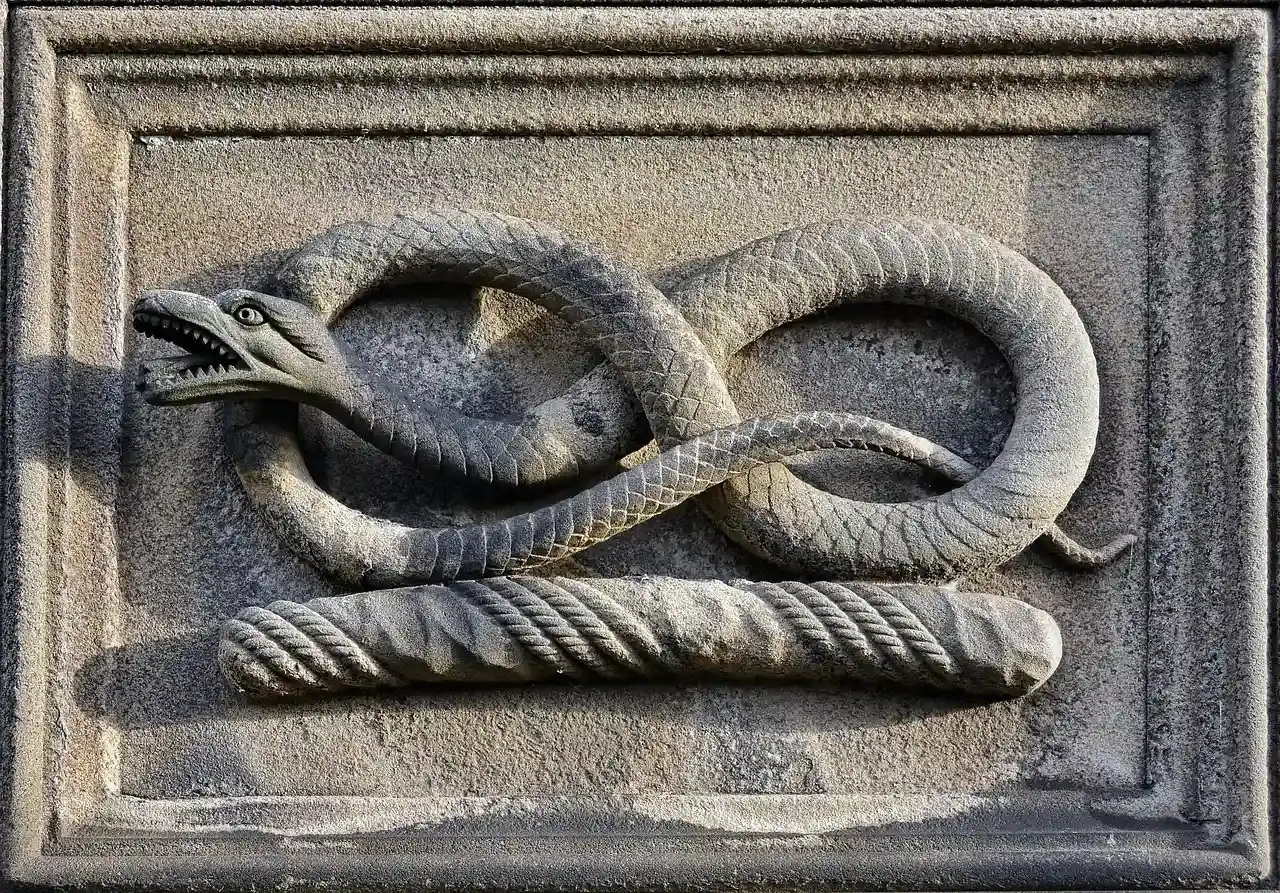
You probably do not need anyone to teach you to be wary of a snake; your body sort of does that for you. Serpent-like figures and long wavy lines show up in rock carvings in Africa, the Americas, Europe, and Asia, often without any historical link between the people who made them. Sometimes the snake appears as a clear coiled animal, other times as a zigzagging line that might represent a serpent, a river, or lightning, all mashed together in a single visual idea. When you put yourself in the shoes of a stone carver living thousands of years ago, a snake is the perfect symbol to work with. It can kill, it can shed its skin and seem reborn, and it moves like a living river of muscle. In your own mind, it easily stands for danger, transformation, or power. So when you find serpent carvings on distant continents with no clear cultural links, you are really seeing how one powerful animal becomes a shared psychological symbol in human minds everywhere.
5. Handprints and “Negative Hands”: The Same Human Signature Worldwide
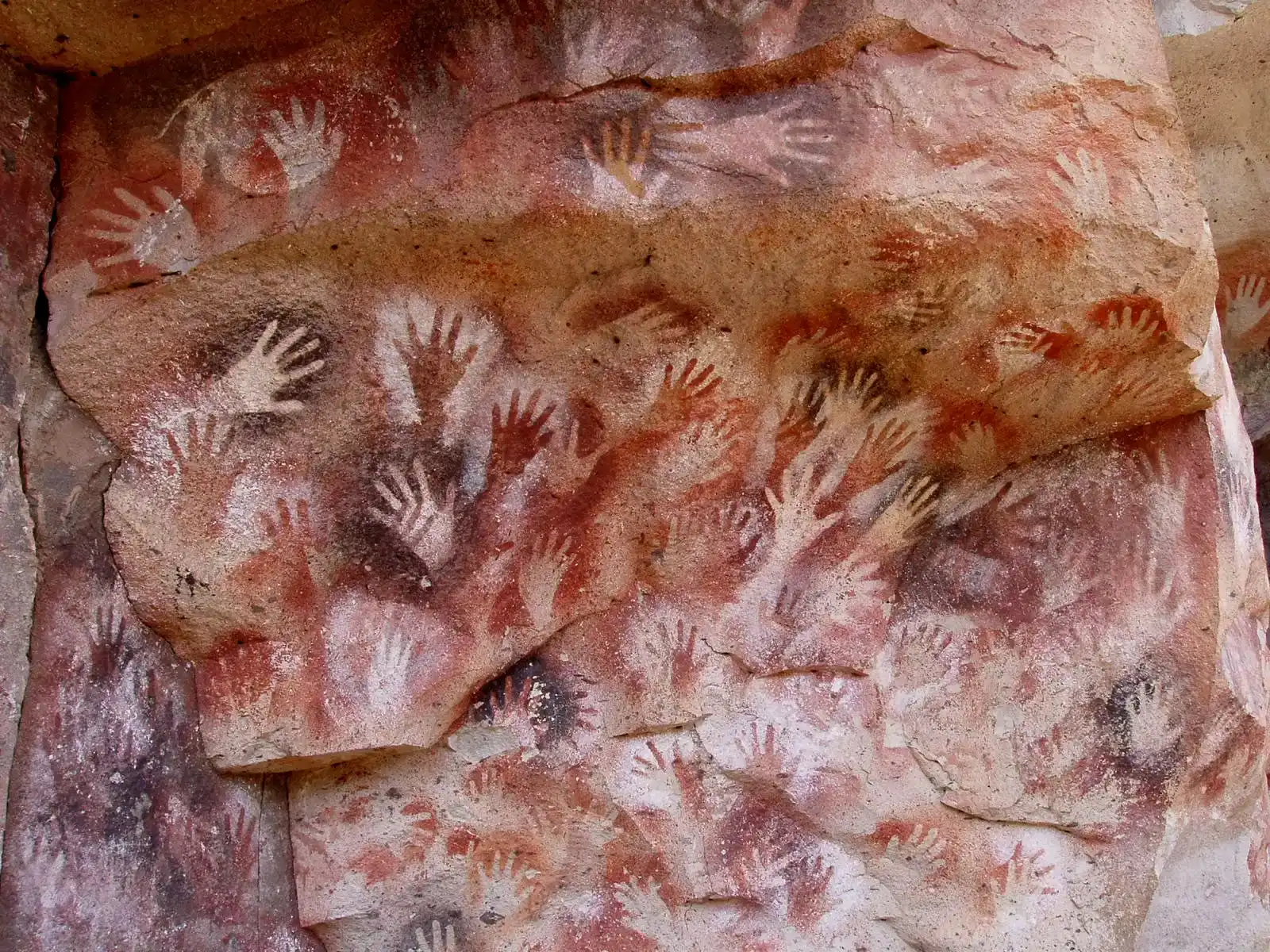
You may have seen photos of cave paintings where ancient people blew pigment around their hands, leaving a ghostly outline on stone. Versions of that “negative hand” image and carved or pecked hand motifs turn up on several continents, from Eurasia to the Americas, with no known cultural chain tying all of them together. It is hard not to feel a jolt when you realize someone on the other side of the world had the same impulse: to fix their hand on stone as if signing their presence. From your perspective, the hand is the most personal symbol you can imagine; it is quite literally what you use to shape the world in front of you. If you do not have writing, pressing or outlining your hand against rock is the most direct way to say, “I was here” or “we were here.” So when you see carved hands or hand-like forms on separate continents, you are watching humans use the same built-in tool – the body itself – to mark identity, even if they never shared a language or myth with each other.
6. Concentric Circles and “Target” Symbols: Mapping Space Without Words
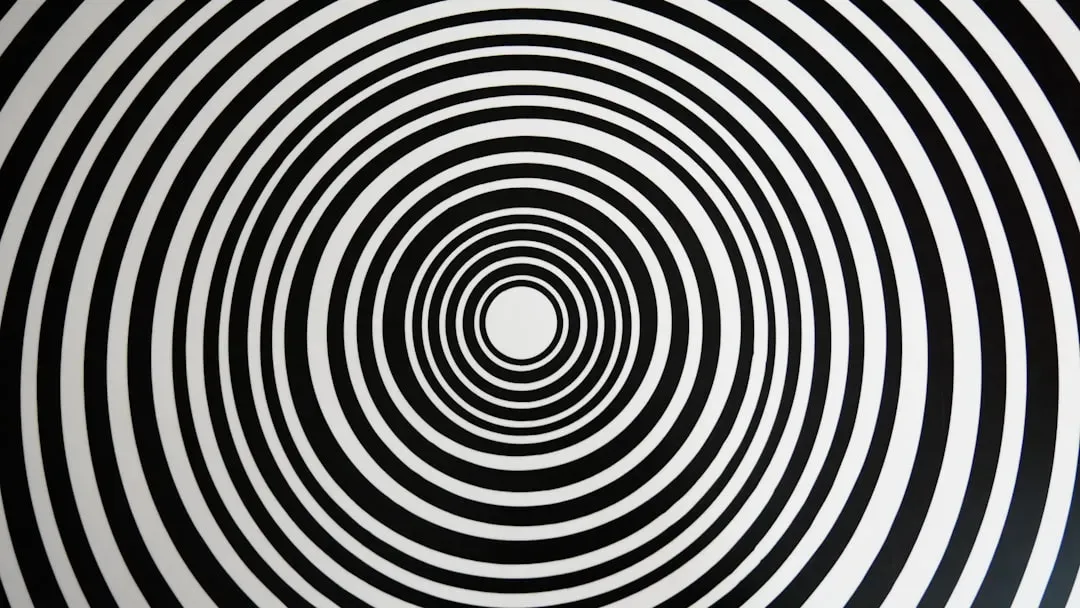
You have probably doodled concentric circles, like a target, during a boring meeting or class. Archaeologists find very similar forms carved into stones on different continents: a small circle inside a larger circle, sometimes surrounded by additional rings, occasionally with a line leading out. In some regions they are tied to local stories or landscapes; in others the meaning is unclear, but the basic shape keeps reappearing despite no known cultural bridge between the people who carved them. When you imagine yourself trying to show “center and surroundings” without written language, those rings start to make sense. You might use them to mark a sacred place, a lake, a settlement, or the idea of something powerful radiating outward. You do the same thing today when you draw a bull’s-eye to highlight importance. So when you see those rings engraved in stone across separate continents, you are seeing how your own instinct to map the world visually is not unique to your culture at all.
7. Grid Patterns and Checkerboards: Ordering Chaos the Same Way
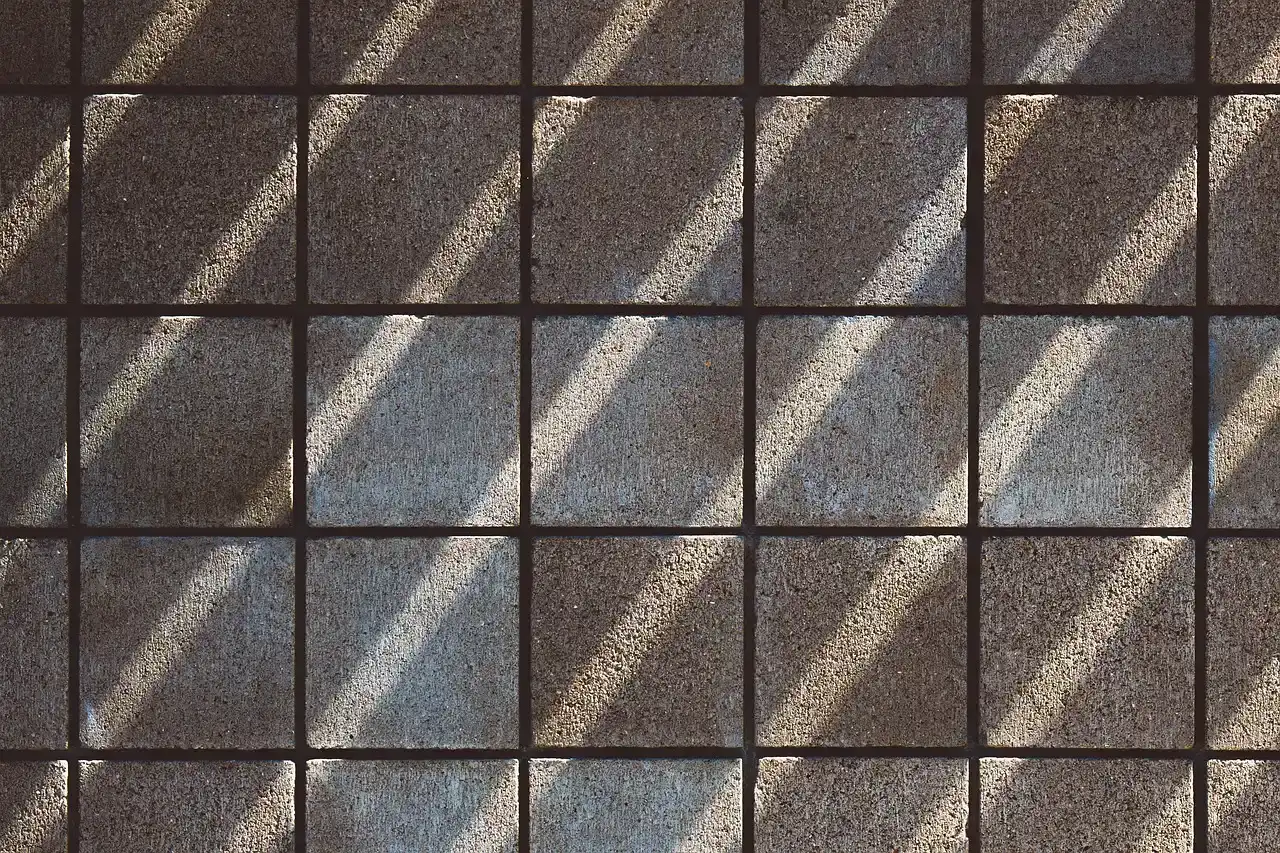
You might think of grids and checkerboards as modern, maybe tied to city planning or board games, but carved grid-like symbols turn up at ancient sites on more than one continent. They can look almost like a tic-tac-toe board, a woven textile, or a field layout, and yet they appear in places where the people are not known to have shared mathematics texts or design manuals. You are left wondering why your brain and theirs both end up carving a similar set of intersecting lines. If you are trying to bring order to chaos, a grid is a natural move. You might be counting days, fields, or houses, or you may simply be fascinated by the rhythm of parallel lines crossing at right angles. You do something similar when you draw charts or organize a notebook into squares. So when you see checkerboard-like rock carvings on distant continents, you are watching humans reinvent the same visual way of splitting space into manageable pieces, long before there was any global exchange of diagrams.
8. Sunburst and Radiating Lines: Shared Skies, Shared Symbols
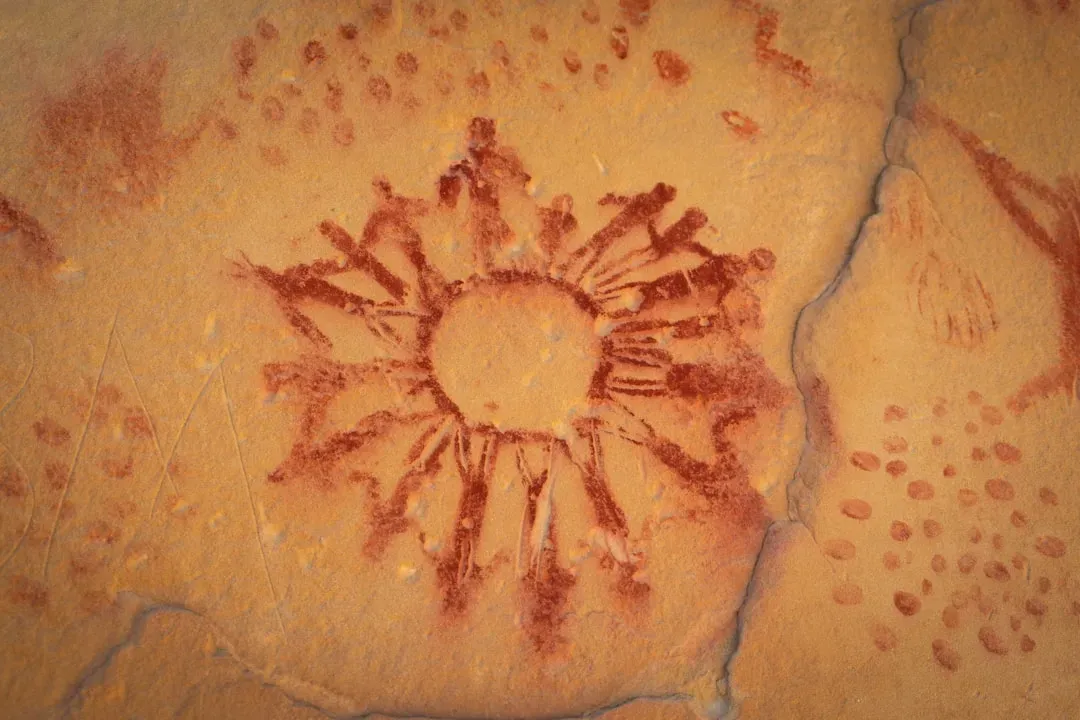
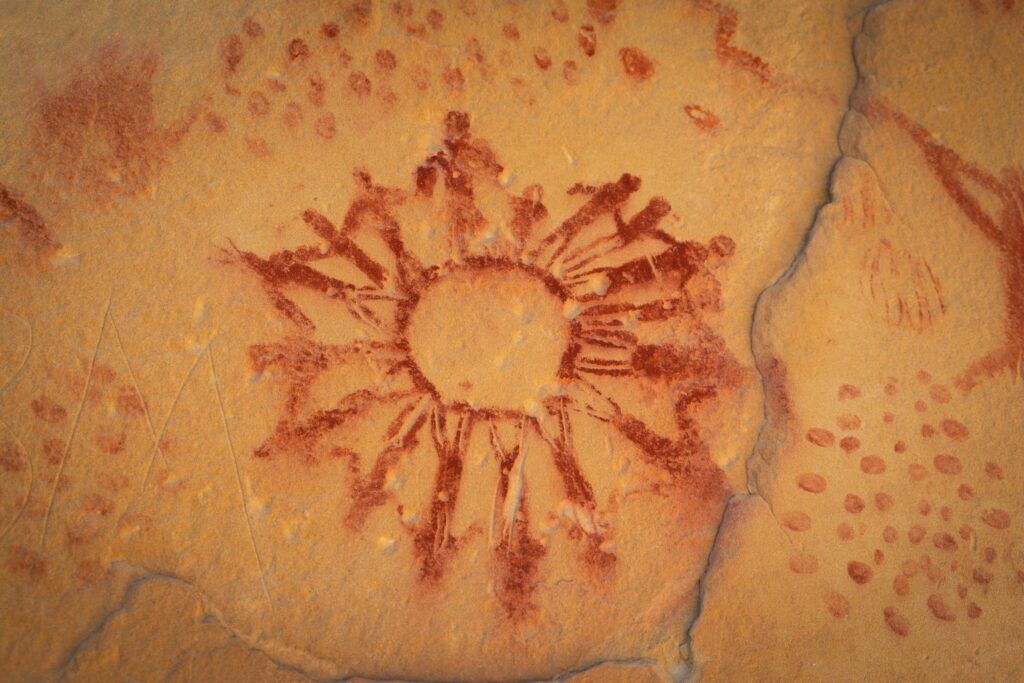
You do not need a meteorology degree to appreciate the sun; you just need to feel its warmth and notice that your days and seasons depend on it. Rock carvings showing a central circle with radiating lines – what you might casually call a sunburst – appear in many parts of the world, including regions on separate continents where there is no evidence of direct cultural contact. The details change, but the basic idea of a bright center with lines shining outward feels almost instantly recognizable to you. If you try to imagine yourself explaining “sun” on a rock without words, that radiating form is exactly what you would probably carve. You have a round body in the sky that sends out heat and light, so a central circle with rays is the simplest translation from experience to stone. That is why, when you see the same style of symbol carved far apart across the globe, you are seeing a shared human response to living under the same sky, more than a hidden map of ancient trade routes.
9. Eyes and “Watching” Symbols: The Same Sense of Being Seen
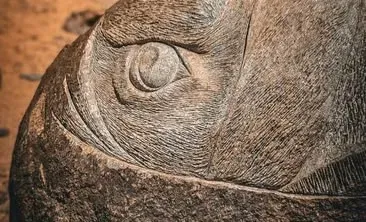
You know what it feels like when someone is watching you, even if you are not entirely sure anyone is there. Simple “eye” symbols – an oval or circle with a central dot or slit – show up in carvings across multiple continents, from stylized faces to standalone eyes pecked into stone. Many of these appear in cultures with no known direct contact, yet the motif hits you instantly: you are looking at something that is also looking back. If you sit with that feeling for a moment, you can see why eyes make such a powerful carving subject. The eye is the doorway to awareness; it signals that a being is present, judging, or protecting. When you carve an eye on a stone, you might be calling on a deity, warning intruders, or simply recognizing that you, too, are a watcher in the world. So when you discover eye-like symbols in rock art from separate continents, you are recognizing a shared human urge to embody perception and presence in a simple, striking shape.
Conclusion: What Shared Symbols Really Tell You About Human Minds
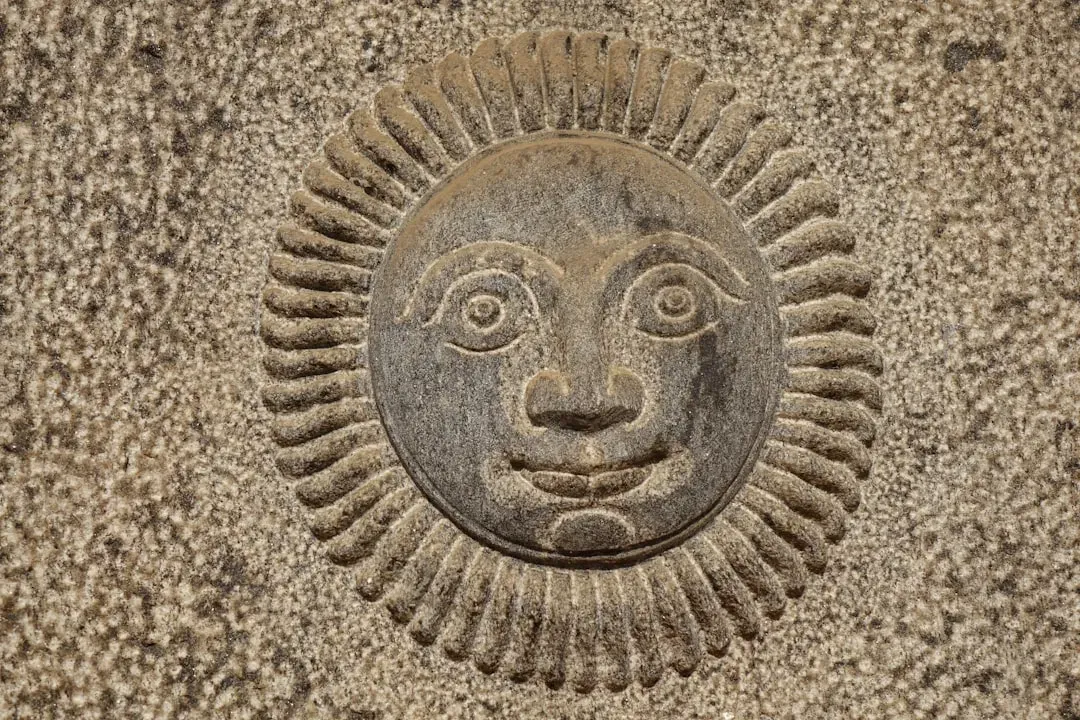
When you step back from these carvings, you might feel tempted to leap to dramatic conclusions about long-lost global empires or secret contact between ancient peoples. It is more honest – and ultimately more interesting – to see them as windows into how your mind works. Given the same sky, the same sun, the same animals, the same need to mark identity and map space, people on different continents reach for similar shapes and turn them into symbols, even when they never hear of each other. You are living proof that this pattern continues: you still draw spirals, circles, grids, sunbursts, eyes, and trees without being taught some ancient code. The stones are not whispering a single hidden story so much as they are showing you the shared toolkit that all humans carry in their heads. The real mystery is not whether these cultures secretly met, but how you, right now, decide what to see in those repeating symbols: do you treat them as coincidences, or as a reminder that human imagination has always been more alike than you expected?