Most people assume “age” in archaeology is basic math: carbon-date the thing, match the soil layer, done – exact year unlocked. That assumption is wrong more often than textbooks let on, and not because of internet cranks or ancient-aliens YouTube channels.
Some of the most famous objects on the planet are stuck in genuine academic standoffs, with credentialed specialists – not fringe theorists – arguing over thousands, sometimes millions, of years. A single artifact shifting a few millennia in either direction can tilt entire timelines of human history. Here’s what the specialists, the skeptics, and the hard data actually say, starting with the object that has confused scientists and believers alike for over a century.
#12 – The Shroud of Turin
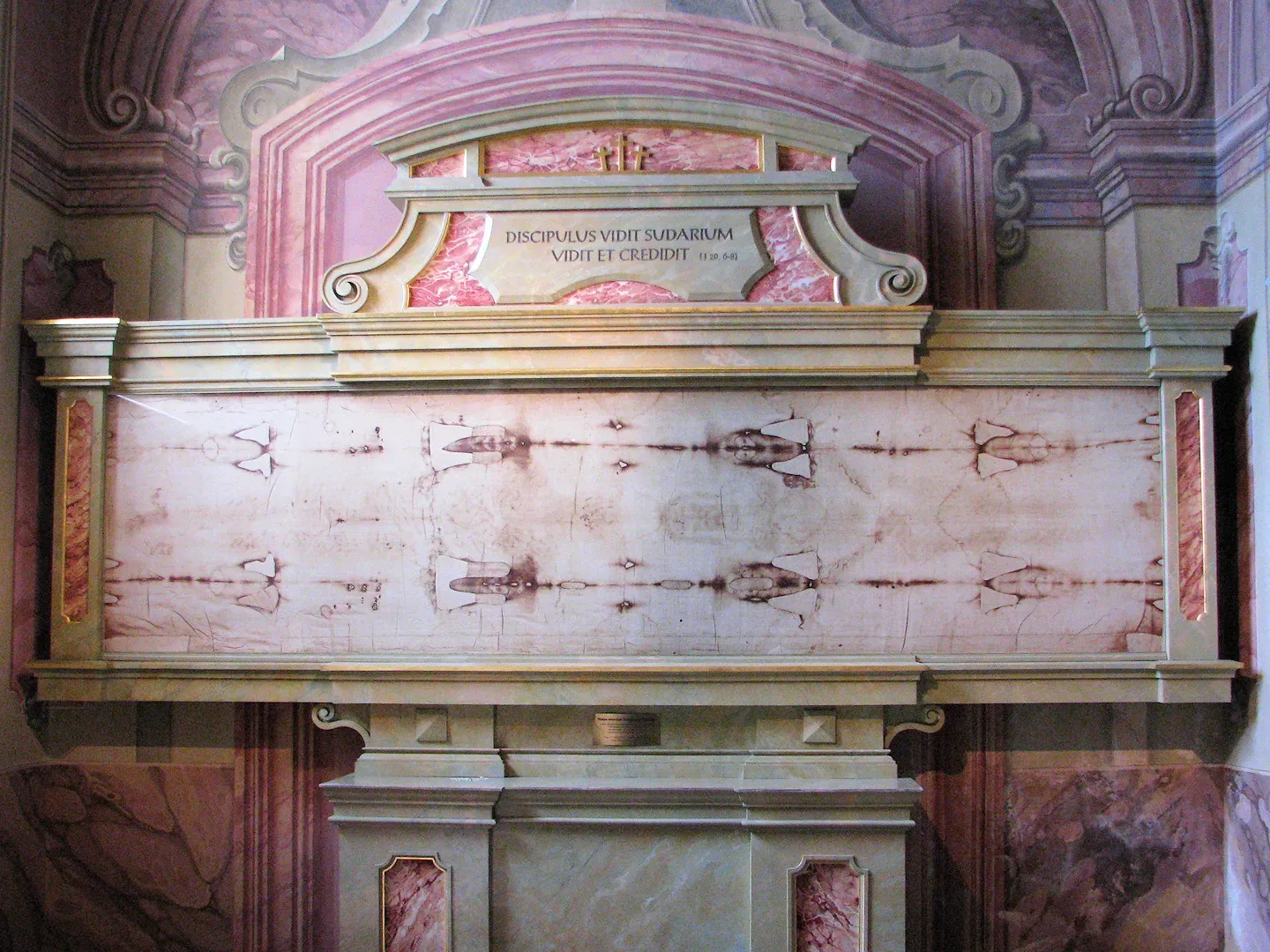
Few objects have bounced around the historical timeline as violently as the Shroud of Turin. One camp insists it’s the literal burial cloth of Jesus. Another camp says it’s a brilliant medieval forgery. The fight isn’t really about faith – it’s about dates, contamination, and what counts as “good” science.
Radiocarbon tests in 1988 put the fabric in the 13th-14th century, apparently closing the case as medieval. But even that “definitive” study is still under fire. Critics argue the lab sampled a repaired corner, contaminated by centuries of handling, smoke, and restoration work – which could skew the age much younger than the original cloth.
Microscopic analysis has only added fuel to the fire. Some researchers claim to see pigment residue consistent with a medieval artist. Others insist the body image shows no clear brush strokes or known artistic technique, hinting at some physical or chemical process nobody has replicated. Bloodstain patterns, pollen allegedly from the Middle East, and strange 3D information encoded in the image all keep the counterclaims alive.
The result is a genuinely split field: peer-reviewed arguments exist for a 1st-century origin, a late medieval origin, and a hybrid “ancient cloth, medieval image” scenario. Even secular historians quietly admit the evidence is messy, not neatly closed. But that’s nothing compared to what we found about #11.
#11 – The Piri Reis Map
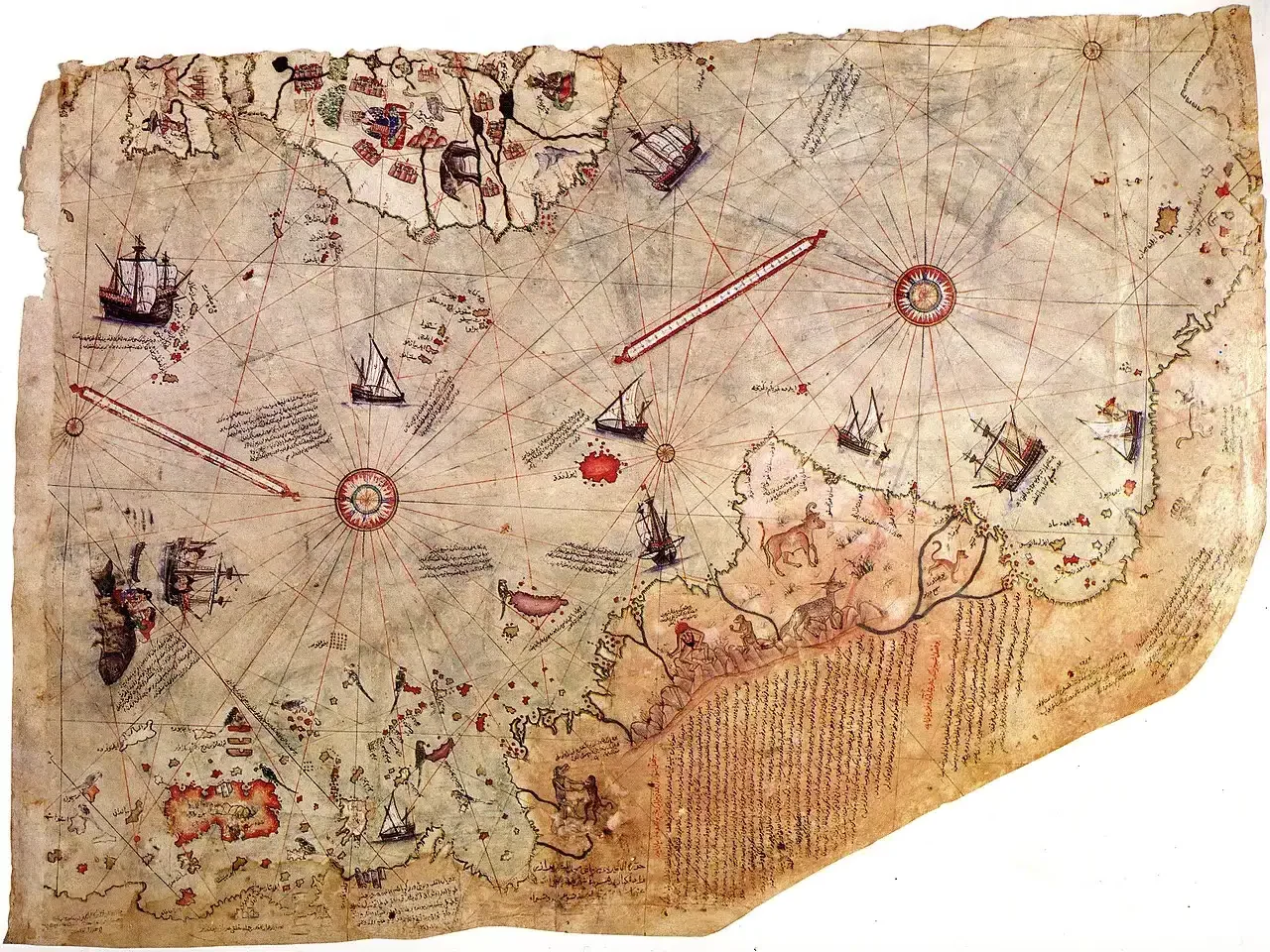
A single map fragment, drawn in 1513 by Ottoman admiral Piri Reis, has spawned decades of wild speculation and serious scholarly debate in equal measure. At first glance it’s just another early-modern world map. Look closer, and you fall straight into cartographic chaos.
The provocative claim is simple: some coastline segments, especially near South America and the far south, look more accurate than European explorers were “supposed” to know in 1513. Alternative-history fans argue Piri Reis must have copied older, more advanced source maps – possibly tracing back to lost seafaring cultures unknown to mainstream history.
Professional cartographers push back hard. Correct for projection errors, mistranscriptions, and artistic liberties, they say, and the “amazing precision” mostly evaporates. What looks like Antarctica to mystery-hunters might just be a distorted extension of South America or an imaginative guess filling in blank space.
Fast Facts
- Drawn in 1513 by Ottoman admiral Piri Reis
- Piri Reis claimed to have used “twenty charts and mappae mundi” as sources
- Only a fragment of the original full map has ever been found
- The surviving piece is preserved at Topkapi Palace Museum in Istanbul
Still, a few awkward details remain. Piri himself wrote that he used “twenty charts and mappae mundi,” including some “drawn in the time of Alexander the Great.” Did he mean genuinely ancient material, or old legends he misunderstood? Nobody agrees on how literally to take him, which leaves the map sitting in a gray zone where a few lines on vellum might compress centuries of lost navigation lore. But that’s nothing compared to what we found about #10.
#10 – The Dendera “Light Bulb” Reliefs
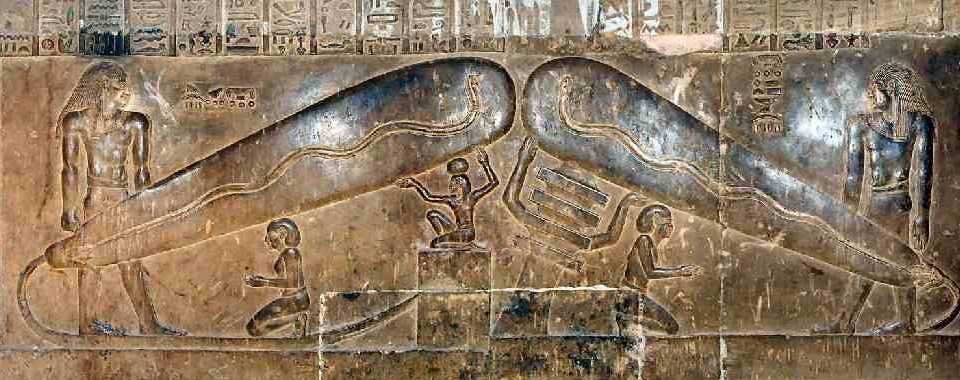
In the crypts of the Hathor Temple at Dendera, Egypt, a set of carved reliefs has become a lightning rod for disagreement – not about the stone itself, but about what era of knowledge it supposedly encodes. You’ve probably seen the pictures: a long oval “bulb” shape with a snake inside, held up by a pillar, with figures gathered around it.
To Egyptologists, this is straightforward religious iconography. The “bulbs” are lotus flowers, the snakes represent a form of the god Harsomtus, and the whole scene depicts the daily emergence of the sun during creation. The reliefs date comfortably to the late Ptolemaic or early Roman period, roughly 1st century BCE to 1st century CE, based on inscriptions and architectural context.
Alternative interpreters see something else entirely: an ancient engineering diagram, proof Egyptians had some form of electrical lighting thousands of years before modern science. They point to the “bulb and socket” shapes, the cable-like lines, and supposed parallels to early electrical tubes. If true, it wouldn’t redate the stone – it would force a radical redating of the technological knowledge behind it.
Here’s the tension worth sitting with: the stone itself isn’t controversial at all. The argument is over whether the imagery preserves a much older conceptual system, or whether that’s pure modern projection onto ancient art. So the real “age” debate here isn’t about rock – it’s about when an idea was born. And that’s nothing compared to the chronological chaos surrounding #9.
#9 – The Antikythera Mechanism
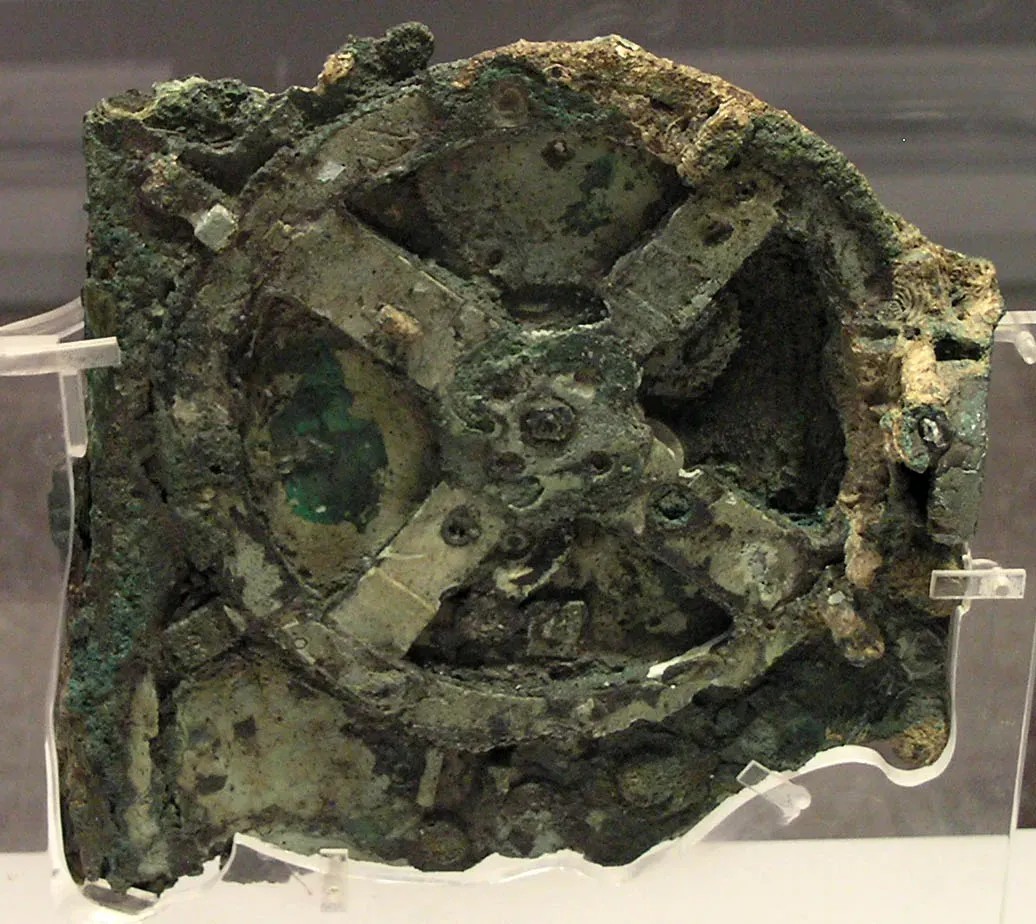
Salvaged from a shipwreck off a Greek island, the Antikythera mechanism is often called the world’s first analog computer – and its age keeps historians and engineers arguing decades after its discovery. Everyone agrees it’s ancient; the fight is over how ancient, and what that implies about lost technology.
Based on associated pottery and coins, many researchers place the wreck in the mid-1st century BCE. Radiographic studies reveal a level of miniaturized, interlocking gears so sophisticated that nothing comparable reappears in Europe for over a thousand years. That gap is precisely what fuels the controversy.
Some researchers suspect the design lineage stretches back to the 3rd century BCE, possibly tied to the school of Archimedes or Hipparchus – meaning the know-how could be several generations older than the corroded bronze we actually see. Others argue for a tighter timeline: the gear trains and eclipse predictions match late Hellenistic astronomy closely enough that there’s no need to push the concept earlier.
There’s a quieter, uneasier question underneath it all: if something this complex existed by 100 BCE, simpler precursors must have existed centuries before it. Nobody has found them. Is that evidence of an older mechanical culture we’re missing, or just incomplete archaeology? Until another mechanism turns up with clear context, we’re calibrating one data point against an almost blank background. But that isolated marvel is almost tame compared to the radiocarbon knife fight over #8.
#8 – The Nazca Lines
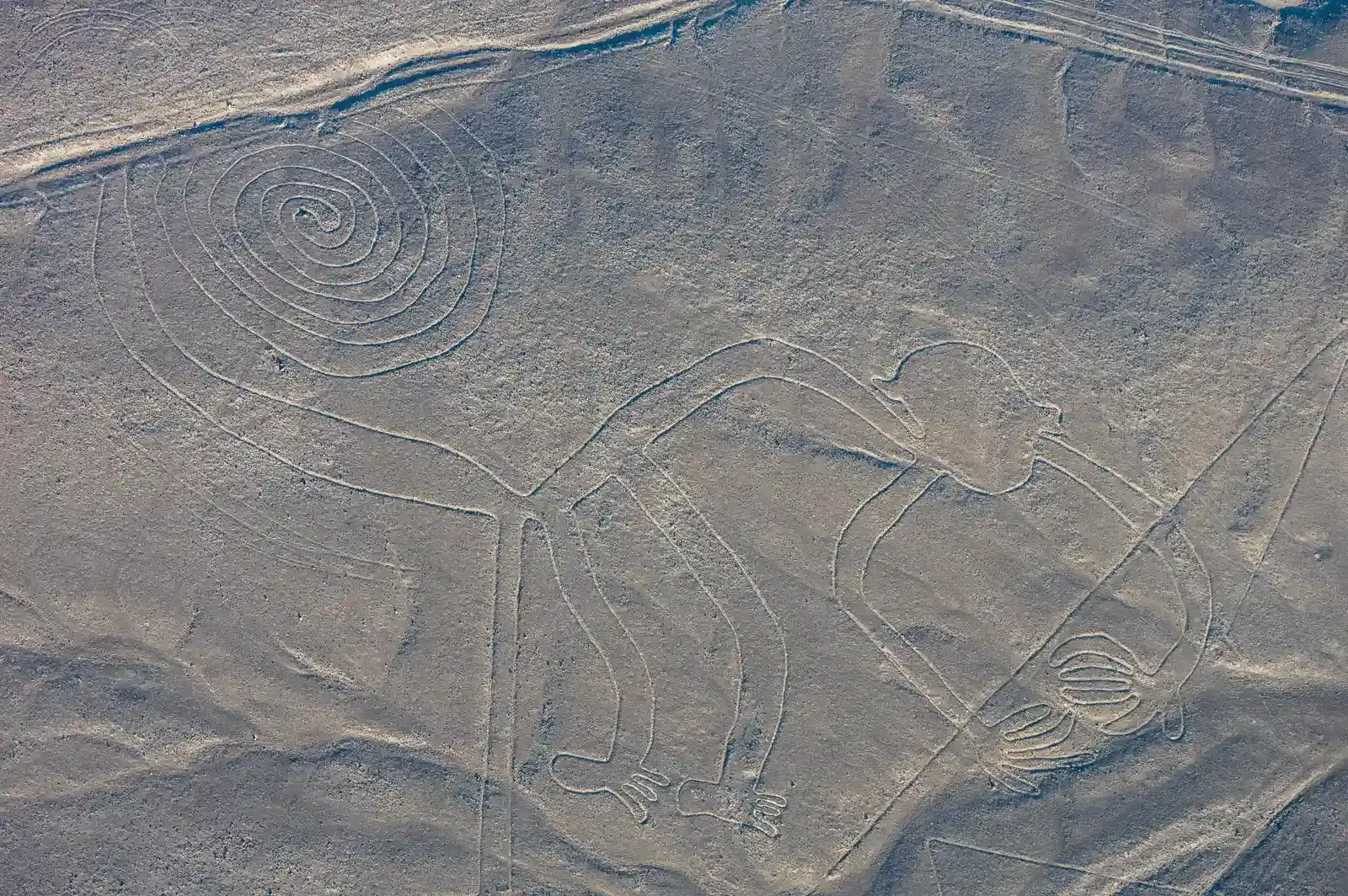
On the high desert of southern Peru, gigantic ground drawings – monkeys, hummingbirds, perfectly straight lines running for kilometers – have puzzled observers for nearly a century. The Nazca Lines are famous. Their precise age is not settled at all.
Conventional archaeology places most lines between roughly 200 BCE and 600 CE, tied to the Nazca culture through pottery styles and nearby settlements. That’s already an 800-year window, and different research teams lean toward different ends of it depending on which evidence they weigh heaviest.
Then there are the outliers. A few geoglyphs may pre-date the Nazca culture entirely, possibly linked to earlier Paracas groups, while others may have been re-traced during later Wari or Inca activity. The desert surface is brutally hard to date because the lines were made by simply scraping away dark surface stones – no wood, no mortar, almost nothing organic to test right where it matters most.
That thin evidence field leaves room for bolder claims, and fringe theories happily fill the gap with talk of ancient surveying projects. Most specialists aren’t convinced, but even inside orthodox circles there’s real debate over whether the lines represent one continuous tradition or several distinct phases layered across centuries. Tourists see ancient runways; archaeologists see a timeline full of holes. And those gaps look small compared to the arguments around #7.
#7 – The Great Sphinx of Giza
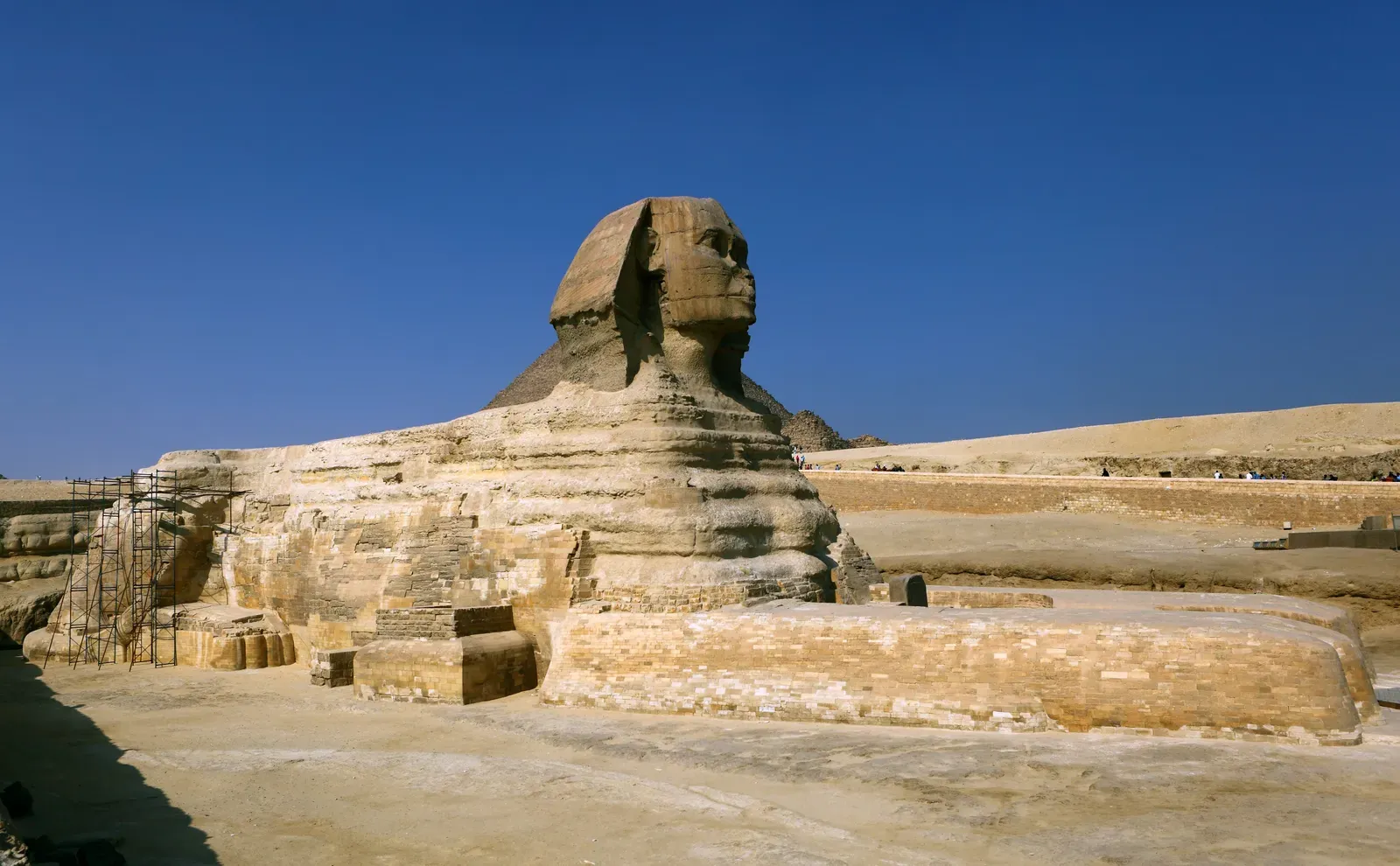
Few monuments generate more heated age wars than the Great Sphinx. The textbook answer ties it to Pharaoh Khafre of the 4th Dynasty, around 2500 BCE, based on its alignment with the Khafre pyramid complex and stylistic comparisons of the face.
A vocal group of geologists has challenged that timeline hard, pointing to erosion patterns on the Sphinx’s body and enclosure walls. They argue the weathering looks like prolonged exposure to heavy rainfall rather than wind and sand – which would push construction back into a much wetter climatic period, possibly 7000-5000 BCE.
Mainstream Egyptologists counter that the erosion can be explained by salt crystallization, groundwater, and centuries of restoration work. They also point to a total absence of any securely dated Old Kingdom text mentioning a pre-Khafre Sphinx – a silence they treat as a serious red flag against radical backdating.
Quick Compare
- Mainstream view: Carved around 2500 BCE under Khafre, based on pyramid alignment and stylistic dating
- Water-erosion theory: Weathering suggests construction between 7000-5000 BCE, during a wetter climate
- Compromise theory: An older body later recarved with Khafre’s face
The compromise theories are almost more interesting than either extreme. Some researchers think the body could be genuinely older, with the head recarved during Khafre’s reign – creating a monument that is essentially two ages stitched together, an older statue quietly rebranded for a new ruler. No consensus is in sight, and the Sphinx’s official birthday stays put in the 3rd millennium BCE – but plenty of credentialed experts still argue over how much older its stone soul might really be. And if you think that’s speculative, wait until we hit #6.
#6 – Göbekli Tepe’s Oldest Layers
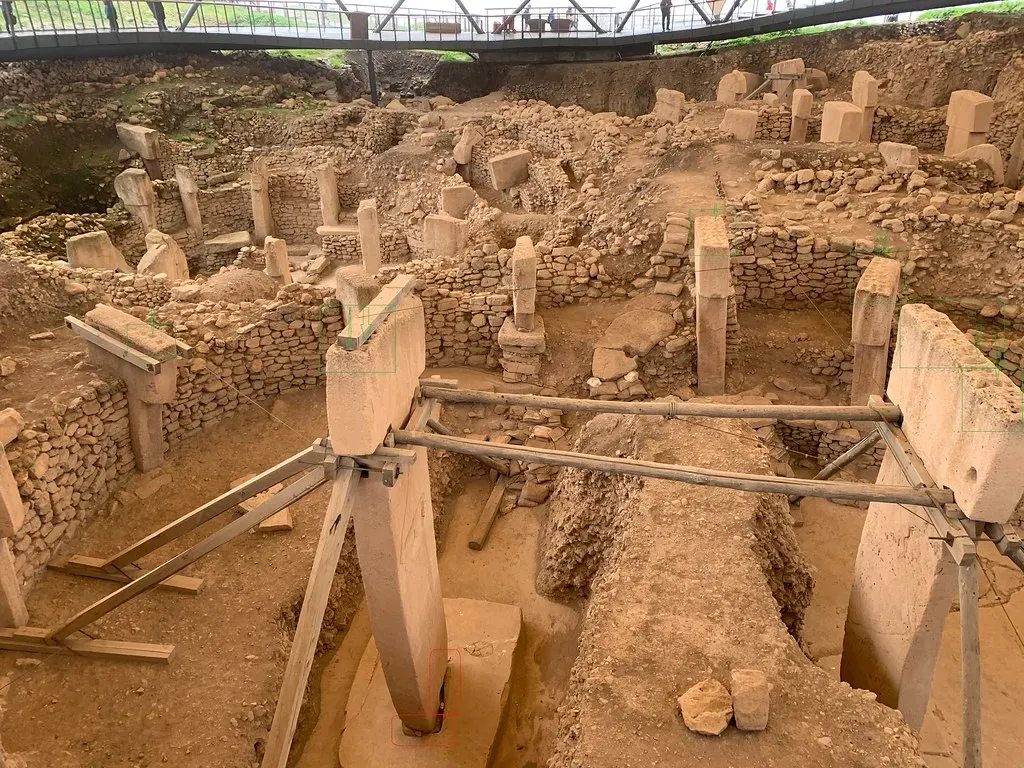
Discovered in southeastern Turkey, Göbekli Tepe exploded into public consciousness because it seemingly rewrote human prehistory. Massive stone circles and carved pillars covered in animals and abstract symbols were apparently built by hunter-gatherers before pottery, metal, or farming existed – if the dating holds up.
Radiocarbon tests on organic material from the site cluster around 9600-8200 BCE for the oldest monumental phases, making it several thousand years older than Stonehenge and the Egyptian pyramids combined. But the key word is “around.” The pillars themselves can’t be directly carbon-dated – archaeologists rely on charcoal, bone, and fill deposits instead, which leaves room for arguments about contamination and reuse.
First came the temple, then the city.
Klaus Schmidt, lead archaeologist at Göbekli Tepe
That line captures exactly what’s at stake in the dating fight. Some researchers suspect construction started even earlier, nudging monumental building almost to the tail end of the last Ice Age. Others suspect the oldest published dates actually reflect ritual fires or later debris, not the original raising of the megaliths – a distinction that changes everything about how far back organized religion and social hierarchy actually reach.
The stakes are enormous either way. If the most ambitious dates hold, it implies complex symbolic thinking thousands of years before mainstream models expect it. New excavations keep refining the numbers, but the site’s age remains a sliding window rather than a clean timestamp. Compared to the deep-time headaches around #5, though, Göbekli Tepe is almost straightforward.
#5 – The Laetoli Footprints
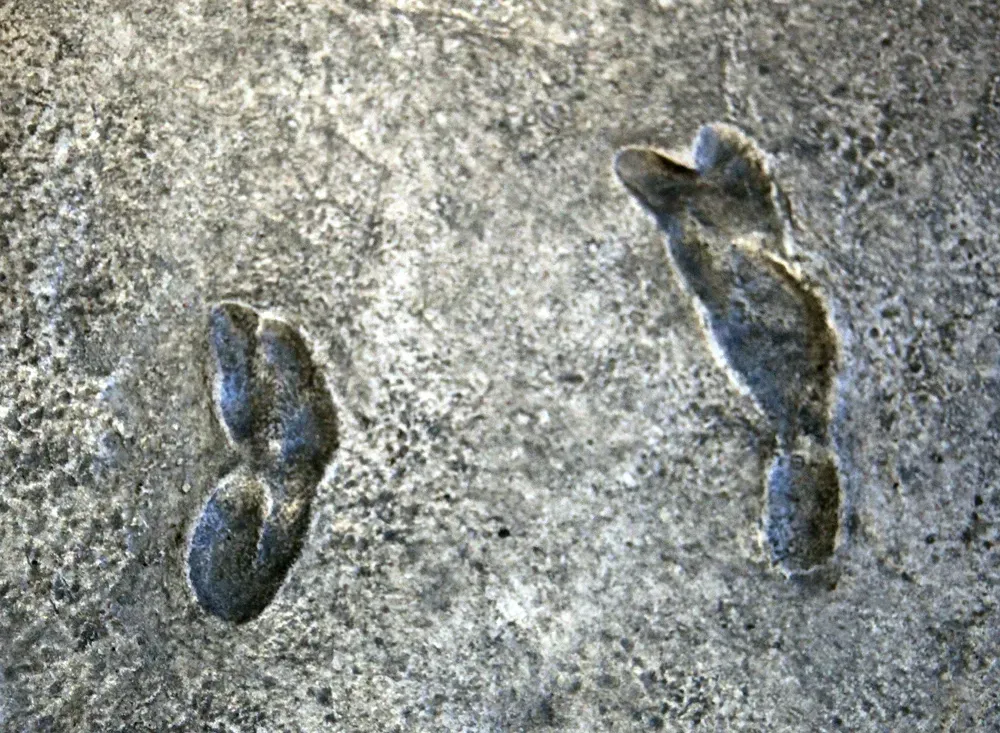
In northern Tanzania, a series of fossilized footprints preserved in volcanic ash pose a deceptively simple question: who made them, and exactly when? The answer swings our understanding of human evolution itself.
The classic Laetoli trackway was originally dated to around 3.6 million years ago, based on radiometric dating of the volcanic layers above and below the prints. Most paleoanthropologists link them to Australopithecus afarensis – the same species as the famous “Lucy” skeleton – making them foundational evidence of early habitual bipedalism.
Newer analyses have complicated that tidy story. Re-examination of other, previously overlooked tracks at the site has revived debate about variation in gait and foot shape. Some researchers now argue certain prints may represent a different hominin species with a more human-like foot, hinting at parallel lineages walking upright at the same time.
Even the age isn’t bulletproof. The volcanic stratigraphy is solid by archaeological standards, but in deep time even small revisions – tens or hundreds of thousands of years – matter enormously. Most agree the prints are around 3.6 million years old, but “around” is doing more work here than the popular science headlines admit. And if three million years bends your brain, the numbers at stake for #4 are on an entirely different scale.
#4 – The Mysterious Zircons of Jack Hills
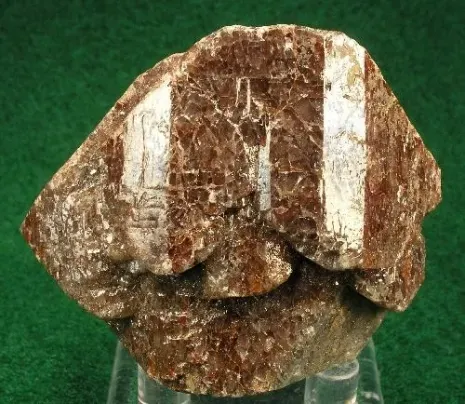
In Western Australia’s Jack Hills, tiny zircon crystals – some barely a fraction of a millimeter across – sit at the center of one of geology’s biggest age debates. These aren’t artifacts in the human sense, but they are archaeological objects of Earth itself, and their age could rewrite our planet’s earliest history.
Uranium-lead dating of some Jack Hills zircons yields ages around 4.3-4.4 billion years, not long after Earth formed roughly 4.5 billion years ago. If accurate, these are the oldest known fragments of Earth’s crust. More provocatively, their internal chemistry hints at liquid water and relatively cool conditions – suggesting stable oceans far earlier than most models predict.
Worth Knowing
- Jack Hills zircons are smaller than a grain of sand, yet among the oldest materials ever measured on Earth
- Uranium-lead dating places some crystals at 4.3-4.4 billion years old
- Earth itself formed roughly 4.5 billion years ago, leaving only a narrow gap between planet and crystal
- Internal chemistry hints at early liquid water, far sooner than many geologic models predict
Some geochemists fully accept these dates, arguing the methods are robust and the crystals faithfully record a surprisingly gentle early Earth. Others are skeptical, pointing to possible lead loss and metamorphic overprinting that could make a composite signal look like a single clean age. To them, 4.4 billion years might be an illusion built from a messier crystal history.
The controversy isn’t just academic. If Earth had crust and liquid water this early, the window for the origin of life might open much sooner than biologists assume. If the zircons are somewhat younger than claimed, the traditional picture of a long, molten, chaotic Hadean Earth stays intact. Either way, the debate shows how fragile our deepest “certainties” about time can be when they rest on grains smaller than a grain of sand. And human prehistory gets just as shaky when we move to #3.
#3 – The Denisovan Legacy Objects
Unlike the Neanderthals, Denisovans don’t yet have a clearly mapped archaeological culture. They have a handful of bones, teeth, a bit of DNA, and a few enigmatic objects from Denisova Cave and beyond – which makes dating their belongings unusually contentious.
The cave itself holds artifacts spanning from over 200,000 years ago to less than 50,000 years ago. Stone tools, ornaments, and bone fragments sit in layered sediments tested with radiocarbon, luminescence dating, and other methods that sometimes give overlapping – but not perfectly matching – results. That’s more than enough to stir arguments over which layer belongs to which hominin.
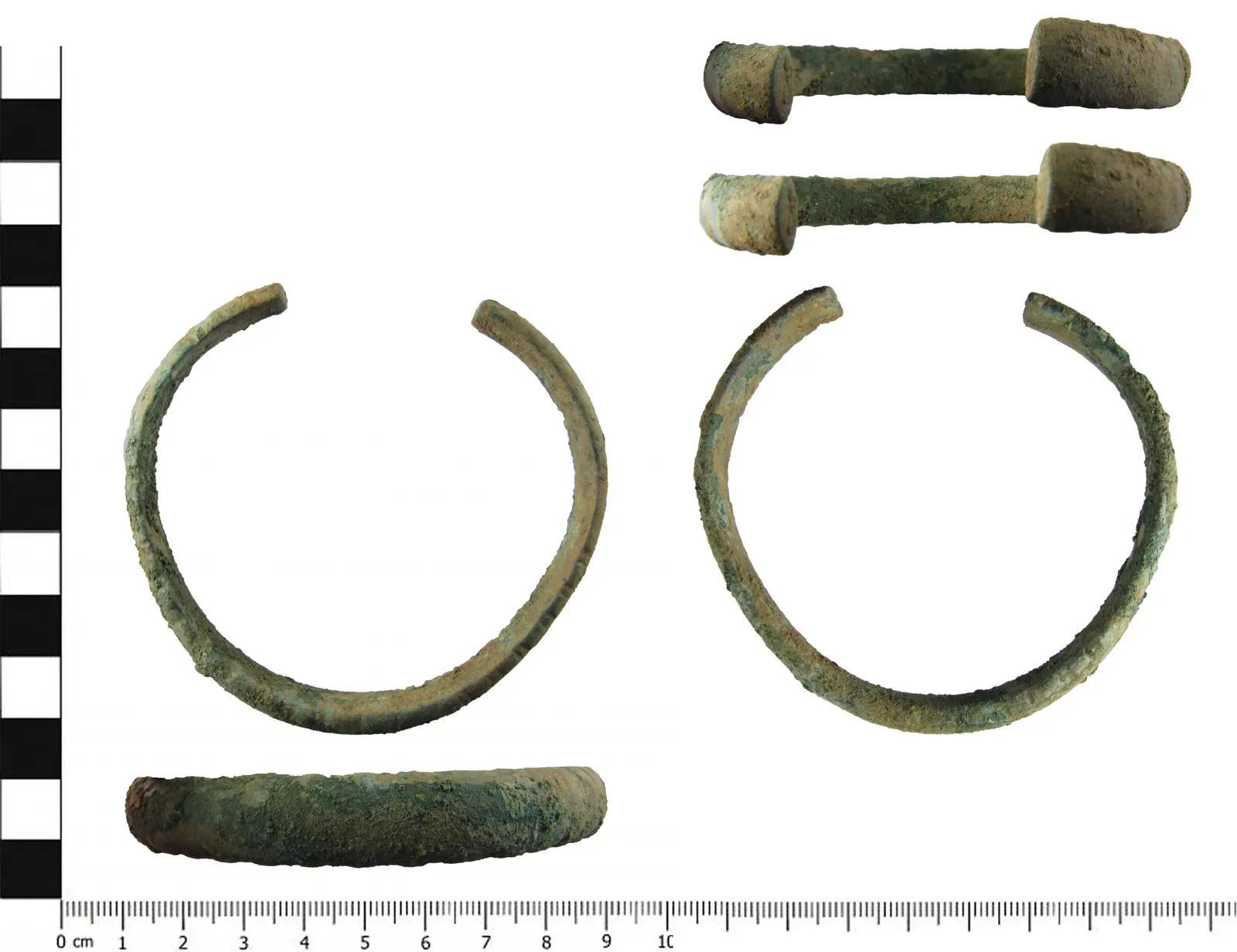
One famous item is a polished green stone bracelet fragment, often touted as evidence of advanced Denisovan jewelry-making around 40,000-50,000 years ago, possibly earlier. Some researchers accept both the date and the Denisovan attribution. Others caution that modern humans occupied the region later too, muddying which culture actually made it.
Then there’s the genetic evidence, which tells its own story. High levels of Denisovan DNA in some modern populations across Asia and Oceania imply long, regionally complex interactions that don’t line up neatly with the dated archaeological layers. The genes say one thing, the artifacts say another, and the sediments say a third – three imperfect clocks that specialists are still trying to synchronize. And if ambiguity bothers you, the storm around #2 will not make you feel better.
#2 – The “Out-of-Time” Metal Objects (London Hammer & Co.)
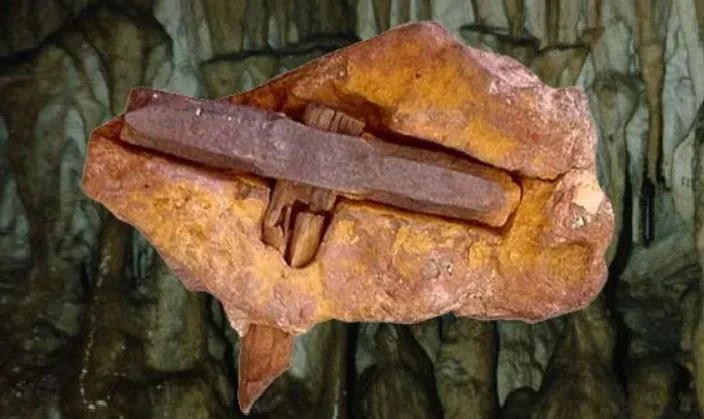
Scattered across fringe archaeology circles are a handful of metal tools – like the so-called London Hammer from Texas – claimed to be hundreds of millions of years older than humans, encased in rock supposedly dating to deep geological epochs. If that were true, every textbook on Earth would need rewriting by morning.
Mainstream geologists tell a much duller, much more solid story. In most cases the metal object itself is clearly of recent manufacture, often 19th- or early 20th-century in style and metallurgy. The surrounding “ancient rock” is typically a concretion that can form around a hard object in years or decades, not millions of years.
The disagreement, then, isn’t really about radiometric numbers – it’s about classification. Believers treat the host material as genuine ancient strata, so the tool inside must share its age. Specialists argue the rock simply doesn’t pass geological scrutiny; it’s young cementation wrapped around an old-looking tool.
Their popularity online reveals something worth noticing, though: plenty of people instinctively distrust long, tidy timelines and want an object that “proves” history is wrong. That emotional pull keeps the debate alive even when the professional consensus is completely lopsided. Yet there’s one category where even careful, credentialed professionals are still genuinely split – arguably the most famous “old or not?” puzzle of them all.
#1 – The Sanxingdui Masks and the Age of Their Culture
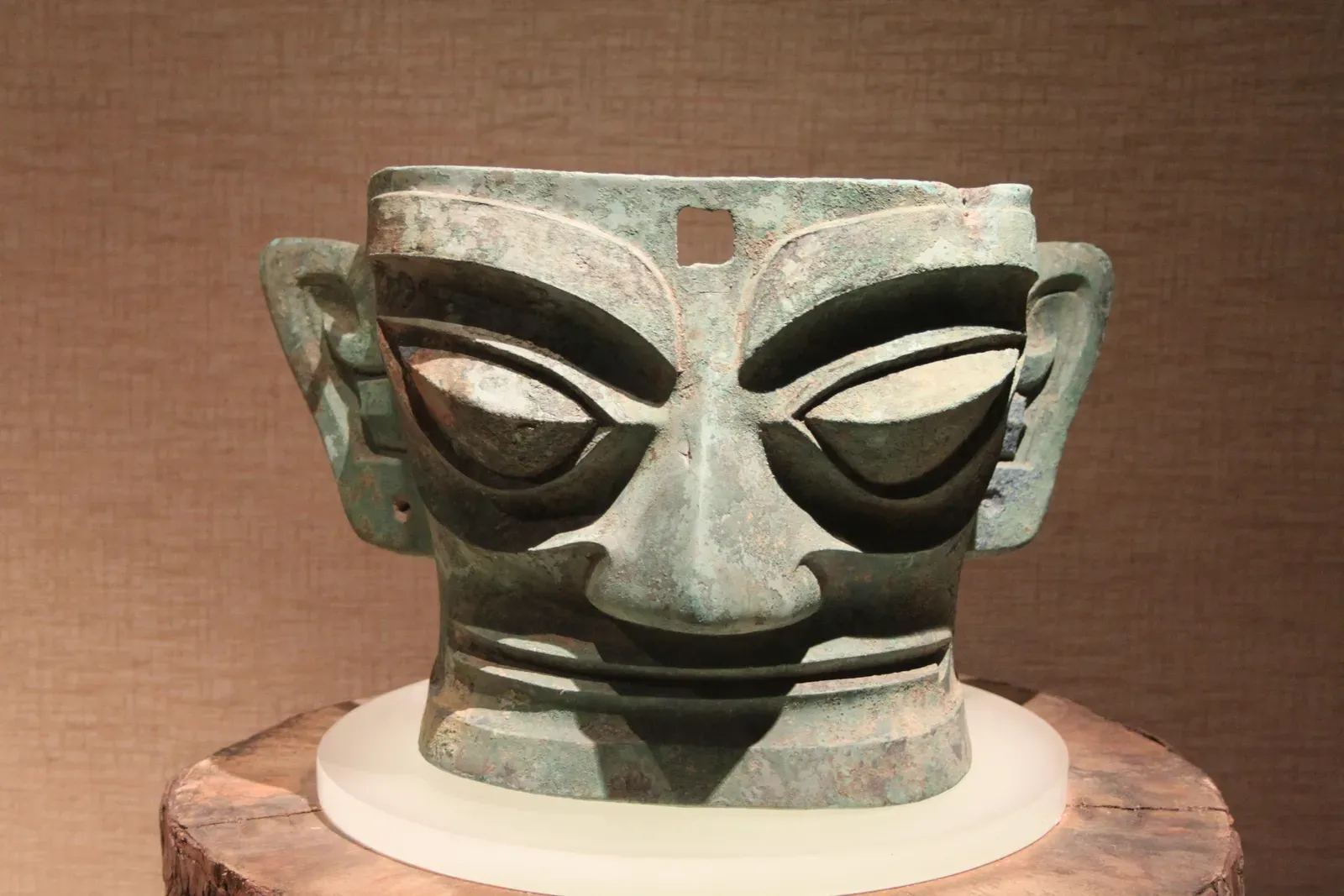
In Sichuan, China, the Sanxingdui site has yielded some of the most startling bronze artifacts ever unearthed: gigantic masks with protruding eyes, intricate gold-covered faces, and a visual style that looks almost alien next to later classical Chinese art. The question isn’t whether they’re ancient – it’s how early this cultural explosion really began, and how long it lasted.
Most current dating – combining radiocarbon, stratigraphy, and typology – places the main sacrificial pits and bronzes between roughly 1200-1000 BCE, overlapping with the late Shang dynasty in central China. That’s already remarkable, because the art and ritual system look almost nothing like anything from the Shang heartland.
But ongoing excavations keep stretching that window. Some scholars argue predecessor phases might reach back to 1500 BCE or earlier, while others see stronger evidence for a shorter, more intense peak. There’s also unresolved debate over how Sanxingdui relates to the later Jinsha site – one long-lived tradition shifting styles, or several distinct cultures in sequence?
Why It Stands Out
- Bronze masks feature exaggerated, protruding eyes unlike any other ancient Chinese art tradition
- Main sacrificial pits date to roughly 1200-1000 BCE, overlapping the late Shang dynasty
- Possible predecessor phases may stretch back to 1500 BCE or earlier
- The site’s exact relationship to the later Jinsha culture remains unresolved
A further twist: ancient texts referring to the mysterious “Shu” kingdom are hard to match cleanly to the archaeological record. If some of those texts really do describe Sanxingdui-related polities, the cultural age behind these masks could pre-date the bronzes themselves by centuries. Other historians call that a stretch. So the disagreement isn’t about whether the masks are old – it’s about whether they’re a brief, brilliant flash in the late 2nd millennium BCE, or the visible crest of a much older cultural wave that’s still mostly buried.
The Bottom Line
Across these twelve cases, one pattern keeps surfacing: age in archaeology is rarely a single number. It’s a range, propped up on a stack of assumptions about contamination, stratigraphy, symbolism, or even which species left a footprint. Change one assumption and the whole timeline wobbles.
Some of these disputes, like the Jack Hills zircons, are serious scientific arguments about how far we can trust our own dating methods. Others, like the London Hammer, mostly pit popular myth against basic geological literacy. Lumping them together as “mysteries” does all of them a disservice.
What’s most uncomfortable is this: our grand narratives about human origins, early civilizations, and technological firsts often hang on a handful of fragile data points. A contaminated sample, a misread sediment layer, or one out-of-place shard can quietly reshape centuries of storytelling. That doesn’t mean every wild claim deserves equal airtime – most don’t. It means certainty, in this field, is almost always thinner than the documentaries let on, and the honest scientists are usually the ones still arguing.