If you think you already know the world’s most impressive landscapes, you’re in for a shock. Beyond the famous grand canyons and crowded waterfalls, there are places so strange and otherworldly that they feel like misfiles from another planet. Most people will only ever see them in photos, if they hear about them at all.
When you start to look for these hidden wonders, you realize something humbling: you really have only scratched the surface of what Earth is capable of. Some of these places glow in the dark, some seem actively hostile to life, and others quietly shelter species that exist nowhere else. As you read through, imagine yourself standing there in person, feeling the air, smelling the minerals or the sea, and noticing how small you suddenly feel.
1. Socotra Island, Where Trees Look Like They Came From Another Planet
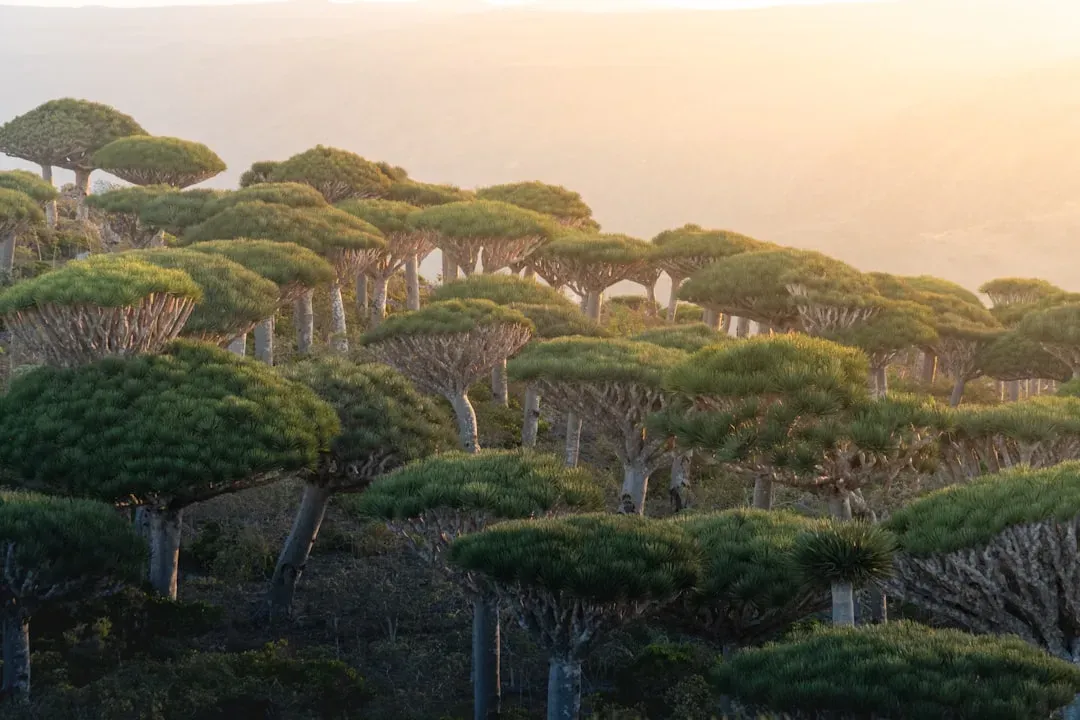
Picture this: you step out of a small plane, and instead of familiar pines or palms, you see trees with thick trunks and umbrella-shaped crowns, oozing crimson sap when cut. On Socotra Island, off the coast of Yemen, dragon’s blood trees dominate the landscape like living sculptures. Scientists have found that well over one third of the island’s plant species exist nowhere else on Earth, and that sense of isolation hits you the moment you look around and think, you have never seen anything like this before.
The island’s remoteness in the Arabian Sea helped it evolve as a kind of biological time capsule, where reptiles, plants, and even land snails followed their own evolutionary paths. You are essentially walking through a living museum that has been shaped by heat, drought, and salty winds for millions of years. At the same time, you’re also walking a tightrope: modern development, climate shifts, and resource pressures are pushing fragile ecosystems to their limits, turning your awe into a quiet sense of urgency about what might be lost if care runs out.
2. Lake Natron, The Deadly Mirror of Tanzania
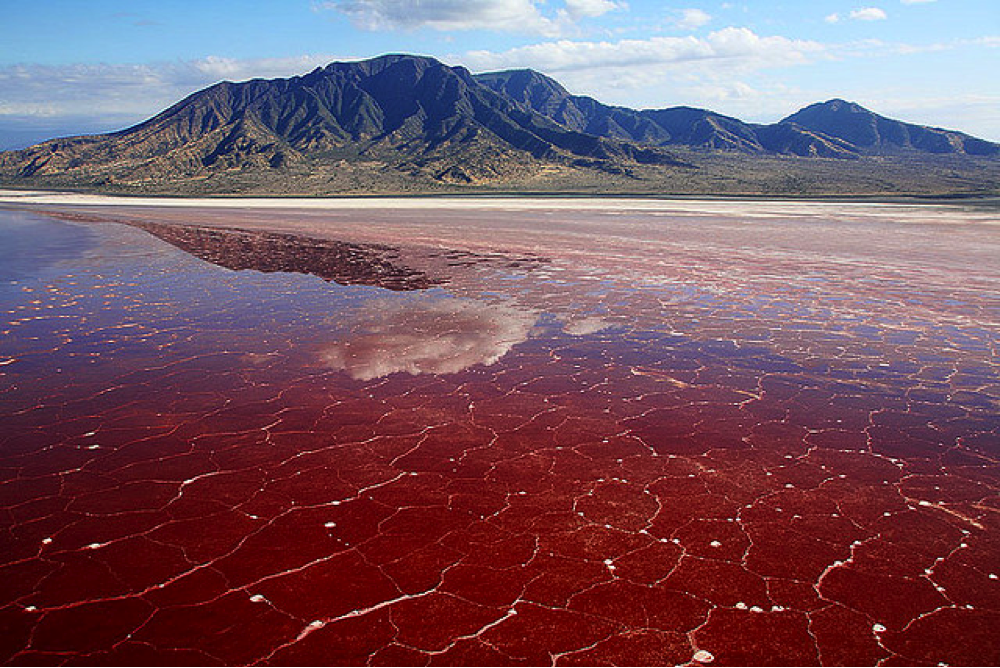
At first glance, Lake Natron in northern Tanzania looks peaceful, even dreamy – a broad shallow lake with pinkish water and mirages shimmering in the heat. Then you learn that this is one of the most alkaline lakes on the planet, with water that can reach a pH so high it can burn the skin and eyes of most animals that wander in unprepared. You are standing beside a place where temperatures can soar and the water can crust into salt flats that feel more like another world than part of the African savanna.
Yet, in the middle of all that harshness, life has adapted in surprisingly delicate ways. Huge colonies of lesser flamingos flock here to feed on specialized algae that actually thrive in the caustic water, turning the scene into a surreal mix of danger and pastel elegance. Stories online sometimes exaggerate Lake Natron as a place that instantly “turns animals to stone,” but the reality is more nuanced and more interesting. You’re looking at a natural chemistry lab where evolution has carved out narrow survival niches in conditions that, for you, would be utterly unforgiving.
3. Danakil Depression, Ethiopia’s Hell on Earth
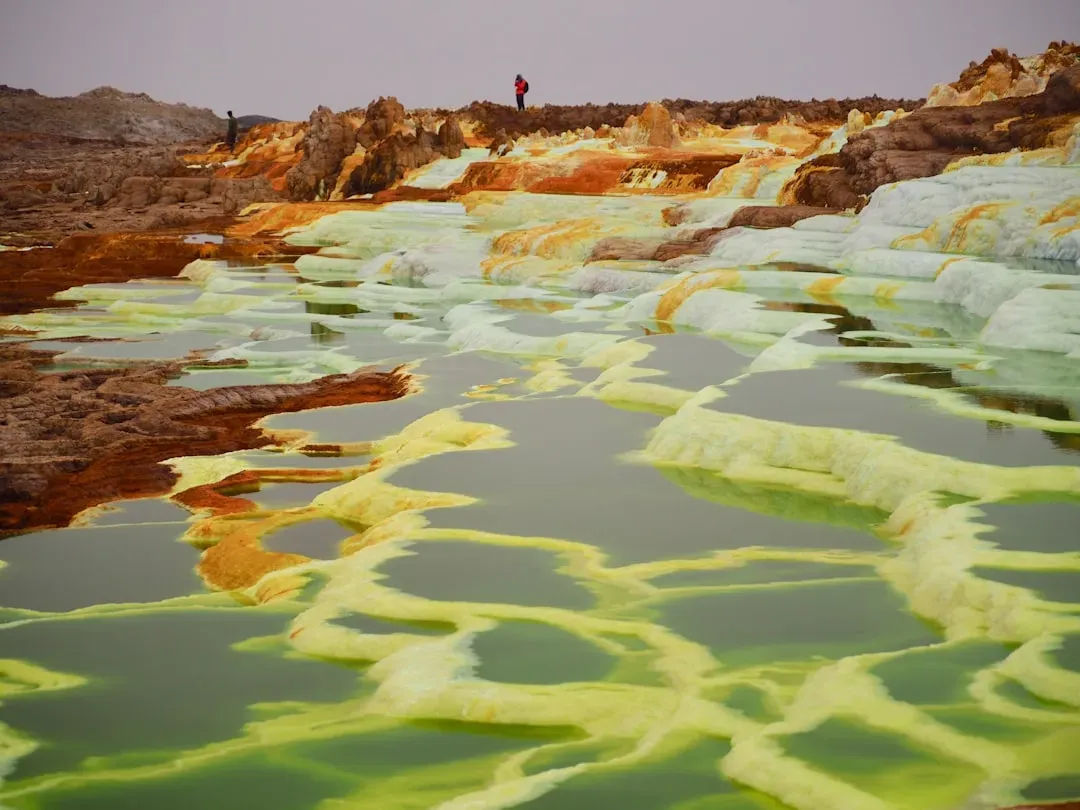
If someone dropped you into the Danakil Depression without warning, you might honestly believe you had landed on a hostile alien planet. Here in northeastern Ethiopia, you stand below sea level in one of the hottest continuously inhabited places on Earth, surrounded by toxic pools that glow electric yellow and green from sulfur and dissolved minerals. Gases hiss from fissures, and salt plains stretch out in eerie stillness, broken only by jagged formations built by volcanic activity and evaporating water over countless years.
Despite heat that often stays brutal even at night and conditions that would destroy most equipment, a few communities and research teams continue to work here. You learn that scientists are fascinated by Danakil because its extreme acidity, salinity, and heat offer clues about how life might survive on other planets or moons. As you imagine walking over the brittle crust, with thin layers of minerals hiding scalding fluids below, you realize you’re looking at the edge of what life on Earth can tolerate – and somehow, microbes still manage to call this nightmare landscape home.
4. Son Doong Cave, The Underground Jungle of Vietnam
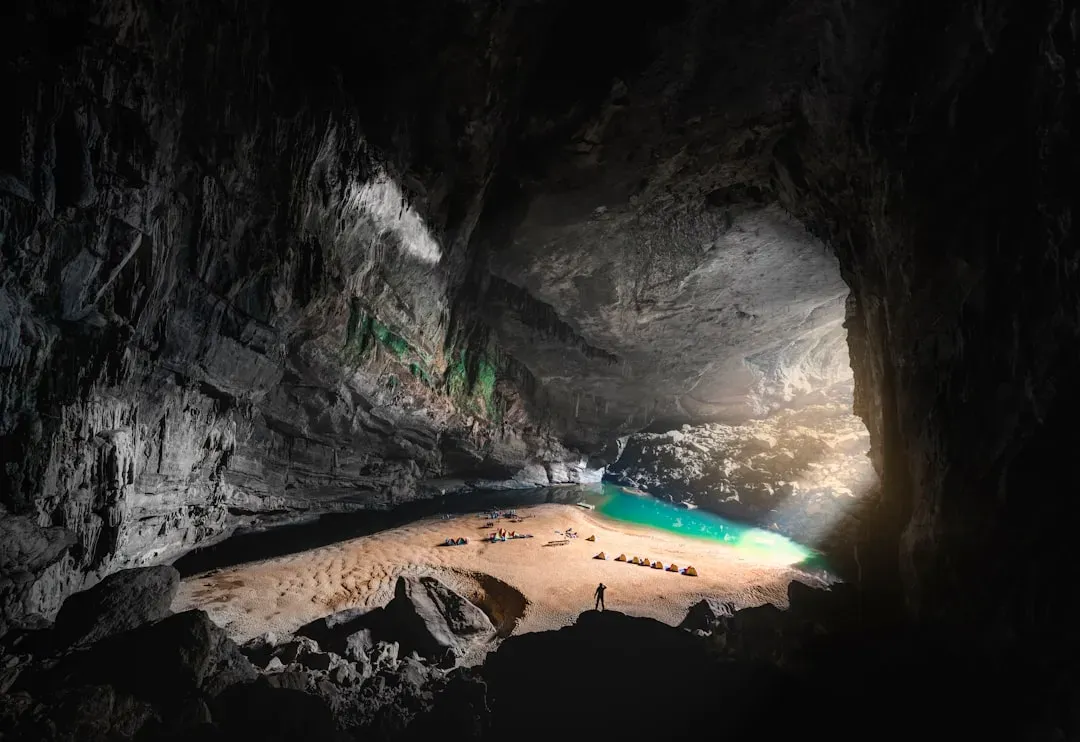
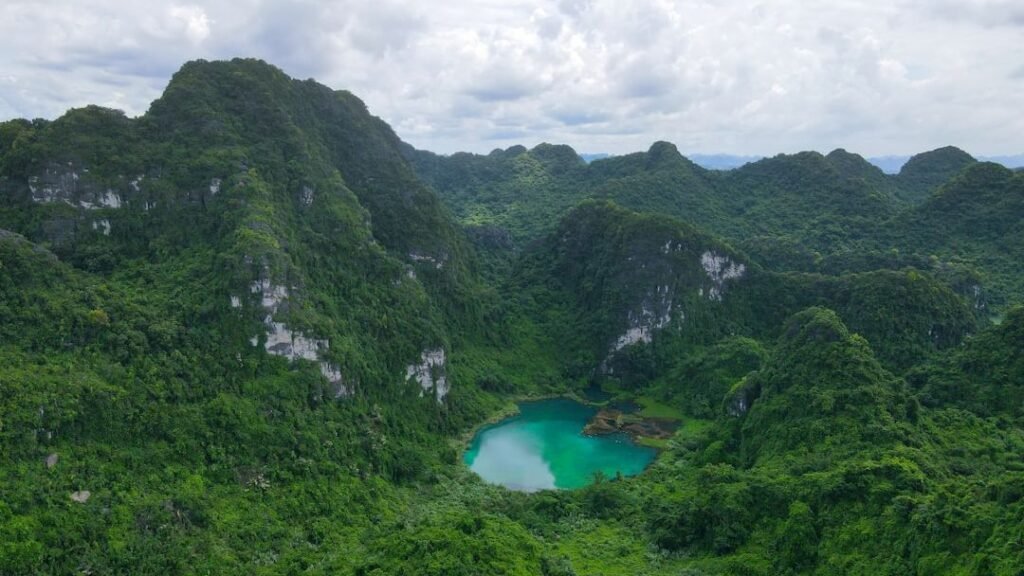
When you hear the phrase “world’s largest cave,” your mind probably jumps to a vast, dark hollow. But Son Doong Cave in Vietnam rewrites that image completely. This cave is so massive that entire New York City skyscrapers could fit inside, and in some sections the ceiling has collapsed just enough for sunlight to pour in. That break in the rock lets rain and vegetation in, so you can literally walk through an underground jungle, with trees, mist, and clouds forming in a chamber hidden beneath the Earth’s surface.
Son Doong was only explored in detail in the twenty-first century, which is wild when you think about how mapped and measured you assume the planet already is. Getting there is not a casual hike; access is tightly controlled, and you need to trek through dense jungle, cross rivers, and camp inside the cave with guides trained to protect both you and the fragile formations. Standing under those colossal stalagmites and looking up at shafts of light cutting into the darkness, you feel like you’ve stumbled into a fantasy novel – except every drip of water and patch of moss is very, very real.
5. The Marble Caves of Patagonia, Sculpted by Glacial Water and Time
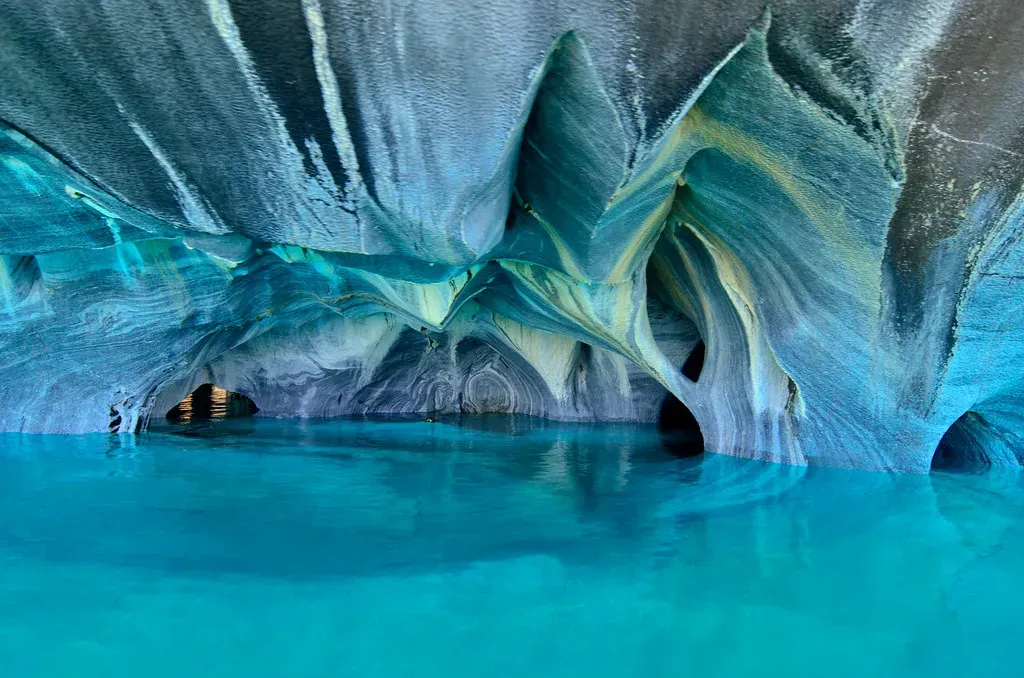
Imagine drifting in a small boat across a turquoise lake in southern Chile and Argentina, the water so clear you can see deep into its cold heart. As you glide closer to a rocky outcrop, the gray stone suddenly turns into swirling blue and white patterns, like someone painted the inside of a seashell on a grand scale. These are the Marble Caves of Lake General Carrera, formed over thousands of years as waves carved into solid calcium carbonate, polishing tunnels and caverns into smooth, rippled walls.
The magic really hits you when sunlight bounces off the glacial water and back onto the rock, making the caves glow in different shades depending on the season and the hour of day. You realize you’re inside a natural cathedral where the architect was simply patience: water wearing down stone millimeter by millimeter. There’s no visitor center sitting on top, no mega-resort looming in the background, just a remote Patagonian lake and a reminder that some of Earth’s finest art is hidden far from the main roads.
6. Waitomo Glowworm Caves, New Zealand’s Underground Starfield
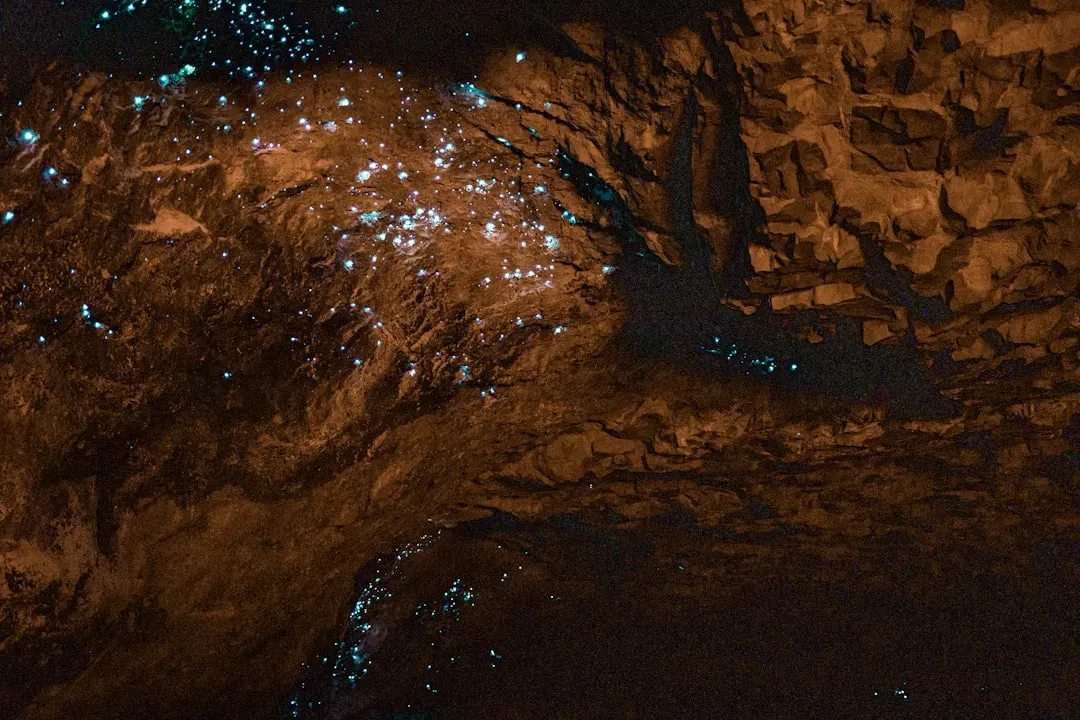
Now picture yourself sitting in a silent boat, the guide’s paddle barely breaking the water as you drift under a low ceiling of limestone. The lights go out, and for a heartbeat you see nothing – then tiny blue-green pinpricks appear above you, spreading until they look like a galaxy tucked inside the Earth. In the Waitomo Glowworm Caves on New Zealand’s North Island, the stars overhead are actually the larvae of a species of fungus gnat, each one dangling sticky threads and glowing to lure in prey.
What feels like pure magic is really a mix of geology and biology working together in complete darkness. Over time, underground rivers carved the cave system, decorating it with stalactites and stalagmites, while the glowworms claimed the ceilings like their own private sky. As you float through this living planetarium, you can’t help but whisper, partly out of respect and partly because you do not want to be the person who breaks the spell. You walk back out into daylight realizing that one of the most breathtaking night skies you can ever experience actually happens in the middle of the day, deep underground.
7. Blood Falls, Antarctica’s Frozen Waterfall of Rust-Red Brine
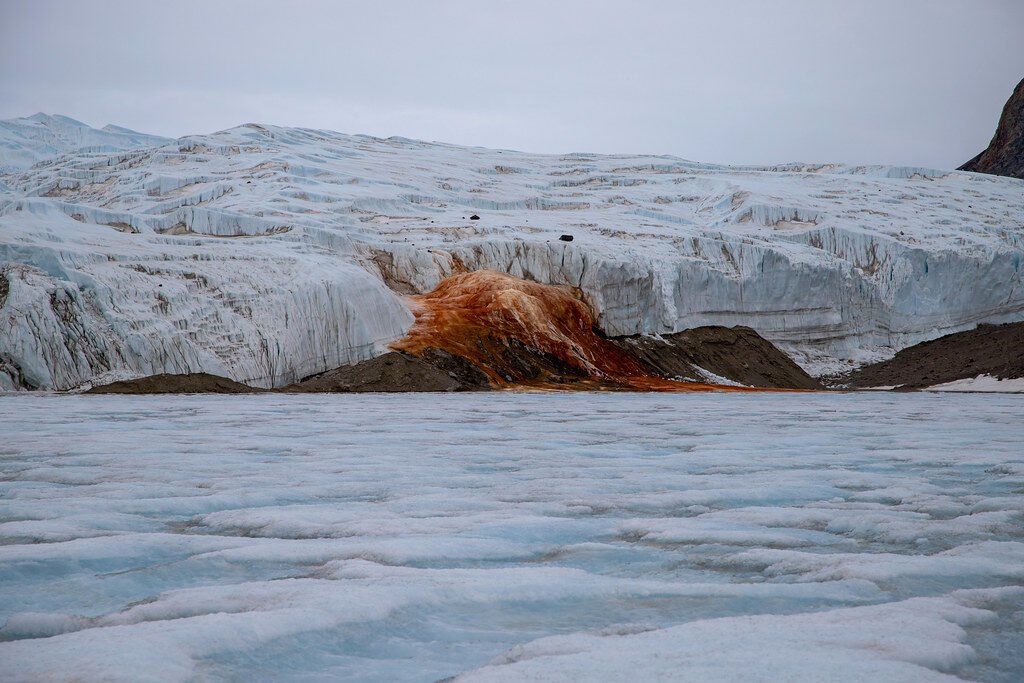
In the middle of Antarctica’s blinding white landscape, your eyes suddenly lock onto something that looks disturbingly like a wound in the ice. At the edge of Taylor Glacier, an iron-rich, salty outflow stains the ice in shades of deep red and orange, cascading down like frozen blood. This is Blood Falls, and while it looks like a horror movie prop, it’s really the result of brine seeping out from an ancient subglacial lake, reacting with oxygen and turning the water a rusty color as it emerges.
The strangeness runs far deeper than the surface stain. Scientists have found that the water feeding Blood Falls has likely been trapped under the glacier for millions of years, isolated from sunlight and the atmosphere. When you realize that microbes are managing to survive in that frigid, oxygen-poor, ultra-salty environment, you suddenly see the site as a natural laboratory for understanding how life might persist on icy worlds like Europa or Mars. You’re standing in one of the most remote corners of our planet, looking at a tiny leak that tells a story older than human civilization.
8. Vaadhoo Island’s Sea of Stars, Where the Ocean Glows at Night
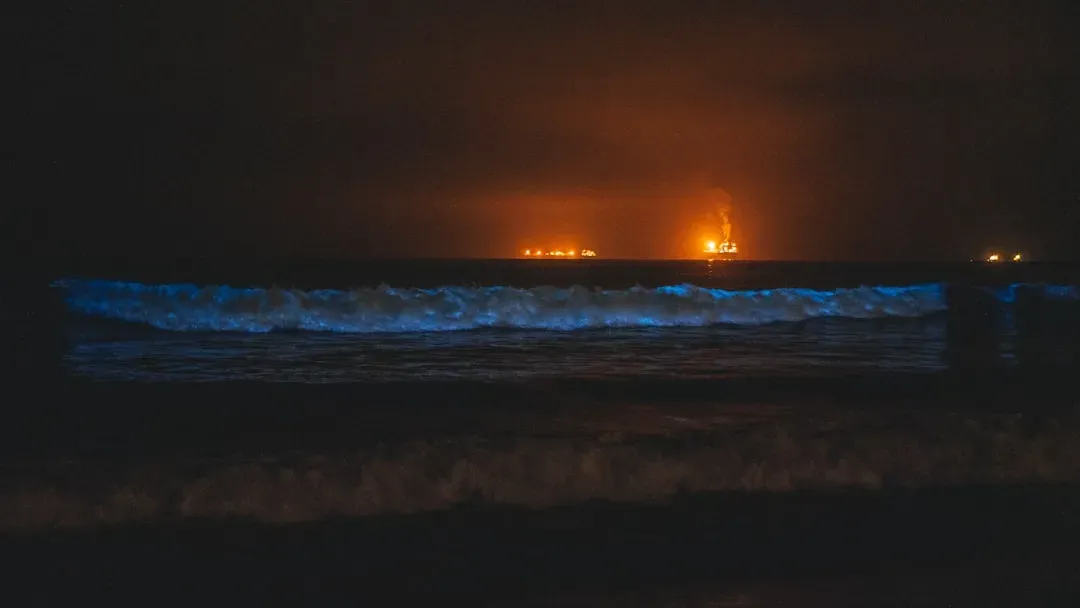
Think about walking along a quiet beach in the Maldives after sunset, waves rolling in as usual, when suddenly every step you take makes the shoreline shimmer with electric blue. On Vaadhoo Island, certain nights bring a phenomenon often called the Sea of Stars, caused by bioluminescent plankton near the surface of the water. When waves break or your foot disturbs the shallows, countless microscopic organisms flash with light, turning each ripple into a streak of neon.
What feels like a scene from a fantasy film is actually a defense mechanism, as the plankton emit light when disturbed, possibly to startle predators or attract something that might eat their attackers instead. As you stroll along the glowing tide line, you are watching chemistry and biology turn motion into light in real time. Photos online can make it seem like the water glows every single night, but in reality the intensity and frequency depend on factors like plankton blooms, weather, and season. That uncertainty makes the experience even more special: you cannot just buy a ticket to guarantee it, you have to bring a bit of patience and luck.
9. Socotra’s Cousins in the Sky: Mount Roraima’s Lost-World Plateau
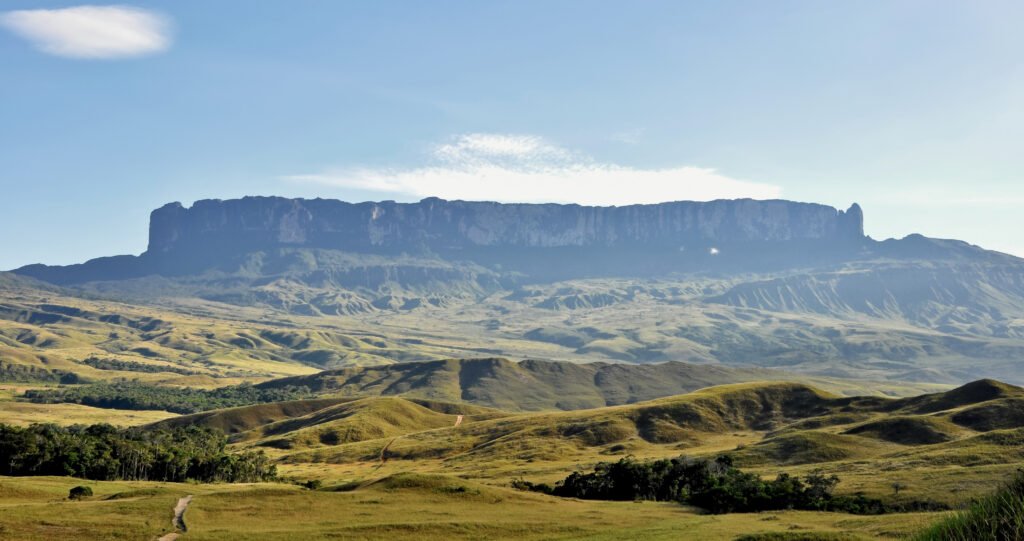
If you have ever stared at a flat-topped mesa in a movie and thought it looked impossible, Mount Roraima on the border of Venezuela, Brazil, and Guyana takes that feeling to another level. You look up at sheer cliffs rising out of the jungle, their summit often wrapped in clouds, like an island in the sky. This ancient tepui plateau has been worn down over hundreds of millions of years, leaving a table of rock so isolated that many of its plants and animals evolved there alone, just as uniquely as the life on Socotra.
When you finally stand on top after a demanding multi-day trek, the world up there feels wrong in the best way: wind-sculpted rocks, strange insect species, and pockets of vegetation clinging to shallow soils in scattered pools. The sense of separation is almost physical, as if you’ve stepped off the map of modern life into a forgotten chapter of Earth’s history. No wonder early explorers and writers used this place as inspiration for lost-world tales. You come back down with sore legs, muddy boots, and a nagging thought that maybe the most extraordinary places are the ones that still put up a fight before letting you in.
Conclusion: Let the Unknown Corners of Earth Change How You See Everything
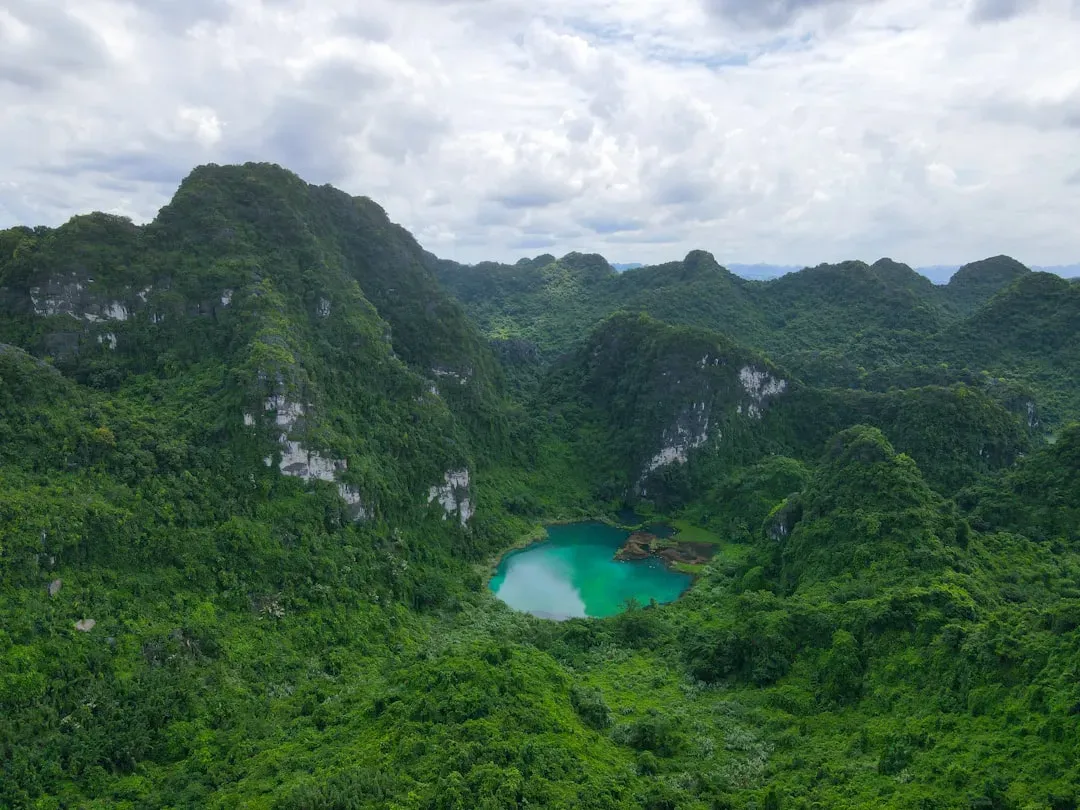
As you move from glowing caves to toxic lakes, from underground jungles to burning hot depressions, a pattern quietly emerges: the world is far stranger, harsher, and more imaginative than you usually give it credit for. Many of these hidden wonders are remote not just in distance, but in mindset; they sit outside the usual travel bucket lists, quietly shaping scientific discoveries, local cultures, and the limits of life itself. When you learn about them, your sense of what is “normal” on this planet starts to stretch in all directions.
You might never visit all, or even any, of these places in person, and that is okay. Even knowing they exist changes the way you look at the nearest patch of forest, the rock under your feet, or the night sky above your street. Next time someone claims there are no real mysteries left on Earth, you will know better – and you will have stories ready to prove it. Which of these hidden wonders surprised you the most, and which one can you not stop picturing yourself standing in right now?