You live on a planet that sends people to space, edits DNA, and builds quantum computers, yet there are still places on Earth that quietly shrug off every neat explanation you throw at them. These are not fantasy locations from a movie; they are spots you can actually visit, stand in, and feel your sense of certainty wobble a little. Scientists have flown over them, drilled into them, pointed instruments at them, and published papers about them – and still had to admit, in the end, that big pieces of the puzzle are missing.
As you walk through these places in your mind, you’ll see how far science has come and where it still stalls out. In many cases, researchers have good working theories, and some parts of the mystery are probably solved; others remain stubbornly weird, or so complex that no one can yet tie everything together. That tension is what makes these spots so addictive to think about. By the time you reach the end, you may feel less like you understand the world and more like you’ve just discovered how much there still is to learn – and oddly, that’s a pretty wonderful feeling.
1. Racetrack Playa, Death Valley – Where Heavy Rocks Seem to Sail on Their Own
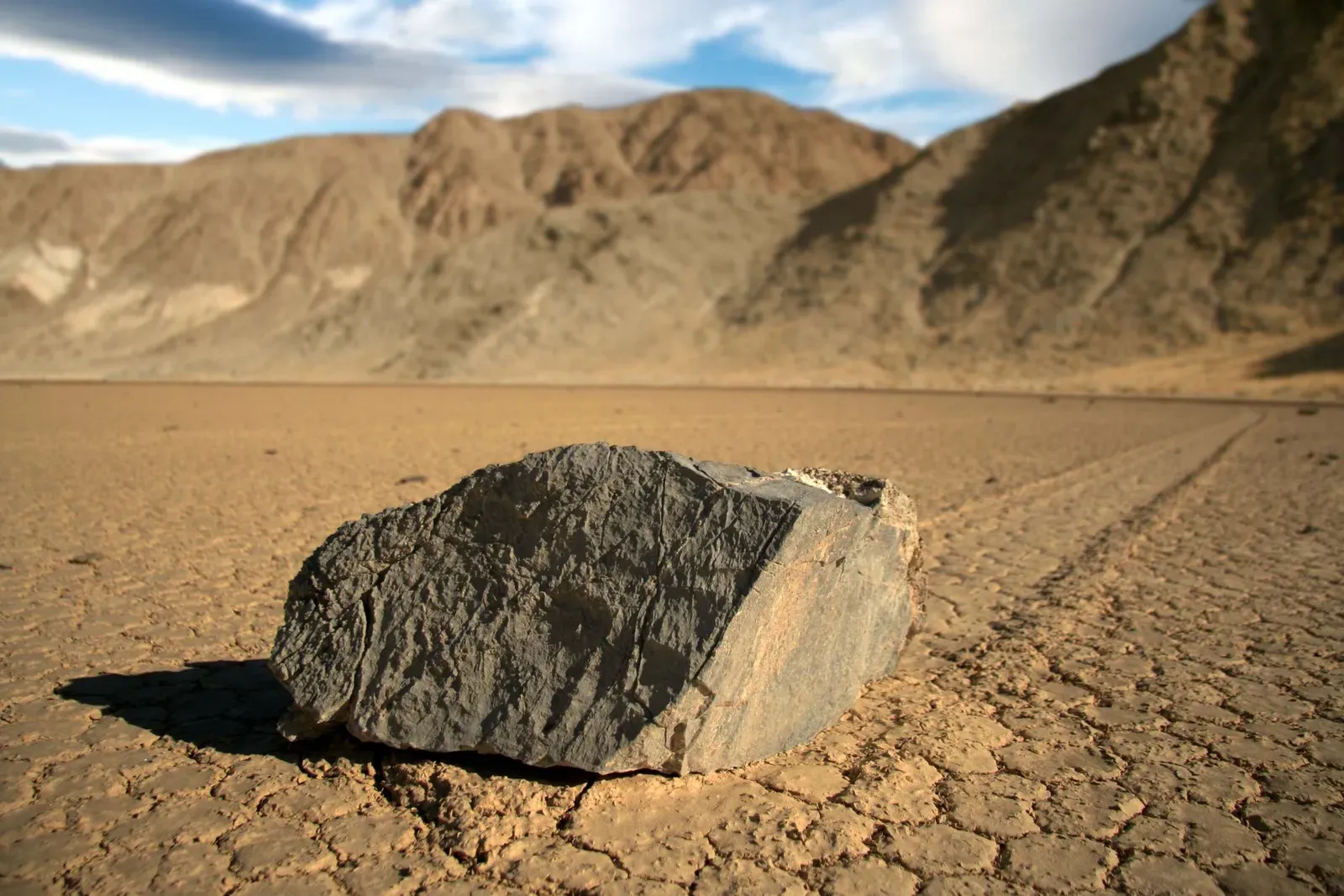
If you ever find yourself in Death Valley’s Racetrack Playa, it feels like you’ve walked into a crime scene where the culprit vanished into thin air. You’re standing on a dried lake bed, ringed by rugged mountains, looking down at rocks that weigh as much as a person, each one leaving a long, winding trail scratched across the mud. The eerie part is that you never see these rocks move; you just see the evidence that they did, as if the desert rearranged itself while you were blinking.
Researchers have spent more than a century trying to catch these “sailing stones” in the act, and in recent years they finally did: thin sheets of ice forming around the rocks on rare cold, wet nights, pushed gently by light winds, can slowly drag the stones across a slick, muddy surface. So in one sense, you do have a plausible physical mechanism. But when you look closer, not every trail looks the same, not every rock behaves predictably, and subtle variations in ice, mud, and wind still leave unanswered questions. You’re left in this oddly satisfying middle ground where you know roughly how it works, yet the desert still refuses to give you a clean, simple formula for every stone and every track.
2. Hessdalen Valley, Norway – A Sky That Lights Up With No Agreed Cause
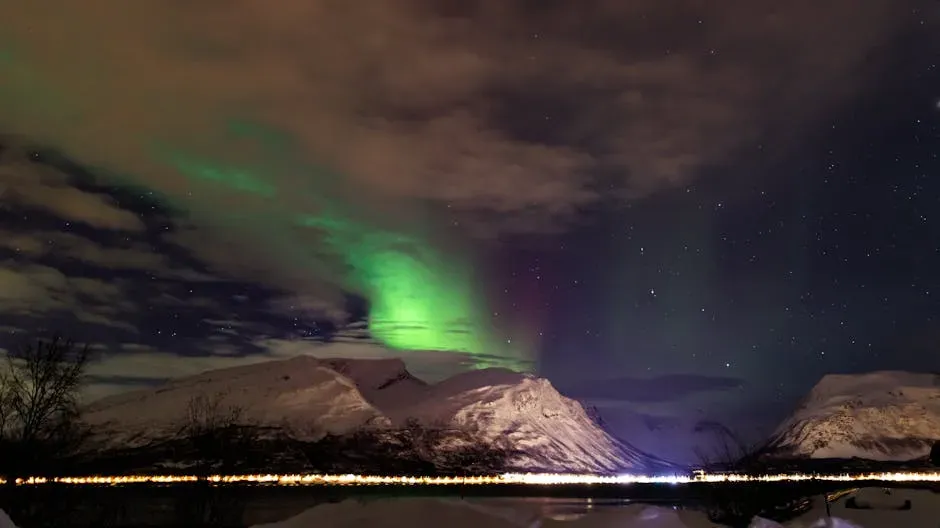
Imagine camping in a quiet Norwegian valley and looking up to see bright orbs of light drifting, darting, or hovering over the landscape like silent lanterns with their own agenda. In Hessdalen, that is not a campfire story – it is something people have been reporting for decades, often with cameras and instruments to back them up. You see white, yellow, or sometimes reddish lights that can hang over a field, glide along a slope, or zip away faster than you’d expect from any normal aircraft.
What makes Hessdalen so unsettling is that scientists have actually set up long-term monitoring stations there, capturing radar data, spectra, and high-quality images, and they still do not agree on what you’re looking at. Some teams lean toward exotic but natural explanations like dust plasmas, unusual atmospheric electricity, or geological processes that ionize air above certain rocks. Others argue that these ideas explain part of the behavior but not all of it, especially the complex motions and long-lasting, structured lights. You end up with a rare case where serious researchers openly admit that, after years of study, the lights are real, well documented – and still not satisfactorily explained.
3. The Bermuda Triangle – An Ocean Patch Loaded With Mystery and Misconception
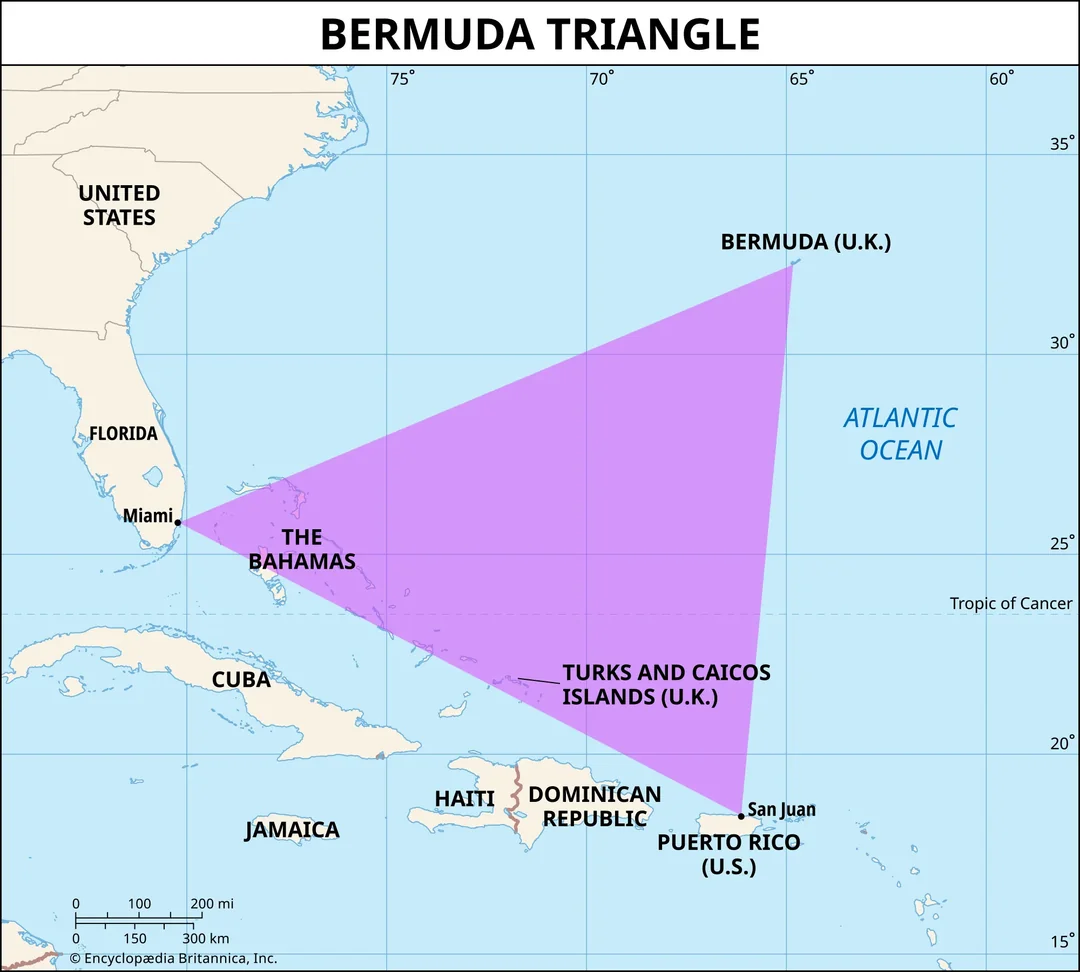
When you think of the Bermuda Triangle, you probably picture ships and planes vanishing into some supernatural hole in the sea, thanks to decades of dramatic books and TV shows. This loosely defined patch of Atlantic Ocean, roughly between Florida, Bermuda, and Puerto Rico, became famous in the twentieth century because of high-profile disappearance stories that seemed to cluster in the area. If you sail or fly through it, you might half-expect your compass to spin or your instruments to fail for no reason.
When you dig into the numbers, though, the Triangle’s accident rate doesn’t clearly stand out from other heavily traveled ocean regions, and many headline-making cases now have plausible mundane explanations: storms, navigation errors, mechanical issues, and, in some instances, simply poor record-keeping. At the same time, you do face a frustrating data problem – old reports are incomplete, causes were not always investigated carefully, and some official records are missing or contradictory. So you live in this odd space where the legend is clearly exaggerated, yet you cannot fully reconstruct every incident or completely rule out all anomalies. The real mystery here is less a magical sinkhole and more a tangled knot of human error, patchy history, and ocean conditions that you still do not track as perfectly as you like to think.
4. The Devil’s Kettle, Minnesota – A River That Appears to Vanish Underground
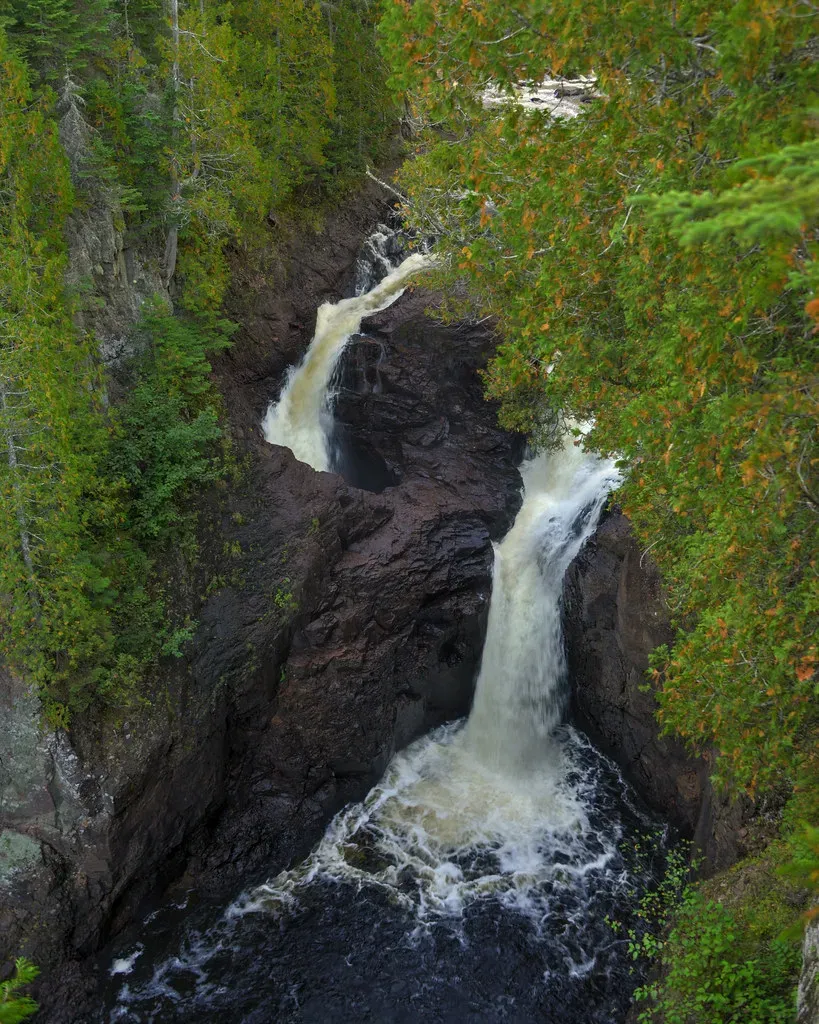
On Minnesota’s North Shore, the Brule River splits around a rocky outcrop and does something that looks like a magic trick just upstream of Lake Superior. One side of the river crashes down a normal waterfall, while the other side dives into a deep, foaming pothole called the Devil’s Kettle and seems to disappear. For years, people tossed in brightly colored dyes, ping-pong balls, and even logs, waiting to see where they would pop back out – only to find nothing obvious downstream.
Hydrologists eventually measured the river’s flow above and below the Kettle and found that the numbers match closely, which strongly suggests that the “missing” water rejoins the main river not far beneath the surface. You probably are not dealing with a portal or an endless underground labyrinth; you are dealing with water slipping through fractures in rock and reemerging in ways that are hard for you to see with the naked eye. Still, no one has mapped every crack or traced a clear, visible path from hole to outlet, and the exact geometry remains hidden. It is a reminder that even in a state park within driving distance of major cities, basic questions like “where does this water go?” can be surprisingly hard to answer with total certainty.
5. The Baltic Sea Anomaly – A Strange Shape on the Seafloor
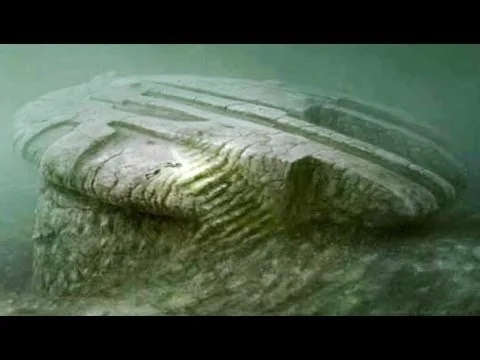
Far beneath the waves of the Baltic Sea, sonar once picked up an odd, almost circular structure that quickly sparked global speculation. When you first see the grainy images, your brain wants to label it: a crashed craft, a forgotten bunker, some kind of ancient mega-structure. The object appears to have straight-ish edges and a shape that at a glance feels too organized to be random, which is exactly the kind of pattern your mind loves to latch onto.
Divers and geologists who have investigated the anomaly tend to lean toward a natural explanation: a mix of rock, glacial deposits, and sediment that your eyes and the sonar technology happen to turn into something more dramatic than it is. At the same time, you do not have high-resolution, peer-reviewed mapping and sampling that settles the debate so cleanly that everyone walks away satisfied. Limited visibility, funding, and the sheer difficulty of working at that depth keep the data thinner than you’d like. That leaves you in a familiar limbo: enough evidence to seriously doubt the wildest theories, but not enough detail to confidently file the object away as just another boring chunk of geology.
6. Lake Anjikuni, Canada – A Vanishing Village Legend That Won’t Quite Die
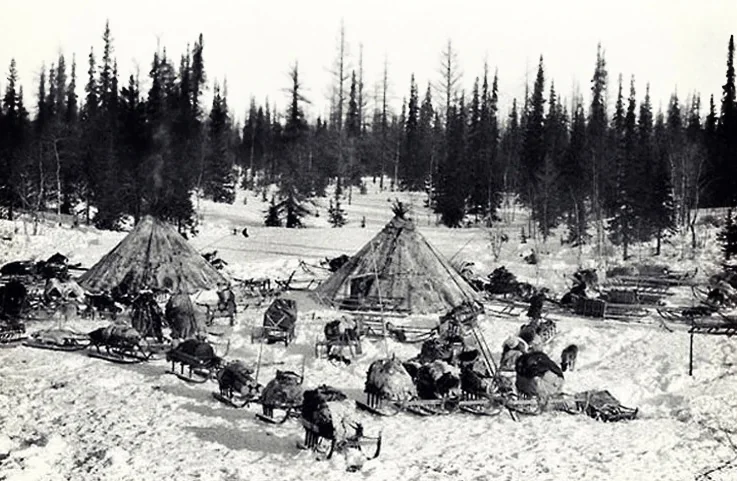
In the Canadian north, you may have heard a chilling story about Lake Anjikuni: an entire Indigenous village supposedly discovered abandoned in the early twentieth century, with food still on the tables, dogs frozen where they’d been tied, and even graves said to be mysteriously emptied. The tale has all the ingredients of a perfect mystery – remote wilderness, missing people, and almost no paper trail to anchor anything down. When you first encounter it, it feels like the kind of thing that should have a file cabinet full of official reports behind it.
When researchers try to track those files down, though, they run into a mess of conflicting newspaper accounts, unverified retellings, and later embellishments that make it almost impossible to separate any real event from layers of storytelling. Some historians argue that the entire episode was invented or wildly exaggerated by early writers; others suggest that there might have been a smaller, real incident that got inflated over time. You are left with an uncomfortable sort of mystery: not so much “what supernatural force made people vanish,” but “did this dramatic disappearance even happen the way you’ve been told?” It becomes a case study in how, once a story locks into public imagination, it can feel solid even when the documented evidence remains shaky at best.
7. Fly Geyser, Nevada – A Surreal Alien Landscape Born From a Human Mistake
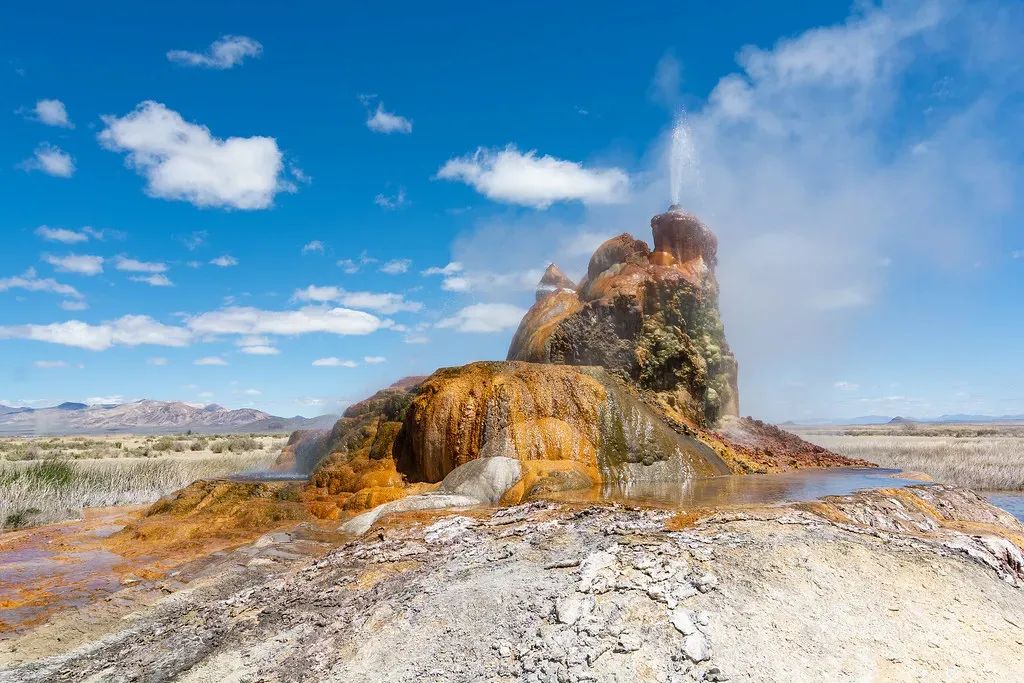
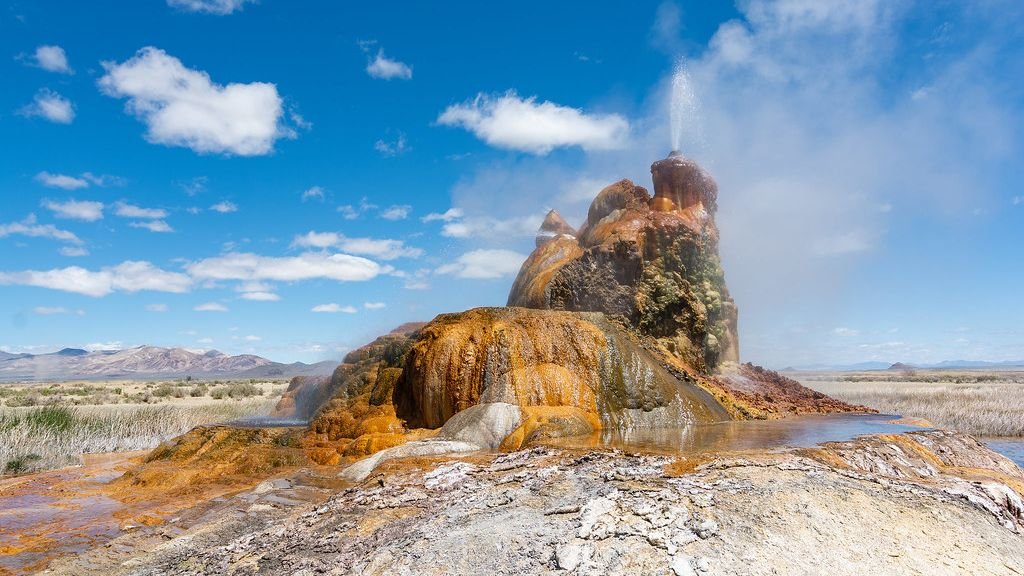
Out in the Nevada desert, north of the tiny town of Gerlach, you can step onto land that looks more like a science fiction set than part of the American West. Fly Geyser rises just a few meters high, but its vivid reds and greens, stacked mineral terraces, and constant sprays of steaming water make it feel like an alien organism half-awake. Thermophilic microbes paint the formation in bright colors, turning dissolved minerals into sculpted ridges that keep growing year after year.
What makes Fly Geyser so strange is that it likely began with human drilling in the mid-twentieth century, when a well tapped into a hot aquifer and water, under pressure, began forcing its way to the surface. Over time, minerals precipitated out, building the bizarre cone you see today, and subsequent changes in drilling or capping attempts may have redirected the flow again. You have a decent outline of the story – geothermal water plus borehole plus minerals equals accidental geyser – but you still do not know every detail of the subsurface plumbing, or exactly how long each phase of growth took. Standing in front of it, you are reminded that you can trigger processes you do not fully model, and end up with landscapes that are neither purely natural nor fully engineered, but something in between that defies your usual categories.
8. The Booming and Singing Sands – Beaches and Dunes That Roar Like Hidden Drums
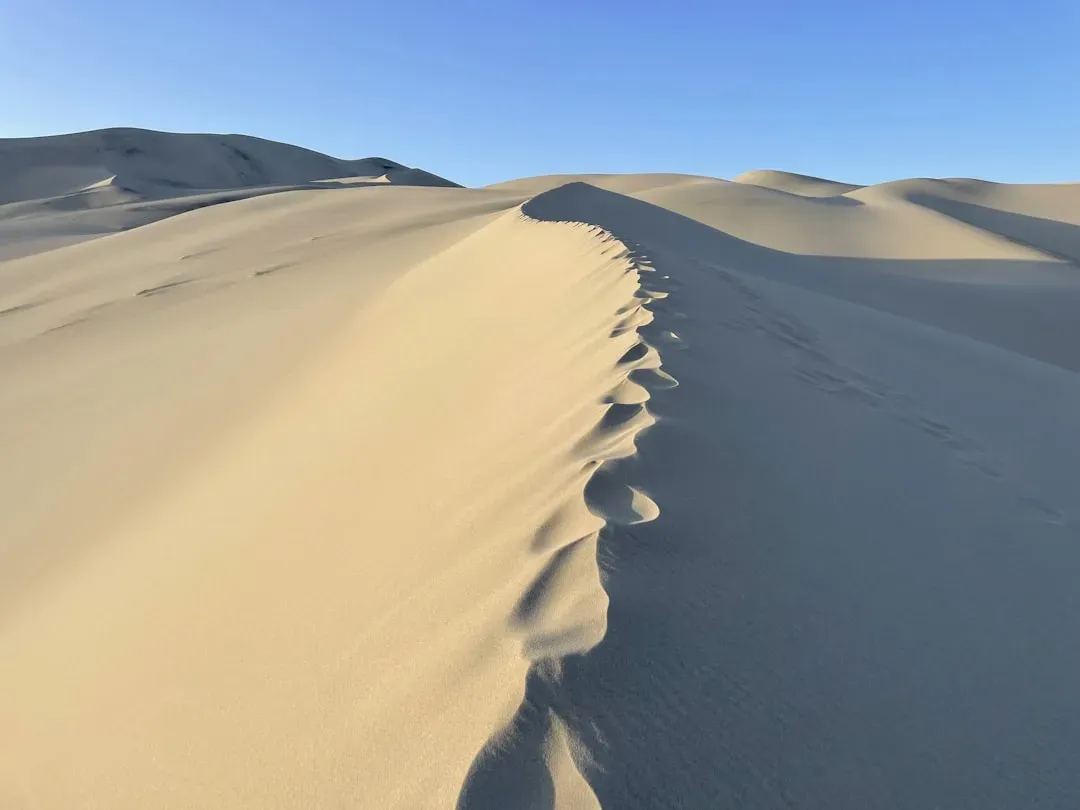
Picture yourself sliding down the face of a huge sand dune and suddenly hearing a deep, resonant hum rolling out around you, as if someone turned on a distant organ inside the hill. In scattered places around the world – deserts in Asia, dunes in the Americas, even some remote beaches – sand can produce booming, droning, or musical tones when it moves in just the right way. You feel grains slipping under your feet, and at the same time you hear a sound that seems much too big to be coming from sand.
Researchers have found that the effect depends on very specific conditions: grains of similar size and shape, very dry sand, and the right speed of movement, which together can make the sliding layers vibrate and amplify sound. That gives you a solid start on the physics, and lab experiments can even reproduce some of the tones. Yet you still cannot fully predict which dunes will sing, why some stop singing over time, or why the same dune can change its voice. The phenomenon sits in that tricky zone where many interacting variables – grain size, moisture, layering, slope, and even air humidity – turn a simple question into a chaotic one. You know the broad strokes, but each booming dune you encounter still feels like it has its own personality and secrets.
Conclusion – Learning to Live With Open Questions
When you line these places up – rocky deserts that slide stones around, valleys with ghostly lights, ocean floors with strange shapes, rivers swallowing water, and dunes that sing – you see a pattern that has nothing to do with the supernatural and everything to do with your own limits. In most cases, science has not thrown up its hands; it has offered partial answers, strong hints, and working models that explain a lot but not everything. You are not staring at places that break the laws of physics; you are staring at corners of the world where those laws play out in ways that are so complex, rare, or messy that your current tools only get you part of the way there.
If you let that frustrate you, you miss the real gift these mysteries offer. They remind you that the planet under your feet is still bigger, stranger, and more surprising than any textbook can capture, and that genuine unknowns are not just hiding at the edge of the universe but also in deserts, valleys, forests, and coastlines you can actually visit. Maybe the most important shift is this: instead of craving a final, neat answer for every odd place on Earth, you learn to value the process of asking better questions, building better instruments, and accepting that some puzzles will stay open for a long time. And really, would you want to live on a world where everything was already explained, or do you prefer a planet that still has secrets waiting for you to stumble across them?