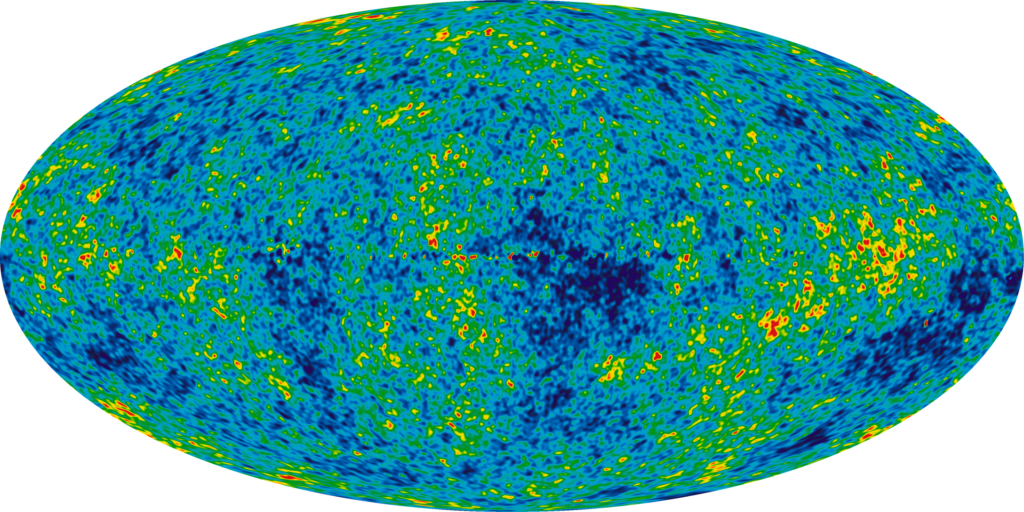

You probably grew up with the idea that the universe is neat, smooth, and ruled by beautiful equations. Then you meet the cosmic microwave background – the faint afterglow of the Big Bang – and suddenly it feels like opening a perfectly arranged drawer and finding a few very weird objects rolling around in the back. Physicists can describe this glow with astonishing precision, yet the data also contains oddities that stubbornly resist explanation. These are not tiny technical quirks; some of them poke at the way you think space, time, and even cosmic history are supposed to work. As you explore these named anomalies, you are stepping right into the cracks of modern cosmology. None of them, on their own, have been declared proof of new physics, and many may ultimately fade away as statistical flukes or subtle systematics. But taken together, they force you to confront an uncomfortable truth: your current picture of the cosmos might be incomplete in ways you do not yet understand. That uncertainty is exactly where the story gets exciting.
The CMB Cold Spot: A Chilling Puzzle in an Otherwise Warm Sky
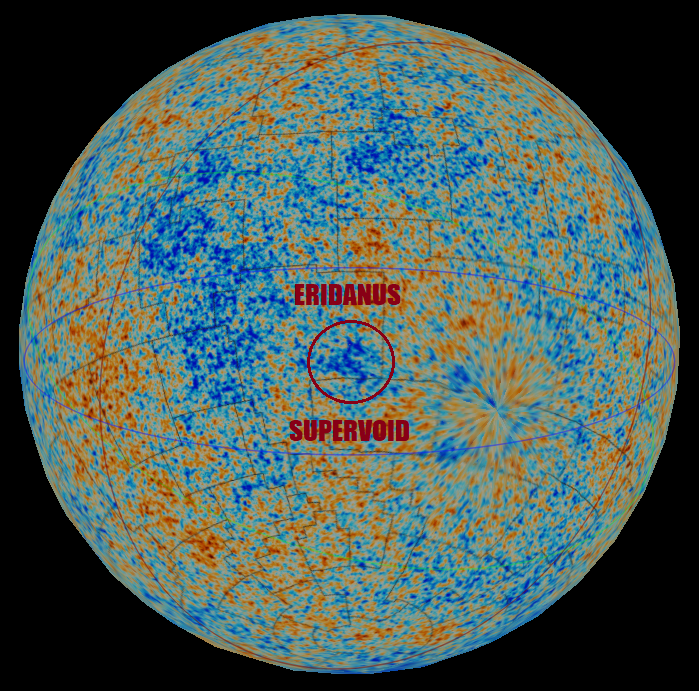
Imagine looking at a nearly uniform orange sunset and seeing, in one patch, a smudge of bluish cold that just should not be there. That is essentially what you find with the CMB Cold Spot: a region of the sky, in the constellation Eridanus, that is noticeably cooler than the smooth, random fluctuations predicted by standard cosmology. In the usual model, you expect hot and cold patches of certain sizes and strengths, but this one looks uncomfortably extreme, as if the dice of the early universe rolled a sequence no one was expecting. You might be tempted to blame some giant void of galaxies along that line of sight, since matter can slightly cool CMB photons through gravitational effects as they pass through. Observations have found a large underdense region, but its properties do not seem strong enough to fully account for the anomaly. That leaves you with a shortlist of options: perhaps it is a rare, but technically allowed statistical fluke; perhaps it hides some exotic early-universe physics; or perhaps there is still some subtle contamination or bias you have not pinned down. For now, you are stuck with a named, mapped Cold Spot that feels more like a shrug than a solution.
The Axis of Evil: When the Universe Seems to Pick a Favorite Direction
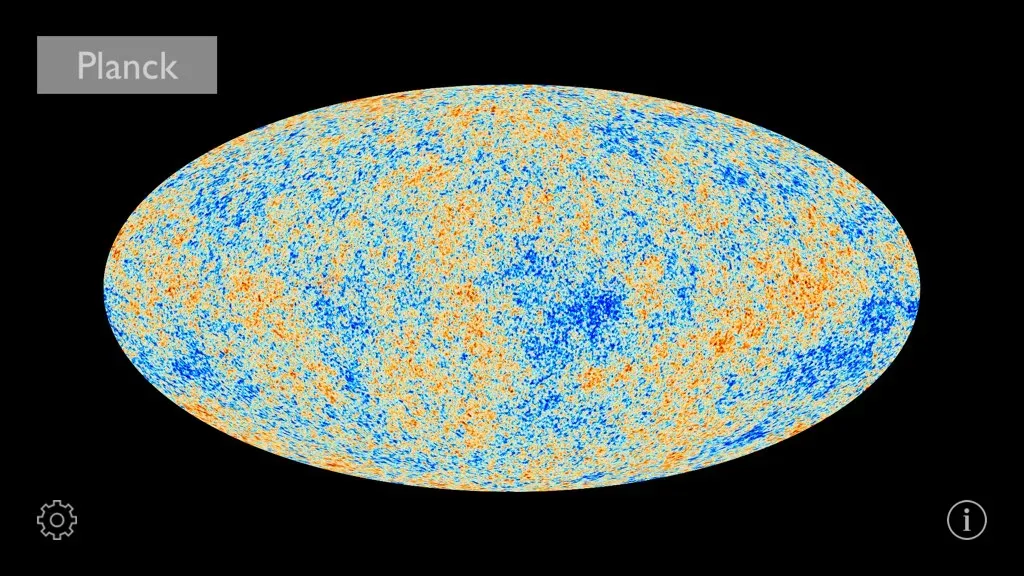
You are told, over and over, that on the largest scales the universe has no preferred direction – it should look statistically the same no matter where you point. Then you look at low-order patterns in the CMB, like the dipole, quadrupole, and octupole modes, and you find something unsettling: they seem to line up along a particular axis on the sky. This alignment has been dramatically nicknamed the Axis of Evil, precisely because it clashes with the comforting idea of cosmic isotropy. You might wonder whether your own cosmic backyard is to blame, perhaps the motion of the Solar System or contamination from the Milky Way is leaving fingerprints that fake this alignment. Teams have tried to clean and re‑clean the data with different methods and instruments, including WMAP and Planck, but traces of the effect keep showing up. The statistical significance is debated, and you are always fighting the temptation to see patterns in noise, yet the fact remains: when you look at the largest-scale ripples in the CMB, they appear more coordinated than your simplest models say they should be.
The Low Quadrupole: A Surprisingly Quiet Large-Scale Universe
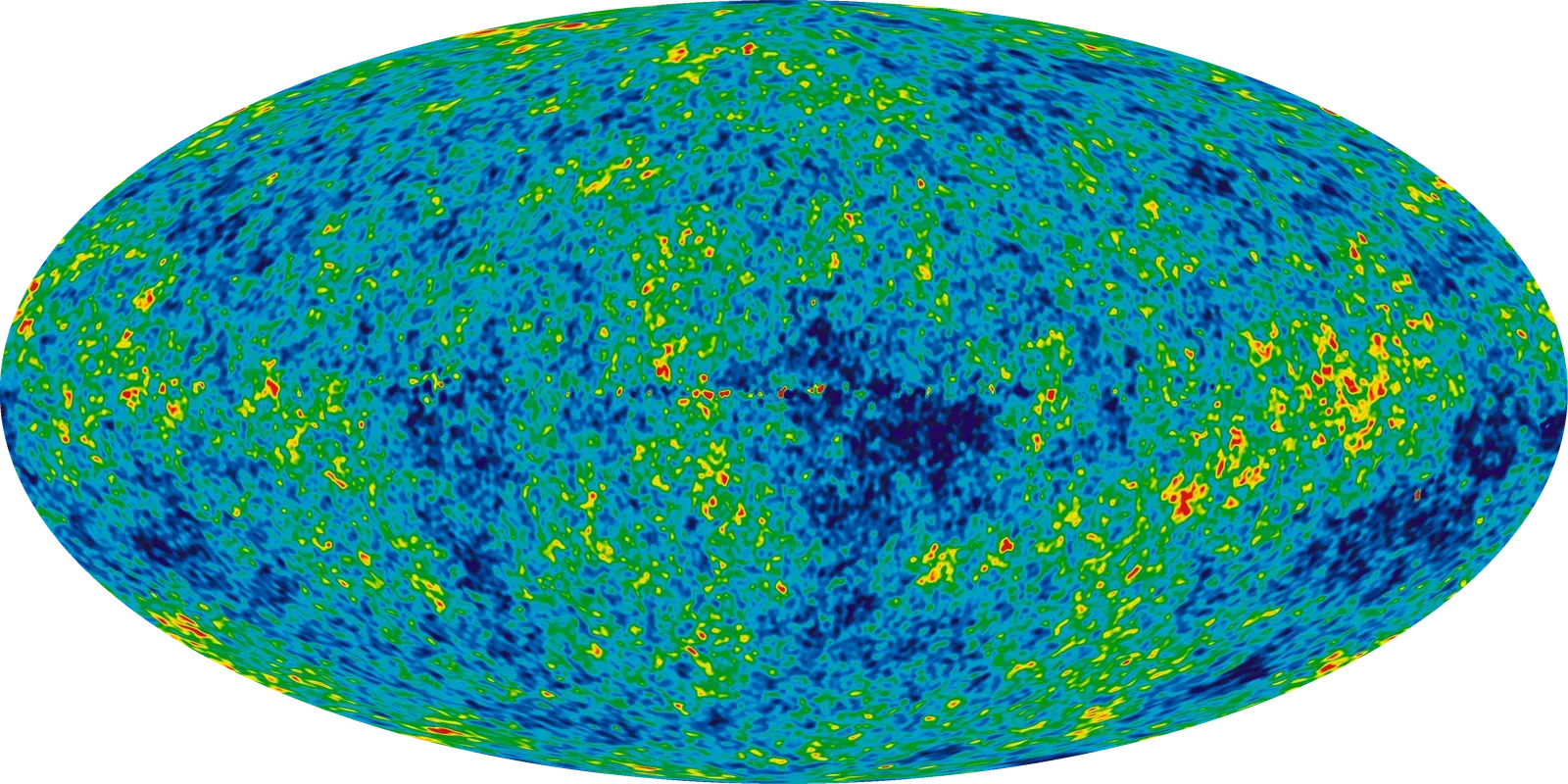
If you picture the CMB temperature map as a rich blend of musical notes, the lowest notes – the largest-scale modes – should have a certain expected loudness. The quadrupole, one of those very low notes, comes in much quieter than theory predicts. You are not seeing a simple calibration issue; you are seeing a fundamental statistic of the sky coming out small in a way that makes cosmologists frown and reach for more coffee. One possibility you have to entertain is that this really is just a weird roll of the cosmic dice, that in your one available universe, the quadrupole happened to be low. Another, more provocative thought is that it hints at something about the global shape or boundary conditions of space, like a universe that is not as infinite and featureless as you assume. While no consensus has emerged, the low quadrupole forces you to confront how much you rely on a single sky to validate cosmological predictions that are, at their core, probabilistic.
Hemisphere Power Asymmetry: One Half of the Sky Is Livelier
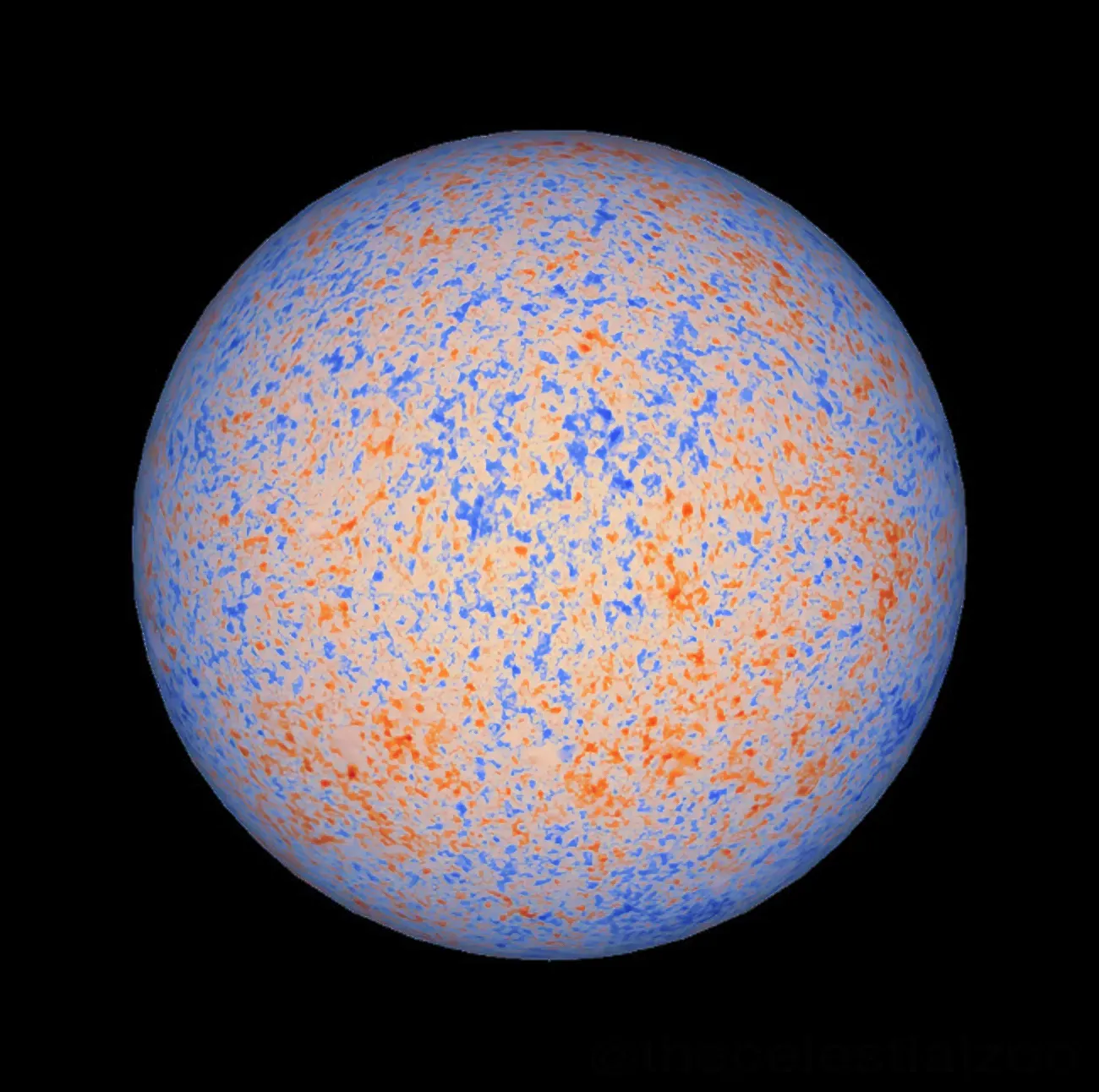
When you split the CMB sky into two halves, you expect both to show roughly the same level of fluctuation power; after all, why would one cosmic hemisphere be busier than the other? Yet analyses of the data show that one side appears to have stronger temperature variations than its opposite counterpart. This large-scale hemispherical power asymmetry is like flipping a coin many times on each side of your living room and consistently getting more heads on one side than the other. You can try to rotate your dividing line and see where the asymmetry is strongest, and, intriguingly, you find a preferred axis along which the mismatch becomes most pronounced. That sounds suspiciously like another break in isotropy and raises the possibility that several of these anomalies might be related. On the other hand, you also know that once you start hunting for oddities in noisy data, you will inevitably find some that look special. You are left with an uncomfortable middle ground: the asymmetry is striking enough to investigate but not decisive enough to rewrite the textbooks.
Parity Asymmetry: Even and Odd Modes Refusing to Balance
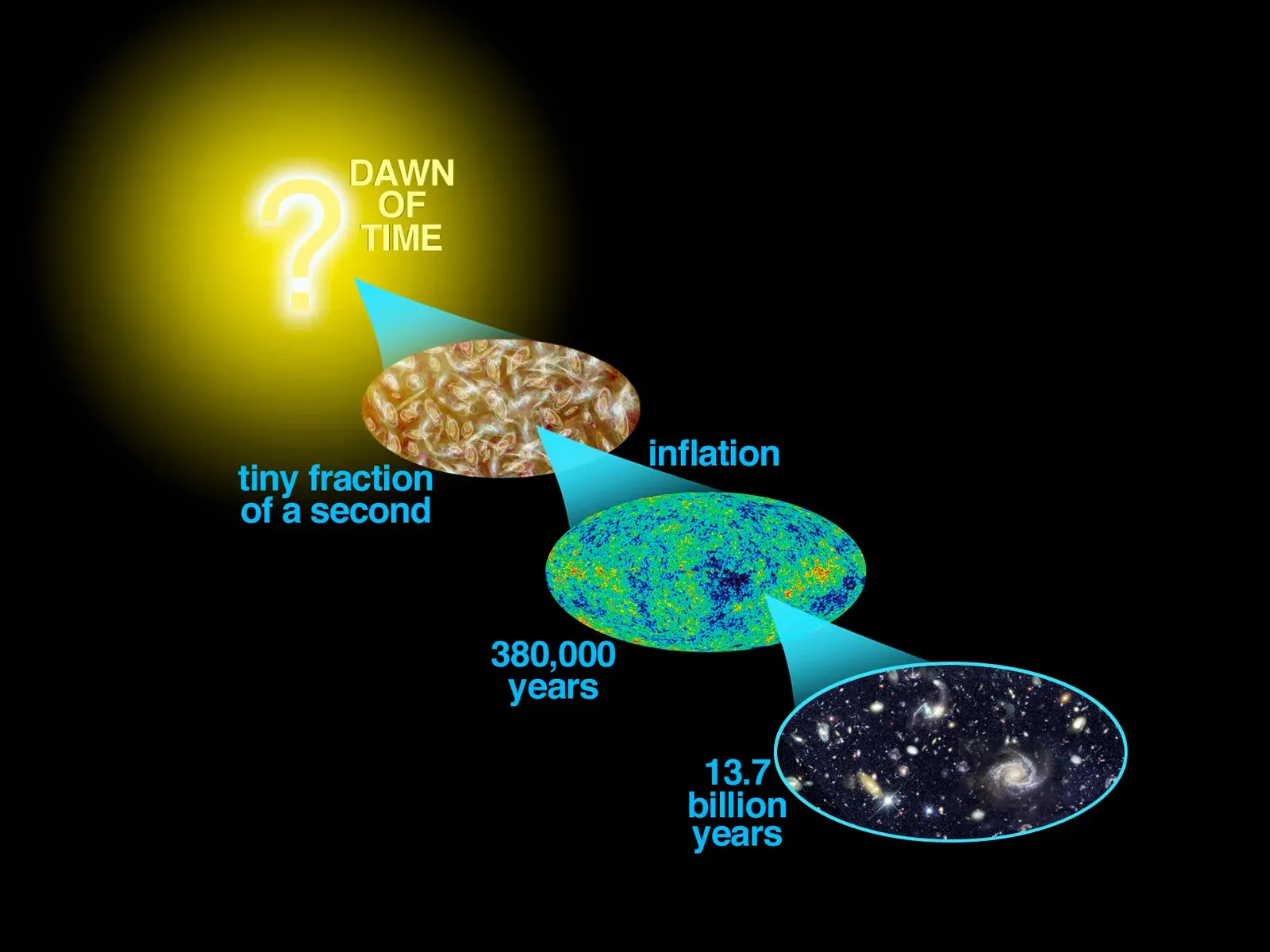
If you decompose the CMB sky into spherical harmonics, you can label each mode as even or odd, analogous to how waves might be symmetric or antisymmetric. In a neat, random, statistically isotropic universe, you would expect no particular bias between the power in even and odd modes at large scales. What you actually see is a curious parity asymmetry: certain ranges of low multipoles show an imbalance, with one parity dominating more than you would naturally expect. From your perspective, this is like rolling a fair die many times and noticing that odd numbers show up distinctly more often than even ones in a specific range of throws. Statistically, it is not impossible, but it makes you wonder whether the die or your assumptions might be slightly off. Several proposed explanations range from foreground systematics to exotic physics affecting primordial fluctuations, yet none has firmly nailed the case. So you are left treating parity asymmetry as a nagging hint that your picture of early-universe randomness might be missing some quiet rule.
Curious Alignments with the Ecliptic and Local Structures
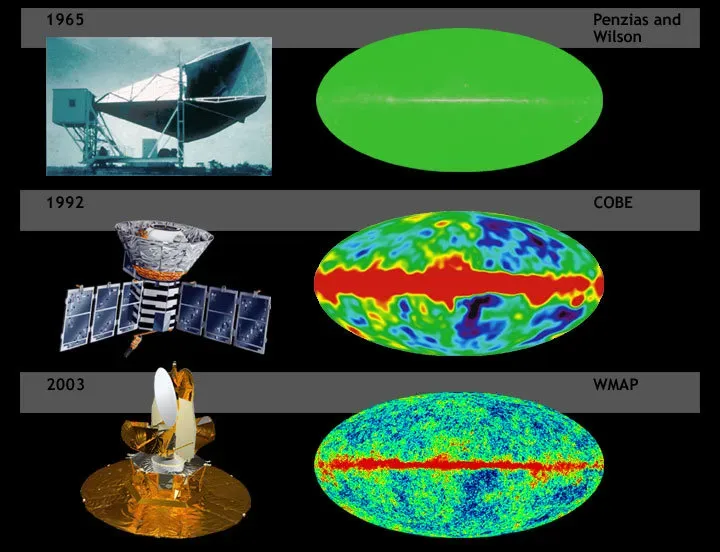
You would expect the cosmic microwave background – a signal from when the universe was just a few hundred thousand years old – to be completely indifferent to the geometry of your Solar System. Still, when you look closely, some features and statistical oddities appear suspiciously aligned with the ecliptic plane or even with the motion of the Solar System relative to the CMB. To you, this feels a bit like discovering that the pattern of ancient tree rings somehow lines up perfectly with the layout of your modern city’s streets. One natural reaction is to suspect that some part of the signal processing pipeline, instrument systematics, or residual foreground emission tied to the Solar System or the Galaxy is leaking into the supposedly primordial map. Researchers have spent years trying to model and subtract such contaminants, yet the whiff of alignment has not entirely vanished. You are left balancing skepticism – because you know your instruments are never perfect – with intrigue, because if any of these alignments turned out to be genuinely cosmological, they would demand a deep rethink of how large-scale structure and motion are connected.
Hubble Tension and the Implied CMB–Late-Universe Mismatch
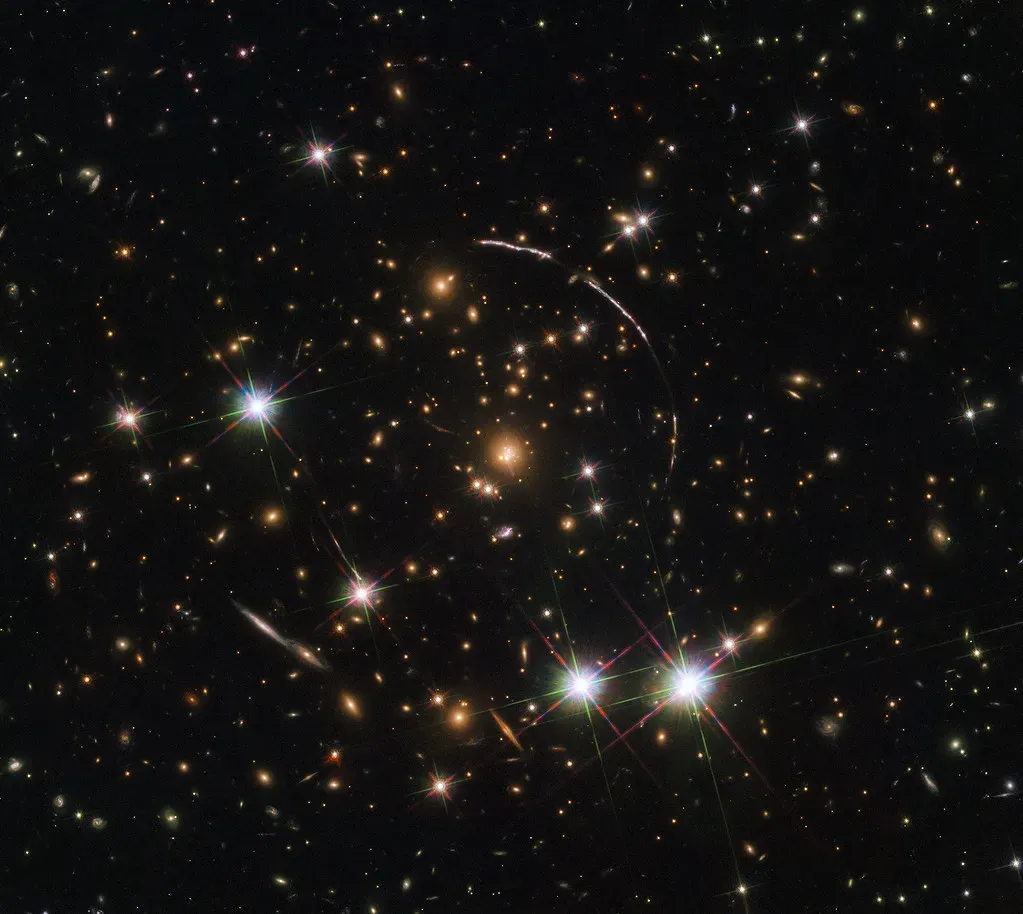
At first glance, the Hubble tension might not look like a CMB anomaly, because it shows up when you compare different cosmic measurements. When you use the CMB and the standard cosmological model to infer the present expansion rate of the universe, you get a value that disagrees with what you measure directly from nearby galaxies and supernovae. As you, personally, try to reconcile these two, you are effectively being told that the universe cannot decide how fast it is expanding. Since the CMB is one of the anchors in this disagreement, you are forced to ask whether your interpretation of its fluctuations is missing something – perhaps an unknown type of dark energy, extra relativistic particles, or some twist in early-universe physics. None of the simple fixes has worked cleanly without breaking something else that the CMB or large-scale structure already describes well. So you live in this uneasy situation where the CMB still fits the standard model beautifully on its own terms, yet in conversation with late‑time data it seems to be telling you a slightly different story about cosmic history.
Non-Gaussian Hints and Unusual Hot–Cold Patterns
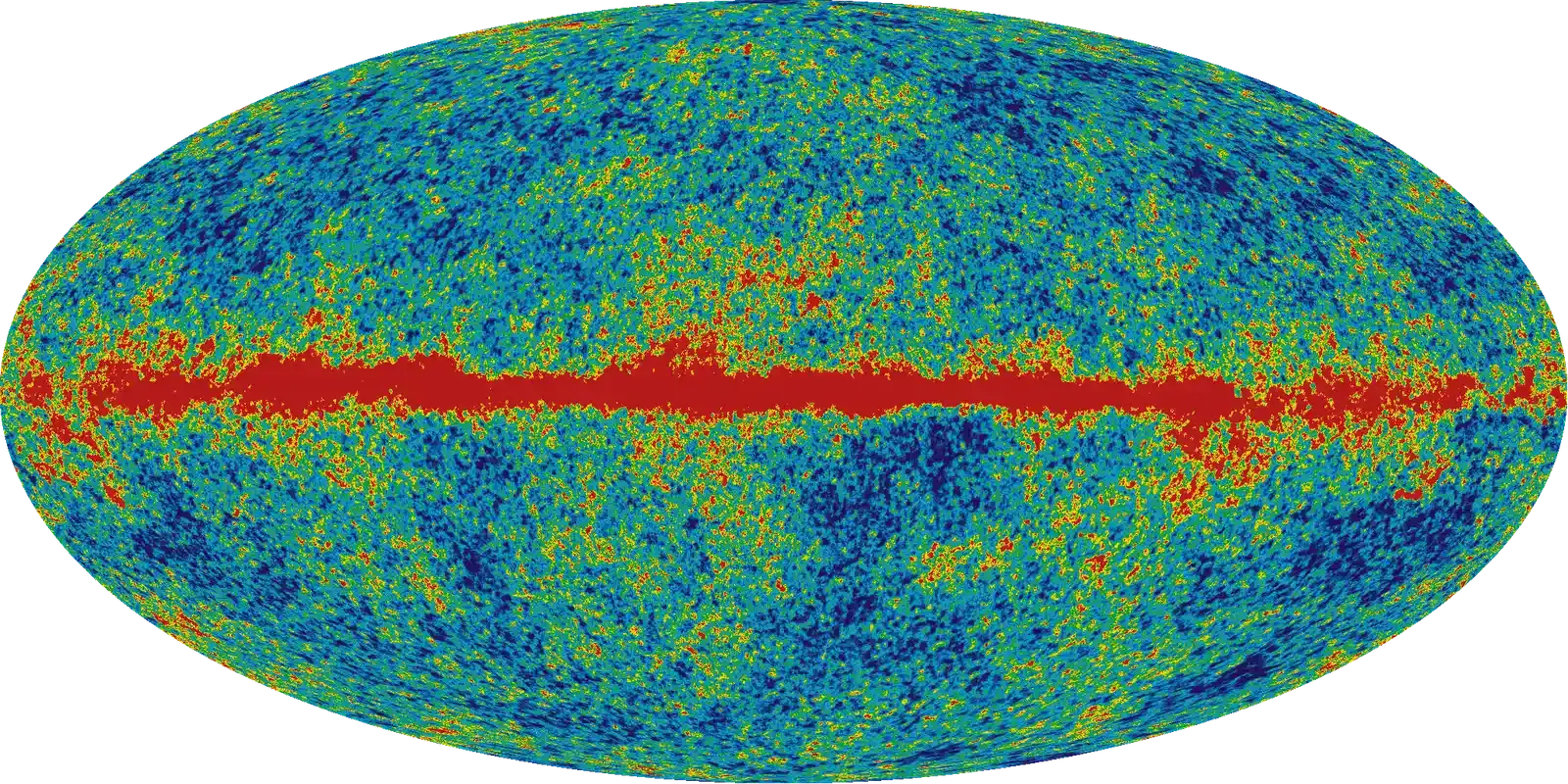
The standard story tells you that the primordial fluctuations that seeded all cosmic structure were almost perfectly Gaussian: random, with no preferred shapes or clumps beyond what simple statistics allow. In the CMB, this translates to a specific pattern of correlations that has been tested with enormous care. Still, buried in the data, you find small hints of non‑Gaussian features, such as curious hot-and-cold ring patterns, localized anomalies, or subtle deviations in higher-order statistics that refuse to fully disappear. For you, this is like analyzing the static on an old television screen and, if you stare long enough, thinking you see faint patterns that might be more than just noise. Some of these hints have weakened as data and methods improved, while others linger on the edge of significance, never quite strong enough to claim discovery. If any one of them were confirmed as real, you would be looking at direct evidence that the early universe contained interactions or structures beyond the simplest inflationary picture. Until then, you are stuck in a limbo where your best theory says “almost perfectly Gaussian,” and the data occasionally whispers, “maybe not entirely.”
Conclusion: Living with a Sky Full of Questions

When you step back from each of these anomalies and look at the whole CMB sky, you still see one of the greatest triumphs of modern science: a map that your standard cosmological model describes with stunning precision. Yet threaded through this success, you find the Cold Spot, the Axis of Evil, hemispherical and parity asymmetries, odd alignments, tensions with late‑universe measurements, and faint hints of non‑Gaussianity. None has yet crossed the line from intriguing oddity to definitive discovery, but together they force you to admit that your confidence in a perfectly simple, featureless cosmos might be a little optimistic. In practice, that means you live with an uncomfortable but fertile kind of ignorance. You keep building better instruments, improving foreground models, and sharpening statistical tools, all while knowing that some of these named puzzles may evaporate and others could open doors to entirely new physics. As you imagine future CMB missions peering even more deeply into the early universe, you have to ask yourself: are these anomalies just the universe’s random static, or are they the first, faint syllables of a story you have not yet learned to read?