If you have ever had the strange feeling that a place is “alive” under your feet, you are not imagining things. The Earth is constantly vibrating, humming, and ringing at frequencies so low and subtle that most of us will never consciously hear them. Yet animals with sharper, broader, or differently tuned hearing ranges can pick up parts of this underground soundtrack in ways we simply cannot.
The twist is that these hums are not mystical secrets buried by scientists; they are very real, very physical signals created by ocean waves, shifting rock, flowing magma, and human industry. In a few places around the planet, these vibrations are unusually stable, strong, and consistent, forming long‑lived “notes” that fall just beyond typical human hearing but right inside what many animals can detect. Let’s walk through six of the most fascinating places where the ground is quietly singing beneath us – even if you will never hear it with your own ears.
Ocean-Coastlines Worldwide Where Microseisms Never Stop

Here is a surprising fact: even on calm sunny days when the ocean looks flat, the seafloor and nearby land are shaking almost nonstop. Long ocean swells generated by storms far away collide with each other and with continental shelves, creating pressure fluctuations that pound the seafloor like a slow, repeating drum. These subtle impacts generate “microseisms,” low-frequency seismic waves that can travel hundreds or even thousands of kilometers inland.
Most of this energy sits in very low-frequency bands, far below the range of typical human hearing, but not necessarily beyond what animals with different sensitivity curves can detect. Some large mammals, like elephants, are known to sense long-wavelength vibrations in the ground, and marine mammals can be sensitive to low-frequency pressure changes. Along rugged coastlines, the hum of microseisms is remarkably stable, forming a kind of continuous bass note of the planet that many animals may effectively “feel as sound,” even while it slips entirely under the radar of most people.
Volcanic Calderas Where Magma and Gas Create a Planetary Subwoofer
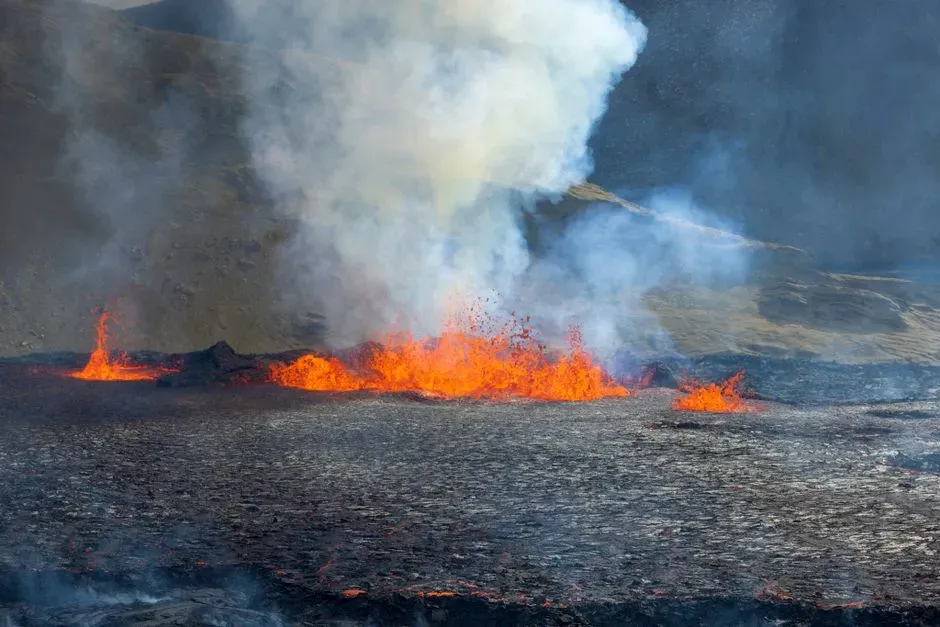
Volcanic regions are not just about explosive eruptions and lava flows; they are also about slow, persistent vibration. Beneath large calderas and active volcanoes, moving magma, pressurized gases, and boiling hydrothermal systems can generate rhythmic seismic tremor that runs at fairly stable frequencies. Think of it like a gigantic, buried subwoofer driven not by electronics but by rising bubbles and shifting molten rock.
These volcanic tremors often fall at very low, ultra‑low, or even infrasound frequencies, slipping underneath normal human hearing but falling inside ranges that some animals can pick up more readily, either through air or ground conduction. Birds, for example, are sensitive to low-frequency changes in air pressure, while animals like elephants, ungulates, and some predators are better than humans at sensing low-frequency ground motion. Around famous volcanic systems with continuous tremor, the land can be quietly humming in a way that may provide animals with early cues about changing conditions long before humans notice anything but a vague feeling of unease.
Deep Sedimentary Basins Beneath Major Cities and Plains
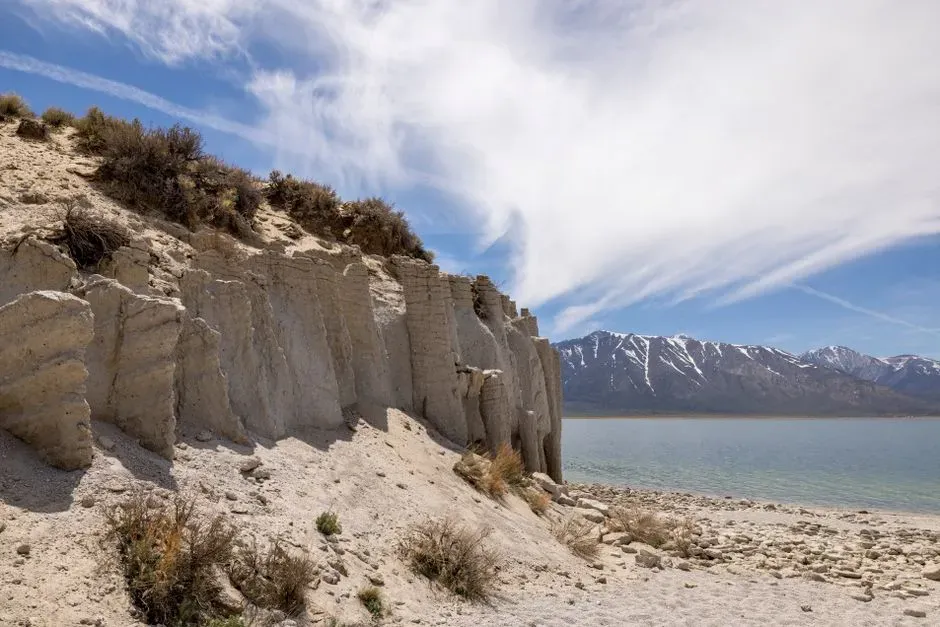
It sounds counterintuitive, but some of the most consistent, low-frequency ground hums are not in remote wilderness, but under large urban areas and broad sediment‑filled plains. Thick layers of soft sediments act a bit like a massive acoustic cavity or drum head, trapping and amplifying very long-period waves generated by distant storms, earthquakes, and human activity. The result is a persistent background vibration at certain “resonant” frequencies that change slowly only if the basin geometry changes.
Most city dwellers never notice this because the frequencies are extremely low and our hearing is tuned mainly to much higher sound. Yet many animals are not limited in the same way. Dogs, for instance, are better at higher frequencies, but large animals like horses or cattle may be more sensitive than humans to low-frequency ground motion, responding uneasily before people sense anything abnormal. In these deep basins, the Earth effectively stores and reshapes incoming waves into a subtle, repeating hum – one that might register on an animal’s nervous system while remaining completely absent from human perception.
Glacier Margins and Ice Sheets Where Ice Streams Groan in Slow Motion

At the edges of glaciers and under large ice sheets, enormous masses of ice are constantly creeping downhill, grinding against rock, and interacting with pockets of meltwater. This slow, relentless motion generates a spectrum of seismic noise, including low-frequency tremor that can persist at nearly steady frequencies for long periods. You can think of it as the low growl of a truck engine idling, except the “engine” is a moving river of ice tens of meters thick.
Although humans in these regions may hear occasional cracking, rumbling, or avalanches as audible sound, the more stable, ultra‑low‑frequency components of glacier motion remain below our hearing. Larger animals, especially those evolved to navigate open tundra or mountainous terrain, may be more attuned to these long‑wavelength vibrations. To them, the edge of a glacier is not just white and silent; it is a dynamic acoustic boundary broadcasting slow, steady signals about shifting ice, moving water, and distant storms driving melt and flow.
Subduction Zones Along Earth’s Great Tectonic Trenches
![Subduction Zones Along Earth’s Great Tectonic Trenches ([1], Public domain)](https://nvmwebsites-budwg5g9avh3epea.z03.azurefd.net/dws/8d2b82d3c6a2c4585fb22b6510a615d5.webp)
Along major subduction zones, one tectonic plate dives beneath another, and the grinding interface between them does more than just produce large, rare earthquakes. It also generates ongoing low-frequency earthquakes, slow slip events, and continuous tremor that hum away in the background at relatively stable frequencies. Seismologists have shown that in some regions, this tremor appears in bands that turn on and off like a musical phrase repeating deep underground.
Humans generally do not sense this tremor directly, because the frequencies are too low and the amplitudes too small at the surface for us to register consciously. Animals, especially those that live close to the ground or have more sensitive mechanoreceptors in their limbs and bodies, may effectively “hear” more from this invisible orchestra. While popular stories about animals predicting earthquakes are often exaggerated, it is reasonable to think that, in subduction regions, some species are picking up subtle, continuous vibrations that people will only ever see as lines on a seismograph, not as a sound in their ears.
Quiet Rural Zones Far From Cities, Where Earth’s Natural Hum Stands Out
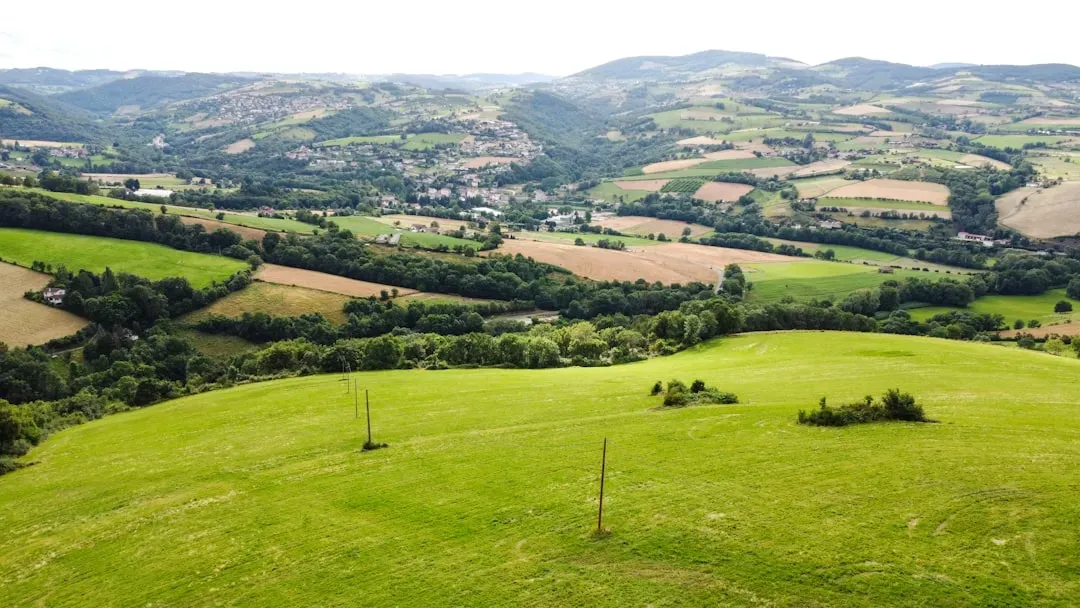
Even far from dramatic volcanoes or active faults, the Earth is always singing a faint, natural hum. Generated primarily by the interaction of ocean waves with the seafloor and amplified by the structure of the crust, this hum shows up as stable frequency bands that have been measured all over the planet. In remote, quiet regions with little human noise, these natural bands stand out more cleanly, forming a persistent background “note” that never quite turns off.
Humans in these rural zones might describe the feeling as deep quiet, but that silence is relative to our own limited hearing and the way our brains filter sensory input. For many animals, especially those with low-frequency sensitivity or a broader audible range, these places are not truly silent at all. The ground is constantly pulsing with subtle vibrations that may encode information about distant storms, ocean states, and even large earthquakes far away. From their perspective, what we call a peaceful countryside may actually be more like standing in the back row of a vast, slow-motion concert hall.
Conclusion: A Planet That Sounds Different Depending on Who Is Listening

When you step back and look at all these humming places together, one thing becomes clear: the Earth is not a quiet rock; it is a permanently vibrating instrument. Volcanic fields, ocean coasts, deep basins, ice sheets, and tectonic trenches are like different sections of an orchestra, each adding its own low, steady notes that blend into a continuous background hum. Humans miss most of this because our ears and brains evolved to focus on the mid‑range sounds of speech, predators, and nearby dangers, not the long, slow waves rolling through stone and water.
My own opinion is that we seriously underestimate how much of this hidden soundtrack animals are using, even if they are not “listening” to it in the conscious way we imagine. A dog pacing nervously before a storm or a herd shifting restlessly on trembling ground may be reacting to a layer of information we will never naturally perceive. In a way, every species lives on the same planet but inside a slightly different acoustic reality. Knowing that the floor beneath you is always humming – even if you cannot hear it – raises a quiet question: how much of the world’s story is still unfolding just beyond the edge of our senses?