Every time we think modern technology has reached a sort of final boss level, history quietly pulls out an ancient object that should not, by all rights, exist. Perfect seams, impossible alloys, machining marks where there should only be hammers and charcoal forges – these are the details that make seasoned metallurgists stare a little longer than they’d like to admit. The story is rarely as wild as time-traveling engineers, but it is often far stranger than neat textbook timelines.
This article looks at six cases where the manufacturing quality is so striking that even with twenty–first century labs and modeling software, experts either struggle to reproduce the exact results, or still cannot agree how these objects were originally made at scale. None of them prove lost alien tech or secret forgotten civilizations. But each one exposes a blind spot in what we assumed ancient craftspeople and early industrial engineers could do – and that gap is exactly where things get interesting.
The Seamless Perfection of the Delhi Iron Pillar
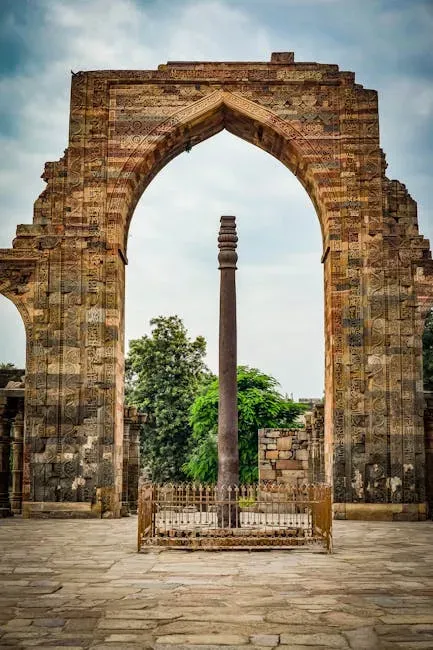
At first glance, the Delhi Iron Pillar looks almost boring: just over seven meters of rust–brown metal in a courtyard near the Qutub Minar. Yet this pillar, likely forged around fifteen hundred years ago, has resisted serious corrosion in an outdoor environment for centuries while modern structural steel in similar conditions would need constant protection. Metallurgists analyzing its composition have found a high level of phosphorus and almost no sulfur or manganese, along with a very distinctive slag distribution that seems to help form a passive, protective film on the surface.
Reproducing a single corrosion–resistant alloy is not the hard part for modern materials science; we do that routinely for aerospace and marine applications. What experts still cannot fully replicate, though, is the combination of low–tech tools and large–scale forging that could create such a massive, nearly seamless piece with that specific, beneficial impurity profile. The ancient smiths appear to have used successive forge–welding of sponge–like blooms of iron, somehow controlling cooling and slag inclusion across a huge section. We can simulate it, we can approximate it, but matching that exact “recipe plus process plus environment” in a way that ages identically in the open air remains out of reach – and that is what unsettles modern specialists.
Damascus Steel Blades With Vanishing Nanostructures
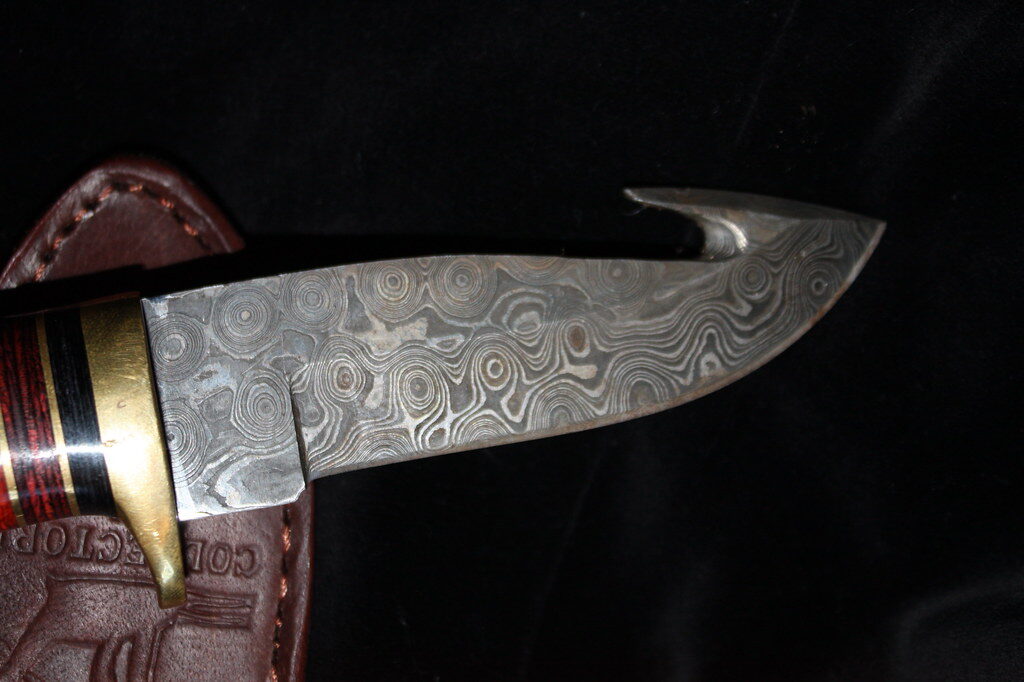
Few words in metallurgy are as overused and as misunderstood as Damascus. The historical blades that made the term famous were legendary for their resilience and their beautiful, watery patterns – yet the real mystery lies in their microstructure. When scientists examined authentic surviving blades under electron microscopes, they identified unusual banding, carbides, and even nanometer–scale structures linked to very specific forge temperatures, impurities, and thermal cycling. Once the original production centers declined and ore sources shifted, that exact combination of conditions disappeared.
Modern steelmakers can produce blades that easily outperform historical Damascus in sharpness, toughness, and consistency. What they still cannot do reliably is recreate the same nanostructured patterning and performance using the same low–tech, fuel–fired processes and ore qualities the original smiths had. Experimental archaeometallurgists have spent years trying to reverse engineer the method, getting partial successes with pattern and hardness but never a reproducible, fully authentic route. The uncomfortable implication is that an artisanal tradition, transmitted orally and refined over generations, developed a process window so narrow and so sophisticated that even with modern sensors and models, we are still guessing at the full recipe.
The Viking Ulfberht Swords and Their “Out of Time” Steel
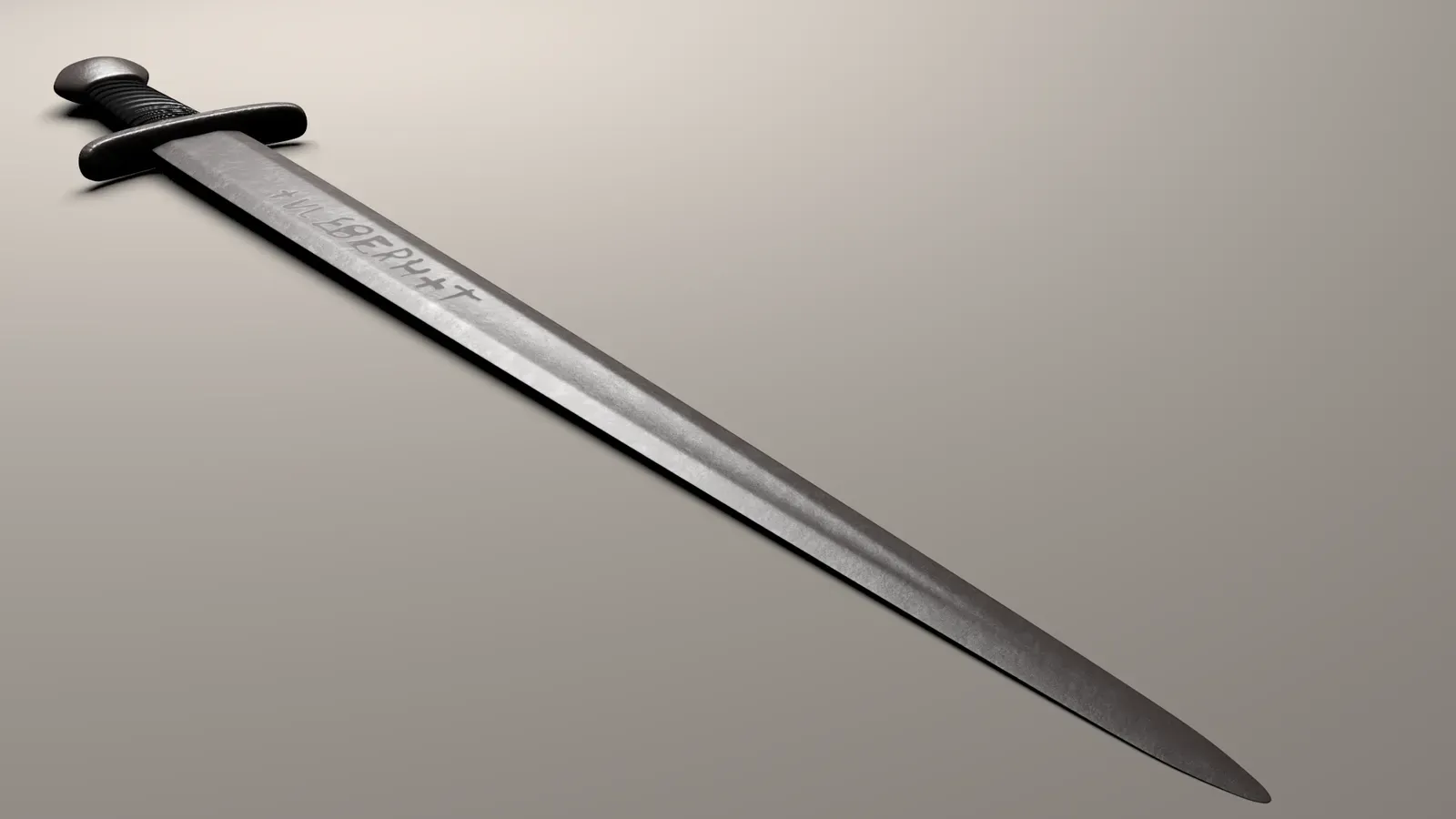
When archaeologists began noticing swords marked with the inscription “ULFBERHT” in Viking–age graves, the assumption was that this was merely a prestigious maker’s mark. Metallurgical analysis, however, showed that many of these blades were forged from steel with carbon content and cleanliness closer to much later crucible steels than to the bloomery iron that dominated early medieval Europe. Some examples have slag levels and uniformity that suggest very high temperatures and careful control of the melt – conditions that should not have been widely available in that region at that time.
We can certainly produce steel today that matches or exceeds Ulfberht quality, but doing it using only the tools, fuels, and trade routes plausibly available to those smiths remains unsolved. The leading view is that at least some of the steel was imported as ingots from Central or South Asia, where crucible technologies were more advanced. But even if that is true, Viking–age craftsmen still had to reforge, weld, and shape that material without ruining its properties, something far easier to mess up than to get right. Modern attempts to reenact the process often end in warps, cracks, or inconsistent hardness, which tells you just how narrow the original craftsmen’s margin for error really was.
Roman Concrete Harbor Structures With Self‑Healing Durability

Concrete seems like the most boring of building materials until you realize Roman marine structures have sat in seawater for nearly two millennia and are, in some cases, still mechanically sound. When geologists and materials scientists examined Roman harbor concrete, they found a complex mix of volcanic ash, lime, and aggregates that reacts with seawater over time to form new, binding minerals. These minerals, including certain aluminum–tobermorite phases, actually strengthen the material rather than degrade it, creating a kind of slow, self–optimizing composite.
Contemporary engineers have created experimental concretes inspired by Roman recipes, and some show promising durability, but fully reproducing the long–term microstructural evolution is still beyond us because we simply have not had centuries to watch our test blocks weather. Much like a sourdough starter, the Roman system depended on local ingredients, specific ash chemistry, and the messy variability of lime burning and mixing by hand. We can match nominal proportions and even crystallographic phases, but we cannot yet recreate the exact way those components interacted over one thousand or more years in a real harbor, which is why those breakwaters still feel quietly superior to many of our short–lived modern piers.
The Antikythera Mechanism’s Metal Gearing and Tolerances
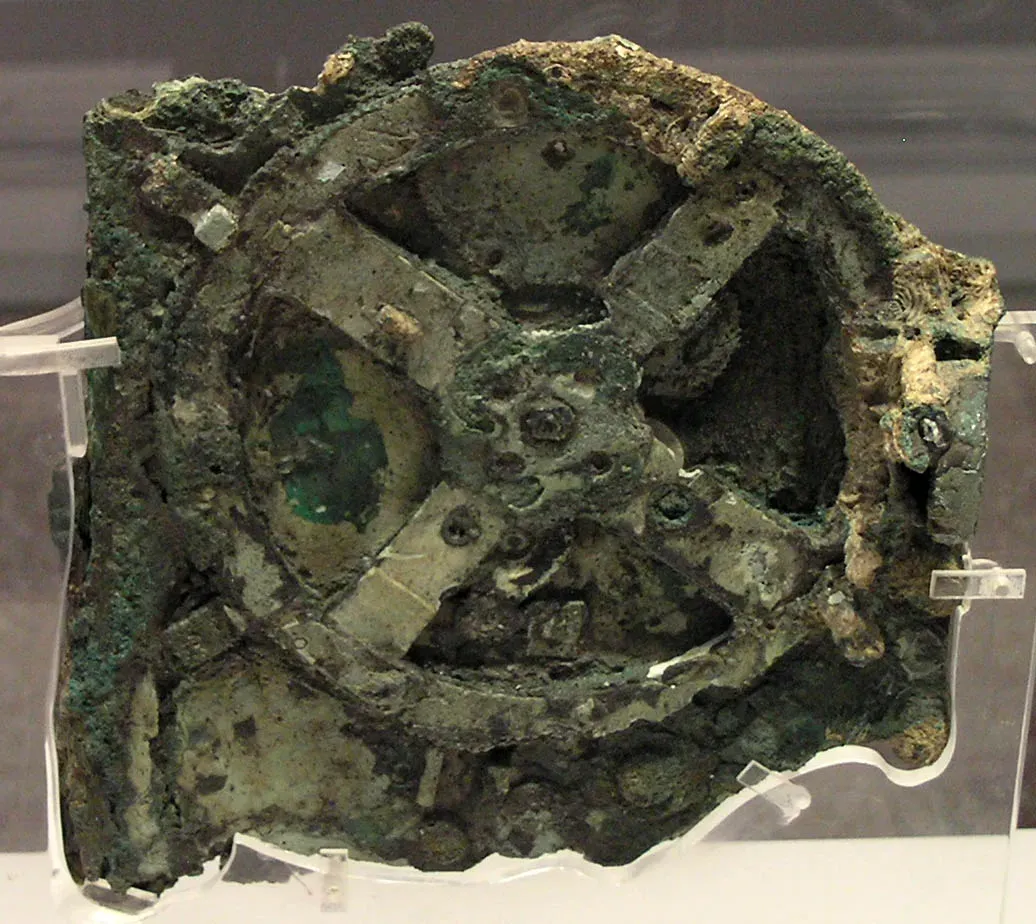
The Antikythera Mechanism is often described as the world’s first known analog computer, but the metalwork is what really stuns engineers. The surviving fragments show bronze gears with extremely fine, regular teeth, stacked in multi–gear trains with clear astronomical functions. Based on reconstructions, the device required precise cutting of gear teeth, accurate alignment of shafts, and careful accounting of backlash and wear – concepts that would not be formally described until many centuries later.
Modern watchmakers and precision engineers can exceed the mechanism’s tolerances without breaking a sweat, using CNC mills and high–purity alloys. The challenge lies in reproducing the original toolchain and workshop conditions that could consistently produce those gears by hand. Experts do not yet fully agree on which specific tools – files, saws, indexing devices – were used, nor on how widespread that expertise was. When contemporary artisans try to duplicate the mechanism using only historically plausible methods, the result is often bulkier, less accurate, or far more time–consuming to build, hinting that the original makers were operating at the absolute cutting edge of what their metallurgy and tooling allowed.
Ultra‑Pure, Razor‑Sharp Obsidian Surgical Blades
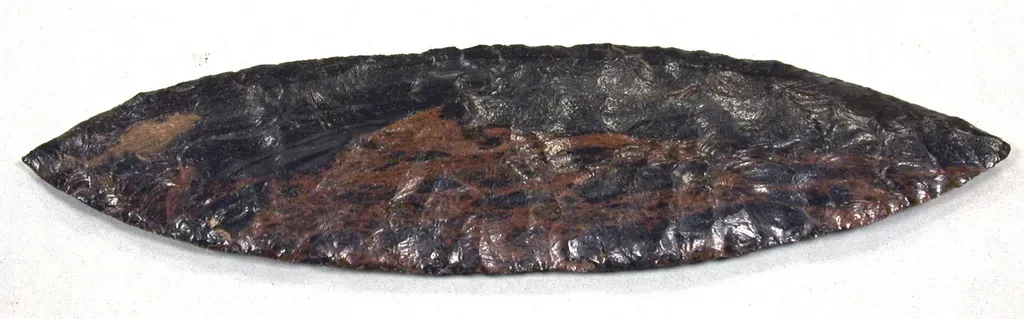
Obsidian blades have been around since the Stone Age, but they still quietly embarrass some modern metals when it comes to sharpness. Properly knapped obsidian can form edges that approach molecular thinness, far sharper than most steel scalpels. Under high magnification, a fresh obsidian edge looks almost eerily smooth compared to the jagged profile of a conventional metal blade, which is why some specialized surgical applications have experimented with obsidian knives despite their brittleness.
From a strictly metallurgical standpoint, this is cheating – obsidian is a volcanic glass, not a metal. Still, the fact remains that even with modern alloys and advanced grinding, we cannot produce mass–market blades that reliably match that natural glass edge at the same cost or with the same simplicity. The skill of shaping the raw material, understanding how the internal stresses will release, and striking in just the right way to produce a continuous cutting edge is an art form we have not fully mechanized. We can grow perfect crystals and nano–engineer surfaces in labs, but giving a single artisan a chunk of stone and watching them out–perform a factory on edge geometry is a humbling reminder of how narrow and specialized our modern priorities can be.
Conclusion: When “Primitive” Tech Refuses To Stay In Its Place
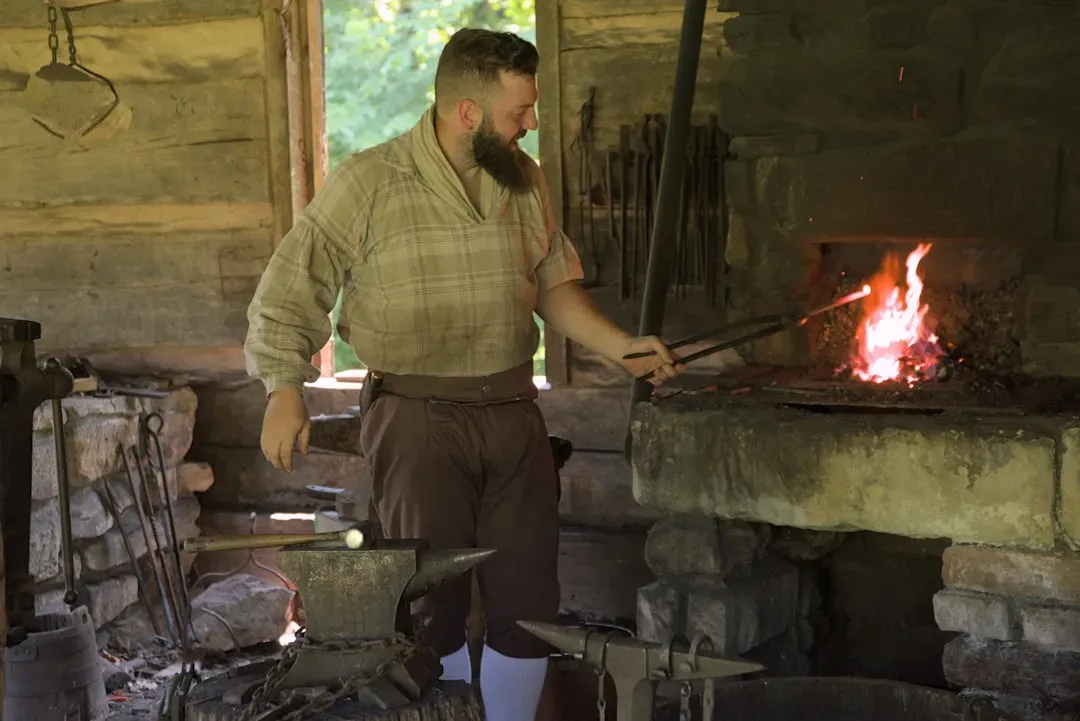
Looking at these artifacts side by side, a pattern emerges that is more uncomfortable than any sensational mystery story: the limitation is not what humans were capable of in the past, but what questions we choose to ask in the present. Ancient and early industrial craftspeople optimized ruthlessly for durability, performance, or symbolism within their tiny windows of available tools and materials. We, on the other hand, often optimize for speed, cost, and scale, then act surprised when we cannot quite reproduce the quirks of a pillar that has shrugged off fifteen hundred monsoons or a blade whose structure depends on impurities we spend millions trying to eliminate.
My own opinion is that the real “irreplicable” part of these artifacts is less about the raw metallurgy and more about lost ecosystems of skill – apprenticeships, tacit knowledge, and an obsession with a single object that stretches across generations. You can put a PhD metallurgist and a master smith in the same lab and still not fully rebuild the cultural pressure that made someone tweak that fire a little hotter or fold that steel one extra time. Maybe the question we should be asking is not whether we could copy these artifacts perfectly, but whether we even value the same things enough to try. If we did, which of our everyday objects would still look impossible to someone staring at them a thousand years from now?