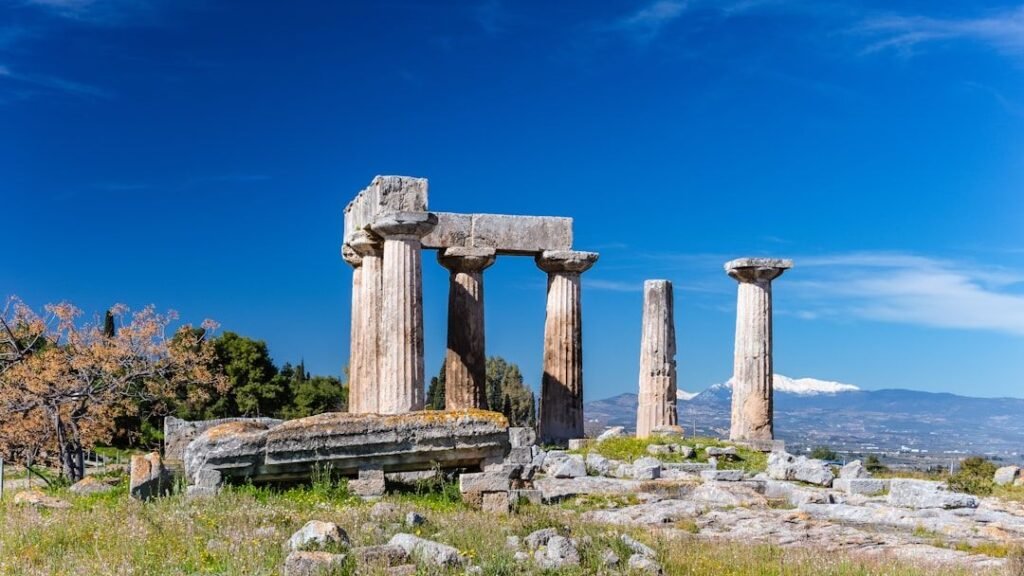

You live in an age of space telescopes and quantum computers, yet some of the biggest question marks on Earth are still piles of old stone, half-buried in dust. You would think that lasers, satellites, and radiocarbon dating could explain everything by now, but when you look closely at certain ancient sites, you find something unsettling: even with all your tools, you still don’t fully understand how or why they were built.
That tension between hard data and lingering doubt is exactly what makes these places so addictive. At each of these six sites, you can point to solid science – measurements, excavations, climate studies – and at the same time feel a delicious sense of “wait, that still doesn’t quite add up.” As you go through them, picture yourself standing there in person, feeling the stones under your hands, the wind in your face, and that quiet shiver of realizing that people thousands of years ago pulled off things you still struggle to explain.
Göbekli Tepe: The Temple That Shouldn’t Exist
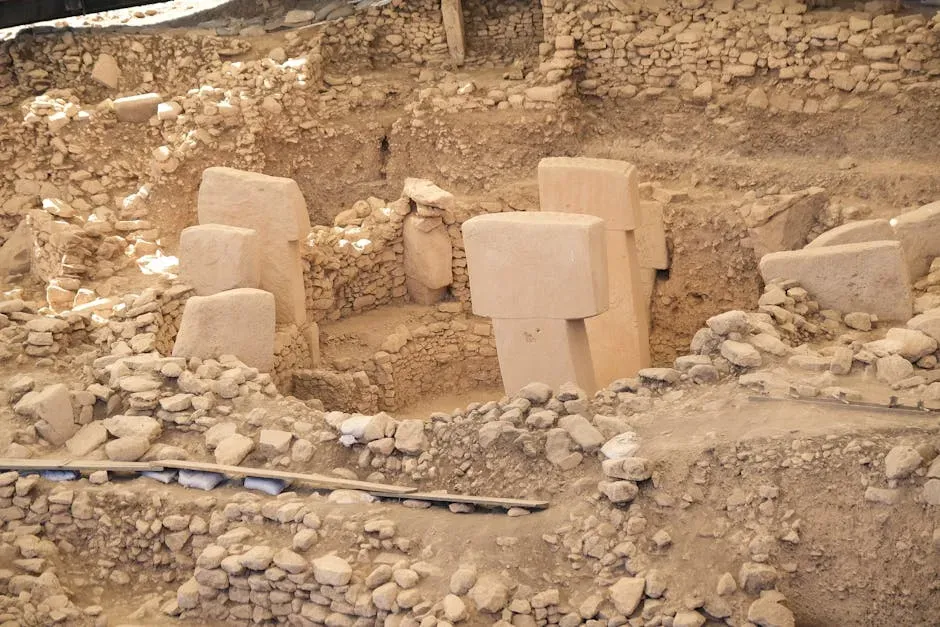
When you walk onto the hill of Göbekli Tepe in southeastern Turkey, you’re stepping into a story that scrambles the usual order of human history. Archaeologists date its earliest phases to around the tenth millennium BCE, long before cities, pottery, or metal, in a time when people were supposed to be simple hunter-gatherers. Yet here you see massive T‑shaped limestone pillars, some weighing many tons, arranged in circular enclosures and carved with foxes, snakes, vultures, and abstract symbols that look like they belong to a settled, complex society, not roaming bands with stone tools. The very existence of this site forces you to rethink the idea that farming came first and monumental religion followed; here, it looks suspiciously like shared rituals may have helped drive people to settle down.
Science has given you a reasonably clear toolkit for how it might have been built: quarries just uphill, evidence that workers exploited natural fractures in the limestone, and experiments showing you can move such stones short distances with ropes, sleds, and coordinated crews. Ground surveys and excavations have revealed dozens of pillars still buried, along with animal bones and stone tools that suggest feasting and repeated gatherings. But even with that data, you still don’t know exactly what these circles meant to the people who made them, why they deliberately buried parts of the site, or how leadership and belief were organized in a supposedly non-urban, pre-agricultural world. You’re left in a rare place where every new study answers one question and opens three more, and that’s what keeps Göbekli Tepe at the center of debates about how civilization actually began.
Stonehenge: A Giant Stone Machine for the Sky
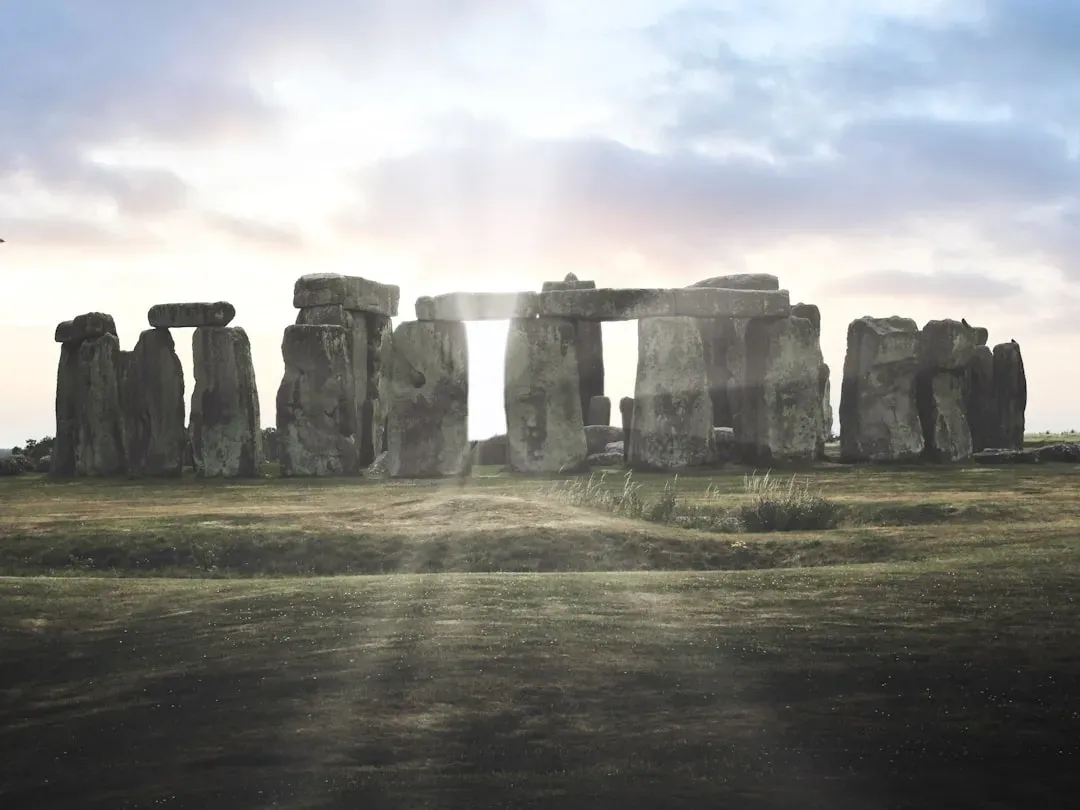
If you visit Stonehenge at dawn on a solstice, you see why this ring of stones on the Salisbury Plain still pulls you in after thousands of years of study. The monument, whose main stone circle dates to roughly the third millennium BCE, lines up in striking ways with the movements of the sun, particularly the sunrise at midsummer and the sunset at midwinter. Archaeologists have mapped out construction phases, nearby burial mounds, and associated timber circles, and they can show you quarry sites in Wales where some of the smaller “bluestones” came from. You also know from experiments that, given enough people, sledges, rollers, and possibly simple trackways or waterways, dragging and levering these stones into place is physically possible, if grueling.
Yet once you accept that people could do it, you still hit a wall when you ask why they did it this way. You can point to evidence of ritual feasting, cremations, and long-distance travel to the site, hinting that Stonehenge sat at the center of a ceremonial landscape tied to life, death, and the turning of the year. At the same time, the precise reasons the builders chose that exact layout, those specific alignments, and that scale of effort remain hazy. You stand there knowing more than any previous generation about its construction sequence and still feel you’re only reading the table of contents of a book whose main chapters are missing. The science anchors you in dates and logistics, but the emotional weight of the place refuses to be captured in neat diagrams.
Nazca Lines: Messages Written So Only the Sky Could Read Them
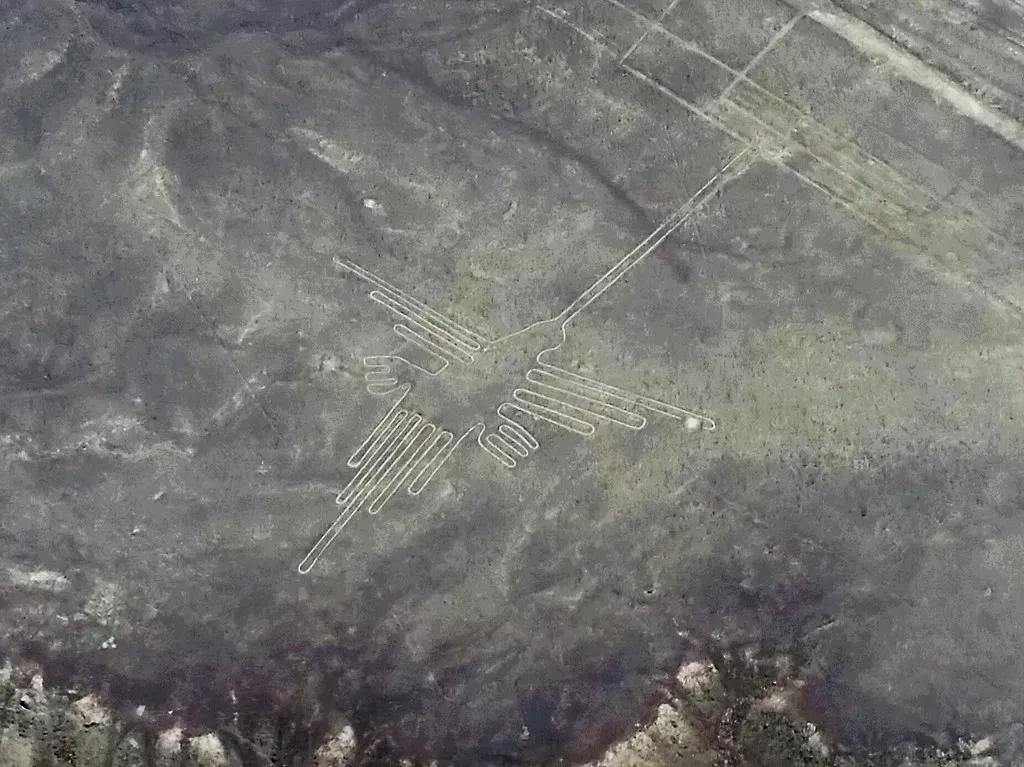
When you first see photos of the Nazca Lines in southern Peru, they almost look like they belong on another planet: gigantic figures of spider, hummingbird, monkey, and long straight lines stretching for kilometers across a desert plateau. On the ground, they can feel underwhelming, like shallow tracks in gravel, but from the air you suddenly grasp the scale of what the Nazca culture created between roughly the first millennium BCE and the first millennium CE. Researchers have shown that the basic technique is deceptively simple: you scrape away the dark, oxidized pebbles to expose the lighter soil underneath, and the hyper-dry climate helps preserve the designs for centuries. Surveys, pottery fragments, and radiocarbon dating all help you slot many of the lines and figures into a clear archaeological timeframe.
Explanations for their purpose lean heavily on data too: some sets of lines line up with horizon points for the sun and certain stars, others cluster around ancient water sources, and excavations suggest ritual deposits and offerings near some figures. The current mainstream view favors a mix of religious processions, water-related ceremonies, and perhaps symbolic paths walked as part of community rites. But when you imagine designing shapes visible mainly from above, with no planes or drones, the mystery deepens again. You know survey methods like sighting posts and corded grids could allow accurate scaling, yet it still feels uncanny that a culture went to this much trouble for images most participants could never fully see. The Nazca Lines sit at that sweet spot where your rational brain can outline methods and hypotheses, while your gut tells you there’s something more going on than you can quite articulate.
Great Pyramid of Giza: Precision Engineering in Stone
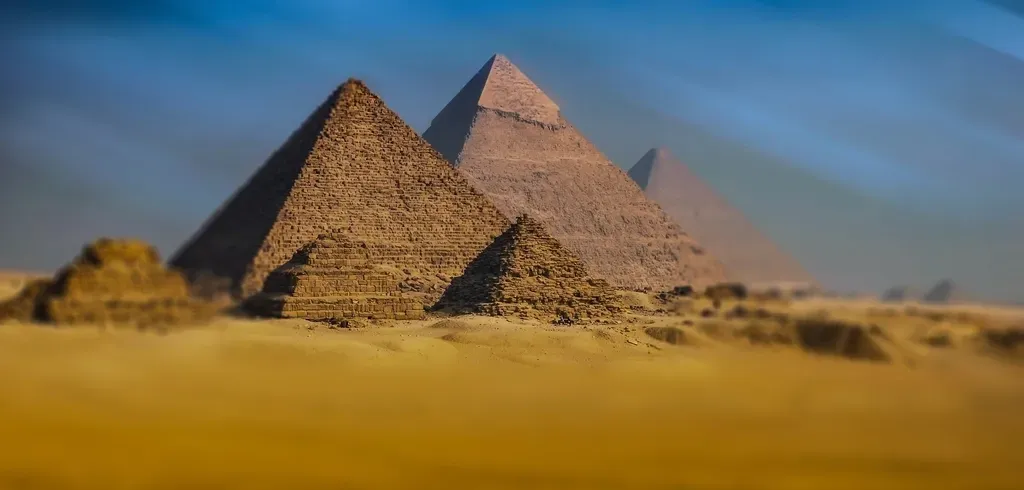
Standing at the base of the Great Pyramid of Khufu on the Giza Plateau, you’re dwarfed by a structure that has been studied for centuries and still manages to feel one step ahead of you. Built around the middle of the third millennium BCE, it originally rose with smooth limestone casing, its sides aligned closely to the cardinal directions and its base nearly square to a striking degree of accuracy. Archaeological work, inscriptions at nearby quarries, and worker village remains have stripped away a lot of the old “impossible” myths: you now have strong evidence that teams of skilled laborers, not enslaved masses, organized in rotating crews, dragged blocks on sleds over prepared surfaces and ramps, using levers and a staggering amount of coordination.
Even with that, the interior still teases you. You can map the known chambers – the so‑called King’s Chamber, Queen’s Chamber, and the sloping and horizontal passageways – but recent muon imaging revealed a large, previously unknown void above the Grand Gallery, hinting that the internal structure may be more complex than the current textbook diagrams imply. You also know that, unlike many later tombs, the pyramid’s internal walls are strangely bare of textual decoration, and the exact symbolic meaning of its chamber layout and narrow “air shafts” remains debated. So on one hand, you can describe quarry logistics, workforce nutrition, and stone weathering in detail; on the other, you are forced to admit that you still do not fully understand every design choice, hidden space, or ritual logic that guided its builders. That combination of meticulous measurement and nagging uncertainty is exactly why the Great Pyramid remains the flagship of ancient enigmas.
Puma Punku: Geometric Stonework at the Roof of the World
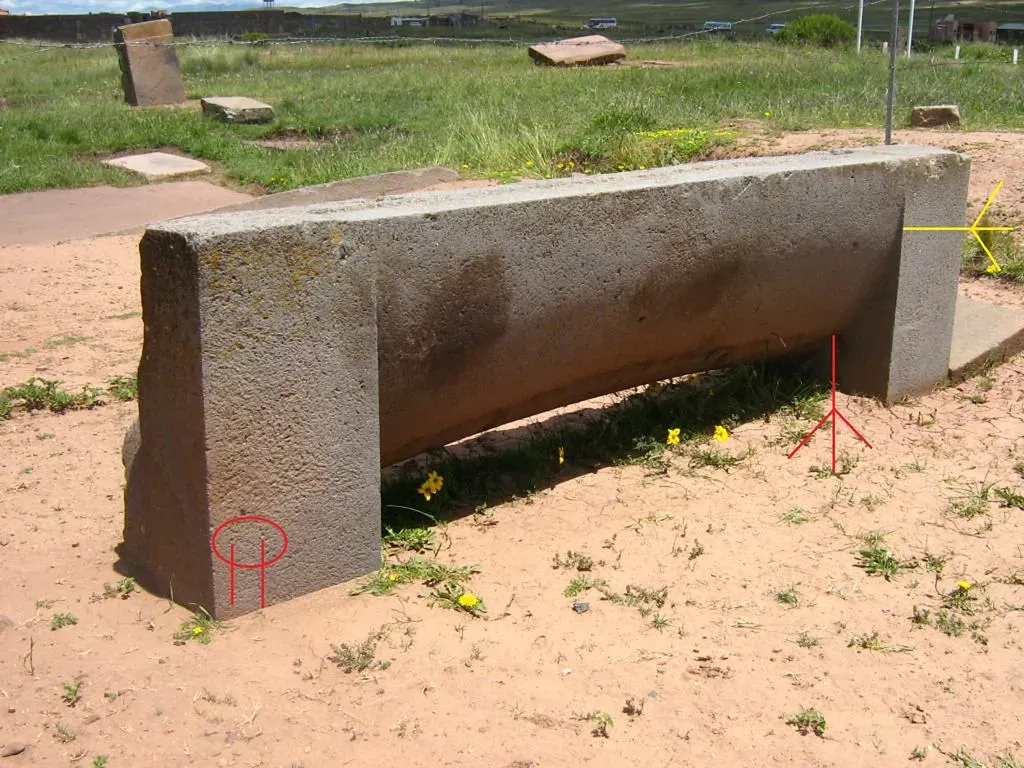
Travel up onto the high Andean plateau near Lake Titicaca in Bolivia and you reach Puma Punku, part of the larger Tiwanaku complex, where the air is thin and the stones look unnervingly precise. Here you find huge red sandstone blocks and finely carved andesite pieces, some shaped into distinctive “H” profiles, with straight edges, right angles, and intricate notches and channels that seem almost modular. Archaeological evidence places the Tiwanaku civilization between roughly the first and early second millennia CE, long before steel tools or modern machinery, and yet the fit of certain joints is still impressively tight. Geological studies point to quarries many kilometers away, sometimes across the lake, raising obvious questions about how you move multi‑ton stones to an elevation of more than three and a half thousand meters without wheeled vehicles or draft animals.
Here, physics and materials science step in to keep you grounded. Experiments and microscopic analysis suggest that with enough skill, stone and copper tools, sand abrasives, and patient labor can carve and polish hard stone to very high precision. You also see that many blocks are unfinished or reworked, hinting at a more trial‑and‑error process than the clean lines suggest at first glance. Still, key puzzles remain: why this particular modular style, what specific rituals or functions the complex served, and why the site appears to have been deliberately dismantled or violently disturbed at some point. As you walk among the scattered blocks, you can use scientific reasoning to bat away the more extravagant claims about impossible technology, but you also feel a real, honest mystery in how a society without writing managed to coordinate such sophisticated architecture and then vanish from the landscape, leaving you to piece its story together from cold stone.
Machu Picchu: Inca Mastery Hidden in the Clouds
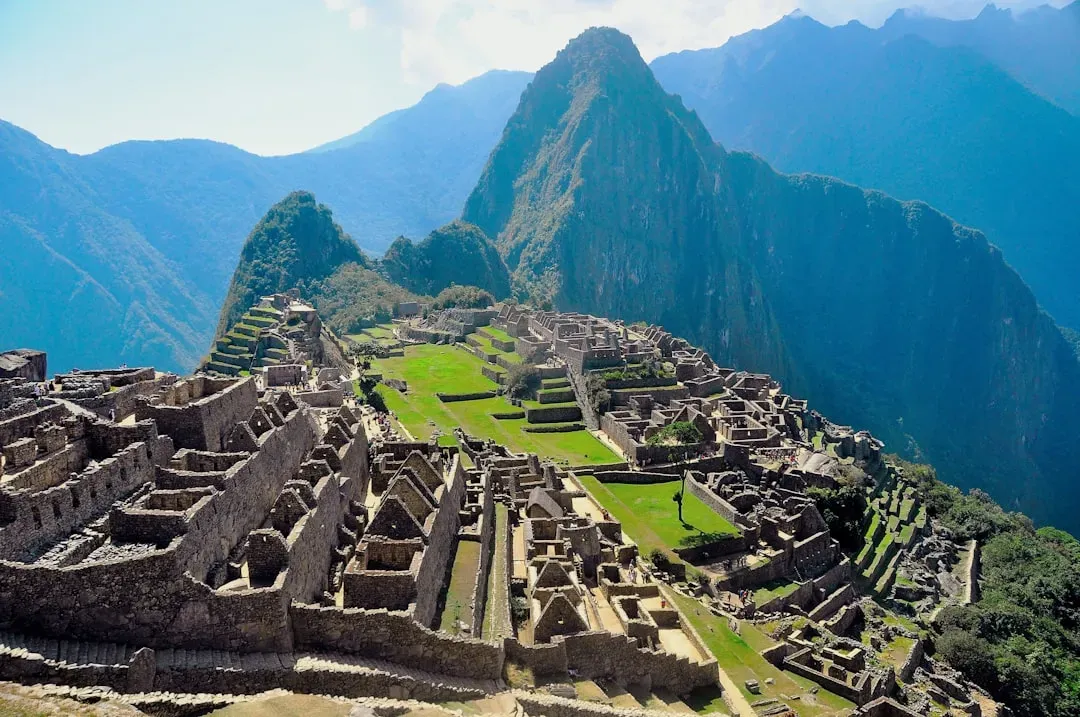
When you arrive at Machu Picchu in Peru, especially if you hike in through the mountains rather than taking the train, the setting hits you first: steep slopes dropping to the Urubamba River, mist curling around jagged peaks, and terraced stonework clinging to ridges that seem almost vertical. Built by the Inca in the fifteenth century CE and later abandoned in the wake of Spanish conquest, the site showcases engineering choices that modern geotechnical studies have come to admire. The Inca used terraces and carefully layered soils to stabilize slopes and control water, channeling rainfall through a drainage system that kept the city remarkably resilient in an earthquake‑prone, rain‑heavy environment. Many walls show the classic Inca style of tightly fitted polygonal stones, which help structures flex slightly rather than crumble during seismic events.
Still, you find yourself puzzling over the bigger picture. Archaeologists broadly agree that Machu Picchu was not a typical city but some mix of royal estate, religious center, and agricultural experiment station, yet the precise balance of those roles is still debated. You see temples, ritual stones aligned with cardinal directions and notable peaks, and clusters of dwellings that hint at both permanent residents and episodic elite visits. You also notice how cleverly the builders used natural rock outcrops as part of their design, blurring the line between architecture and landscape. Science lets you model water flow and slope stability, count pollen grains in soil samples, and date construction phases, but it cannot quite tell you what it felt like to treat this place as the sacred navel of a living landscape. Some part of Machu Picchu will always live in that grey zone between practical engineering marvel and spiritual stage set, and that ambiguity is part of why it still captivates you.
Cahokia Mounds: A Vanished City in the American Heartland
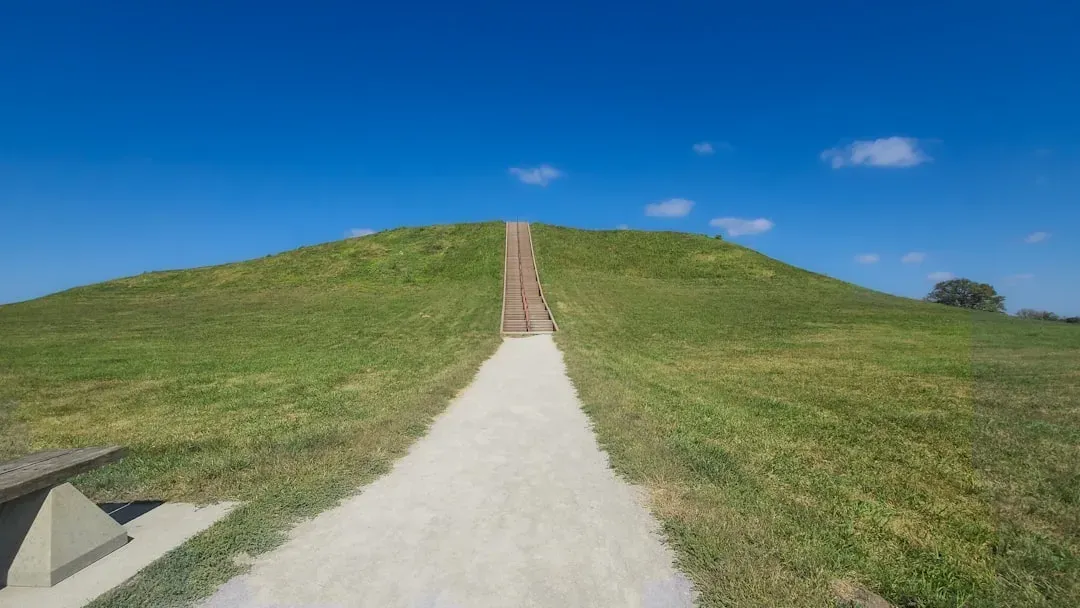
In the floodplain near present‑day St. Louis, you can climb Monks Mound at Cahokia and look out over a landscape that once held one of North America’s largest pre‑Columbian cities. Between roughly the eleventh and fourteenth centuries CE, this Mississippian center hosted tens of thousands of people, with a central plaza, wooden palisades, and an astonishing array of earthen mounds built by hand, basketload by basketload. Excavations have uncovered evidence of extensive trade networks, farming of maize and other crops, and a complex social hierarchy that coordinated the movement of vast amounts of earth into carefully planned platforms, conical mounds, and geometric arrangements.
Here, the mystery is not how they built it so much as why it rose so rapidly and then declined just as dramatically. Environmental studies suggest a combination of deforestation, soil depletion, flooding, and climate shifts, while human remains and settlement patterns point to social stress, conflict, and possible disease. You can model shifting river courses, analyze isotopes in bones to trace diet and migration, and map out how neighborhoods changed over time. Yet there is no single, neat cause that explains why a place that rivaled contemporary European cities in population faded and was largely abandoned by the time Europeans arrived. Standing among the mounds, you sense how even a society with sophisticated agriculture and large‑scale planning can be vulnerable to a tangle of environmental and social pressures. Science lets you reconstruct pieces of that story, but it also reminds you that complex systems rarely have simple endings.
Conclusion: Learning to Live With Honest Mystery
When you pull back and look at these six sites together, you start to see a pattern that has less to do with aliens or lost super‑technologies and more to do with how your own mind works. You crave tidy narratives – first farming, then cities, then temples; first simple structures, then big ones – but places like Göbekli Tepe and Cahokia blow holes in that script. You lean on science to ground you: radiocarbon dates, geological sourcing, imaging, and experimental archaeology show you that determined humans with simple tools can achieve astonishing feats. At the same time, those methods tend to answer the “how” more quickly than the “why,” and that leaves you in a productive discomfort that no clickbait explanation can really satisfy.
If you let yourself sit with that discomfort instead of rushing to the nearest sensational theory, these ancient sites become more powerful, not less. They remind you that people long ago were not primitive caricatures but problem‑solvers, believers, skeptics, engineers, and storytellers in their own right, capable of choices that still surprise you. The collision of science and mystery is not a battle to be won but a conversation that keeps deepening every time a new trench is dug or a new scan is run. As you think about your own world – full of monuments, data, and unanswered questions – it is worth asking yourself: when the future looks back at what you have built, how much will they really understand, and how much will they still be guessing?