Picture the typical Bronze Age smith: shirtless, sweaty, hammering scrap metal over a smoky pit fire with nothing but instinct and luck. It’s a comforting image. It’s also wrong. When metallurgists actually run the chemistry on certain ancient alloys, the numbers refuse to line up with campfire metallurgy at all – some of these mixtures demand furnace control that wouldn’t look out of place in a 19th-century foundry.
This isn’t a fringe theory or a UFO documentary talking point. It’s real archaeometallurgy, quietly published in real journals, forcing real scientists to admit an uncomfortable gap. Across 22 specific alloys – from blood-red gold jewelry to steel that etches into ghostly, hypnotic patterns – the evidence points to furnace technology that official history insists shouldn’t have existed yet. Here’s what the metal itself has been trying to tell us all along.
22. High-Tin Arsenical Bronze That Should Have Crumbled
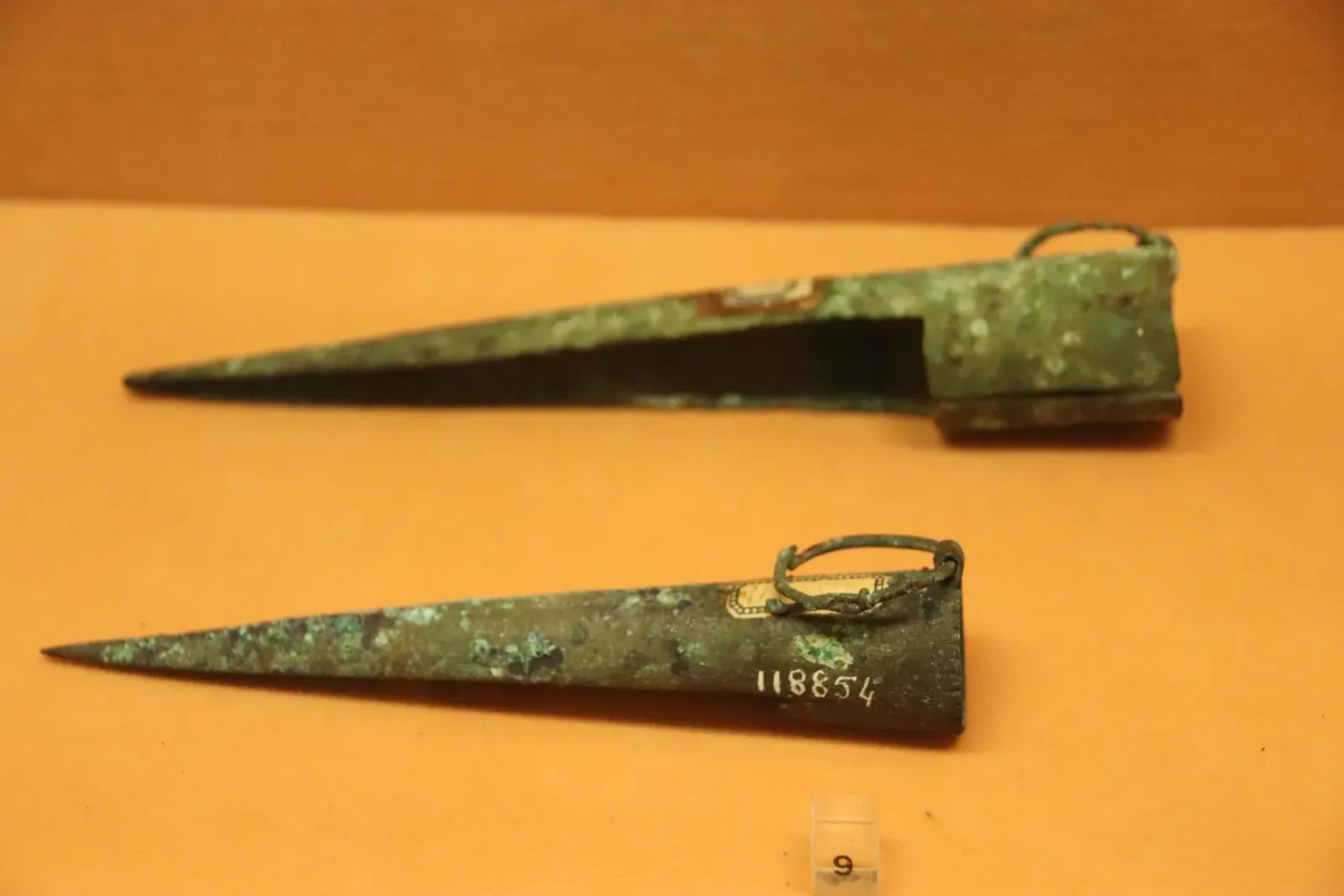
Archaeologists used to write off arsenical bronze as a sloppy stepping-stone toward “real” bronze – a mistake early smiths eventually corrected. Phase-diagram analysis says that story is backwards. Some artifacts combine high tin (10-14%) with several percent arsenic, a recipe that forms brittle intermetallics the moment cooling drifts even slightly.
On paper, this alloy should shatter like glass under a hammer. Lab reproductions show a melt swinging just 50-80°C off target turns the whole batch unworkable. Hitting that narrow window over and over implies furnaces with steady airflow, controlled fuel, and a reliable way to judge temperature by eye – nothing close to the “toss it in the coals” stereotype.
Fast Facts
- Tin content: 10-14%, paired with several percent arsenic
- Cooling tolerance: just 50-80°C off target ruins the batch
- Failure mode: brittle intermetallics form almost instantly outside that range
- Implication: demands steady airflow and controlled fuel, not open-pit smelting
21. Deep-Red Copper-Gold Alloys With Color Control
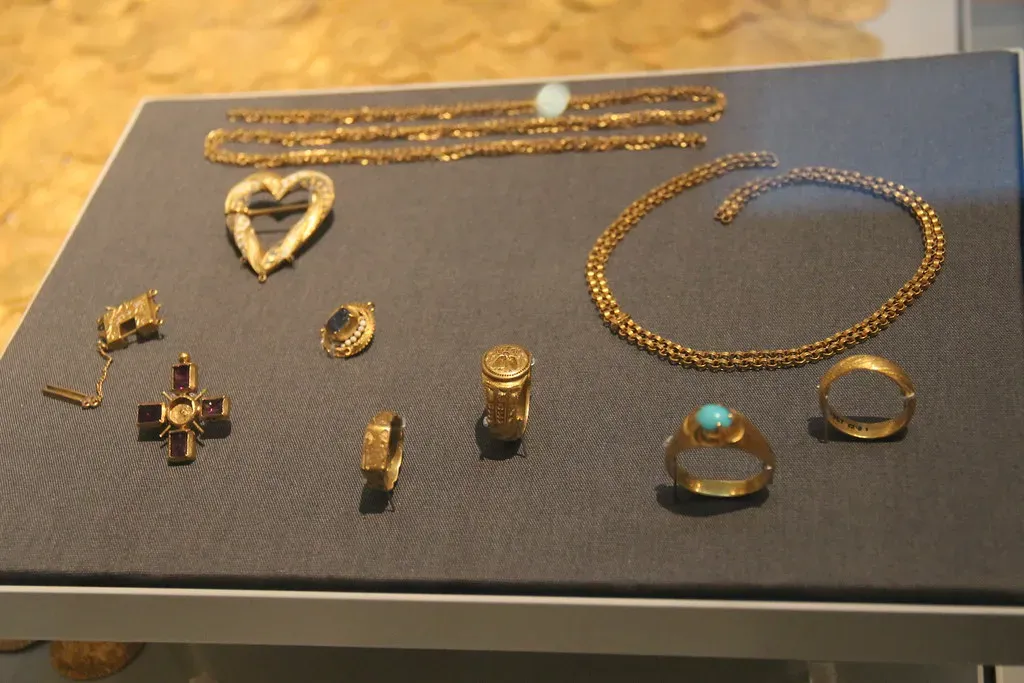
Some ancient jewelry carries an eerie, blood-red copper-gold alloy that’s more precisely tuned than most costume jewelry made today. The gold content sits in a tight band, roughly 20-30%, because that’s the exact range that produces the red hue. Overshoot by even a few percent and the color quietly disappears.
Reproducing that color means melting copper and gold at carefully staged temperatures while skimming oxides and managing oxygen exposure the whole time. Miss that atmosphere control and the alloy dulls into ordinary brownish brass. For a culture supposedly guessing in the dark, this kind of repeatable color output looks suspiciously like industrial process control.
20. Ultra-Pure “Oxygen-Free” Copper Before Electrolysis
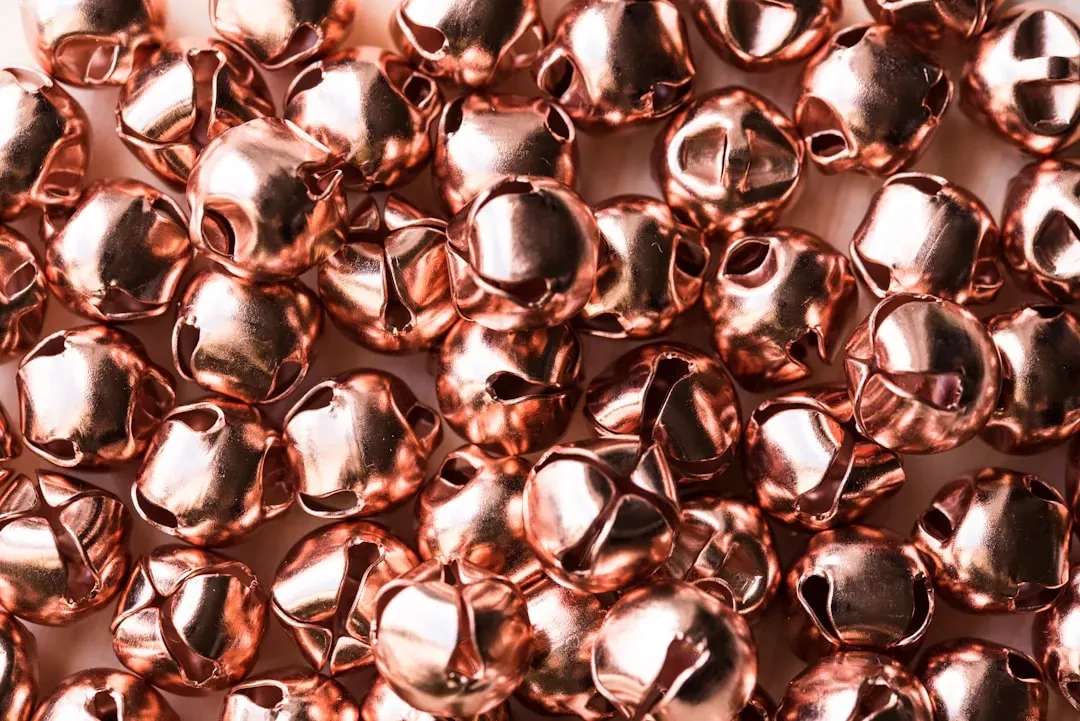
Oxygen-free copper sounds like a modern marketing term, prized today for its conductivity. Yet some ancient bells, conductors, and ritual objects test out at oxygen and impurity levels comparable to early industrial copper – centuries before anyone had electrolysis.
Hitting that purity without electricity means keeping strong reducing conditions inside the furnace and shielding molten copper from direct airflow so it doesn’t re-oxidize. Without a semi-closed furnace and carefully tuned charcoal-to-ore ratios, dissolved oxygen stays stubbornly high. Grain structures and conductivity values rivaling 19th-century copper wire hint at tuyères, chimney pulls, and possibly preheated air – a primitive but genuinely process-engineered smelter hiding behind what we picture as a bonfire.
19. Phosphor Bronze Castings With Modern-Like Fluidity

Phosphor bronze – copper, tin, and a touch of phosphorus – is still valued today for strength and easy casting. Some ancient tools and statues land right in the sweet spot, around 0.1-0.3% phosphorus, where you get the casting benefits without the brittleness. The catch is that phosphorus is a runaway element: it burns off fast if the melt runs too hot for too long or air gets in where it shouldn’t.
Modern foundries manage this with temperature probes. Ancient smiths apparently managed it with something almost as precise, because CT scans of certain artifacts reveal clean, well-fed mold fills and low porosity – the signature of fluid metal held in a narrow temperature band, not just metal that was “hot enough.” That quietly admits to furnace control we assumed didn’t exist for another two thousand years.
18. High-Carbon Crucible Steels Long Before Blast Furnaces
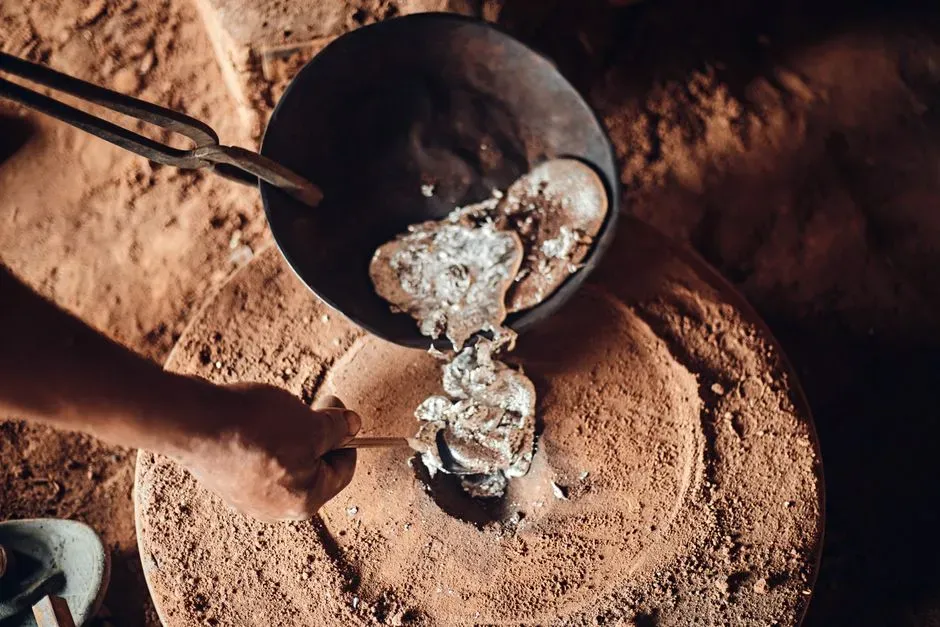
Most textbooks still imply that real steel began with medieval blast furnaces. Crucible steels – the early wootz-type alloys – blow that timeline apart, showing carbon contents of 1-1.5% distributed with startling uniformity. Uniform carbon like that doesn’t happen from a lucky, one-off pour.
It takes crucibles that can survive 1,300-1,400°C without failing, and furnaces hot and sustained enough to fully austenitize the charge – something an open charcoal pit simply cannot do for long. When researchers tried to replicate these microstructures, they needed well-sealed shaft furnaces with forced draft, preheated air, and multi-hour soaks. The alloys weren’t just asking for heat; they were demanding time-temperature discipline and refractory technology our history books barely credit for that era.
At a Glance
- Carbon content: 1-1.5%, evenly distributed throughout the metal
- Required crucible strength: withstands 1,300-1,400°C without failing
- Process needs: multi-hour soaks plus forced draft and preheated air
- Timeline gap: this control predates the “invention” of blast furnaces in most textbooks
17. Nickel-Rich White Bronzes That Refuse to Separate
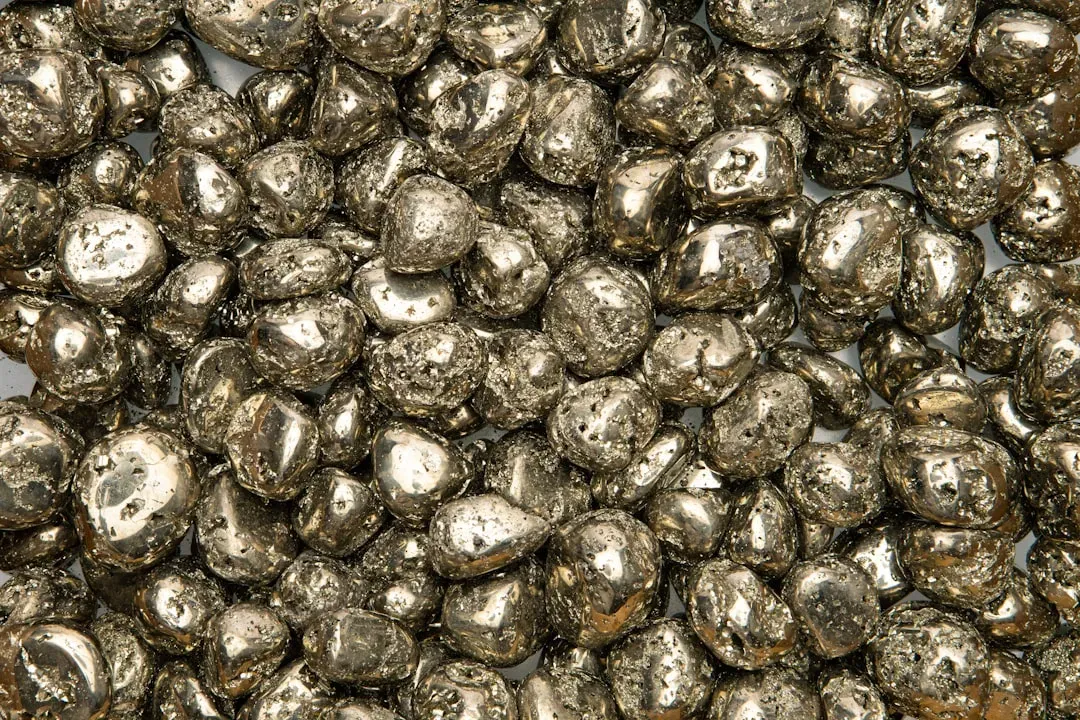
White bronzes containing 10-20% nickel show up in ancient ornaments and tools, and nickel is not a forgiving guest. It raises the melting point and tends to cause messy phase separation if you heat and cool it carelessly. Many of these artifacts are instead remarkably homogeneous.
Lab simulations show reaching this result demands furnace temperatures well above ordinary bronze work, plus melts held long enough for nickel to fully dissolve before a controlled cooldown. Under a microscope, the fine, even grains and minimal segregation scream prolonged, stable furnace runs rather than a quick smoky pour. For pieces coming out of cultures we still casually label “early,” the official furnace timeline starts to look 500-700 years too conservative.
16. Low-Lead, High-Strength Gunmetal Before Firearms
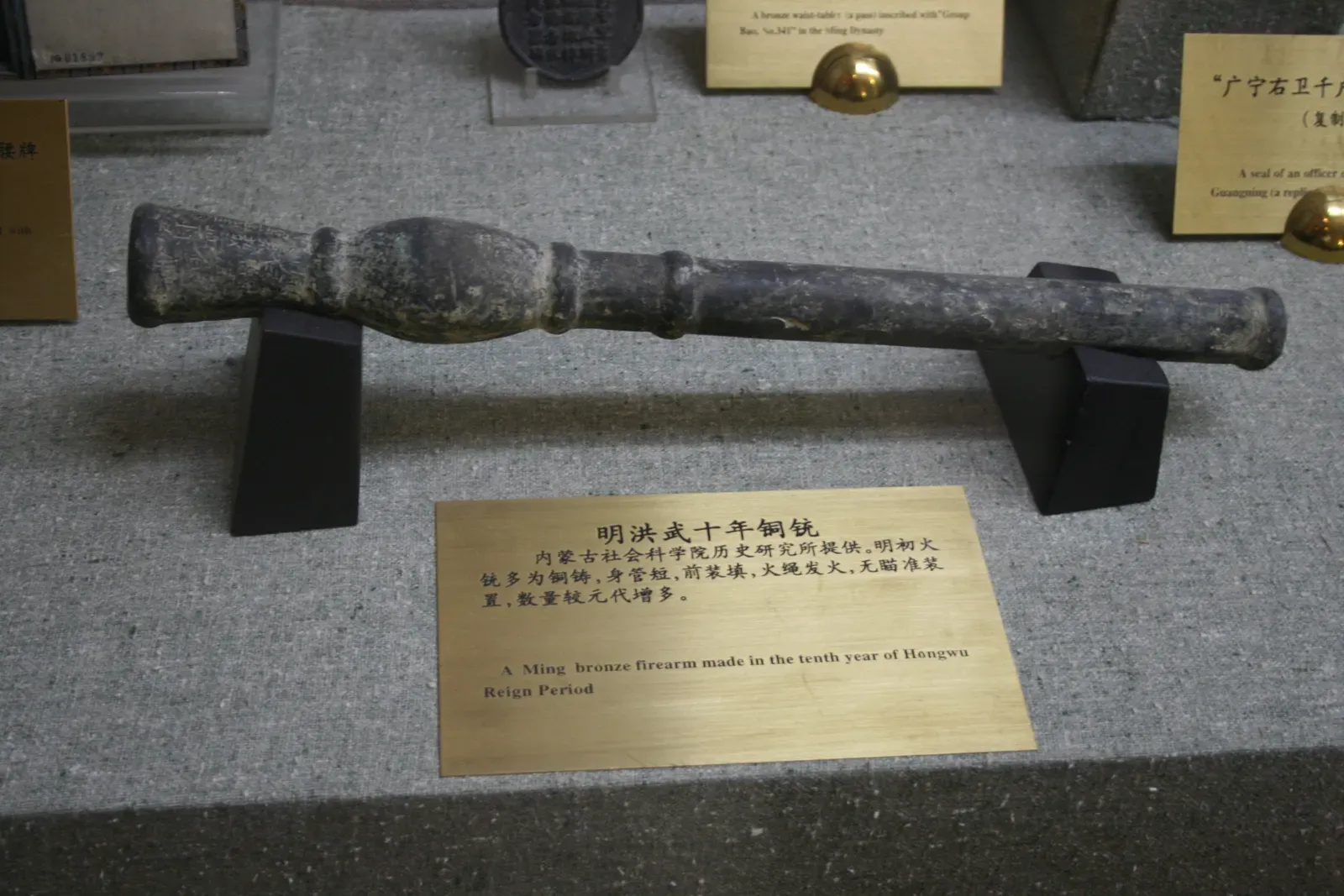
“Gunmetal” gets its name from cannons, but related copper-tin-zinc alloys show up in statuary and bells centuries earlier, with low lead content and carefully tuned zinc and tin levels that deliver strength without brittleness. That balance is harder to hit than it sounds, because zinc boils at around 907°C and loves nothing more than vaporizing straight up your chimney the moment a furnace runs too hot.
Chemical analyses show these alloys clustered in surprisingly narrow zinc-to-tin ratios, meaning ancient smelters could get the furnace hot enough to work zinc into the melt without burning it off entirely. That kind of ceiling control – through enclosures, limited air intake, and deliberate fuel-bed layering – is a subtlety plenty of backyard foundries still struggle with today.
15. Silica-Rich Copper Slags That Demand Blast-Like Conditions
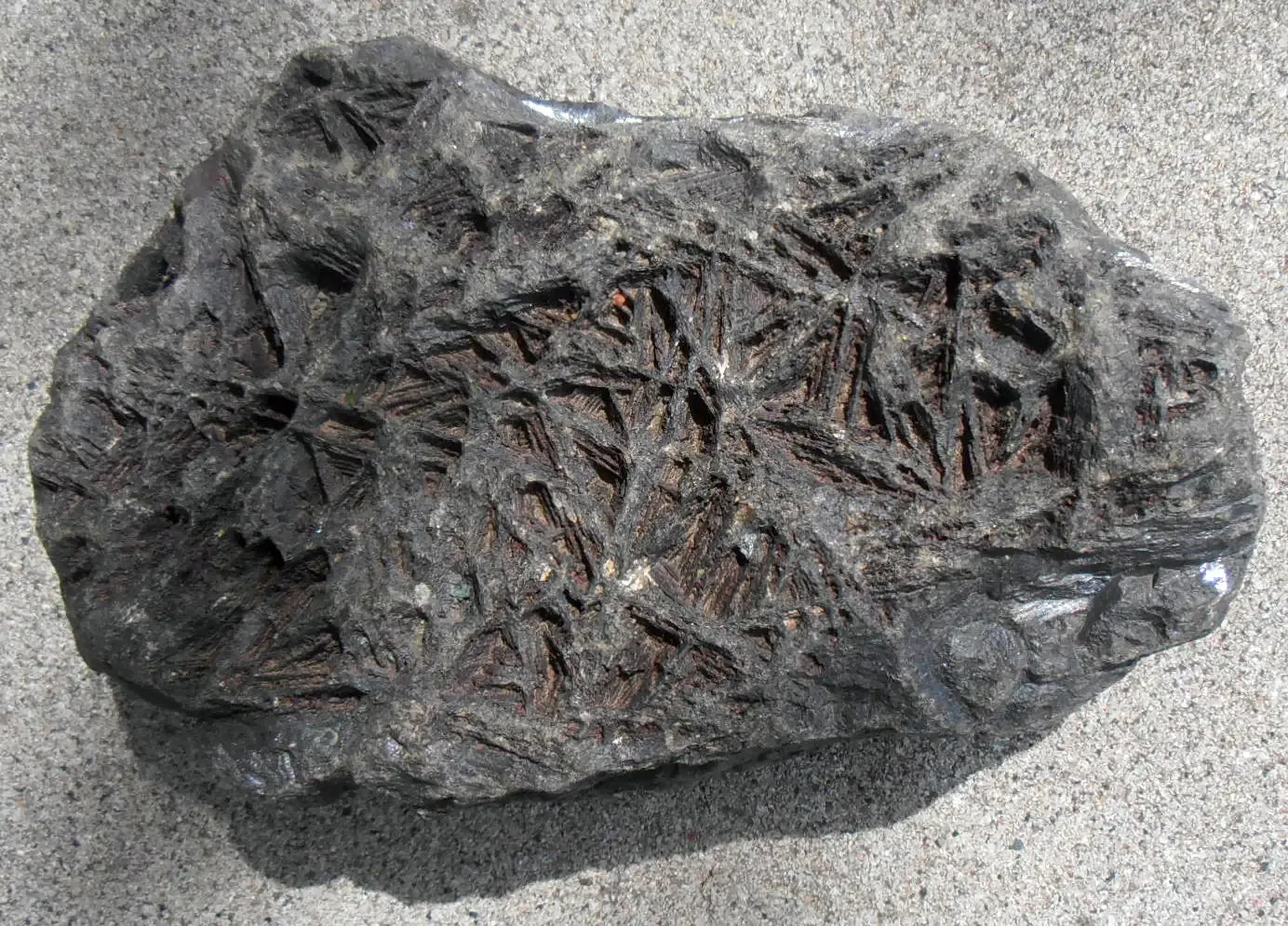
Slag doesn’t lie. It’s the crime scene tape of metallurgy, and at some early copper sites, it contains silica-rich phases and iron-calcium silicates that only form reliably at very high temperatures under sustained reducing conditions. Casual campfire smelting produces lumpy, half-melted slag – not this.
Getting fully molten, glassy slag out of a furnace takes temperatures around or above 1,200°C and strong, steady reducing atmospheres held for a long stretch. Field experiments confirm only shaft or bowl furnaces with forced draft – essentially small-scale blast furnaces in everything but name – can produce it. Official diagrams still call these setups “simple.” The slag chemistry stubbornly disagrees.
14. Work-Hardening Brass That Needed Repeat Annealing
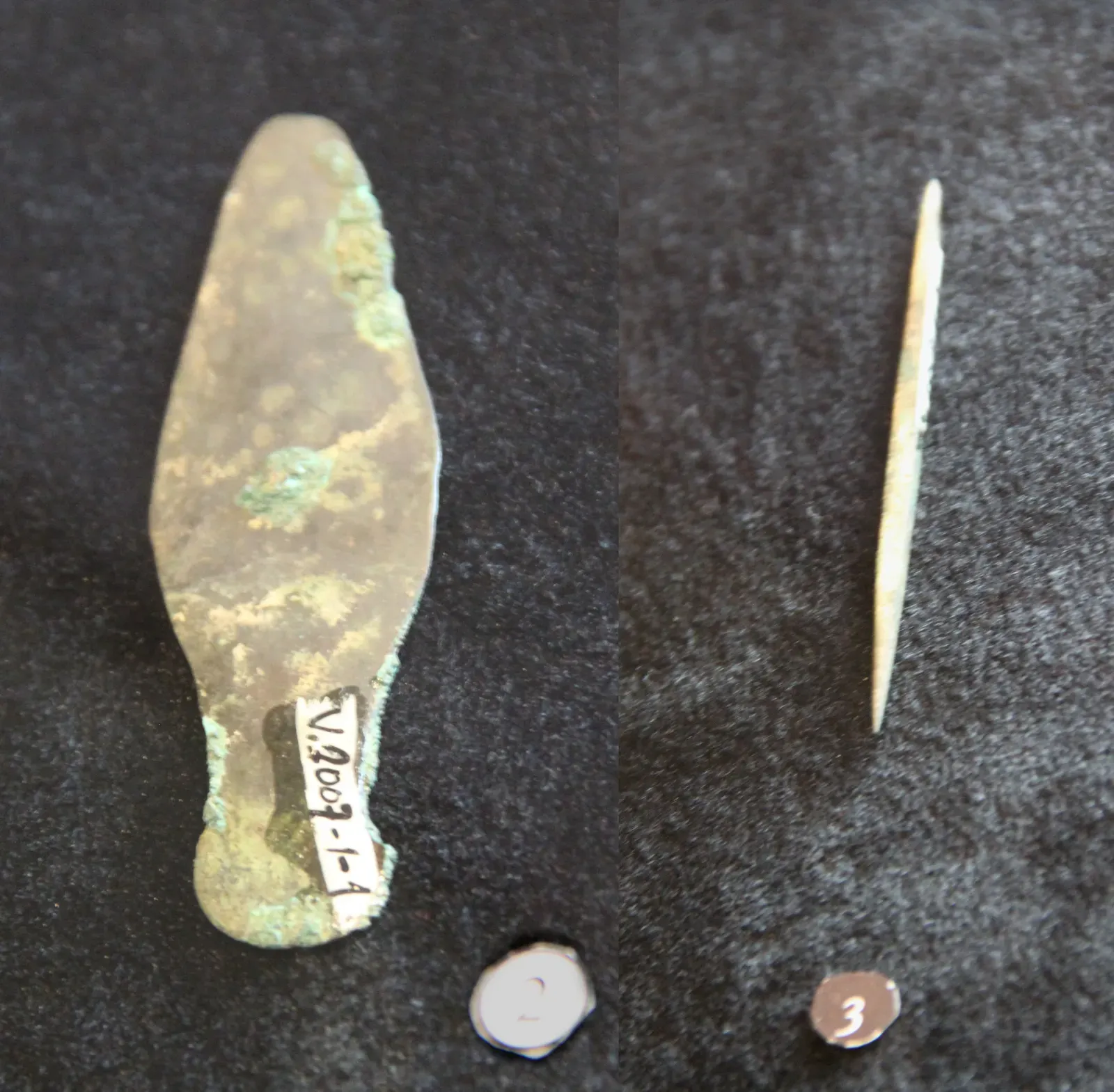
Ancient brass wasn’t only decorative. Some pieces were repeatedly work-hardened and annealed, a cycle visible in the grain structure and hardness profiles of surviving artifacts. That kind of cycling only works if you can reheat the piece into a narrow annealing range without remelting it or burning off the zinc – repeated trips to roughly 500-700°C, never letting open flame lick the metal directly.
The microscopic evidence – recrystallized grains layered over hardened zones – points to craftsmen reading temperature by color with alarming precision, inside furnaces that held those colors steady instead of swinging wildly. You cannot fake three, four, or five clean anneal cycles by guessing. The brass itself is a logbook of controlled furnace cycling, centuries before anyone gives ancient workshops credit for “thermal process control.”
13. Deliberately Quenched “Martensitic” Steels
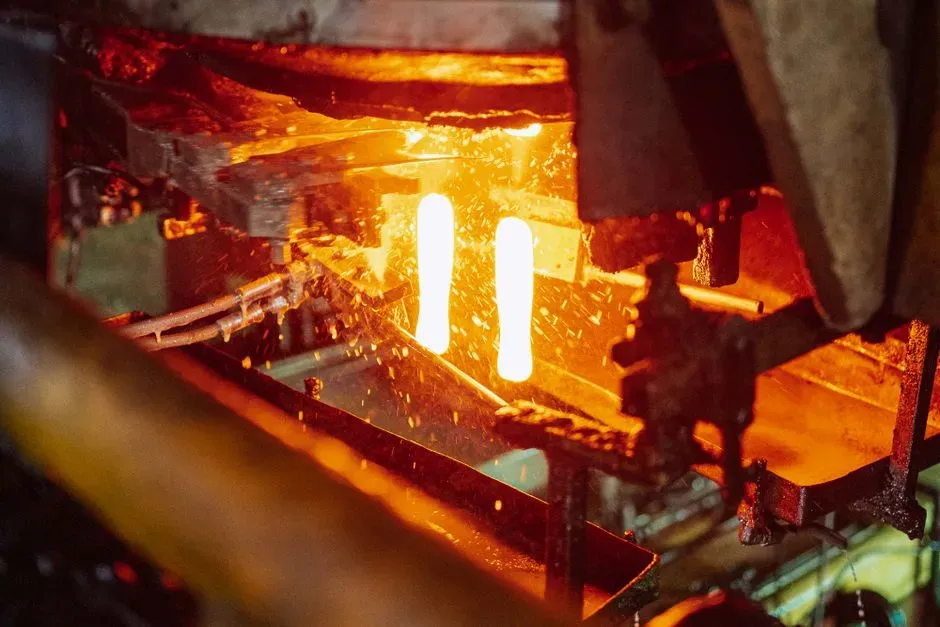
Some early blades and tools show martensitic microstructures – that needle-like pattern that only appears when hot steel is quenched fast enough to trap its structure mid-transformation. This isn’t an accident of forging; it requires heating the piece evenly into the austenite range, above roughly 800-900°C, and then plunging it into water or oil within seconds.
Cross-sections of these artifacts often reveal a hardened outer layer wrapped around a tougher, softer core – a deliberate thermal gradient, not a lucky side effect. Call it folk knowledge if you like, but the alloy tells a more specific story: these were proto-heat-treat shops, running furnaces that could carry steel to exactly the right point and hold it there uniformly. That’s a long way from “stick it in the fire until it glows.”
12. Tin Bronzes With Shockingly Tight Composition Bands

Not all bronze is created equal, and some ancient workshops consistently landed on 11-13% tin – the same sweet spot modern metallurgists still use for balancing strength and castability. Drift a few percent in either direction and you sacrifice real performance, yet these workshops kept hitting the target batch after batch.
That takes more than luck. It means knowing roughly how much tin to add per batch, then melting, stirring, and homogenizing at temperatures stable enough to avoid segregation. Run the furnace too cold and the tin sits uneven; run it too hot and oxidation losses spike. Repeatedly threading that needle points to something closer to a standard operating procedure than a chaotic bonfire – kilns with policy, not kilns with luck.
11. Zinc-Heavy Brasses That Defy Boiling Point Logic
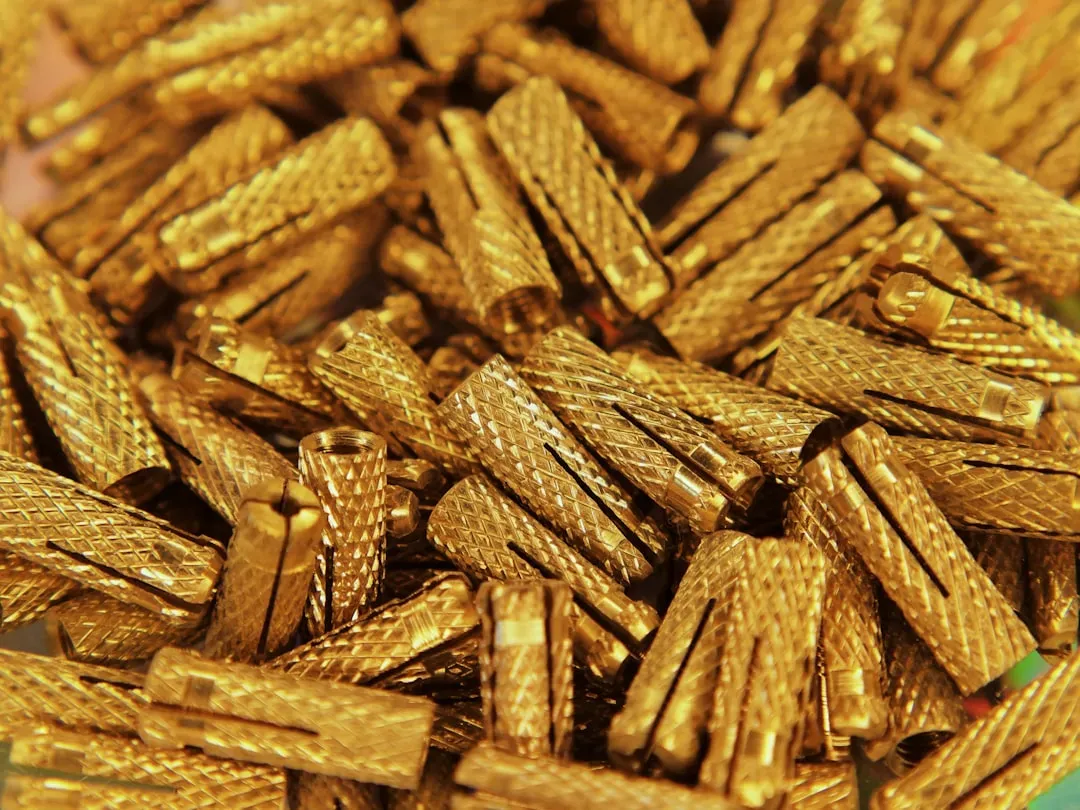
Zinc is the troublemaker of ancient metallurgy – it wants to boil away exactly when you need it to behave. Yet some early brasses hold zinc contents above 20% with barely any evidence of surface depletion, which shouldn’t be possible over an open fire.
Reproducing this in a lab typically requires enclosed or semi-enclosed crucibles and furnace setups with limited airflow and carefully tuned heating rates; blast an open fire instead and the zinc simply hisses away, as experimental slags confirm. The ancient alloys that preserved this much zinc suggest a furnace and crucible working together as a crude vapor-management system, trapping the metal long enough to saturate the copper. “Accidental cementation” is starting to sound like a polite excuse rather than an explanation.
Worth Knowing
- Zinc boils at roughly 907°C, well below typical bronze-working heat
- Some artifacts retain zinc above 20% with minimal surface depletion
- Open-fire smelting normally lets zinc vaporize away almost entirely
- Enclosed or semi-enclosed crucibles appear necessary to trap the vapor in place
10. High-Manganese Irons Bordering on Modern Hadfield Logic
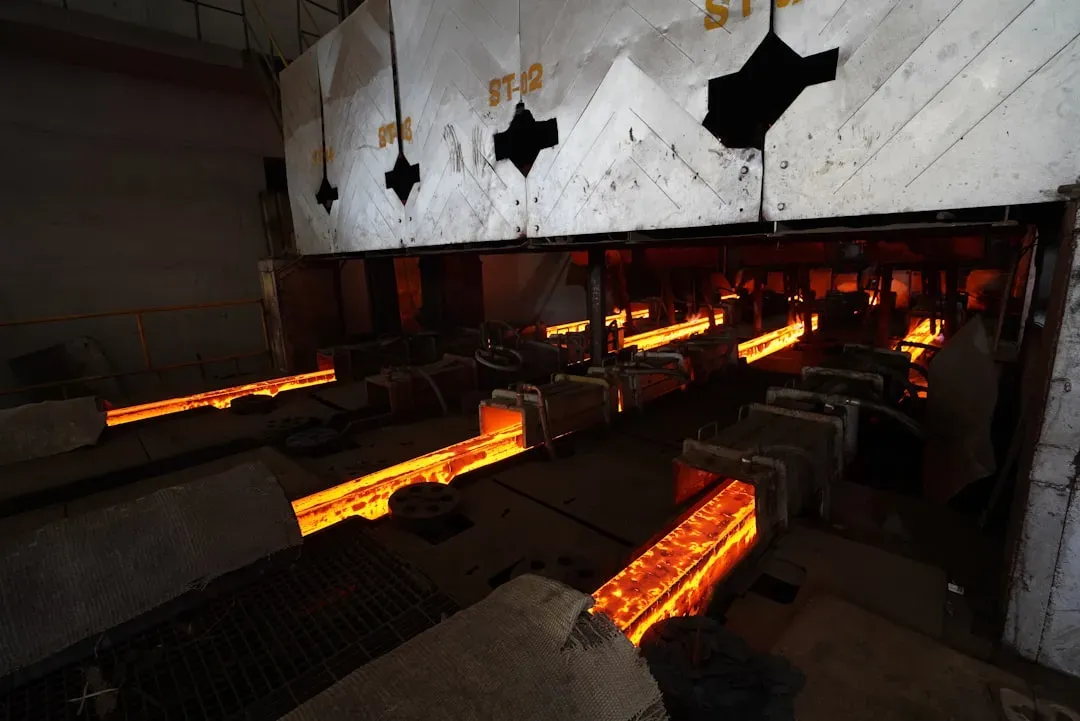
In some regions, iron artifacts carry unusually high manganese content, nudging toward the behavior of the much later Hadfield steels – though not identical to them. Manganese changes everything about how iron deoxidizes, toughens, and hot-works, and smelting manganese-rich ore demands higher furnace temperatures plus strongly reducing atmospheres, since manganese would rather oxidize into the slag than stay in the metal.
Many of these irons retain manganese at levels modern smelters struggle to match in simple bloomery setups. The microstructures and slag compositions together point to smelting systems with air-blast intensity and refractory stability well above the “mud bloomery” cliché. Nobody is claiming these smiths invented Hadfield steel – but the alloys suggest they were operating closer to that thermodynamic edge than we give them credit for.
9. Bimetallic Tools With Clean Metallurgical Bonds
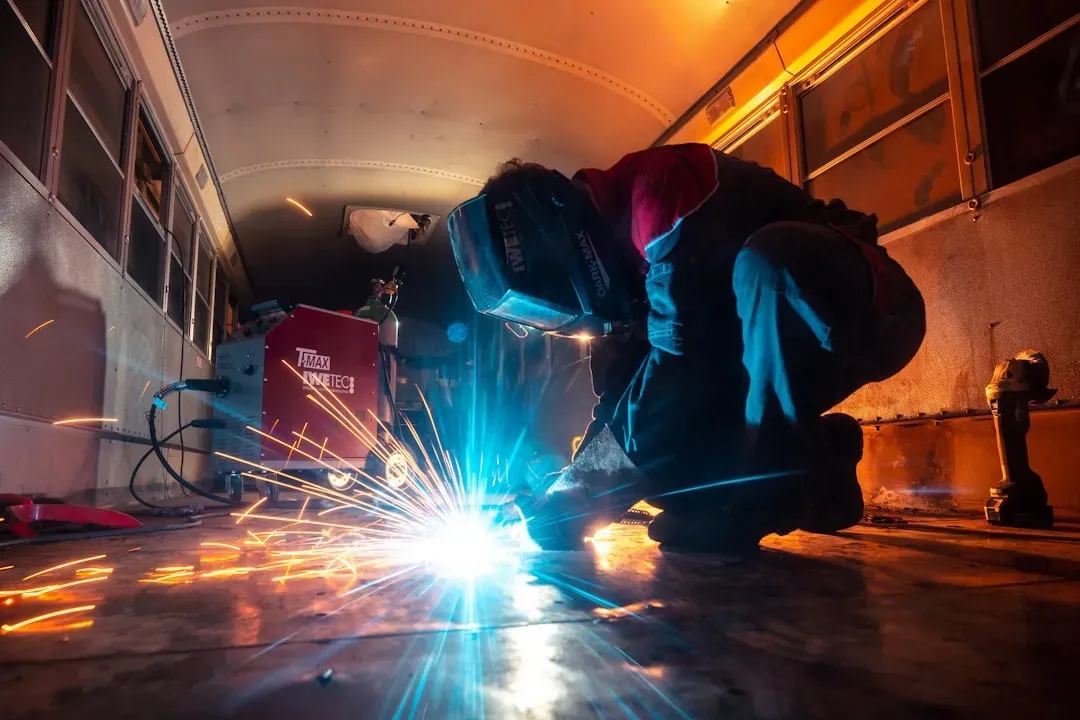
Composite tools – iron blades with steel edges, bronze cores with harder working faces – turn up across the ancient world, and some show clean metallurgical bonds rather than crude mechanical wraps. That means the joint heated into a genuine diffusion zone without melting the whole piece apart, which requires raising the interface into a narrow welding window and stopping before the lower-melting-point material liquefies.
Modern smiths call this a “black heat” or dull-red weld, and pulling it off consistently across multi-material joints is far harder than forging a single bar of metal. The gradual diffusion gradients visible at these ancient seams are exactly what you’d expect from carefully managed furnace or forge temperatures. It’s quiet proof that some workshops were already treating heat as a precision tool rather than a crude background condition.
8. Leaded Bronzes That Flow Like Water, Not Lava
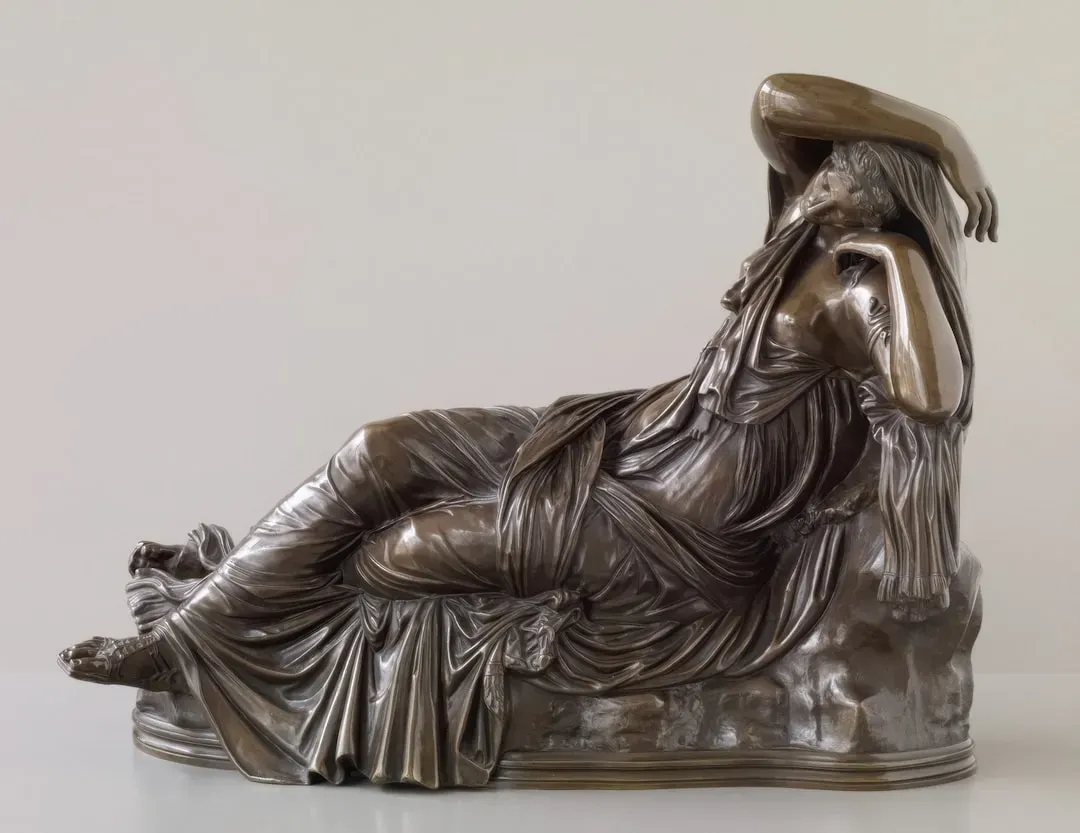
Leaded bronze can pour like a dream, but only within a narrow band. Run it too hot and lead segregates into ugly pools and weak spots; run it too cool and you lose the fluidity that made adding lead worthwhile in the first place. High-quality ancient statues and intricate fittings often show fine, well-distributed lead globules with almost no large pockets or cold shuts.
Metallographic sections reveal these alloys were poured just above the optimum fluidity point, not wildly overheated out of caution. That strongly implies pouring practices calibrated well beyond “shrug and hope.” Managing a heavy, low-melting phase like lead without ruining the final piece quietly admits to repeatable, fine-tuned heat control – not the primitive foundry cartoon we’ve been sold.
7. Iron With Surprising Nitrogen Levels From Carburizing-Like Furnaces
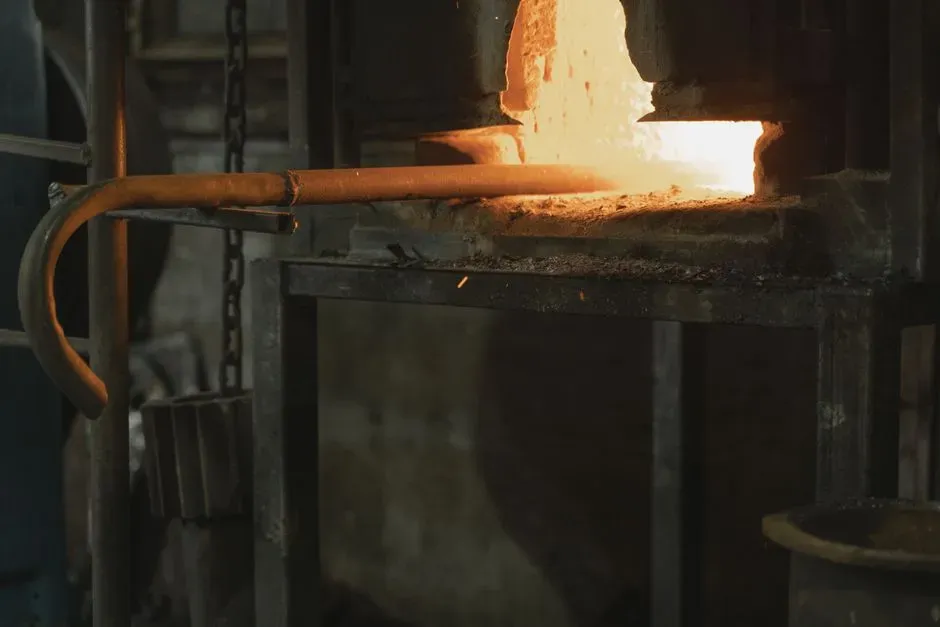
Some early irons show elevated nitrogen content, most likely absorbed from smelting or forging in strongly reducing, nitrogen-rich atmospheres. Introducing nitrogen consistently isn’t easy; it takes furnaces where charcoal and limited air combine to generate CO, CO₂, and N₂ at high temperatures, with the iron sitting inside that atmosphere long enough for nitrogen to diffuse in.
Whether or not anyone understood the chemistry, they were skirting the edges of modern nitriding. You don’t hold iron in that range for hours unless your furnace is stable and capable of locking temperature inside a specific, repeatable band. The resulting alloys – tougher than plain blooms – argue that furnace technology had already reached “controlled atmosphere by habit,” long before anyone had a name for it.
6. Silvery Ternary Alloys Mimicking Later Coinage Standards
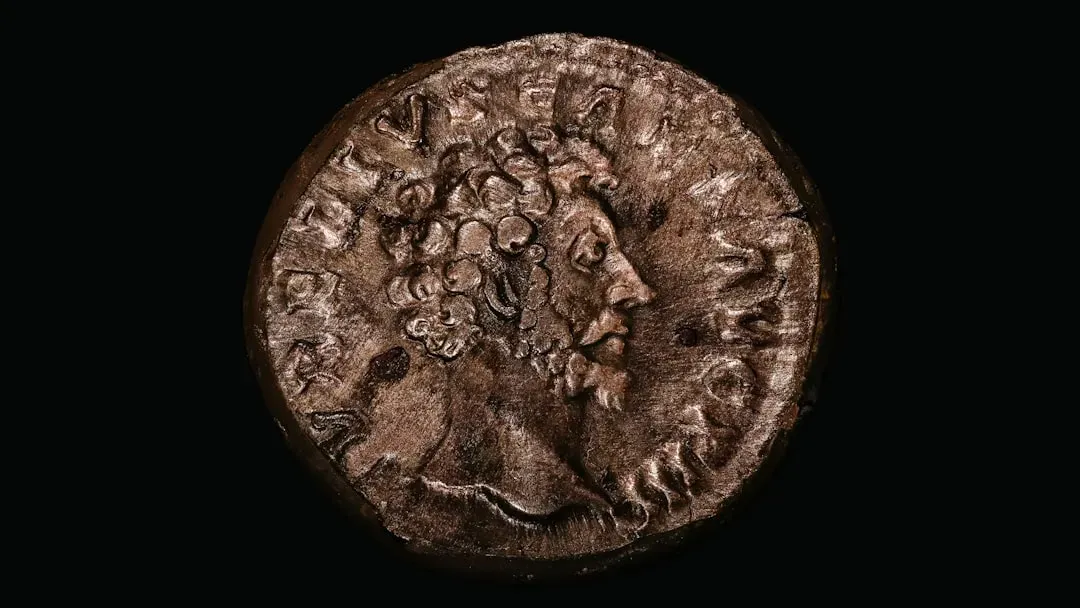
Some ancient coins and ceremonial pieces use carefully tuned ternary alloys – typically copper, tin, and silver, or copper, tin, and arsenic – to hit a specific silvery sheen and hardness. Stray too far on any one leg of that triangle and either the color or the durability falls apart, yet analyses across large coin issues show narrow composition windows with minimal batch-to-batch drift, even across different dies and years.
That kind of consistency implies furnaces that melt an entire charge uniformly and avoid local hot spots where one element could oxidize or segregate out. To hold that homogeneity, a furnace basically has to behave like a crude homogeneous reactor, not a random pile of burning wood. Officials still call this trial-and-error luck. The statistics say otherwise.
5. Deliberately Decarburized “Skin” Steels for Flexibility
Some blades and tools show the reverse of what you’d expect from quenching: softer, low-carbon outer skins wrapped around higher-carbon cores. That pattern points to decarburization, where carbon leaves the surface during prolonged heating in an oxidizing atmosphere – a furnace game, not a quick pass through the forge.
Pulling it off means holding steel at high temperature, just short of burning, for extended periods, while controlling airflow so only the outer layers lose carbon and the core stays intact. The gradual carbon gradient from core to surface found in these artifacts suggests carefully staged heat treatments, run in furnaces capable of hours-long soaks without their walls collapsing or their temperature wandering. We like to picture ancient furnaces as fragile, one-off holes in the ground. These alloys talk like long-lived, well-understood heat-processing infrastructure instead.
4. Shock-Resistant Bell Bronzes With Ridiculous Repeatability
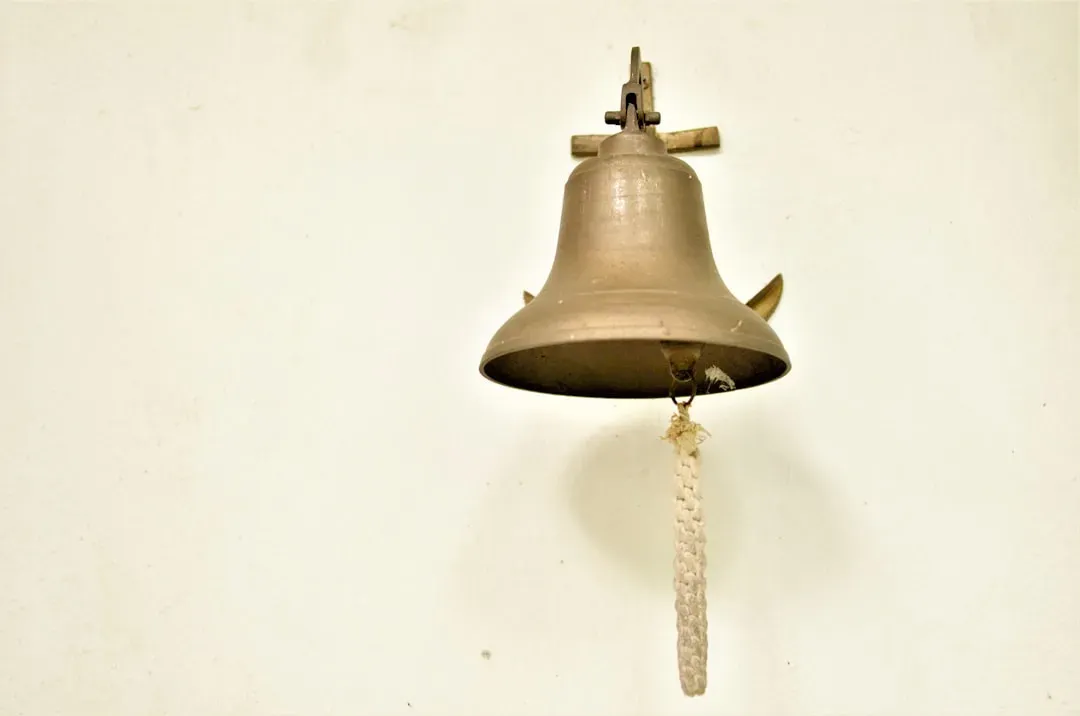
Bell bronze is notoriously picky – around 20-22% tin in copper gives you that brilliant tone, but it’s also brittle enough to shatter if you overshoot. Too little tin and the bell sounds dead; too much and it cracks. Some bell-founding traditions hit that narrow sweet spot over centuries with astonishingly little scatter in composition.
Acoustic studies and fracture analyses of ancient bells show uniform properties from crown to lip, and that kind of consistency doesn’t come from sloshing semi-molten metal around in a smoky pit. It points to high-capacity furnaces, careful stirring, and controlled cooling – an industrial mindset quietly hiding underneath religious or civic architecture. When an entire culture builds its identity around a bell’s sound, the furnace behind that sound becomes cutting-edge technology, whether history books admit it or not.
Quick Compare
- Under ~20% tin: bell tone comes out flat and lifeless
- 20-22% tin: the bright, resonant sweet spot founders still target today
- Over ~22% tin: bronze turns brittle and prone to cracking
- Ancient founders repeated this narrow band across entire bell-making traditions
3. Quasi-Stainless Copper Alloys in Aggressive Environments
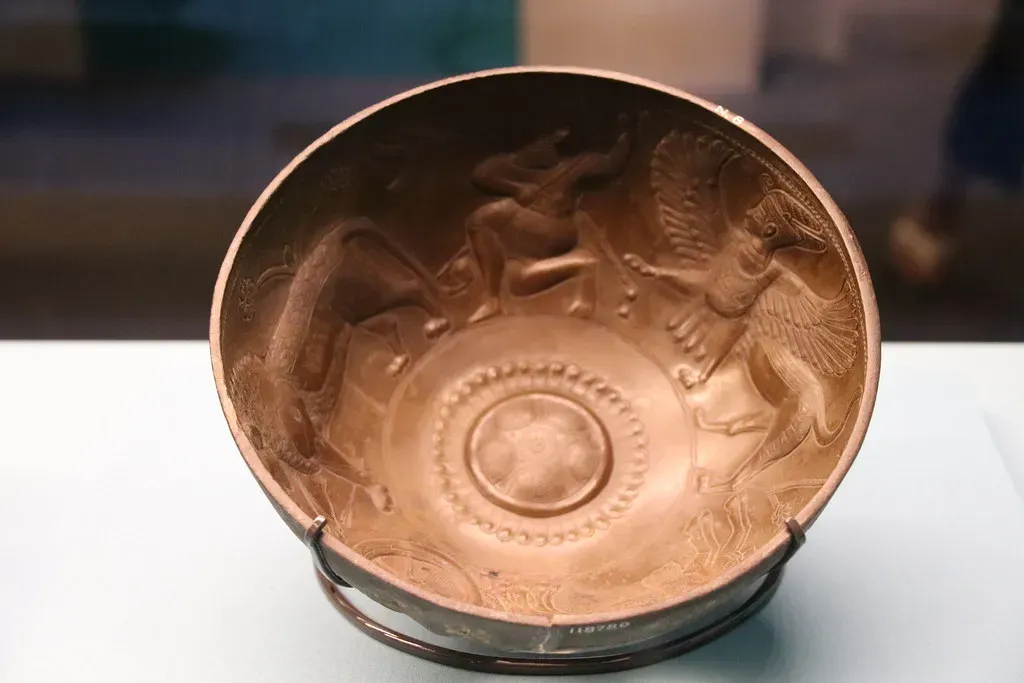
Some artifacts pulled from harsh, acidic soils or seawater show copper alloys with surprisingly resilient corrosion layers. Analyses find combinations like copper, tin, and small amounts of arsenic or antimony forming passivating films similar in spirit – though not identical – to modern corrosion-resistant alloys.
Creating this effect takes enough heat to fully dissolve minor elements into the melt, plus controlled cooling so those elements segregate toward grain boundaries or surfaces where they can actually protect the metal. Furnaces running too cold or too unevenly just leave inclusions and weak spots instead. The fact that some of these pieces survived millennia with only a thin, tight patina suggests carefully managed smelting runs, and probably post-cast reheats – the kind of practice you only develop by noticing, again and again, which furnace habits keep an object alive in the ground.
2. Gold-Copper Surface Enrichment That Implies Controlled Diffusion
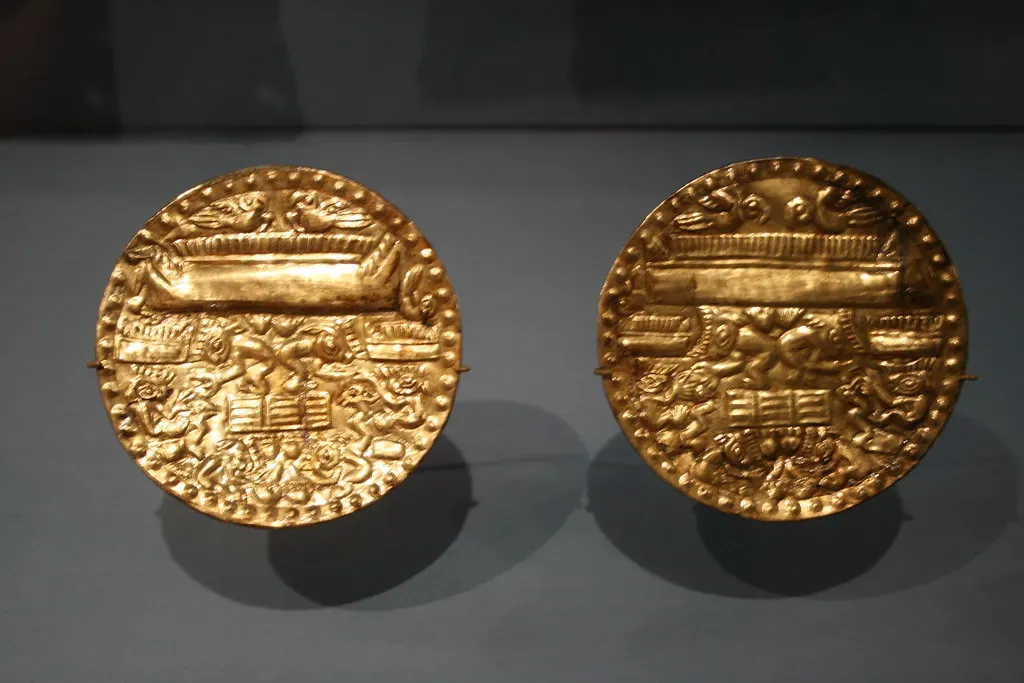
A number of ancient “gold” objects aren’t pure gold at all – they’re gold-copper alloys with gold-rich surfaces, likely produced by leaching copper out of the skin or by controlled thermal diffusion. The result is a noble-looking exterior wrapped around a harder, cheaper core, and it’s a genuinely clever trick.
Pulling it off reliably takes furnace conditions warm enough to accelerate diffusion without melting the piece, repeated over consistent heat-and-chemical cycles. Experimental archaeology shows this process is unforgiving – a few tens of degrees off and you either accomplish nothing or ruin the object outright. Surviving artifacts show even, micrometer-scale gold-rich layers, the kind of result that only comes from workshops able to hold long, gentle heat in something closer to a kiln than a campfire.
1. True Crucible Steels With Patterned Microstructures
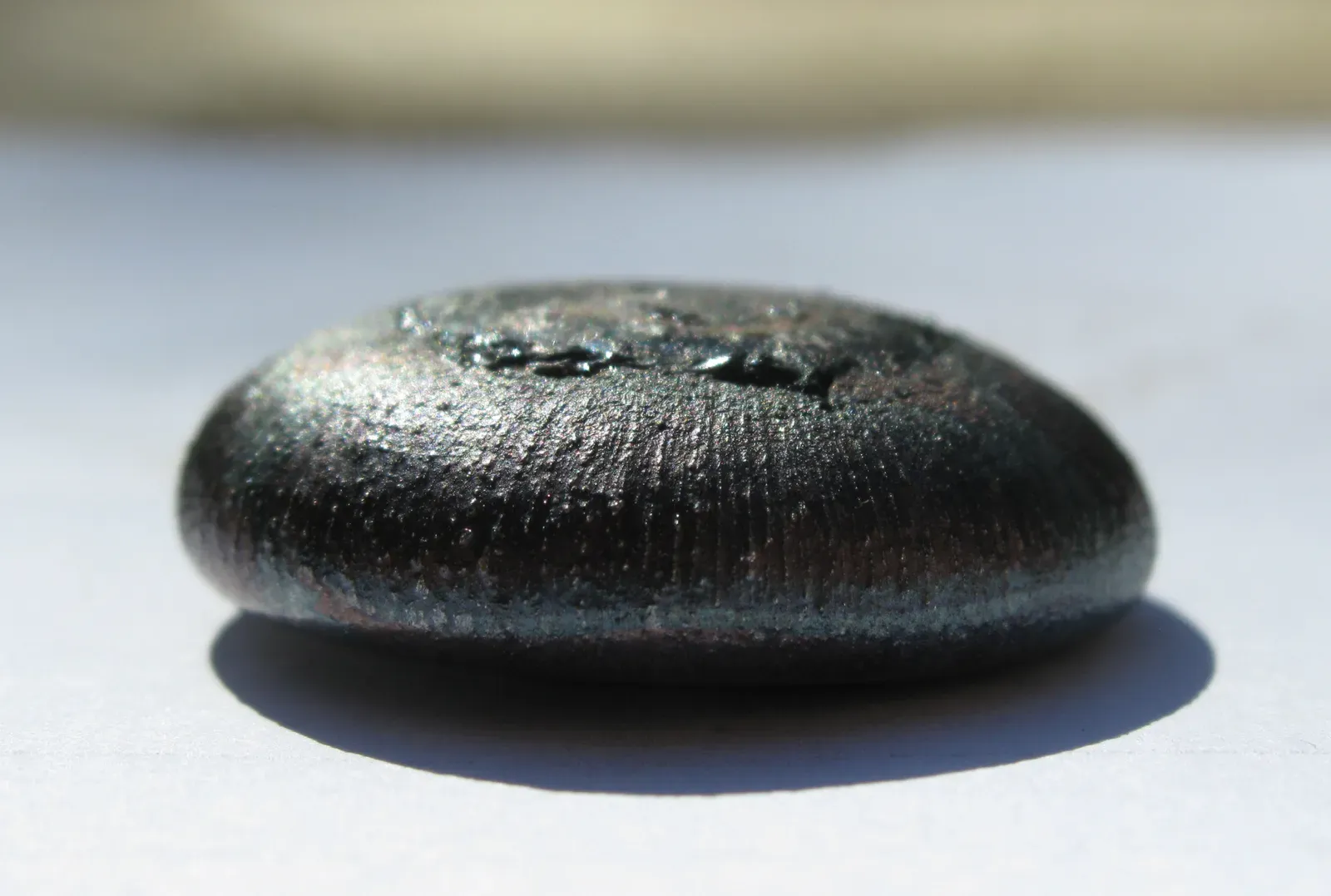
At the very top of the list sit the famous crucible steels – wootz-like alloys whose microstructures produce visible, almost hypnotic surface patterns once etched and polished. These aren’t decorative flourishes. They come from carbide networks that only form under exceptionally precise thermal histories, and getting them right takes charging sealed crucibles with iron, carbon, and sometimes glassy fluxes, holding them at very high temperatures for many hours, and cooling them slowly under controlled conditions.
Modern experiments confirm that even a slight deviation in soak time or cooling rate wrecks the pattern completely. That means the original furnaces weren’t just hot; they were predictable, cycle after cycle, across multiple crucibles. For a technology we still romanticize as half-mythical, the evidence points to something far more grounded: ancient metallurgists running genuinely process-controlled, high-temperature operations that our official history still refuses to fully credit.
Why It Stands Out
- Produces visible carbide-network patterns only under precise thermal histories
- Requires sealed crucibles holding iron, carbon, and flux at very high heat for hours
- Slow, controlled cooling is essential – rush it and the pattern disappears
- Even slight timing or temperature deviations wreck the microstructure entirely
The Uncomfortable Bottom Line
Line these 22 alloys up side by side and the pattern stops being subtle. The chemistry, the microstructures, the slag – all of it whispers the same uncomfortable truth: the furnaces had to be better than the story we’ve been telling about them. Not magical. Not alien. Just hotter, steadier, and far more deliberately engineered than the “mud hole with bellows” cartoon still taught in classrooms.
Here’s my honest take: this isn’t really a mystery about furnaces. It’s a mystery about ego. Modern metallurgy loves crediting itself with “inventing” process control, alloy standardization, and heat treatment, as if precision started with the Industrial Revolution. These 22 alloys say otherwise, loudly. Somewhere along the way we decided clever engineering couldn’t exist without electricity, blueprints, or a degree attached to it – and that assumption has cost ancient metallurgists the credit they earned the hard way, one carefully controlled pour at a time.
Did we miss an alloy – or an entire furnace type – that deserves a spot on this list? Say so in the comments.