Everyone loves the story where an old object turns out to be impossible – too advanced, too old, too strange for its time. What almost nobody talks about is the quieter story that follows: the second lab that walks in, runs the same test with better equipment, and calmly takes the mystery apart piece by piece.
That second act is where this list lives. Twenty-one objects were once sold to the public as history-rewriting proof of something extraordinary – and every single one of them got demoted back to ordinary once independent researchers pushed back. Some of the reversals are funny, some are a little sad, and one or two are genuinely embarrassing for the people who pushed the original hype. Here’s what actually happened when the second opinion came in.
#21 – The Shroud of Turin’s “Miracle” Medieval Dating
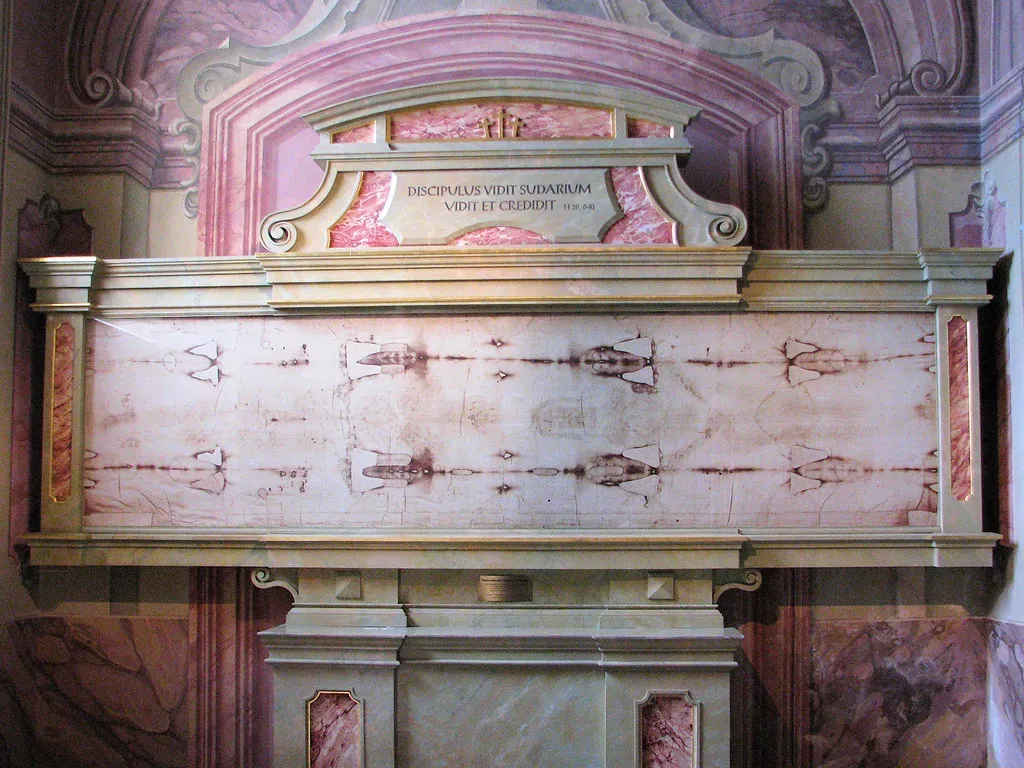
For decades, the Shroud of Turin was treated like forensic proof of a biblical event. Then in 1988, three separate radiocarbon labs – Oxford, Zurich, and Arizona – all dated the cloth to the Middle Ages, not the 1st century. That should have settled things, but it only opened a new fight.
A later wave of researchers claimed the original sample came from a rewoven, contaminated edge, and pointed to newer chemical tests suggesting older fibers underneath. When independent labs actually reviewed those follow-up claims, they found no replicable evidence the cloth predates the medieval period – just small sample sizes and shaky statistics. Most textile experts now call it a stunning 14th-century religious painting on cloth, not a burial shroud.
#20 – The Vinland Map That “Proved” Pre-Columbian America
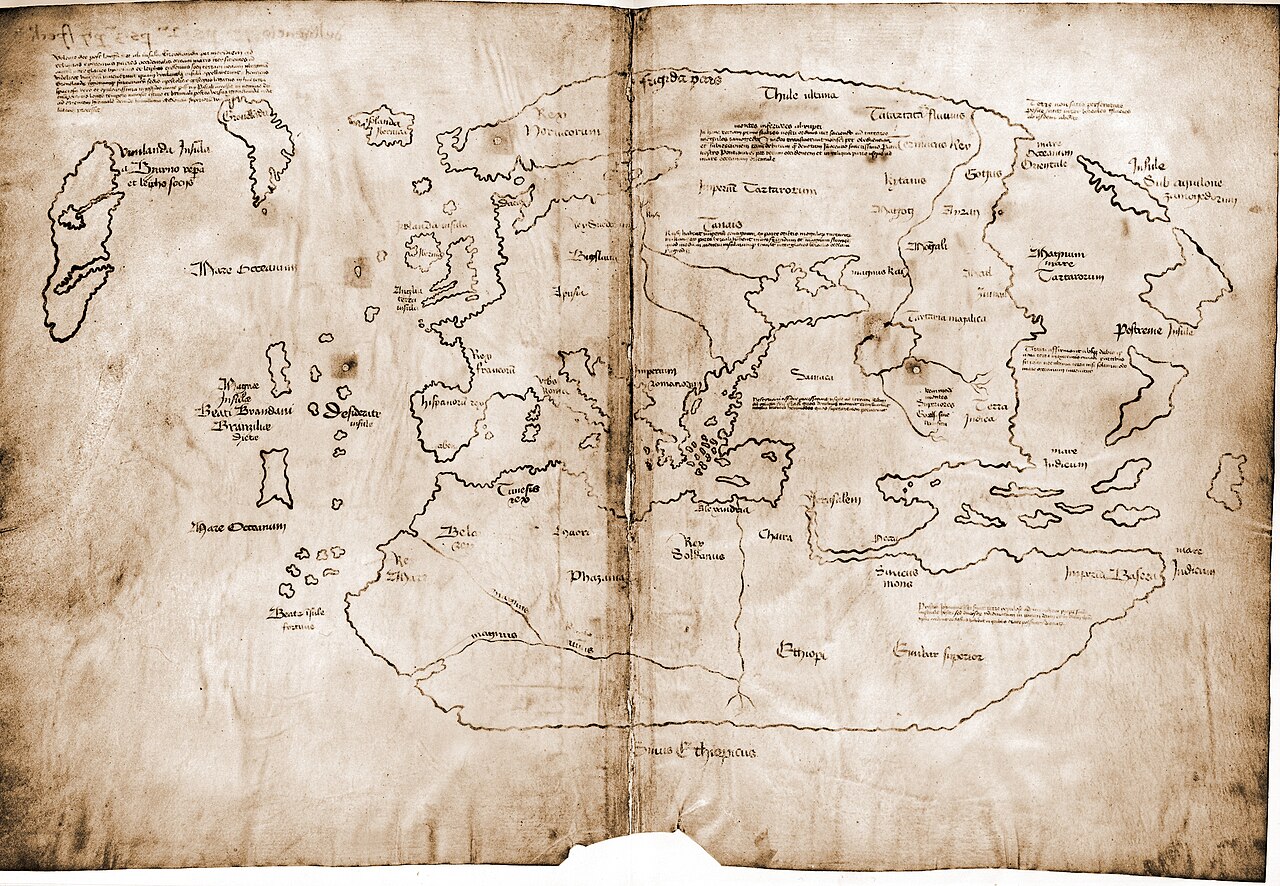
When Yale unveiled the Vinland Map in 1965, it was treated as a bombshell: solid proof Europeans had charted North America centuries before Columbus. The first ink tests were limited and inconclusive, so historians cautiously ran with it. Documentaries loved the story – secret medieval knowledge, lost records, quiet vindication for Norse explorers.
Then sharper tools showed up. Electron microscopy and advanced spectroscopy found modern synthetic anatase – a titanium dioxide pigment – sitting right in the ink lines, decades before that pigment existed. Two more labs confirmed it independently. The map wasn’t tweaked or reinterpreted; it went from world-changing discovery to a clever forgery pasted onto genuinely old parchment.
Fast Facts
- Unveiled by Yale University Press in 1965 as pre-Columbian proof
- Key clue: synthetic anatase pigment not manufactured until the 1920s
- Two additional independent labs confirmed the pigment finding
- The parchment itself is genuinely old – only the ink is fake
#19 – The Kensington Runestone’s Viking Fantasy
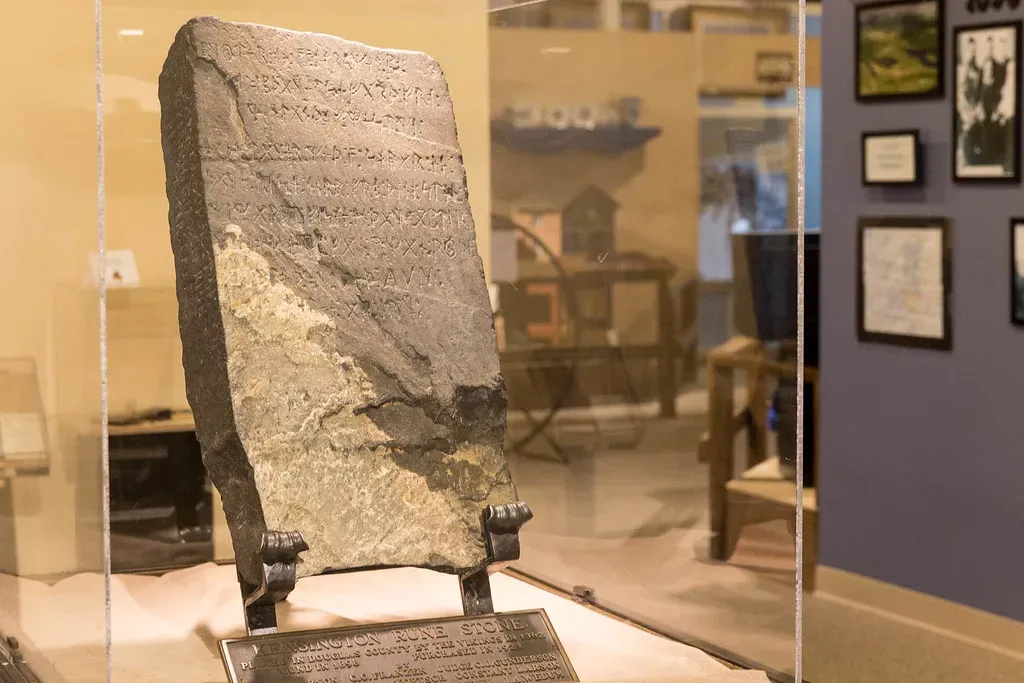
In 1898, a Minnesota farmer claimed he’d dug up a massive stone carved with runes describing a 14th-century Viking expedition deep into North America. Early Scandinavian-American scholars focused almost entirely on translating the text, not on the geology or the tool marks. For years, local museums proudly displayed it as living proof of Nordic discovery.
Then linguists and geologists actually compared the carvings to genuine medieval inscriptions. The spelling and grammar matched 19th-century Scandinavian, not 1300s Norse, and the weathering on the stone looked far too fresh for six centuries outdoors. Multiple independent experts landed on the same mundane answer: probably a 19th-century hoax. Regional pride keeps the argument alive in Minnesota bars to this day, but the science stopped arguing a while ago.
#18 – The “Ancient” Ica Stones of High-Tech Dinosaurs
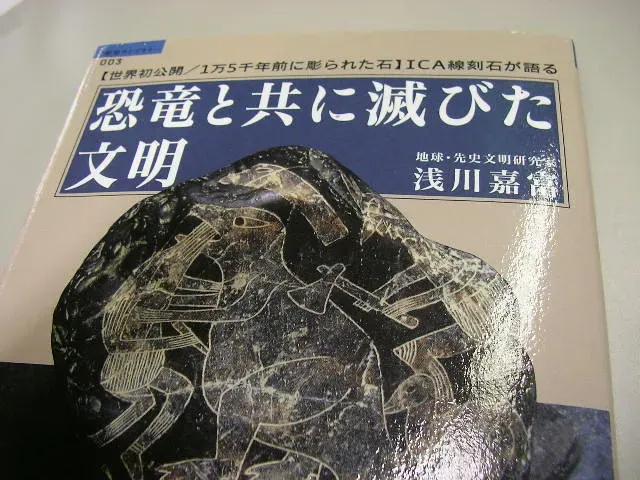
The Ica stones from Peru show humans riding dinosaurs, performing brain surgery, even peering through telescopes. They exploded in fringe circles during the 1960s and 70s, helped along by early lab checks that only confirmed the rock itself was ancient – which supporters quietly stretched into “the carvings must be ancient too.”
Skeptical researchers eventually took fresh samples to independent labs and found something different: sharp, clean incisions with none of the mineralization or patina real weathering leaves behind. Some stones even carried modern tool marks and pigment residue. The final nail came from the main collector himself, who admitted commissioning carvings from local artisans, though he later walked that admission back. The rock is old. The art is not.
#17 – The Piltdown Man That Fooled a Generation
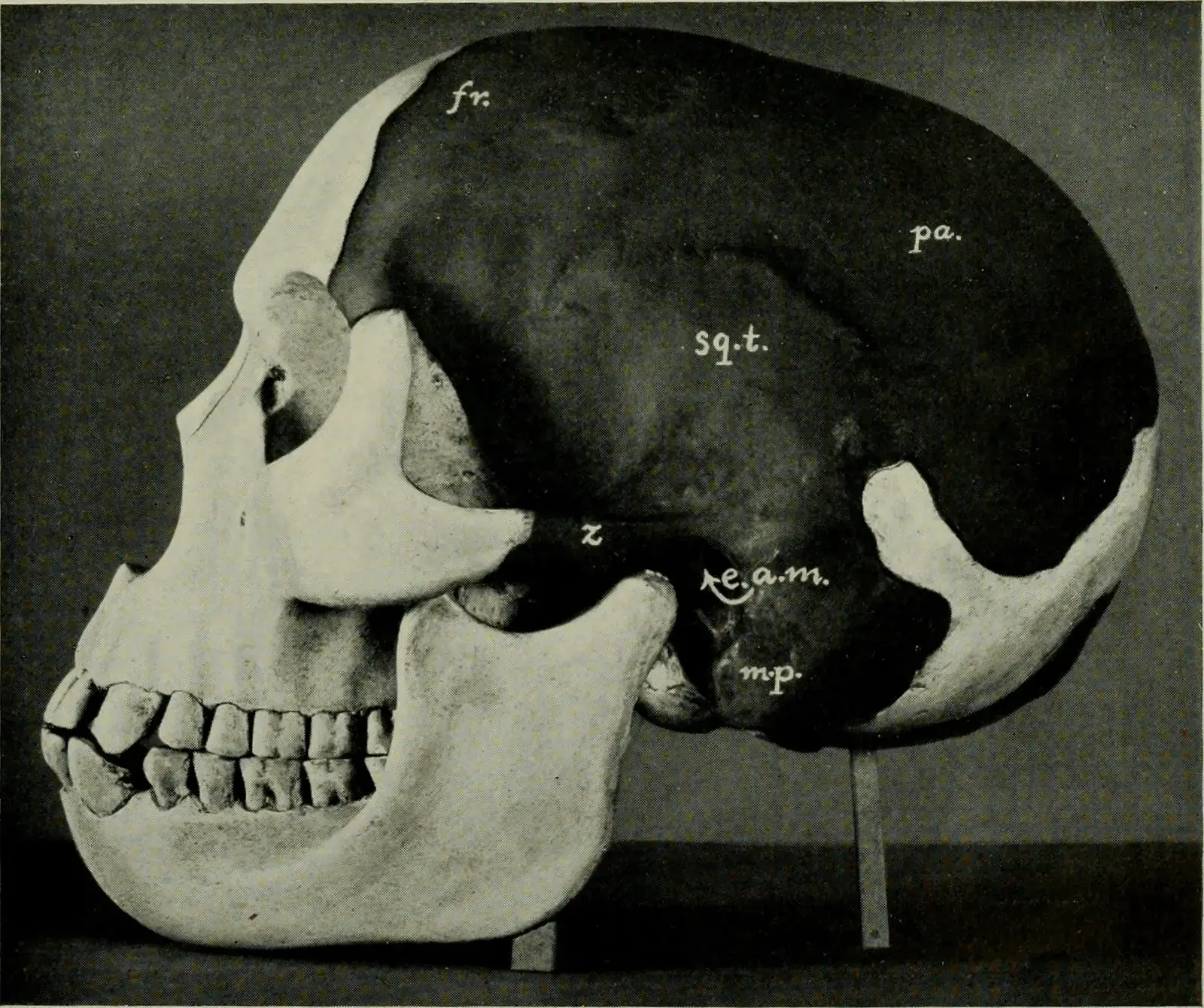
Piltdown Man sat proudly in the human family tree for decades after its “discovery” in England in the early 1900s. Early tests were crude by today’s standards, and the fossil conveniently confirmed what British scientists already wanted to believe: a big brain paired with a primitive jaw. It was flattering science, which made it popular science.
Once better hominin fossils turned up in Africa and Asia, Piltdown started looking wrong. A second round of testing – fluoride analysis, microscopy, careful anatomy – found a medieval human skull paired with a filed-down, stained orangutan jaw. It wasn’t reinterpreted. It was exposed as a deliberate fraud, and it’s now taught mainly as a warning about believing what you want to see.
Extraordinary claims require extraordinary evidence.
Carl Sagan
#16 – The Crystal Skulls Demoted to Victorian Curios
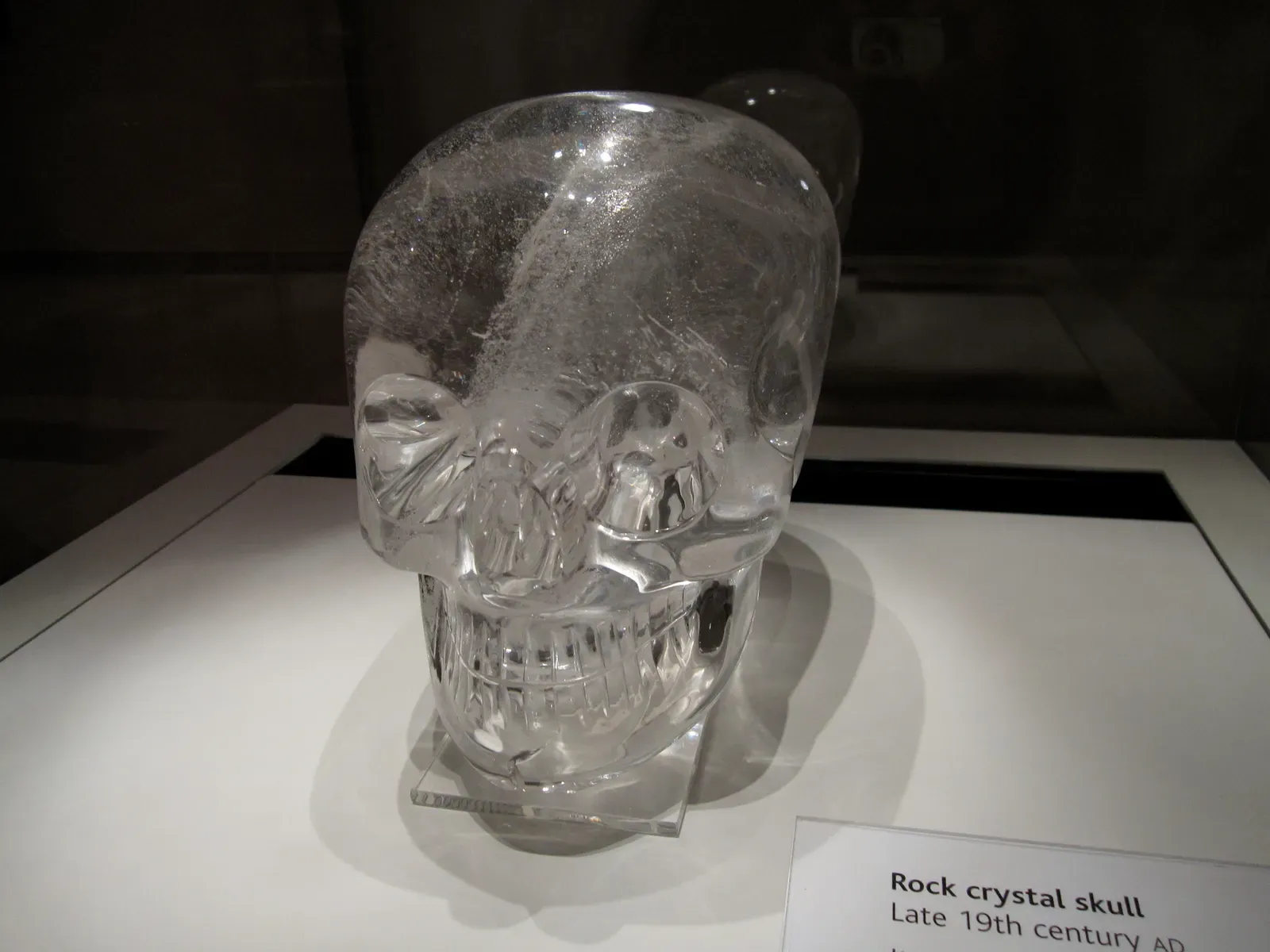
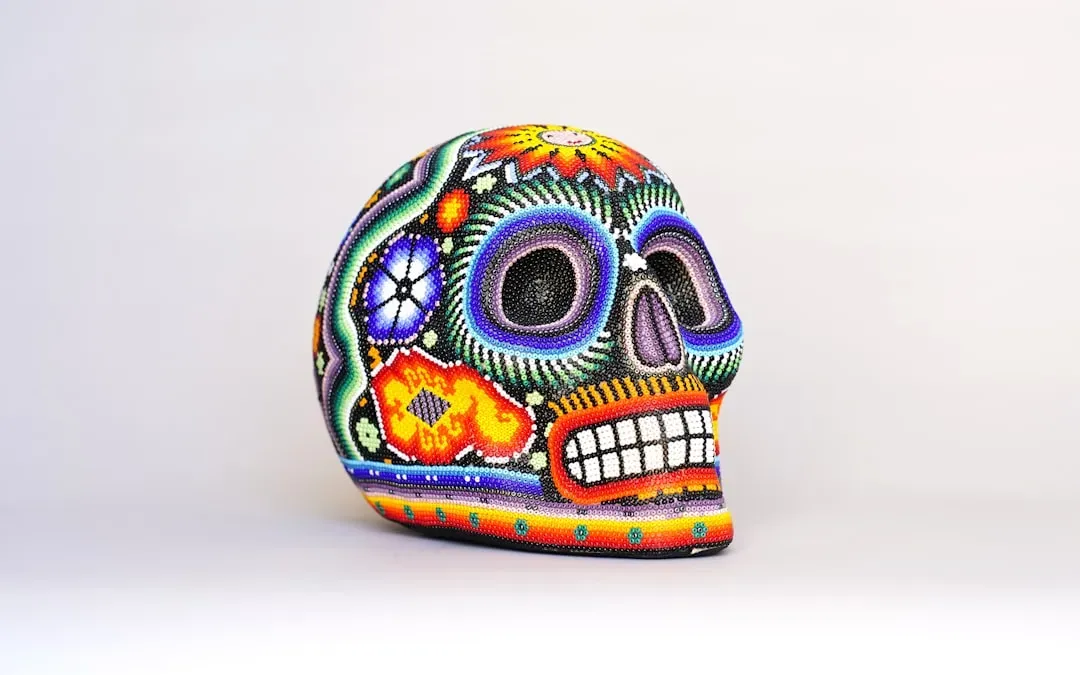
Museum crystal skulls were once marketed as mysterious Mesoamerican power objects, carved with precision that supposedly shouldn’t have existed in the ancient Americas. Early provenance stories leaned almost entirely on dealer claims, and first-pass stylistic reviews were generous enough to keep the mystery alive on television.
Electron microscopy told a different story: tool marks matching rotary wheels and modern abrasives, not pre-Columbian hand carving. Quartz sourcing pointed to European and Brazilian deposits never used in ancient Mesoamerica, and the paperwork behind several skulls traced straight back to known 19th-century forgery dealers. Most major museums now quietly label their skulls as European or Mexican workshop pieces from the 1800s – fascinating objects, just not the ones they were sold as.
#15 – The Antikythera Mechanism’s “Alien Tech” Narrative
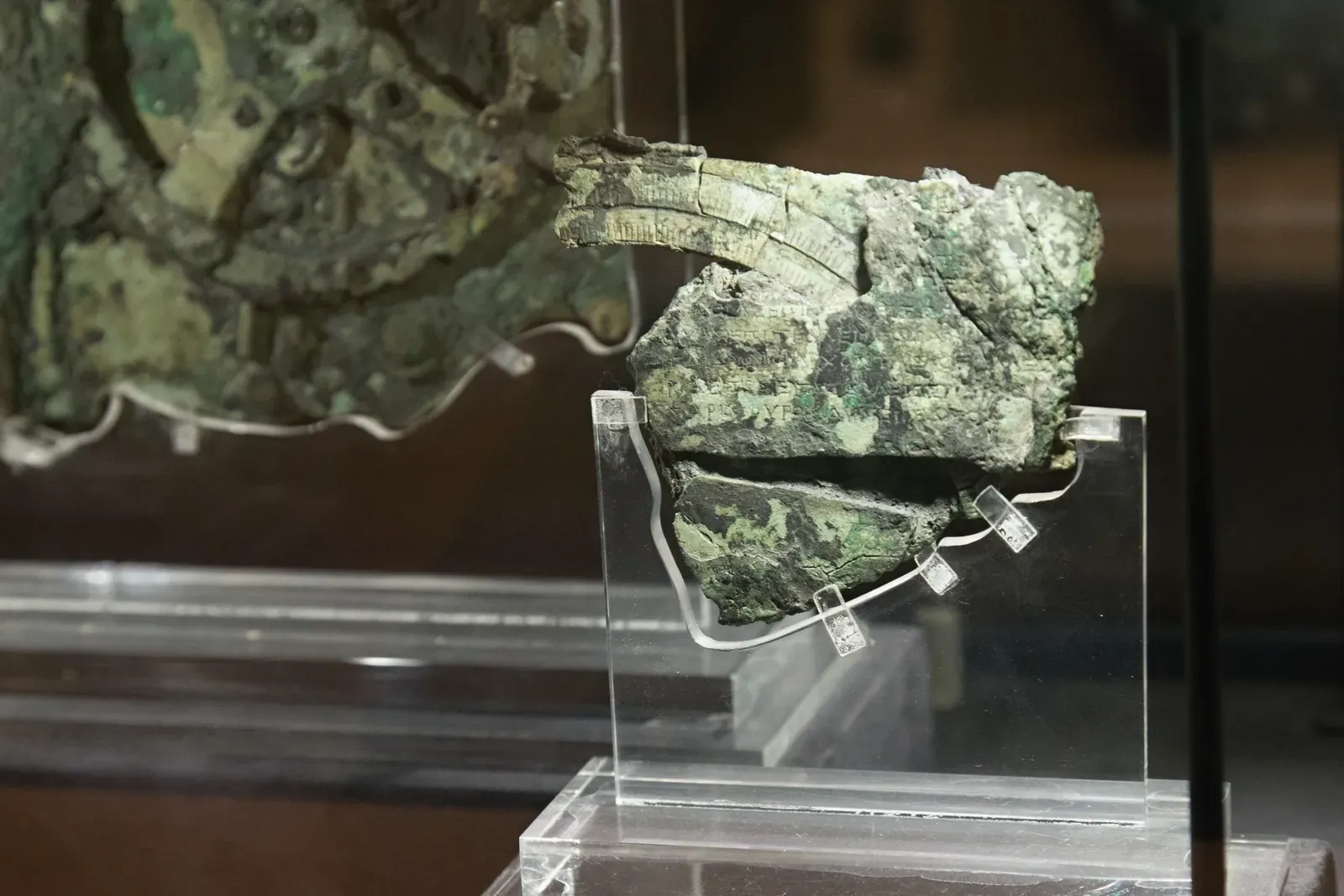
The Antikythera Mechanism really is extraordinary – a complex Greek bronze gear device from roughly the 2nd century BCE. Early X-rays revealed internal gearing so intricate that some commentators leapt straight to “impossible technology,” hinting at lost global civilizations feeding the Greeks their engineering secrets.
Better imaging changed the story completely. CT scans, 3D reconstructions, and careful epigraphy revealed the device as the peak of a known Hellenistic tradition of gears and astronomical models, with inscriptions matching standard Greek astronomical terms. The alloy and corrosion patterns fit other artifacts from the same era. It’s not modern. It’s not alien. It’s just proof we underestimated ancient Greek engineers.
#14 – The Coso Artifact’s “Out-of-Place” Spark Plug
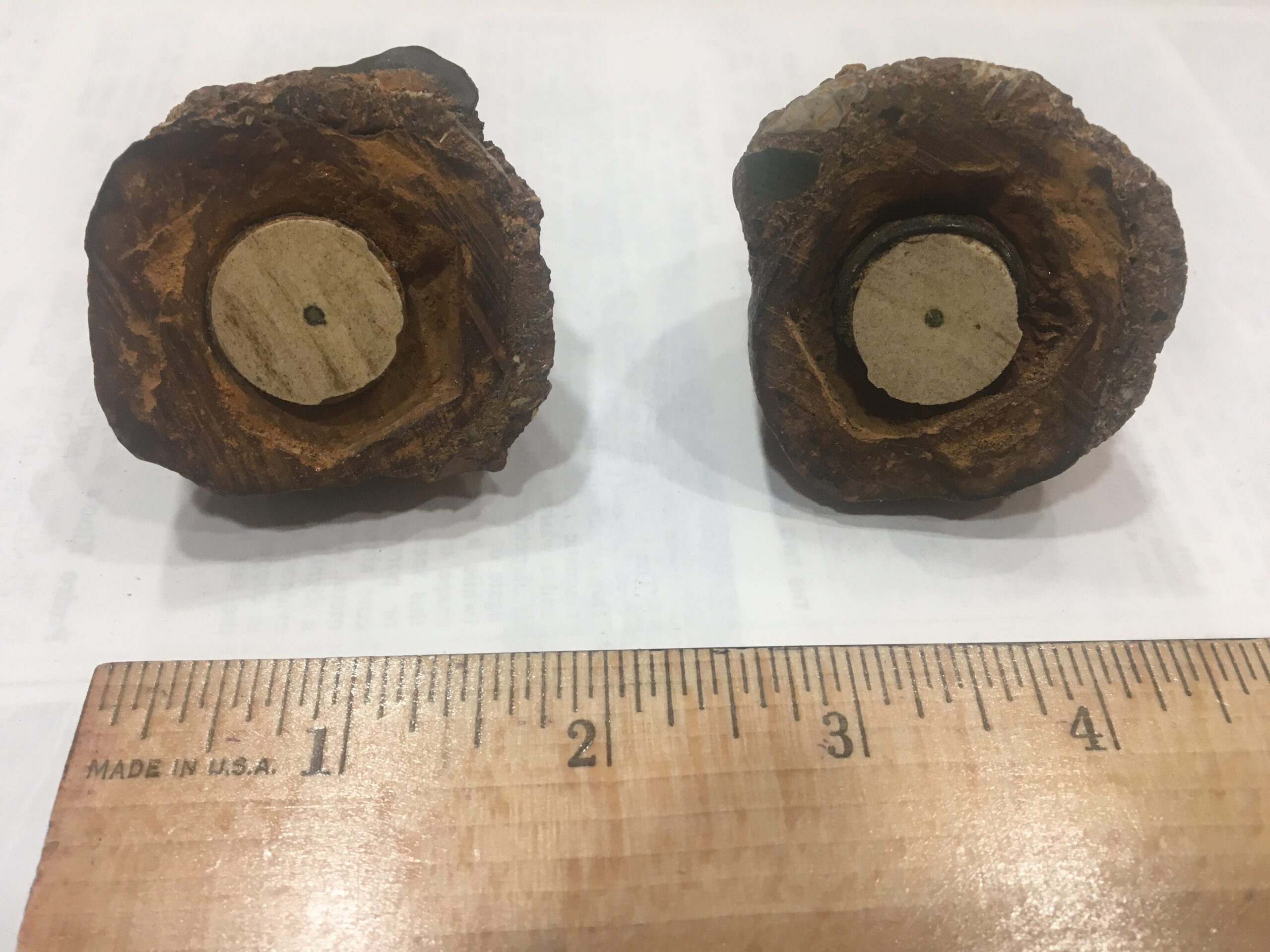
In 1961, rock collectors near Olancha, California, cracked open a concretion and found something that looked mechanical inside. Early write-ups called it a “geode-encased machine,” and one loose opinion based mainly on the rock’s hardness implied it was ancient. The story snowballed into an impossible spark plug trapped in solid stone.
Later, more careful measurements and side-by-side comparisons with catalog parts told a much simpler story: a 1920s-1930s Champion spark plug, encased in an iron oxide concretion that can form in decades, not eons. The rock wasn’t ancient. It just did what rocks do around discarded metal – and second-round work put the whole thing back in the 20th century where it belonged.
#13 – The London Hammer Frozen in Stone
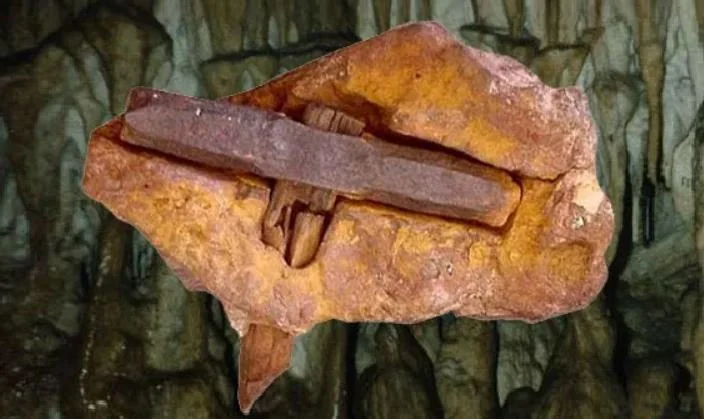
Photos of the so-called London Hammer – a wooden handle and iron head apparently locked inside solid rock – are a staple of “forbidden archaeology” pages. Early commentary vaguely labeled the surrounding stone “Cretaceous,” implying the hammer was hundreds of millions of years old, and a few articles ran with that without checking the caveats.
Geologists who looked closer found the rock wasn’t ancient bedrock at all – it was a carbonate-sandstone concretion that can form around an object in years to centuries under the right conditions. The hammer itself matched 19th-century American designs, with metallurgy consistent with modern low-carbon iron. An old tool got trapped in young rock. Interesting, but not history-shattering.
#12 – The Piri Reis Map and Its “Antarctic Coastline”
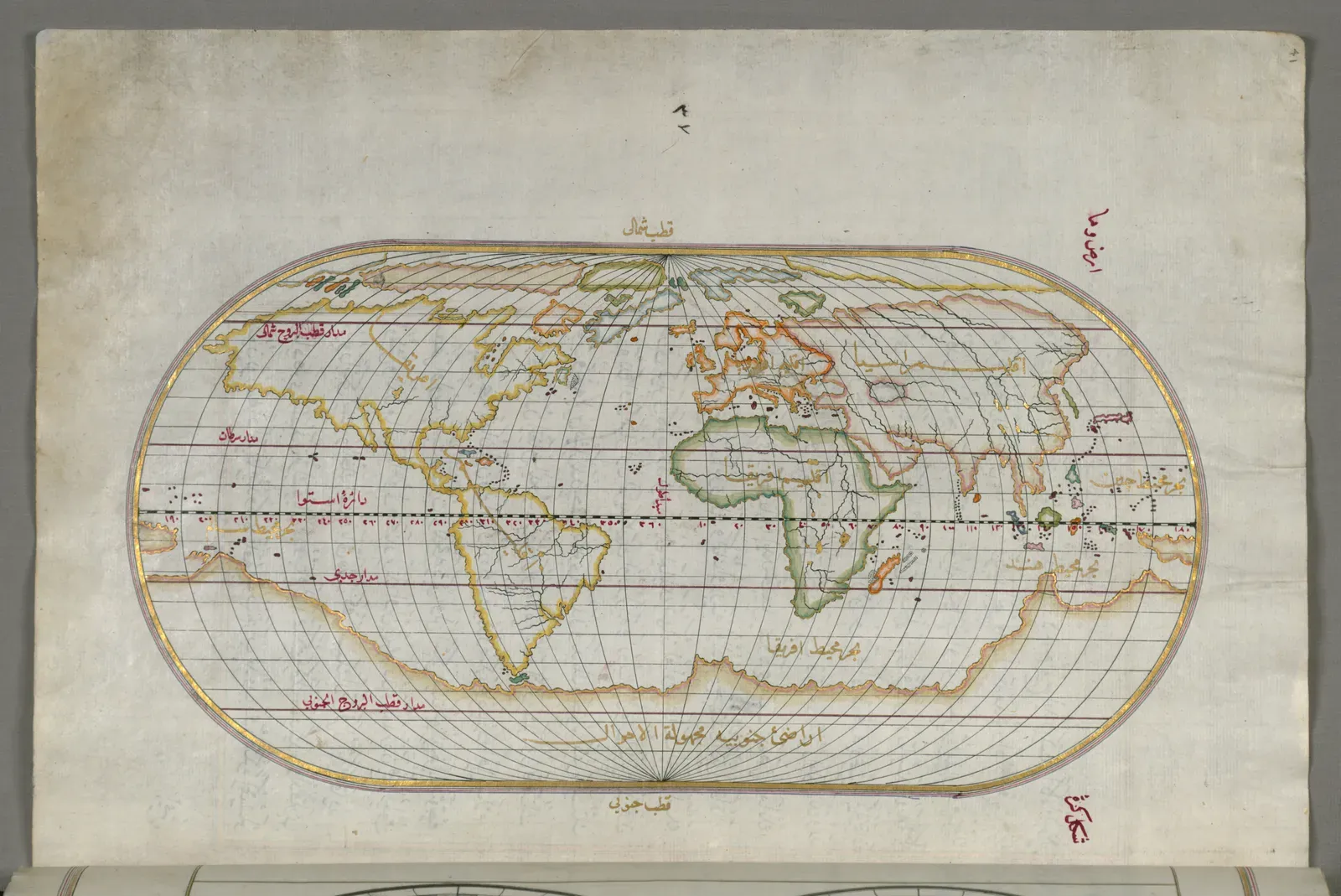
The Piri Reis map, drawn by an Ottoman admiral in 1513, is a genuinely fascinating patchwork of earlier charts. Early 20th-century enthusiasts fixated on one distorted section and declared it an ice-free Antarctica, claiming it proved an advanced ancient survey no one could explain. A couple of popular books cemented the idea in public memory.
Later cartographers re-examined the projections and coastlines and found the “Antarctic” section actually lines up far better with South America’s eastern coast, stretched and rotated – a known problem when old mapmakers stitched together mismatched source charts. No lab could replicate the supposed Antarctic match against real coastal data. The map didn’t get dismissed; it got downgraded from lost civilization evidence to a brilliant, ordinary 16th-century compilation.
#11 – The Dropa Stones and a Vanishing Tribe
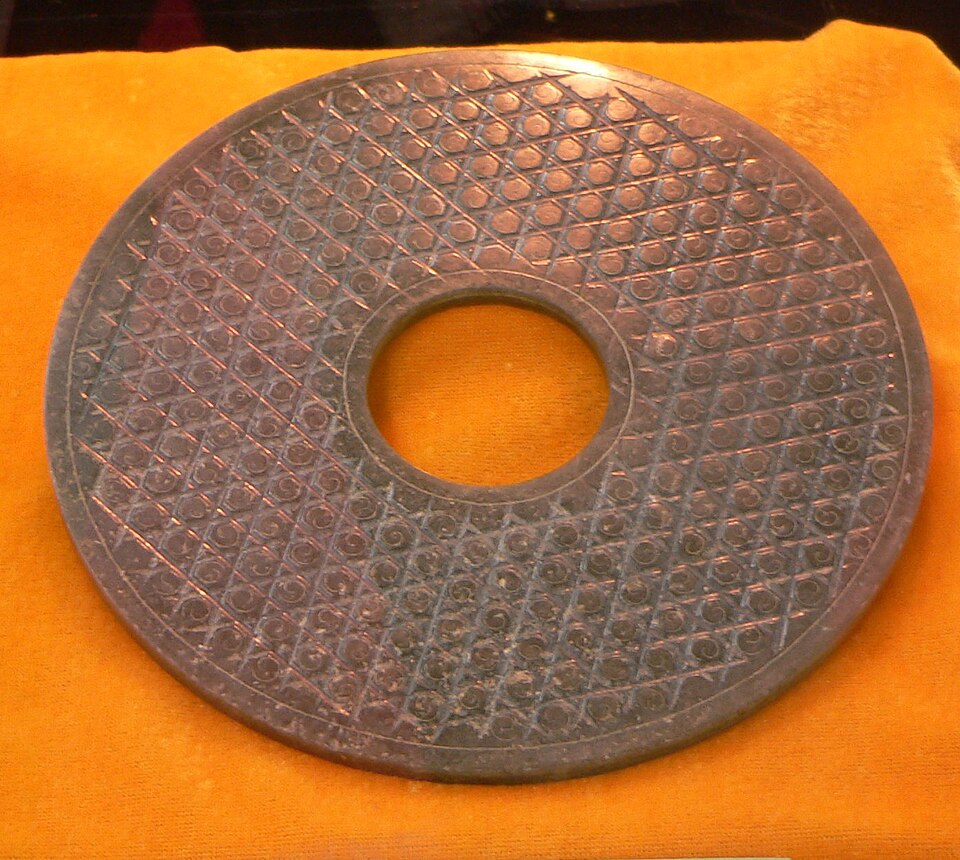
The Dropa stones – alleged disk-shaped artifacts with spiral inscriptions from a remote Chinese cave – swept through Western magazines in the 1960s. Early reports claimed Soviet and Chinese labs had found signs of extreme age and strange composition, with some writers floating a non-human origin. The catch: none of those early lab claims could be traced to a real institution.
When skeptics went looking for the actual evidence, there was nothing there. No museum or university could produce the stones. Second-round investigators found no records of the named scientists or expeditions in Chinese or Russian archives, and the accompanying photos turned out to be generic artifacts or props. This downgrade wasn’t from ancient to modern – it was from mystery to fabricated story, recycled hearsay dressed up as archaeology.
#10 – The “Alien” Atacama Skeleton (Ata)
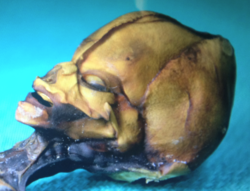
The tiny Atacama skeleton, nicknamed Ata, surfaced in Chile and quickly picked up an online reputation as a mummified alien. Early X-rays showed odd bone development and elongated proportions, and a limited first DNA analysis left enough gaps for speculation to run wild.
A second, far more thorough genomic study sequenced Ata’s DNA at high coverage and found something heartbreaking rather than extraterrestrial: human, female, Chilean ancestry, carrying rare mutations affecting bone growth. Bone histology pointed to a fetus or newborn, not a centuries-old miniature adult. The alien label didn’t survive proper genetic testing – it was a tragically deformed human child, and the ethical questions about displaying those remains matter far more than the conspiracy ever did.
#9 – The Baghdad Battery and “Ancient Electricity”
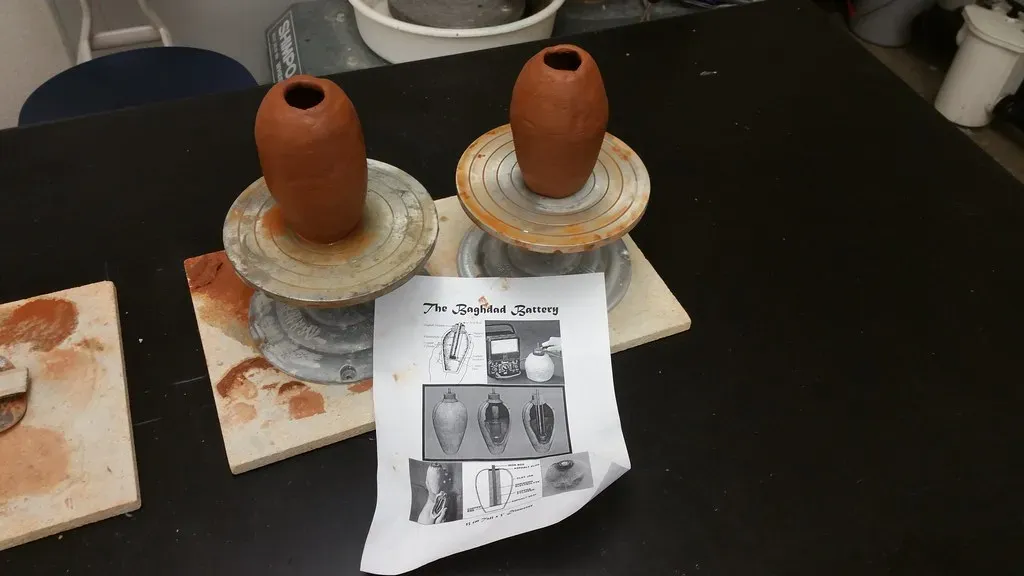
The so-called Baghdad Battery – a ceramic jar with a copper cylinder and iron rod – has been promoted for decades as proof ancient Mesopotamians had electricity. Early tests showed that adding an acidic liquid produced a small voltage, and some labs even ran copper-plating demos to suggest it was a functioning galvanic cell thousands of years ahead of its time.
Later archaeologists focused on context instead of party tricks: no wiring, no electrolyte residue, no depictions or texts describing electroplating anywhere in the period. Experimental archaeology showed the same parts fit ritual or storage use just as easily, and may never have been assembled as a single device in antiquity. Most specialists now treat “ancient battery” as anachronistic speculation bolted onto an ordinary jar.
Quick Compare
- First read: acidic liquid produced measurable voltage, hinting at a deliberate design
- Second look: no wiring, no electrolyte residue, no electroplating texts anywhere in the record
- Verdict: most likely ritual or storage use, not an intentional power source
#8 – The “Ancient” Japanese Aluminum Belt from Kofun Mounds
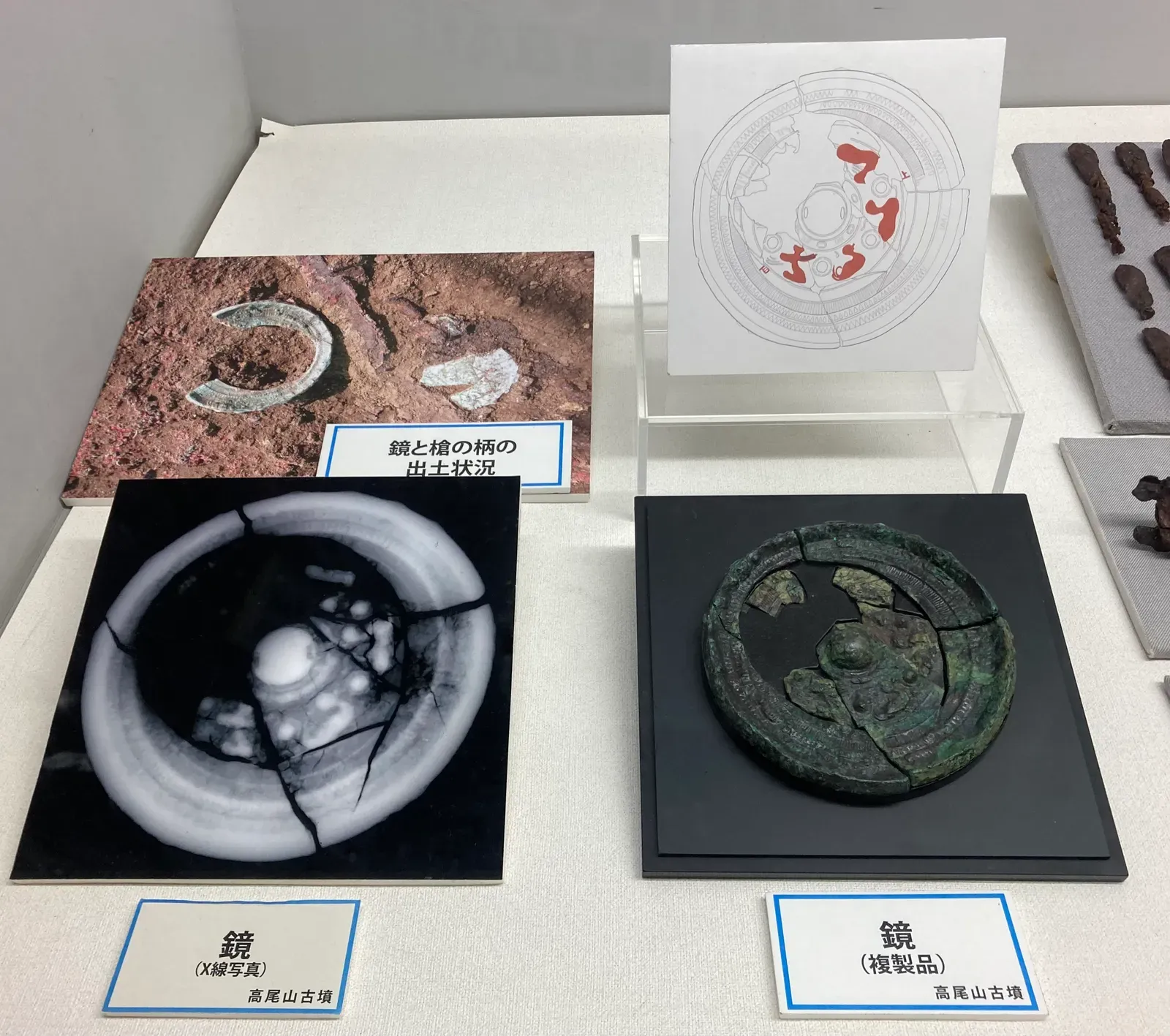
Rumors of an aluminum belt ornament found in an ancient Japanese Kofun tomb have circulated for years, cited as proof of high-tech metallurgy millennia before real aluminum smelting existed. Early, obscure reports described unusual corrosion on a metallic object that one lab allegedly identified as mostly aluminum.
When actual artifacts could be tracked down and tested properly, many of the “aluminum” pieces turned out to be copper, tin, lead, or zinc alloys with surface corrosion that had confused earlier tests. No securely documented, peer-reviewed Kofun excavation has ever produced high-aluminum artifacts predating the 19th century. Better provenance and better labs made the exotic alloy quietly disappear.
#7 – The “Roman” Lead Cross of Tucson
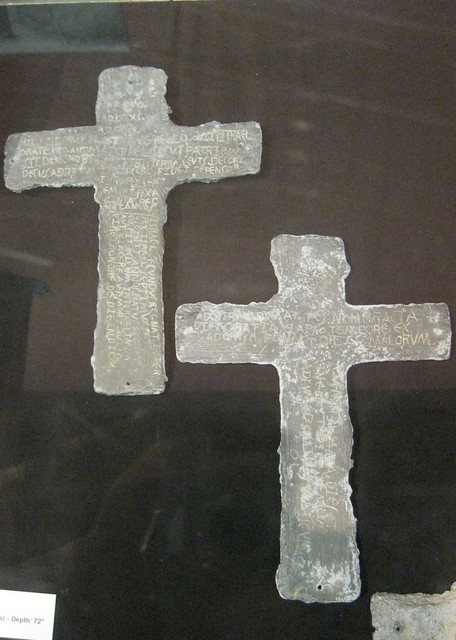
In the late 1920s, lead crosses and inscriptions turned up near Tucson, Arizona, and early local interpretations pointed to a lost Roman or early Christian colony in the American Southwest. One early chemical read on the lead’s corrosion layers suggested serious antiquity, which enthusiasts treated as scientific backing for the whole story.
Later labs retested the metal and found corrosion patterns consistent with lead exposed to desert conditions for decades, not millennia. Epigraphers noticed spelling oddities that looked more like someone imitating textbook Latin than genuine Roman provincial writing, and no supporting architecture, ceramics, or coins ever turned up. The consensus today sits firmly on “modern hoax,” likely from the late 19th or early 20th century – the second-round lab work didn’t just disagree, it dismantled the whole lost-colony story.
#6 – The Calaveras Skull and Gold-Rush Pranks
The Calaveras Skull, allegedly pulled from deep inside a California mine shaft in the 1860s, was once treated as proof that modern humans lived alongside Miocene animals. Early opinions – given before modern stratigraphy and dating existed – called it ancient, and an early chemical test on the bone wasn’t rigorous enough to stop the hype.
Radiocarbon dating and better stratigraphic methods eventually placed the skull only a few hundred years old, consistent with Native American or early colonial remains. The supposed depth of the original find turned out to be undocumented, and Gold Rush-era practical jokes aimed at gullible scientists were common knowledge at the time. One calibration chart quietly rewrote a century of myth.
#5 – The “Ancient” Egyptian Light Bulb at Dendera
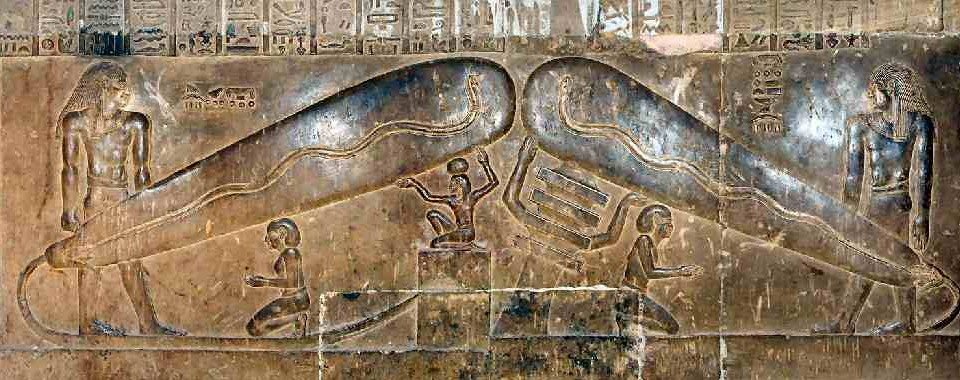
The Dendera “light bulb” comes from a temple relief showing a snake inside an elongated oval on a pedestal, held by human figures. Fringe interpretations claimed it depicted an electric lamp, and some “lab evidence” circulated online was really just modern replicas built specifically to glow like bulbs, not analysis of the actual ancient carving.
Egyptologists pushed back with a different kind of lab work – iconographic and contextual analysis – and identified the scene as a well-known mythological motif involving the lotus, the sun, and the serpent, consistent with other Egyptian cosmological art. No electrical residue, no conductive components, no lighting infrastructure exists anywhere in the archaeological record for the period. The expertise that mattered wasn’t electrical engineering. It was art history.
Worth Knowing
- The relief shows a snake inside an oval held by human figures – not a filament
- No electrical residue or conductive material has ever been found nearby
- The same lotus-sun-serpent imagery repeats across other Egyptian temples
- Viral “proof” online typically shows modern replica bulbs, not the original carving
#4 – The “Aluminum” Wedge of Aiud
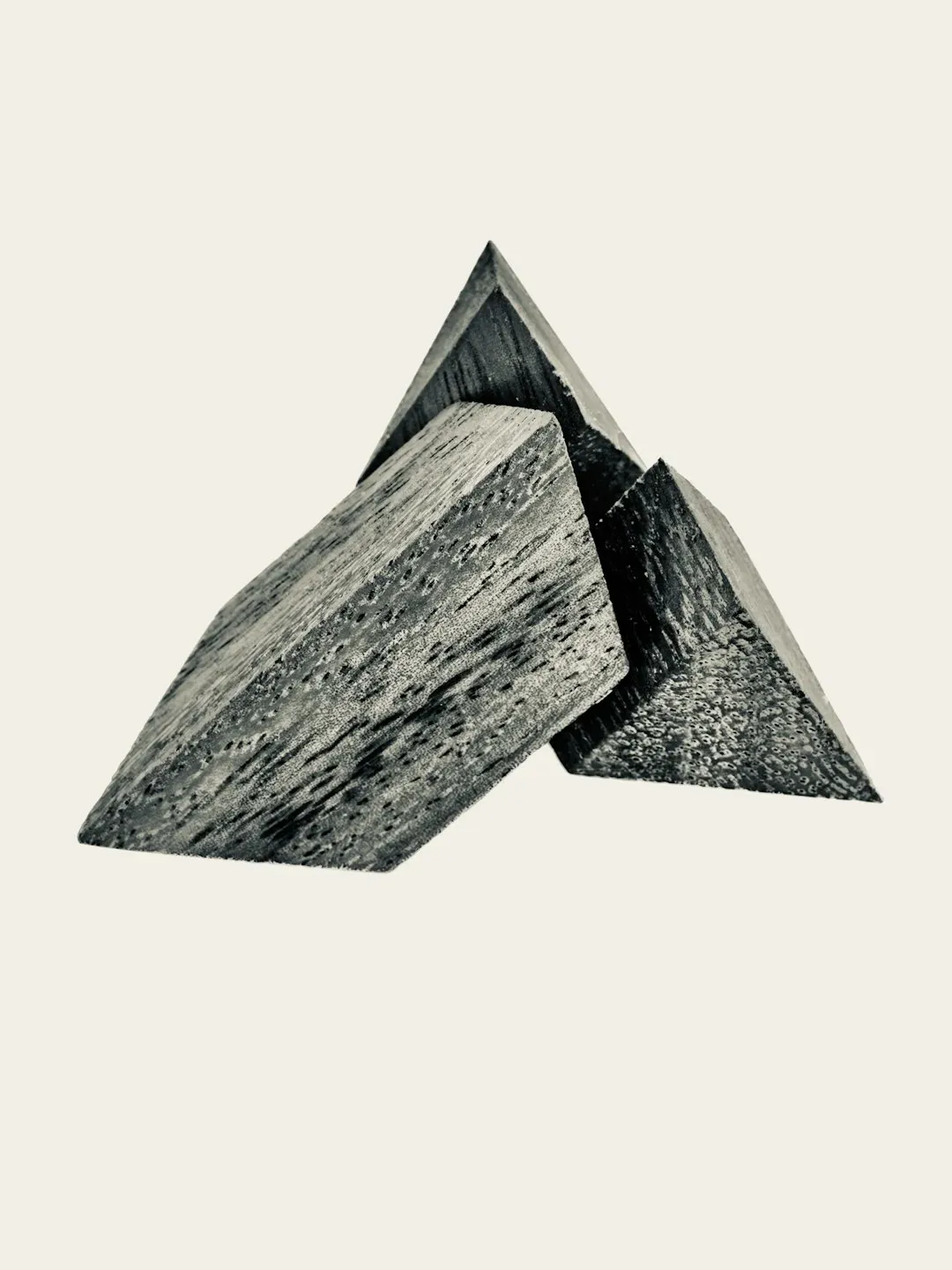
The wedge of Aiud, reportedly found alongside mastodon bones in Romania, has been sold as an anomalous aluminum artifact too old for modern metallurgy to explain. Early metal testing, often cited second- or third-hand, supposedly showed high aluminum content, and writers quickly leapt to lost civilizations or alien technology.
Direct analysis painted a far more boring picture: an aluminum alloy consistent with 20th-century cast parts, with corrosion that forms quickly in certain soils. The link to ancient mastodon bones lacked any real stratigraphic documentation, and it’s entirely plausible the wedge was intrusive debris – possibly part of excavation machinery. Once independent metallurgists replicated the results, most serious researchers stopped treating it as anything but modern scrap.
#3 – The Alleged “Blood” on Ancient Relics
Countless religious relics – saintly bones, sacred shrouds – have been claimed to carry preserved blood. Early tests decades ago relied on rudimentary assays that could only say “this reacts like blood,” without confirming species or age, and popular retellings quickly inflated tentative positives into “confirmed ancient human blood.”
Modern testing – immunohistochemistry, mass spectrometry, DNA analysis – has produced a messier picture: degraded proteins indistinguishable from gelatin, animal residues used in medieval art, or modern contaminated DNA from centuries of handling. Church authorities often restrict destructive testing, so many early claims were never properly replicated. The quiet consensus across independent labs: organic residue of uncertain origin, not miraculously preserved blood.
#2 – Alleged “Fossilized Human Footprints with Dinosaurs”
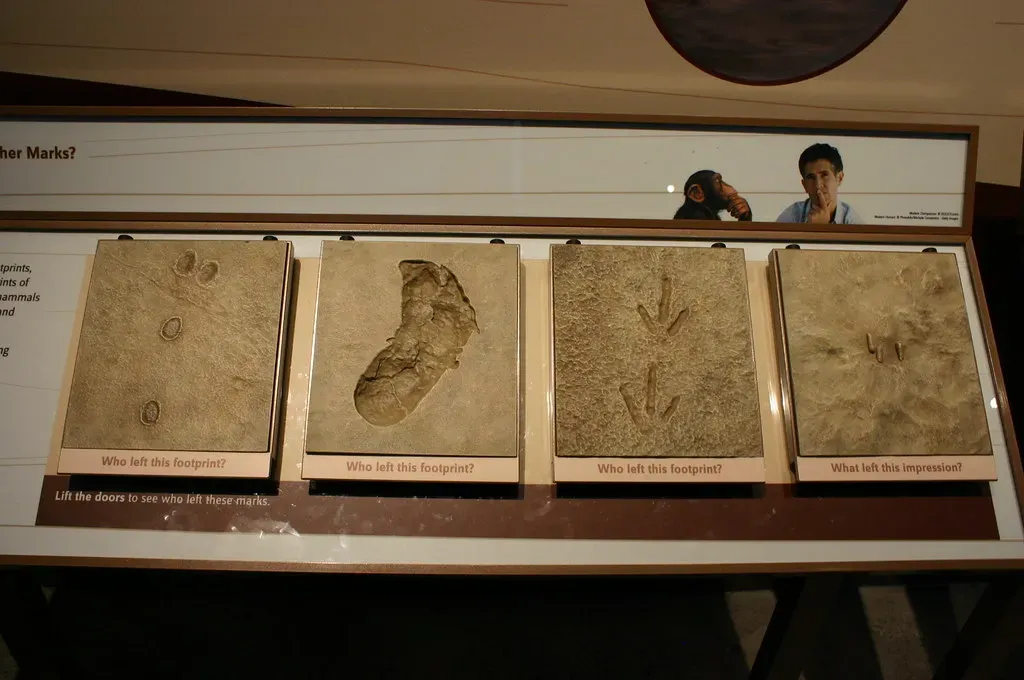
Photos of human-like footprints crossing dinosaur tracks in Texas’s Paluxy Riverbed flooded creationist pamphlets in the mid-20th century. Early local analyses, sometimes by non-specialists, called them genuine human prints, and molds were sent to sympathetic labs with no real ichnology expertise.
When professional paleontologists revisited the site with better photogrammetry and cleaner excavation, the mystery shrank fast. Most “human” prints turned out to be eroded dinosaur tracks, overlapping impressions, or outright carvings added by locals hoping to sell curios to tourists. No verified print showed proper toe alignment, arch, or human pressure distribution. Dinosaurs and humans never shared that riverbed – misread rocks and a handful of fakes did.
#1 – The “Alien” Metal from UFO Crash Sites
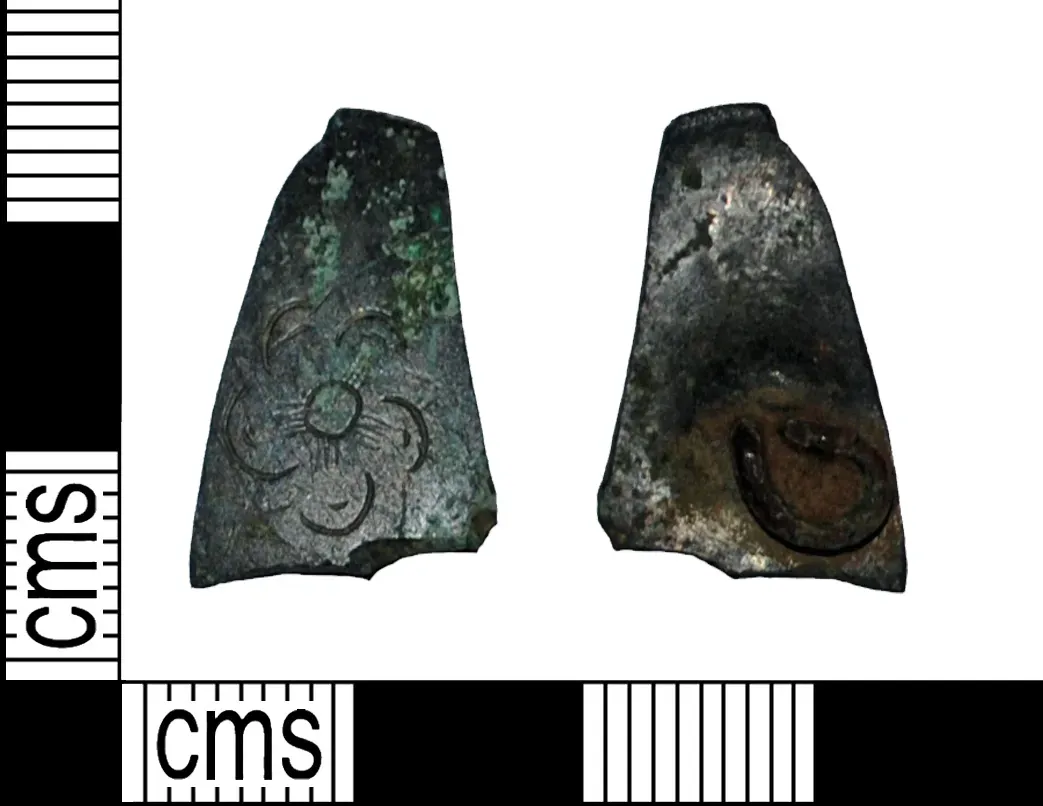
Fragmented metals claimed to come from UFO crash sites – Roswell and beyond – have been marketed for decades as exotic alloys beyond human capability. Early tests, often run in small, under-equipped or private labs, sometimes reported unusual isotope ratios or unusually pure compositions, and those unpublished results fed entire books and documentaries.
When better-equipped, independent labs got their hands on the same samples, the story fell apart in the most ordinary way possible. Mass spectrometry, X-ray diffraction, and isotopic analysis repeatedly turned up conventional aerospace or industrial alloys – aluminum-magnesium, titanium, nickel-based superalloys – advanced, but squarely within known manufacturing methods of the era. The supposed isotope anomalies vanished under precise measurement or traced back to contamination and instrument error. It doesn’t kill every UFO story, but it does confirm a pattern: once rigorous labs get involved, “non-terrestrial” quietly becomes “impressive, but human.”
At a Glance
- Testing methods used: mass spectrometry, X-ray diffraction, isotopic analysis
- Materials identified: aluminum-magnesium alloys, titanium, nickel-based superalloys
- Alleged isotope anomalies traced to contamination or instrument error
- Verdict: advanced but conventional aerospace-grade manufacturing
The Bottom Line
Run all 21 cases side by side and the pattern is impossible to miss: the first result – or what people assumed the first result said – almost always favored the most dramatic possible story. The second, more independent, better-equipped labs were the ones that dragged everything back down to Earth, sometimes literally.
Viking runes turned into 19th-century carvings. An “alien” skeleton turned into a human infant with tragic mutations. “Impossible” alloys turned into standard industrial metal. Miraculous relics turned into contaminated proteins and old paint. None of that is a failure of science – it’s the opposite.
If there’s a real scandal buried in this list, it’s not that these artifacts got downgraded. It’s how long shaky, unreplicated first results were allowed to run wild before anyone checked them properly. Disagreement between labs isn’t an embarrassment – it’s the immune system doing its job. Most of our favorite “impossible” artifacts only survive in headlines, never in peer review, and that gap between the two should make anyone a little more skeptical of the next miracle claim that shows up in their feed.