
You flip a switch, the room fills with light, and your brain files the whole event under “solved.” Simple cause, simple effect. Except physicists who have spent their careers staring at light will tell you, almost sheepishly, that they still don’t have a gut-level story for what’s actually happening.
Light moves at a speed nothing can add to or subtract from. It seems to check whether you’re watching before deciding what to be. It can be in two places, two paths, even two realities at once. Researchers have the equations nailed down cold – what they don’t have is an intuition that survives contact with the math. Here are the properties of light that quietly break the human brain, one by one.
#14 – Light Can’t Decide If It’s a Wave or a Particle (And Never Will)
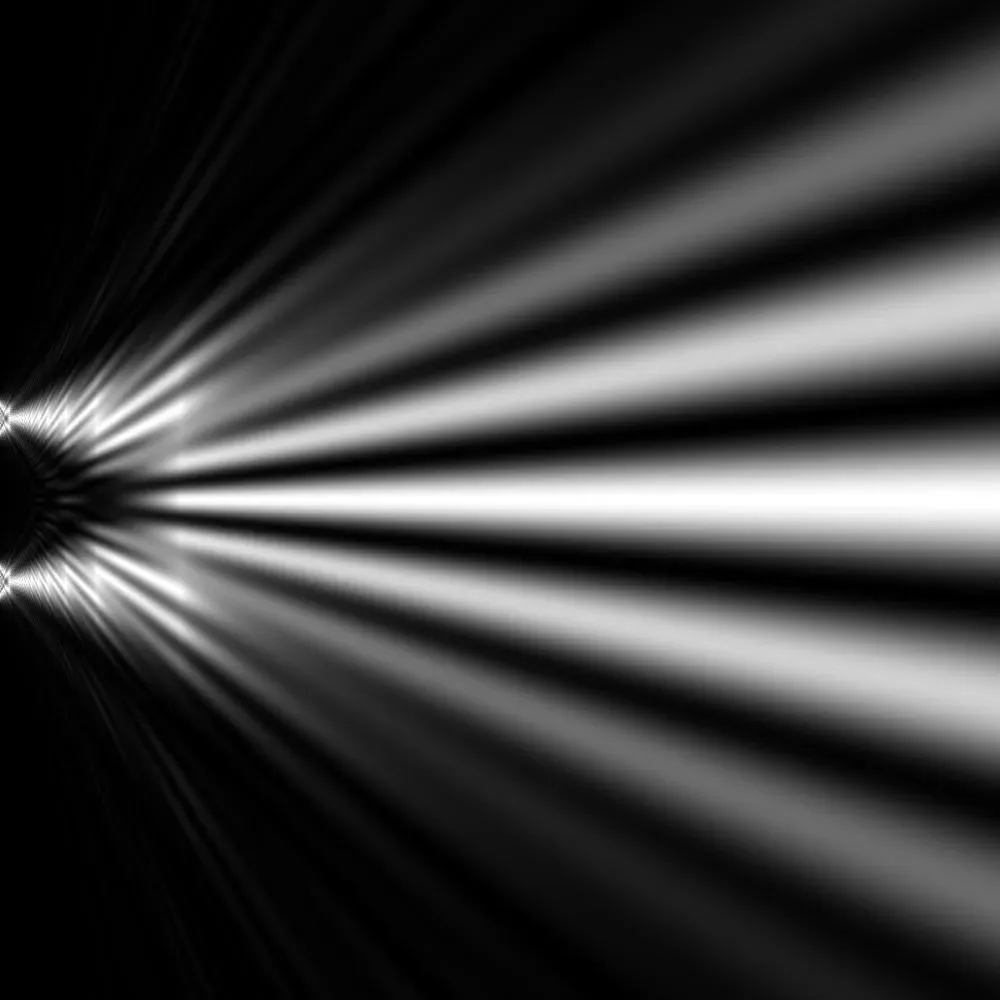
Light refuses to pick a lane. It behaves like a spread-out wave and a tiny, localized particle at the same time, depending entirely on how you choose to look at it. Fire a single photon at a barrier with two slits, and the pattern that builds up on the screen behind it is a wave pattern – bands of light and dark, as if the photon somehow went through both slits and interfered with itself.
Try to catch it in the act, though, and everything changes. The moment you set up a detector to see which slit the photon actually used, it starts acting like a plain old particle, and the interference pattern vanishes completely. Physicists have the math for this “wave-particle duality” memorized. What they don’t have is a story that makes it feel normal – most just shrug and let the equations do the talking.
#13 – Light’s Speed Never Changes, No Matter How Fast You Chase It
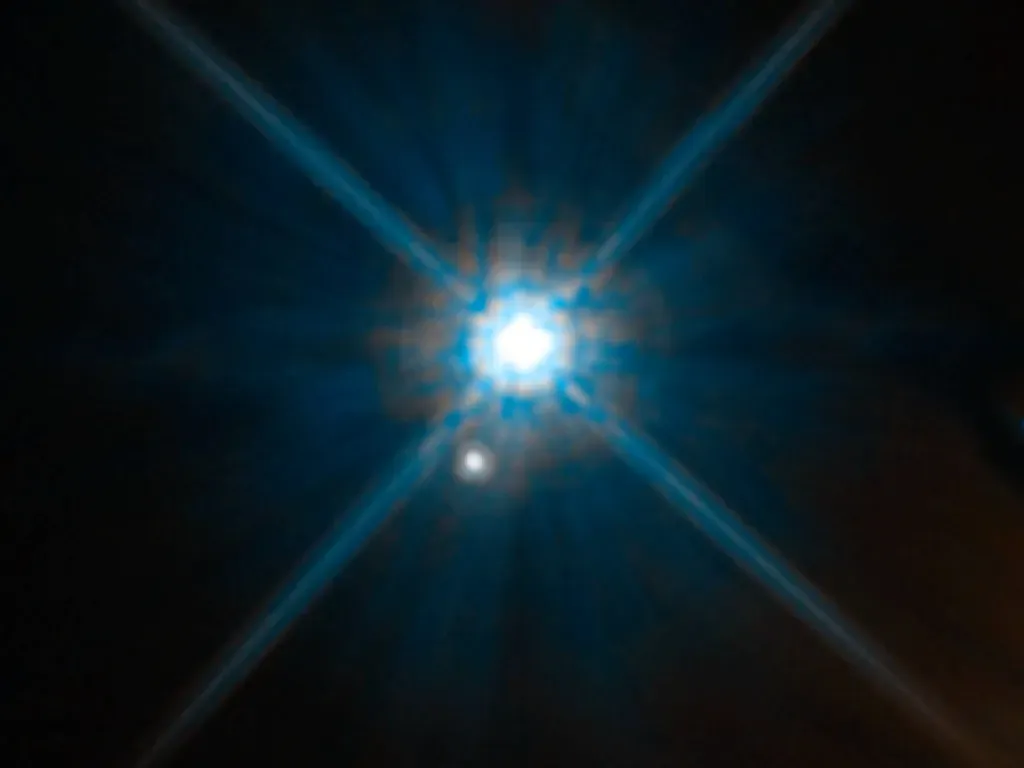
Throw a ball from a moving train and a bystander on the platform will clock it at train speed plus throw speed. That’s intuitive. Light doesn’t play by that rule at all. No matter how fast you move toward or away from a beam of light, you will always measure its speed as exactly 299,792 kilometers per second in a vacuum.
It doesn’t budge for your motion, and that single stubborn fact forced Einstein to rewrite space and time to make the universe consistent. Instead of light adjusting its speed for you, reality adjusts your clocks and your rulers instead – time slows, distances shrink, and “at the same time” stops meaning the same thing for everyone. It’s been verified again and again, and it still sounds like science fiction.
#12 – Light Bends Time and Space Around Anything Massive
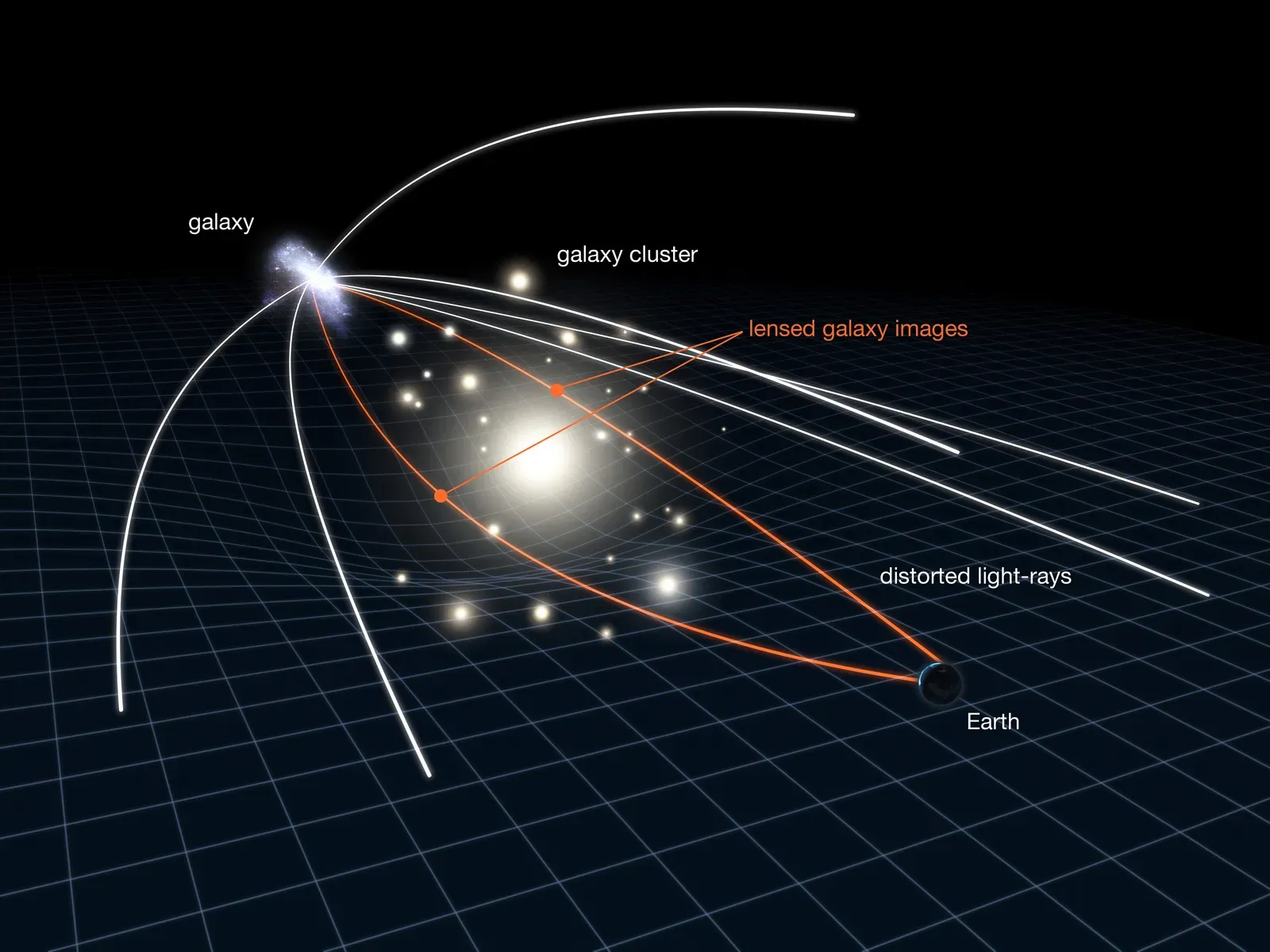
Most people picture gravity as a pull, like an invisible rope. Einstein’s version is colder and far stranger. Mass bends spacetime itself, and light simply follows the curve – no force required. When starlight passes near a massive galaxy on its way to us, its path visibly bends, turning that galaxy into a cosmic magnifying glass that can smear a single object into multiple images or glowing arcs.
Fast Facts
- In 1919, astronomers led by Arthur Eddington photographed a solar eclipse specifically to test Einstein’s prediction that gravity bends light.
- Starlight grazing the Sun bent by roughly 1.75 arcseconds during that eclipse, matching Einstein’s calculation almost exactly.
- Modern telescopes now use this same bending, called gravitational lensing, to spot galaxies otherwise too faint or too distant to see directly.
- When the alignment between source, lens, and observer is nearly perfect, the result can appear as a glowing circle known as an Einstein ring.
Here’s the part that really breaks your brain: from light’s own perspective, no time passes between when it’s emitted and when it’s absorbed. Zero. Yet that same photon still gets its path and timing warped by every massive object it passes. So a photon is bent by something it never “feels,” during a trip in which it experiences no time at all. Calling that unintuitive is being generous.
#11 – You Can Never Catch Up to Light – It Has No “Point of View”
We love asking what things look like from another object’s point of view. With light, that question isn’t just hard – it’s meaningless. There is no valid reference frame in which light is standing still. You cannot ride alongside a photon and see what it sees.
Push the equations of relativity toward the speed of light and they simply stop making sense as an observer’s viewpoint. You can accelerate a spaceship close to light speed and watch clocks elsewhere crawl to a stop, but you will never actually catch up to a beam of light. It’s always out ahead of you, occupying a vantage point that physics says flatly does not exist.
#10 – Light Travels Every Possible Path at Once, Until You Look
In certain quantum setups, a single photon behaves as though it took several different routes at the same time. Until you measure it, light’s path isn’t just unknown to you – it’s genuinely undecided, existing as a superposition of possibilities. In a Mach-Zehnder interferometer, a photon is split down two paths and later recombined, and the resulting interference only makes sense if both paths were somehow taken at once.
This isn’t a gap in our knowledge waiting to be filled. The math says there is no single, definite history until something – usually a measurement – forces one to appear. The photon isn’t secretly choosing a path behind the scenes; reality itself is running as overlapping probability waves that only snap into a concrete event when an interaction demands it. Asking “but which path did it really take?” is exactly the question that breaks your intuition, because the universe never answers it.
#9 – Light Somehow “Knows” When You’re Watching
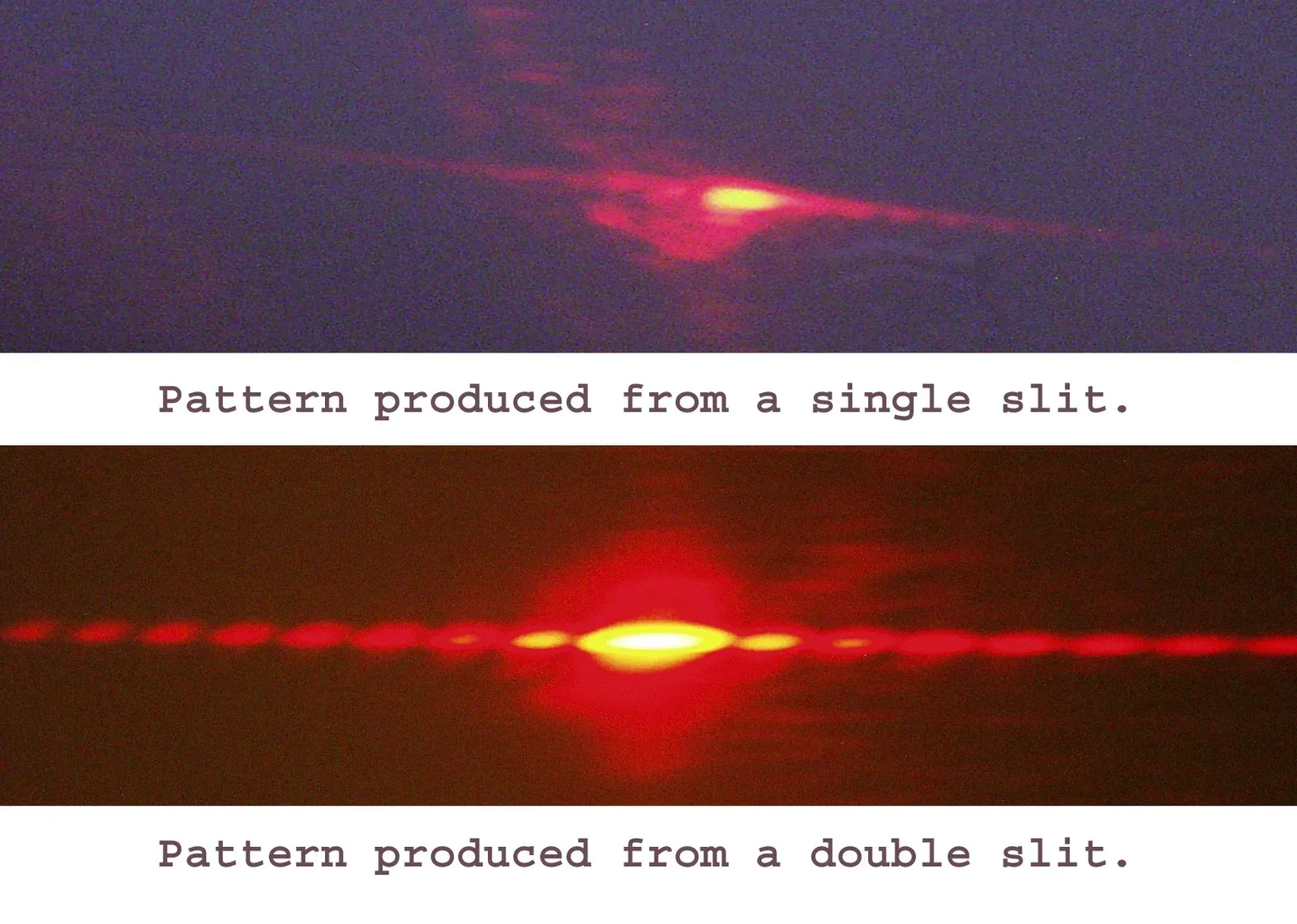
This is the classic mind-bender. In the double-slit experiment, if you try to detect which slit a photon passes through, the interference pattern disappears entirely – light starts acting like a particle instead of a wave. Leave the detector off and you get the full wave pattern back. The physical act of measurement, not your conscious attention, seems to change what light actually is.
This isn’t mystical “thoughts create reality” territory – it comes down to interactions that leave traces in the environment. Still, common sense insists the photon should be either a wave or a particle regardless of whether anyone’s poking at it. Quantum theory says that’s wrong: gaining which-path information genuinely changes the set of possible outcomes. Even “delayed choice” experiments, where the decision to measure happens after the photon should have already passed through, line up perfectly with quantum predictions – and still feel like cheating.
#8 – Two Entangled Photons Act Like One Object, No Matter the Distance
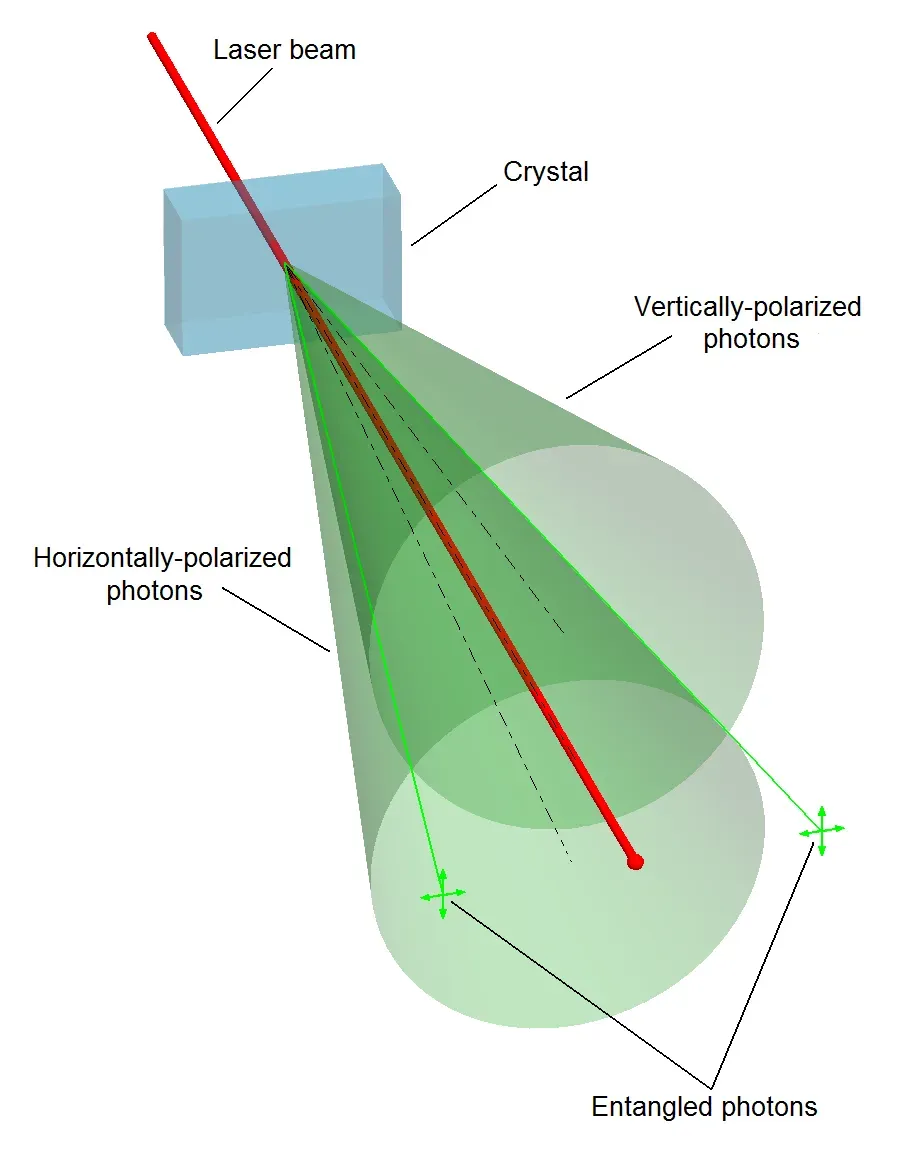
Entanglement is where light stops behaving like separate, independent pieces and starts acting like a single object split across space. Two photons can be created so that measuring one instantly tells you the state of the other, no matter how far apart they’ve traveled. Change what you measure on one side, and the pattern of outcomes on the other side shifts to keep the correlation intact.
The math insists no signal actually travels faster than light, but it certainly looks that way. Experiments testing Bell inequalities have flatly ruled out any simple “hidden variable” explanation that would let us keep our comfortable assumptions about local, pre-existing properties.
Spooky action at a distance.
Albert Einstein
Einstein coined that phrase because entanglement offended his own intuition, and decades of experiments have only made it worse. Light, in its entangled form, forces you to pick which cherished assumption about reality you’re willing to throw out.
#7 – Light Has No Mass, Yet It Can Physically Push You
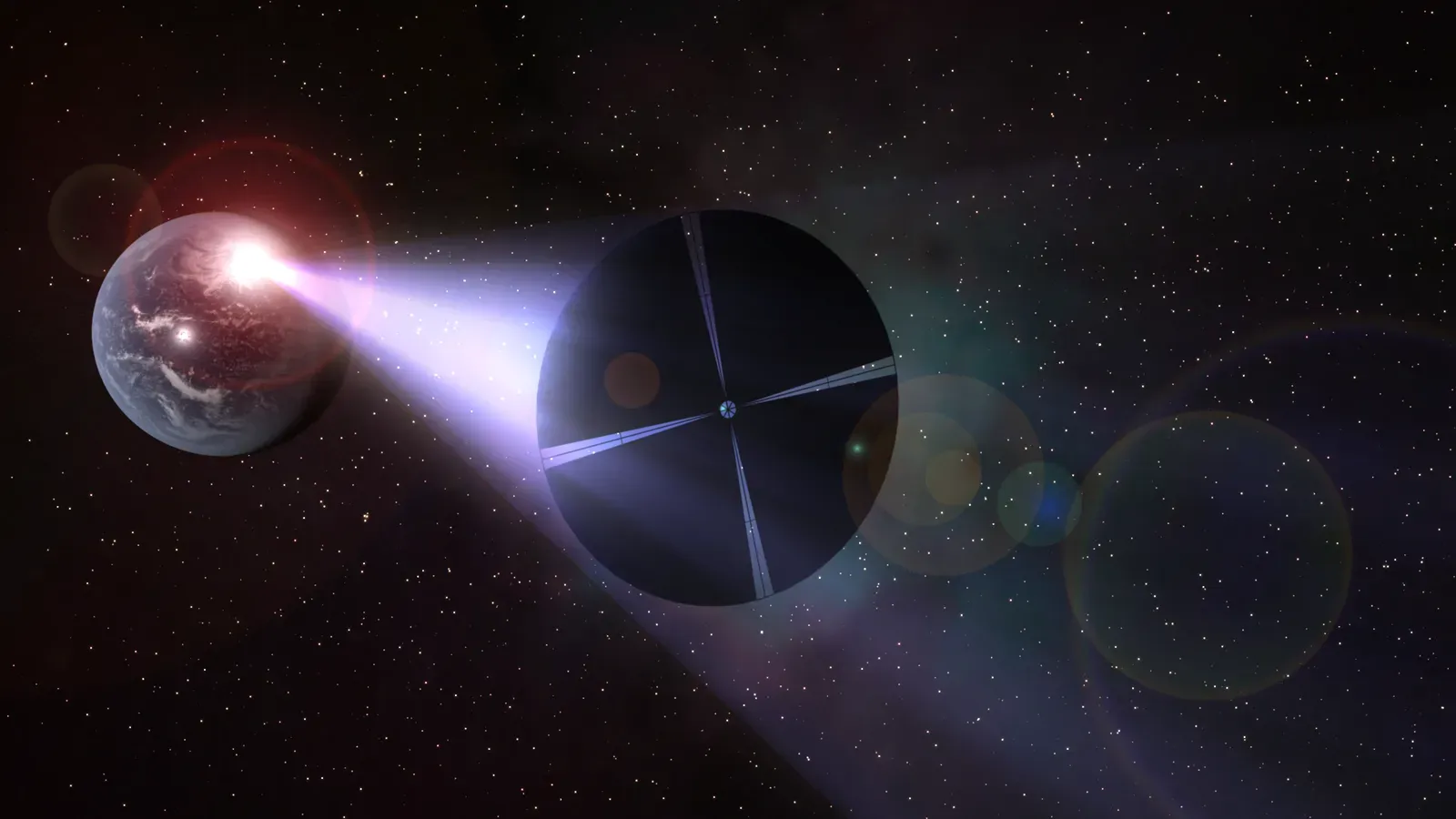
Ask most people what has momentum, and they’ll say anything with mass that’s moving. Reasonable – and wrong when it comes to light. Light has zero rest mass and still carries real, measurable momentum in the form of radiation pressure. Solar sails get pushed across space by sunlight alone. Lasers can nudge microscopic particles and even trap individual atoms in devices called optical tweezers.
Worth Knowing
- Japan’s IKAROS spacecraft became the first to successfully demonstrate solar sail propulsion in deep space, back in 2010.
- The Planetary Society’s LightSail 2 spent years raising its orbit around Earth using nothing but the gentle push of sunlight.
- Optical tweezers, built from focused laser beams, are precise enough to grab and move individual cells or strands of DNA.
- Radiation pressure from sunlight also helps shape the faint dust tails that stream behind comets as they pass the Sun.
In relativity, energy and momentum are locked together tightly enough that a photon’s energy – tied to its frequency – implies momentum even with zero mass behind it. That’s why light can transfer angular momentum, set particles spinning, and quietly shove dust and gas around in space. It’s a ghost that can still shove you, and for generations of physicists before Einstein, that felt like breaking the rules outright.
#6 – Every Color of Light Is Actually a Specific Chunk of Energy
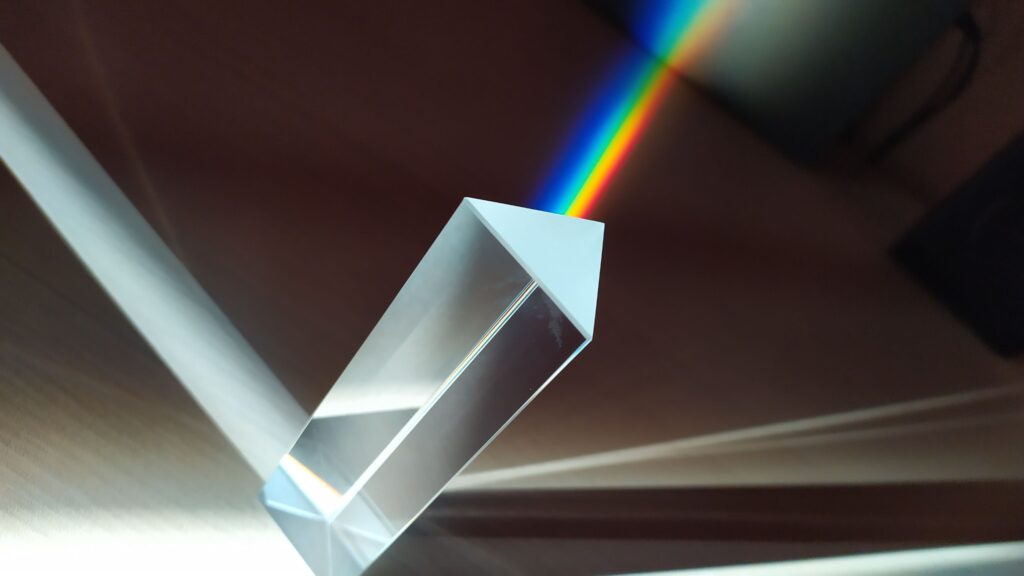
We talk about color like a smooth dial you can slide from red to violet. Under the hood, it’s nothing like that. Each color corresponds to a specific photon energy, and light arrives in discrete chunks rather than a continuous smear. A red photon carries less energy than a blue one, which is exactly why ultraviolet light can damage your DNA while red light, no matter how bright, generally can’t.
This showed up unmistakably in the photoelectric effect. Shine red light on a metal plate, crank the brightness as high as you want, and nothing happens. Switch to a dim beam of ultraviolet, and electrons pop off immediately. It was never about total brightness – it’s about whether a single photon carries enough energy to clear the threshold. Our senses are built for continuous experience, not quantum ladders, and light simply doesn’t care.
#5 – Light Slows Down in Glass, But Not Because It’s Tired
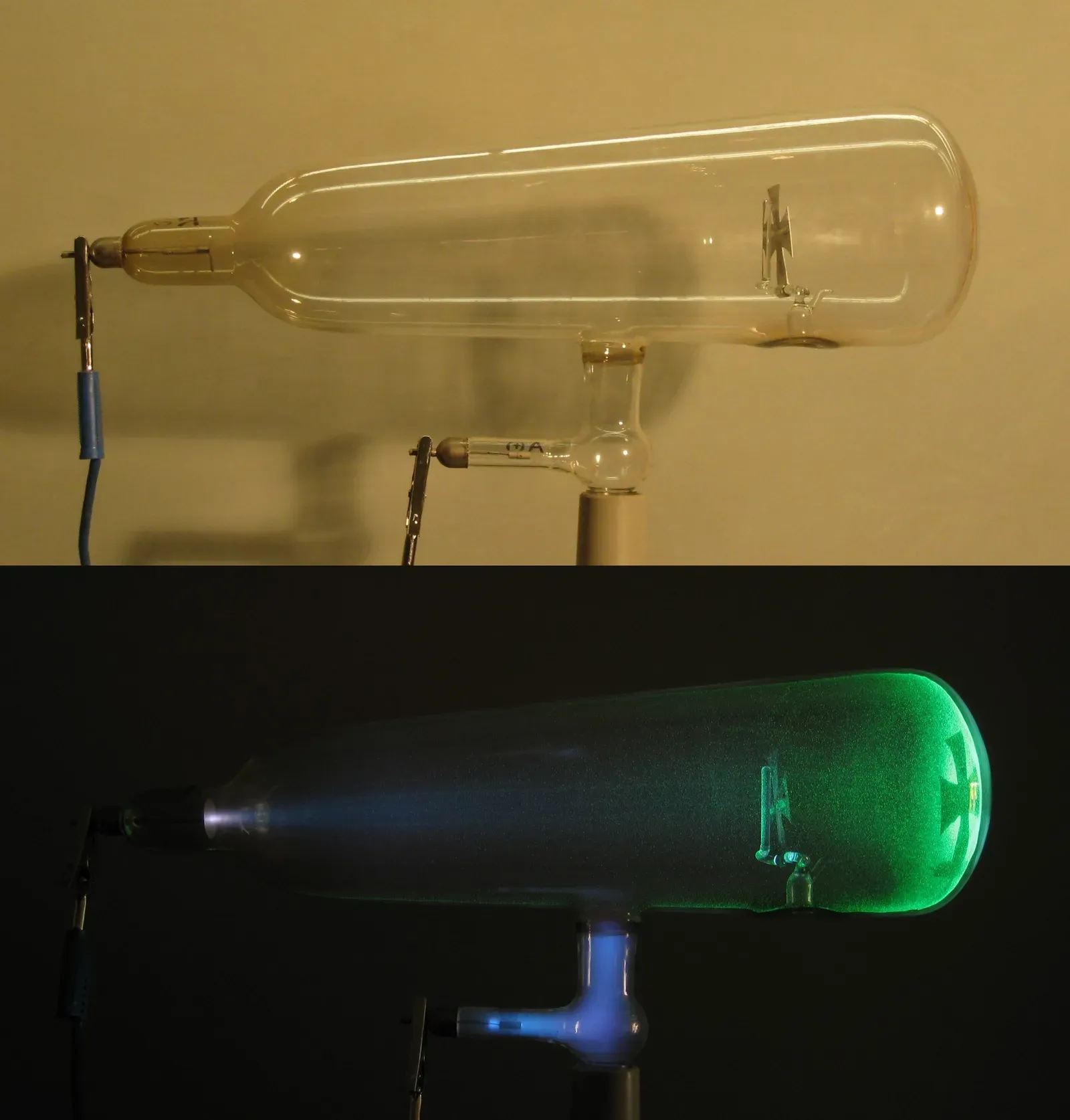
It’s tempting to picture light trudging through glass like a runner wading through mud. The real story is stranger. Individual photons always move at full light speed between interactions; what actually slows is the effective speed of the overall wavefront, caused by countless absorption and re-emission events inside the material. The glass’s atoms briefly absorb the light’s energy and pass it along slightly out of sync, and from a distance, that chaotic relay race looks like one smooth beam moving slower.
Light never loses its intrinsic speed or gets fatigued – it’s constantly being delayed by quantum interactions with bound electrons. Some engineered materials can even stop or drastically slow a light pulse in the lab, all while the universal speed limit in a true vacuum never budges an inch. Our brains crave a simple friction analogy; the universe hands us a field-theory tangle instead.
#4 – Light Interferes With Itself Like a Wave, Yet Lands Like a Bullet
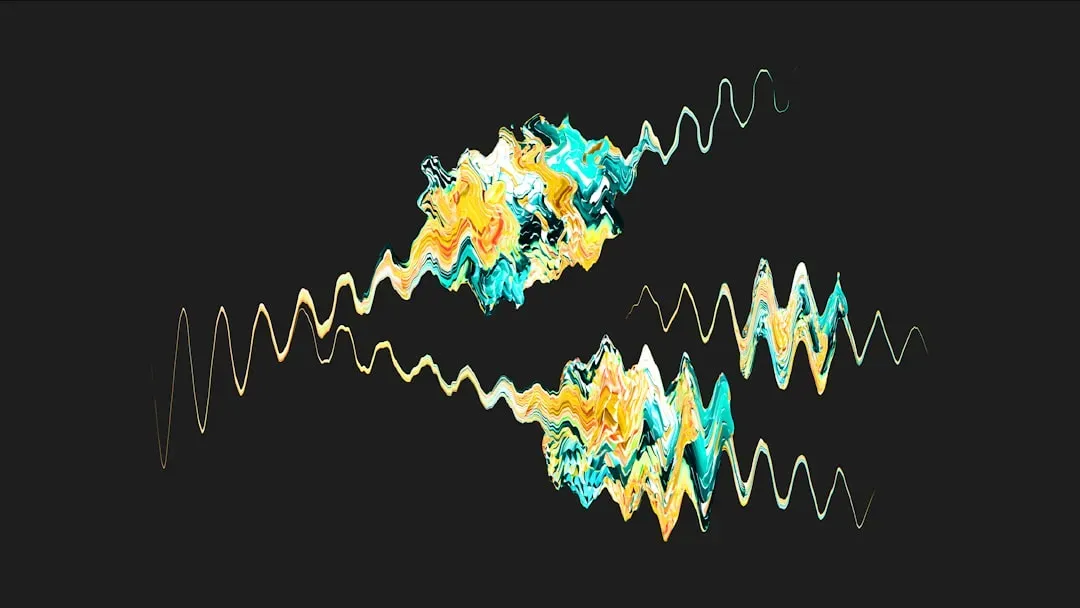
Interference patterns are classic wave behavior – overlapping ripples creating bright and dark bands. Here’s the twist: even if you turn the source down so low that only one photon is emitted at a time, the interference pattern still builds up gradually, one dot at a time, on the detector. Each individual hit is a sharp, localized point, but the accumulated statistics scream “wave” every time.
This is one of the deepest mind-wreckers in all of physics, because the photons never interact with each other to create the pattern – they don’t need to. What propagates between source and screen isn’t a marble on a fuzzy trajectory; it’s a wave equation describing probability. The outcome of each individual event is still a single point-like detection. Most experts stop trying to build a mental picture here and just admit it feels alien.
#3 – Light Never Ages, Even Though We Watch Its Ancient History
Sunlight takes roughly eight minutes to reach Earth. Light from distant galaxies has been traveling for billions of years. But from the perspective of relativity, a photon’s own internal clock never ticks at all – its proper time between emission and absorption is exactly zero. In the strictest relativistic sense, there is no duration whatsoever along light’s own path.
At a Glance
- Sunlight takes about 8 minutes and 20 seconds to cross roughly 93 million miles from the Sun to Earth.
- Light from the Andromeda Galaxy left its source roughly 2.5 million years ago, long before modern humans existed.
- The oldest light we can detect, the cosmic microwave background, has been traveling for about 13.8 billion years.
- None of that travel time exists from the photon’s own point of view – only ours.
Yet our entire picture of the universe is built from light that we describe as having endured an epic, ancient journey. Both stories are mathematically correct at once: in our frame, the trip took billions of years; along the photon’s own path, no time passed. Holding light’s timelessness and our time-stretched view in your head simultaneously is exactly where intuition throws up its hands and quits.
#2 – Empty Space Isn’t Empty, and It Quietly Bends Light’s Path
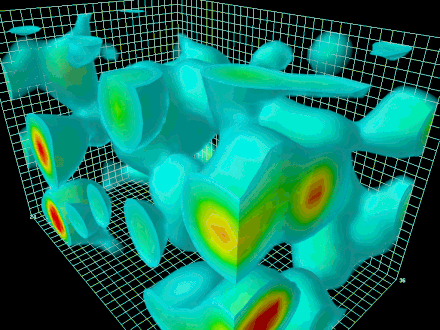
We grow up picturing a vacuum as pure, sterile nothing. Physics has other ideas. Even “empty” space is seething with quantum fields, and these vacuum fluctuations subtly shift energy levels in atoms and alter how light behaves near boundaries – effects known as the Lamb shift and the Casimir effect. In extreme conditions, sufficiently strong fields can even make the vacuum behave like a medium with properties of its own.
Light doesn’t glide through sterile nothingness at all; it’s constantly interacting with a restless, structured background. Near intense gravitational fields or in high-energy environments, these effects can turn genuinely dramatic. The clean “speed of light in a vacuum” figure we all memorize is already an effective number built on top of this underlying mess. We want a bare stage with actors moving across it; the universe hands us a buzzing quantum theater where the stage itself is part of the show.
#1 – Light Proves There’s No Single “Real” Version of the Universe
Follow every one of these properties to its logical end and you hit a wall. The way light behaves means there is no single, absolute picture of reality that matches everyday common sense. Different observers genuinely disagree about distances and durations. Quantum events have no definite outcome until measured. Entangled photons defy any story where everything carries fixed, pre-set properties waiting to be discovered.
Physicists respond with competing interpretations – many-worlds, relational quantum mechanics, QBism, and others – and none of them hand back the familiar, single-story, objective movie of the universe most of us instinctively believe in. Light sits right at the center of this crisis.
Quick Compare
- Many-worlds: every possible outcome happens, splitting reality into countless parallel branches.
- Relational quantum mechanics: a system’s properties only exist relative to whatever is observing it.
- QBism: quantum states describe an observer’s personal beliefs about outcomes, not an objective reality.
- All three use identical math and produce identical predictions – they only disagree about what’s “really” happening.
Its speed, its quantum nature, and its response to measurement keep exposing the same cracks in our intuition. The equations work beautifully. Conceptually, they leave us with a universe far stranger, and far less comforting, than most textbooks ever admit.
The Bottom Line
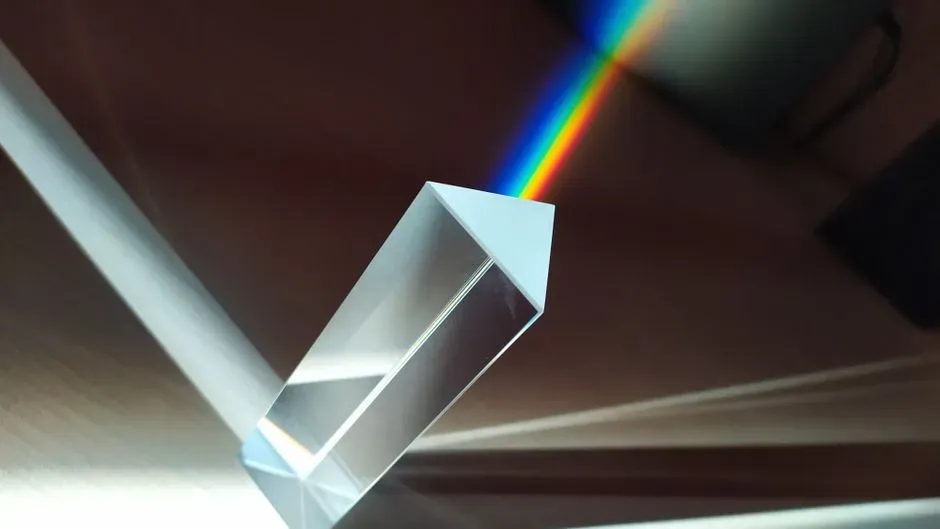
Taken together, these properties don’t read like features of a familiar physical object. They read like patch notes for a reality we were never built to understand. Light is massless yet pushy, timeless yet dense with history, local in the equations yet globally entangled in its outcomes.
The math is brutally consistent. Our stories about what’s “really happening” are still scattered all over the map, and I’d argue that’s the part too many science communicators smooth over to keep things comfortable. If light makes you feel like the universe is running on rules that weren’t designed for human brains, you’re not wrong – you’re finally paying attention.
Which of these mind-benders bothers you the most?