
Ask most people what cosmologists do, and you’ll get some version of: “they figure out how the universe ends.” A specific answer. A date, maybe. A tidy diagram with Big Bang on one side and some dramatic finale on the other.
Here’s the twist nobody advertises: a huge chunk of those confident, textbook-ready predictions have been quietly abandoned over the last decade and a half. Not with a press release. Not with an apology. They just… stopped appearing in papers, stopped showing up in talks, and got replaced with a lot more shrugging and a lot more math. Eleven of the biggest ones are below, and the pattern behind all of them says something uncomfortable about how much we actually know.
#11 – A Precise “End of the Universe” Date
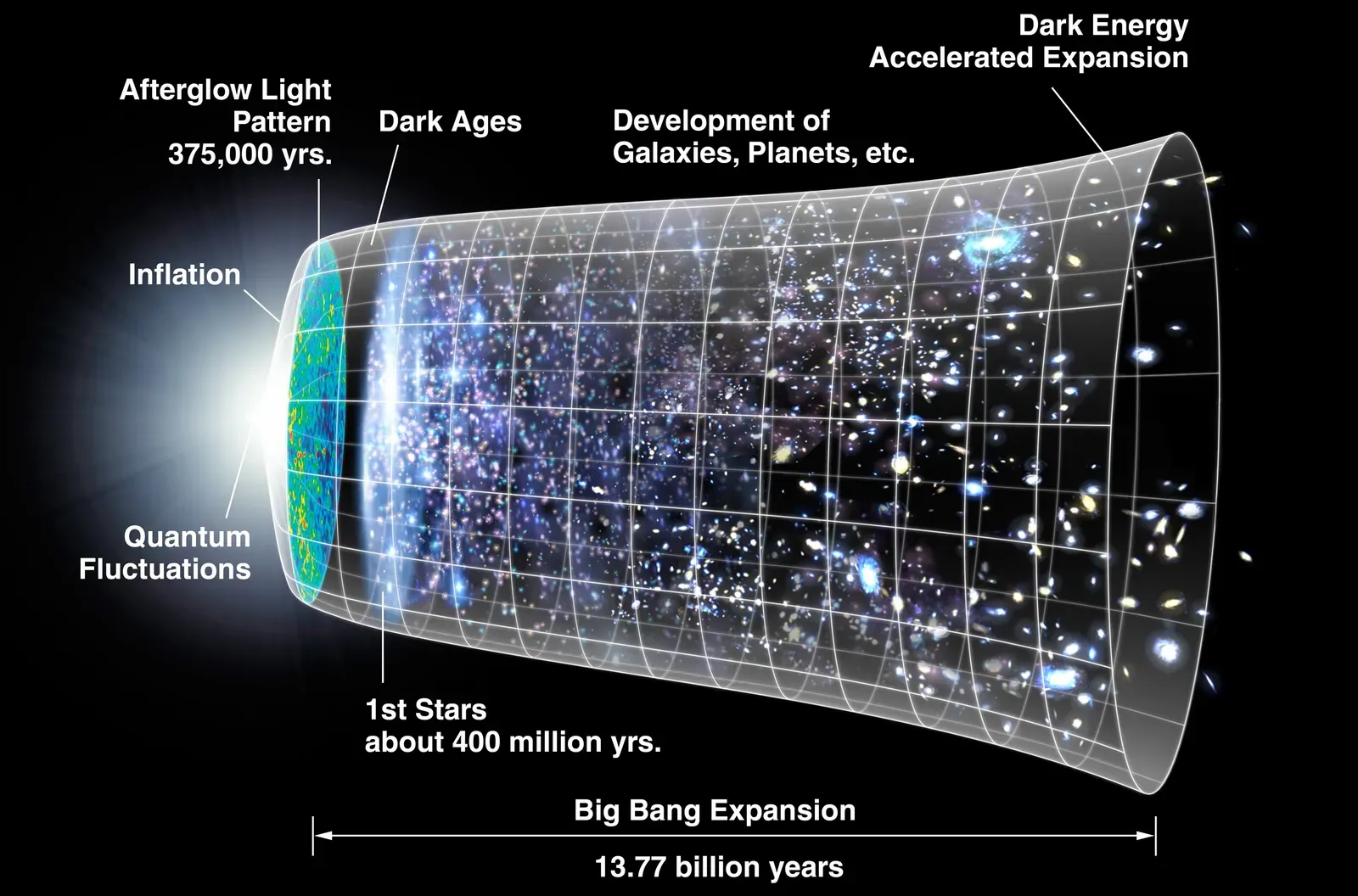
Pop-science headlines used to love implying cosmologists were closing in on an actual doomsday date. Big Crunch, Big Rip, Heat Death – pick your flavor, and somebody, somewhere, was willing to slap a timeline on it. It made for great TV. It was never actually good science.
Once missions like Planck and sharper supernova surveys came online, the error bars on any long-term cosmic timeline turned out to be enormous. Tiny uncertainties in how dark energy behaves balloon into absurd timing errors once you stretch them across trillions of years. That’s why modern papers talk in vague, staggering orders of magnitude – “10¹⁰⁰ years,” roughly – instead of anything resembling a countdown clock. Nobody credible is putting a number on the marquee anymore.
#10 – One Guaranteed Ending for the Universe
Textbooks used to present the universe’s fate like a multiple-choice question: Big Crunch if gravity wins, endless expansion if it doesn’t, maybe a perfect balance if you’re feeling generous. Pick an answer, run the equations, move on with your day.
Then dark energy showed up in the late 1990s and shredded the exam. Cosmologists tried to force it into neat boxes – a fixed cosmological constant, a simple field with one clean equation of state – just to keep the old multiple-choice format alive. It didn’t hold. We still don’t know if dark energy is truly constant, slowly changing, or a symptom of something wrong with our theory of gravity itself. Each possibility leads somewhere completely different, which is why researchers now publish branching scenario trees instead of a single confident verdict.
Quick Compare
- Big Crunch: Gravity wins, expansion reverses, everything collapses back down.
- Heat Death: Expansion continues forever, energy spreads thin, stars slowly burn out.
- Big Rip: Dark energy intensifies until it tears apart galaxies, atoms, and space itself.
#9 – An Exact Number for Dark Energy’s Behavior
Back in the 2000s, it was fashionable to publish a bold best-fit number for dark energy’s “equation of state,” the parameter physicists call w. People would casually say “we’ve pinned it to −0.9” and build entire cosmic futures on that single digit.
That confidence didn’t age well. New data, new systematics, and different modeling choices kept nudging the number around, and eventually the community stopped pretending it had a fixed target. Today the honest answer is basically “w is close to −1, within our current uncertainties” – which sounds unsatisfying until you realize the far future depends enormously on whether it’s a hair above or below that line. Nobody wants to bet the fate of the cosmos on a rounding error, so most cosmologists simply stopped trying.
#8 – A Detailed Timeline for the Big Rip or Big Crunch
Once dark energy entered the picture, two nightmare scenarios took over the headlines. The Big Rip: dark energy grows so violent it tears apart galaxies, stars, planets, even atoms. The Big Crunch: expansion reverses and everything collapses back on itself. Early models treated both as genuinely plausible, and people drew detailed cartoon timelines showing exactly when the unraveling would begin.
That drama has quietly evaporated. Current data line up almost perfectly with a plain, boring cosmological constant – dark energy that doesn’t get stronger over time – which makes a Big Rip extremely unlikely. A Big Crunch would require dark energy to flip sign or behave strangely in ways we simply don’t observe. Both scenarios still get explored as “what-if” math exercises, but they’ve slid from mainstream forecast to speculative movie plot.
#7 – A Precise Count of Universes in the Multiverse
For a brief, thrilling stretch, some theorists talked as if they could eventually calculate how many pocket universes exist out there – 10⁵⁰, 10¹⁰⁰, take your pick. The idea came from inflation, where quantum fluctuations supposedly spawn endless bubble universes, and it sounded like the beginning of an actual probability distribution over possible cosmoses.
Then everyone slammed into the measure problem. Once your multiverse is effectively infinite, a question as simple as “what fraction of universes look like ours?” stops having a well-defined answer – you can make almost any number pop out depending on how you choose to count infinity. That’s not a discovery, it’s a red flag. Most serious cosmologists still mention the multiverse as a possible explanation for certain oddities, but you’ll rarely hear anyone predict a headcount with a straight face anymore.
#6 – Clear, Testable Predictions from String Theory
There was a real window when people confidently said, “string theory predicts X, and we’ll be able to check it soon.” Extra dimensions, cosmic strings, distinctive gravitational wave fingerprints – all pitched as tests waiting just around the corner, with the early universe acting like a natural particle accelerator.
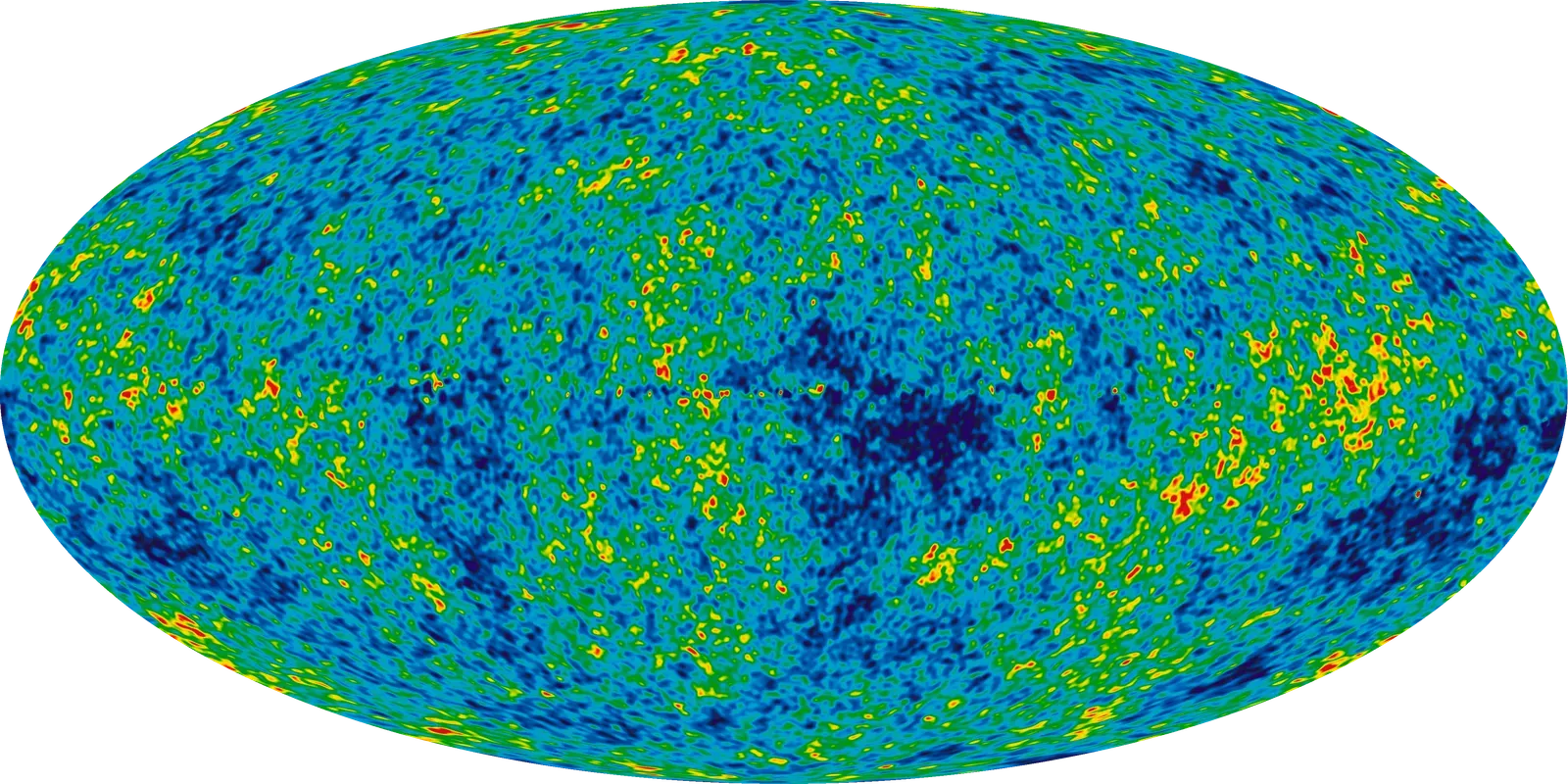
Decades later, the sky has stayed frustratingly quiet. The cosmic microwave background looks boringly consistent with plain old inflation and standard particle physics, and none of the exotic defects some string-inspired models promised have turned up. Meanwhile, the string landscape has ballooned into so many possible vacua that it can be bent to fit almost any outcome after the fact. That flexibility killed its predictive power – cosmologists now talk about “string-motivated models,” a much smaller and more honest claim than the one they used to make.
Fast Facts
- String theory typically requires extra spatial dimensions – often 10 or 11 total.
- The “string landscape” is often estimated to contain on the order of 10^500 possible vacuum states.
- No confirmed cosmic strings or extra-dimensional signatures have shown up in CMB data.
#5 – One Clean, Unique Inflation Story
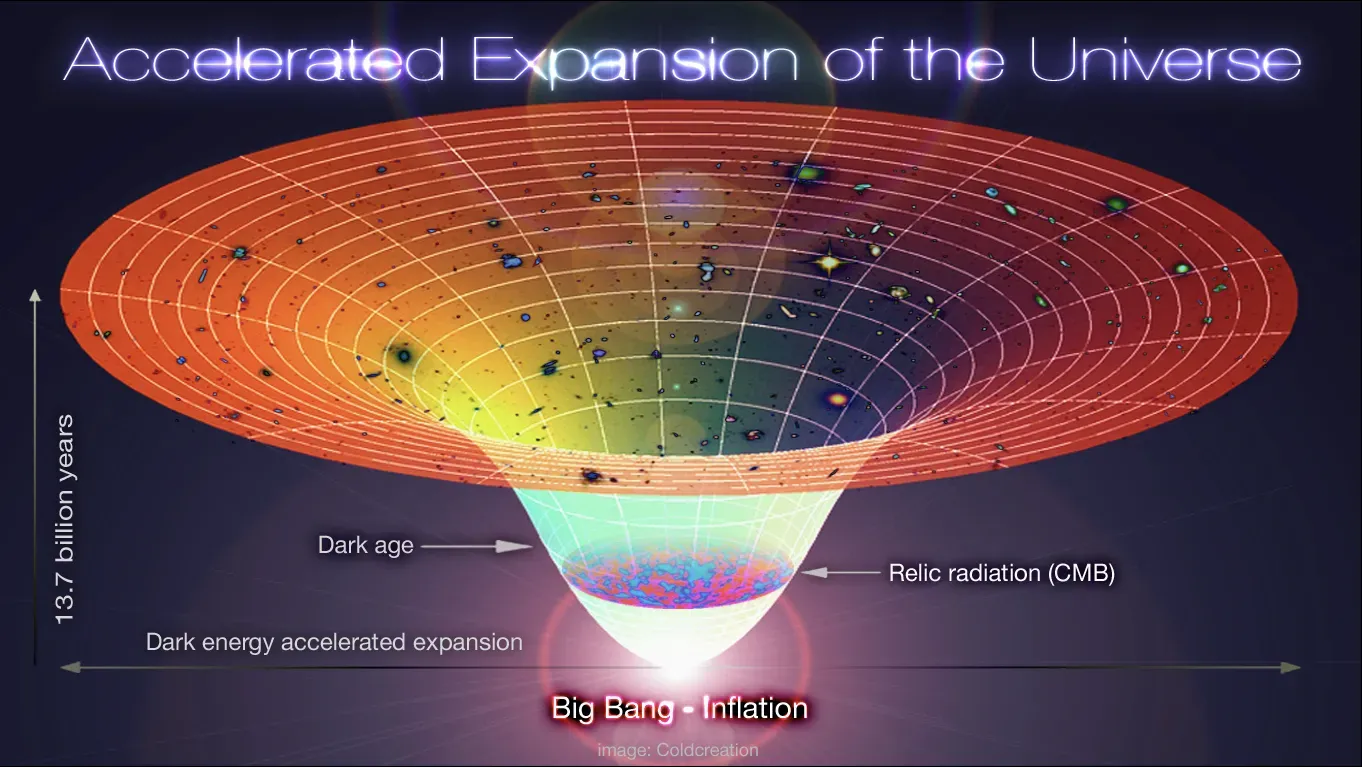
Inflation used to be sold to the public as an almost-finished story: one simple field drives a brief burst of exponential expansion, smooths the universe out, and seeds all the structure we see today. That version made crisp, checkable predictions, and plenty of cosmologists expected upcoming data to rule entire classes of models in or out for good.
Instead, experiments kept killing off specific simple models while the broader framework proved endlessly adaptable – tweak a field, add a feature, adjust the initial conditions, and it still fits the sky. Deep problems like the measure problem and the question of what set inflation off in the first place never actually got solved. Inflation remains the leading early-universe idea, but the dream of one elegant model winning outright has quietly given way to talk of entire families of inflation-like scenarios, including bouncing alternatives that skip inflation altogether.
#4 – An Exact Primordial Gravitational Wave Signal
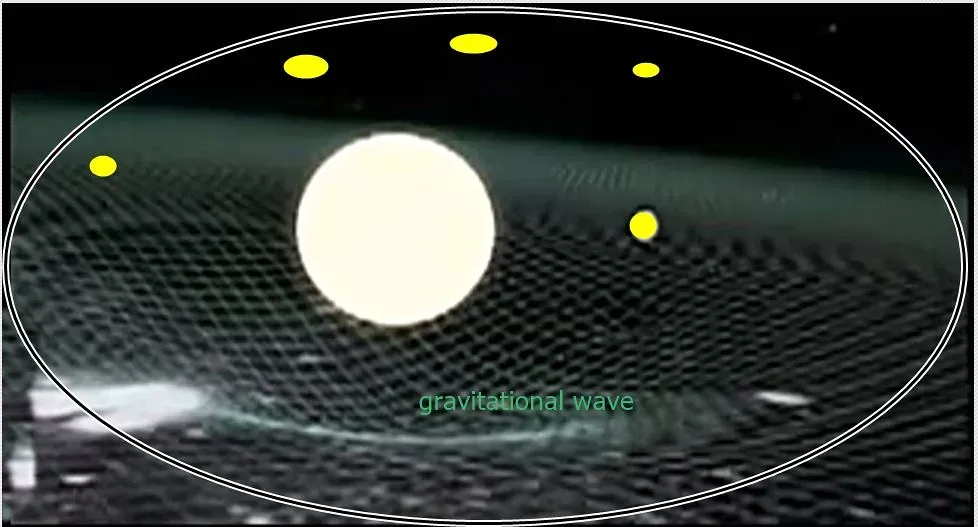
In the early 2010s, the hunt for primordial gravitational waves – encoded as B-modes in the cosmic microwave background – was hyped as the smoking gun for inflation. Some models even named a specific number, predicting the signal strength should land around r ≈ 0.1. Then came BICEP2’s celebrated “discovery,” which turned out to be interstellar dust in disguise.
That embarrassment became a turning point. Since then, the upper limits on r have kept dropping with every new survey, but no real detection has landed, and each null result shaves off another slice of the possibilities. The honest state of the field is that we still don’t know if inflation left a detectable gravitational wave signature at all. “Constraining r” has quietly replaced “predicting r” as the actual job description.
#3 – A Fixed Timeline for Detecting Dark Matter
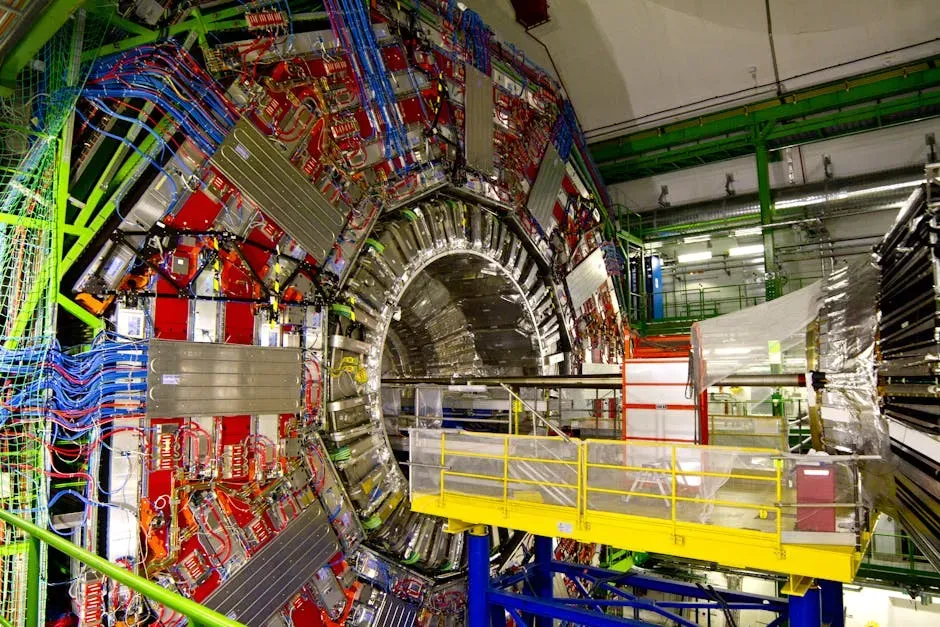
Around the 2010s, plenty of serious researchers genuinely believed direct detection of dark matter particles was just a few years away. Underground detectors kept getting more sensitive, and the leading WIMP models predicted signals that should have shown up right on schedule. People openly talked about “solving” dark matter within a decade.
The decade came and went, and the corner kept moving. Year after year, the most sensitive experiments on Earth reported nothing but null results, quietly erasing huge swaths of the parameter space WIMPs were supposed to occupy. The field has since fragmented into a crowded lineup of alternatives – axions, sterile neutrinos, dark sectors, even modified gravity – with no clear favorite and no guaranteed payoff. “Imminent detection” has been replaced with something closer to “we genuinely have no timeline,” which is a strange thing to admit about one of the biggest mysteries in physics.
At a Glance
- WIMPs: The longtime favorite, largely squeezed out by decades of null underground results.
- Axions: Ultra-light particles now drawing fresh attention from specialized detectors.
- Sterile neutrinos: A quieter cousin of ordinary neutrinos, still unconfirmed.
- Modified gravity: Skips new particles entirely by tweaking gravity’s rules instead.
#2 – A Neat Solution to the Cosmic Coincidence Problem
Cosmologists used to frame the “coincidence problem” as something a clever enough theory could crack: why is dark energy taking over the universe right now, during the exact narrow window when stars, planets, and observers like us happen to exist? For a while, ambitious models – tracker fields, anthropic arguments dressed up in multiverse language – claimed to make our era feel less like a fluke and more like a natural outcome.
The confidence didn’t survive contact with more scrutiny. Those models kept adding assumptions faster than they removed them, or drifted into territory that’s nearly impossible to test, while the data stubbornly refused to crown a winner. What’s left is an uncomfortable possibility: the timing might just be a brute fact, or something only explainable through anthropic, multiverse-flavored reasoning that most physicists find deeply unsatisfying. The coincidence problem now lives more as a philosophical puzzle than a race anyone claims they’re about to win.
#1 – A Final “Theory of Everything” That Predicts the Whole Cosmos
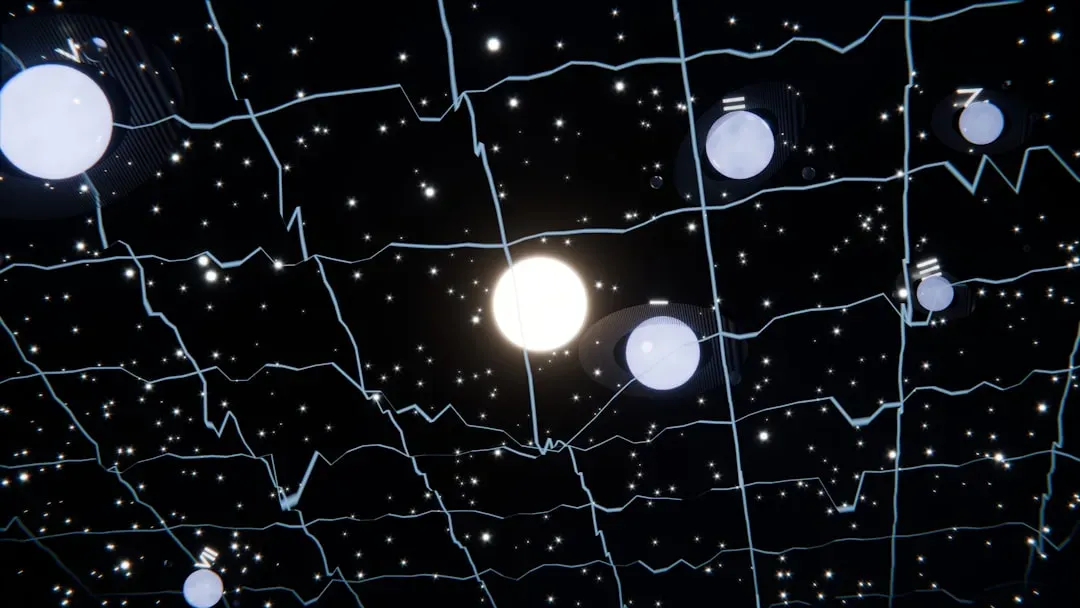
For decades, the holy grail was obvious: one unified theory stitching together quantum mechanics and gravity, explaining every force and particle, and from that single foundation, predicting the structure and fate of the entire universe. String theory, loop quantum gravity, or some yet-unnamed successor was supposed to eventually hand over the master key.
What actually happened is far more humbling. Progress in quantum gravity has been real, but scattered and incomplete, with nothing close to a testable, unique “final theory” in sight. Even worse, such a theory might not uniquely determine our universe’s large-scale features at all – initial conditions, symmetry breaking, and landscape problems can swamp predictability no matter how elegant the underlying math is. Most researchers still chase deeper laws, but almost nobody promises a final, all-encompassing script for the cosmos anymore.
Worth Knowing
- String theory: Unifies forces through vibrating strings, but still lacks testable predictions.
- Loop quantum gravity: Treats spacetime itself as quantized into discrete loops.
- Causal dynamical triangulation: Builds spacetime from tiny, evolving triangular building blocks.
The universe is under no obligation to make sense to you.
Neil deGrasse Tyson
Taken together, these eleven retreats say something most people don’t want to hear: modern cosmology has gotten less confident and more honest at the same time, and that’s not a contradiction – it’s the whole point. The field didn’t fail; it grew up. Instead of sketching the universe’s entire past and future on a napkin, cosmologists now openly admit where the math breaks down, where the data is too thin to trust, and where an idea has quietly slid from physics into philosophy.
That’s going to frustrate anyone who grew up on tidy textbook timelines and dramatic sci-fi endings. I’d argue it’s actually the most impressive thing happening in the field right now – a whole generation of scientists choosing to say “we don’t know” instead of manufacturing false certainty just to satisfy a headline. If you remember a confident “cosmic promise” from twenty years ago that quietly vanished, drop it in the comments – chances are it belongs on this list too.