
You like to think you see the world exactly as it is. But you don’t. Every second, your brain is quietly editing reality, filling in gaps, and making fast guesses so you can move through life without freezing up. Optical illusions are like little glitches in that system, exposing how much of what you “see” is actually what your brain decides you should see.
Once you start noticing this, it’s both unsettling and strangely reassuring. Unsettling, because you realize your senses can be tricked. Reassuring, because those same shortcuts usually help you survive and function. As you explore these illusions, you’re not just looking at clever pictures – you’re watching your own mind at work from the outside.
1. The Müller-Lyer Illusion: When Arrows Trick Your Sense of Size
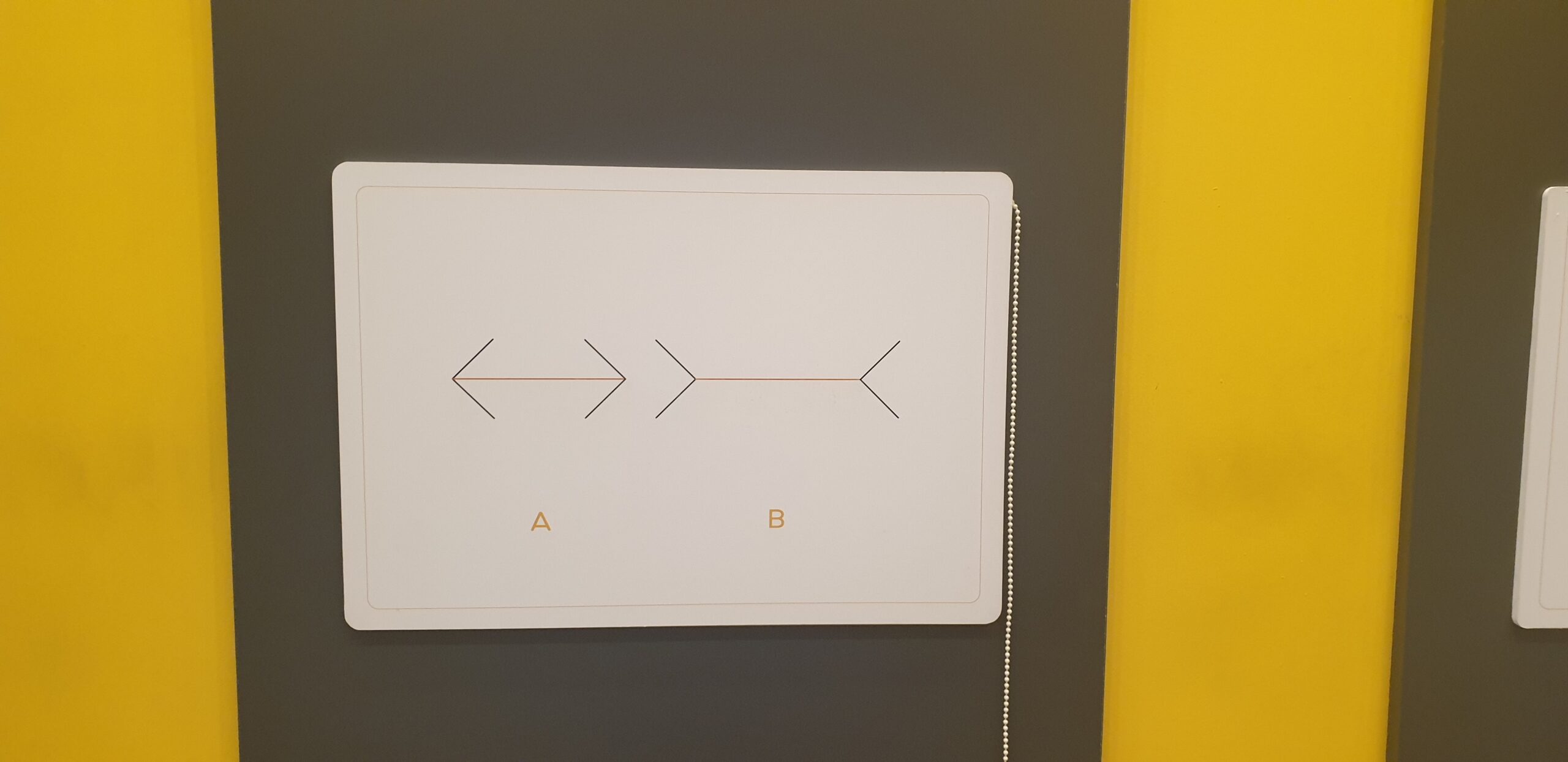
Picture two straight lines, side by side. On one line, the arrow tips point inward like the ends of a spear; on the other, the arrows flare outward like the ends of a tail. Even when you know the lines are exactly the same length, the one with outward-pointing arrows almost always looks longer to you. Your brain stubbornly refuses to accept the ruler over the illusion.
What’s happening is that your visual system does not just measure raw size – it interprets context. You’re wired to treat those arrow shapes as depth cues, a bit like corners in a room or edges of objects. Without asking you, your brain “corrects” the image for perspective and distance, and that correction distorts your judgment of length. You are not seeing a mistake; you are seeing your brain’s best guess, just applied in the wrong situation.
2. The Checker Shadow Illusion: When Colors Change Without Changing
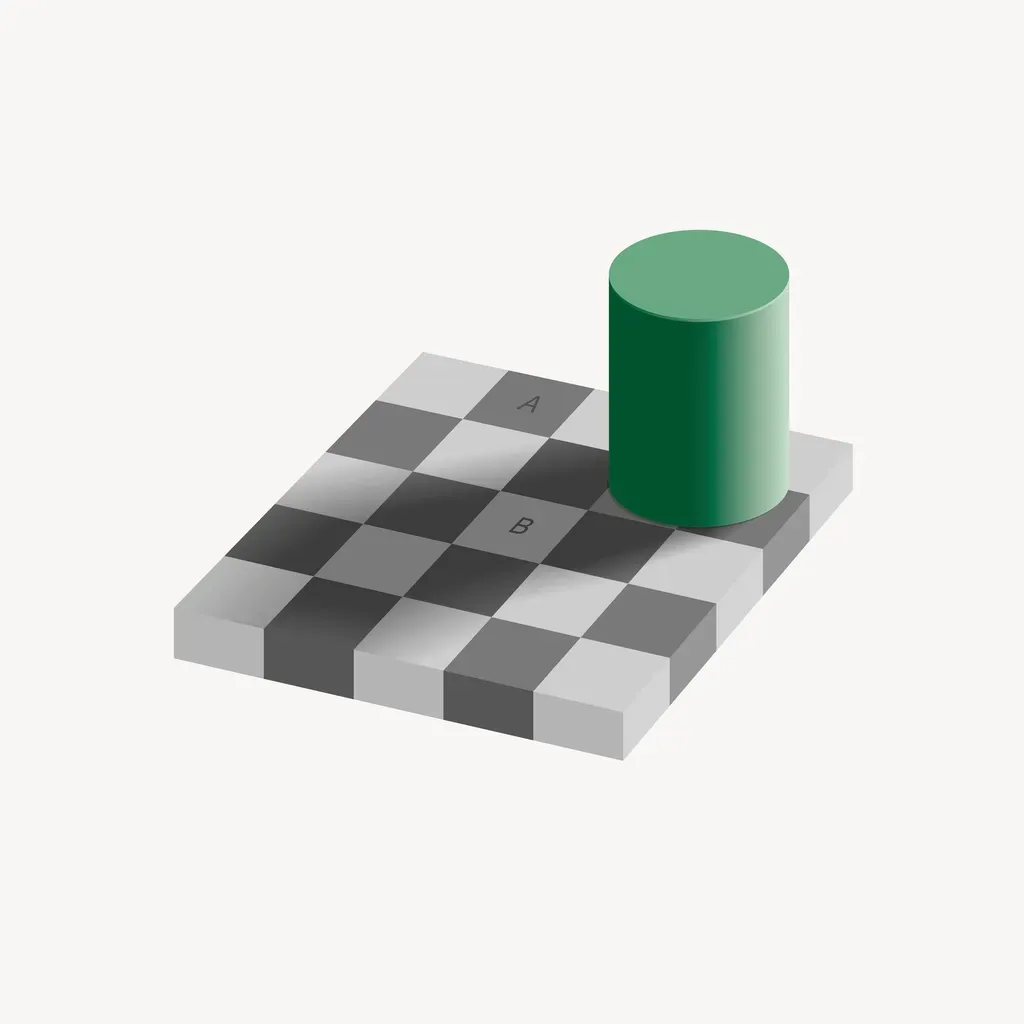
Imagine a checkerboard with light and dark squares, and a cylinder casting a shadow across it. One square sitting in the shadow looks dark, and another square outside the shadow looks light. When you look closely, you would swear they are completely different shades. But if you isolate them, you discover they’re actually the same color.
Your brain is constantly trying to untangle lighting from surface color. Instead of treating brightness as absolute, you automatically adjust for shadows, highlights, and reflections, so you can recognize objects under different lighting. In this illusion, that usually helpful correction backfires. You perceive the shadowed square as lighter than it really is because your brain thinks, “It’s in the dark, so it must actually be brighter.” You are not bad at seeing color – your brain is just overcompensating to keep the world stable.
3. The Kanizsa Triangle: Seeing Edges That Don’t Exist

If you look at three Pac-Man-like shapes arranged just right, you suddenly “see” a bright white triangle floating on top of them, even though no triangle is actually drawn. You can trace an invisible edge in your mind, and it feels as real as any line on the page. You are literally seeing something that is not there, and your brain is totally okay with it.
This illusion shows how your mind prefers complete, simple shapes over scattered fragments. Instead of passively receiving every detail, your visual system actively fills in missing pieces, creating whole objects from hints and suggestions. In everyday life, this helps you recognize a friend behind a fence or a car partly hidden by another car. With the Kanizsa triangle, you get the same “completion” process – but here, it creates a crisp shape out of empty space.
4. The Rubin Vase: One Picture, Two Realities
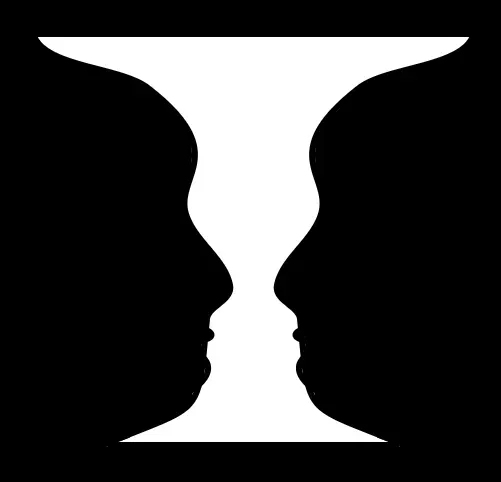
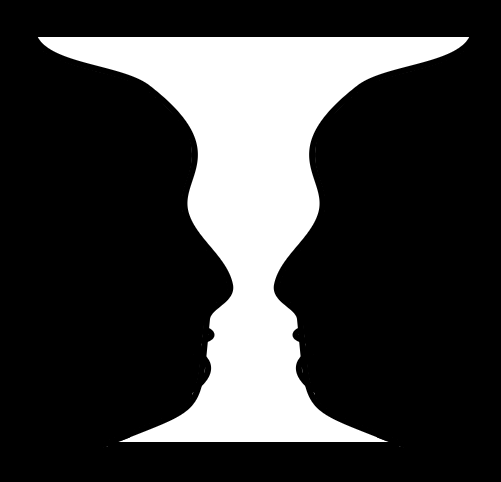
In the Rubin vase illusion, you see either a decorative vase in the center or two faces in profile looking at each other. You can’t usually see both at exactly the same moment, even though you know they’re both there. With a tiny shift of attention, the image flips, and suddenly what used to be “background” becomes “figure.”
This flip reveals how your brain constantly chooses what to focus on and what to ignore. You do not process every part of a scene equally; you assign one thing as the main object and let the rest become backdrop. In this illusion, the borders stay the same, but your interpretation of who gets the spotlight changes. You get a rare, conscious glimpse of how your attention shapes what you think you’re seeing.
5. The Ames Room: When Your Brain Believes the Wrong Geometry
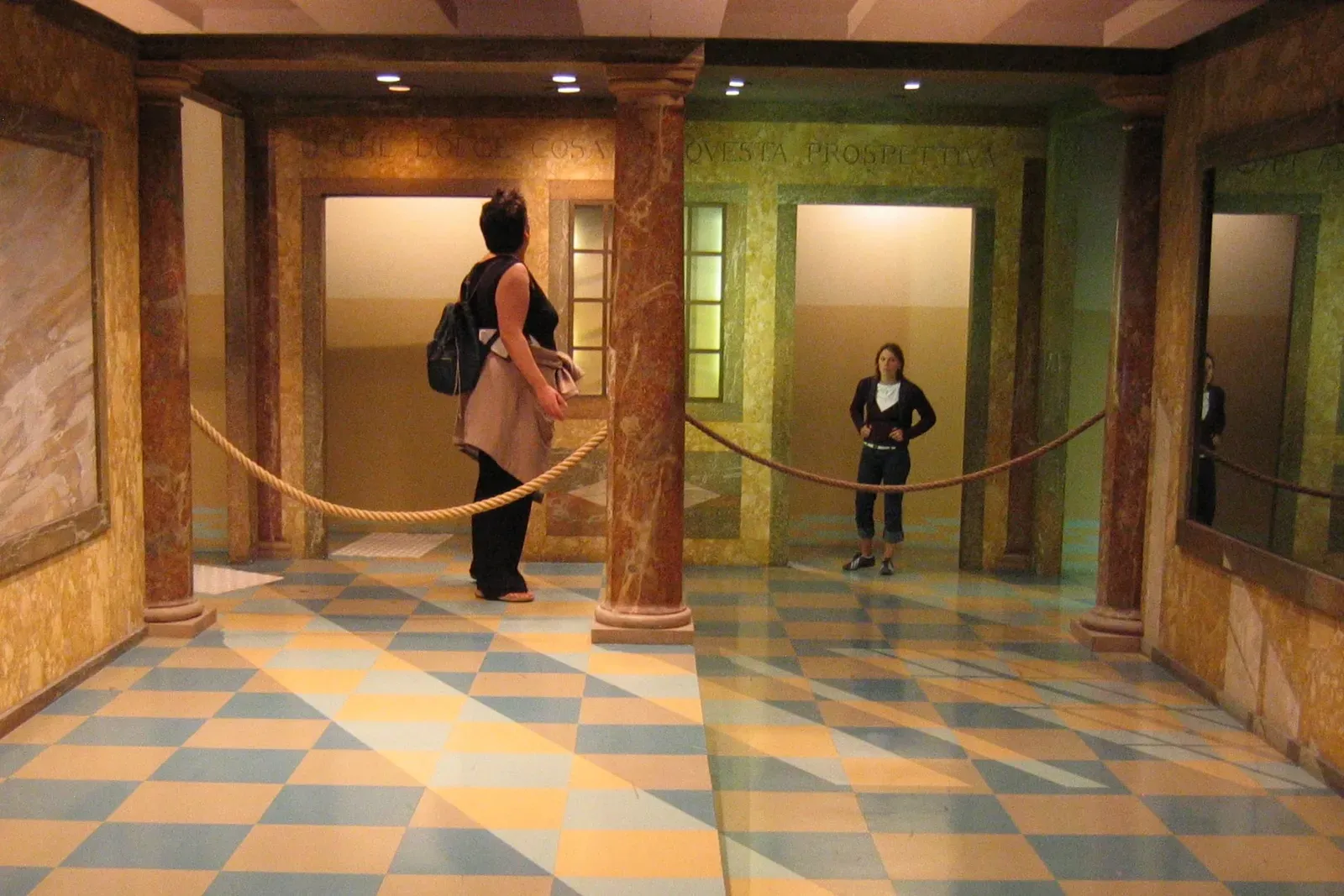
In an Ames room, you stand on one side and watch two people walk from one corner to another. One seems to grow into a giant, while the other shrinks to the size of a child. Your first instinct is that someone is cheating – maybe the floor slopes or the camera is edited – but the trick is subtler: the room itself is built with warped geometry that looks normal from only one viewpoint.
Because your brain expects rooms to be rectangular, it treats the distorted shape as ordinary and assumes the floor and ceiling are level. You unconsciously trust those assumptions more than your actual retinal image. As a result, your size judgments get badly skewed. In daily life, that shortcut makes sense: you rarely stand in a bizarrely constructed room. In the Ames room, that trust in familiar structure is exactly what lets the illusion work so powerfully on you.
6. The Motion Aftereffect: Why the World Seems to Move When It Doesn’t
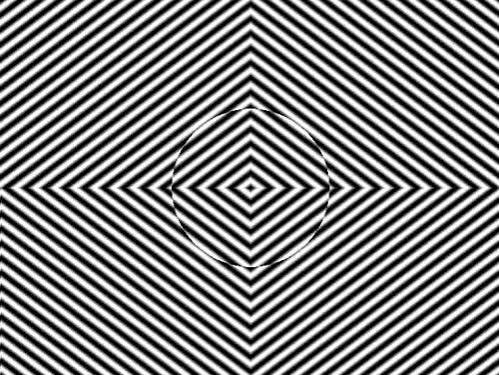
Think about staring at a waterfall or scrolling text for a short while, then looking away at a still wall. For a moment, the wall seems to drift upward or downward, as if it is alive. You know the wall is not moving, yet the sensation feels real enough that you might blink to reset your vision. That eerie, drifting feeling is called the motion aftereffect.
Inside your brain, you have cells tuned to different directions of motion. When you stare at movement in one direction, those specific cells get tired and fire less strongly. When you suddenly look at something still, the opposing motion detectors win the tug-of-war, so you briefly perceive the opposite motion. Your brain measures movement by comparing these competing signals; when you fatigue one side, the balance tips, and the illusion appears. You are literally feeling your neurons recalibrate in real time.
7. The Ebbinghaus Illusion: How Context Warps Your Sense of Size
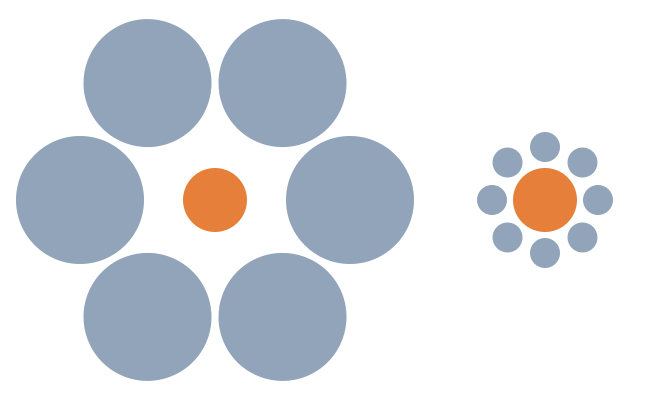
In the Ebbinghaus illusion, you see two orange circles. One is surrounded by large gray circles, the other by small ones. Even though the orange circles are actually identical, the one with big neighbors looks smaller to you, while the one with tiny neighbors seems larger. It is the visual equivalent of feeling short around tall people and tall around short people.
Your brain judges size relatively, not absolutely. Instead of measuring each object in isolation, you compare it to whatever is nearby. This is efficient in the real world, where you often care more about what is bigger or smaller than about exact dimensions. But on a flat page, that relational trick becomes a trap. The Ebbinghaus illusion lays bare how much your perception is shaped by context – something that extends far beyond vision into how you judge your own abilities, status, and success.
8. The Café Wall Illusion: Straight Lines That Look Crooked
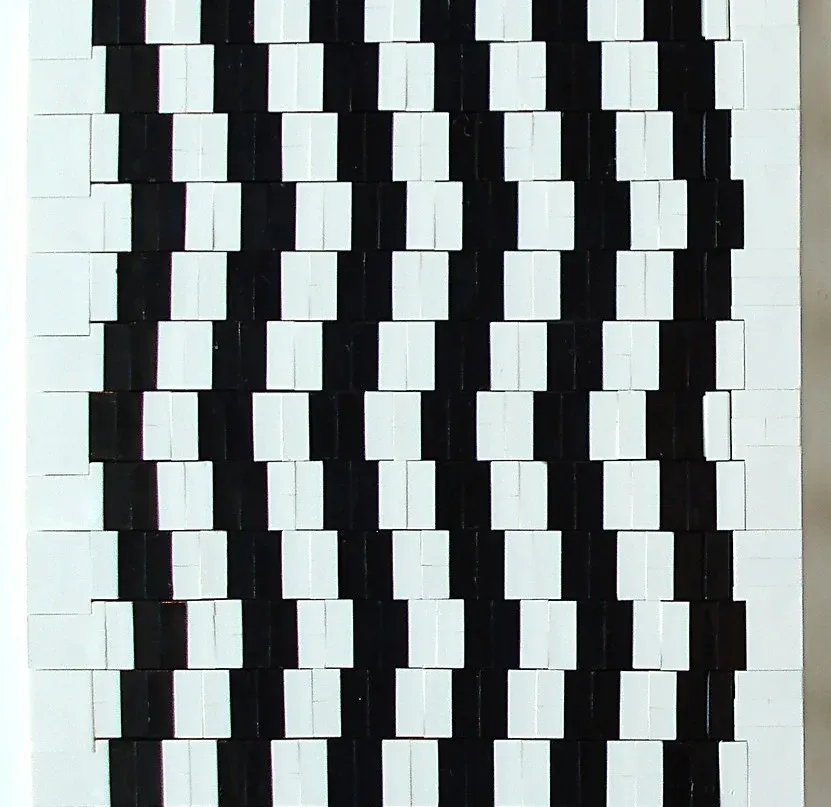
The café wall illusion shows rows of alternating dark and light tiles, offset like bricks in a wall, with thin lines between them. When you look at it, the horizontal lines that should be perfectly straight appear to tilt and ripple, as if the wall were bulging. If you trace them with a ruler, you discover they are completely parallel, but your brain refuses to see them that way at first glance.
This happens because your visual system is trying to make sense of high-contrast edges that are slightly misaligned. Neurons in your brain that detect orientation and contrast start to “overreact” at the light–dark borders, and their combined signals skew your perception of the lines. You could say your brain is smoothing out noise and edges, but in doing so, it accidentally bends what should be straight. You are watching the side effects of a system that is optimized for messy real-world scenes, not carefully crafted patterns.
Conclusion: What These Illusions Quietly Reveal About You
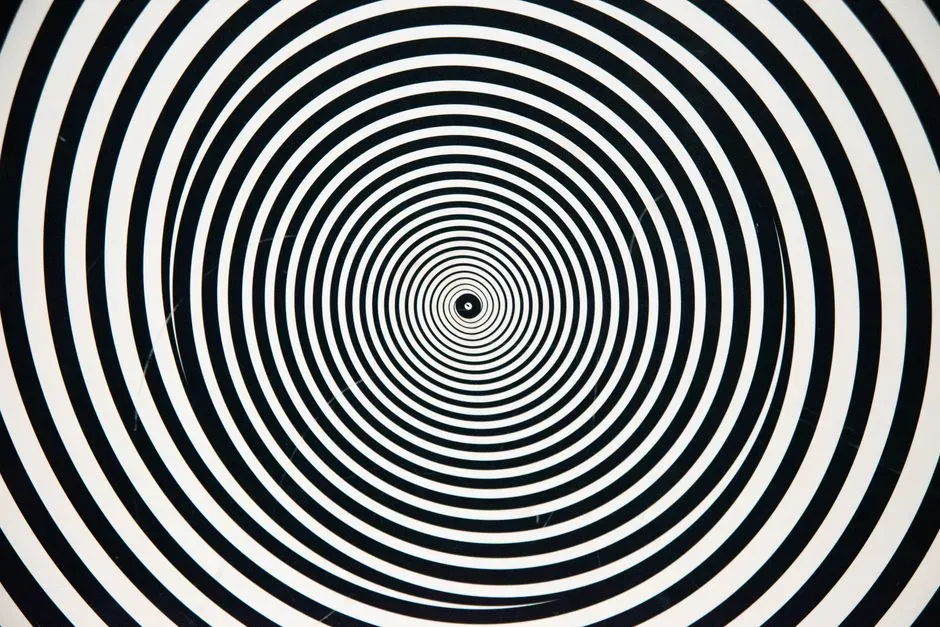
When you step back from these illusions, you start to see a pattern: your brain is not a camera; it is a storyteller. It edits, predicts, and fills in, always trying to give you a stable, useful version of reality, even if that means bending the truth. Every time an illusion surprises you, you catch your mind in the act of rewriting the world.
If you take anything from this, let it be a kind of humble curiosity. The next time you are sure about what you saw, felt, or remembered, you might pause and wonder what your brain quietly “fixed” for you along the way. After all, if a simple drawing can fool you so easily, what else in your life might be shaped more by perception than by fact – and what could change if you learned to notice the difference?