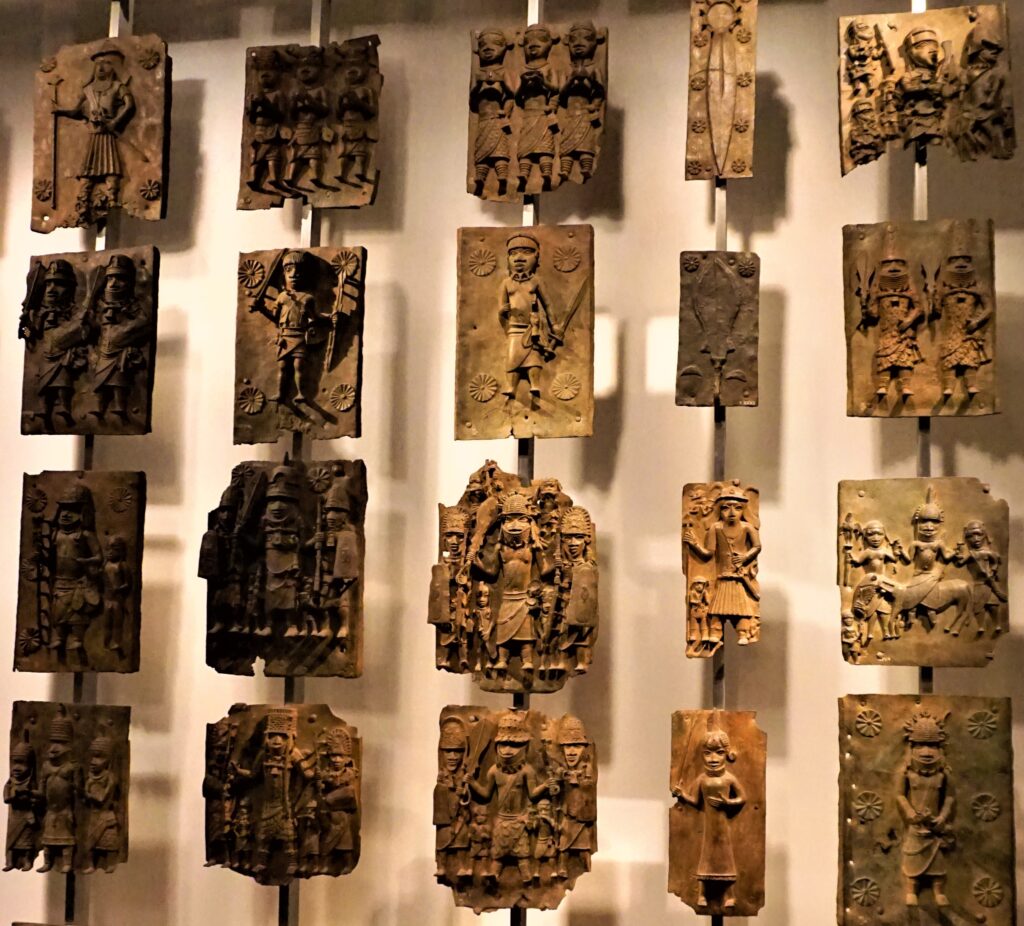
Walk into any major museum and you’ll feel it: hushed voices, perfect lighting, a sense that everything behind the glass simply belongs there. That calm is a performance. Behind a lot of those cases sits a quieter, uglier story involving looted palaces, forged paperwork, sawed-through temple ceilings, and at least one archaeologist who may have died for what he found.
These aren’t obscure academic squabbles. They’re fights over some of the most famous objects on Earth, and the arguments get more uncomfortable the closer you look. Fourteen of them are below, starting with the one so contentious it has its own empty room waiting in Athens.
#1 – The Elgin Marbles (Parthenon Sculptures)
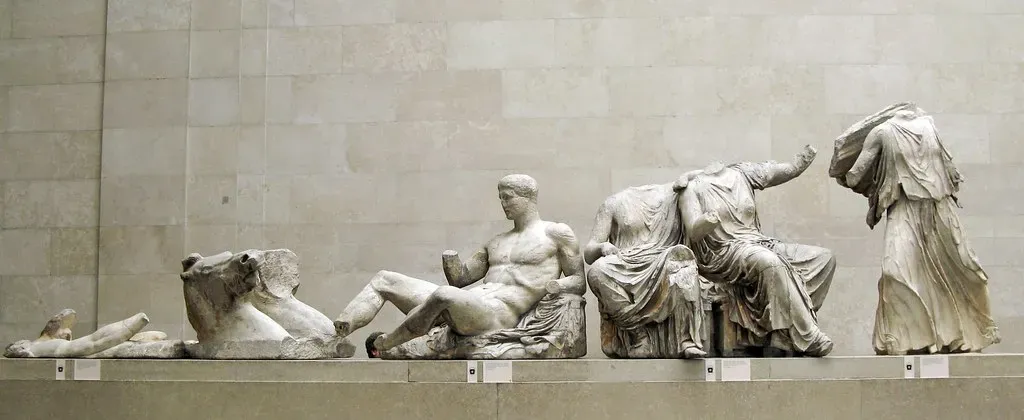
These aren’t just old stones. They’re the single most argued-over artefacts on Earth, and the argument has been running for over 200 years.
Carved in the 5th century BCE for the Parthenon, the Elgin Marbles once wrapped around the physical heart of Athenian democracy. In the early 1800s, Lord Elgin removed roughly half of the surviving sculptures while Greece was under Ottoman rule, then sold them to the British Museum. Britain insists Elgin had a valid Ottoman permit. Nobody has ever produced the original document – only later translations exist, and scholars still argue over what they actually authorized.
Greece’s counterpoint is simple and brutal: an occupying empire had no moral right to sign away another nation’s cultural heart. Athens built the ultra-modern Acropolis Museum with deliberately empty spaces where the missing marbles would go, a standing accusation in glass and concrete. Most UK polling now shows public support for some form of return, yet the British Museum has held firm, offering loans only if Greece admits British legal ownership – something Athens flatly refuses.
The Parthenon Marbles are the symbol and the blood and the soul of the Greek people. We have fought for the resurrection of our marbles and we shall continue to fight for it.
Melina Mercouri
#2 – The Rosetta Stone
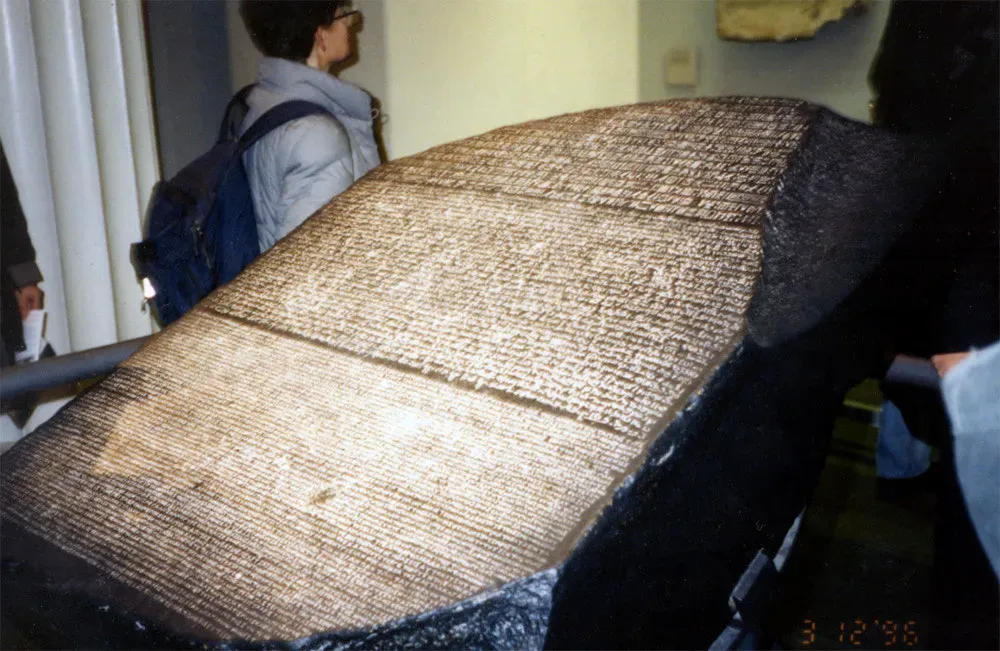
This isn’t just a slab of engraved rock. It’s the key that unlocked an entire lost language, and Egypt wants it back.
Discovered by French soldiers in 1799 near Rashid, Egypt, the Rosetta Stone repeats the same text in hieroglyphic, Demotic, and ancient Greek. That triple inscription let scholars like Champollion finally crack hieroglyphs in the 1820s. When Britain defeated Napoleon’s forces in Egypt, it seized the stone under the 1801 Treaty of Alexandria and shipped it straight to London, where it has stayed ever since.
Britain calls it simple: legitimate war booty, transferred under treaty. Egypt calls that a convenient fiction, since the treaty was signed between two occupying European powers – neither of which had any moral claim to Egyptian heritage in the first place. Modern Egyptian campaigns frame the stone as the ultimate symbol of knowledge taken without consent, and the irony stings: the object that translated ancient Egypt for the world was never Egypt’s to give.
Privately, plenty of European Egyptologists admit Egypt has the stronger ethical case. Publicly, almost none will say so, worried that one high-profile return could unravel entire collections built on the same colonial-era logic.
#3 – The Benin Bronzes
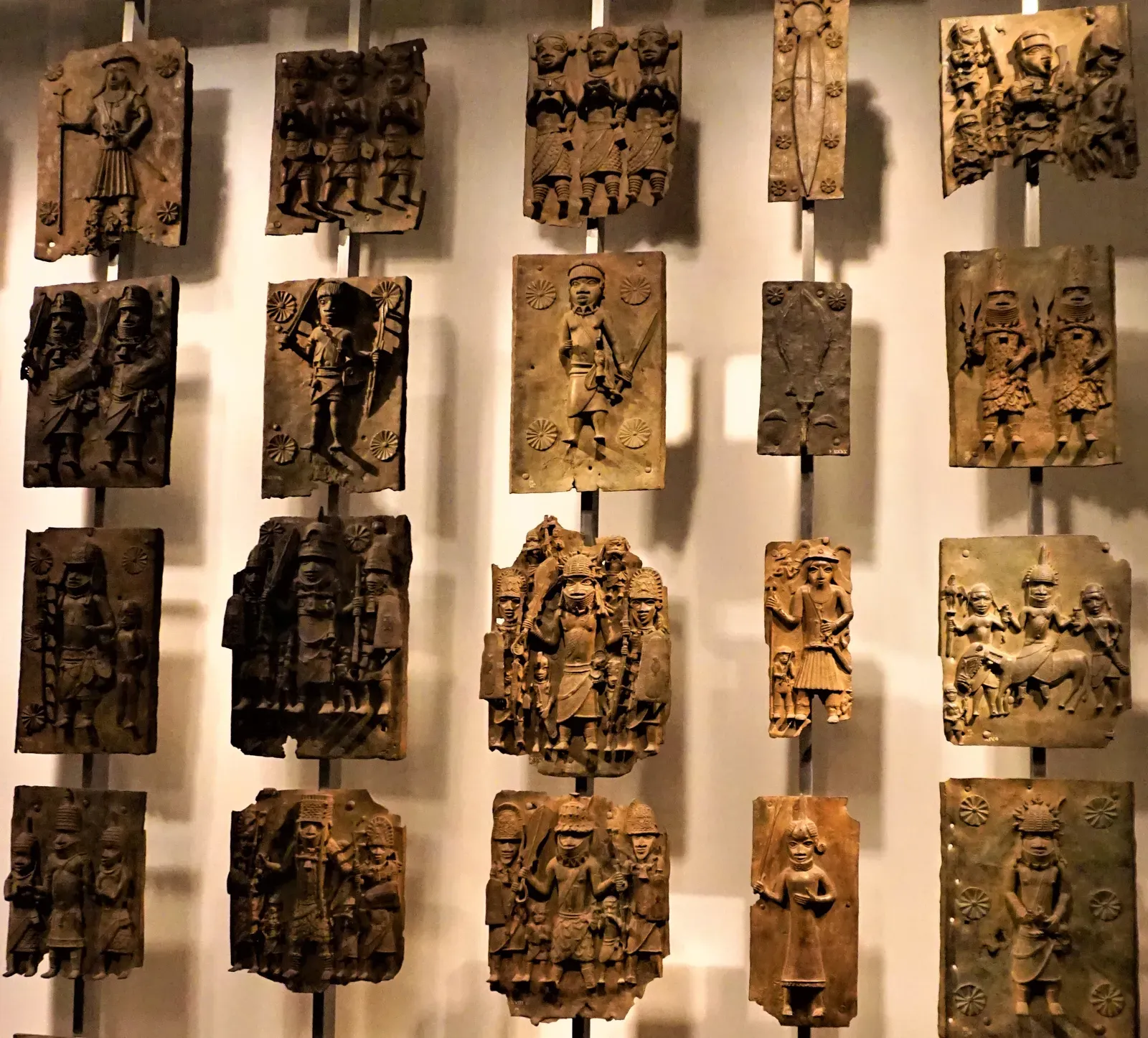
Some of the most admired “African art” in Europe wasn’t collected. It was taken in a single, brutal military raid, and the paper trail proves it.
In 1897, British forces attacked the Kingdom of Benin, in present-day Nigeria, after a trade dispute turned deadly. They burned the royal palace and looted thousands of brass plaques, ivory carvings, and cast metal heads now known as the Benin Bronzes. British officers at the time openly called the haul “booty” – there was no pretense of discovery, just conquest and theft, dressed up later as connoisseurship.
That clarity is rare in restitution debates, and it’s exactly why Benin has become the test case for whether museums’ reconciliation talk means anything. Nigeria argues these aren’t decorative artworks; they’re royal and spiritual regalia tied directly to the Oba and centuries of Benin history. Germany has agreed to transfer ownership of many pieces, and a handful of institutions have quietly followed suit. Britain, mostly, has not.
Fast Facts
- Approximately 5,000 objects were removed from the royal palace during the 1897 raid, though the exact number remains uncertain.
- Looted bronzes are now scattered so widely that they now reside in 165 museums and countless private collections, with the British Museum holding over 900 objects, the world’s largest collection.
- In July 2022, Germany and Nigeria signed a joint declaration for the return of 1,130 Benin bronzes, one of the largest transfers of ownership from a colonial context to date.
- In 2025, the Netherlands returned 119 Benin Bronzes to Nigeria, nearly 130 years after they were looted, marking one of the biggest single handovers so far.
Even the wins come with an asterisk. Some returned bronzes are ending up in modern state institutions rather than the traditional royal court, opening a second, messier question: once an object goes home, who inside that home actually gets to own it?
#4 – The Bust of Nefertiti
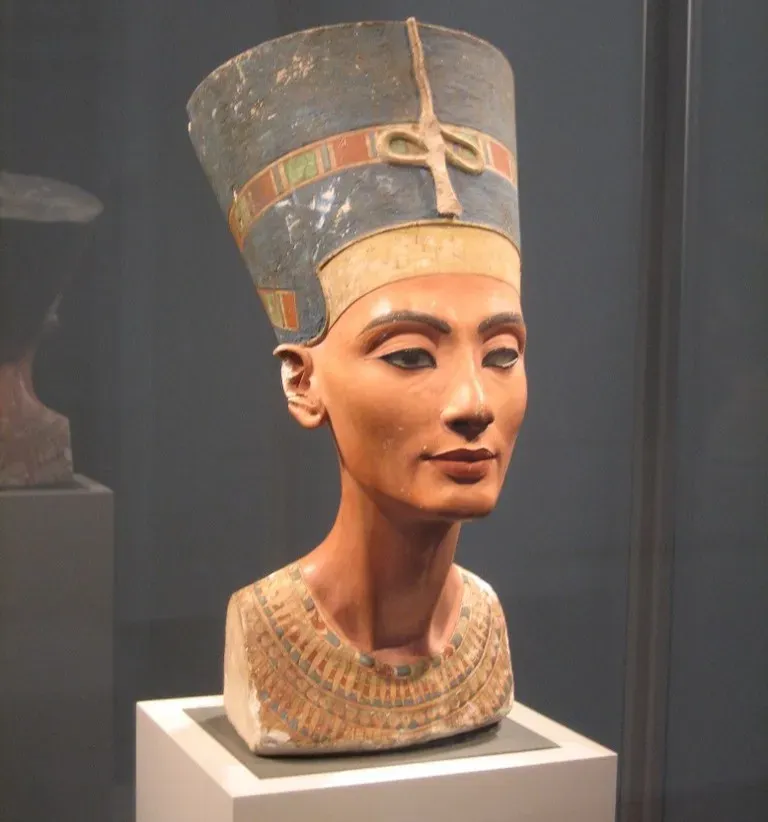
It’s one of the most photographed faces on the planet – and possibly one of the most dishonestly exported.
The painted limestone bust of Queen Nefertiti, unearthed in 1912 by a German team at Amarna, now anchors a Berlin museum. German records say it left Egypt legally in 1913 under the partage system, where finds were split between foreign missions and Egyptian authorities. The problem is what happened at the negotiating table.
German archaeologist Ludwig Borchardt reportedly described the bust in official documents as a “painted plaster bust of a princess” of minor importance – even though his private diary called it a masterpiece. Egyptian officials at the time complained they’d only been shown a poor photograph that hid the bust’s true quality. That’s not a clerical error; critics call it bad-faith negotiation dressed up in legal paperwork.
Berlin insists the export was legal for its era and that Nefertiti is now too fragile to move – an argument plenty of Egyptians read as a convenient excuse wrapped in conservation language. Germany has since made high-profile gestures on the Benin Bronzes. On Nefertiti, so far, nothing moves.
#5 – The Koh-i-Noor Diamond

Forget the crown jewels aesthetic for a second. This is arguably the most politically radioactive gemstone on the planet.
The Koh-i-Noor passed through Mughal emperors, Persian shahs, Afghan rulers, and Sikh maharajas before the British annexation of Punjab in 1849, when it was ceded to Queen Victoria under the Treaty of Lahore – signed after the Sikh Empire had been militarily crushed. Calling that a “gift” from a defeated child-maharaja is, in Delhi’s words, historical gaslighting.
India, Pakistan, Iran, and Afghanistan have all staked historic claims. Pakistan points out the stone was physically in Lahore, now Pakistani territory, when it was seized. Britain simply says the 19th-century treaty is binding and the diamond is now part of British national heritage, full stop.
Notice what the palace does during coronations: the Koh-i-Noor tends to stay quietly out of the spotlight, a tacit admission of how explosive it is. Every time it resurfaces in the news, social media across South Asia erupts with demands to bring it home. No country wants to be the one that looks weak by letting it go, which is exactly why nothing changes.
#6 – The Hoa Hakananai’a Moai (Easter Island Statue)
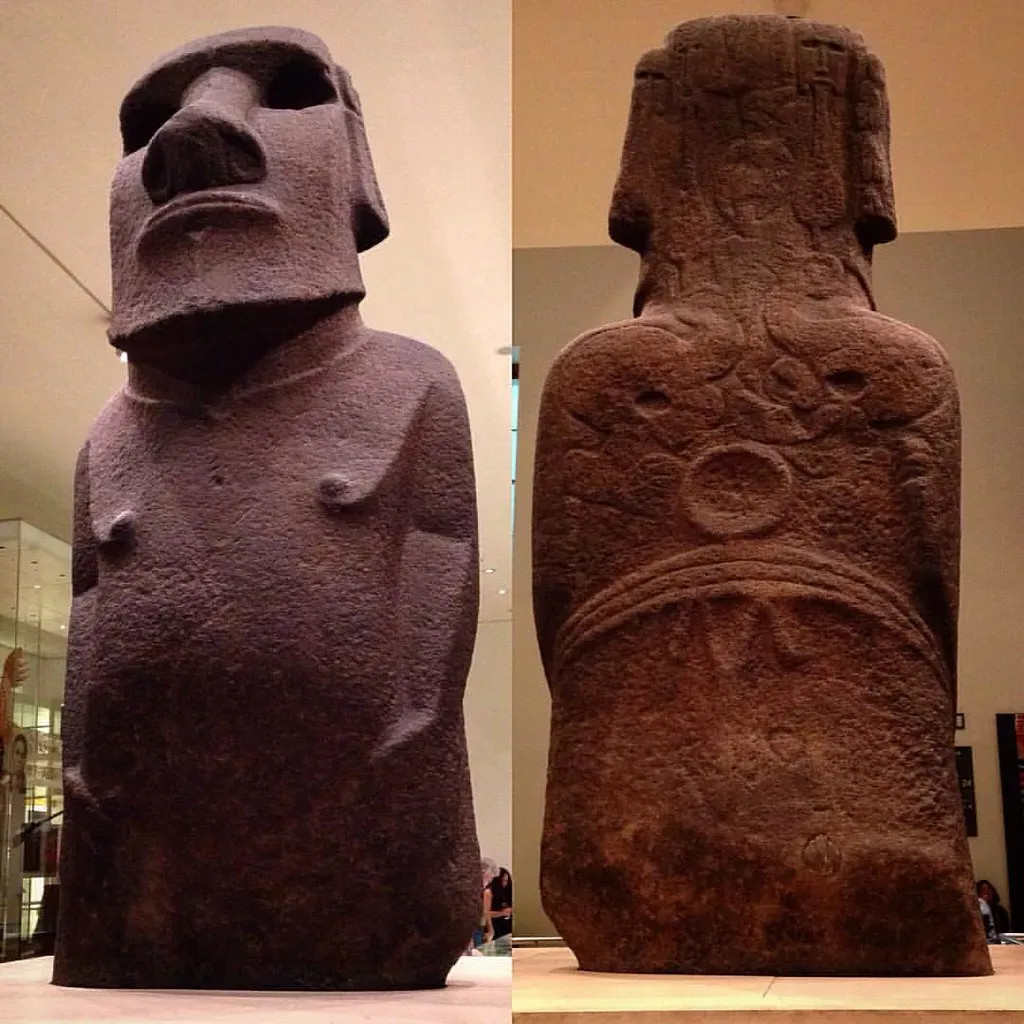
On the surface, it’s just a stone statue in a museum hall. To the people who carved its ancestors, it’s a living relative on permanent display abroad.
The moai called Hoa Hakananai’a stands in the British Museum but originates from Rapa Nui, a Chilean territory with a distinct Polynesian culture. A British naval expedition pried it from a sacred site in 1868 and shipped it to Queen Victoria as a gift – treated, at the time, as an exotic curiosity rather than a spiritual object.
For the Rapa Nui, moai aren’t art. They embody ancestral spirits tied to specific lands and bloodlines. Community leaders have compared this statue’s absence to having an ancestor’s body kept on display in a foreign country. Rapa Nui activists have traveled to London to perform ceremonies outside the museum and formally request its return.
The British Museum leans on its usual defenses: legality at the time, and the value of preserving world heritage centrally. Critics note Rapa Nui’s own cultural institutions have grown considerably, and returning one statue wouldn’t empty the museum’s Pacific collection. Even some Western anthropologists now quietly back repatriation when an object is clearly sacred rather than decorative.
#7 – The Maqdala (Magdala) Treasures of Ethiopia
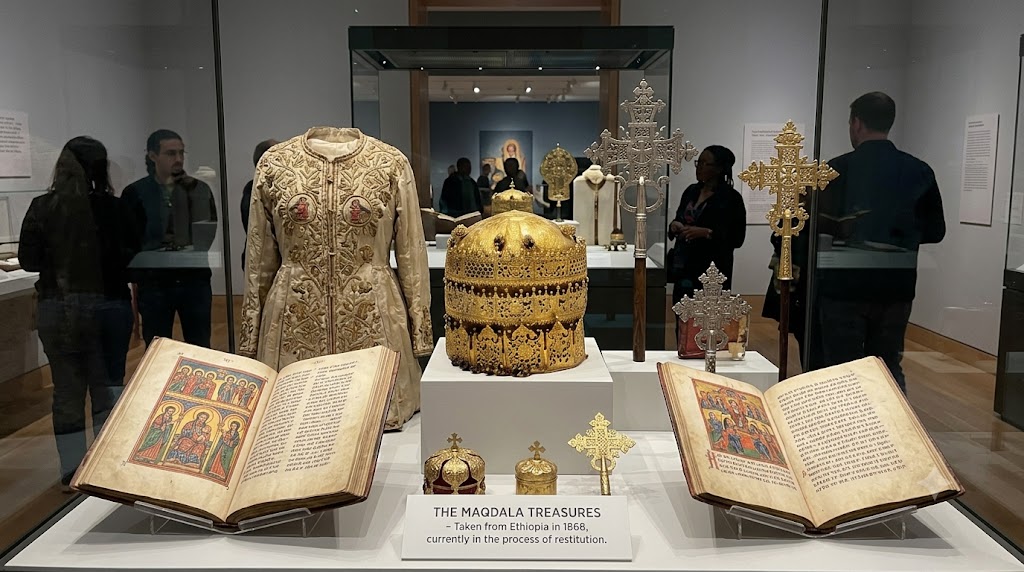
Everyone fawns over European crowns and jewels. Fewer people realize some of Christianity’s most sacred surviving treasures actually belong to Ethiopia.
In 1868, British forces stormed the fortress of Maqdala after a hostage crisis involving Emperor Tewodros II. Following the emperor’s suicide, soldiers looted manuscripts, gold and silver crosses, royal garments, and religious objects on a massive scale. Much of it ended up in the British Museum, the Victoria and Albert Museum, and various church collections.
Ethiopian officials have long demanded specific items back, especially illuminated manuscripts and tabots – holy altar tablets so sacred that many ordinary believers are never permitted to see them. Keeping them in foreign storage isn’t treated as a cultural inconvenience in Ethiopia; it’s felt as a spiritual wound.
A few institutions have quietly loaned or returned individual pieces, carefully framed as “long-term loans” to avoid setting a wider legal precedent. Understandably, Ethiopians find it strange to receive a “loan” of something their own ancestors never agreed to give away. This dispute previews a bigger question coming for museums everywhere: what happens when looted objects aren’t just art, but living religious tools still in use?
#8 – The Zodiac Ceiling of Dendera
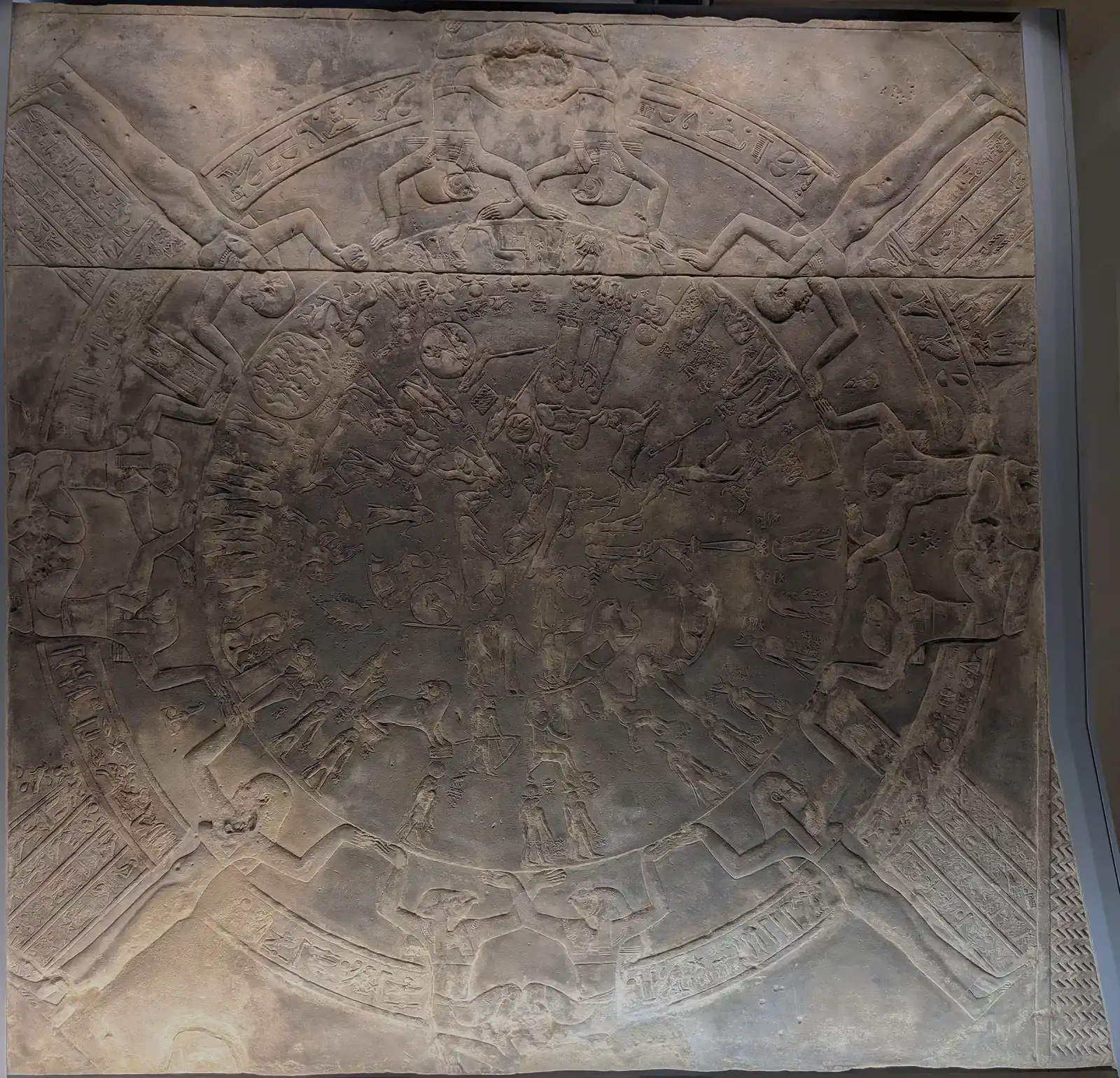
Everyone’s seen the Mona Lisa. Almost nobody realizes another Louvre showpiece is, quite literally, a piece of stolen sky.
The Dendera Zodiac is a carved ceiling relief from the Temple of Hathor, dating to the late Ptolemaic period. In the early 1800s, a French engineer arranged to have the entire zodiac physically sawed out of the temple’s ceiling and shipped to France, where it now hangs in the Louvre.
France claims Ottoman authorities approved the removal and that it saved the relief from decay. Egypt counters that the temple wasn’t in any real danger, and that this was simple cultural slicing – taking the most visually stunning piece and leaving the rest of the roof damaged behind.
At a Glance
- The relief was added to the ceiling of a chapel dedicated to Osiris inside the Hathor Temple, sometime after 51 BCE.
- In 1821, a hired agent used saws, jacks, scissors and gunpowder to pry the entire zodiac loose from the temple roof.
- The relief reached Paris and was snapped up by Louis XVIII for the kingly sum of 150,000 francs.
- In 1922 the zodiac was moved to the Louvre’s main galleries, a full century after leaving Egypt.
The sheer physical violence of the extraction is often cited as proof of bad faith, no matter what paperwork exists. The Louvre still resists restitution, leaning on the object’s importance to the history of astronomy. But as high-profile returns pile up elsewhere, the pressure on France keeps building quietly in the background.
#9 – The Sultanganj Buddha
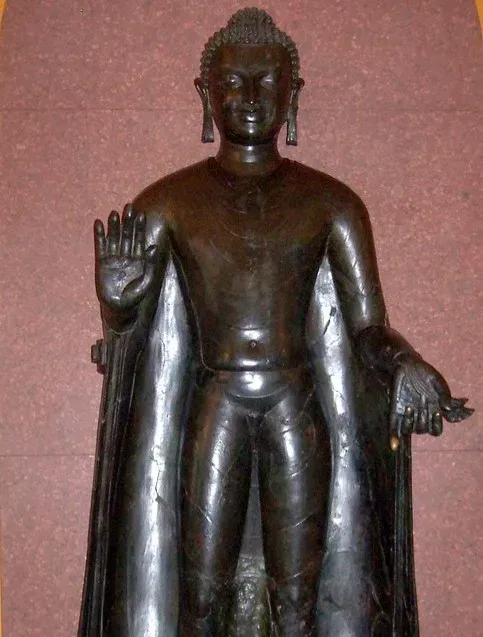
This 7th-century copper Buddha weighs nearly a ton, and its journey from Bihar to Birmingham still sparks arguments a century later.
Discovered in 1861 during railway construction near Sultanganj, India, the statue was acquired by a British railway engineer and shipped overseas, where it now sits in Birmingham Museum & Art Gallery. At the time, the region was under British colonial rule, with essentially no heritage law protecting such finds.
India’s case rests on that vacuum: a monumental religious object was pulled from the ground during an imperial infrastructure project and shipped abroad by a private foreign official, with no consent sought from any local religious or cultural authority. It may have been legal by 19th-century rules. It looks nothing like consent by today’s standards.
Some UK curators claim the statue was “saved” from being melted down for scrap metal – a classic colonial-era justification Indian historians dismiss as speculative. Complicating the neat “send it back” argument, Birmingham has a large South Asian community that has come to see the statue as a genuine spiritual and cultural touchstone of its own.
#10 – The Stone of Destiny (Stone of Scone)
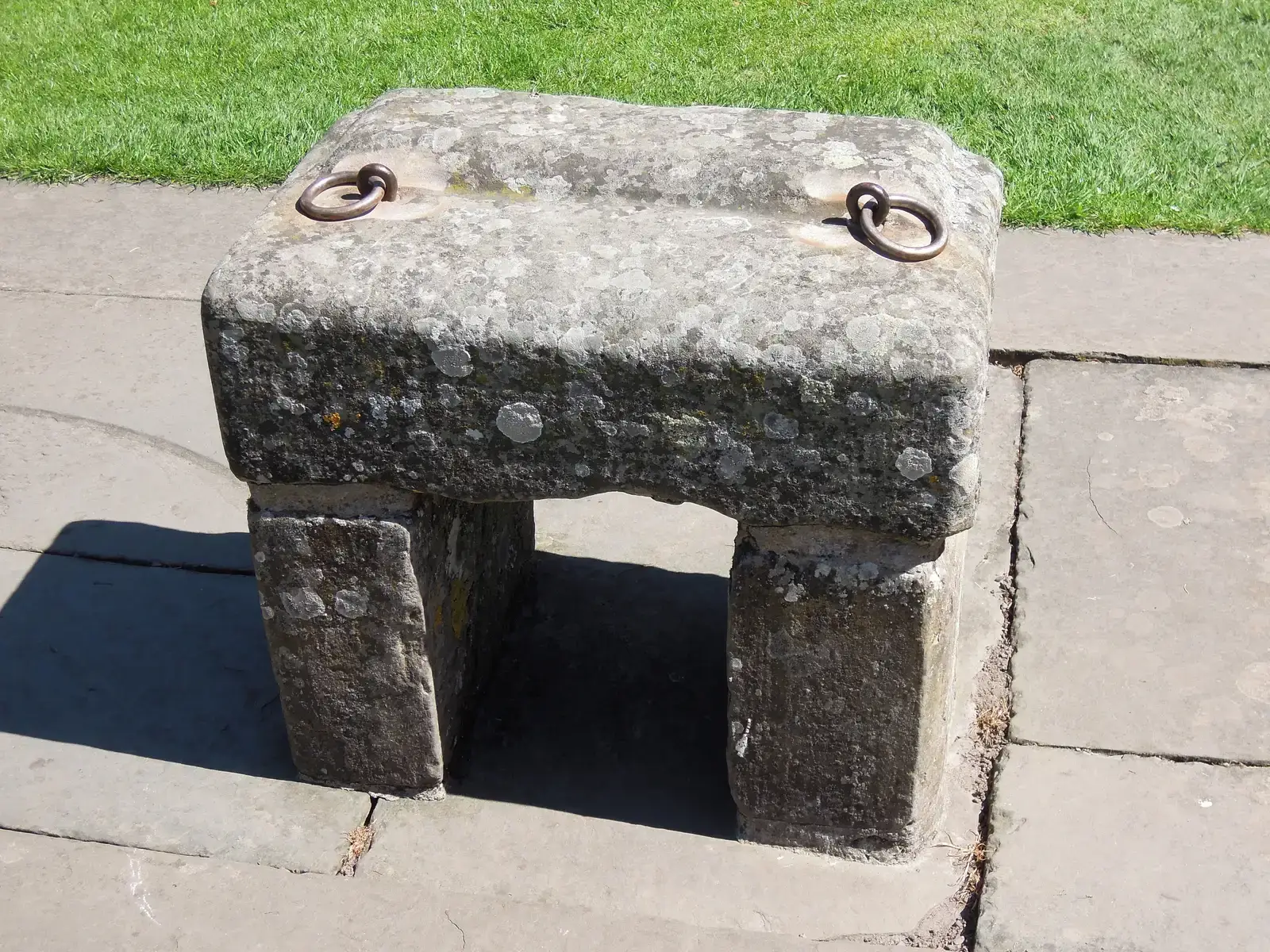
Not every artefact fight is colonizer versus colonized. Sometimes it’s a fight over who owns power inside the very same kingdom.
The Stone of Destiny, used in Scottish coronations for centuries, was seized by England’s Edward I in 1296 and built into the English coronation chair at Westminster Abbey, a permanent symbol of English dominance. In 1950, Scottish students famously stole it back, only for it to be recovered and returned to London. It wasn’t until 1996 that the UK government finally sent it to Edinburgh Castle – on condition it travels back to England for future coronations.
Many Scots see that condition as a half-measure: a symbolic gesture that still treats the stone as UK property, merely on loan to Scotland. Independence supporters argue it should never again serve a British coronation. Unionists reply that shared use simply reflects a shared monarchy and centuries of intertwined history.
Legally, Westminster can decide the stone’s fate outright. Politically, trying to reclaim it for good would be a firestorm. This is one of the rare artefact disputes where ballots, not courtrooms, will decide the outcome.
#11 – The Axum (Aksum) Obelisk
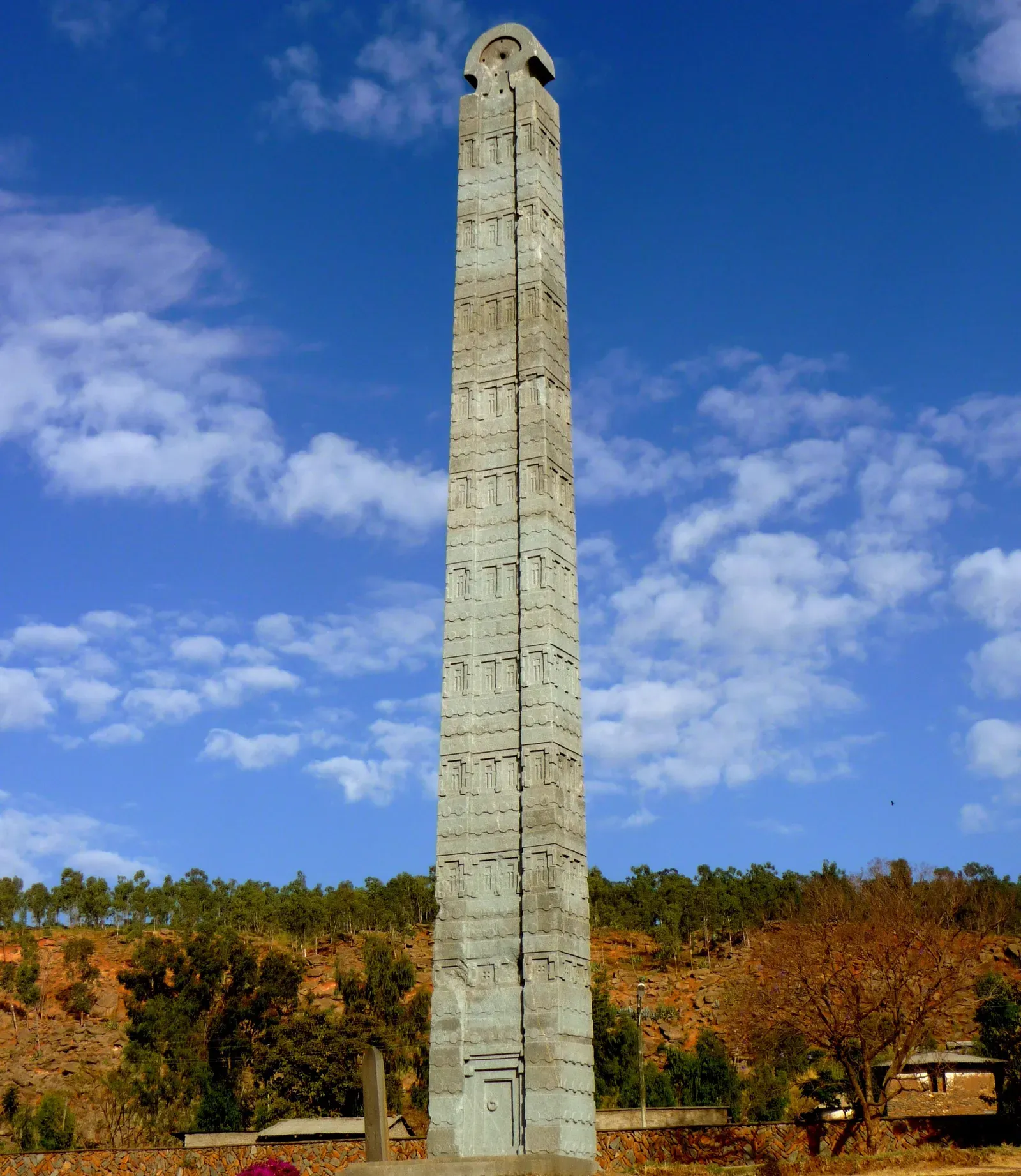
Unlike most items on this list, this one actually went home. That doesn’t mean the argument disappeared.
The Axum Obelisk, a massive carved granite stela from ancient Aksum, was hauled off to Italy in 1937 under Mussolini’s fascist regime as an imperial trophy for Rome. A post-war treaty obligated Italy to return looted Ethiopian artefacts, but decades of delays and technical excuses followed. The obelisk was finally dismantled, flown home in pieces, and re-erected in Axum between 2005 and 2008.
Why It Stands Out
- The stela stands 24 metres tall and weighs 160 tonnes, carved from a single block of stone.
- It was taken as war booty and moved to Italy by the Fascist regime in 1937 on Mussolini’s direct orders.
- Italian specialists dismantled it into three pieces during late 2003 and early 2004 before its physical return began.
- One section was flown home using an Antonov An-124, described as the largest and heaviest piece of air freight ever carried.
On paper, that’s a clean success story. In reality, Ethiopian commentators point out that countless other objects taken during the same occupation are still abroad, and even this return only happened under sustained international pressure.
African and Asian governments now cite Axum as living proof: if a multi-ton stone monument can be dismantled and flown across continents, claims that smaller artefacts are “too fragile” to move start sounding suspicious. Italian officials quietly bristle at the idea of re-litigating every colonial-era transfer, which is exactly why this precedent keeps some European museum directors up at night.
#12 – The Gweagal Shield
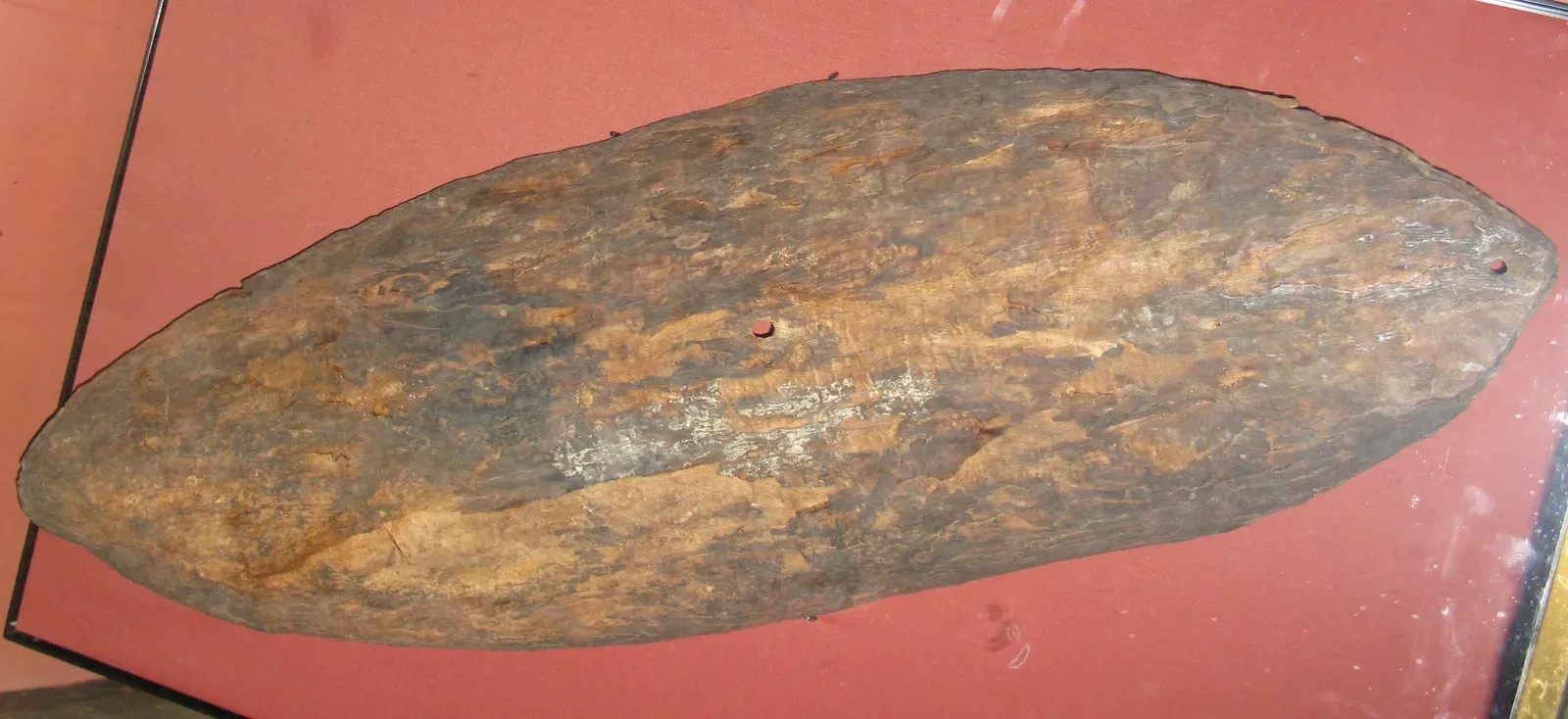
Restitution debates aren’t just a story about Europe’s old colonies in Africa and Asia. Australia’s frontier violence tells its own version.
The Gweagal Shield is believed by many to be the wooden shield dropped by an Aboriginal warrior during Captain James Cook’s 1770 landing at Botany Bay. It passed through private British hands before landing in the British Museum. For Indigenous Australians, it represents the literal moment first contact turned into resistance meeting musket fire.
Some scholars question whether this exact shield matches the size and damage documented from Cook’s encounter. Yet for many Aboriginal leaders, its symbolic weight doesn’t depend on forensic certainty – returning it would still acknowledge the violence of colonization and the endurance of the Gweagal people.
The British Museum resists permanent restitution, citing provenance doubts alongside its usual global-heritage argument. Even if this specific shield turns out not to be Cook’s, the dispute has already forced both Britain and Australia to confront how sanitized their “exploration” histories really are.
#13 – The Sevso Treasure
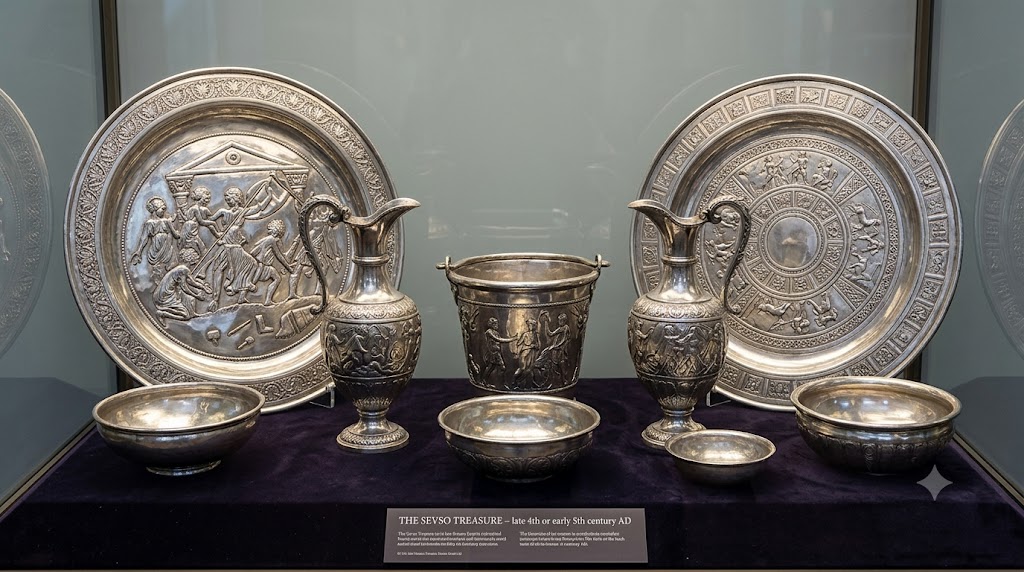
If you want an artefact dispute that reads like a crime thriller, this is it – complete with a death nobody has ever fully explained.
This hoard of late Roman silver tableware surfaced on the international art market in the 1970s and 1980s, tangled up in murky stories linking it to Lebanon, Hungary, and Croatia. A young Hungarian archaeologist connected to the find died under suspicious circumstances. A Lebanese marquis later claimed he’d inherited the treasure – a claim courts eventually treated as unproven.
Worth Knowing
- The hoard surfaced on the black market with no verified excavation site or paperwork.
- Three different countries – Lebanon, Hungary, and Croatia – have all been floated as its true place of origin.
- A young archaeologist tied to the discovery died in unexplained circumstances, and the mystery was never fully solved.
- Hungary eventually bought back much of the treasure in the 2010s rather than winning it through legal restitution.
Because the pieces were never properly excavated, most of the archaeological context that could have nailed down their true origin is simply gone. Hungary and Croatia both claim ties to the Roman province of Pannonia; Lebanon was floated as another possibility. Instead of a clean colonial paper trail, investigators found forged documents, shady dealers, and contradictory stories.
In the 2010s, Hungary struck deals to buy back and repatriate much of the treasure from undisclosed sellers. That solved Hungary’s immediate problem, but not the deeper moral one: if the hoard was originally looted and trafficked, buying it back arguably legitimized the black-market route it traveled through in the first place.
#14 – The Machu Picchu Artefacts at Yale
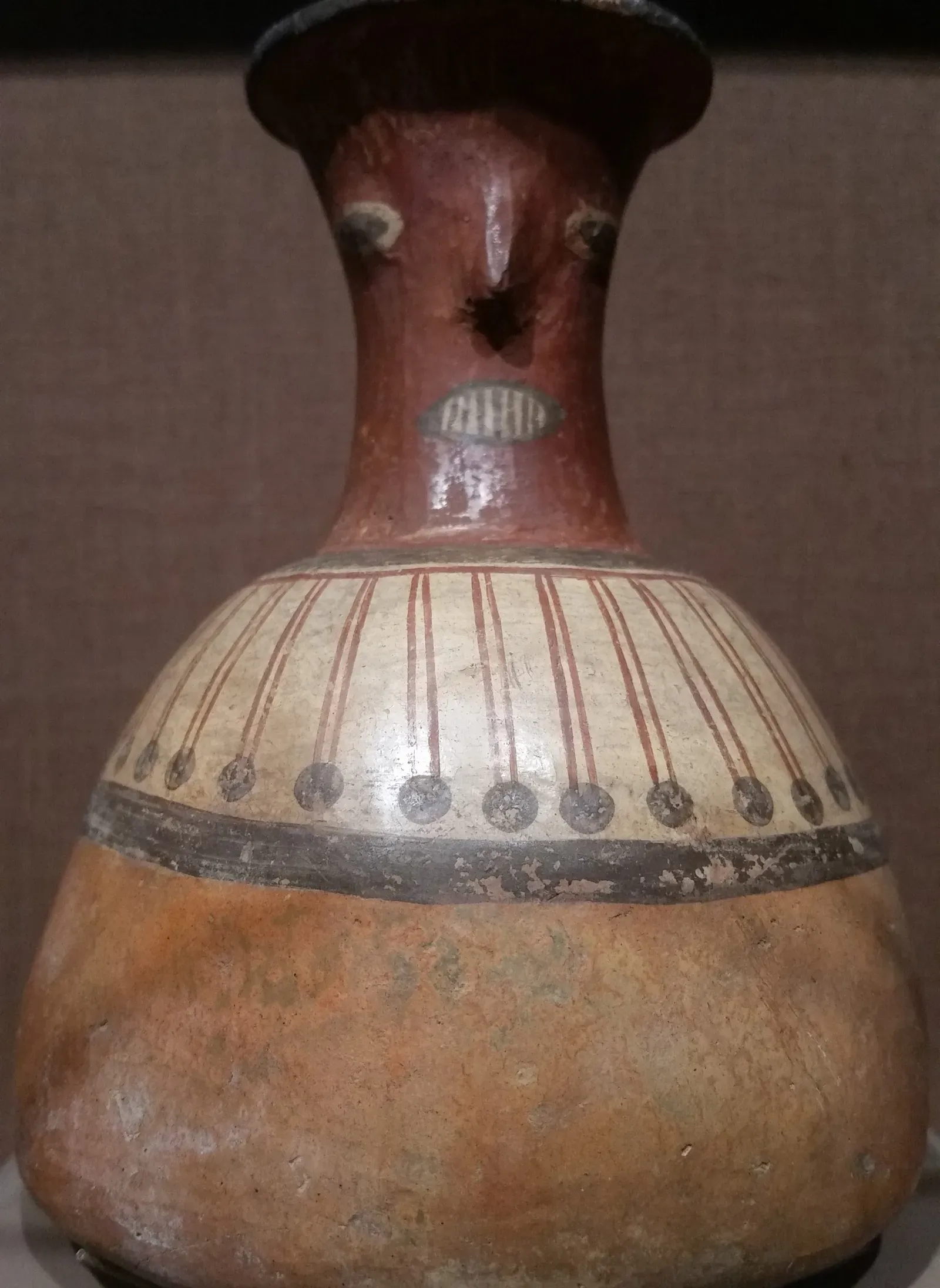
Plenty of Americans assume artefact disputes are strictly a European problem. Peru’s decades-long fight with Yale University says otherwise.
Between 1911 and 1915, explorer Hiram Bingham, backed by Yale and National Geographic, excavated at Machu Picchu and shipped thousands of artefacts – ceramics, metal objects, human remains – to the United States. Peruvian law at the time allowed temporary export for study, not permanent removal.
Yale held the collection for decades, arguing it had broad rights under early 20th-century agreements. Peru pushed back with documents suggesting the pieces were meant to be returned after a few years, accusing Yale of quietly treating a loan as a donation.
After years of legal wrangling and mounting public pressure, Yale finally agreed in 2010 to return the bulk of the collection, now housed in a dedicated center in Cusco. The scars remain, though. For many Peruvians, it confirmed a familiar pattern: Western institutions happily accept “temporary” access to someone else’s heritage, then quietly act like permanent owners until they’re forced to admit otherwise.
The Bottom Line
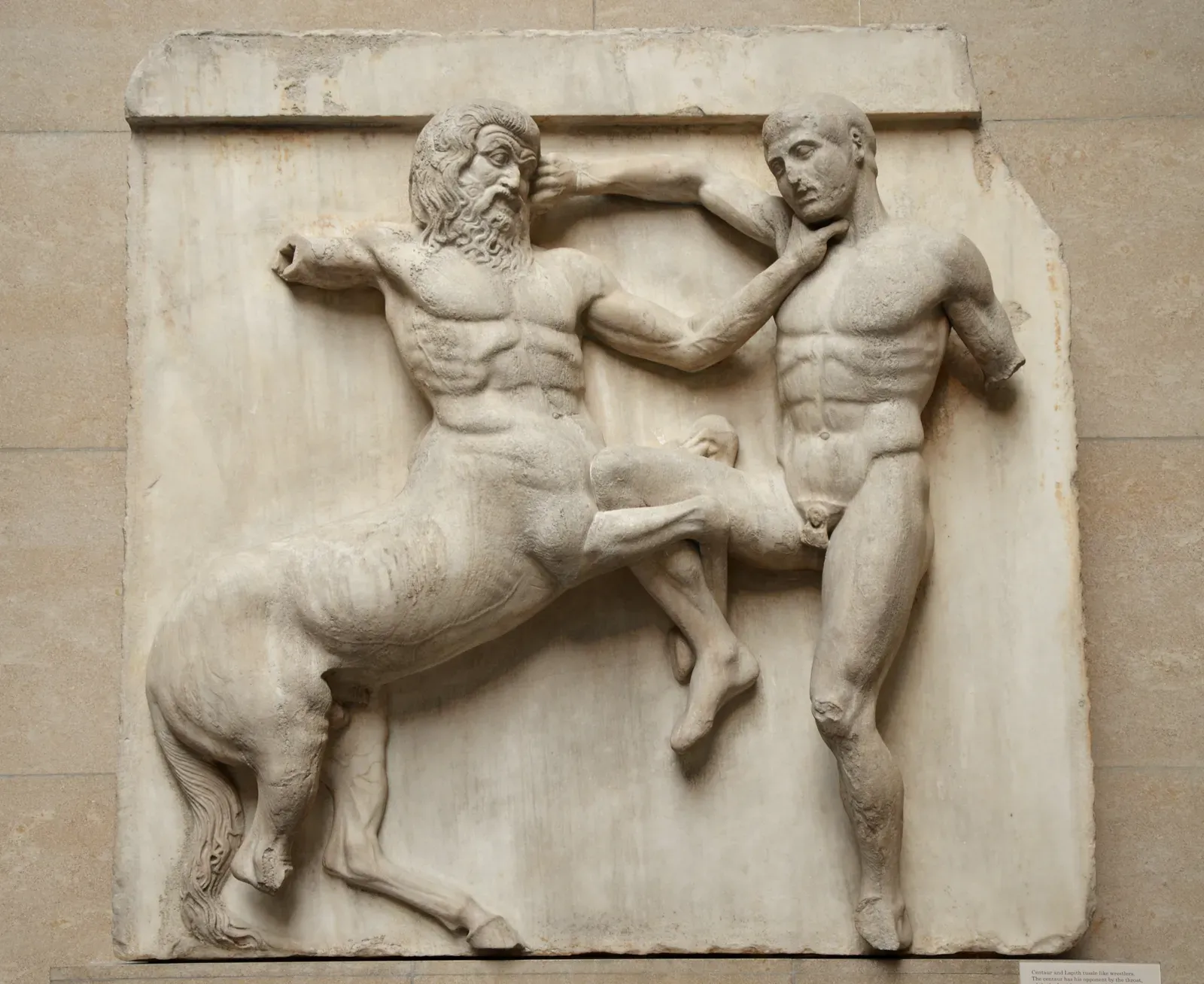
Strip away the soft lighting and polished wall labels, and a lot of “world heritage” starts looking like somebody else’s loss. From the Elgin Marbles and the Rosetta Stone to the Benin Bronzes and the Koh-i-Noor, the pattern is brutally consistent: power moved first, legality followed later, and ethics showed up last, if it showed up at all.
When a museum insists that 19th-century paperwork settles a 21st-century grievance, what it’s really defending is its own authority, not neutral history. There’s no tidy universal fix here. Sending everything back overnight would create new problems, but pretending nothing was ever taken under coercion is worse.
The honest path is case-by-case: return the sacred and the clearly looted first, accept that a few untouchable “icons” will eventually move, and stop treating empire-era signatures as beyond question. So – which artefact on this list do you think should go home first, and which one do you think has actually earned its place where it sits?