
Most people assume the ocean is basically figured out by now – whales, ships, maybe a few weird deep-sea fish clicking away in the dark. Oceanographers know better. Their hydrophones keep picking up sounds so loud, so strange, and so persistent that nobody on Earth can say for certain what’s making them.
These aren’t blurry TikTok clips or campfire legends. They’re logged, argued over in serious research labs, and still unresolved decades later. Some are louder than any known animal alive. Some repeat for years, then vanish without warning. A few don’t fit any natural pattern scientists have ever modeled – and what’s coming up will make you rethink how much we actually understand about the water covering 70% of our planet.
#1 – The Unsettling “Upsweep” That Never Quite Goes Away
Scientists first logged “Upsweep” in 1991, and remarkably, it’s still humming through the Pacific today. The sound is a series of narrow-band upsweeping tones, mostly between 1-6 kHz, arriving in long, distant choruses that peak every spring and fall like clockwork. It isn’t a one-off blip – it’s a seasonal pattern tied to some unknown process grinding away in the deep ocean, year after year.
What’s maddening is that no known animal, submarine, or geological event quite matches it. The leading guess is volcanic or hydrothermal activity on the seafloor, maybe hot fluids forcing their way through cracks as tectonic plates shift. But if that were the full story, you’d expect a clean link to known vents or eruptions. Instead, Upsweep just sits there in the data, slowly fading over three decades but never fully disappearing. Most people don’t realize we’ve literally watched a mystery sound decline in real time for over 30 years and still can’t swear what’s causing it. But that’s nothing compared to what’s next.
Fast Facts
- First recorded in 1991 and still detected today
- Frequency range: roughly 1-6 kHz
- Follows a seasonal pattern, peaking each spring and fall
- Intensity has faded over three decades but never fully vanished
#2 – The “Whistle” That Sounds Mechanical… But Probably Isn’t

“Whistle” doesn’t even sound biological. It’s a long, tonal signal that rises steadily in pitch, more like a distant turbine spooling up than any whale call on record. Hydrophones have picked it up scattered across the Pacific, but never with enough precision to pin down where it’s actually coming from.
Its clean, narrow frequency tempts people to shout “submarine” – but naval acoustics experts quietly admit it doesn’t match typical propeller or machinery signatures. Here’s the part that keeps researchers honest: we only have a handful of good recordings, and they don’t repeat in any regular pattern, which makes it almost impossible to model or rule anything out. It could be a rare interaction of currents and undersea terrain, an odd low-frequency resonance in the water column, or – yes – a classified human system nobody’s meant to recognize. Because governments don’t publish those details, oceanographers are forced to file “Whistle” under unidentified. And it’s not the only one like that.
#3 – Random “Unknowns” That Show Up Once… And Never Again

People love arguing over a handful of famous clips, but insiders know the real headache is dozens of one-off deep ocean recordings that appear in the archives, get tagged “unknown,” and are never heard again. These aren’t just pops or static – some are complex, multi-second sounds that resemble nothing in the catalogues of known whales, earthquakes, or ice events.
Analysts reviewing old tapes sometimes stumble across these acoustic ghosts almost by accident: a strange modulated tone buried under background noise, or a low boom with harmonic overtones but no quake anywhere nearby. Because they’re one-time events, there’s nothing to correlate – no location triangle, no repeating pattern, no seasonal cycle to lean on. You can’t rule out a freak hardware glitch, but you also can’t prove that’s all it was. So they sit in a kind of scientific purgatory: too weird to ignore, too thin to publish a bold claim about. As strange as those are, they don’t top the scale of what happened in 1999.
#4 – The “Julia” Signal That Sounded Like Something Huge Was Moving
Recorded in 1999, “Julia” is a low, moaning sound that lasted over a minute and carried strong enough to be heard across the entire equatorial Pacific. Sped up for human ears, it sounds uncannily like a giant creature groaning in the dark – exactly why conspiracy threads still love it.
In reality, the raw data point somewhere else: the acoustic fingerprint looks more like a massive ice or geological event than a biological call. One leading hypothesis is an enormous iceberg grounding or scraping along the seafloor, with the friction radiating for thousands of miles through the water. But the evidence stays circumstantial – there’s no satellite imagery or direct measurement we can rewind to confirm an exact match, and no single iceberg has ever been definitively tied to it. Experts cautiously say “likely ice” while admitting they can’t fully attribute Julia to a specific incident. It sits in that uneasy gray zone forever – plausibly explained, never conclusively nailed.
#5 – The Legendary “Bloop,” Still Argued About Decades Later
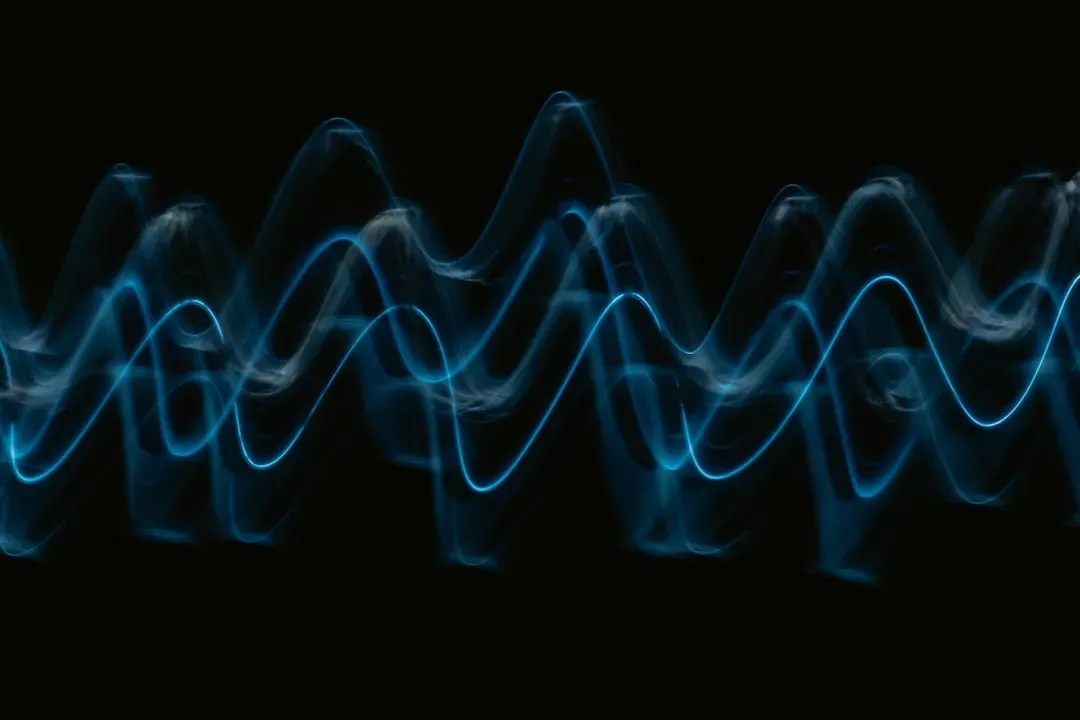
The “Bloop,” recorded in 1997, is the deep ocean’s celebrity mystery. It was loud enough to be picked up by multiple hydrophones thousands of miles apart, which instantly triggered headlines about unknown megafauna lurking in the abyss. Sped up, it even sounds vaguely organic, which only fed the idea of something colossal moving miles below the surface.
Years later, many oceanographers tentatively linked the Bloop’s spectral shape to large icequakes – massive chunks of Antarctic ice cracking or collapsing under their own weight. That’s the mainstream explanation now, but here’s the nuance most people miss: the match is suggestive, not absolute. There’s no direct instrumented record of the exact ice collapse that would have produced it, so scientifically it remains a best-fit guess rather than courtroom-level proof.
Some researchers are satisfied with the ice explanation; others point out that no other recorded icequake has quite the same fame-making combination of volume, shape, and mystery.
#6 – “Slow Down,” The Noise That Acts Like It Knows Where It’s Going

“Slow Down,” detected in 1997, is exactly what it sounds like: a long, descending frequency that drops steadily over several minutes, almost as if something massive were decelerating through open water. The signal traveled so far it was logged on multiple hydrophones at once, yet nothing on the surface was obviously big enough or fast enough to match it.
Glacial ice is once again the official suspect. One theory says it was a giant iceberg scraping along the seafloor, gradually losing speed as friction changed the sound’s frequency – which would explain that eerie “slowing” contour. But skeptics point out that our dataset of comparable events is tiny, and location estimates stay fuzzy. There’s no known iceberg anyone can point to and say, “there, that’s the one.” So “Slow Down” lives in the same category as Bloop: likely ice-related, but never cleanly attributed to one specific, documented event.
#7 – “Train,” The Ocean Noise That Sounds Straight Out Of A Horror Movie

The signal dubbed “Train,” recorded in the late 1990s, sounds – after being sped up for human ears – like a distant freight train grinding along ancient tracks in the dark. It’s a long, rumbling, rhythmic sound that appears to originate near Antarctica, strong enough to carry across vast stretches of the Southern Ocean.
Many researchers suspect ice again: possibly ice shelves flexing, ridges rubbing against each other, or icebergs dragging under shifting currents. Those processes can mechanically produce repetitive, low-frequency tones that might explain the “train-like” cadence. But just like its cousins, Train has never been pinned to a specific, observed physical process at a given place and time. What unnerves some analysts most is how deliberate it sounds – steady, patterned, almost engineered. That’s likely just our brains hunting for patterns where none were intended. Still, if Train feels unsettling, the next one hits even closer to home.
Quick Compare
- Bloop (1997): the loudest and most famous, generally linked to icequakes
- Slow Down (1997): a descending tone, possibly an iceberg grounding and losing speed
- Train (late 1990s): rhythmic rumbling near Antarctica, tied to shifting ice shelves
- Julia (1999): a moaning tone across the equatorial Pacific, likely ice scraping the seafloor
Notice the pattern: every one of these points toward ice, yet not a single one has ever been matched to a specific, documented event.
#8 – The “Whale-Like” Calls That No Known Whale Is Making
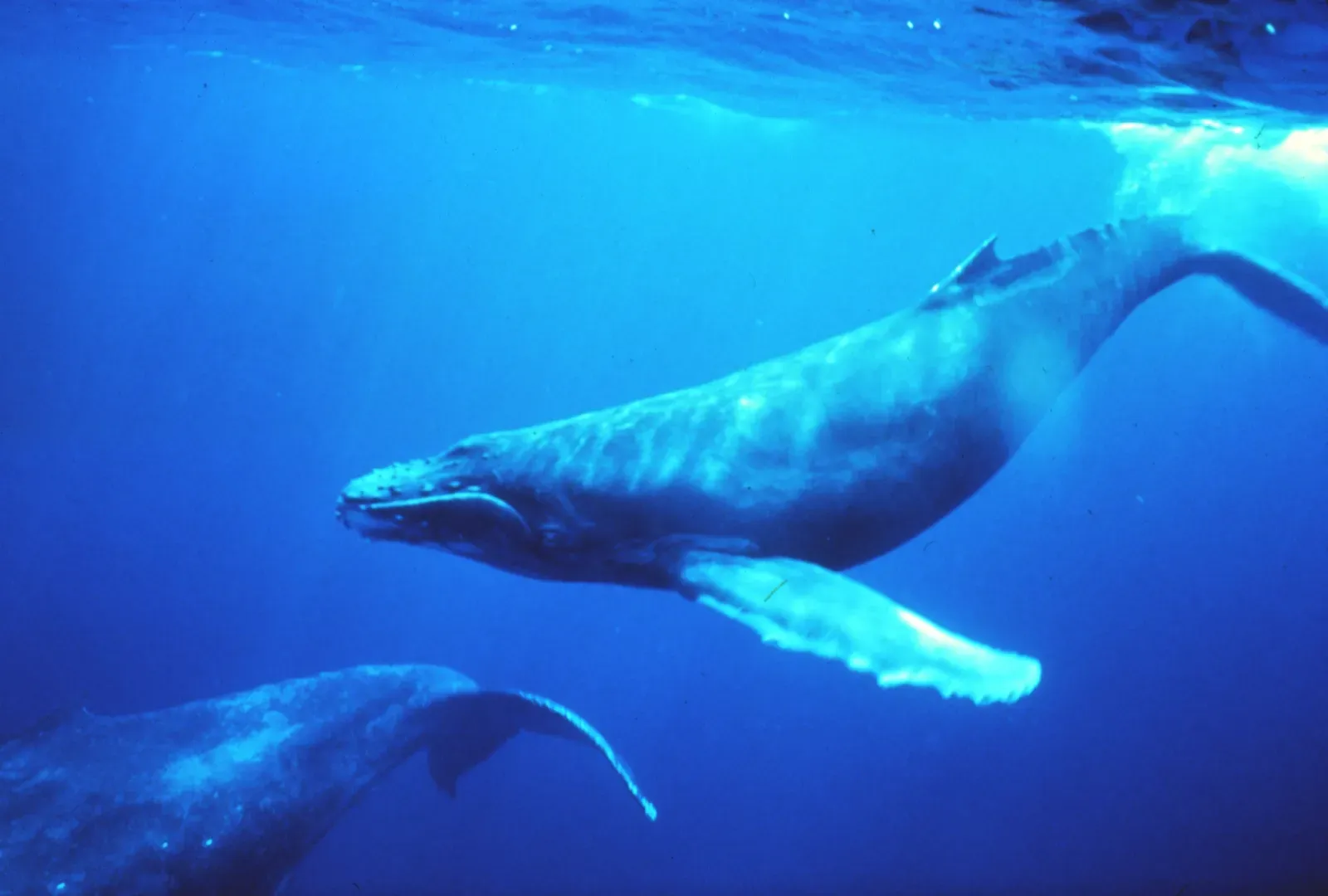
Sometimes the mystery isn’t a thunderous boom – it’s a voice that almost fits an animal we know, but not quite. Over the years, hydrophones have picked up highly structured, melodic calls that sound “whale-ish” but don’t match any catalogued species. The rhythms, intervals, and frequency ranges fall outside humpbacks, blues, or fin whales, even accounting for individual variation.
There are a few real possibilities on the table:
- An unknown or very rarely recorded vocalization from a known species
- A small, possibly undiscovered population with a unique call type
- Hybrid animals with slightly shifted acoustic traits
Because the ocean is enormous and our monitoring is patchy, scientists hesitate to declare “new species” based on sound alone. Still, the fact remains: we have clean, repeated, song-like patterns with no confirmed biological owner. For a field that prides itself on matching calls to animals, that’s quietly infuriating. And if mystery whales already bother you, the next one takes it to another level with a single lonely voice.
#9 – The 52-Hertz “Loneliest” Whale That Might Not Be A Whale At All
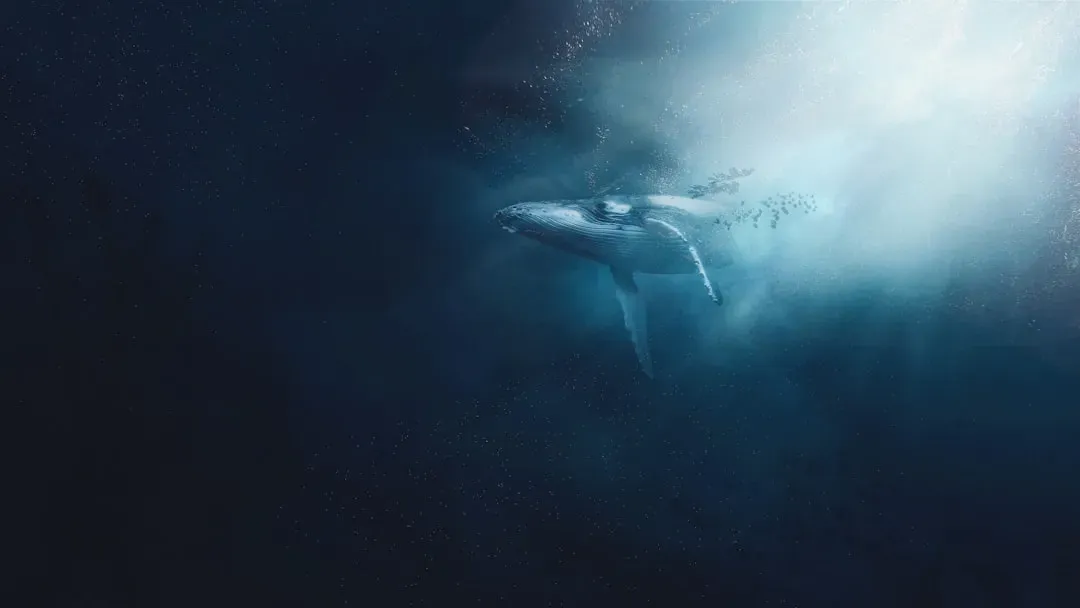
You’ve probably seen headlines about the “loneliest whale,” calling at 52 Hz – much higher pitched than typical blue whale songs. Hydrophones have tracked versions of this signal for decades, migrating roughly along known whale routes, but it never overlaps cleanly with blue, fin, or any other species’ vocal patterns.
It’s often portrayed as one lonely individual nobody can hear. But here’s the twist: some acousticians quietly caution that we don’t actually know if this is one animal, one species, or even a whale at all. The signal could be an unusual individual – injured, deformed, or hybrid – a very small unknown subpopulation, or even a complex interference pattern created by multiple overlapping calls. No one has ever visually confirmed a specific animal making the noise. The emotionally charged “lonely whale” story is popular, but scientifically, 52 Hz remains an unsolved attribution problem. And weirdly, some recordings go beyond biology entirely.
Worth Knowing
- 52 Hz sits well above the typical pitch of most blue whale calls
- The signal has been tracked for decades along known migration routes
- No one has ever visually confirmed the animal – or animals – producing it
- Some acousticians suspect overlapping calls rather than one solitary whale
#10 – Deep Booms With No Earthquake, No Volcano, No Ship

In seafloor acoustic data, there are events that look like clean, impulsive booms – short, intense, low-frequency bursts that resemble the start of an earthquake or an underwater explosion. Yet when seismologists check the usual sources – tectonic sensors, volcanic monitors, shipping logs – nothing lines up in time or location.
In some cases the waveforms don’t quite fit human detonations either, since naval tests tend to leave recognizable patterns and get logged even when details stay sparse. That leaves researchers with a shortlist of maybes: uncatalogued small quakes that never registered on land sensors, sudden gas releases from the seafloor, or rare landslides on steep underwater slopes. But for a subset of these events, none of the above can be proven, and the acoustic signature doesn’t perfectly match any known template. They’re recorded, they’re real, they’re powerful – and they still get filed under “unattributed impulsive events.”
#11 – Long, Droning Tones That Don’t Match Any Known Propeller

Underwater microphones constantly pick up continuous tones from ships – propellers, pumps, engines. Those are well studied, and experts can usually say “that’s a tanker” or “that’s a fishing fleet” without hesitation. But buried in some archives are long-lasting, droning hums, sometimes stretching tens of minutes to hours, that drift in frequency without matching standard ship noise at all.
They’re too steady and too long for typical animal calls, too irregular for most industrial sources, and too narrow-band to be wind or waves. Unlike dramatic one-off events, these hums sometimes fade in and out over days, as if something were slowly crossing a wide region or switching on and off far below the surface. Classified military systems are the obvious suspect, but that’s exactly the problem – if they’re secret, nobody’s confirming it in a peer-reviewed paper. In the scientific record, they remain anonymous: documented sounds with a clearly artificial vibe, but no officially acknowledged origin.
#12 – Hydrophone “Glitches” That Don’t Behave Like Glitches
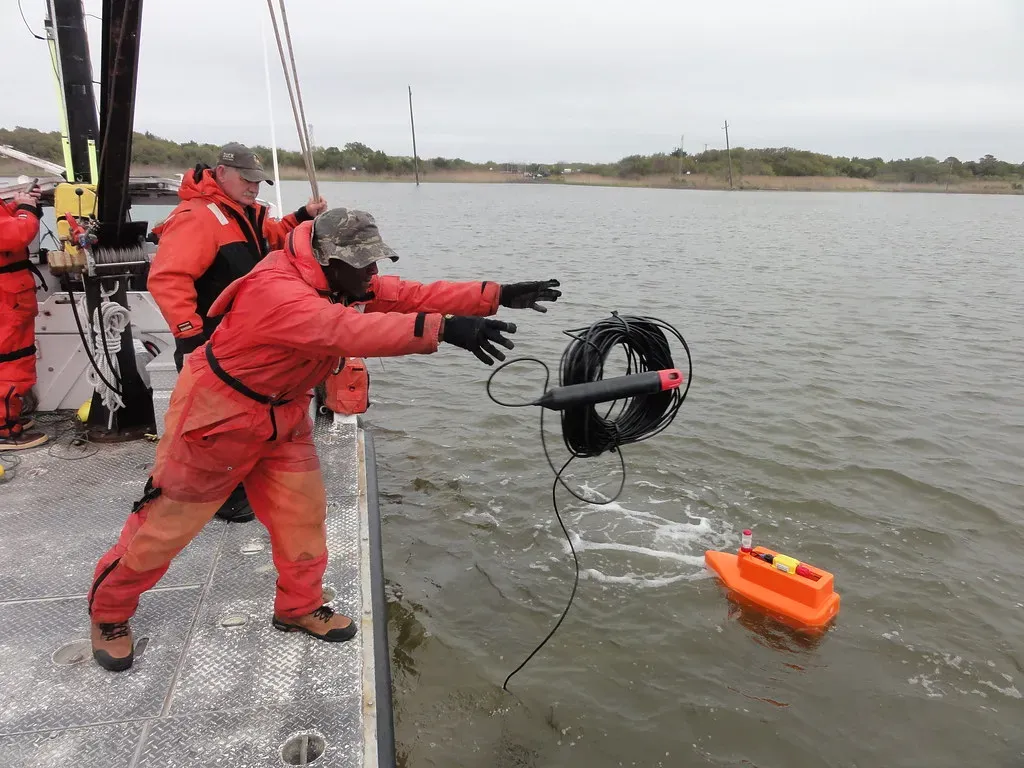
It would be easy to write off plenty of weird recordings as equipment errors – but some so-called “glitches” repeat across different instruments, locations, and years, with strikingly similar shapes and frequencies. That kind of consistency makes true random hardware noise far less likely than it first appears.
Instead, it suggests there might be real environmental sounds that just happen to exploit quirks in our sensors – a certain pressure wave or micro-quake pattern causing cables or components to resonate, creating a hybrid signal that’s part ocean, part instrument. In the logs, these get dismissed as “instrumental artifacts” because they don’t fit known biological or geological categories. But when the patterns keep recurring, a few skeptical researchers start asking an uncomfortable question: are we throwing away a whole class of genuine but poorly understood ocean noises? The awkward answer is maybe. Yet some of the most persistent mysteries on this list started out exactly that way.
#13 – The “Hum” Of The Ocean’s Own Circulation

On very long timescales, the deep ocean produces a kind of background “hum” tied to waves, currents, and pressure variations. We have solid models for parts of this – microseisms from waves hitting coastlines, turbulence stirred up by storms. But when you look closely at low-frequency acoustic data, certain components of that hum simply don’t match the simulations.
Some frequency bands are stronger, more coherent, or more persistent than our fluid dynamics models predict, which suggests there are still large-scale processes – eddies, boundary flows, interactions with complex seafloor topography – that we haven’t fully captured. Because these signals are always “on,” it’s nearly impossible to isolate individual causes; they form the acoustic wallpaper behind everything else in the ocean. So while scientists can broadly say “this is the sound of the ocean itself,” specific pieces of that spectrum remain unattributed to any exact mechanism. It’s like hearing a crowd from far away – you know humans are there, but you can’t tell who’s talking.
At a Glance
- Partially explained: microseisms from waves hitting coastlines
- Partially explained: turbulence stirred up by storms
- Unexplained: some frequency bands are stronger than models predict
- Always “on,” making individual causes nearly impossible to isolate
#14 – Signals At The Edge Of Detection That Might Be… Nothing (Or Everything)
At the limits of our instruments, the line between “real sound” and “statistical noise” gets blurry fast. Yet analysts sometimes spot faint, recurring structures in that gray zone – patterns that maybe, just barely, rise above randomness. They’re too weak to triangulate, too marginal to publish as strong findings, but too persistent to fully ignore.
Some of these edge-case recordings show up as very low-frequency oscillations with quasi-regular spacing, or brief tonal blips that repeat over months in the same frequency band. Skeptics will reasonably say, “that’s just the noise floor.” Others argue that every discovery starts with something that looks like a smudge, and that we may be glimpsing distant or very subtle processes – unknown animals, far-off ice, or even deep-Earth phenomena bleeding into the ocean. For now, these traces remain unattributed in the strictest sense: we don’t even know if there is a real source. And that uncertainty says a lot about how little we truly hear of the deep.
For all the viral hype about “mystery ocean sounds,” the uncomfortable truth is more interesting – and less comforting. Even now, with global hydrophone networks and decades of accumulated data, scientists are still staring at real, repeatable recordings they cannot confidently tie to any specific animal, machine, or geological event. Icequakes, submarines, whales, vents – each explains some things, but never all of them. The ocean remains a noisy courtroom with too many suspects and not enough witnesses.
My take? The most honest position is also the most unsettling one: we’re still acoustically blind to huge parts of our own planet. Some of these signals will eventually get demystified with better instruments and more patience. Others may stay unattributed for as long as anyone’s listening. So which one on this list do you think is most likely to have a completely wrong “official” explanation – and why?