Somewhere along the way, most of us picked up the same tidy story about math: a lone genius sits under a tree, or stares at bathwater, or scribbles on a napkin, and a brand-new idea arrives out of nowhere. One mind. One flash. One name forever stamped on the theorem. It’s a comforting story. It’s also mostly false.
The real history of mathematics looks less like a relay race and more like a haunting. The exact same ideas keep surfacing in places that never spoke to each other – separated by oceans, centuries, and completely different alphabets – almost like the concept itself was just waiting somewhere to be found. Thirteen times, entirely different civilizations landed on the same mathematical truth without a whisper of contact between them. Here’s the messier, stranger version of the story your textbook left out.
#13 – The Idea of Zero and Place-Value Numbers

We’re taught that zero was invented once, somewhere, by someone – and then it spread. That’s a nice sentence for a textbook. It’s also a flattened version of a much stranger truth.
The Babylonians, as early as the 2nd millennium BCE, used a base-60 system with a special placeholder symbol to mark an empty position. It wasn’t a full zero like ours, but it was a crucial first step toward treating emptiness as something you could calculate with, instead of just leaving a blank space and hoping for the best.
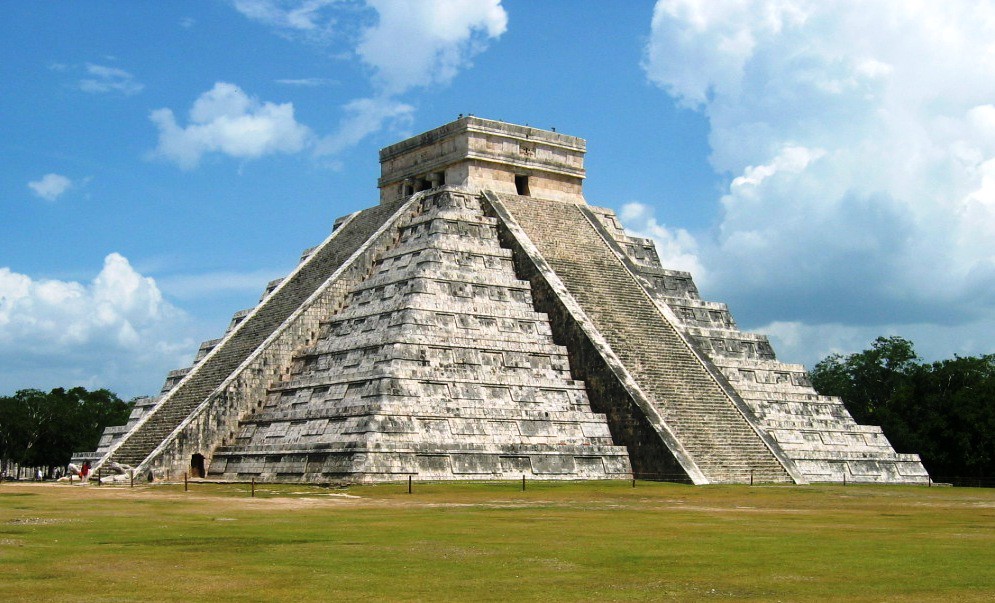
Thousands of miles away, with zero contact with Mesopotamia, the Maya built their own positional system in base 20 – complete with a shell-shaped symbol for zero. They were using it centuries before Europeans had even adopted Hindu-Arabic numerals. They needed a marker for “no tens” or “no twenties” to make their calendar math work, so they built one from scratch.
In India, Brahmagupta went further still in the 7th century CE, giving zero full arithmetic status: a + 0 = a, and even rules for dividing by it. That leap – treating nothing as a number you can operate on – eventually traveled through the Islamic world into Europe. So no, zero wasn’t invented once. It was invented at least three times, by people who had no idea the others existed. And that’s mild compared to what happened with a theorem you probably think has a Greek passport.
Fast Facts
- Babylon: base-60 placeholder symbol for an empty position, roughly 2000 BCE
- Maya civilization: base-20 system with a shell-shaped zero glyph, in use before Europe adopted Hindu-Arabic numerals
- India: Brahmagupta formalized zero’s arithmetic rules in the 7th century CE
- Bottom line: zero was independently built from scratch at least three separate times
#12 – The Pythagorean Theorem Before Pythagoras
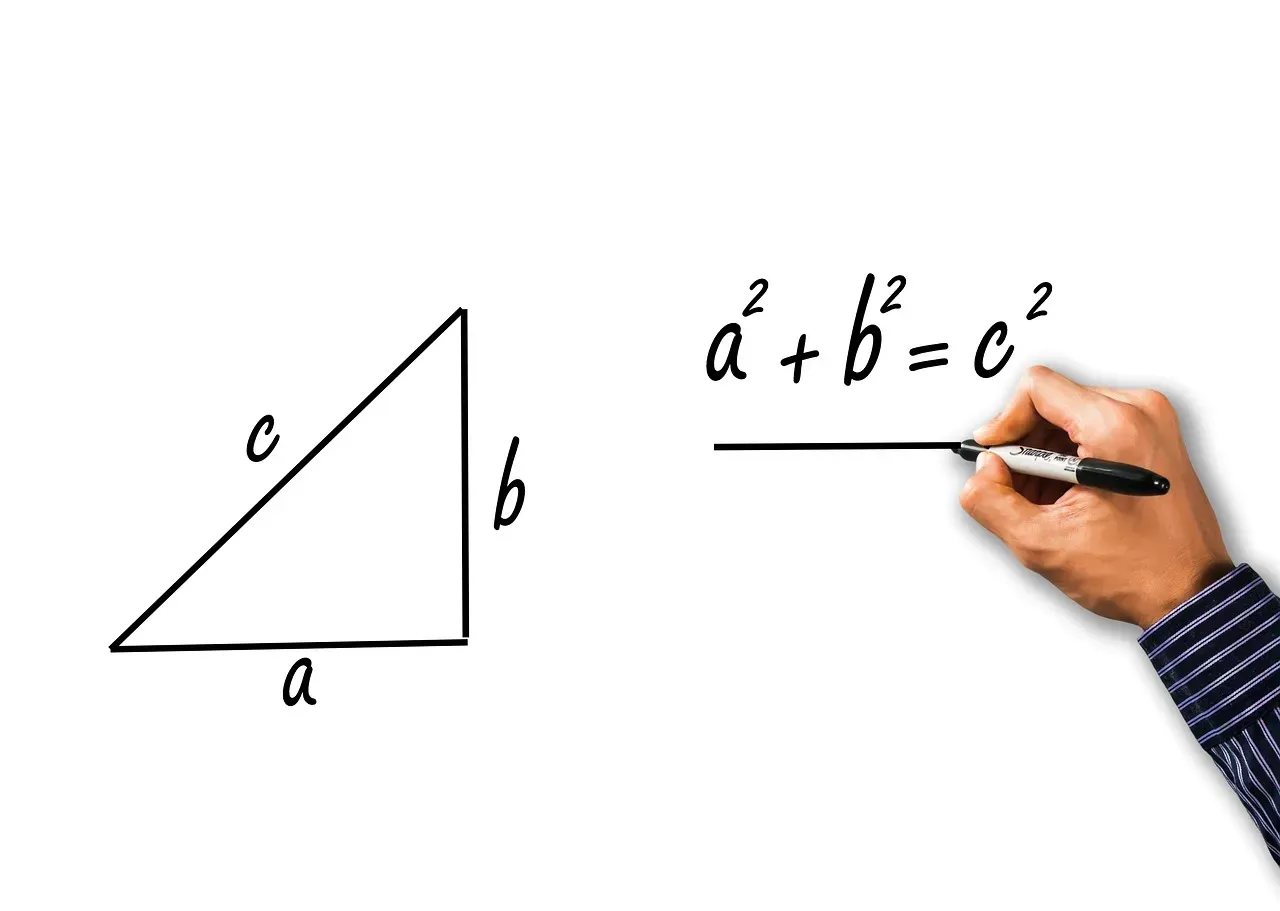
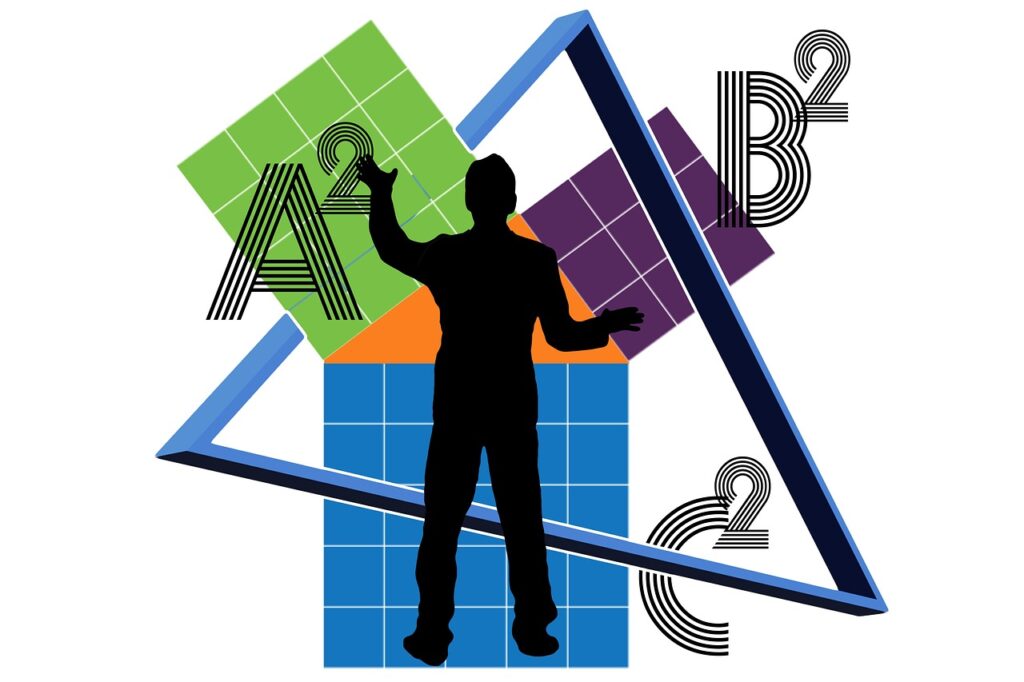
Everyone learns a² + b² = c² with a Greek name stapled to it. The uncomfortable truth is that this relationship was old news long before Pythagoras was born – and it showed up in more than one civilization, independently.
Cuneiform tablets from the Old Babylonian period (roughly 1800-1600 BCE) list integer triples like (3, 4, 5) and (5, 12, 13) that satisfy the theorem perfectly. These scribes weren’t doodling; they were systematically generating what we now call Pythagorean triples for surveying and construction, over a thousand years before Pythagoras allegedly discovered anything.
In ancient India, the Śulba Sūtras (roughly 800-500 BCE) laid out geometric rules for building ritual altars with mathematical precision. One passage states that the diagonal of a rectangle produces an area equal to the sum of the areas produced by its length and breadth separately – which is, in plain language, the Pythagorean relationship. There’s no clear evidence they borrowed this from Babylon.
Then there’s China’s Zhoubi Suanjing, compiled over centuries with roots stretching back to roughly the 1st millennium BCE, which includes a detailed diagram and geometric argument for the 3-4-5 triangle – complete with a proof idea based on rearranging squares, eerily similar in spirit to arguments the Greeks would make centuries later. Three civilizations, three separate roads, one identical destination. Which brings us to a triangle you’ve absolutely doodled in a school notebook without knowing its real age.
#11 – Pascal’s Triangle Shows Up in China, India, and the Islamic World First
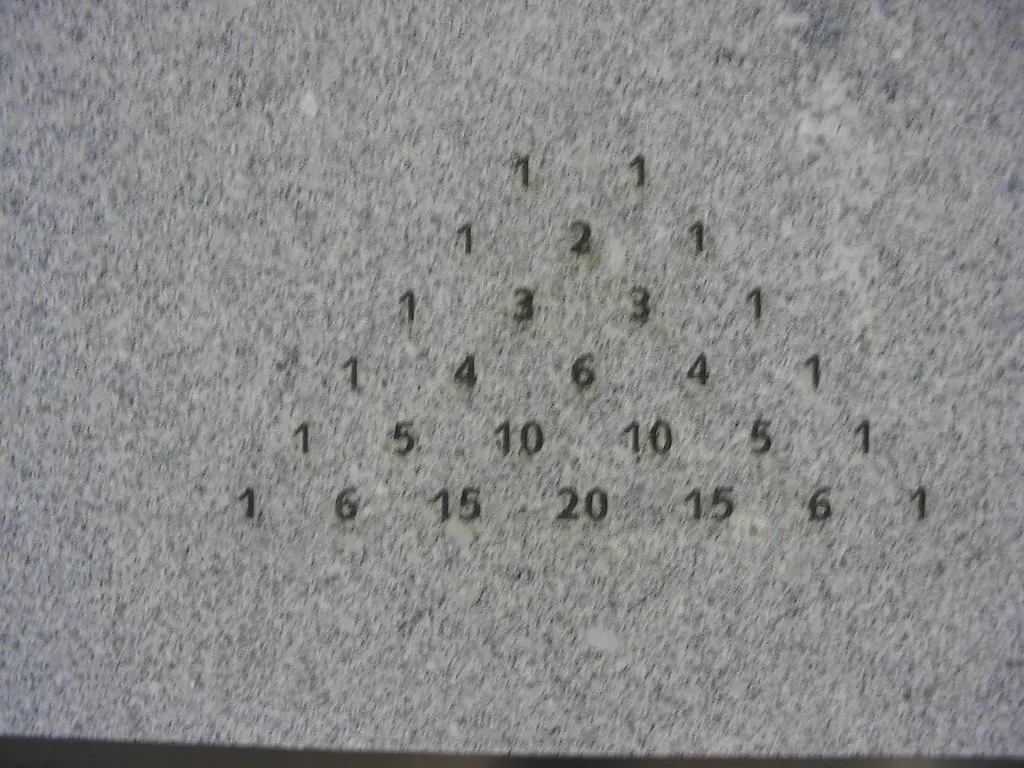
You probably met Pascal’s triangle in school – that tidy stack of numbers where each entry is the sum of the two above it. Most people assume it’s a 17th-century French invention. Historians of math tend to wince at that assumption.
In China, versions of this exact triangle appear as early as the 11th century in the work of Jia Xian, and far more clearly in Yang Hui’s 13th-century writings. Chinese mathematicians used what’s now called “Yang Hui’s triangle” to compute binomial coefficients and extract square and cube roots – studying the same rows, diagonals, and symmetries we now associate with Pascal, four hundred years before he was born.
Meanwhile, in the Islamic world, the 15th-century mathematician al-Kāshī wrote about binomial expansions arranged in triangular form, using them for astronomical calculations and jaw-droppingly precise approximations of π and trigonometric values. And earlier still, in India, prosodists studying the rhythm of Sanskrit poetry described combinatorial patterns that generate the exact same numbers – just in the language of long and short syllables instead of algebra.
Pascal did brilliant, systematic work applying the triangle to probability. But he didn’t conjure it out of thin air; he was the fourth stop on a very long trip. Speaking of things that got “invented twice” in the same breath – wait until you hear how many times calculus happened.
#10 – Calculus Was Never a Single Lightning Strike
School stories usually frame calculus as a rare double-invention: Isaac Newton in England, Gottfried Leibniz in Germany, both working it out independently in the late 17th century. That alone caused one of the ugliest priority feuds in the history of science. But the real story has even more characters.
Both men developed systematic ways to handle instantaneous rates of change and sums of infinitely many tiny pieces, introducing notation and rules that turned messy geometric problems into repeatable procedures. Their work was different enough, and developed independently enough, that modern historians credit them both as co-founders rather than picking a winner.
Yet two centuries earlier, mathematicians of India’s Kerala school – especially Madhava of Sangamagrama in the 14th and 15th centuries – were already deriving infinite series for sine, cosine, and π that are functionally equivalent to Taylor series. They used reasoning strikingly close to integration to approximate areas and arc lengths, built entirely from their own geometric traditions and Sanskrit terminology, with no connection to Europe whatsoever.
Go back even further and you’ll find Archimedes in ancient Greece slicing shapes into ever-finer pieces to approximate areas and volumes – a proto-integral in every sense but the symbols. Calculus wasn’t a lightning bolt. It was a slow-burning idea that different civilizations kept lighting on fire, in different centuries, using completely different fuel.
#9 – Negative Numbers Were Born From Debt, Not Theory

Ask a room of adults when negative numbers became “real,” and most will guess Renaissance Europe. The actual history is older, more global, and honestly a little more relatable – because it starts with people owing each other money.
In China’s 2nd-century BCE text Nine Chapters on the Mathematical Art, mathematicians used red counting rods for positive numbers and black rods for negative ones, performing addition, subtraction, and even solving simultaneous equations with them. The logic was brutally practical: red meant surplus, black meant deficiency or debt.
In India, Brahmagupta laid out formal rules for negative numbers in the 7th century: a debt minus zero is still a debt, adding two debts makes a bigger debt. It reads almost exactly like a modern middle-school worksheet, just dressed in the language of fortune and loss, driven by the needs of astronomy and commerce.
European mathematicians took much longer to warm up to the idea. Cardano, in the 16th century, still called negative solutions “fictitious” even while quietly using them to crack cubic equations. The pattern is unmistakable: wherever people kept ledgers and owed each other something, “below zero” eventually stopped feeling strange and started feeling obvious. Which sets up a much less emotional, far more mechanical rediscovery next.
#8 – Solving Multiple Equations at Once, Centuries Before Matrices Existed
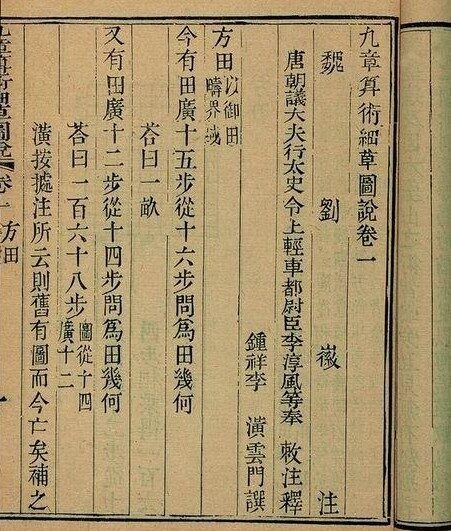
Most people assume matrices are a modern, abstract invention cooked up for computers and engineers. In reality, the core idea behind them – juggling several equations and several unknowns at the same time – is startlingly old, and it shows up in at least two civilizations that never compared notes.
In ancient China’s Nine Chapters, there’s a method historians now call “fangcheng” for solving systems of equations that looks remarkably like modern Gaussian elimination. Coefficients were physically laid out in a rectangular grid using counting rods, then systematically added and subtracted row by row to eliminate variables one at a time – essentially a matrix, worked by hand, thousands of years before the word “matrix” existed.
In Babylonian mathematics, clay tablets from around 1800 BCE pose problems requiring two unknowns to be solved simultaneously, like finding a rectangle’s length and width from its perimeter and area. Their toolkit – completing the square, clever substitution – collapsed two unknowns into one, using pure algebraic instinct rather than formal notation.
Centuries later, Islamic and early modern European algebraists independently rebuilt systematic methods for linear systems, often pushed by astronomy or land surveying, with no knowledge of the Chinese work that predated them by over a thousand years. Whenever real-world problems demand juggling several conditions at once, the math of linear systems keeps reappearing on its own – with or without a name for it.
Quick Compare
- China (Nine Chapters, “fangcheng”): counting-rod grids, row-by-row elimination – a hand-worked precursor to Gaussian elimination
- Babylon (~1800 BCE tablets): completing the square and substitution to collapse two unknowns into one
- Islamic and European algebraists: rebuilt systematic methods centuries later, unaware the Chinese had already solved it
#7 – π Got Reverse-Engineered on at Least Four Continents
Obsessing over π is practically a universal human hobby. What’s less appreciated is how many separate civilizations independently figured out that you could only truly pin π down through an infinite process – never a final answer, just an endless refinement.
In India, Madhava and the Kerala school derived, around the 14th century, an infinite series for arctangent that leads directly to what’s now called the Gregory-Leibniz series for π. They pushed it further with faster-converging variants, squeezing out many correct decimal places using reasoning that blended geometry with early calculus.
Three centuries later, James Gregory and Gottfried Leibniz in Europe found the exact same arctangent expansion, apparently with zero knowledge of the Indian work, simply framing it in the newer language of power series. Long before either group, Chinese mathematicians had been trapping π between shrinking upper and lower bounds using polygonal approximations, an approach that rhymes with what Archimedes was doing in Greece.
Everything of importance has been said before by somebody who did not discover it.
Alfred North Whitehead
Even in the Islamic world, al-Kāshī developed extraordinarily precise values of π through his own iterative methods. The underlying idea never changes: slice the circle into smaller and smaller pieces, then let the pieces multiply toward infinity. π wasn’t a single European epiphany – it was the same geometric riddle, answered again and again by people who never met.
#6 – Logarithms Were Invented to Kill Tedious Multiplication – Twice
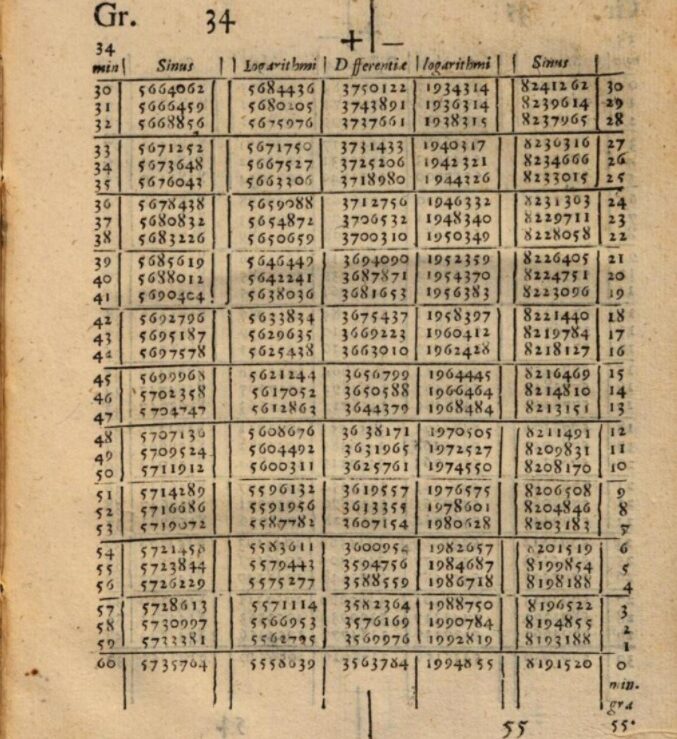
Logarithms feel like something only exam-takers and long-dead astronomers care about. But the core trick behind them – turning brutal multiplication into simple addition – was clearly too good an idea for only one person to find.
John Napier in Scotland published his logarithm tables around 1614, inspired by geometric progressions, with a brutally practical goal: make monstrous astronomical and navigational calculations survivable. Multiplication and division collapsed into addition and subtraction, which was an enormous deal in a world with no calculators.
Around the same time, and apparently without knowing about Napier, Joost Bürgi in Switzerland built his own version of logarithmic tables. His work stayed mostly unpublished, which is why historians still argue over who deserves the credit – but the parallel invention itself isn’t in dispute. The same computational headache produced the same medicine, twice, in two different countries.
Go back further and you’ll find Indian astronomers working with unwieldy base-60 numbers, building lookup tables and step-by-step schemes that mimic the same logic without ever calling it a “logarithm.” Chinese rod and abacus calculators did something similar, breaking multiplications into sums of simpler parts. Whenever a culture leans hard enough on heavy numerical work, someone eventually notices that repeated multiplication is secretly hiding an addition problem.
#5 – Combinatorics Was Forced Into Existence by Poetry, Trade, and Games
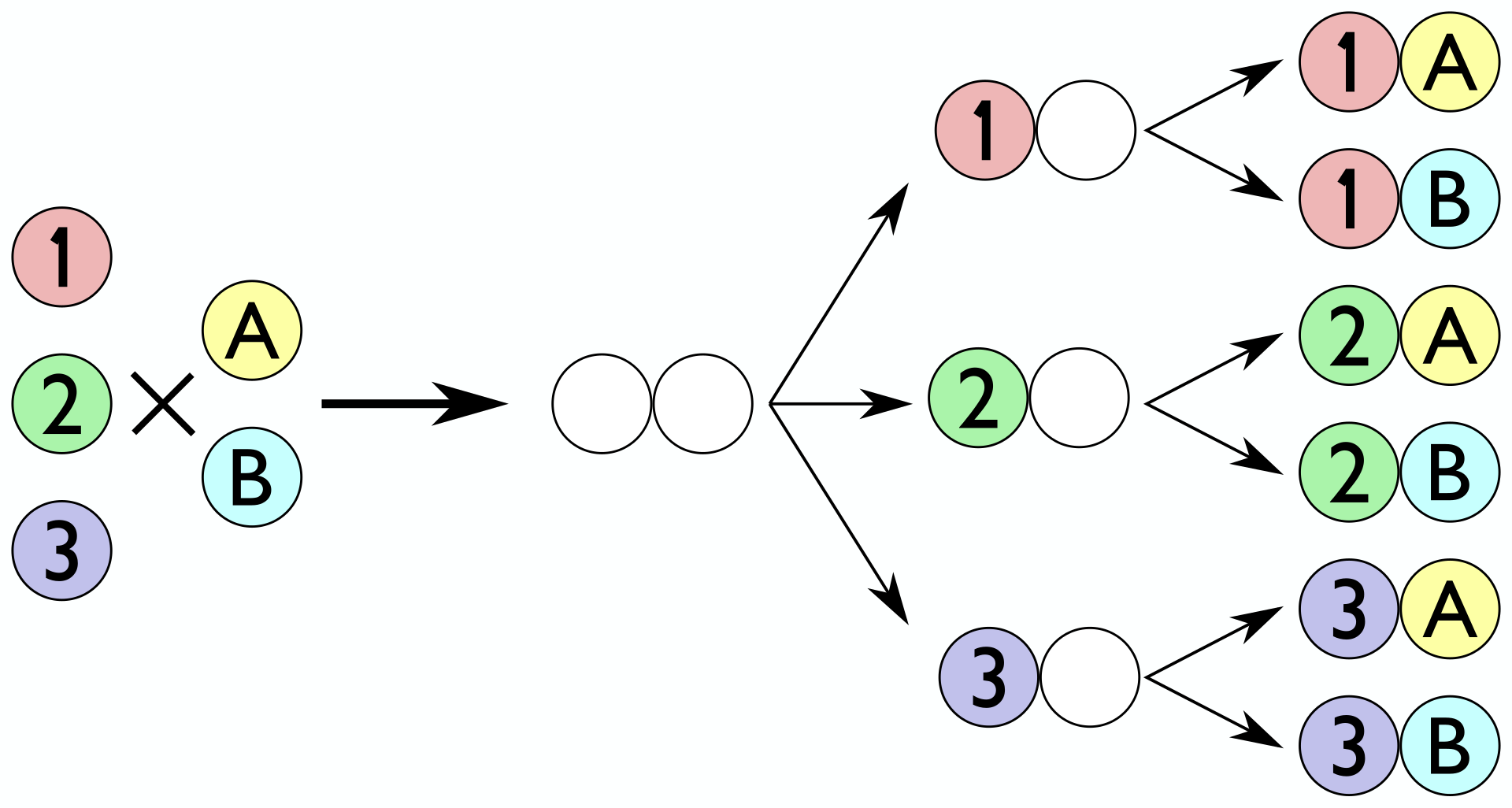
It’s tempting to think combinatorics – counting arrangements and selections – is a modern, puzzle-loving branch of math invented for fun. In reality, different cultures collided with the same questions because everyday life kept forcing the question on them.
In India, prosodists studying the rhythm of Sanskrit verse in texts like Pingala’s, dating back roughly to the 2nd century BCE, were essentially doing binary combinatorics. They counted patterns of long and short syllables, derived what we’d now recognize as binomial coefficients, and built recursive methods to list every possible arrangement – poetry dragged them straight into discrete mathematics.
In China, problems from Nine Chapters and later texts count combinations of items and arrangements arising from trade and taxation, independently landing on formulas equivalent to modern “n choose k” combinations. In the Islamic Golden Age, scholars reasoned through combinatorics for games of chance and inheritance law, work later revisited by European mathematicians like Cardano and Pascal chasing the same questions for gambling tables.
The pattern underneath all of it is almost embarrassingly simple: whenever humans face constrained choices – seating arrangements, dividing goods, composing rhythms – the same structures of binomial coefficients and permutations show up, invited or not. You don’t need advanced algebra to be cornered by combinatorics. You just need rules and options.
#4 – The Unsettling Discovery That Some Numbers Can’t Be Written as Fractions
The idea that some lengths simply cannot be expressed as a ratio of whole numbers is genuinely unsettling once you sit with it. It’s no surprise that separate civilizations, working independently, all hit the same wall and reacted with something close to alarm.
Greek tradition credits the Pythagoreans with discovering that the diagonal of a unit square – √2 – cannot be written as a fraction. Legend claims the discovery was so disturbing it was kept secret, even punished. Whether or not that detail is literal history, it captures how genuinely disruptive irrationality felt to a worldview built on whole-number ratios.
In ancient India, Vedic and post-Vedic mathematics show clear familiarity with approximations of √2 and √3, used in altar construction and astronomy. They often treated these as computable surds rather than “numbers” in the modern sense, but they were unmistakably working with quantities that refused to resolve into tidy fractions.
Chinese texts arrived at the same wall from a different direction, using square-root algorithms that necessarily produce non-terminating decimals – a numerical confrontation with the exact same phenomenon, without the philosophical drama. Islamic mathematicians later formally classified numbers into rational, irrational, and various subtypes, extending Greek ideas under their own geometric and algebraic pressure. Push geometry and algebra hard enough, in any language, and irrational numbers eventually crawl out of the equations.
Worth Knowing
- Greece: the Pythagoreans reportedly treated the discovery of √2 as disturbing enough to suppress
- India: Vedic-era approximations of √2 and √3 appear in altar construction and astronomy
- China: square-root algorithms produced non-terminating decimals without any philosophical fanfare
- Islamic world: scholars later formally classified numbers as rational, irrational, and beyond
#3 – Probability Theory Was Born From Gambling, in More Places Than One

Today probability looks like a polished, formal branch of mathematics. Its actual origin story looks suspiciously like a series of late-night gambling disputes – and that pattern repeats itself across cultures that had no contact with each other.
In 17th-century Europe, the famous correspondence between Blaise Pascal and Pierre de Fermat about how to fairly split the pot in an unfinished game is usually crowned as the birth of modern probability. They formalized expected value and combinatorial probability, turning a tavern argument into a genuine mathematical theorem.
But centuries earlier, Indian texts discussing dice games described odds, favorable outcomes, and which bets were fair versus stacked – reasoning through the logic of favorable-versus-total outcomes without ever writing it down as formal notation. Islamic legal scholars, meanwhile, reasoned probabilistically through inheritance law, structuring fair distribution of uncertain outcomes under religious obligation. Chinese lottery and game manuals contained rules that only make sense if someone already had an intuitive grasp of which outcomes were more common.
Formal probability theory is a European packaging job. But the underlying shift – deciding that randomness itself could be measured and quantified rather than just endured – happened independently, wherever money, risk, and games collided. Which brings us to an even bolder rebellion: the moment mathematicians started questioning geometry itself.
#2 – The Slow, Global Unraveling of “One True Geometry”

Most people assume the idea of “other geometries” was a purely 19th-century European rebellion against Euclid. In reality, doubts about his parallel postulate stretch across centuries and traditions, and flickers of non-Euclidean thinking appeared more than once, long before anyone gave the idea a name.
For nearly 2,000 years, mathematicians from Proclus to Gauss tried and failed to prove Euclid’s parallel postulate from his other axioms. The textbook version of the story jumps straight to Lobachevsky and Bolyai, who independently built consistent geometries in which infinitely many lines through a point can be parallel to a given line – proving Euclid’s fifth postulate was a choice, not a law of nature.
But centuries before them, Islamic mathematicians Ibn al-Haytham and later Omar Khayyām explored quadrilaterals with equal sides and right angles, probing what happens if you tweak the assumptions about parallel lines. They never announced “non-Euclidean geometry” out loud, but they were quietly mapping alternate logical universes where Euclid’s fifth postulate behaves differently.
Meanwhile, astronomers and surveyors in India and China were already using spherical geometry in practice, where “straight lines” are great circles and the angles of a triangle add up to more than 180 degrees – a core feature of non-Euclidean space, even without a formal axiomatic name attached. Whenever people modeled curved surfaces – the Earth, the heavens – cracks in “one true geometry” quietly appeared, long before Europe declared the rebellion official.
#1 – Algebra Itself Was Reinvented, Not Just Refined
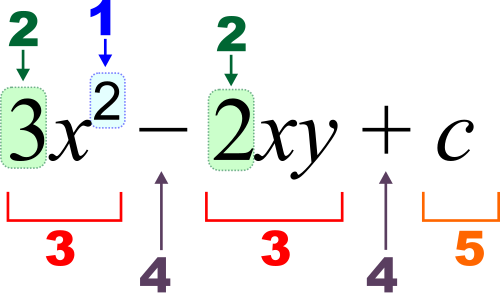
The most powerful parallel invention on this entire list isn’t a single theorem – it’s a whole way of thinking. The idea of manipulating generalized quantities and unknowns through rules, rather than solving every number problem from scratch, was independently reinvented by civilizations that shared no direct line of communication.
Babylonian clay tablets from around 1800 BCE already contain recipes for solving quadratic and even cubic-like problems, describing unknowns as lengths and areas. The procedures – completing the square, reducing to standard forms – are unmistakably algebraic. They were solving for x before the letter x ever existed.
In India, texts from roughly the first millennium CE onward developed systematic rules for solving linear and quadratic equations, eventually tackling complex Diophantine problems with methods like the “pulverizer” algorithm for solving congruences – startlingly advanced for their time. Then the Islamic Golden Age gave algebra its identity and its name: al-Khwarizmi’s 9th-century book on “completion and balancing” (al-jabr wa’l-muqabala) methodically solved equation types and became the genre’s blueprint, later translated into Latin and absorbed into European mathematics.
Renaissance thinkers like Viète and Descartes finished the job by introducing full symbolic notation – letters standing in for unknowns and parameters – making algebra fully abstract and portable. But the conceptual heart of it all, the idea of using rules to transform expressions representing unknown quantities, had already appeared separately in Mesopotamia, India, and the Islamic world. Algebra is what happens when humans get tired of solving every problem from scratch and decide to build a machine of rules instead – and that machine, it turns out, has been built more than once.
At a Glance
- Babylon (~1800 BCE): quadratic and cubic-style recipes using lengths and areas as stand-ins for unknowns
- India (1st millennium CE onward): systematic equation-solving plus the “pulverizer” algorithm for congruences
- Islamic Golden Age: al-Khwarizmi’s 9th-century book gave the field its name and its blueprint
- Renaissance Europe: Viète and Descartes added full symbolic notation, making algebra portable
The Bottom Line
Zoom out far enough and the “lone genius” story simply collapses under its own weight. Zero wasn’t invented in India alone – placeholders and place-value thinking emerged in Babylon and among the Maya first. The “Pythagorean” theorem lived comfortably in Babylonian, Indian, and Chinese texts long before Greece gave it a passport it never actually needed.
Calculus, π-series, combinatorics, even algebra itself – again and again, cultures with no contact hit the exact same mathematical vein and started digging. That’s not a coincidence you can shrug off. It’s evidence that some ideas are so deeply wired into how reality actually works that human brains were basically guaranteed to trip over them eventually.
Here’s the opinion part: crediting a single “inventor” for any of these ideas isn’t just historically lazy – it’s a small act of erasure, one that’s been repeated in classrooms for generations. The real story is better anyway. Math isn’t a straight line from one genius to the next. It’s a chorus of strangers, scattered across centuries and continents, occasionally harmonizing by accident. Did we miss a parallel discovery that deserves a spot on this list? Make your case in the comments.