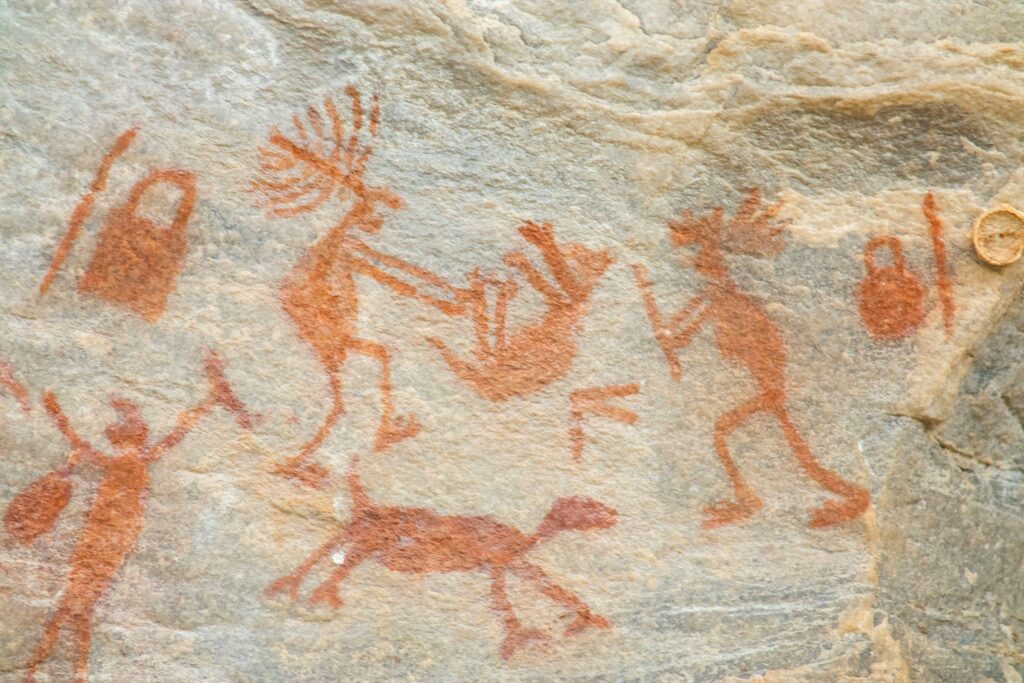
Most people picture cave art as bison charging across a wall, a herd of horses frozen mid-gallop, or a single red handprint pressed into stone thousands of years ago. That image isn’t wrong. It’s just incomplete, and the missing half is stranger than anything in a textbook.
Because tucked between the mammoths and the mystery is a set of small, deliberate marks – dots, ladders, spirals, zigzags – that show up on cave walls in France, Indonesia, South Africa, and Patagonia, separated by oceans and tens of thousands of years, with no contact between the people who made them. Some of these signs weren’t even visible until modern scanners peeled back later paintings and found older ones hiding underneath. What archaeologists are starting to suspect is that these shapes might be the oldest shared “language” our species ever used – and the famous animals may have been painted on top of it.
#1 – The Dot Code That Might Predate Every Famous Animal Painting
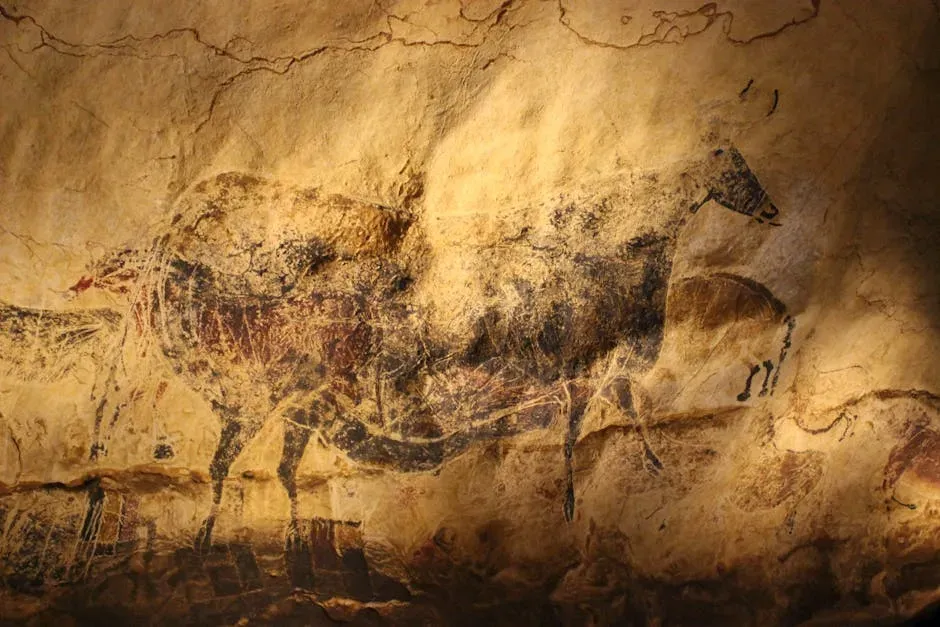
Archaeologists joke that if Ice Age humans only had one “word,” it was probably a dot. Dotted patterns appear on cave walls from France to Indonesia to Patagonia, and they are not random splatter. Many are deliberately spaced, carefully placed, and sometimes layered directly over animals that came later.
In caves like El Castillo and Chauvet, simple dots and dot clusters may actually be older than the animal figures painted around them, some reaching back 35,000 to 40,000 years. In certain panels, dots seem to “halo” an animal, almost like a field of static around it. In others, rows of dots trail along the natural curves and cracks of the rock, as if marking a route or highlighting something the artist wanted a viewer’s eye to follow.
What really shook things up was digital and multi-spectral scanning, which exposed older dot fields buried under later paintings. In at least a dozen documented cases, hidden red or black dot clusters sit beneath more famous animal scenes – meaning the dots came first, and the showpiece animals were added centuries or even millennia afterward.
That raises an uncomfortable question: were the animals ever really the point, or just decoration layered over something more symbolic? It gets stranger from here.
#2 – The 70,000-Year-Old Grid That Shouldn’t Exist Yet
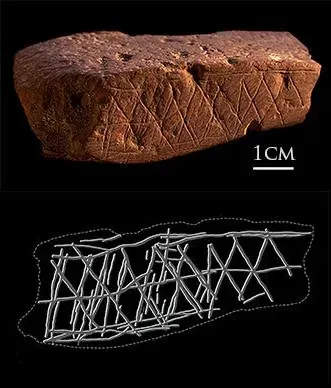
The so-called “hashtag” engraving from Blombos Cave in South Africa stopped researchers in their tracks for a reason. It’s a cross-hatched grid scratched onto a piece of ochre more than 70,000 years old, and it looks suspiciously like deliberate design rather than idle scratching.
That same ladder-and-crosshatch style turns up, in different forms, across Europe, the Near East, and parts of Asia. In several French and Spanish caves, ladder-like figures made of parallel lines connected by crossbars appear both near entrances and deep inside the galleries. Sometimes they float near animals. Sometimes they stand completely alone.
Fast Facts
- Engraved onto a piece of ochre at Blombos Cave, South Africa
- Dated to more than 70,000 years old
- Made of a deliberate cross-hatched, “hashtag”-style grid
- Similar rectilinear shapes later surface in France, Spain, Australia, and North America
In one striking case, imaging revealed a hidden ladder motif underneath a later painted horse, which suggests the geometric symbol mattered enough to be preserved in some form, even after new art was painted over it. Researchers still argue over what it meant: a counting system, a symbolic gate, or an abstract stand-in for a trap or shelter.
What makes this genuinely unsettling is that similar rectilinear shapes show up in rock art from Australia and North America, where there was no possible cultural contact. Some experts chalk it up to shared cognitive wiring – our brains simply like organizing space into grids and rungs. Others think it hints at something closer to a shared, proto-notational system. Wait until you see what’s hiding in #3.
#3 – Spirals That Only Make Sense When the Light Hits Just Right
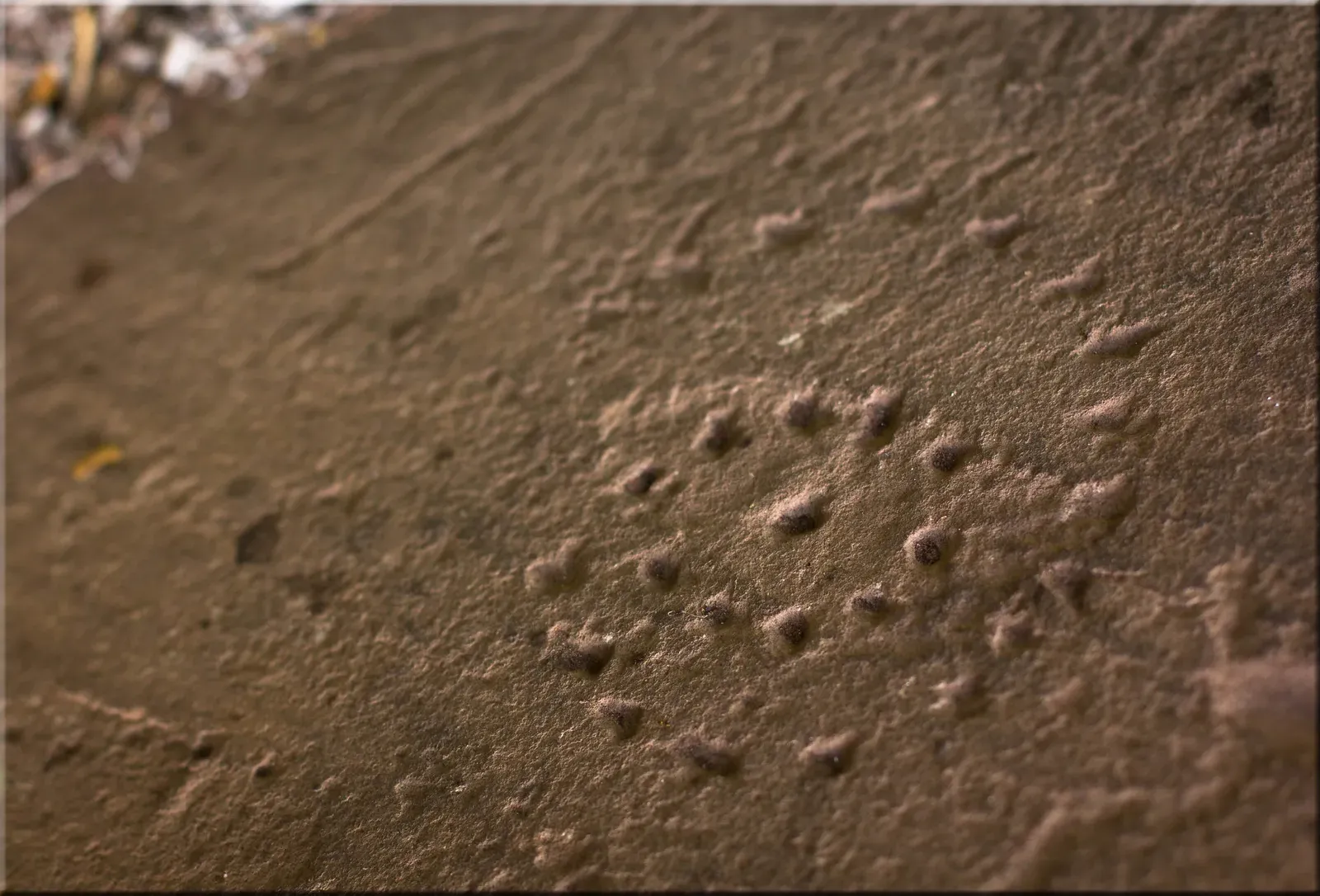
Spirals are one of those shapes humans can’t seem to stop drawing. From European megaliths to Puebloan kiva walls, spirals keep showing up in places obsessed with the sky, especially the sun.
Cave spirals are rarer than dots or lines, but when they appear, they tend to sit in locations that catch dramatic light or frame a specific rock formation. In some deep caves, spiral engravings or painted curls are tucked into alcoves where, on certain days of the year, a sliver of sunlight or torchlight lands on them precisely.
Careful 3D scanning in a few sites has revealed faint spiral motifs hiding beneath overlying animal scenes, proving that earlier artists engraved or painted the spirals first, and later generations reused the same wall for new imagery entirely. Similar spiral forms show up in European cave engravings, North African rock shelters, and early American petroglyph sites.
Some archaeologists think spirals reflect altered states – visions triggered by trance, migraines, or the entoptic patterns the brain generates in total darkness. Others tie them to celestial cycles, especially in sites where rock “windows” align with solstices. We can’t prove a single meaning, but spirals clustering in ritual-heavy locations isn’t just a coincidence anymore.
#4 – The Branching Mark Hidden Inside the Animals Themselves
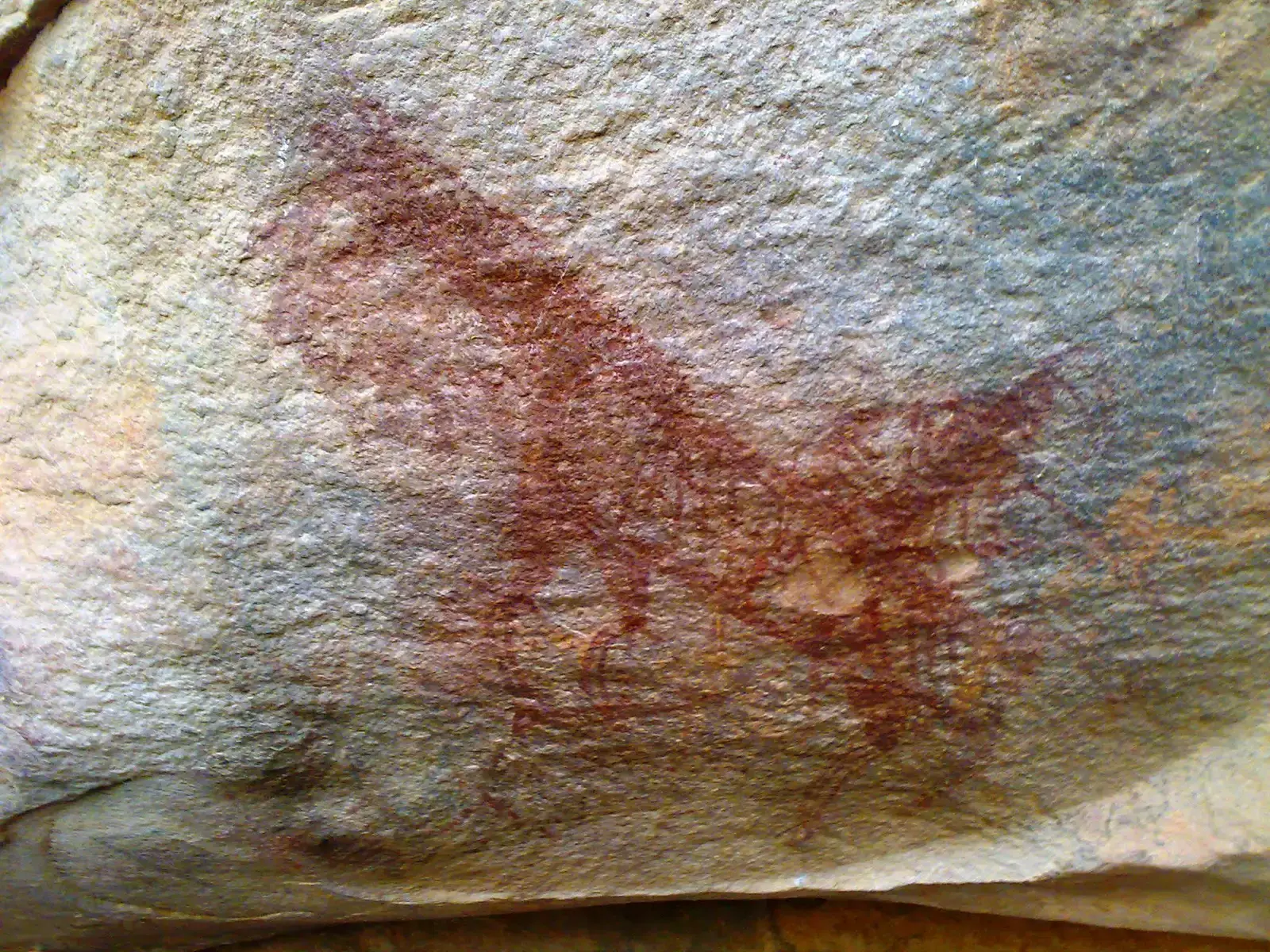
One of the most quietly persistent motifs in cave art is the simple “Y” shape, or branching line. It looks trivial at first glance. But it repeats so consistently across continents that some researchers think it might encode a basic idea like “split,” “choice,” or “birth.”
In European Ice Age caves, these Y-shaped figures often appear beside animals – sometimes even emerging directly from their bodies or aligned with genital areas. That has pushed some scholars toward fertility or reproductive interpretations. In other spots, the same branching forms trace cracks in the rock, as if marking where water once ran or where a path underground split in two.
Digital reconstructions have uncovered previously invisible branch-like marks hidden under darker pigment layers, particularly in caves that were repainted repeatedly over centuries. In roughly a dozen documented instances, underdrawings show branching lines partially covered by later bison, horses, or human figures – suggesting the geometry belonged to an earlier “base” design that came first.
Outside Europe, similar motifs turn up in Australian and American rock art, sometimes mapped directly onto real, bifurcating rivers or trails. That cross-continental echo keeps fueling one idea: humans may naturally reach for branching lines whenever they’re thinking about decisions, family lines, or water.
#5 – Tally Marks Buried Under the Bulls
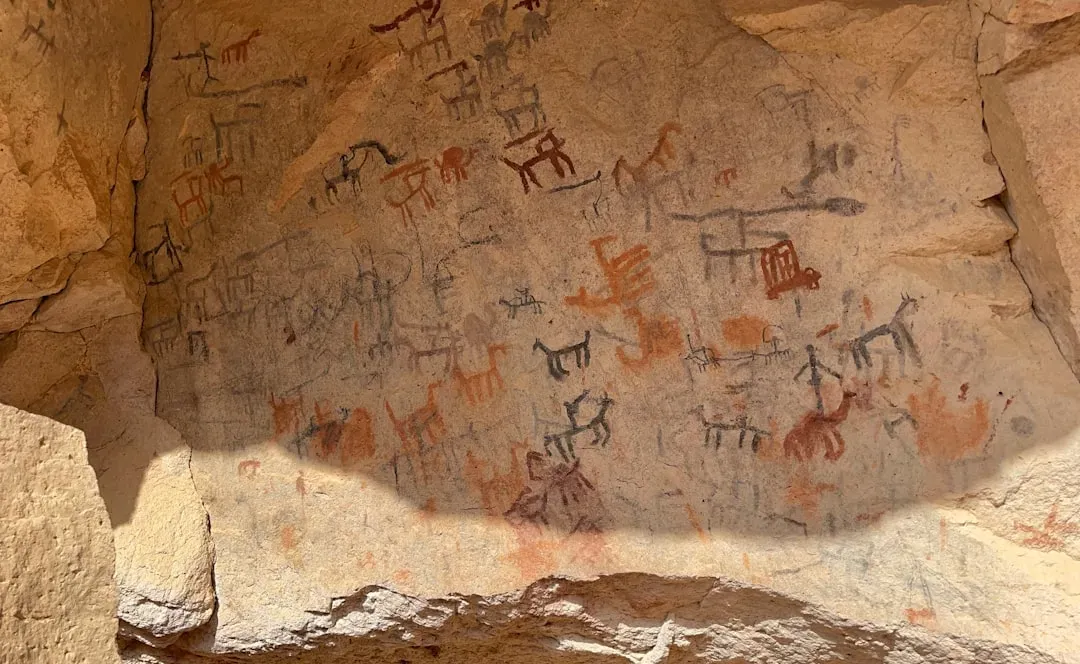
Strip writing down to its bare bones and you get parallel lines and counts. Ice Age artists were apparently already there. Clusters of short, parallel strokes – sometimes straight, sometimes slightly curved – appear in caves from France to Siberia, often in sequences that look tantalizingly like tallies.
Some researchers have proposed that certain marks might track animal behavior: migrations, mating seasons, or hunting windows. Not everyone agrees, but a few series do show repeated groupings next to specific species, and regular intervals that could reflect lunar cycles.
High-resolution imaging has revealed tally-like engravings underneath later, flashier animal panels in multiple caves. In a few cases, the linear marks are cut so deeply into the rock that later artists had to bend their animal outlines around them, as if the older “code” was too embedded to erase.
Skeptics say this is all modern projection – maybe people just liked making lines. But that argument gets shakier when similar counted clusters turn up in early Near Eastern notched bones and in unrelated rock traditions on other continents. The safest read is that humans have been using repeated marks as memory aids for a very long time.
#6 – The Checkerboard No One Expected to Find in a Cave
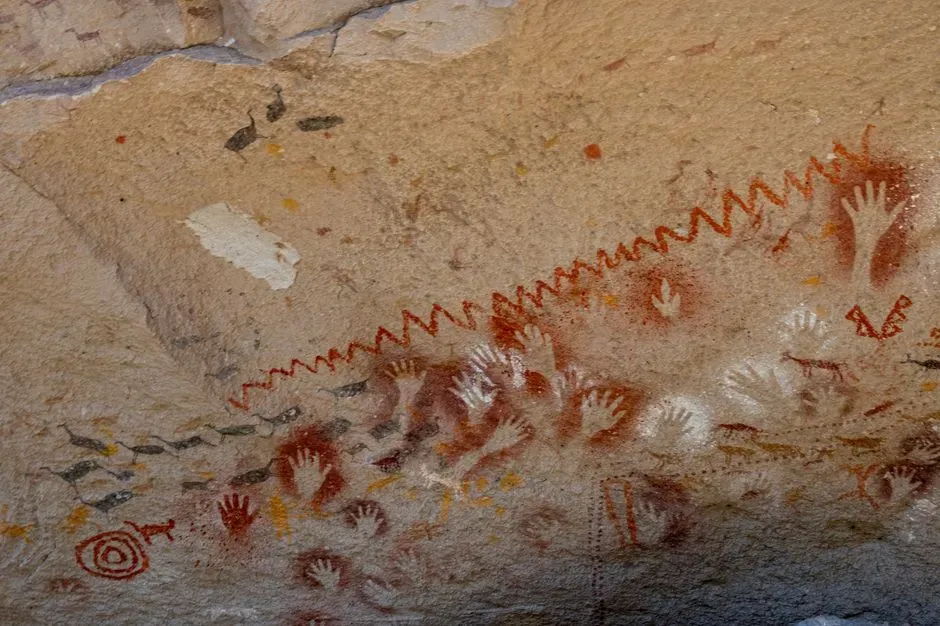
Grids feel like a modern invention – spreadsheets, calendars, chessboards – but our ancestors were etching grid-like designs long before cities or writing existed. In several European caves, rectangular or square fields divided into smaller compartments appear near more naturalistic imagery, and they’re rare enough to stop researchers cold when they find one.
Some panels show cross-hatched squares sitting next to animal herds, checkerboard-like sections tucked into corners of chambers, and grids that were partially erased or painted over with later imagery.
In at least a dozen cave paintings re-examined with infrared and multi-spectral imaging, faint grid designs emerged beneath more famous animals or hand stencils. In a few cases, the underlying grid lines run at odds with the composition on top of them, confirming they were separate, older designs and not just preparatory sketches for what came later.
What could they mean? Theories range from simple decorative filler to maps of territory or traps. Some researchers see them as an early attempt to organize complex information spatially – forcing the mind to think in boxes. The fact that rough grid patterns also appear, much later, in early Chinese and Mesoamerican contexts with zero shared contact suggests we’re looking at a recurring human solution for structuring space, not a coincidence.
#7 – The Lonely X That Might Be the Most Important Mark in the Room
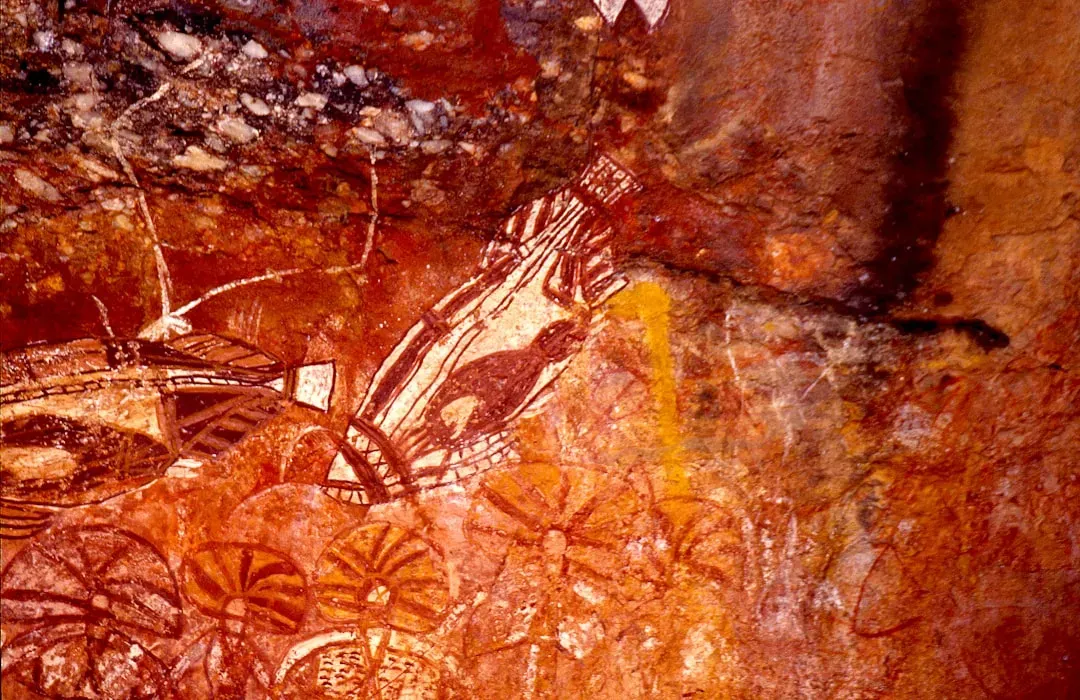
If there’s a shape almost as universal as the circle, it’s the cross. Intersecting lines – X shapes, plus signs, small starbursts – show up in caves and rock shelters across nearly every region on earth. Some look casually scratched. Others are composed with real precision around natural rock features.
In European Paleolithic caves, crosses and X-like marks often sit where two planes of rock meet, or where natural cracks intersect, almost as if the artist was highlighting a junction the rock itself created. In a few rare panels, sophisticated intersecting-line motifs hide beneath thick layers of calcite or later paintings, and digital enhancement has pulled some of these buried cross-forms back into view – proof that early artists were already experimenting with symmetry.
Quick Compare
- Dots: France, Indonesia, Patagonia
- Grids and ladders: South Africa, Europe, Australia, North America
- Crosses and X shapes: Europe, Australia, the Americas
- Concentric circles: Europe, Oceania, the Americas
Outside Europe, simple crosses appear in early American and Australian sites, later gaining elaborate cosmological meanings in some Indigenous traditions. We shouldn’t retroactively project those specific meanings onto Ice Age Europe, but the basic cognitive pull of two lines crossing – a center, a meeting point, a balance – does seem to be pan-human.
Here’s the part that gives some researchers chills: in a handful of caves, the only deliberate mark in an entire chamber is one small engraved X. No animals. No hands. Just that. Some archaeologists quietly argue those lonely marks might be the most important ones in the whole cave.
#8 – Zigzags That Move Like Lightning Across the Rock
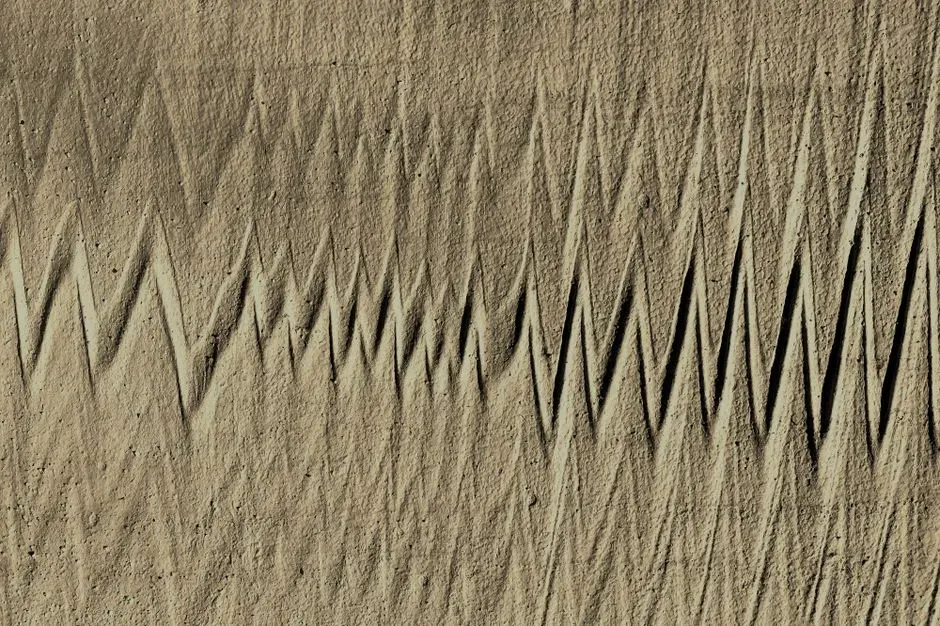
Zigzags are everywhere – cave walls, pottery, textiles, tattoos. In prehistoric art, sharp, repeating zigzags and wavy meanders often ride along the natural contours of the rock, echoing rivers, snakes, or lightning. Neuroscientists point out that zigzags are also classic “entoptic” patterns, the kind of shapes the brain manufactures during altered states or sensory deprivation.
In many European and African sites, zigzags cluster near water sources or drip lines inside the cave. Some panels show animals moving along or across zigzag bands, as though actively interacting with them. Others wrap zigzags around small carved pits called cupules, creating motifs that feel oddly electric even today.
Modern scanning has peeled back layers of soot, calcite, and overpainting to reveal earlier zigzag bands hiding under later, more figurative scenes. In some cases the animals line up almost perfectly with the buried lines beneath them, hinting at continuity of meaning. In others, later artists seem to ignore or even defy the old geometry, layering smoother forms right over the angular ones.
Zigzags tied to water, snakes, or raw energy recur in European caves, Australian rock shelters, and North and South American petroglyph fields. We can’t pin one single “translation” on every zigzag ever drawn, but it’s hard to dodge the idea that humans have long used these shapes to grapple with forces that felt powerful, flowing, and a little dangerous.
#9 – The Target Symbol That Keeps Marking Sacred Ground
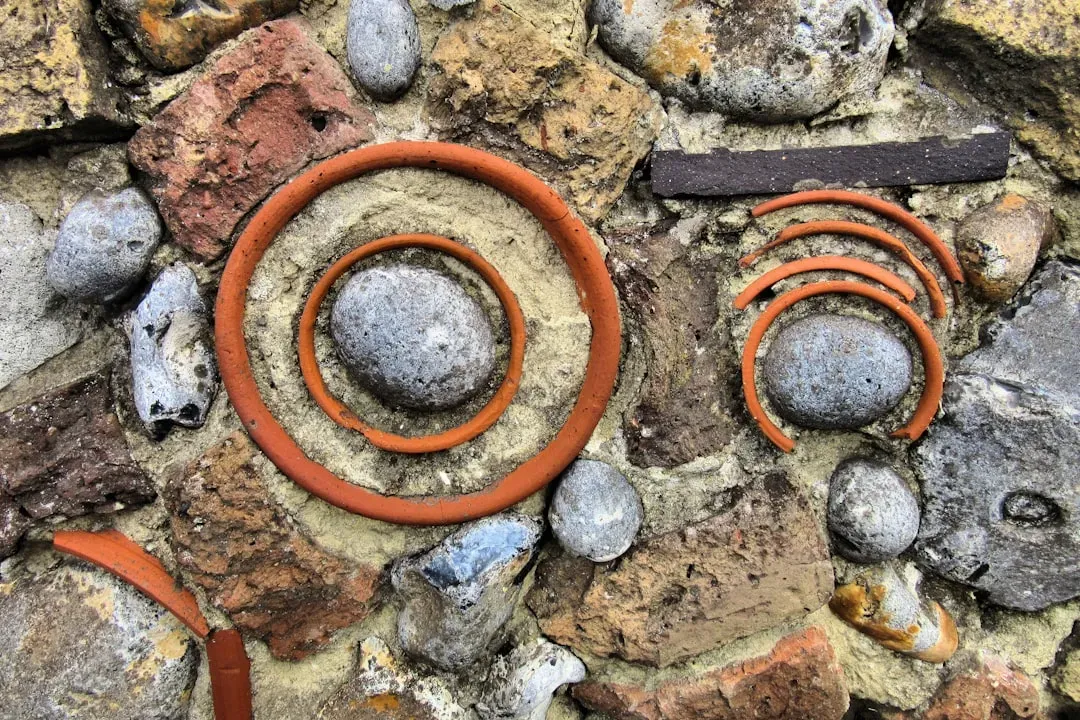
Draw a circle inside a circle inside a circle, and you’ve accidentally tapped into one of the oldest visual clichés on the planet. Concentric circles appear in rock art traditions from Europe to Oceania to the Americas, almost always in settings with heavy ritual overtones – burial sites, meeting places, echoing chambers.
In some caves, concentric engravings or painted “targets” flank the entrances to side passages, almost like signposts. In others, they’re carved around natural hollows or bumps in the rock, turning ordinary geological quirks into deliberate focal points. A few panels even place an animal directly at the center of the rings, as if marking territory or importance.
High-resolution imaging has revealed faint concentric designs under later layers of paint in several European caves, including cases where only tiny fragments of the inner rings were ever visible to the naked eye. Reconstructed digitally, those fragments snap together into full ring systems composed well before the animals painted over them.
Outside Europe, similar target-like figures appear on Australian rock walls tied to waterholes and meeting sites, and in North American traditions linked to the sun, stars, or spirit paths. We shouldn’t lazily equate all of these meanings across cultures, but the repeated choice of the ring-within-ring format to mark something sacred is hard to write off as chance.
#10 – The Hand That Was Signing Something Older Than Itself
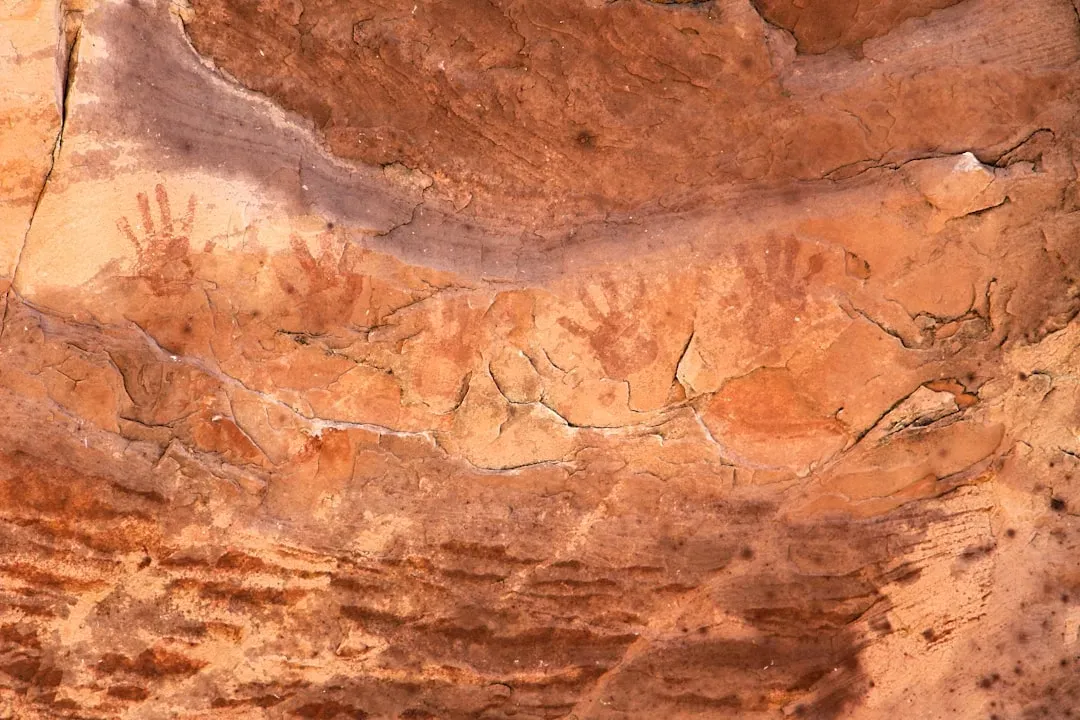
Hand stencils – made by blowing or spitting pigment around a hand pressed flat against the wall – are some of the most famous images in cave art. What most people miss is how often they interact with geometric signs underneath or around them.
In multiple caves, hands overlap dots, lines, and other symbols in arrangements too careful to be accidental. Researchers have noticed that in some sites, hand stencils frame geometric fields, appear in patterned groups like left-right-left or small-large-small, and are clearly layered over or under other designs on the wall.
When scanned with modern imaging, a number of iconic hand panels turned out to be hiding faded underlayers of geometric marks – dots, lines, even fragments of grids – directly behind or beneath the hand stencils. In a few cases, those underdrawings were so faint they went unnoticed for more than a century of study.
That’s sparked a real debate: were the hands “signatures” placed over older symbolic marks, a way of claiming them? Or were the geometric layers simply the foundation later artists built their personal imprint on top of? Since hand negatives paired with basic geometric signs occur in caves and shelters from Europe to Australia to the Americas, some experts now think the combination of hand-plus-symbol may be the closest thing we have to a universal prehistoric message: I was here, and this meant something.
#11 – 12 Buried Paintings That Rewrote the Timeline
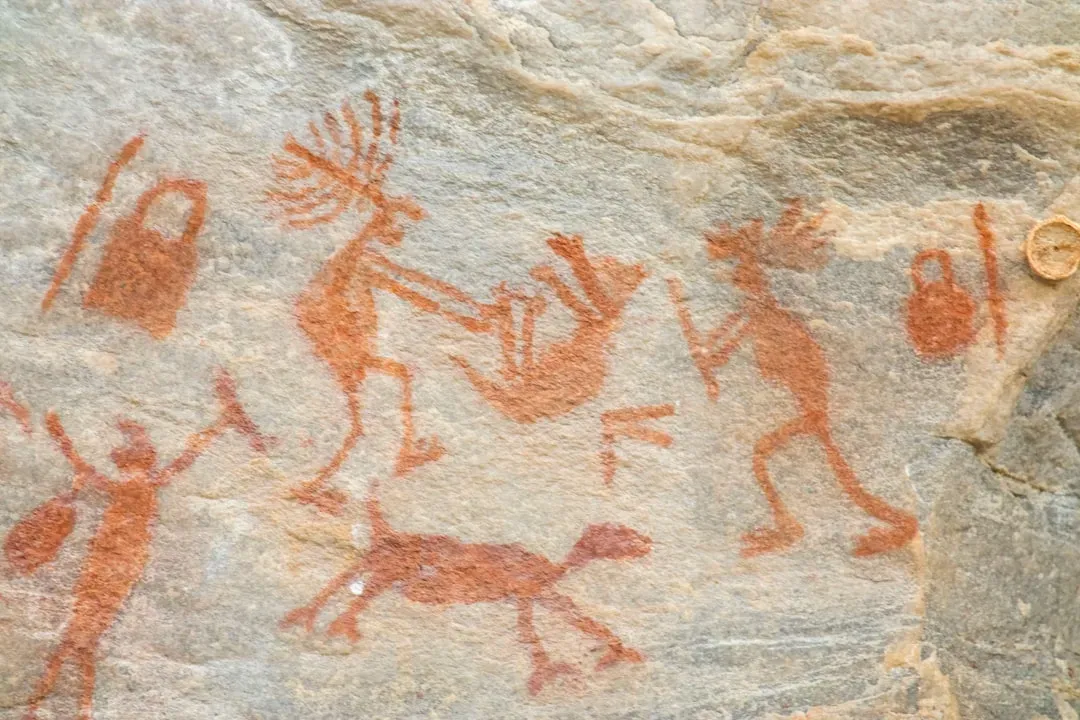
For decades, cave-art books only showed you the finished scenes – bulls, horses, rhinos, human-animal hybrids. What they rarely mentioned is that many of these masterpieces sit directly on top of older paintings, and a surprising number of those older works are purely geometric.
Thanks to infrared, 3D scanning, and digital enhancement, archaeologists have now documented at least a dozen significant underpaintings that quietly rewrite the sequence of events on these walls. Among the confirmed cases are dot clusters concealed under later animal silhouettes, ladder and grid forms partially erased or painted over, faint spiral or concentric-ring systems buried beneath darker pigments, and early parallel-line “tallies” smoothed over and repurposed as part of an animal’s outline.
At a Glance
- Dot clusters concealed beneath later animal silhouettes
- Ladder and grid forms partially erased or overpainted
- Spiral and concentric-ring systems buried under darker pigment
- Parallel-line tally marks smoothed into an animal’s outline
In some caves, the underpaintings don’t just sit there silently – they shape what comes after. Artists working centuries later still responded to ghostly traces of old signs, sometimes lining up their new work with the older geometry underneath. In other cases, they seem to reject the earlier symbols outright, burying them under new animals or hand stencils instead.
This layered reality demolishes the old idea that cave art happened in one creative burst. These walls were palimpsests – reused, corrected, and negotiated over generations, with geometric systems often forming the very first layer. If anything, the famous animals might be the latest comment in a much older, mostly invisible conversation.
#12 – The Shape That Shouldn’t Repeat Itself an Ocean Away
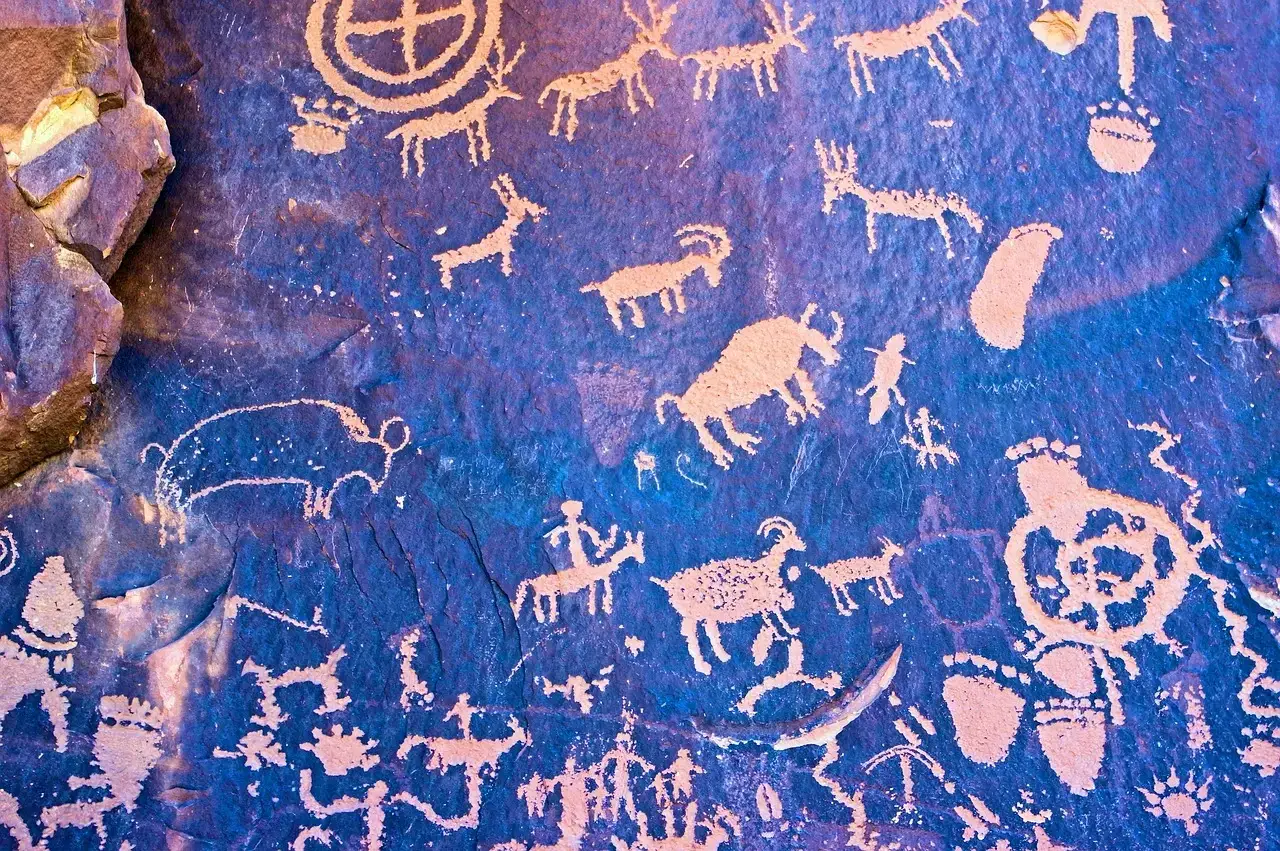
Here’s where things get uncomfortably big-picture. A few shared motifs could be chalked up to chance. But once you start ticking through the full list – dots, ladders, grids, spirals, zigzags, concentric circles, crosses, branching lines, tallies – and you see variations of every single one in rock art traditions across Europe, Africa, Asia, Australia, and the Americas, coincidence starts to feel like a lazy answer.
There are three main camps among researchers. The first is universal cognition: our brains are simply wired to see and draw certain patterns, so people everywhere independently reinvent the same shapes. The second is deep cultural inheritance: some elements might trace back to very early Homo sapiens culture before humans spread out of Africa, evolving locally afterward but keeping a shared “symbolic starter kit.” The third is selective perception: we notice the similarities because we’re actively looking for them, while quietly ignoring the differences.
Worth Knowing
- Universal cognition: human brains default to the same basic shapes everywhere
- Deep cultural inheritance: shared symbols may predate the spread out of Africa
- Selective perception: researchers may notice similarities while overlooking real differences
Most cautious archaeologists lean toward a mix of the first and third explanations. But the sheer recurrence of certain forms – especially when they show up together in similar “bundles” – keeps the deeper-inheritance idea stubbornly alive.
Modern science demands honesty about how thin the evidence still is; there’s no proof of a global Ice Age symbol code. But when you walk into a cave in France and see dot fields, then look at a rock panel in Australia with dot fields bracketing animals in almost the same way, it’s hard not to feel like you’re staring at echoes of a very old, very shared way of thinking.
#13 – The Real First Language Might Not Have Been Words at All
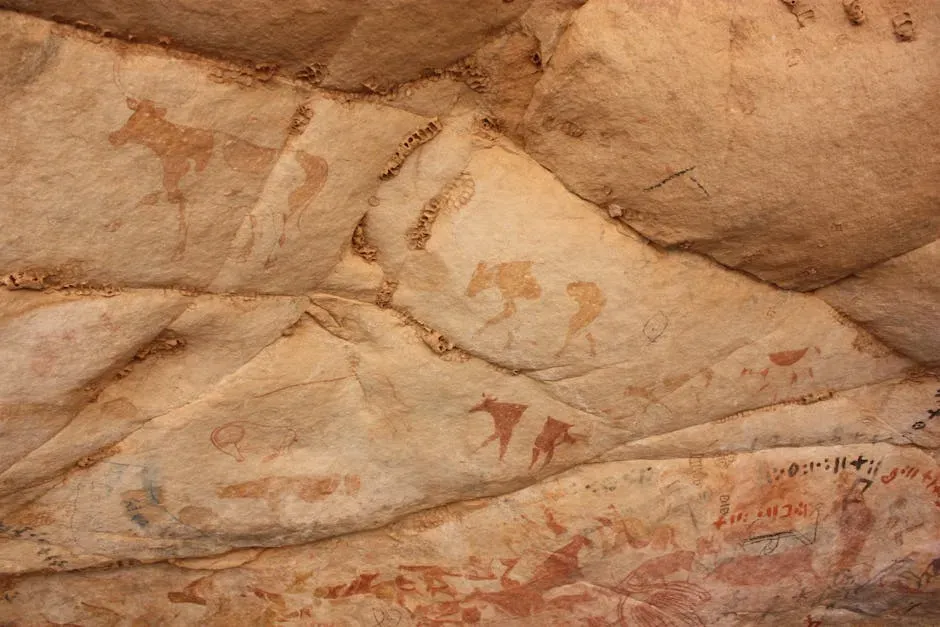
Here’s the uncomfortable possibility: the animals might not be the main story. The simplest, most abstract signs – dots, lines, grids, spirals, branches – may be the oldest layer of shared human meaning, older than any specific myth or local tradition. They were easy to draw, hard to completely misunderstand, and flexible enough to carry different shades of meaning in different groups.
Think about what these forms are actually good at. Dots and sequences can mark time. Grids and branching lines can map space. Concentric circles and crosses can flag importance. Zigzags and spirals can signal force and motion. They’re not “pictures” in the usual sense at all – they’re tools for thinking in public, on stone.
The fact that we keep finding early geometric layers underneath later figurative paintings suggests prehistoric people may have started with structural marks – tracking, mapping, signaling – and only wrapped stories and animals around those frameworks afterward.
Are we looking at the direct ancestors of writing? That’s a stretch too far. But it’s not crazy to see these systems as distant cousins of later notation – calendars, maps, clan marks, ritual diagrams. The same small set of forms keeps turning up in caves on separate continents, hinting that beneath all our cultural differences, humans have been sketching the same mental furniture on rock for tens of thousands of years.
The Bottom Line
Strip away the romance, and cave art stops being just “prehistoric murals” and starts looking like a layered, slowly evolving information system. The real shock isn’t that Ice Age people painted animals – it’s that across continents, with no contact between them, they kept returning to the same geometric toolkit: dots, lines, grids, spirals, zigzags, branches, circles, crosses. In at least a dozen documented cases, they laid those signs down before the famous figures we now put on museum posters.
The evidence doesn’t justify wild fantasies about a lost global code, and any honest researcher will tell you the gaps are still huge. But it does point to something quietly radical: long before alphabets, humans were carving and painting repeatable symbols to track time, space, power, and belonging. My honest take? The animals get all the postcards, but the geometry is the older, stranger story – and it’s the one that actually connects us across every continent.
Do you think the animals or the symbols matter more, or are we still asking the wrong question? Tell us where you land in the comments.