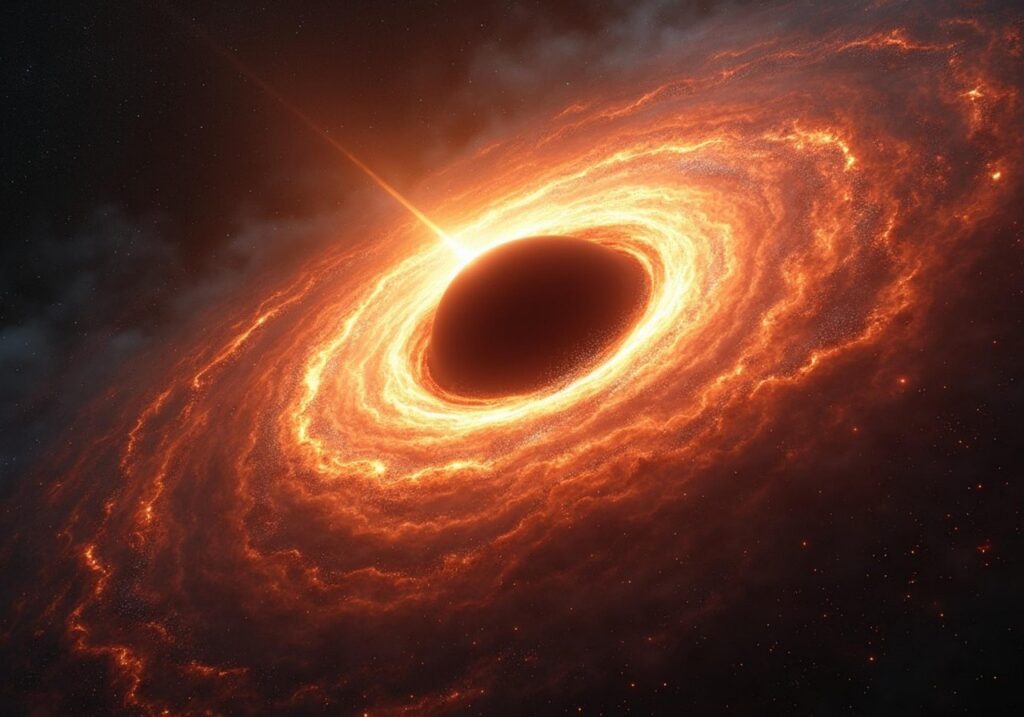

Ask most people if gravity is “solved,” and they’ll shrug and say yes. We land spacecraft on comets, predict eclipses to the second, and even photographed a black hole from half a galaxy away. Case closed, right?
Except behind closed doors, in seminar rooms and late-night conference bars, the mood is nowhere near that confident. The gaps in our understanding of gravity aren’t minor footnotes – they’re some of the biggest open wounds in all of physics. The deeper researchers dig, the stranger and more unfinished the picture gets.
#12 – Why Gravity Is So Absurdly Weak Compared to Everything Else
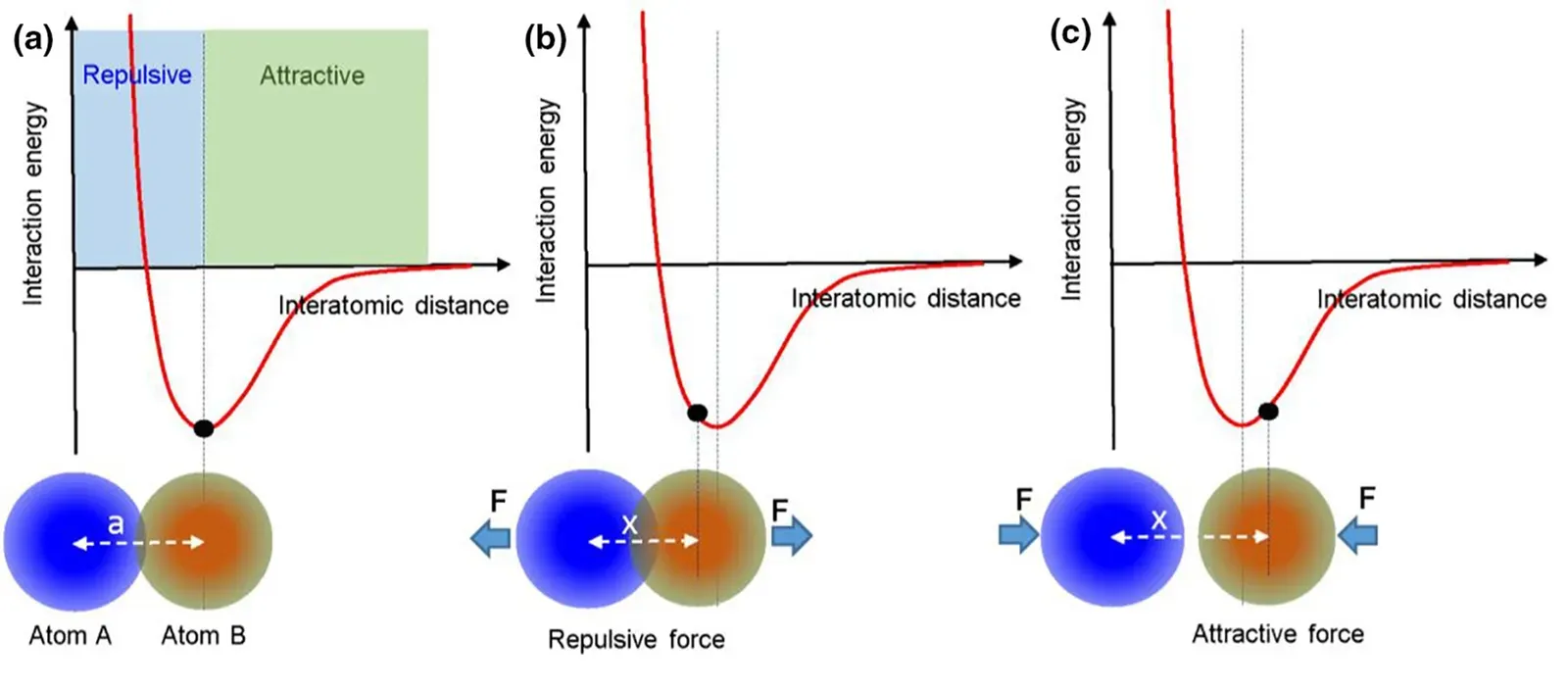
Here’s a number that should bother you more than it does: the electromagnetic force between two electrons is roughly 10³⁶ times stronger than the gravitational pull between them. That’s a 1 followed by 36 zeros. Gravity only feels powerful to us because huge piles of matter – planets, stars, you standing on the sidewalk – add up their pull in one direction, while electric charges mostly cancel each other out.
Physicists call this the “hierarchy problem,” and nobody has a confirmed answer for it. Some blame it on extra hidden dimensions that dilute gravity before it reaches our 3D world. Others point to unknown physics near the Planck scale. Every collider experiment built to test these ideas has come back empty-handed, which means the weakest force in the universe is also, ironically, one of its best-kept secrets.
Fast Facts
- Gravity is about 10³⁶ times weaker than electromagnetism between two electrons.
- The mismatch is known among physicists as the “hierarchy problem.”
- Proposed fixes include extra spatial dimensions and unknown physics near the Planck scale.
- No collider experiment, including at the Large Hadron Collider, has confirmed any of these ideas.
#11 – Gravity and Quantum Mechanics Still Refuse to Get Along
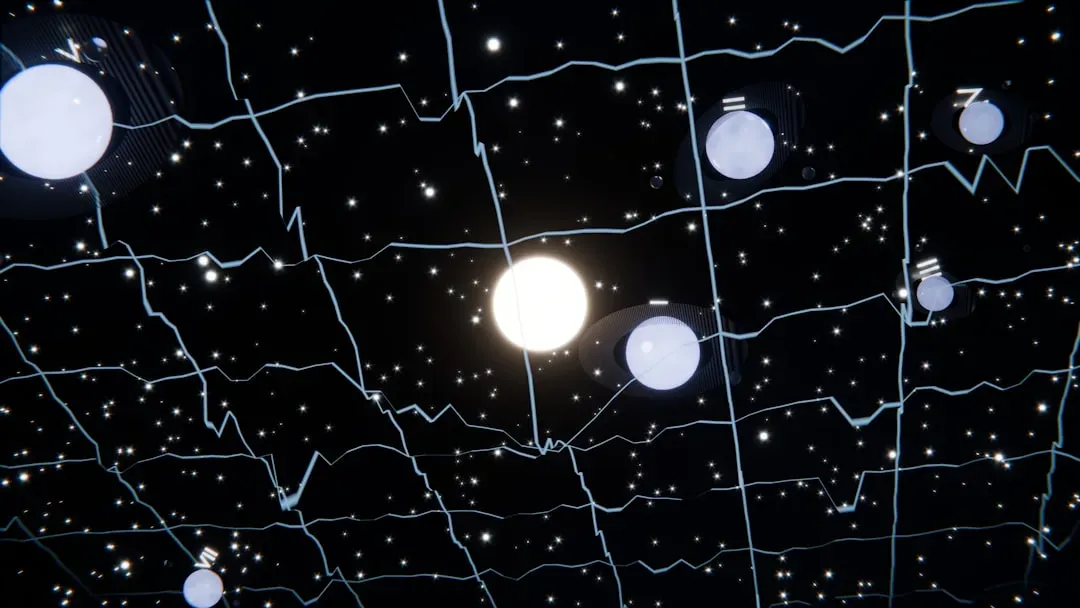
Physics has two crown jewels, and they hate each other. General relativity treats spacetime as smooth and continuous. Quantum mechanics insists that at tiny scales, everything is grainy, jittery, and probabilistic. Try to force gravity into the same mathematical treatment we use for every other force, and the equations spit out useless infinities.
Decades of effort haven’t fixed this. String theory smooths particles into vibrating strings but demands extra dimensions we’ve never observed and hasn’t produced a testable prediction. Loop quantum gravity chops space into discrete chunks but still can’t reproduce every success of Einstein’s theory. Physicists can talk around this problem at conferences all day; on paper, the gap never closes.
#10 – What Really Happens at the Heart of a Black Hole
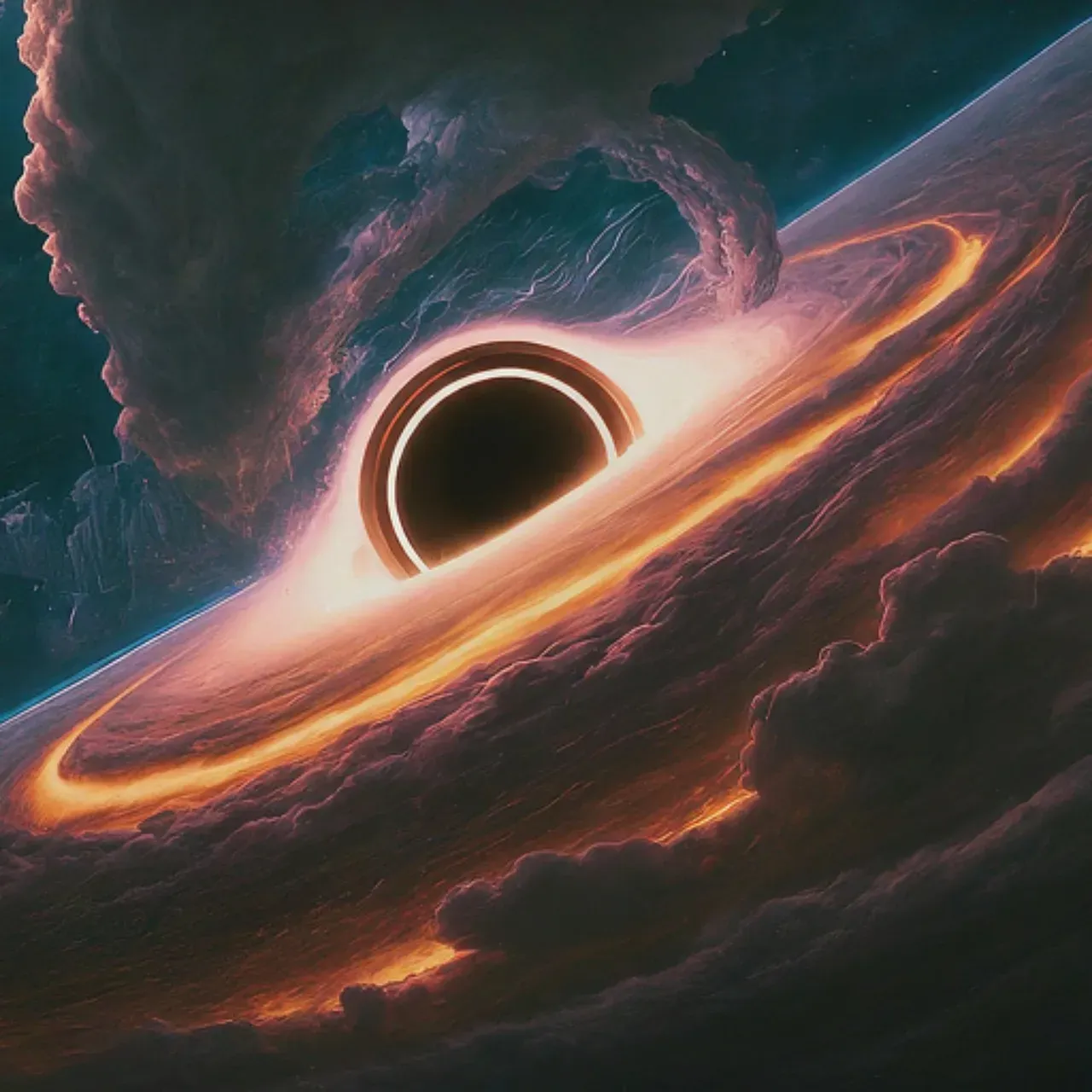
Every textbook says matter falling into a black hole gets crushed to “infinite density” at a singularity. That phrase sounds authoritative. It’s actually code for “our equations broke and we have no idea what comes next.” At that point, spacetime curvature goes infinite, which is nature’s polite way of saying the theory has been pushed past where it can be trusted.
We genuinely don’t know if matter collapses to a point, smears into something unrecognizable, or transforms into an object we don’t have the vocabulary for yet. Some quantum gravity models suggest exotic replacements like “Planck stars” or bouncing cores where spacetime rebounds instead of collapsing forever. No telescope, no probe, no experiment can peek behind the event horizon to check any of it. For now, “singularity” is just a very elegant word for ignorance.
#9 – The Dark Energy Mystery Physicists Can’t Shake
In the late 1990s, astronomers watching distant supernovae discovered something that shouldn’t have been possible: the universe’s expansion is speeding up, not slowing down. To patch Einstein’s equations, physicists invented dark energy – a kind of negative pressure filling all of space. The leading guess is that it’s vacuum energy from quantum fields.
Here’s the embarrassing part. When theorists actually calculate what that vacuum energy should be, they miss the observed value by up to 120 orders of magnitude. It’s been called the worst theoretical prediction in the history of physics. We can see dark energy’s fingerprints everywhere – in supernovae, galaxy clustering, the cosmic microwave background – yet we still can’t say, at a fundamental level, what it actually is.
Worth Knowing
- Dark energy was first inferred from distant supernova observations in the late 1990s.
- Vacuum energy predictions miss the observed value by up to 120 orders of magnitude.
- Evidence for dark energy shows up in supernovae, galaxy clustering, and the cosmic microwave background.
- Dark energy is estimated to make up roughly two-thirds of the universe’s total energy content.
#8 – Gravity Gets Weird the Smaller You Go
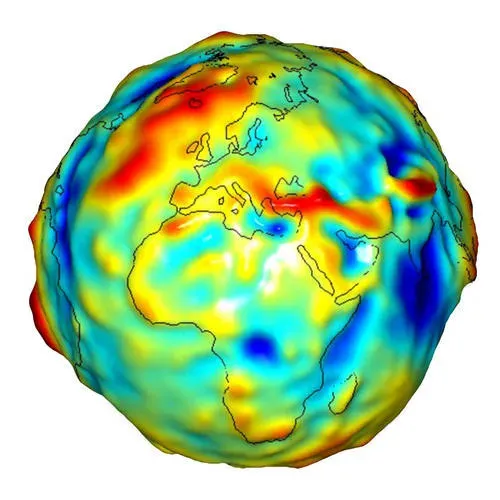
We’ve tested gravity beautifully with planets, moons, and orbiting satellites. But shrink the scale down to fractions of a millimeter, and the confidence starts to crumble. Labs have only recently managed to test gravity at these tiny distances, and we’re still nowhere near the Planck length, where quantum effects are expected to take over completely.
Some theories predict that at short enough distances, gravity should deviate from the familiar inverse-square law – a sign of extra dimensions, hidden forces, or entirely new physics. So far, every increasingly delicate experiment has stubbornly confirmed the old formula anyway. The tension is almost comedic: theory keeps shouting “something new is hiding here,” while every experiment calmly replies, “nothing to see.”
#7 – Spacetime Might Not Even Be Real
We treat spacetime like a stage where particles perform. A growing number of physicists suspect that’s backwards – that spacetime isn’t fundamental at all, but something that emerges, the way temperature emerges from jittering molecules. Holographic dualities, like the famous AdS/CFT correspondence, hint that the geometry of a higher-dimensional universe can be fully encoded in a lower-dimensional system that has no gravity in it whatsoever.
If that’s true, gravity isn’t a basic force at all – it’s a large-scale side effect of something deeper, something non-geometric. Some researchers now argue that space itself is woven out of quantum entanglement. It’s a beautiful phrase. Turning it into equations that actually match our universe is still an open, unresolved battle with no winner yet.
#6 – The Black Hole Information Paradox Nobody Can Close
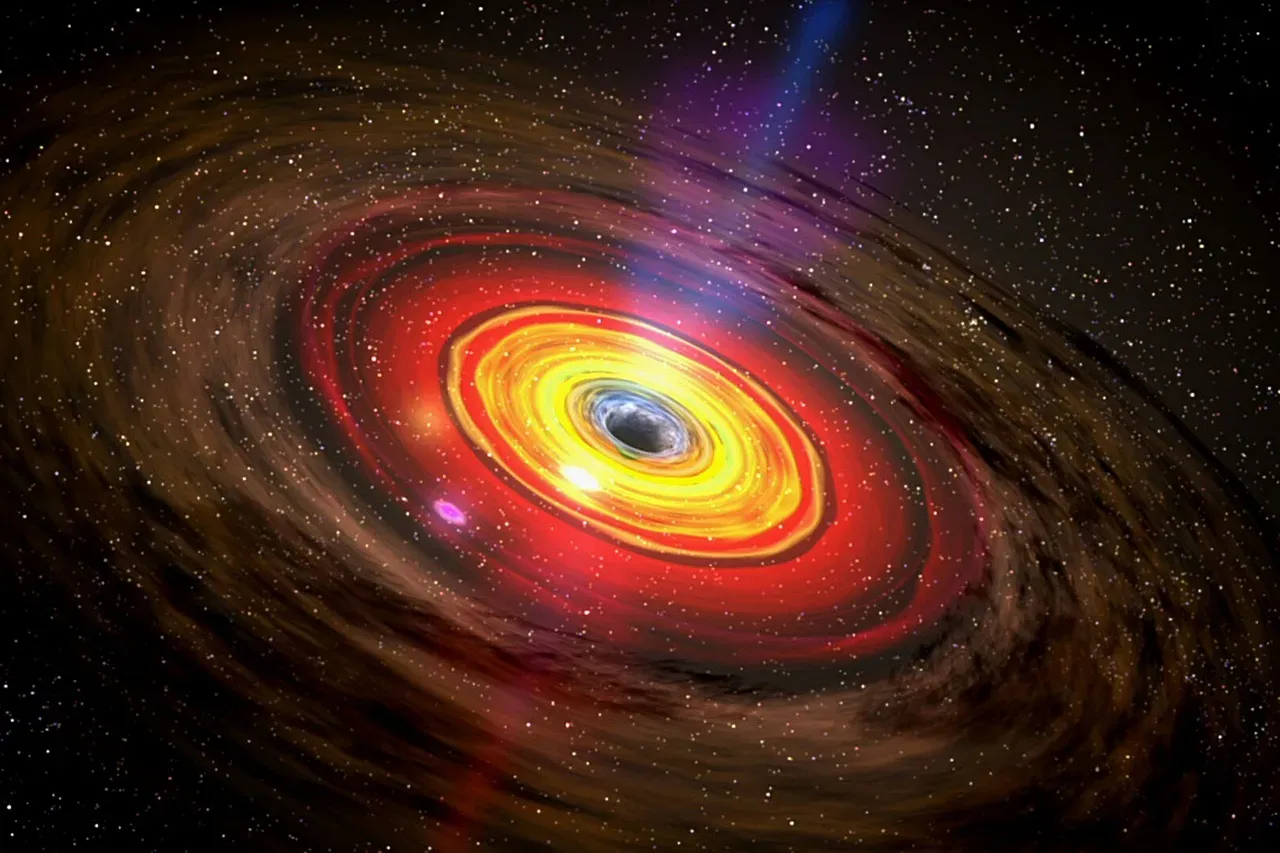
You’ve probably heard that black holes “destroy information.” Modern physics says they can’t – not if quantum mechanics is right, anyway. That contradiction is the black hole information paradox, and it has quietly tormented physicists for fifty years. Hawking’s original calculation showed black holes slowly evaporate through radiation, but in doing so, they seemed to erase the details of everything that ever fell in.
Quantum theory forbids that kind of true information loss, full stop. Decades of proposed fixes – holography, “soft hair,” firewalls, complementarity – have piled up without a clean winner. Some say the information gets smeared onto the horizon’s surface. Some say it leaks out in subtle patterns within the radiation itself. The fact that brilliant, tenured physicists still argue furiously about what happens to a book you throw into a black hole tells you exactly how far from solved this really is.
Quick Compare
- Holography: information is encoded on the black hole’s horizon rather than lost inside.
- Soft hair: subtle quantum imprints on the horizon preserve details of what fell in.
- Firewalls: a violent boundary at the horizon that destroys anything crossing it.
- Complementarity: different observers see different, seemingly contradictory truths, with both treated as valid.
#5 – Why Galaxies Spin Like Something Invisible Is Holding Them Together
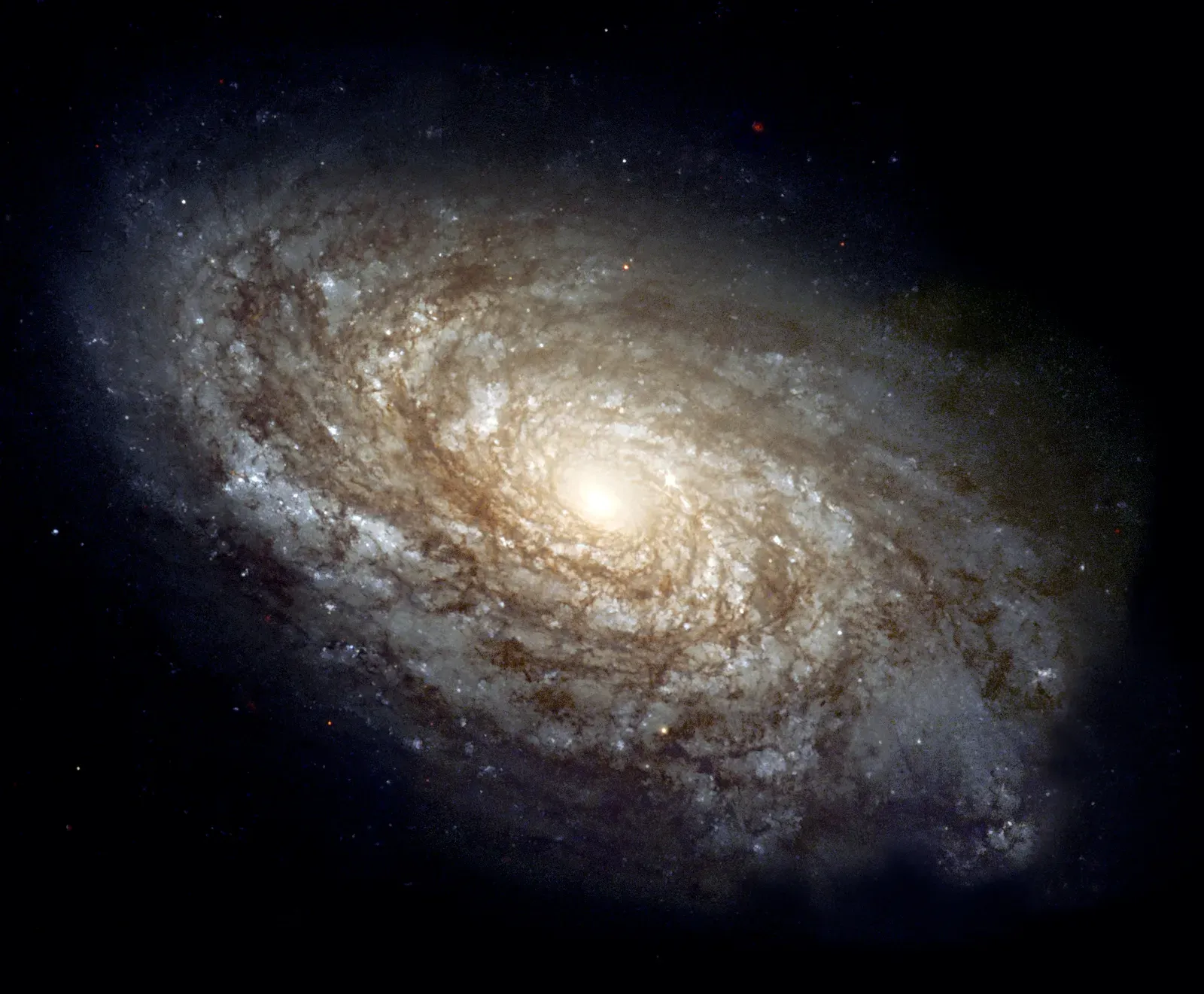
Measure how fast stars orbit inside a galaxy, and the numbers simply don’t add up. There isn’t enough visible matter to keep those stars gravitationally bound at those speeds – by all rights, galaxies should be flinging their outer stars into deep space. The mainstream fix is dark matter: an invisible substance that interacts through gravity but never through light.
The catch is brutal. Despite decades of increasingly sensitive detectors, nobody has ever directly caught a dark matter particle. A vocal minority of physicists argue instead that gravity itself changes at extremely low accelerations – an idea called Modified Newtonian Dynamics, or MOND – which fits galaxy rotation curves shockingly well but falls apart on galaxy clusters and cosmological scales. So the honest answer is this: either 85 percent of the matter in the universe is an invisible substance we’ve never detected, or our theory of gravity quietly breaks down on galactic scales. Nobody has proven either one.
#4 – What Gravity Was Doing in the First Fraction of a Second
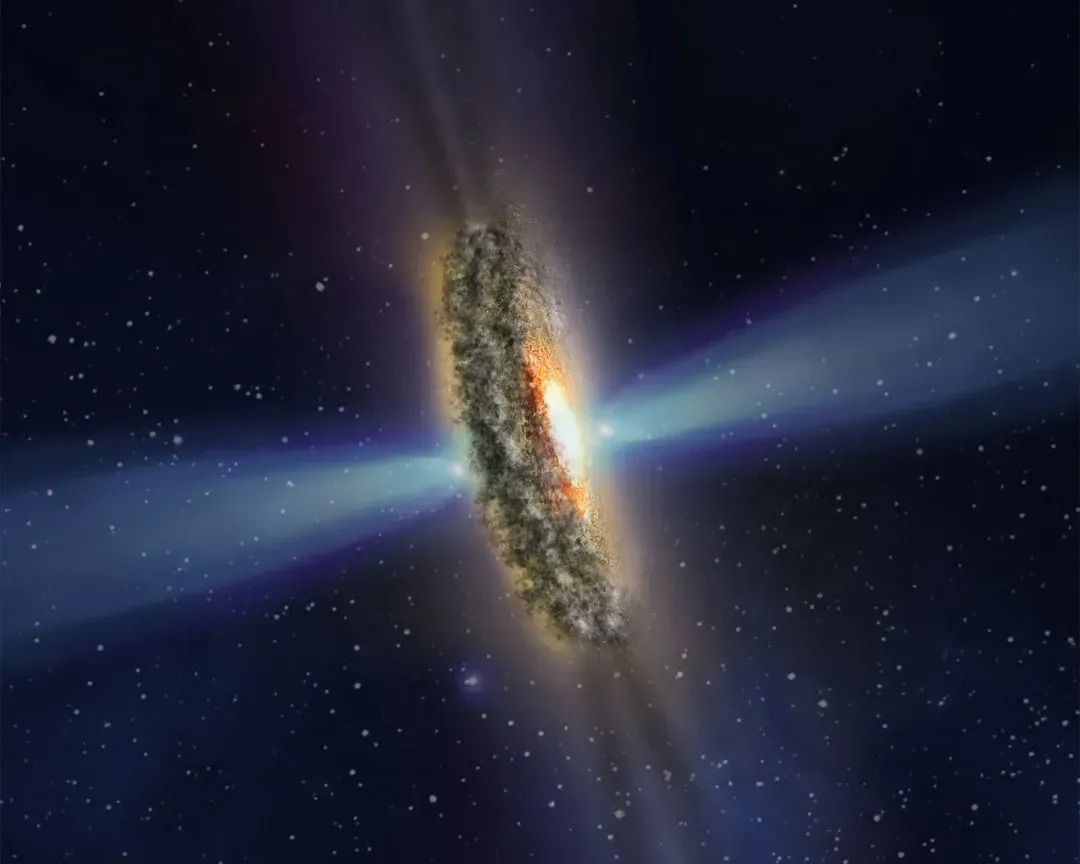
We can model the universe back to an almost unimaginably tiny fraction of a second after the Big Bang. Push any further, and the equations collapse. At those energies and densities, general relativity and quantum mechanics slam into each other head-on, and neither one comes out the winner.
Inflation theory proposes a burst of impossibly fast expansion driven by a mysterious field – but nobody knows what that field actually is, why it switched on, or why it switched off so smoothly. Some researchers suggest the Big Bang was really a “bounce” from a previous, contracting universe, sidestepping the idea of a true beginning altogether. The blunt truth is there’s no agreed-upon story of what gravity was doing at the very first moment – or even whether that question makes sense to ask in the first place.
At a Glance
- Inflation theory proposes expansion far faster than light-speed within a fraction of a second.
- The driving mechanism, often called the “inflaton field,” has never been directly observed.
- Alternative “bounce” models suggest our universe emerged from a previous contracting one.
- General relativity and quantum mechanics both break down at these extreme energies.
#3 – Is Gravity a Force, or Just Geometry in Disguise?
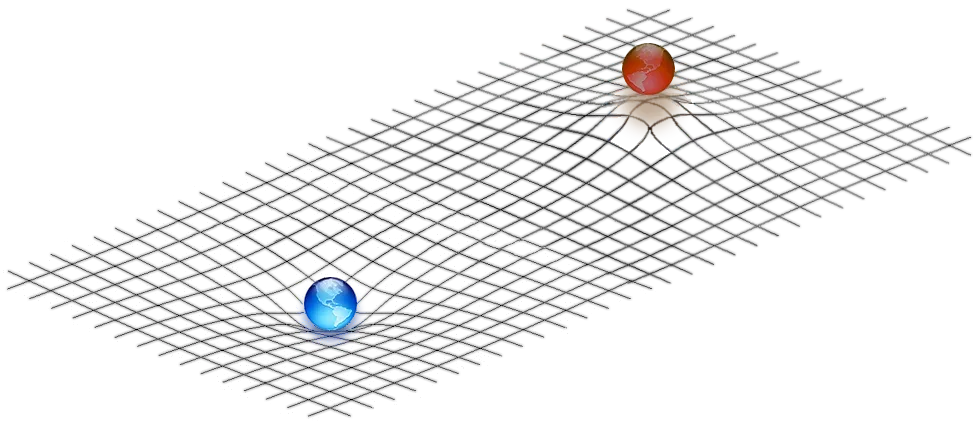
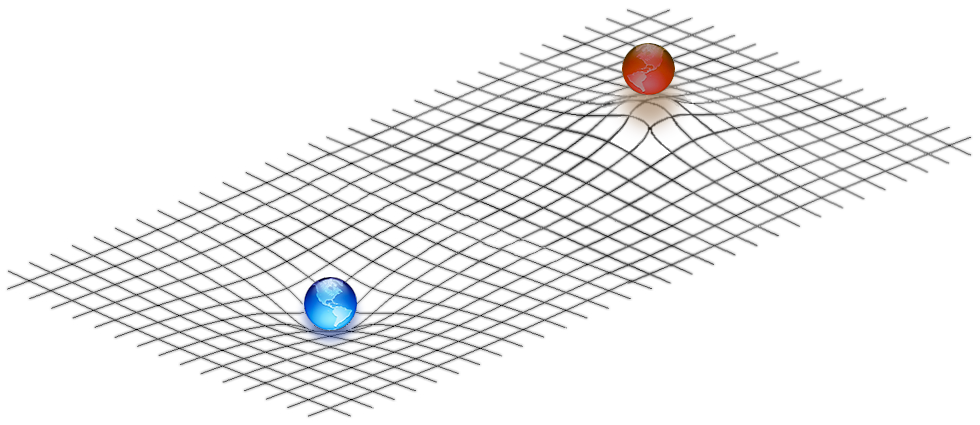
Einstein trained us to stop thinking of gravity as a force at all, and instead as the curvature of spacetime, quietly telling matter how to move. That geometric picture has survived every test thrown at it, from planetary orbits to gravitational waves rippling across detectors on Earth. And yet at the quantum level, physicists still talk about a hypothetical particle called the graviton, imagined to carry gravity the same way photons carry light.
Space tells matter how to move; matter tells space how to curve.
John Archibald Wheeler
So which is it – a force with a particle, or pure geometry with no particle at all? If spacetime turns out to be emergent, the whole question might be malformed from the start. Some emergent gravity models describe it arising from entropy gradients or information, with no fields or particles in the traditional sense whatsoever. Nobody has a single framework that unifies these competing pictures – physicists just switch languages depending on which problem they’re solving that day.
#2 – Why Time Only Moves Forward in a Universe That Doesn’t Care
Run Einstein’s gravitational equations backward in time, and they work almost exactly the same. Yet nothing about your actual life runs that way. Glass shatters and never un-shatters. Stars burn through their fuel and never spontaneously reassemble it. Gravity is constantly clumping diffuse gas into stars and galaxies, always in one direction, never the reverse.
The standard explanation blames rising entropy, but how entropy, initial conditions, and gravity conspire to produce one single global arrow of time is still genuinely murky. Some physicists argue the early universe simply began in a bizarrely low-entropy state that gravity then amplified. Others suspect gravity itself might encode a deeper arrow of time, separate from thermodynamics entirely, especially near black holes. The equations don’t care whether time runs forward or backward. The universe clearly does, and nobody can fully explain why.
#1 – Why Gravity Exists at All
Here’s the question almost no textbook dares to touch: why does gravity exist in the first place? Saying “mass curves spacetime” isn’t an explanation – it’s just a restatement of the rule with fancier words. Why should energy and momentum produce curvature at all? Why this exact strength, this exact relationship, in exactly this many dimensions and not some other arrangement entirely?
If gravity turns out to be emergent – born from entanglement, information, or thermodynamics – we still have to explain why those deeper rules happen to produce something that looks precisely like Einstein’s gravity. Some of the more radical proposals suggest gravity is a statistical illusion, similar to pressure or temperature, appearing only when you zoom out far enough to stop seeing the microscopic chaos underneath. Nobody knows for certain. The universe simply has this law-like pull between masses, and we still can’t say why it exists instead of something else, or nothing at all.
Why It Stands Out
- Unlike the other forces, gravity has never been successfully folded into a single quantum framework.
- Some theorists compare gravity to temperature or pressure – a large-scale effect, not a fundamental one.
- Every attempt to explain gravity’s existence still relies on assumptions physicists can’t independently verify.
- It remains the only force where physicists openly debate whether the question itself is well-formed.
The Bottom Line
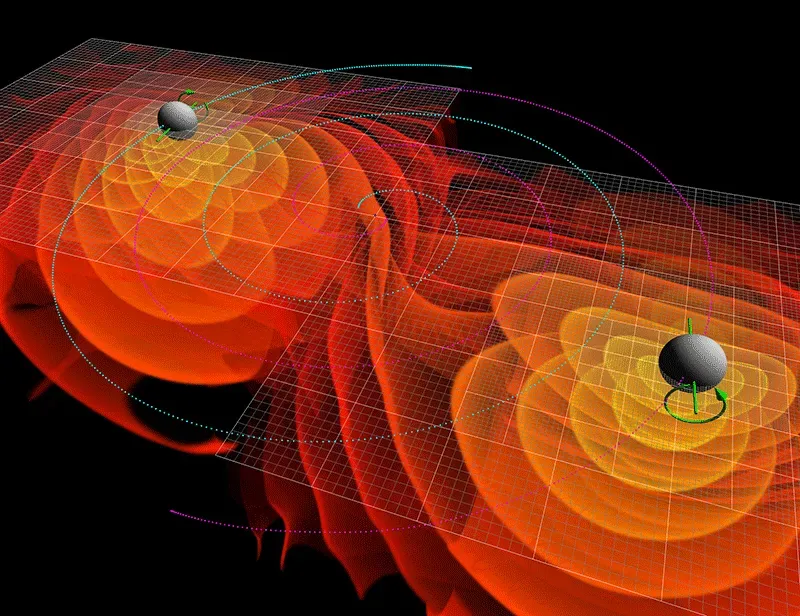
Physicists can predict orbits, GPS timing corrections, and black hole mergers with jaw-dropping precision. That success has quietly convinced the public that gravity is a finished subject. It isn’t. The weak strength, the war with quantum theory, the singularities, the dark energy, the dark matter, the arrow of time – they all point to the same uncomfortable conclusion: our most celebrated theory is probably a brilliant approximation sitting on top of something we haven’t found yet.
My honest take? We’re living through the awkward, unglamorous stage right before the next Einstein-level rewrite, and most people won’t notice it happening until it’s already textbook fact. The public story says gravity is settled. The actual research says otherwise, loudly and often. When the real breakthrough finally lands, it won’t just patch a few equations – it will change what we mean by space, time, and reality itself.