
You live in a world where your phone can stream a movie, your GPS can find a tiny café across town, and your laptop can talk to an AI on the other side of the planet. Behind all of that, quietly running the show, is a strange set of rules that absolutely do not behave like everyday life: the rules of quantum physics. If you tried to run your normal common sense down there, at the scale of atoms and particles, it would fall apart in seconds.
The wild part is this: you do not need to be a physicist to appreciate how weird and wonderful this hidden layer of reality really is. Once you get a feel for the basic ideas, you start seeing the world around you differently – light, matter, even your own body. Think of this as a guided tour through a microscopic funhouse, where every mirror breaks a rule you thought was unbreakable.
1. Particles Can Exist in Many States at Once
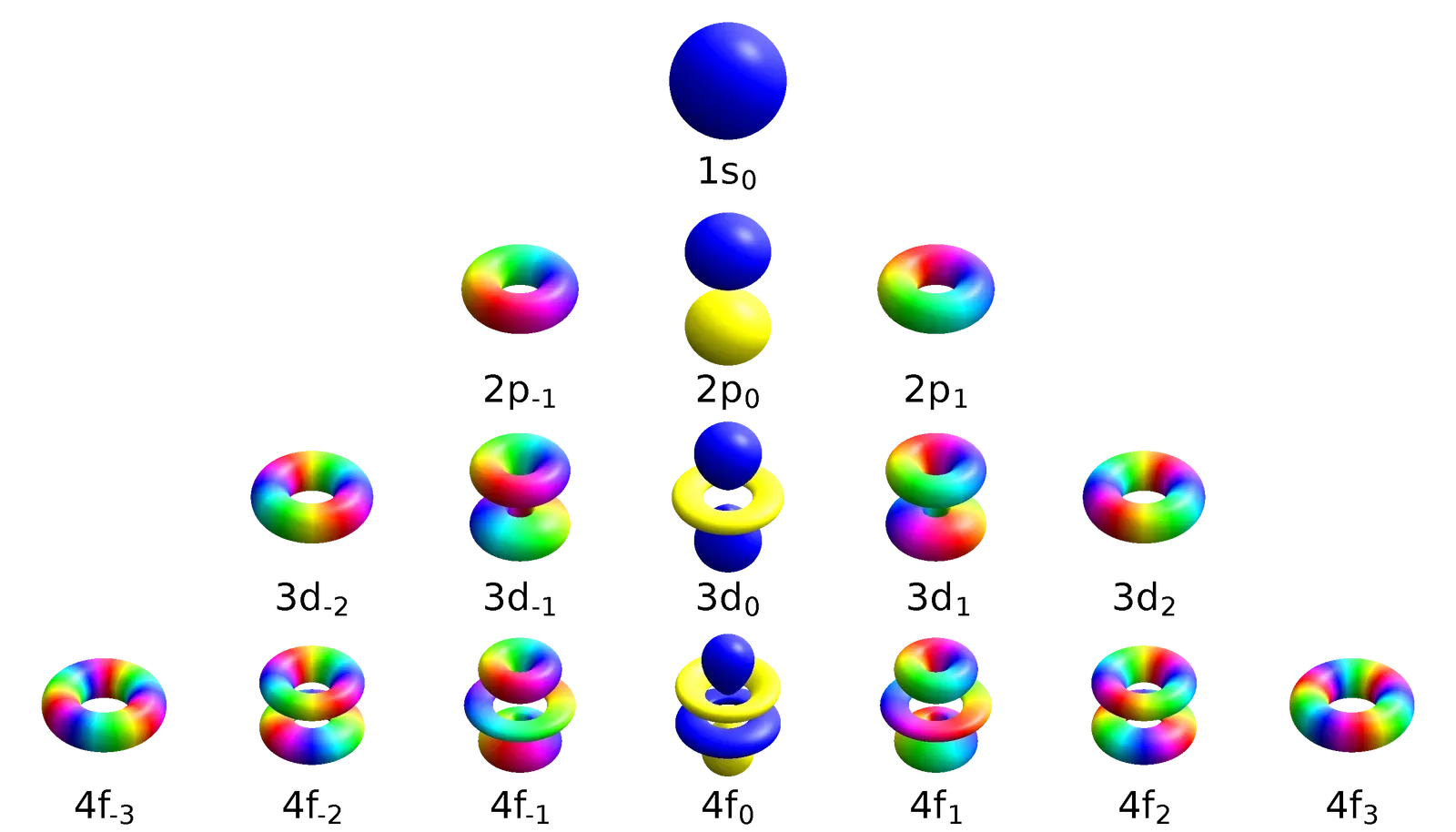
In your everyday world, something is either here or there, on or off, yes or no. In the quantum world, a single particle can be in a combination of possibilities at the same time, a phenomenon called superposition. You can imagine flipping a coin and having it be both heads and tails at once until you look at it, but unlike a coin, this is not just a mental trick; it is how tiny systems like electrons and photons actually behave.
When you measure a quantum system, you force it to “choose” a definite outcome from those possibilities. Before that moment, you have to describe it as a cloud of probabilities, not a single solid fact. That sounds abstract, but superposition underlies much of modern technology, including how electrons move through atoms and how quantum computers aim to process information. You are not just dealing with weird philosophy here; you are dealing with the blueprint of how nature really runs.
2. Entangled Particles Share a Deep, Non-Local Connection
Imagine you have two particles that interacted in the past and then flew far apart – even across a galaxy. In quantum physics, those particles can remain entangled, which means their properties are linked in a way that goes beyond anything you see in daily life. When you measure one, you instantly know something about the other, no matter how far away it is.
Crucially, you are not sending a message faster than light, but you are revealing a correlation that was baked into the joint quantum state of the pair. Experiments have repeatedly shown that entangled particles display patterns that cannot be explained by any simple “hidden variable” inside each particle. You are forced to accept that nature allows connections that are deeply non-local in a very specific, measurable way. This is not sci‑fi; it is tested in labs around the world.
3. Light Behaves Like Both a Wave and a Particle

When you think of light, you probably imagine a beam shining from a flashlight or the soft glow of a lamp. On the quantum level, light behaves in two contradictory ways at once: as a continuous wave spreading out in space and as tiny packets of energy called photons. In some experiments, you see light forming interference patterns like ripples on water; in others, you detect it as single, separate clicks in a detector.
Here is the twist: you are not choosing between two different kinds of light. It is the same physical thing being described in two complementary ways, and which aspect you see depends on how you look. That wave–particle duality is not just for light, either; matter itself, like electrons and even large molecules under controlled conditions, shows the same kind of behavior. The neat boundary you keep in your head between solid objects and waves in a pond simply does not exist at the quantum scale.
4. The Act of Measuring Changes What You See
In the everyday world, you assume you can measure something without really disturbing it: you can check the temperature of a room or the pressure in a tire and still treat the system as basically unchanged. In quantum physics, measuring is an active, invasive process. When you probe a quantum system – say, by detecting where a particle is – you inevitably alter its state in a way you cannot fully “undo.”
This is at the heart of the so‑called measurement problem. You are not just reading a pre‑existing value; your measuring device and the particle become part of one larger quantum system that evolves together. Once you register a definite result, the previous spread of possibilities collapses into a single outcome. That means you have to be very careful about what question you ask a quantum system, because the way you ask it literally changes the answer you get.
5. Quantum Tunneling Lets Particles Cross “Impossible” Barriers
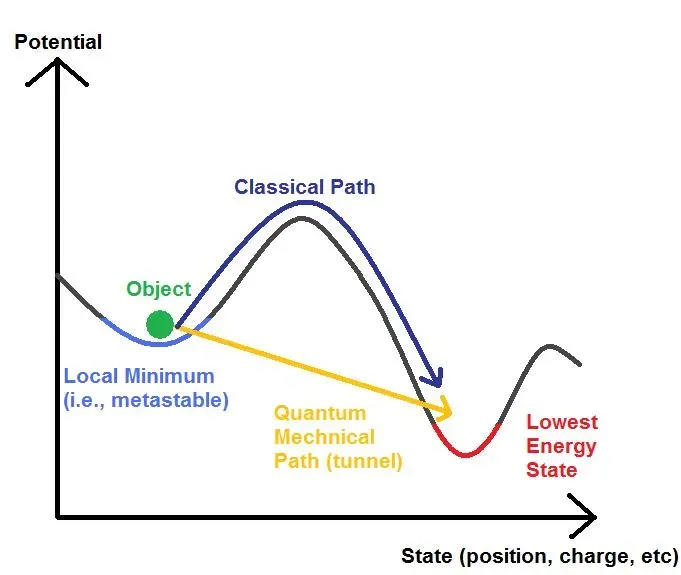
In classical physics, if you throw a ball at a wall that is taller than the ball’s energy can carry it, the ball bounces back, end of story. In the quantum world, a particle facing an energy barrier it should not be able to climb can sometimes appear on the other side anyway. This phenomenon, called quantum tunneling, comes from the wave-like nature of particles and the fact that their position is described by a spread-out probability wave, not a sharp point.
You rely on tunneling more than you realize. In many types of electronics, especially at very small scales, electrons tunnel through barriers inside components, enabling devices like tunnel diodes and parts of flash memory. Even in astrophysics, tunneling helps explain how nuclear reactions occur in stars at temperatures lower than simple classical models would suggest. When you hear that something is “classically forbidden,” tunneling is nature’s way of saying that quantum reality does not always respect those old fences.
6. Quantum Uncertainty Is Built Into Reality, Not Just Ignorance
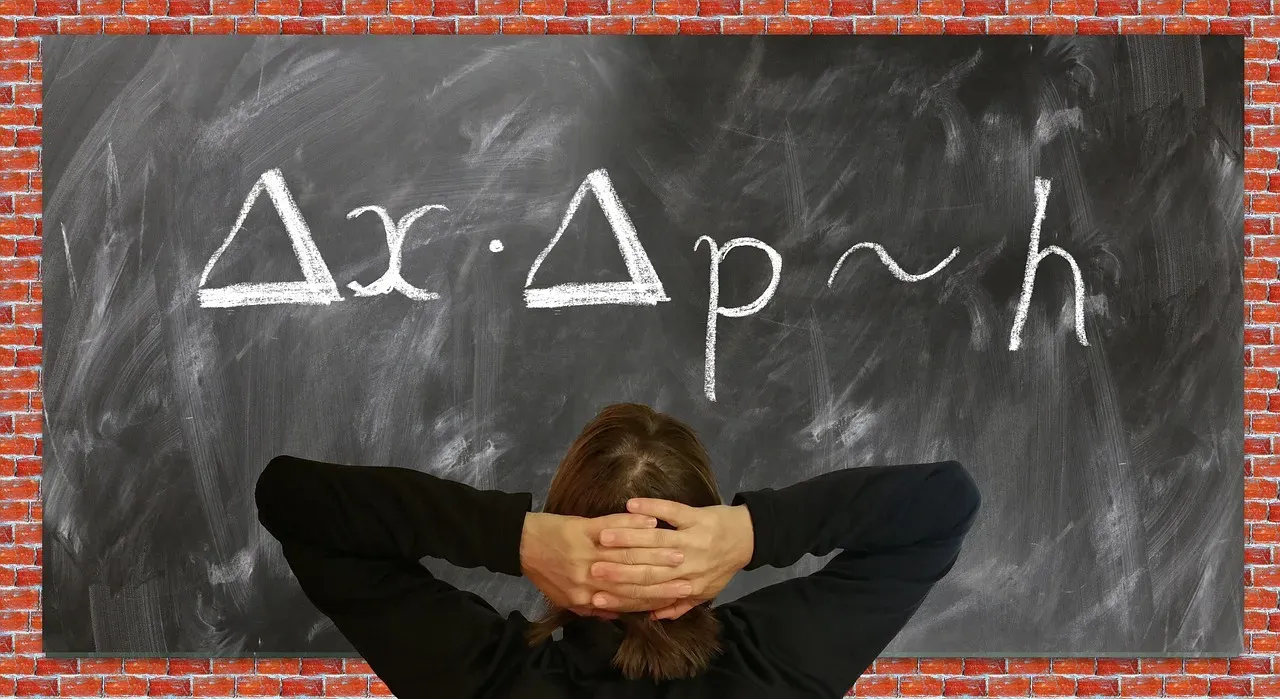
You might think that if you had perfect technology, you could know exactly where a particle is and exactly how fast it is moving. Quantum physics tells you that this dream is fundamentally impossible. The Heisenberg uncertainty principle states that certain pairs of properties, like position and momentum, cannot both be known with arbitrary precision at the same time, no matter how good your tools are.
This is not about clumsy instruments disturbing a delicate object, although that also happens; it is about how nature itself encodes information. The more tightly you pin down one quantity, the more spread out the other must be in the underlying quantum state. When you zoom in on the quantum world, you are not uncovering a perfectly sharp mechanical clockwork. Instead, you are meeting a reality where fuzziness is not a flaw but a fundamental feature.
7. Quantum Randomness Is Truly Unpredictable
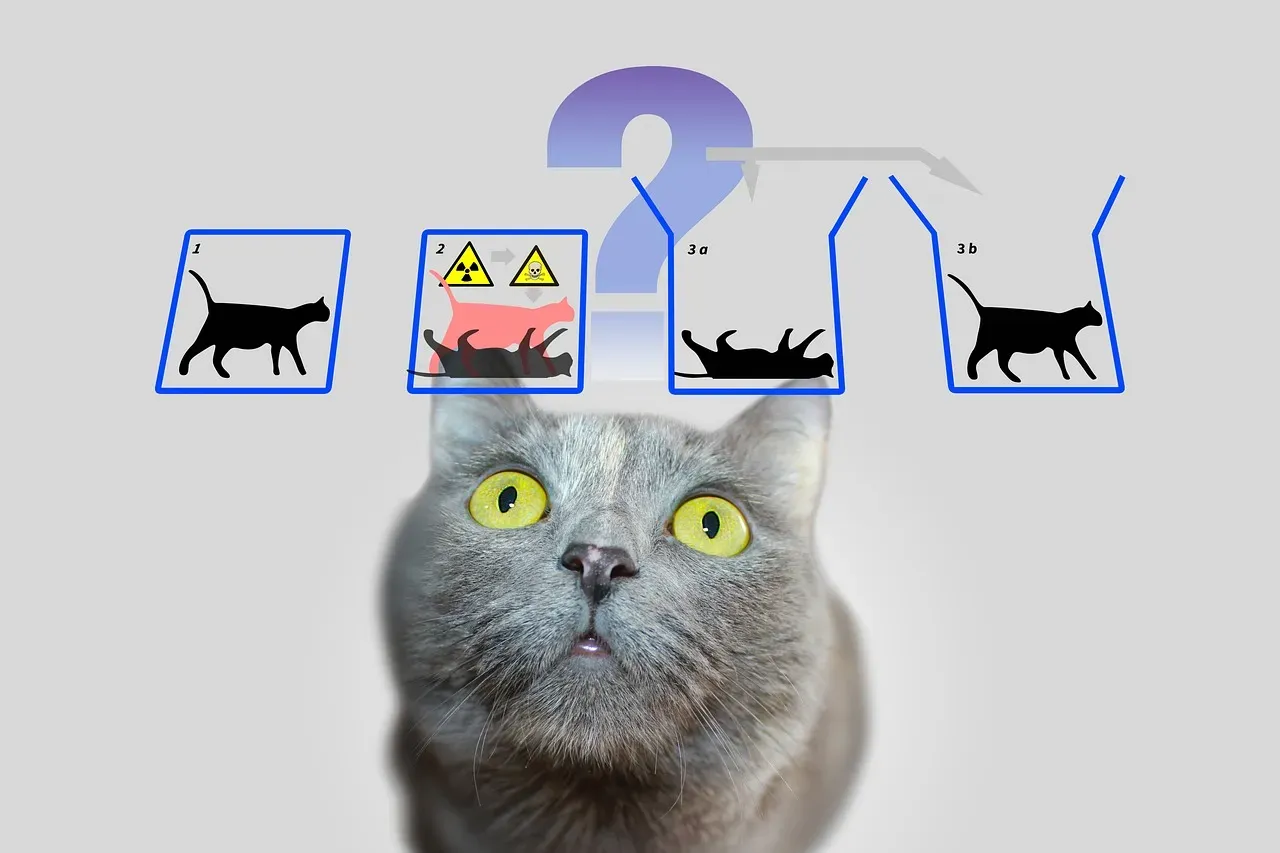
In many situations, you treat randomness as a placeholder for what you do not know. If you roll a die, you know in principle that the outcome is determined by initial conditions and forces, even if you cannot calculate them. Quantum mechanics introduces a different kind of randomness. When you measure the outcome of certain quantum processes, like the decay of a radioactive atom, you truly cannot predict the exact result, only probabilities.
That unpredictability is not due to hidden details you simply have not discovered; decades of experiments have strongly constrained such explanations. For many quantum events, the theory itself tells you that only the likelihood of each outcome is defined before measurement. This kind of randomness is powerful enough that people build hardware random number generators based on quantum effects, using them for tasks like encryption, where you really do want outcomes that nobody can foresee in advance.
8. Quantum Theory Explains Why Atoms Are Stable
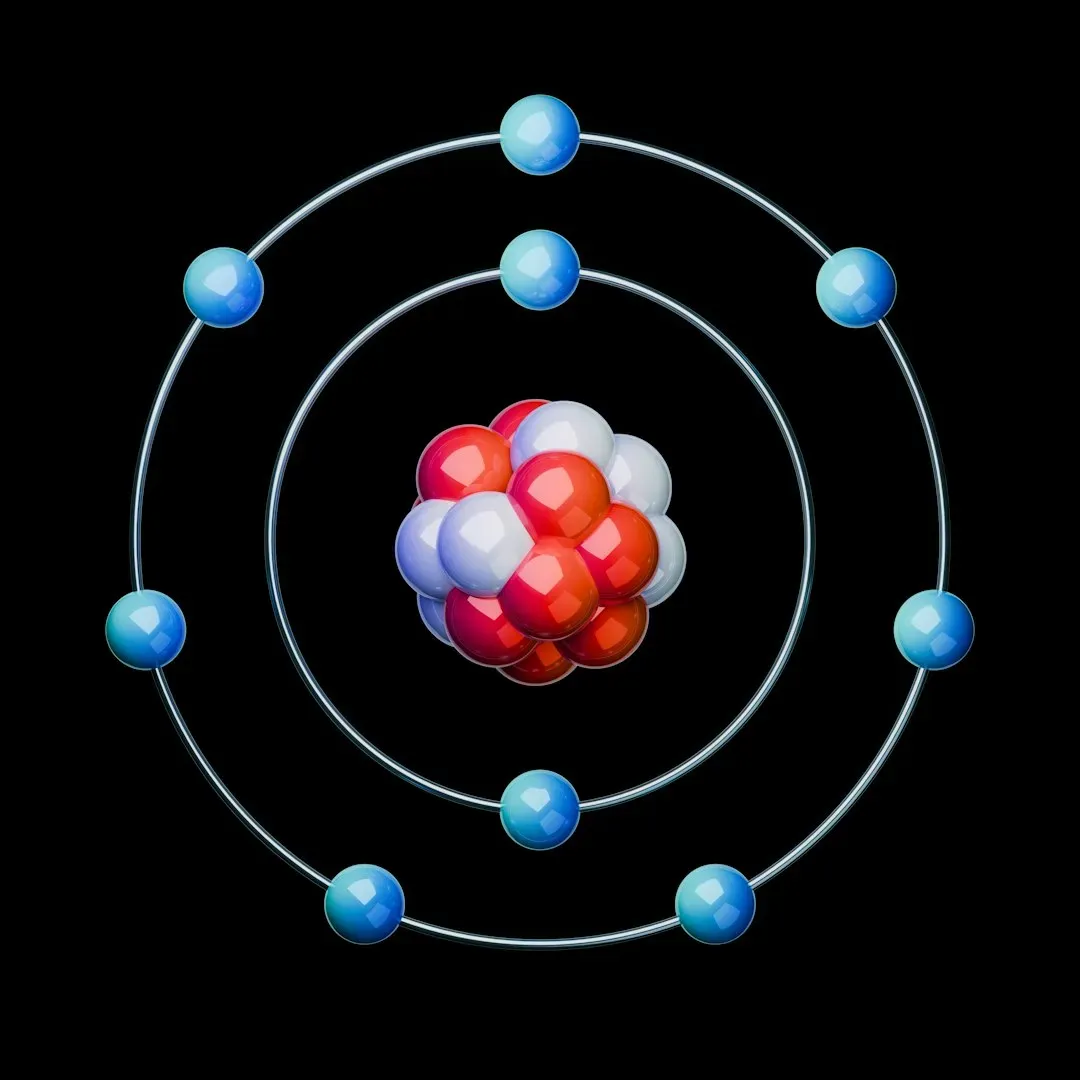
If you tried to describe atoms using only classical physics, you would run into a nasty problem. Electrons orbiting a nucleus like tiny planets should constantly radiate energy and spiral inward, eventually crashing into the nucleus. That would mean the matter around you could not exist in any stable form. Quantum physics rescues you from this disaster by forcing electrons into specific allowed energy levels and wave-like standing patterns around the nucleus.
In these quantum states, electrons do not slowly lose energy in the way a classical orbiting charge would. Instead, they occupy discrete energy levels and only jump between them by emitting or absorbing specific amounts of light. That is why the elements have characteristic spectral lines and why chemistry is structured in tidy rows and columns in the periodic table. Every time you look at a solid object and trust that it will not evaporate into nothing, you are quietly relying on quantum rules to keep atoms from falling apart.
9. Quantum Fields, Not Particles, Are the Deepest Layer
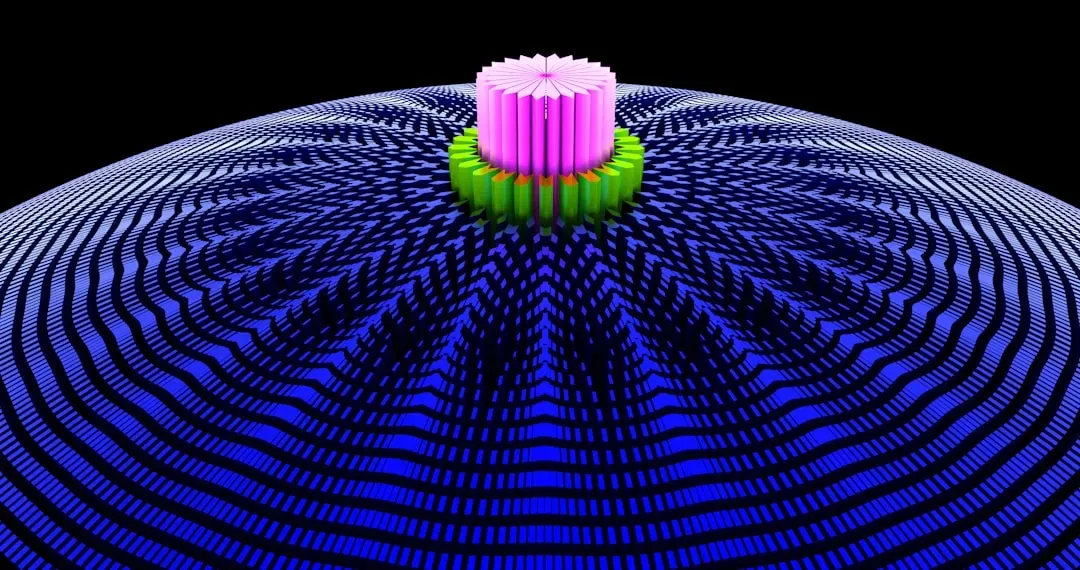
When you picture the quantum world, you may imagine tiny particles buzzing around like microscopic marbles. Modern physics nudges you toward a different picture: the universe is made of underlying quantum fields that fill all of space, and what you call a “particle” is actually a localized excitation, a little ripple, in one of those fields. An electron is a ripple in the electron field, a photon is a ripple in the electromagnetic field, and so on.
This field-based view helps you understand how particles can be created and destroyed in high-energy processes while the underlying fields remain. It also ties naturally into quantum versions of fundamental forces, where interactions come from fields influencing each other. Instead of thinking that you are moving through a mostly empty void sprinkled with point-like objects, you can think of yourself as living inside a restless sea of fields, with particles popping up as small but significant waves on that surface.
10. Quantum Physics Powers the Technology You Use Every Day

You might hear about quantum mechanics and picture only obscure lab experiments with strange equipment, but its rules already shape your daily life. The basic operation of semiconductor devices – the transistors inside your phone and computer – depends on understanding how electrons move through quantum energy bands in solid materials. Without that, you would not have modern microchips or the entire digital revolution built on top of them.
Other tools you take for granted, like lasers and magnetic resonance imaging, also rely directly on quantum principles. Lasers use stimulated emission from atoms or molecules in well-defined quantum states; MRI scanners exploit the quantum behavior of nuclear spins in your body placed in strong magnetic fields. Even the precise timing used in global positioning systems depends on atomic clocks, which use quantum transitions inside atoms as their reference. When you navigate across town or stream a song, you are riding on the back of quantum theory in a very practical way.
11. Quantum Computing Uses Superposition and Entanglement as Resources

Traditional computers process information using bits that are either zero or one. Quantum computers, at least in principle, use quantum bits, or qubits, that can exist in superpositions of zero and one at the same time, and that can be entangled with one another. That means a collection of qubits can represent a huge number of possible states simultaneously, giving you a new kind of parallelism that does not exist in classical machines.
Building a large-scale, fault-tolerant quantum computer is still an enormous engineering challenge, and you should be careful not to believe every inflated promise you hear. But even small and medium-sized quantum devices are being tested on specific tasks like simulating quantum materials, optimizing certain problems, or exploring new cryptographic schemes. When you hear about quantum computing, you are hearing about an attempt to treat weird quantum behavior not as a nuisance, but as a powerful tool you can deliberately harness.
12. The Quantum World Forces You to Rethink What “Reality” Means

As you absorb these ideas – superposition, entanglement, uncertainty, randomness – you might notice something unsettling. Many of your intuitive ideas about what is “really” happening behind the scenes simply do not survive experimental tests. Different interpretations of quantum mechanics offer different stories about what is going on, from many branching realities to observer-dependent outcomes, but there is still no single universally accepted narrative.
What you can say with confidence is that quantum theory’s predictions have been confirmed again and again, across an enormous range of experiments. You are left in a place where the math works astonishingly well, but your favorite everyday pictures of reality feel too simple. In a way, that is the most mind-blowing fact of all: the universe does not owe you a story that fits your common sense. It only offers you patterns, probabilities, and a set of rules that you gradually learn to trust, even when they pull the ground out from under your intuition.
Conclusion: Living in a Quantum Universe
When you pull back from all these details, you start to see a bigger picture: you are living in a world where the most basic building blocks behave in ways that are deeply unfamiliar, yet those same strange rules are the reason anything works at all. Your solid desk, your reliable electronics, your medical scanners, and your understanding of stars all rest on a theory that cheerfully breaks everyday logic. The quantum world is not a distant sideshow; it is the backstage machinery of your entire reality.
If you let it, quantum physics can change the way you think about certainty, cause and effect, and even what it means to say something “exists” before you look at it. You may never run an experiment yourself, but you can still carry this insight: beneath the surface of the ordinary, there is a universe far wilder and more delicate than it appears. The next time you switch on a device or look up at the night sky, will you see it the same way, knowing that the quantum world is quietly at work behind the scenes?