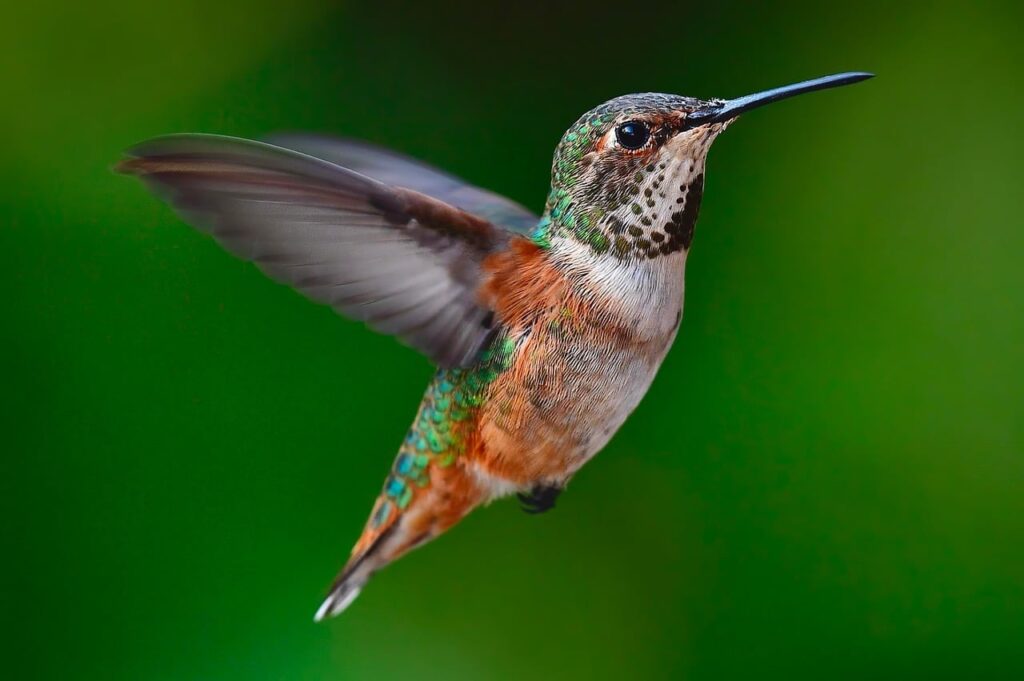
You probably think of a hummingbird as a cute, twitchy little bird that visits your feeder and zips off before you can get a good look. Meanwhile, in robotics labs and aerospace research centers, that same bird is treated like an unsolved engineering puzzle worth millions in research funding. Teams with PhDs, wind tunnels, and serious government grants have spent years trying to reverse-engineer what a two-gram animal does without even thinking about it.
Here’s the part that stings a little: they keep failing. Not because the tech isn’t advanced, but because hummingbirds are pulling off physics, biology, and energy tricks that our best materials and processors simply cannot match yet. Below are 12 specific abilities engineers have tried and failed to fully copy – and once you see what’s actually happening under those feathers, you’ll never look at your backyard feeder the same way again.
#12 – Hovering Like a Living Helicopter (Without Wasting All Its Energy)

Everyone loves to say drones can “hover like hummingbirds,” but that’s mostly marketing talk. A hummingbird can hold a rock-solid hover in swirling wind while sipping from a flower that’s barely attached to a flexible, bouncing stem. Multirotor drones can hover too, but only in fairly calm air, and only by brute force – multiple rotors screaming at high speed and burning through battery power at a brutal rate.
A hummingbird doesn’t just flap up and down like a tiny helicopter blade. Its wings trace a complex figure-eight pattern, generating lift on both the downstroke and the upstroke. That means the bird produces continuous lift instead of a choppy series of power pulses. Mid-stroke, the wing actually rotates and twists to catch and reuse tiny vortices of air, a micro-aerodynamic trick engineers can model in software but still can’t reliably build at that size.
“It can also explain the big divide between engineering and biological wing design.”
David Lentink, Stanford University aeronautics researcher
Lab-built “hummingbird drones” tend to need bulky external power sources and lose fine control the moment real-world gusts show up. The actual bird does this all day, every day, outside your window, running entirely on sugar water and flower nectar. No charging cable required.
#11 – Flying Backwards, Sideways, and Upside Down, Instantly

Most people don’t realize hummingbirds are the only birds on Earth that can truly fly backwards for sustained stretches, not just for a split second. Jets can roll and bank. Drones can rotate and slide. But a hummingbird can fly forward, slam into a dead hover, then reverse straight backward without turning its body at all. It can also shift sideways in a single wingbeat, or flip upside down for an instant to dodge an obstacle or ambush a rival at the feeder.
This isn’t just fast flapping. It’s total control of lift and thrust in three dimensions, packed into a body that weighs about as much as a nickel. The bird is essentially re-aiming its lift vectors from one wingbeat to the next, on the fly, with no warning.
Engineers can program similar moves into quadcopters, but only by changing rotor speeds, waiting for motors and controllers to catch up, and compensating for sensor lag with extra software. A hummingbird does all of this with near-zero delay, blending visual, inner-ear, and muscle feedback faster than our best flight controllers can process a single frame. Doing this at hummingbird size, in gusty outdoor air, with the same grace? Still science fiction.
#10 – Precision Nectar Hovering in Chaotic Wind

Engineers can get a drone to hold a GPS waypoint. What they still can’t do is what a hummingbird does casually at your garden feeder every afternoon. Picture a flower blowing back and forth in the wind, attached to a thin stem, jerking unpredictably from vortex shedding around nearby leaves and branches.
The hummingbird keeps its beak tip within millimeters of that moving nectar source while its whole body gets slammed by unsteady airflow. It isn’t just reacting to gusts after they hit – it’s predicting and dampening them in advance, using wingbeat-level micro-corrections, tail feather adjustments, and subtle shifts in its own center of mass.
Control engineers describe this kind of problem as a “nonlinear, highly coupled dynamic system” with disturbances coming from everywhere at once. In plain English: a nightmare. Even with lidar, cameras, and onboard computers, micro-drones tend to overcorrect, oscillate, lose track of the target, or just drift into a crash when the wind shifts too fast. The hummingbird fuses all that noisy sensory data into smooth, stable behavior in real time, using a brain smaller than a walnut, while burning energy at one of the highest metabolic rates of any vertebrate on the planet.
#9 – Instant Braking and Hairpin Turns in Midair
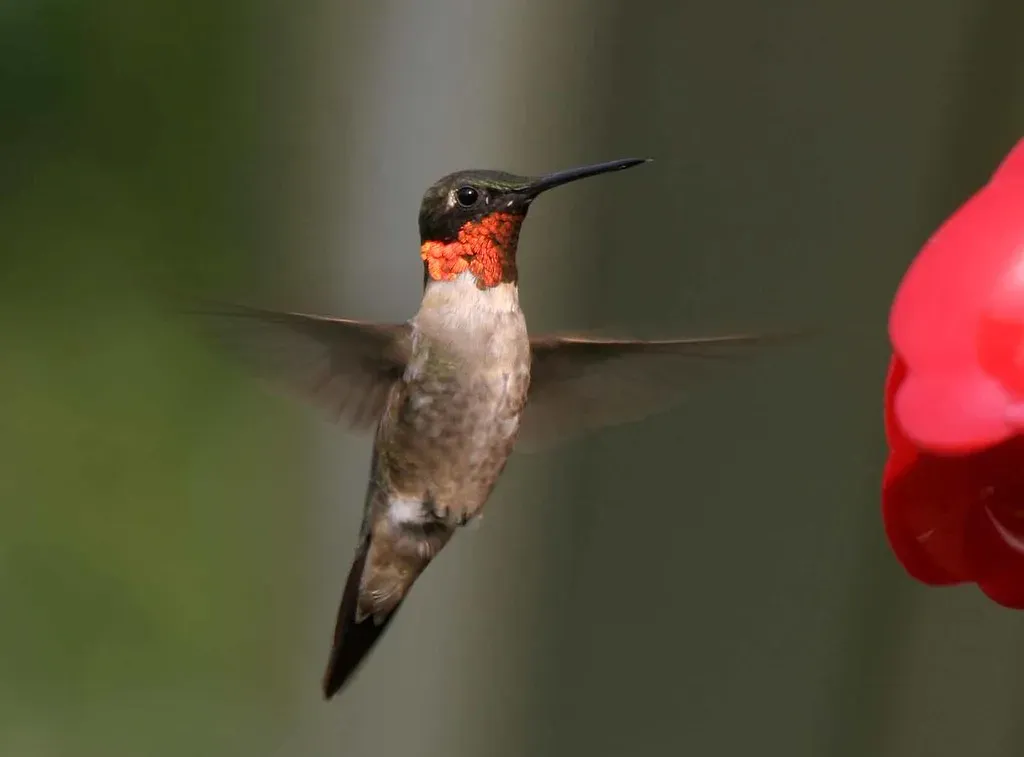
If you’ve ever watched a hummingbird chase a rival off “its” feeder, you’ve witnessed something engineers secretly envy. The bird can go from full-speed forward flight to a dead stop in roughly one body length. Then, without pausing, it carves a 180-degree turn so sharp that a human pilot pulling the same maneuver, scaled up, would likely black out.
Physicists who’ve measured this find angular accelerations and turn radii that would shred many manmade airframes at that scale, simply because our materials can’t flex and self-repair the way living tissue does. The bird’s bones, tendons, and muscles work together as a shock absorber, a flexible spring system, and a dynamic stabilizer, all at once.
Engineers can simulate similar agility in experimental drones, but they usually lean on pre-planned trajectories, advanced controllers running on serious processors, and endless trial-and-error tuning for one specific environment. A hummingbird gets none of that. It reacts instantly to a rival’s unpredictable path, a branch suddenly in its way, or a gust it never saw coming, using asymmetric wing strokes, independent wing control, and elastic energy storage in its shoulder joints that we still can’t replicate in hardware.
#8 – Running an “Energy Budget” That Should Be Impossible
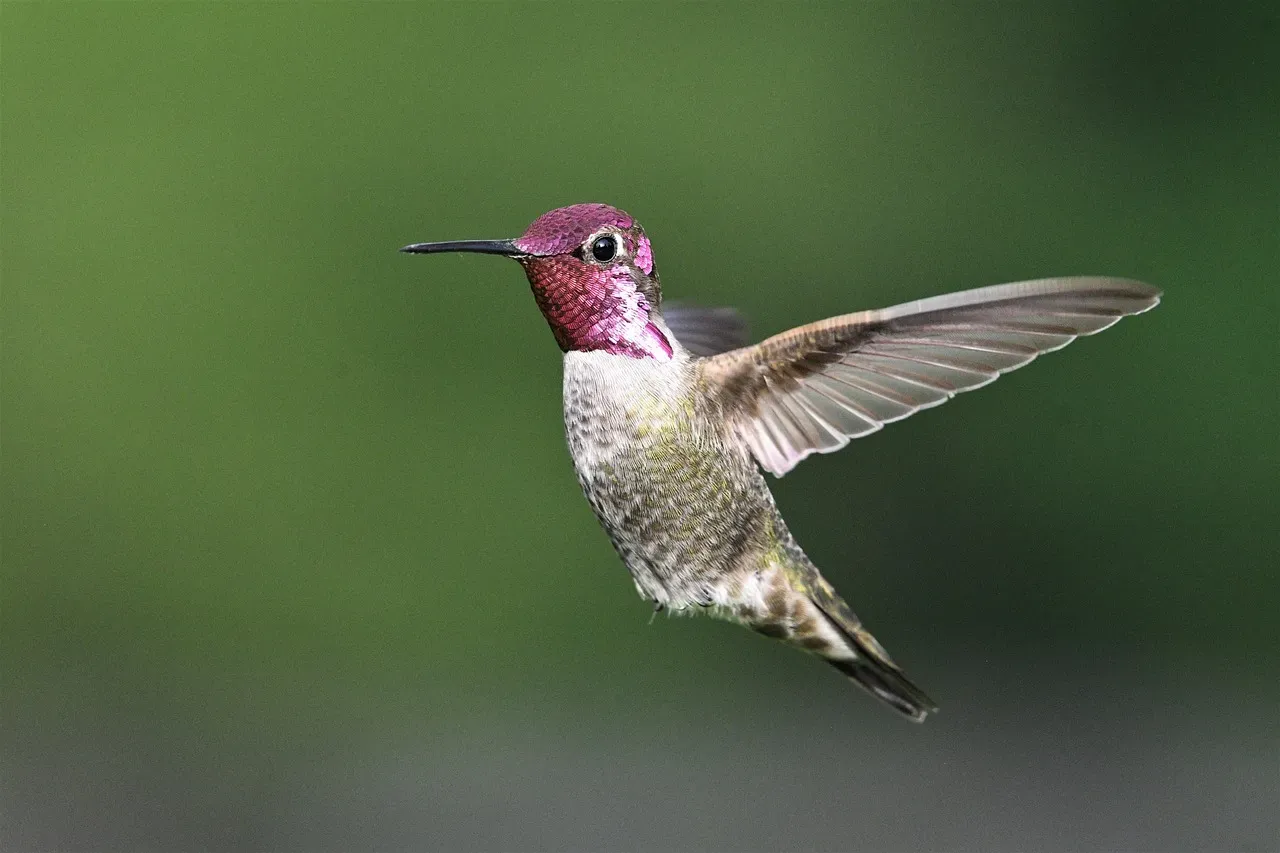
From an engineering standpoint, hummingbirds look like a violation of the rules of energy management. They carry the highest mass-specific metabolic rate of any bird, with resting heart rates that can top 500 beats per minute and flight heart rates that spike above 1,200 beats per minute in some species. If a human tried to match that pace for even a few minutes, we’d be in the emergency room.
They hover constantly, a behavior that should be brutally expensive in calories, and they power it almost entirely on simple sugar – nectar, with the occasional bite of insect protein for variety. Engineers building micro air vehicles with tiny batteries or fuel cells can only shake their heads. Despite decades of battery advances, flight times are still measured in minutes, payload capacity is tiny, and recharge windows are long.
A hummingbird tanks up at a single flower and starts burning that fuel almost immediately, converting sugar into mechanical power with a level of efficiency that regularly embarrasses our best power electronics. Biologists sometimes describe them as basically flying sugar rockets, and it’s not far off. We can model pieces of this biochemistry in a lab, but we still can’t build a self-repairing, self-cooling, sugar-fueled micro-engine that runs nonstop for years without a single tune-up.
#7 – A Nightly “Power-Down Mode” That Would Brick Our Devices

Here’s where things get genuinely strange: hummingbirds don’t just eat like maniacs, they also shut themselves down in a way no engineer would dare attempt in real hardware. At night, or when the weather turns cold, many species drop into torpor, a kind of controlled mini-hibernation. Body temperature crashes, heart rate plummets, and metabolism slows to a fraction of daytime levels.
It’s like turning a screaming jet engine into a quiet, idling motor without breaking a single part in the process. From an engineering angle, this should be catastrophic. Rapid thermal cycling – heating and cooling materials over and over – is exactly what cracks solder joints, warps metal components, and shortens battery life in our machines.
Yet hummingbirds pull off this daily temperature swing for years with no catastrophic failure, cycling between extreme daytime energy output and near-suspended animation at night. We don’t have a single drone, robot, or engine that can run at full blast all day, chill down to near non-function overnight, and wake up at full performance the next morning without heavy maintenance. The bird does it automatically, as part of its ordinary routine, no engineer required.
#6 – Precision Color Vision and Targeting at Insane Speeds

Cameras are supposedly better than eyes, until you watch a hummingbird thread its beak into a flower at full speed. Hummingbird vision covers a wider range of colors than ours, including ultraviolet, and stays sharp even while the bird’s whole head is vibrating from each wingbeat. They perceive rapid motion without the blur that would overwhelm most camera sensors.
They can distinguish subtle shifts in blossom color that hint at higher sugar content, and some experiments suggest they can visually “rank” nectar rewards and remember which flowers actually pay off. Engineers can build hyperspectral cameras and machine-learning systems to attempt something similar, but the hardware stays bulky, the processing demands are heavy, and squeezing it into a tiny free-flying robot remains mostly experimental.
A hummingbird’s eyes, brain, and flight muscles work as one seamless loop: vision spots the blossom, the brain converts that instantly into tiny wing corrections, and the beak and tongue land exactly where the sugar is waiting. Our best systems still fight latency, noise, and limited bandwidth. The bird just makes it look effortless in your backyard.
#5 – GPS-Free Mental Mapping of Thousands of Flowers

Most people have no idea how sharp a hummingbird’s memory really is. A single bird can remember the location of hundreds, sometimes thousands, of individual flowers across its territory, which ones it already visited, and roughly how long each one takes to refill with nectar.
That’s a dynamic, three-dimensional optimization problem: maximize nectar intake while minimizing travel time and energy spent. Humans solve similar problems with computers, routing software, and satellite data. Hummingbirds solve it in real time, with zero satellite help, on a brain that weighs less than a gram.
Worth Knowing
- Can recall the exact location of hundreds to thousands of individual flowers scattered across its territory
- Tracks how long each flower takes to refill with nectar, and skips it until the timing is right
- Relies on a proportionally large hippocampus – the brain’s spatial-memory center – to store the whole map
- Rebuilds its mental layout within hours whenever new blooms open or old ones dry up
Engineers have tried building similar “foraging algorithms” into autonomous drones for crop inspection or infrastructure checks. On paper it looks great. In practice, sensors drift, GPS gets blocked by terrain, and onboard mapping chews through battery power fast. The bird just builds an internal spatial map, updates it the moment flowers dry up or new blooms appear, and defends the most lucrative patches from rivals. No firmware update. No cloud backend. No subscription fee. Just evolved computation running on biological hardware we still barely understand.
#4 – Keeping a Rock-Solid Gaze While the Whole Body Shakes
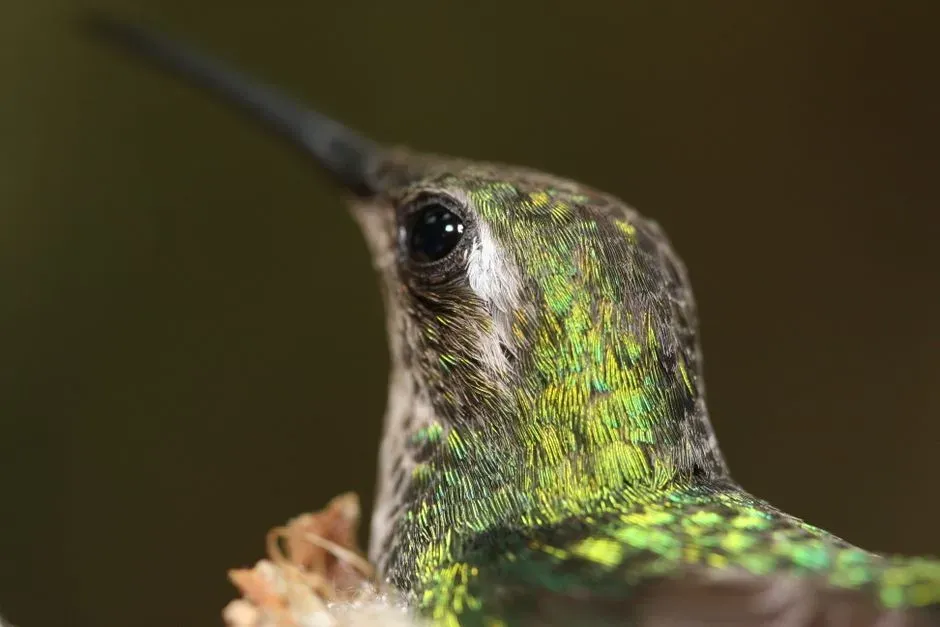
Watch slow-motion footage of a hummingbird and focus only on its head. While the wings blur and the body bounces slightly with every wingbeat, the head and eyes stay eerily locked in place. This “gaze stabilization” is good enough that the bird can track a single flower, watch a rival out of the corner of its eye, and adjust its position without ever losing visual lock.
Our best camera stabilization systems – gimbals, digital stabilization, precision optics – all rely on motors, sensors, and processing power, which adds weight and complexity fast. Hummingbirds do the same job using neck muscles, inner ear sensors, and reflexes fine-tuned by millions of years of evolution, with the head moving in tiny counter-oscillations that cancel out the body’s motion entirely.
Engineers try to copy this with active camera mounts, high-frame-rate sensors, and heavy post-processing software, but a full stabilization system at hummingbird scale still isn’t realistic. Biology cheats by co-designing the whole organism at once – neck, spine, and head evolving together to solve one problem. That kind of integration is exactly what engineering tends to split across separate teams and separate components, and the gap shows.
#3 – Shock-Resistant, Self-Healing Flight Hardware
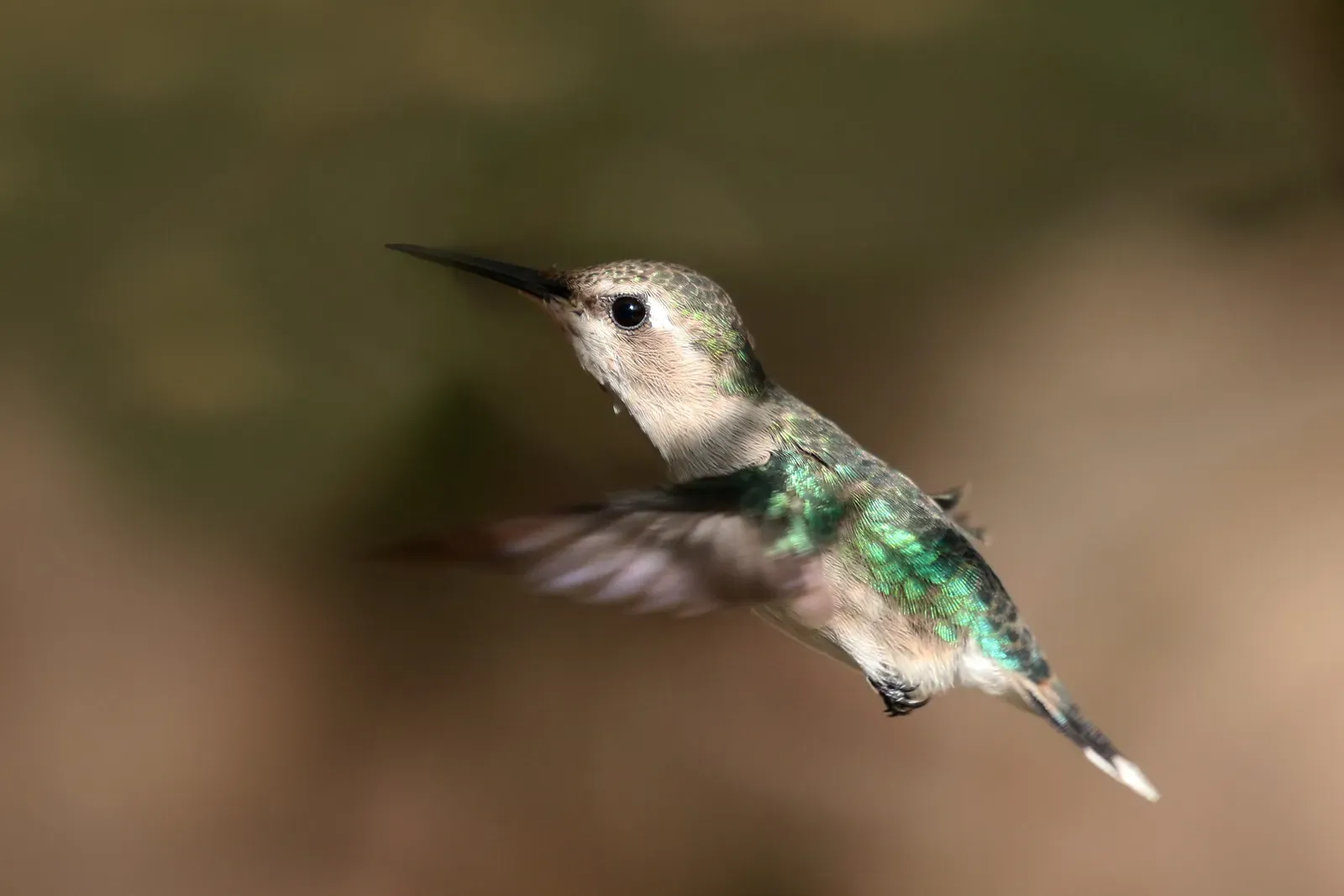
Roboticists don’t love admitting it, but most flying robots are basically divas. Crash a quadcopter into a tree and you’re often looking at broken propellers, bent arms, and fried sensors. Hummingbirds smash into branches, windows, feeders, and even each other at high speed on a regular basis.
And yet they recover midair, adjust their flight pattern, and heal over days or weeks with zero maintenance hangar involved. Their bones, tendons, muscles, and feathers are lightweight but surprisingly tough, flexible under load, and constantly maintained by the body itself. Feathers in particular are a small marvel – built to withstand millions of high-speed strokes, deform and snap back elastically, and get periodically replaced through molting like a built-in replacement schedule.
Engineers have experimented with flexible wings made from composites or polymers, but nobody has built a self-healing, self-cleaning, self-replacing structural material that weighs as little as feathers and holds up flawlessly through rain, dust, and UV exposure. Soft robotics and morphing wings are genuinely impressive research, but they’re still in their infancy compared to what every single wild hummingbird does as a matter of daily routine.
#2 – Musical, High-Speed Wings That Talk Without Words

This one is wildly underappreciated: hummingbird wings don’t just move air, they make sound on purpose. Many species have evolved wing shapes and feather structures that produce distinct hums, buzzes, or whistles that shift slightly with speed and angle, and may signal aggression, courtship, or a territorial warning.
In other words, the wings double as both propulsion and communication devices. It’s the equivalent of a jet whose engine noise doubles as a coded radio signal. Engineers almost always treat aircraft noise as a problem to be minimized. Hummingbirds treat it as free information, and studies suggest rivals can pick out species, individual identity, and even aggressive intent just from wing sound and flight pattern.
Fast Facts
- Wings beat roughly 50 to 80 times per second in most species, with tiny species reportedly climbing much higher
- Anna’s hummingbirds add a second sound trick, fanning tail feathers during high-speed dives to produce a sharp chirp
- Wing-generated tones shift in pitch based on flight speed, wing angle, and courtship or territorial intent
- Rival birds can reportedly distinguish species and individual identity from wing sound and flight pattern alone
Copying this would require airframes that deliberately shape vortex shedding to encode data, sensor networks tuned to decode it, and control algorithms that coordinate sound and thrust at the same time. Most drones just roar or whine at one flat, annoying pitch, wasting acoustic energy instead of using it. Hummingbirds are performing aerodynamic acoustic engineering on the fly, blending function with signal in a way our machines haven’t even started to approach.
#1 – Integrated Super-Reflexes That Outrun Our Best Flight Computers
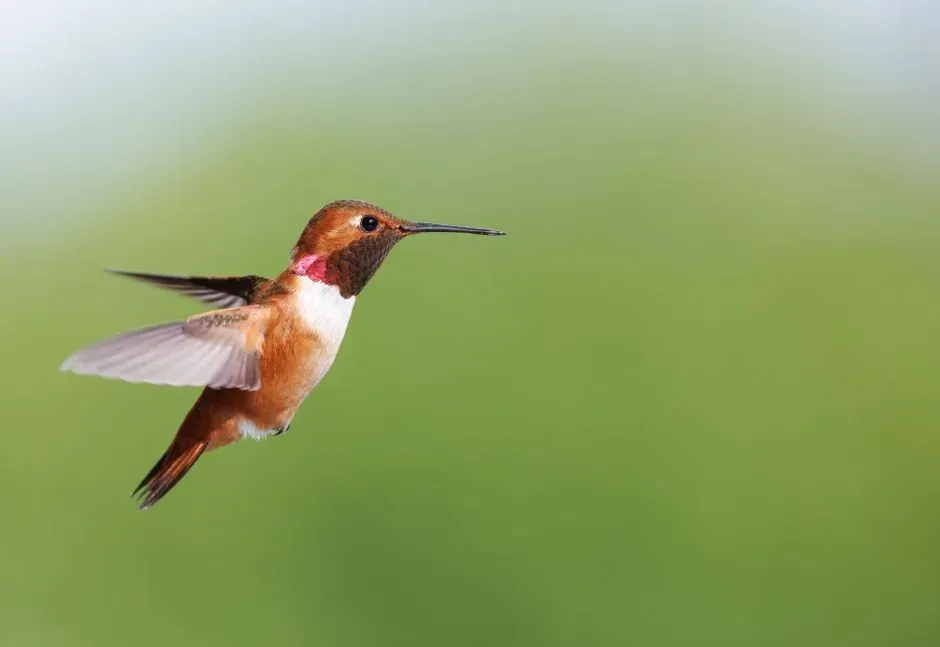
Engineers can simulate hummingbird flight on powerful computers. The problem is that the bird’s nervous system runs that same control scheme in real time, in the field, with wet biological tissue instead of silicon. A hummingbird is constantly juggling visual input on flowers, rivals, predators, and branches, vestibular input on balance and head orientation, proprioceptive feedback on wing angle and muscle stretch, and environmental cues like wind, rain, temperature, and light.
All of it feeds into motor commands that adjust wingbeat frequency, stroke amplitude, wing rotation and twist, and tail spread and angle – hundreds of times per second, with no visible lag. Our best flight controllers on micro-drones lean on relatively slow inertial sensors and cameras, suffer from noise and delay, and fail hard the moment conditions shift too fast.
Quick Compare
| Capability | Hummingbird | Best Micro-Drone |
|---|---|---|
| Hover in gusty wind | Rock-solid, all day | Struggles, short bursts |
| Sharp U-turn | One body length | Wide, pre-planned arcs |
| Power source | Nectar and insects | Battery, minutes of charge |
| Self-repair | Automatic, days to weeks | None – needs a technician |
| Runtime without maintenance | Years | Hours to days |
Hummingbirds aren’t flawless. They do crash and fail sometimes. But their overall success rate, across millions of flights through cluttered, unpredictable terrain, blows past anything we can match at comparable size, weight, and power. It’s never one single trick engineers can lift and copy. It’s muscles acting like smart actuators and springs, feathers doubling as both structure and air sensors, and a brain running massively parallel processing optimized by evolution instead of a software team. Until engineering stops chasing isolated pieces of the hummingbird and learns to co-design structure, sensing, control, and energy the way biology already does, this integrated ability stays firmly out of reach.
The Bottom Line
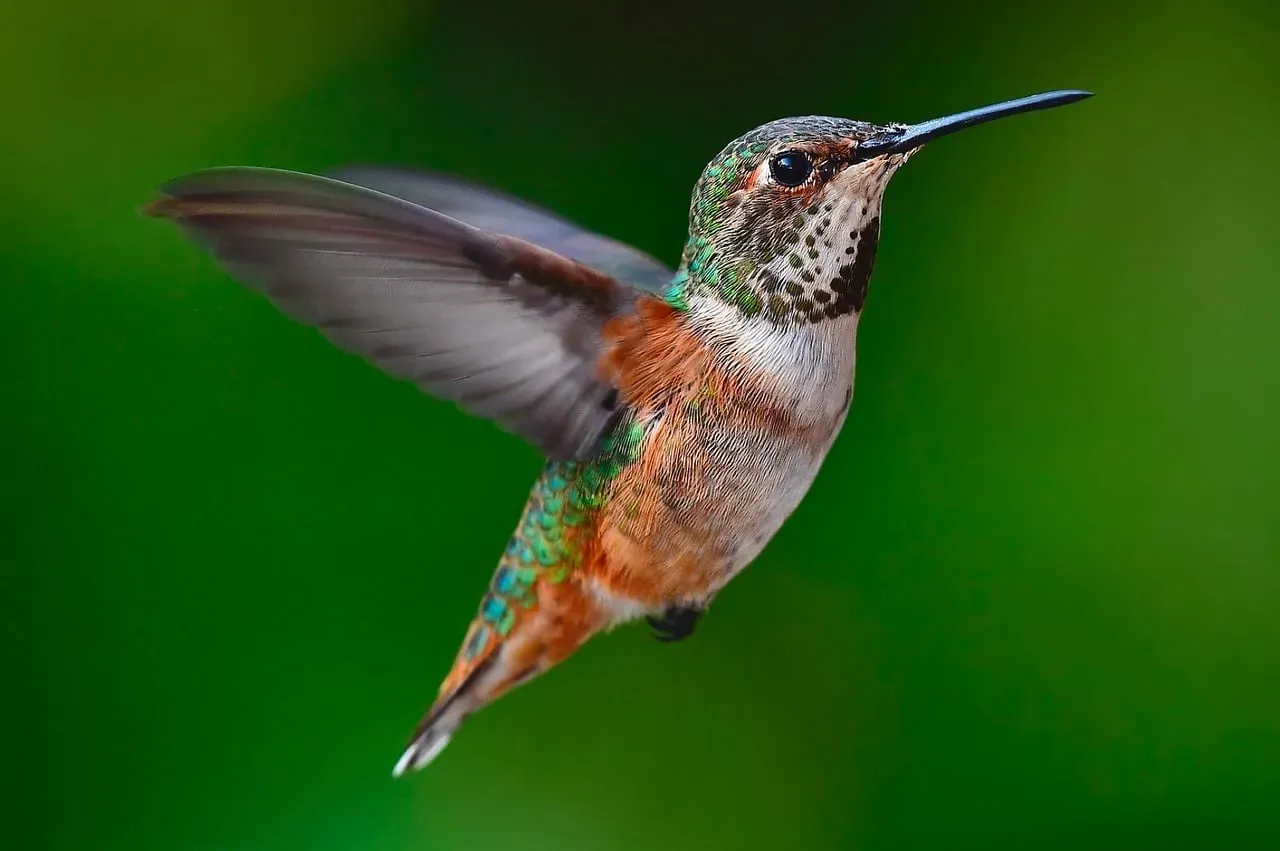
Engineers love to act like we’re closing in on nature, but hummingbirds quietly prove otherwise every single day. Sure, we can build hovering drones and fancy stabilized cameras. What we still don’t have is a sugar-fueled, self-healing, self-stabilizing, map-building, torpor-using micro-aircraft that can brake in its own body length, fly backwards on command, and remember exactly which tiny flower paid out the best nectar yesterday.
The uncomfortable truth is this: every time we think we’ve “copied” a hummingbird, we’ve really just built a crude imitation of one narrow feature. The rest – energy management, integrated reflexes, acoustic signaling, lifelong self-repair – stays firmly, stubbornly biological. My honest take? AI and better materials will keep closing small gaps, but at hummingbird scale, nature isn’t just winning right now, it’s not even close. Which side are you on – do you think engineering ever catches up, or are some tricks simply off-limits to anything that isn’t alive?